Category Archives: Philosophy
Mankind: The Modern Mystery and Myth
This piece is featured in this month’s issue of the BeZine. For a link to the complete issue, click here.
The hero’s journey is a deeply challenging topic for an amateur writer and philosopher. What a great invitation to read and research, to tie strands together and squint to see a pattern! Typically, I submit essays to this forum, as I am much more comfortable in prose. This time, however, I decided that an essay on this topic would be way too ambitious. What I have is Swiss cheese and spiderwebs, full of holes and only loosely connected, so I thought a poem would be more appropriate. However, I will preface this one with a bibliography. I began with the final chapter of Joseph Campbell’s The Hero With A Thousand Faces, where I read this:
“Today all of these mysteries [“the great pantomime of the sacred moon-king, the sacred sun-king, the hieratic, planetary state, and the symbolic festivals of the world-regulating spheres”] have lost their force; their symbols no longer interest our psyche. The notion of a cosmic law, which all existence serves and to which man himself must bend, has long since passed through the preliminary mystical stages represented in the old astrology, and is now simply accepted in mechanical terms as a matter of course. The descent of the Occidental science from the the heavens to the earth (from 17th century astronomy to 19th century biology), and their concentration today, at last, on man himself (in 20th century anthropology and psychology), mark the path of a prodigious transfer of the focal point of human wonder. Not the animal world, not the plant world, not the miracle of the spheres, but man himself is now the crucial mystery. Man is that alien presence with whom the force of egoism must come to terms, through whom the ego is to be reformed. Man, understood however not as “I” but as “Thou”: for the ideals and temporal institutions of no tribe, race, continent, social class, or century, can be the measure of the inexhaustible and multifariously wonderful divine existence that is the life in all of us.” (emphasis mine)
That reading led me to recall lectures I heard from Dave Foreman at the Wilderness 50 conference. His essay on “The Anthropocene and Ozymandius” can be found in several online posts. From there, I considered Nietzsche’s Übermensch from Also Sprach Zarathustra. And always underlying my thoughts is my admiration for Buddhist practice and The Middle Way. So, with all that as the primordial soup, this emerged:
Homo sapiens sapiens
Oh most separate, separating
Anthropocene anthropocentric
The Egoid egotist
Ozymandius, great Wizard of Man
Eyes on screen
Fingertips fiddling
Journey who will
That Über undertaking
Condescend to transcend
Dare to die in darkness,
Awake in wilderness
At one, atoned
In mystic Middle
Cosmic consumption
Preposterous presumption
Unsustainable usurpation
Deplorable devastation
Parading Nero
Begs a humbler hero
© 2015 – poem, essay and photograph, copyright Priscilla Galasso. All rights reserved.
Weekly Photo Challenge: Victory
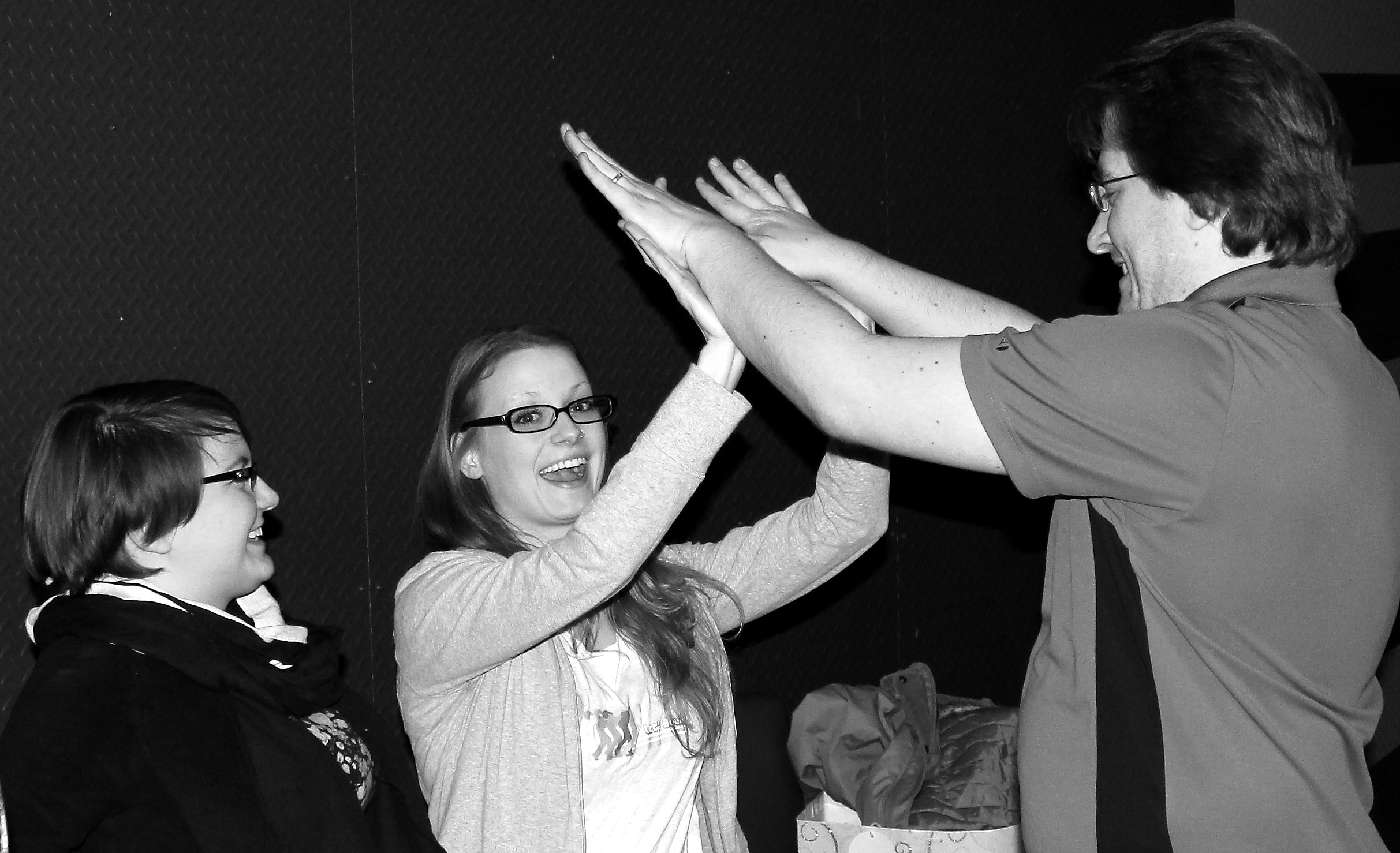
“Victory” is a word that makes me rather uncomfortable. It brings to mind a dualism that causes suffering. In other words, if there’s a victor, there must be a loser. I feel sad when someone is put in that role. I do not like competition. I do not like war. I do not like capitalism. And I do not like losing or feeling “less than”. So often, winners are unkind, insensitive and arrogant. I was the fourth daughter in my family of origin, and I probably felt like “the loser” in lots of ways as a child: redundant, younger, dumber, less skilled. It doesn’t feel good to be on that side of the scale. I prefer to imagine a way that everyone can win, that we can all share and get what we need regardless of how much or how little we are able to contribute. I used to tell my own 4 children, “Fair doesn’t mean everyone gets the same thing. Fair means everyone gets what they need.” May all beings be happy. May we all feel that we can get what we need. I am hoping for a kinder Victory for my country, for my children, for myself.
Weekly Photo Challenge: Boundaries and the Unbound
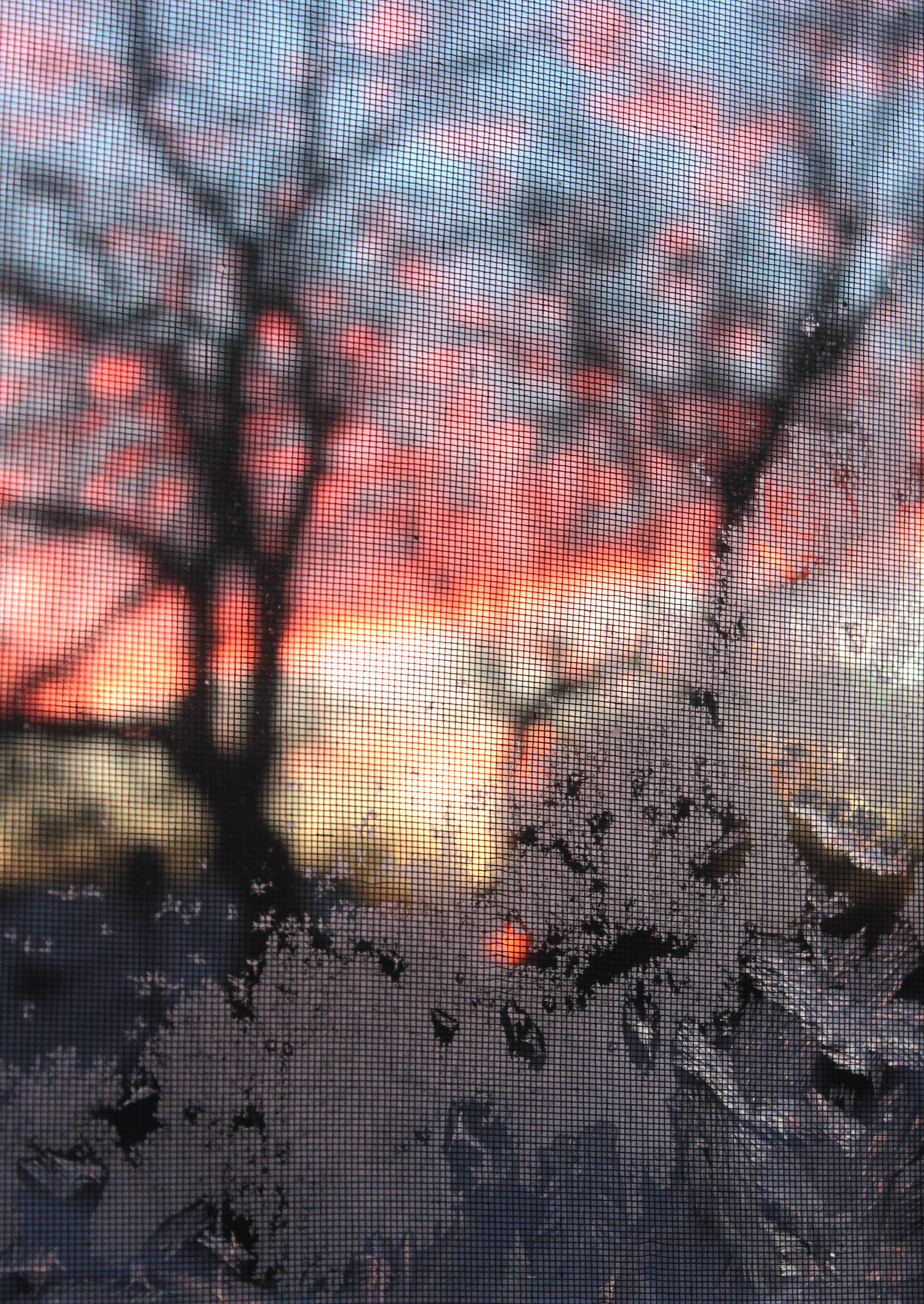
My partner Steve and I have often discussed the usefulness and the detrimental nature of boundaries. To be safe is often important for growth…until it’s not. Steve’s ultimate objective is to grow beyond boundaries and explore the Oneness of reality. After all, boundaries are a concept that we can erect and dismantle at will. Where is your will? Do you elect to put up boundaries or break them down?
Do you go through life humming “Don’t Fence Me In”? I feel that’s the position I take more and more.
Farming a Dancing Landscape
Some Thoughts on Poverty – Spiritual Lessons from Nature Series
This article appears in this month’s issue of The BeZine. To read the entire issue, click HERE.
Raising a child is not rocket science. It is more complex than that. Rocket science is merely complicated. What’s the difference? The Latin root for complicated means “folded,” like pleats. There are hidden surfaces, but you can unfold them and draw an iron straight across it. Rocket science requires a long series of problems to solve, but with enough time and effort, you can get through them all and even repeat the entire process with very similar and predictable results. (Any one with more than one kid knows this is not the case in parenting!) In the same way, you can determine which peak is the tallest one in the Appalachian Mountains. You probably can’t guess correctly just by looking out over the landscape from a single overview, but get enough people with GPS tools to climb the hundreds of peaks on the horizon and take measurements, and eventually, you can figure out which one is the tallest. Complicated, but do-able.
Complex is a whole different story. The root of that word means “inter-woven,” like a spider’s web, where each fine thread is connected to another. And they’re all sticky except for the ones the spider uses to climb directly over to her stuck prey. But can you tell which is which? Can you tell that the one you just stepped into is sending a ripple right over to where the spider is sitting? She now knows exactly where you’re stuck, but she doesn’t know that you harbor a parasite that will kill her and make its way to yet another host when yonder sparrow snaps up her dead carcass. That’s complex.
Raising a child is complex. Trying to tell which peak in the Appalachian range is the tallest is complex, too, if the landscape is dancing: changing in an unpredictable pattern , moving to the rhythm of an imperceptible music. Which peak is tallest now? And NOW? And why are we even trying to find the answer to that question while watching this mysterious dance?
Poverty is complex. It is not something that is solved by simply devoting more time and effort to the problem. If it were, we would not be looking at thousands of years of history on the subject. We give in to the temptation to simplify poverty into a matter of dollars over time, reducing it to something measurable, predictable, and controlled, a mere graphic—the poverty line. But poverty is an inter-woven network of relationships and concepts—self worth, social justice, resources and their extraction, economic policies and global politics. It is as complex as our planet’s environment.
So how do you engage with a complex issue like poverty?
Aldo Leopold arrived at a Land Ethic after years of developing and recording a relationship to a particular place in Wisconsin. In the book A Sand County Almanac, he writes: “A thing is right when it tends to preserve the integrity, stability and beauty of the biotic community. It is wrong when it tends otherwise.” Making personal decisions about right and wrong based on your relationship to the community is the responsibility of every individual. Applying that ethic rigorously and non-dogmatically is the work of love. How do you love your neighbor? How do you preserve the integrity, stability and beauty of the biotic community on this planet of inestimable and finite resources? How do you alleviate the suffering caused by poverty? These are complex questions.
“We shall never achieve harmony with land, any more than we shall achieve absolute justice or liberty for people. In these higher aspirations the important thing is not to achieve, but to strive.” —Aldo Leopold
Maybe a more accessible question is this: How shall we strive to end poverty? To that question, I can imagine simple answers. Start early in your learning. Teach children about sharing and portion, not dogmatically, but in relationship. Strive toward understanding basic needs and toward a sense of what is enough. Build trust and hope and compassion. Be flexible, changing with the land and its resources. Be present with the multiple factors involved; do not look away, diminish or dismiss what is real. Be authentic and honest and diligent, and finally, believe that even on a dancing landscape, food is growing underfoot.
© 2015, essay and photographs, Priscilla Galasso, All rights reserved
Weekly Photo Challenge: Beneath Our Feet
Walking Meditation by Thich Nhat Hahn
Take my hand.
We will walk.
We will only walk.
We will enjoy our walk
without thinking of arriving anywhere.
Walk peacefully.
Walk happily.
Our walk is a peace walk.
Our walk is a happiness walk.
Then we learn
that there is no peace walk;
that peace is the walk;
that there is no happiness walk;
that happiness is the walk.
We walk for ourselves.
We walk for everyone
always hand in hand.
Walk and touch peace every moment.
Walk and touch happiness every moment.
Each step brings a fresh breeze.
Each step makes a flower bloom under our feet.
Kiss the Earth with your feet.
Print on Earth your love and happiness.
Earth will be safe
when we feel in us enough safety.
Print on Earth your love and happiness. On the land, on the water, for yourselves, for your children. Peace is the walk.
Oscar Wilde and “The Critical Spirit”
This article is my submission to the July edition of The BeZine. For the table of contents with links to my colleague’s work, click here.
“THE CRITIC AS ARTIST: WITH SOME REMARKS UPON THE IMPORTANCE OF DOING NOTHING” — Oscar Wilde wrote this essay in the form of a dialogue between two characters, Gilbert and Ernest, in the library of a house in Piccadilly. Here are some key quotes from that piece:
“The one duty we owe to history is to re-write it. That is not the least of the tasks in store for the critical spirit.”
“When man acts he is a puppet. When he describes he is a poet.”
I confess I have not read The Critic As Artist in its entirety and so have not discovered Wilde’s “remarks upon the importance of doing nothing”. However, I do have some understanding of our critical mind, the ways we apply it, and the results of being dominated by it.
First of all, what is ‘the critical spirit’? I think what the author is getting at is the individual thought process that creates meaning. What we ‘know’ of the world might be broken into 3 categories: Fact, Experience and Story. Fact is the measured detail of life — how old it is, how big it is, how it reacts chemically, that kind of thing. We learn some things from it, but it has no emotional arch, no meaning.
Experience is the raw sensation of the moment: emotions, smells, sounds, tastes, sights, awareness, feeling. It is how we know we are alive.
And then there’s Story, and this is how we are all poets: we take in data, we see events transpire, we feel emotion and sensation, and then, we put that together into a narrative that makes ‘sense’ to us. We have created a story, a meaning, and attached it to history. That work is largely supervised by our Ego as our thought processes select and omit and weigh the data according to our own preferences and values. We imagine and imitate what we like, we suppress what we don’t; we spin what comes out. These stories become part of the body of data that we use to create further meaning as well. It is essential to realize that we are constantly making up stories. Civilization is a story. Religion is a story. Philosophy and Art and Psychology and Anthropology and so many other pursuits are simply ways that we have manufactured meaning by creating stories. There is wonderful wisdom in recognizing “the danger of a single story”, and so it is a fortunate thing to have so many different ones. (a Nigerian novelist, Chimamanda Ngozi Adichie, fleshes this out in her profound TED talk, HERE) Stories are ubiquitous. There is no ‘right’ story. Good stories point at Truth, but there are lots of ways to construct them.
This awareness of the creation of story by your own Ego is the key to “the importance of doing nothing” as well. The plethora of stories and the facility of story-telling in our culture tends to dominate our reactions and expectations, creating drama, manipulation and anxiety along with meaning. In some ways, we want that. We find it exciting. But it’s also exhausting and can be exploitative. To be able to leave the story-telling aside and simply BE is important for my well-being and my personal peace. Meditation is helpful in the practice of stilling the ego and refraining from making up meaning. When I concentrate on the present moment and return to the simple activity of breathing, I allow the world to be what it is instead of conscripting it into the service of my creative ego. Then I am free to relax my mind and let go of my anxieties about how the story will turn out. My energy is renewed, and I am at peace. (This is a practice that I am only just beginning to employ. Awareness is the first step!)
“The imagination imitates; it is the critical spirit that creates.” We are invited to engage with the world on many different levels, all of which can be useful and appropriate at certain times. Wisdom is the art of choosing how to engage in a way that is edifying for yourself and others. For everything, there is a season: a time to imitate, a time to create, and a time to refrain from creative ego activity. May each of us find joy in the exploration of this Wisdom and delight where we recognize this exploration in others!
© 2015, essay and photographs, Priscilla Galasso, All rights reserved
Weekly Photo Challenge: Door – or No Door?
The open door…
…is a symbol of the fluidity of life. We pass through, but may we not also pass around or over? Most often, I believe, doors are constructions of our own egos, our own consciousness. We perceive doors even where there are none, just as we construct walls in the wilderness for no reason other than to give us a sense of boundaries. Why do we find boundaries and closed doors comforting? Maybe because they give us an excuse for setting limits. Maybe that’s how they make us feel safe. Where do you build doorways? How would you feel in a place where there were none?
Here’s Waldo
From Essay IX: The Over-Soul — “The Supreme Critic on the errors of the past and the present, and the only prophet of that which must be, is that great nature in which we rest, as the earth lies in the soft arms of the atmosphere; that Unity, that Over-soul, within which every man’s particular being is contained and made one with all other; that common heart, of which all sincere conversation is the worship, to which all right action is submission; that overpowering reality which confutes our tricks and talents, and constrains every one to pass for what he is, and to speak from his character, and not from his tongue, and which evermore tends to pass into our thought and hand, and become wisdom, and virtue, and power, and beauty.”
From Nature — “Nature is a language and every new fact one learns is a new word; but it is not a language taken to pieces and dead in the dictionary, but the language put together into a most significant and universal sense. I wish to learn this language, not that I may know a new grammar, but that I may read the great book that is written in that tongue.”
© 2015 photographs by Priscilla Galasso, All rights reserved