Unknown's avatar

Farming a Dancing Landscape

Some Thoughts on Poverty – Spiritual Lessons from Nature Series

This article appears in this month’s issue of The BeZine.  To read the entire issue, click HERE.

Raising a child is not rocket science. It is more complex than that. Rocket science is merely complicated. What’s the difference? The Latin root for complicated means “folded,” like pleats. There are hidden surfaces, but you can unfold them and draw an iron straight across it. Rocket science requires a long series of problems to solve, but with enough time and effort, you can get through them all and even repeat the entire process with very similar and predictable results. (Any one with more than one kid knows this is not the case in parenting!) In the same way, you can determine which peak is the tallest one in the Appalachian Mountains. You probably can’t guess correctly just by looking out over the landscape from a single overview, but get enough people with GPS tools to climb the hundreds of peaks on the horizon and take measurements, and eventually, you can figure out which one is the tallest. Complicated, but do-able.
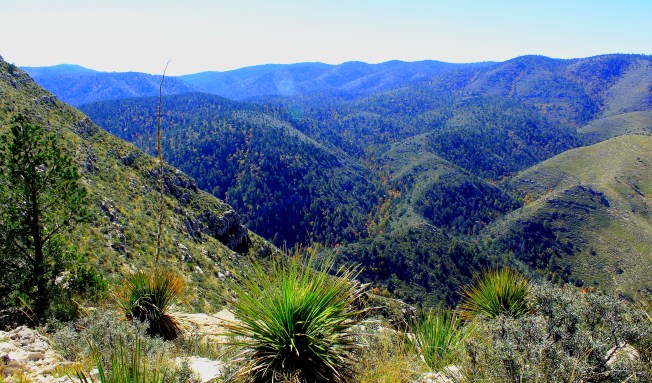
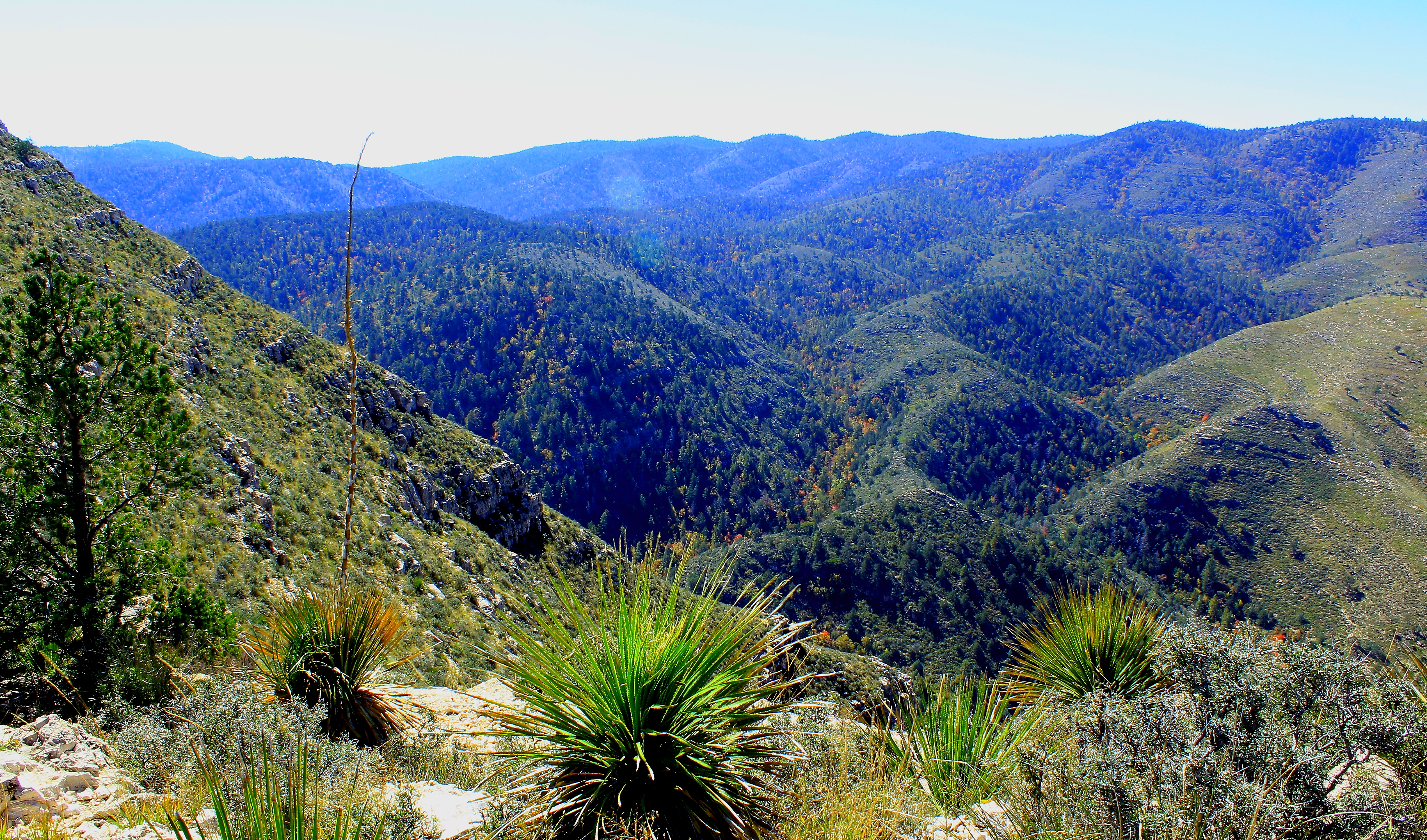
Guadalupe rangeComplex is a whole different story. The root of that word means “inter-woven,” like a spider’s web, where each fine thread is connected to another. And they’re all sticky except for the ones the spider uses to climb directly over to her stuck prey. But can you tell which is which? Can you tell that the one you just stepped into is sending a ripple right over to where the spider is sitting? She now knows exactly where you’re stuck, but she doesn’t know that you harbor a parasite that will kill her and make its way to yet another host when yonder sparrow snaps up her dead carcass. That’s complex.
spider web

Raising a child is complex. Trying to tell which peak in the Appalachian range is the tallest is complex, too, if the landscape is dancing: changing in an unpredictable pattern , moving to the rhythm of an imperceptible music. Which peak is tallest now? And NOW? And why are we even trying to find the answer to that question while watching this mysterious dance?

Poverty is complex. It is not something that is solved by simply devoting more time and effort to the problem. If it were, we would not be looking at thousands of years of history on the subject. We give in to the temptation to simplify poverty into a matter of dollars over time, reducing it to something measurable, predictable, and controlled, a mere graphic—the poverty line. But poverty is an inter-woven network of relationships and concepts—self worth, social justice, resources and their extraction, economic policies and global politics. It is as complex as our planet’s environment.
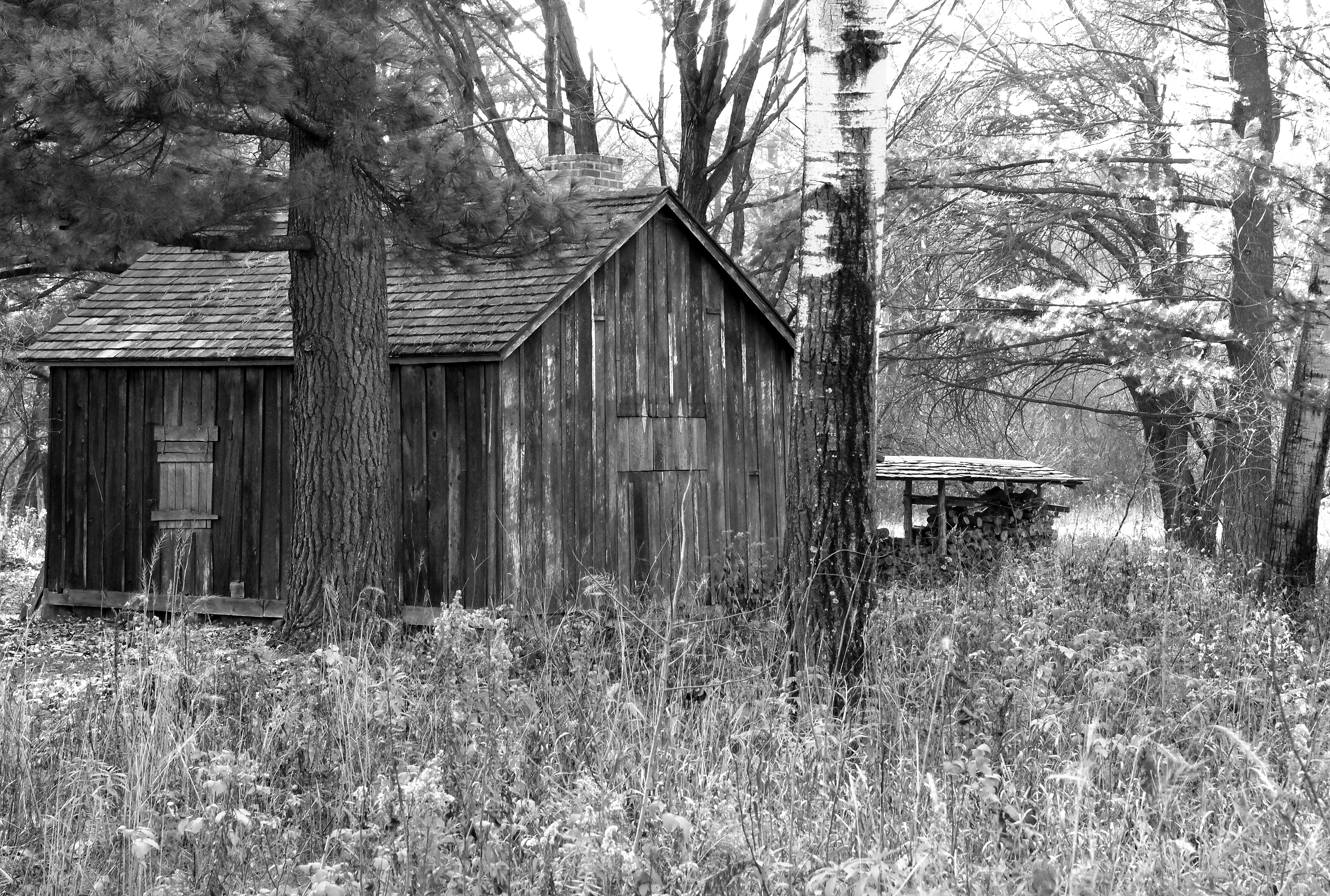
the shack

So how do you engage with a complex issue like poverty?

Aldo Leopold arrived at a Land Ethic after years of developing and recording a relationship to a particular place in Wisconsin. In the book A Sand County Almanac, he writes: “A thing is right when it tends to preserve the integrity, stability and beauty of the biotic community. It is wrong when it tends otherwise.” Making personal decisions about right and wrong based on your relationship to the community is the responsibility of every individual. Applying that ethic rigorously and non-dogmatically is the work of love. How do you love your neighbor? How do you preserve the integrity, stability and beauty of the biotic community on this planet of inestimable and finite resources? How do you alleviate the suffering caused by poverty?  These are complex questions. 

“We shall never achieve harmony with land, any more than we shall achieve absolute justice or liberty for people. In these higher aspirations the important thing is not to achieve, but to strive.”  —Aldo Leopold

Maybe a more accessible question is this: How shall we strive to end poverty?  To that question, I can imagine simple answers.  Start early in your learning. Teach children about sharing and portion, not dogmatically, but in relationship. Strive toward understanding basic needs and toward a sense of what is enough.  Build trust and hope and compassion.  Be flexible, changing with the land and its resources. Be present with the multiple factors involved; do not look away, diminish or dismiss what is real.  Be authentic and honest and diligent, and finally, believe that even on a dancing landscape, food is growing underfoot.

© 2015, essay and photographs, Priscilla Galasso, All rights reserved

Unknown's avatar

Weekly Photo Challenge: Monochromatic

This is a fun challenge!  I had thought at first that “monochrome” in photography meant black and white.  It’s good to be aware of opportunities to be blue on sky or golden on yellow.  (I feel blue on grey skies often, myself.)  


Monochromatic

Unknown's avatar

“Blue ‘Shroom…

… I saw you standing alooooone…”

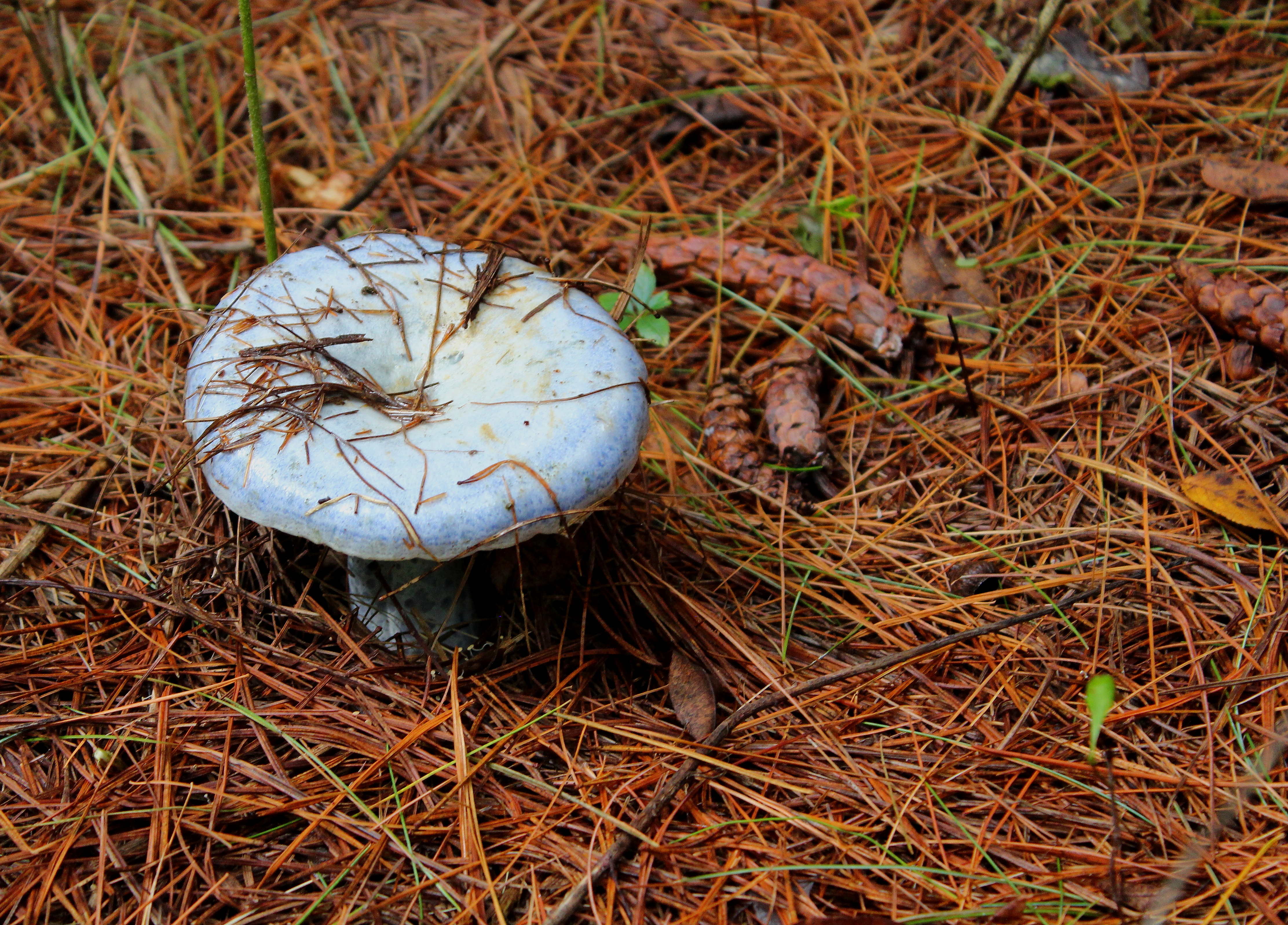
blue mushroomI saw lots of fun fungi on my wet walk through the pines along the Oconomowoc River on the Ice Age Trail today, but this was the funkiest!  I’ve never seen a blue mushroom before, have you?

“Lactarius indigo, commonly known as the indigo milk cap, the indigo (or blue) lactarius, or the blue milk mushroom, is a species of agaric fungus in the family Russulaceae. A widely distributed species, it grows naturally in eastern North America, East Asia, and Central America; it has also been reported in southern France. L. indigo grows on the ground in both deciduous and coniferous forests, where it forms mycorrhizal associations with a broad range of trees. The fruit body color ranges from dark blue in fresh specimens to pale blue-gray in older ones. The milk, or latex, that oozes when the mushroom tissue is cut or broken — a feature common to all members of the Lactarius genus — is also indigo blue, but slowly turns green upon exposure to air. The cap has a diameter of 5 to 15 cm (2 to 6 in), and the stem is 2 to 8 cm (0.8 to 3 in) tall and 1 to 2.5 cm (0.4 to 1.0 in) thick. It is an edible mushroom, and is sold in rural markets in China, Guatemala, and Mexico.” — Wikipedia

© 2015 photograph by Priscilla Galasso, All rights reserved

Unknown's avatar

Photo Connection of a Lifetime: Swallow a Camera

I’ve gone much deeper into photography today than I ever wanted to.  Today, I swallowed a camera.  No joke.  I am undergoing what is known as “capsule endoscopy”; in other words, I ate the Pill Cam.  The thing was flashing when I put it into my mouth.  It’s about the size of the tip section on my little finger, beginning at the last knuckle.  Bigger than any vitamin I’d ever seen, but not by too much.  Presumably, it is flashing away as it winds its way down through my small intestines, recording images of a tunnel that wasn’t reachable using the upper GI scope or the colonoscopy that I had done in June.  These images are being picked up by a bundle of wires strapped onto my navel and recorded in a little metal box that I’m wearing slung around my shoulder.

I suppose what I’m trying to achieve with this exercise is to find out more about my body.  I am seeking understanding about systems that are intimately interconnected – my digestive system and my circulatory system – specifically, why a routine CBC indicated anemia while I have no symptoms.  These connections also effect my sense of self and how I connect with the wider world in larger systems like health care and the environment.  

I have to admit that I am not very comfortable with this technological connection.  I much prefer something more organic.

My vision


Connected

Unknown's avatar

Weekly Photo Challenge: From Both Sides Now

Whenever you’re trying to solve a puzzle, it’s important to look at it from different angles. 

To read “A Little Story About Loving Yourself”, a story I created for this puzzle series, click HERE.

From Every Angle

Unknown's avatar

Weekly Photo Challenge: Today Is a Special Day – Birthday & Wedding

Today is a GRAND day!!  It’s my birthday, actually.  My birthday present to myself 3 years ago was to buy my first digital camera.  It is not a phone; it is a Canon.  I do not upload ‘apps’ on my flip phone; I talk or text.  Therefore, I do not have a Mesh gallery.  I have been using the WordPress gallery display for almost all of my photo challenge posts, and I like how it looks. 

A grand day is a day of living in the moment; a day of real, physical interaction with living things.  I have lots of those days, and sometimes, I have my camera with me.  It groups all the photos I took in a single day together, so I do have chronological records.  I admit, though, it takes a long time to download, edit, and upload them into WordPress to post them in a blog.  I do not hate technology, but I do want to be very careful and aware of how I use it and how much I use it.

So, what does it mean to ‘share’ a day?  My definition will always include being present and only tangentially include technological media.  That said, here is a gallery of photos from a very grand day that I shared with my family 3 months ago.  My brother’s wedding day:


Today Was a Good Day

Unknown's avatar

Music: A Soul Experience

This piece is featured in this month’s issue of The BeZine.  To go to the interactive table of contents, click HERE.

Addressing this topic is a tricky proposition for me. How do I write about “Music” after a lifetime of being in its company, serious collegiate study, professional and semi-professional music-making and now coming to an ever-changing place of informal interaction with it? It is as daunting as writing about “Being Female”.

My partner Steve, who has a more organic relationship to music than I, often asks me, “What is music? Is this Music?” My definitions are vague. John Cage hears music in the sound of traffic. Why not? Steve stands by a babbling brook or a wide lake shore, closes his eyes and begins to wave and conduct the irregular but compelling rhythms. Music is an experience. It is felt and lived, by humans, most certainly, and perhaps by oceans, birds and the cosmic spheres. We can pick it apart, measure it scientifically, codify and teach it and all but kill it while still trying to communicate something beyond all those characteristics. I taught Voice lessons for a few years, giving rudimentary information on practical aspects of sound production and score-reading, but when it came time for a student to prepare for performance, I said something like, “Feel your confidence; trust your instrument; let go and SING!”

P1100993 - Copy

The music of the soul, singing, is not without dukkha, the intrinsic suffering of human life. Aside from Art or Artifice, singing is a conduit for emotion as vulnerable and raw as any primal utterance. Those who have guessed this often try to manipulate it or manufacture it for their own uses. Or they try to lose their egos and get as close to being on the edge as they can. Who are the great “emotive” singers you can name? Judy Garland is our favorite. Her story and her relationship with her music is a painful one, but we love to hear her inimitable voice and styling. I used to play my Wizard of Oz record over and over again and try to sound just like her…before I was 10. Before I knew much about suffering at all. She was all of 16 on the recording. She kept singing that song throughout her career. She knew exactly how to wring all the pathos of her life from that melody by the time she died. She did it repeatedly, convincingly each time.

Just two days ago, I read a passage about Singing that struck me with an entirely new impact. It is from Frederick Douglass’ own autobiography about his life as an African-American slave. It will haunt me now whenever I hear Spirituals or make up my own bluesy tunes in passing. This is written in Chapter II, a memory from before he was 10 years old:

“The slaves selected to go to the Great House Farm, for the monthly allowance for themselves and their fellow-slaves, were peculiarly enthusiastic. While on their way, they would make the dense old woods, for miles around, reverberate with their wild songs, revealing at once the highest joy and the deepest sadness. They would compose and sing as they went along, consulting neither time nor tune. …The hearing of those wild notes always depressed my spirit, and filled me with ineffable sadness. … To those songs I trace my first glimmering conception of the dehumanizing character of slavery… If any one wishes to be impressed with the soul-killing effects of slavery, let him go to Colonel Lloyd’s plantation, and, on allowance-day, place himself in the deep pine woods, and there let him, in silence, analyze the sounds that shall pass through the chambers of his soul,—and if he is not thus impressed, it will only be because “there is no flesh in his obdurate heart.” I have often been utterly astonished, since I came to the north, to find persons who could speak of the singing, among slaves, as evidence of their contentment and happiness. It is impossible to conceive of a greater mistake. Slaves sing most when they are most unhappy. The songs of the slave represent the sorrows of his heart; and he is relieved by them, only as an aching heart is relieved by its tears. At least, such is my experience. I have often sung to drown my sorrow, but seldom to express my happiness. Crying for joy, and singing for joy, were alike uncommon to me while in the jaws of slavery. The singing of a man cast away upon a desolate island might be as appropriately considered as evidence of contentment and happiness, as the singing of a slave; the songs of the one and of the other are prompted by the same emotion.”

Song pouring forth like tears for the relief of an aching heart. Music is a channel for all the emotion that lives within us, be it deep sorrow, longing, suffering, yearning, passion, joy or triumph. Have you never brought an embryonic ache to maturity by playing the right music? Have you not fed a wild impulse by stomping out an insistent rhythm and letting your voice, your body move along with it? Music is my companion, my teacher, my soul mate. It accompanies me as I discover myself, like my breath, my heartbeat. It is biological and intellectual, a genius of Life like an inalienable right. I could not endure existence without it; I can not imagine Freedom without it.

Jim at Carnegie Hall

My late husband was a singer, a gifted tenor. When he died, 300 people came to his memorial service to sing their good-byes – solos, congregational hymns and choir pieces. They sang as the living and imagined that there must be Music after death. They could not bear it to be otherwise. Though Death is entirely unknown and a very different (and luckier, as Walt Whitman would say) experience, I would not be surprised if there was music in it. Perhaps it is the very essence of all experience, conscious or not.

© 2015, essay and photographs, Priscilla Galasso, All rights reserved

Unknown's avatar

Weekly Photo Challenge: Creepy!

I don’t have to look very far to find “creepy” subjects to photograph.  I simply walk downstairs to the living room, dining room and kitchen.  That’s where we house our Museum.  My partner, Steve, has long been in the estate sale and used book business.  We sell a lot of stuff on e-Bay, Amazon, ABE Books and A Libris through our home business, Scholar and Poet Books.  But we also keep a lot of stuff.  Creepy stuff.  Stuff that Steve thinks is somehow “special”.  And he props this stuff in any available nook and corner that he can find.  Which is why I can easily photograph these:

 cha chacreepy 3creepy 2creepy

 
Creepy

Unknown's avatar

Weekly Photo Challenge: Beneath Our Feet

Walking Meditation by Thich Nhat Hahn

Take my hand.
We will walk.
We will only walk.
We will enjoy our walk
without thinking of arriving anywhere.
Walk peacefully.
Walk happily.
Our walk is a peace walk.
Our walk is a happiness walk.

Then we learn
that there is no peace walk;
that peace is the walk;
that there is no happiness walk;
that happiness is the walk.
We walk for ourselves.
We walk for everyone
always hand in hand.

Walk and touch peace every moment.
Walk and touch happiness every moment.
Each step brings a fresh breeze.
Each step makes a flower bloom under our feet.
Kiss the Earth with your feet.
Print on Earth your love and happiness.

Earth will be safe
when we feel in us enough safety.


Print on Earth your love and happiness.  On the land, on the water, for yourselves, for your children.  Peace is the walk. 

Beneath Your Feet