Think Continually of Those At Risk
I wrote this article for The Be Zine whose November issue was dedicated to “At-Risk Youth”.
Under the light of the half moon, David Attenborough speaks to the camera on Christmas Island, surrounded by a moving mass of red crabs. Tens of thousands of crawling females, heavy-laden with hundreds of fertilized eggs, are approaching the high tide in order to release their burdens into the surf. The water turns reddish brown as a surge of life heads out to sea. Millions, no, billions of little babies are set adrift. Enormous whale sharks cruise the waters nearby, ready to feed. Sir David explains that the hatchlings will spend one month in the water before returning to land to move into the forests and begin their lives as adults.
That’s probably not the first picture you conjure when you hear the phrase “at-risk youth”, but it’s the one that came to my mind. It may not be popular to approach this topic from a biological standpoint, but there is a meaningful truth in this perspective. If the “risk” you are referring to is death, that is something that youths face as much as anyone. Death is certain for all of us, and no one is guaranteed adulthood. The human species, however, is far from the threat of extinction. Our population is dominating the globe, in fact. So, “at-risk youth” is not about the peril of the demise of our race. I believe it is much more about social and behavioral dangers than biological ones. This is where we can be optimistic. We can create and control our societies and our behaviors much more readily than we can our biological tendencies.
What does it mean to “survive” to adulthood in our society? How do we measure the success of childhood? Certainly benchmarks in health, education, safety, justice, self-reliance and freedom come to mind. We set standards and often cast about for whom to blame if they are not met. Aren’t our children entitled to these milestones? Are they goals to strive toward if not guaranteed rights? And what about the risk of “merely” surviving?
My youngest child is now an adult. She has survived the death of her father. She has survived self-destructive behavior due to depression. She has survived being institutionalized in the mental health care system. She has survived living in the third largest city in this nation, finding a job and supporting herself. She has survived coming out as queer and has proudly announced her engagement to another wonderful young woman. Her survival of everyday panic, anxiety and body-image crises is chronicled in her Facebook updates. While all of this is great success that I do not mean to diminish, I keep wondering, “Is the mere survival of the hazards of our society the best our young people can hope for?” My daughter is highly intelligent. She is a naturally talented singer and dancer. She is passionate about history and poetry and science. I fear there is a great risk that these traits may remain embryonic throughout her lifetime because she is so focused on navigating social pressures – in a culture that is probably the most economically and socially privileged one on the planet!
That our systems erect road-blocks to social survival and detour our young people from paths of true greatness is a profound risk, I believe. Read the poem “The Truly Great” by Stephen Spender. I get to this stanza, and I am openly weeping.
“What is precious is…
…Never to allow gradually the traffic to smother
With noise and fog, the flowering of the spirit.”
We can so easily provide food, shelter, and opportunity to our youth with the systems we have devised, but those systems have become mine fields where kids are sabotaged on the journey. We have become so enamored of control that we have hobbled love and freedom and self-worth, and our young people will always be the most vulnerable to that constriction. Their symptoms are obvious. They are fighting to survive amid an abundance that mocks spiritual destitution. The Dalai Lama commented on his first visit to America that the thing that surprised him the most about Westerners was that so many suffered from a sense of low self-esteem. He’d never heard the term up until then, but everyone he asked agreed that it effected them.
Our young people have the best advantage for living long biological lives. If they are to live good, happy lives as well, we all must take responsibility for creating caring social space within our psyches and our communities. We need to nurture and model the spirit of social justice from the ground up AND from the top down. We need to encourage and not criticize; we need to live as models, not as victims. One of my favorite examples of a person who dispels social danger with kind communication is Fred Rogers. He takes time; he is present; he sees truth and speaks love. Here is an excellent illustration of that. And a great example of modeling fairness and social progress from the top down can be found in this video about the new Prime Minister of Canada.
We will never be finished addressing the social risks facing our youth. They will be new every moment. If we take up the challenge to face each of those moments with awareness and a commitment to justice and kindness, though, we can be confident that we are living out the remedies even as problems continue to arise.
Weekly Photo Challenge: Victory
“Victory” is a word that makes me rather uncomfortable. It brings to mind a dualism that causes suffering. In other words, if there’s a victor, there must be a loser. I feel sad when someone is put in that role. I do not like competition. I do not like war. I do not like capitalism. And I do not like losing or feeling “less than”. So often, winners are unkind, insensitive and arrogant. I was the fourth daughter in my family of origin, and I probably felt like “the loser” in lots of ways as a child: redundant, younger, dumber, less skilled. It doesn’t feel good to be on that side of the scale. I prefer to imagine a way that everyone can win, that we can all share and get what we need regardless of how much or how little we are able to contribute. I used to tell my own 4 children, “Fair doesn’t mean everyone gets the same thing. Fair means everyone gets what they need.” May all beings be happy. May we all feel that we can get what we need. I am hoping for a kinder Victory for my country, for my children, for myself.
Weekly Photo Challenge: Naturally Ornate
My first association with the theme word is the Ornate Box Turtle. I was just listening to a herpetologist on NPR using that word to describe a different species of turtle; apparently, there are a few that have earned the description in their common name. I met Boxy when I was volunteering at the Wehr Nature Center. Boxy is of an endangered species that inhabits the sandy areas of southwestern Wisconsin. She (I know because her eyes are brown, not red) has a cleverly hinged carapace that allows her to draw her head and limbs in and seal up almost completely when threatened. This is a picture taken through the not-quite-clean glass of her holding tank. It doesn’t do her coloring justice. She appears grumpy because she had just had her beak and nails trimmed at the vet. When it is grown out longer, the corners of her mouth don’t appear so down-turned.
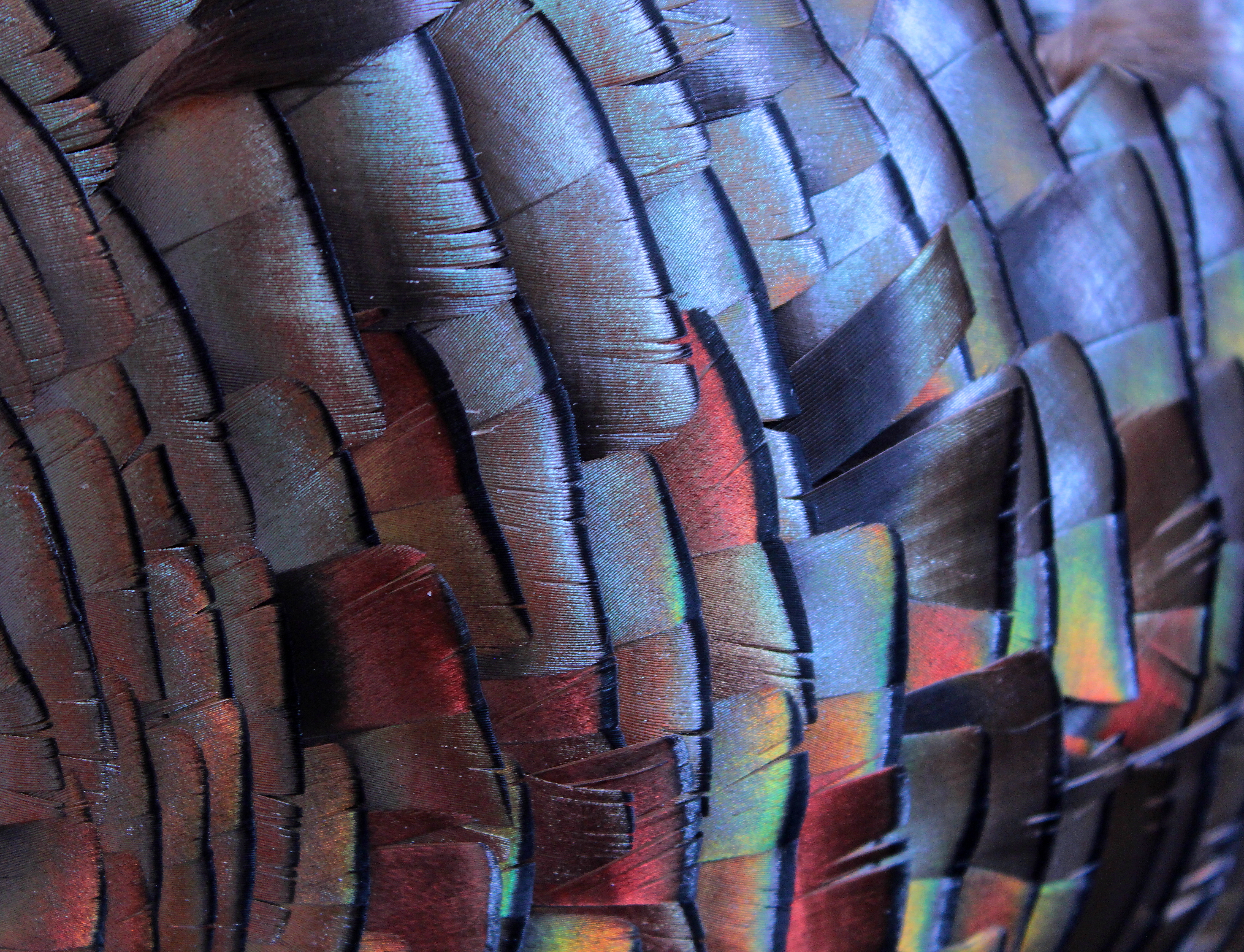
Here is another example of the naturally ornate: wild turkey feathers. These are on a stuffed bird at the Madison Arboretum. The structural iridescence of feathers is a fascinating thing. They are not pigmented. They are prismed (if that’s a word). And each branch of the hair-like parts is barbed so that it will knit back together with its neighbor to form a more solid surface. When birds preen, they are re-knitting their feather edges.
Of course, Nature is often showing off in flowers. Ornate, breathtaking, in color and detail that is microscopically fine, often symmetrical, and elaborately patterned. Here are a few examples: a lily and Queen Anne’s lace.
Nature is extravagant, abundant, opulent, and rich in so many ways. Oh, and it is free. Just appears without us having to do anything. In fact, it becomes even more fantastic when we leave it alone. What a wonderful world!
Weekly Photo Challenge: Life is a Treat
“We can’t wait to see what brings you happiness!” says Word Press.
I’ve enjoyed more than 50 years of sensual pleasures: tastes, smells, sounds, sights, and tactile delights of all kinds. I live in the wealthiest country in the world, so I’ve had my full share of opportunities to be treated to finely-produced, man-made “treats”. Consequently, they’ve become a bit dull. I find that what really makes me smile are all the unexpectedly lavish surprises of Nature I can discover right in front of me, for free, every day.
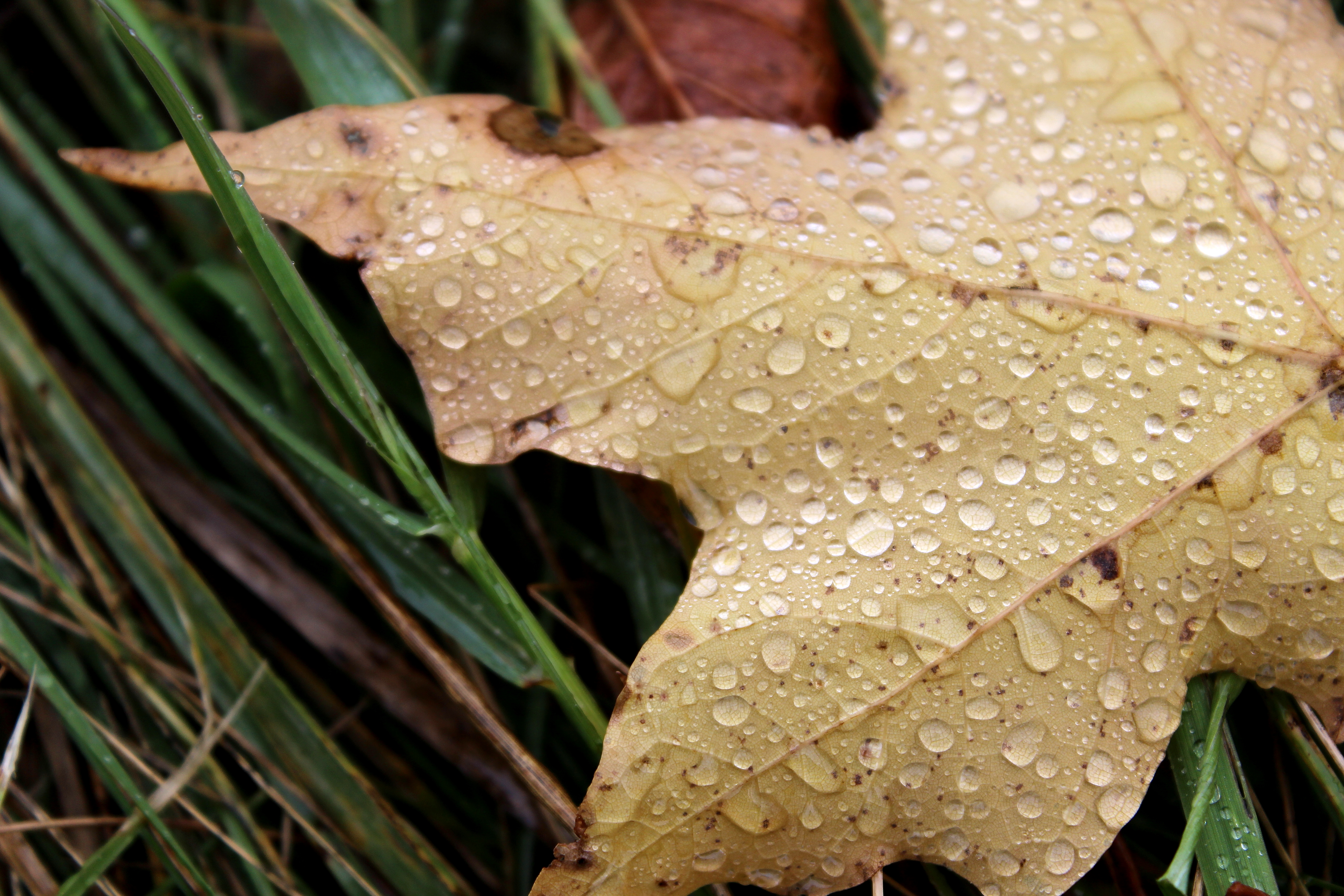
The best treats in life are free….born in freedom. Like Maple Drops.
And Puffball Mushroomallows.
And Teasel Pops.
It’s a world of Pure Imagination! If you want to view Paradise, simply look around and view it. (go ahead, click the link to see Gene Wilder in that scene from Willy Wonka that set me dreaming of chocolate for months as a kid!) Enjoy your treats this weekend.
Weekly Photo Challenge: Please Be Careful
Ever get “Assembly Required” furniture from IKEA? I remember we got 2 sets of loft beds with student desks beneath them for our youngest daughters who shared a room. There were so many screws and wooden pegs and brackets included. God forbid we leave one out and our child plunges to the floor amid splinters of wood!
“To keep every cog and wheel is the first precaution of intelligent tinkering.” – Aldo Leopold
Why are we not as careful with our planet as we are with our furniture? You see a bug looking at you the wrong way, and you squash it. You see a weed growing in the wrong place, and you pluck it. If you don’t think you’ll need it, you plow it under, rip it out, poison it or shoot it to extinction.
Many years ago, my son in his pre-school ignorance was walking a trail in the redwoods of California with his grandfather when they came upon a banana slug, bright yellow, slimy and directly in their path. “What is THAT?” he asked. “A banana slug,” replied Grandpa George. “How do you kill it?” was the next thing out of my son’s mouth. That little exchange was later reported to me by my father and has haunted me since the telling.
We are all ignorant of the full worth of Nature. Let us be careful to tread lightly and reverently.
Weekly Photo Challenge: (Extra)ordinary
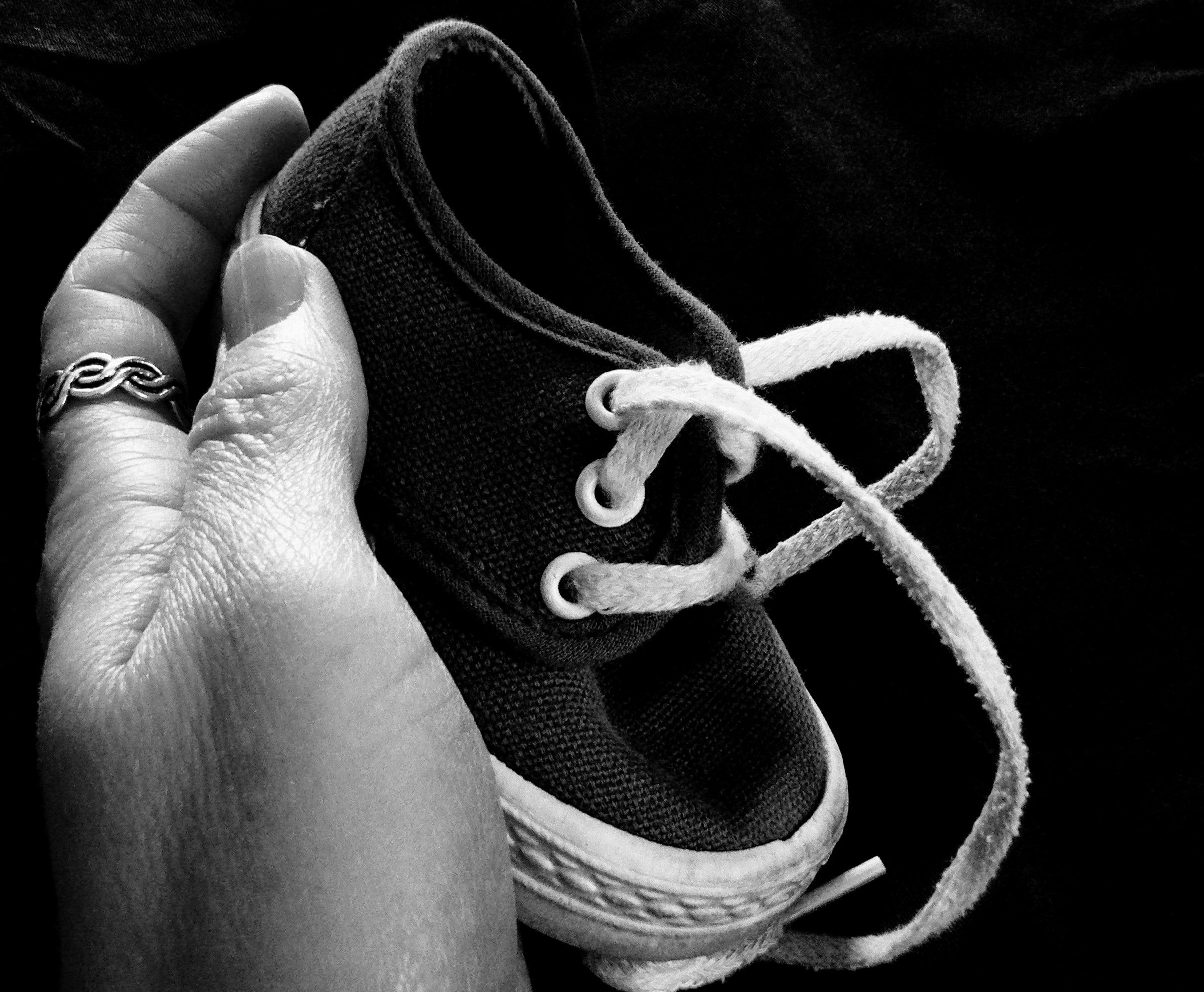
A beautiful everyday thing, for most people. Walking. Feet to the earth. And in the USA, most of us wear shoes. That, in itself, would be extraordinary for many inhabitants on the planet. It was extraordinary in this country 200 years ago. You walked to church barefoot, and put your shoes on when you got there, keeping them seldom worn so that you could pass them on to your younger siblings. When you had to go out in the chicken yard, you wore wooden shoes.
What do your everyday shoes look like? What do they say about you?
Weekly Photo Challenge: Happy Place on the Prairie
“Where do you go when you need to think? What do you do when you need to restore yourself, to ready yourself to take on the coming week with energy and verve? How do you get your sense of humor back? How do you recharge your groove?”
Ah, WordPress. If you only knew.
For twenty years, I was living in a northwest suburb of Chicago, raising 4 children, and partnering my terminally ill husband. Needless to say, I needed a “Happy Place” to go to…frequently, slowly, meditatively. Luckily, there was a prairie preserve just one block away. That became my spiritual sanctuary and furthered my relationship with the Earth beyond my childhood infatuation to a more mature and deep passion. In this place, I breathed, I prayed, I cried, and I began to write poetry in alarming profusion. And when my husband died, I came here to grieve.
I sold my home in Illinois and moved north to Wisconsin almost 5 years ago. I now work for a conservation foundation that has several natural prairie restoration projects in various stages of development. I find myself in Happy Places frequently, looking more closely at the community of life that reminds me on ever-deepening levels that I am alive, that all is well, and that happiness is always at hand.
Happy Place