Tag Archives: writing
Cultural Awareness
I am about to venture out into the retail world in search of shoes that might pass as reminiscent of the 1870s. Having come up empty yesterday at two Goodwill shops, I’m not sure if I will be successful. It’s interesting taking stock of what’s out there in the resale stores. This is the stuff that people give away…and other people buy. It’s not marketed; it’s not about status or brand. It’s about filling a need with something serviceable. I would do all my shopping at a resale place if I could. That’s probably why my kids call me “cheap”. I don’t get the whole “status and style” idea. I just want to get the job done. I’m not trying to fit into a competitive culture of consumerism. My “work outfit” for my new job will be a reproduction of 19th century pioneer clothing. My “work outfit” for my last job was jeans and a T-shirt with the latest musical production logo on it. I guess I have a different idea of dressing for success.
One of Steve’s favorite fables is The Emperor’s New Clothes. He often sees himself as the little boy at the side of the parade who looks on in bafflement at what everyone else is celebrating and asks, “Why are we doing this?” He sometimes talks about it as being the one who points out the elephant in the room, that glaring awkwardness that no one wants to mention. He’s not judgmental about it, he just wants to discuss it, bring it out into the open, make everyone aware of it. He’s not cynical or sarcastic, he’s genuinely curious. We don’t have a TV, but we do watch basketball games online that often include commercials. Those ads bring up a lot of questions. Why do we sell what we sell the way that we do? Why is sex and violence so prevalent? And stereotypes? Why do we think having a good time is so important? What do we really think is important? And why? Why? What is the Big Idea? Everything comes down to that level, that three year old inside who stands watching and asks, “Why?”
It’s a really good question, I think, and one that I have been trained not to ask. “Theirs not to reason why/ theirs but to do and die.” The military motto, President Bush’s command to go out and spend money rather than debate economic policy, my father’s and the Church’s instructions on being obedient…there are so many examples of hushing up that 3-year-old. I admit that there are times when it’s useful to forgo the philosophical and act decisively and immediately, but shouldn’t we return to the subject eventually and periodically to keep our motivation clear? There are members of society who are watchdogs to our conscience, in a way, and I very much respect them for their courage and thank them for the questions that I forget to ask. I am more characteristically concerned with “How?” I want to do things lovingly, primarily; efficiently, much of the time; and as correctly as possible. That may say a lot about how effective my indoctrination into Judeo-Christian thought was.
Intentionally asking both questions and fashioning a life around the answers we find deep in our experience is the focus of our Saturday Summit (what we call our “relationship discussions”). The poetry prompt I found today on NaPoWriMo’s site challenged me to write a hay(na)ku, which is a recent poetic invention. It’s simply 6 words in three lines of ascending (or descending) measure. One word, two words, three words (any number of syllables) or vice versa. We can link several together as well, we’re told. So, here is my hay(na)ku series and a few photos.
Why?
Keeps asking,
“What is important?”
How –
“Am I
A good person?”
Questions
Are for
Shaping my character.
How now, brown cow?
Why? Just…why?
Summoning the Sand Man
I am thinking about my oldest daughter today. She has been sick with a terrible cough, possibly pneumonia, and left a message on my phone yesterday afternoon saying, “I just needed some Mom.” Unfortunately, I haven’t been able to contact her since to get more information although I’ve left messages. These are those “Mom moments” that teach me how to manage anxiety. Her voice actually sounded better than the day before, I know she’s on antibiotics, so my brain can convince me that there’s little evidence that something catastrophic is happening. My imagination, however, cooks up a million scenarios that are “possible”. My spirit tells me that I live in this moment, not any imagined or borrowed moments from some other plane, and so I act in the present as best I can. Practicing living in peace with myself and the world, what I think I know and what I don’t know is an ongoing project. At this point in my life, I do not need added drama. Reality is exciting enough.
My daughter has always been open to engaging with lots of stimulus. Even as a toddler, she had a hard time shutting her brain off at the end of a day, relaxing and falling asleep. As a grad student, there are just so many exciting things to pursue, that I think she resists shutting down to re-charge. She’s a fascinatingly energetic person to talk to, but she has a hard time slowing down. No wonder she’s succumbed to illness, right? I checked out the poetry prompt from NaPoWriMo this morning, and they suggested writing a lullaby. Perfect! I know just who to write one for! I am hoping her phone is turned off because she’s resting, sleeping, meditating and healing. When she was a little girl, I used to do a kind of guided meditation that I made up in order to get her to relax. I had her visualize floating like a leaf on the surface of a slow-moving brook. So, here’s a lullaby for Susan and pictures of the Sand Cave at Wyalusing State Park. I apologize if this makes anyone sleepy in the middle of their work day!
Lullaby for Susan
Float gently, float slowly, my baby, my dear
Like a leaf on the water, no burdens to bear
Gaze skyward to heaven while stars gather there
Like a leaf on the water, no burdens to bear
With mermaid hair flowing, glide slowly along
While Mama’s beside you, she sings this sweet song
Go slowly, breathe deeply, my child; nothing’s wrong
Your Mama’s beside you, she sings this sweet song
You’ve Heard of Purple Prose….
…well, today I present: Purple Poetry. The prompt for today’s National Poetry Writing Month post invites us to compose a piece based on a color. I have to admit that my first response was to think of the goofy beatnik poetry in Ken Nordine’s Colors album, which Steve has. “Yellow was in trouble…” and “Green can be a problem..” If you’ve never heard these, you must. They’re just too much fun!
So here’s my own word association dream on The Color Purple (no, don’t think of Alice Walker):
Twisting tendrils pulsing poison
Bloody Portuguese placenta
birth marks and umbilicus
bruises rhyme with purple wine
capillary coupling
People eaters robed in splendor
Atmospheric skies at sunset
mussels in deep, hazy rain
eggplant mountains majesty
purple cows and penitents
Pimpernel-ish violet babies
Lilac lavender suspension
(dot, dot, dot) of disbelief.
And for the shutterbugs, some photos, too!
I’m Bein’ Schooled
There’s always more to learn, and I want to be a life-long learner. Today, it’s history, science, art and poetry!
In History, my big assignment is to learn about 19th century life in Wisconsin. That’s right, friends; we got the job! Steve and I will be working at Old World Wisconsin, a living history museum in the town of Eagle. We will be costumed interpreter/educators. Steve will be in the Wagon Shop on Tues/Wed/Sat, and I will be in the 1870s German Schottler homestead on Tues/Thurs and in the 1870s St. Peter’s Church on Sat/Sun. Training starts on April 16. I’m sure I’ll be posting more details and photos on that subject in the coming weeks. The season runs through October. Thanks for all your encouragement!
We went on a Science field trip yesterday. My birthday girl, Becca, and the birthday boy, Josh, requested a visit to the Museum of Science and Industry in Chicago as their gift. I haven’t taken them there since they were quite little, and now, they are in their 20s. My oldest, who is on Spring Break from grad school, jumped at the chance to tag along. I remember visiting with my family as a child in the 70s. It has changed a lot in some ways, not at all in others. My perception has probably changed the most. As a child, I didn’t have any ethical questions about industry. I certainly do now. Like, why is it so great to be able to genetically manipulate corn plants so that they have pesticides in their DNA? Does that make them tastier or healthier? Why is it so great to be using larger and larger tracts of land to grow only one crop to primarily feed one type of animal that only some humans eat? Things like that. After seeing the John Deere side of farming, I’m all the more eager to learn about pioneer models. On the fun side, how many short Italian Galasso kids will fit in the wheel of a tractor? I counted three:
Two old favorites in the museum harken back to the days I remember: the chick hatchery and the human body models.

The March of Dimes hall of birth defects is defunct, but these are still in the stairwell. A brand new body exhibit takes up the upper balcony.
I’m counting the photos as Art, so now it’s on to Poetry. It’s day #4 of the NaPoWriMo, and the challenge is to write an epithalamium. Yup, I had to look it up. It’s a poem celebrating a wedding, basically. It’s traditionally written for the bride as she goes to her wedding chamber. It can even be sung…think small cherubic boys and girls throwing rose petals and singing about love, happiness, fertility and all that. I actually envisioned writing to my 21-year old self and came up with this:
Epithalamium: To Have and To Hold
What will you have, young bride? And what will you hold?
That which spreads before you on the long damask board
Goes beyond the pretty souvenirs, traditional and fecund.
Ecru or ivory, embossed or engraved – this is the chaff.
The seeds in the wind are the weightier fare.
The blossoms tossed up are the days of your youth.
They fall to grasping hands, twist apart and scatter,
And what will you hold?
Planting your preference in calendar rows,
There grow the roots of a living, a life
With offshoots and upsprouts, the tender
Begging for tending, pulling on your exhalations,
Fastening to your breast, having as you give
A tug-of-love like war.
And what will you hold?
In the night beneath dark sheets,
In the crowded arena,
In the frightful, bright hallway,
In hushed canyons of stone,
In the places of secret or public adventure,
This man. Until you are parted by death.
Then what will you hold?
An open space, the shape of him,
The great restraint that won’t cave in…
Until you are parted as well.
School’s out. Time to run outside and play!
Tuned In
NaPoWriMo Day #3
Today’s prompt invited me to look up the #1 pop song on my birthday and write a poem inspired by that song. I could also look up another significant date and use the song associated with that date instead. I tried my birthday, and then the day that my husband and I always celebrated as the day of our first kiss. I have to say that the first option won out. Poems I have written inspired by my love for my husband will have to wait. Especially since I am posting this in advance (courtesy the techno savvy of my friend Helen) because I am taking my kids to the Museum of Science and Industry for their birthdays today…their 23rd and 25th birthdays (kids never outgrow museums!). I want to give my husband and the poetry he inspires a bit more time.
The number one hit song on the day that I was born was…..”The Locomotion” by Little Eva.
I had an immediate association. Not with the song, specifically. With a train. Steve has taken to describing my typical M.O. as “the freight train”. It has to do with a very focused, linear way of acting. I get into a task-oriented mode when I’m trying to get something accomplished. I do not like to get side-tracked when I am operating like that. I like to streamline and simplify and do one thing after another until the whole bloody thing is finished. God help you if you get in my way. That’s what cow catchers are for. It can be an effective way of doing things. Steve, however, likes to be “light on his feet”, like a river, like a school of fish, shaped by movement and fluidity. There are advantages to that, too. Anyway, it’s one of our points of reference when discussing our differences and trying to achieve compromise.
That’s the back story. Here’s the poem:
Was I born to do this straight-track motion
Or was I just trained?
Was chugging along my very first notion?
Was it always ingrained?
It’s not much of a dance.
It’s not fluid with grace.
There’s not much of a chance
Of a partner to face
When we’re all in a line
Going forward full speed.
Someone’s always behind;
Someone’s always the lead.
So “ev’rybody’s doing it”,
And that may be true.
But, c’mon baby, are you sure it’s for you?
I think this is my moment to jump off the track.
And, no, I’m not asking for my money back.
Try a Triolet
Day #2 of NaPoWriMo today! 
I am learning a lot. The prompt for today is to write a “triolet”, which is an 8 line poem where lines 1, 4 & 7 are identical and lines 2 & 8 are identical. The rhyme scheme goes like this: ABaAabAB. Having never studied poetry, this is all new to me and fascinating to engage. What do you do with a structure? Play with it for a while, then take it apart and do something else, like with toy blocks? There’s no “right” way to play, is there? I think not. So I go ahead and see what happens.
I was thinking about the repetitive nature of this particular pattern, and it reminded me of a conversation I had with Steve on a recent neighborhood walk. We were talking about getting old, how older people spend their time until they die, the change in energy and the prelude to death. My husband was technically “working” the day before he died, although by that time, he was working from home at the dining room table, from a laptop equipped with Zoom Text that made each letter on the screen about 4 inches high. My father, in the advanced stages of Alzheimer’s, didn’t move or eat or do anything on his own. He eventually succumbed to pneumonia after he lost the ability to swallow food without aspirating it. My grandmother died in a nursing home rather uneventfully. She had lived with us for several years before moving into a place that could care for her more comprehensively. She spent her days watching TV in her room and would come to the dinner table and try to make conversation, often beginning with “They say….” My father always insisted she cite her sources. “Who says? Where did you hear that?”
Our concepts of dying are so complicated and irrational. What makes “sense” economically often offends morally. Questions, decisions, choices, preferences and emotions arise. What do we do with them? How do we communicate our wishes for life and death? To whom? I don’t have any definite answers. I hope I get to communicate what’s important to me to someone who is listening. I hope my views are respected. What that might look like, I cannot tell. Steve mentioned casually at breakfast that he’d like Schubert’s Octet played at his funeral. I asked him who he thought might be there. He couldn’t even say. I guess what matters is that I heard him when he said it.
Triolet for My Grandmother
There was nothing good on TV that day.
She turned her face toward the wall and died.
The years had slipped by while she wasted away.
There was nothing good on TV that day.
She’d listened and heard what they had to say.
They might have been right, but often they lied.
There was nothing good on TV that day.
She turned her face toward the wall and died.
Intimacy
How well do you know me? How well do I know myself? How well can any two people know each other, accept each other, celebrate each other, or be open and honest with each other? Do you really want to be that intimate with someone? It sounds like a lot of work. And there are some things that might not be pleasant to know. Even about myself. Maybe especially about myself. I want to present the pleasing face. I’ve worked on being able to do that. Is that not me? Are you sure you prefer the genuine me over that pleasing mask? Why?
My partner Steve and I go around and round about this. He maintains that he is honestly working toward a genuine intimacy that is non-judgmental and completely open. Whether that’s attainable is another question, rather like a Zen koan. I find that my brain is hard-wired to make a million comparisons, a million analytical assessments, a million judgments all in a short time…about everything. I turn that brain on myself all the time, without being terribly conscious about it. I want to practice being aware of those thoughts and communicate them honestly to Steve. He promises to practice accepting, appreciating, and honoring them, holding a safe space open for me to continue my practice. What might that look like?
We go on a walk together. His long legs want to stretch; I can’t keep up. I assess myself and feel slow and out of shape. I begin to feel like I am a hindrance. I blame myself. I blame Steve. I decide to communicate. “I want to walk more slowly and take pictures.” “I want to keep up a good pace and get more exercise.” “Let’s just do what we want and meet up later.” Sounds reasonable.
There he goes. The Walking Man walks. James Taylor sings in my head. I wander toward the river, away from the parkway, the bicyclists, the dog-walkers, the joggers, the strollers and baby strollers. On a sunny Sunday, the village moves outside. I find a spot by the river’s edge, alone with my camera. I watch the water glide over rocks, reflecting light. What do I reflect? Is that me? Is it genuine? Is it a costume, an act? Maybe I am everything — change and movement. Maybe communicating is so important because this change and movement is constant. You will never know me if you’re thinking about what I said a minute ago. You can never step in the same river twice.
If I take the energy I might have spent on “formatting” myself for presentation and apply it to communicating myself “as is”, will I get closer to knowing my true self?
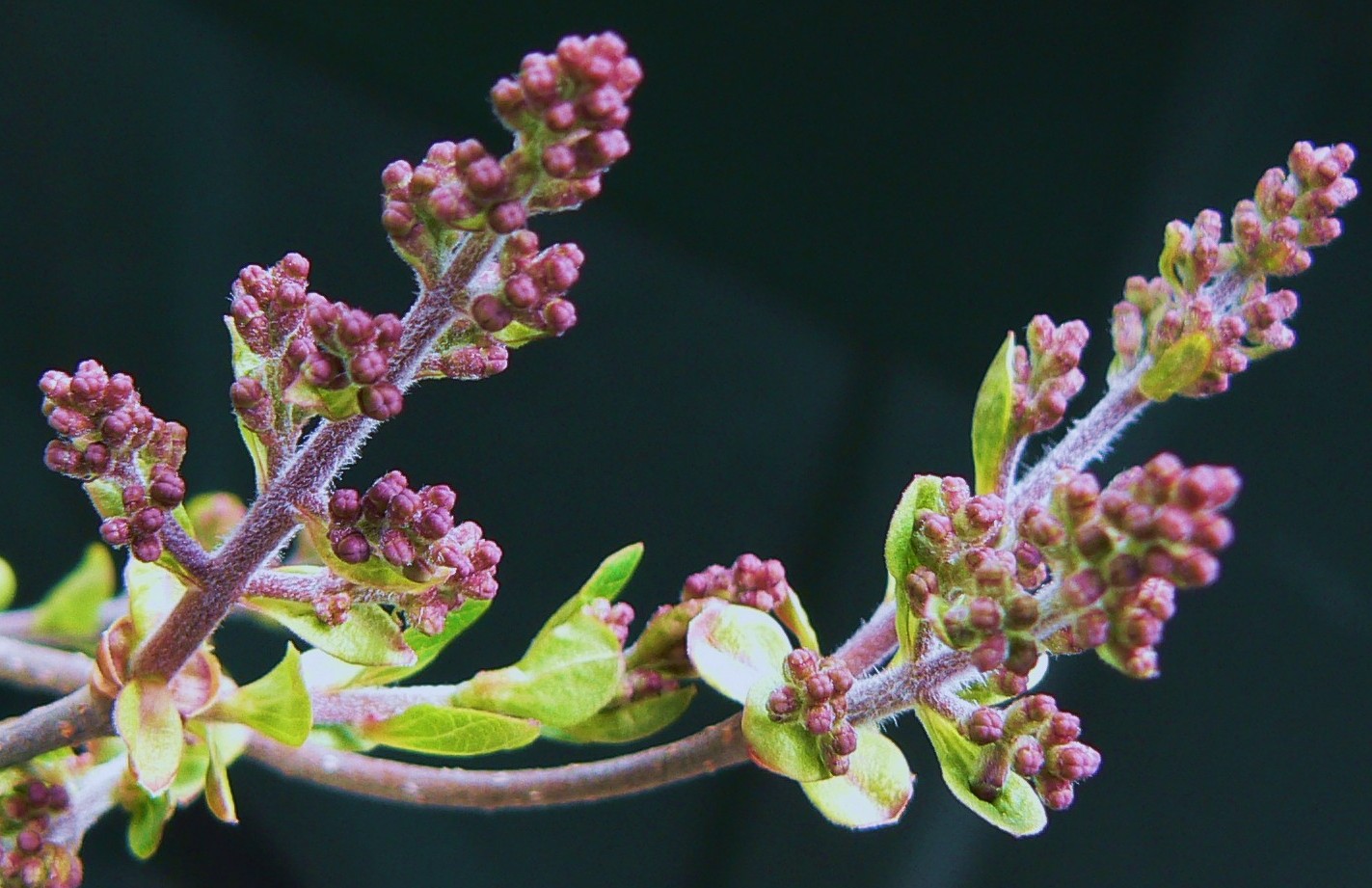
I am still learning how to be what I am. Just that has taken half a century almost. This conscious brain is cumbersome, manipulated early by social constructs and patterns, weighty now with baggage. The simple forming and blossoming of a bud reminds me that life can be much freer than I make it.
I dreamed last night that I could fly. It was like swimming in air, gliding where I wanted to go, my feet never touching the ground. I have had this dream my whole life. I’ve always known how to do that, effortlessly. But only in my sleep.
Have Some Divinity
The premise is this: for each day in December, instead of counting down on an Advent calendar, I’m counting the free gifts we all get every day. Today’s gift is divinity, but I don’t mean the candy. I mean The Divine, The Sacred, The Holy and experiences of them. Don’t we all have the opportunity to receive that every day? If you look for it, will you find it? I think so.
So, what is sacred? How do you recognize the divine and holy? In art, there’s always a halo or a sunbeam to give you a clue. What about here on earth?
‘Namaste’ is the Sanskrit greeting recognizing the existence of another person and the divine spark in that person, with the hands pressed together in front of the heart chakra. I think the divine spark exists in every living thing as the breath of life. Every encounter with a living thing is an experience of the divine. We hardly ever act like that is true, however. But we could. Native Americans and many African tribes have hunting rituals that celebrate the sacred exchange of life. The hunted animal is divine, sacrificing itself for the life of the hunter, and the hunter shows a holy appreciation. Often, when I look at macro photography of living things, flower stamens, insects, mosses, I am compelled to worship the divine in the detail. Life is sacred and beautiful. Looking closely and deeply is a way to practice recognizing that.
In a dualistic world view, the mundane and the divine are polar opposites. One is worldly, one is sacred. If this world were imbued with holiness, if God became incarnate and entered flesh in this world, those opposites would run together like watercolors. Many cultures believe this is the truth about life. The waters under the firmament and the waters above the firmament are separated in one telling of the creation story, but the Spirit of God was moving over all of the waters from the very beginning, even in that story. The understanding that divinity is everywhere has inspired people all over the globe for centuries. This place we inhabit is special; it’s valuable. It’s all holy. This is the beginning of respect for the Universe and everything in it. Somewhere in Western history, that idea lost its power. Earth and everything in it became base and fallen. Good turned to bad and life turned to death. I’m not sure if that new idea has been very helpful. I rather think it hasn’t. And I don’t think it has to be that way. It’s an idea, after all. So if it’s not a helpful idea, why support it? How would you rather live? In a fallen world or in a world where the sacred and divine can be found everywhere? Just wondering out loud. I’m not saying that one idea is right and the other wrong. The glass is neither half full nor half empty. It’s a glass, and there’s water in it. The rest is conceptual. Why argue? Choose how to live with the glass and the water. As for me and my house, “I choose happy.” (One of Jim’s conclusive statements.)
I hope this gives you something to ponder for today. If you like, you can add a scene of Edmund Pevensie in Narnia being asked by the White Witch what he craves. “It is dull, Son of Adam, to drink without eating. What would you like best to eat?” “Turkish Delight, please your Majesty!” he responds. What if he had said, “Divinity”? Same story, nuanced. I would like to taste the sacred in this world, and I believe it’s here.
Who Could Ask For Anything More?
Companions. The gift of friendship, togetherness, to know we’re not alone.
Steve brought me breakfast in bed this morning. I am having one of my cyclical let-downs, when I have wearied myself in contending with life and death and love and loss. We were discussing E.M. Forster’s novel “A Room With A View” when this came on. Hormones, of course, have everything to do with it as well. Lucy Honeychurch gets “peevish” when she plays Beethoven, and I get “peevish” reading Mr. Emerson’s speech on life and “muddles”. Steve gets Slavic and moody listening to Mahler, or perhaps he listens to Mahler when he feels moody and Slavic. We are beginning to know each other’s moods better and better. And I really believe we are lucky, blessed, in a state of grace in that we accept those moods and are not threatened by the most peculiar of them. That’s why he’s my best friend.
I’ve never had a lot of friends, and all of my best friends have been male. Maybe that’s because I grew up with 3 older sisters. I am a little suspicious of females. I have a feeling it’s because I compare myself to them far too much. A sly competitiveness creeps in and makes me uneasy. I pull away. With guys, I don’t compare. I can be ‘other’ and so can he. It seems simpler. It’s a mindset that should apply to females as well except for my own perverse insistence that it can’t. Growing up, I played with a boy who was a year younger than I and lived two doors down. We were best friends for 9 years. We played in the woods across the street. We played house and wedding, and he was always the bride. He had older step-sisters who kept being married off, and I think he found that really enchanting. I suspect he grew up gay, actually. I Googled him and found out a few pieces of information that might support that assumption. But it’s just an assumption. I know for a fact that at least one of my high school boyfriends came out after we broke up. What does that matter? I suppose I enjoy creative, artistic, sensitive male companionship. Jim was definitely my best friend as well as my husband, and that description could fit him, too.
Friends to suffer with your moods, enjoy the stuff of life, travel with you through adventures of all kinds. Old friends, new friends. Situational companions. Steve likes to imagine how he’d be if he were stuck in an elevator with a few people for hours. He would definitely skip the small talk about the predicament and enjoy a captive opportunity to get to know them really well. He’s kind of intense like that. Scares some people. Yesterday, I saw a news video about a policeman who crawled under a bus to hold the hand of a 24 year old woman who was run over and pinned. The photo of them together on the asphalt and his interview afterward just filled my heart. I know what it’s like to be so afraid and to just cling to another person for the reminder that we are never alone in our fears. We suffer together. We are interconnected. And if anything is God, it is there as well. Presence. Abiding. Being with each other. It is the ultimate ‘yes’ of living. Which brings me back to Forster and Mr. Emerson. “In his ordinary voice, so that she scarcely realized he was quoting poetry, he said:
“‘From far, from eve and morning/ And yon twelve-winded sky/ The stuff of life to knit me/ Blew hither: here am I’
“George and I both know this, but why does it distress him? We know that we come from the winds, and that we shall return to them; that all life is perhaps a knot, a tangle, a blemish in the eternal smoothness. But why should this make us unhappy? Let us rather love one another and work and rejoice. I don’t believe in this world sorrow.” Miss Honeychurch assented. “Then make my boy think like us. Make him realize that by the side of the everlasting Why there is a Yes — a transitory Yes if you like, but a Yes.”
Ah, Yes. To love one another and work and rejoice. Companioned. Who could ask for anything more?