

Weekly Photo Challenge: Gathering My Group Shots


I do notice some predominant elements at gatherings with my nearest and dearest: big smiles, big hugs, goofiness and a glass of something. Looking forward to having more of these…in this year and in the next.
Mankind: The Modern Mystery and Myth
This piece is featured in this month’s issue of the BeZine. For a link to the complete issue, click here.
The hero’s journey is a deeply challenging topic for an amateur writer and philosopher. What a great invitation to read and research, to tie strands together and squint to see a pattern! Typically, I submit essays to this forum, as I am much more comfortable in prose. This time, however, I decided that an essay on this topic would be way too ambitious. What I have is Swiss cheese and spiderwebs, full of holes and only loosely connected, so I thought a poem would be more appropriate. However, I will preface this one with a bibliography. I began with the final chapter of Joseph Campbell’s The Hero With A Thousand Faces, where I read this:
“Today all of these mysteries [“the great pantomime of the sacred moon-king, the sacred sun-king, the hieratic, planetary state, and the symbolic festivals of the world-regulating spheres”] have lost their force; their symbols no longer interest our psyche. The notion of a cosmic law, which all existence serves and to which man himself must bend, has long since passed through the preliminary mystical stages represented in the old astrology, and is now simply accepted in mechanical terms as a matter of course. The descent of the Occidental science from the the heavens to the earth (from 17th century astronomy to 19th century biology), and their concentration today, at last, on man himself (in 20th century anthropology and psychology), mark the path of a prodigious transfer of the focal point of human wonder. Not the animal world, not the plant world, not the miracle of the spheres, but man himself is now the crucial mystery. Man is that alien presence with whom the force of egoism must come to terms, through whom the ego is to be reformed. Man, understood however not as “I” but as “Thou”: for the ideals and temporal institutions of no tribe, race, continent, social class, or century, can be the measure of the inexhaustible and multifariously wonderful divine existence that is the life in all of us.” (emphasis mine)
That reading led me to recall lectures I heard from Dave Foreman at the Wilderness 50 conference. His essay on “The Anthropocene and Ozymandius” can be found in several online posts. From there, I considered Nietzsche’s Übermensch from Also Sprach Zarathustra. And always underlying my thoughts is my admiration for Buddhist practice and The Middle Way. So, with all that as the primordial soup, this emerged:
Homo sapiens sapiens
Oh most separate, separating
Anthropocene anthropocentric
The Egoid egotist
Ozymandius, great Wizard of Man
Eyes on screen
Fingertips fiddling
Journey who will
That Über undertaking
Condescend to transcend
Dare to die in darkness,
Awake in wilderness
At one, atoned
In mystic Middle
Cosmic consumption
Preposterous presumption
Unsustainable usurpation
Deplorable devastation
Parading Nero
Begs a humbler hero
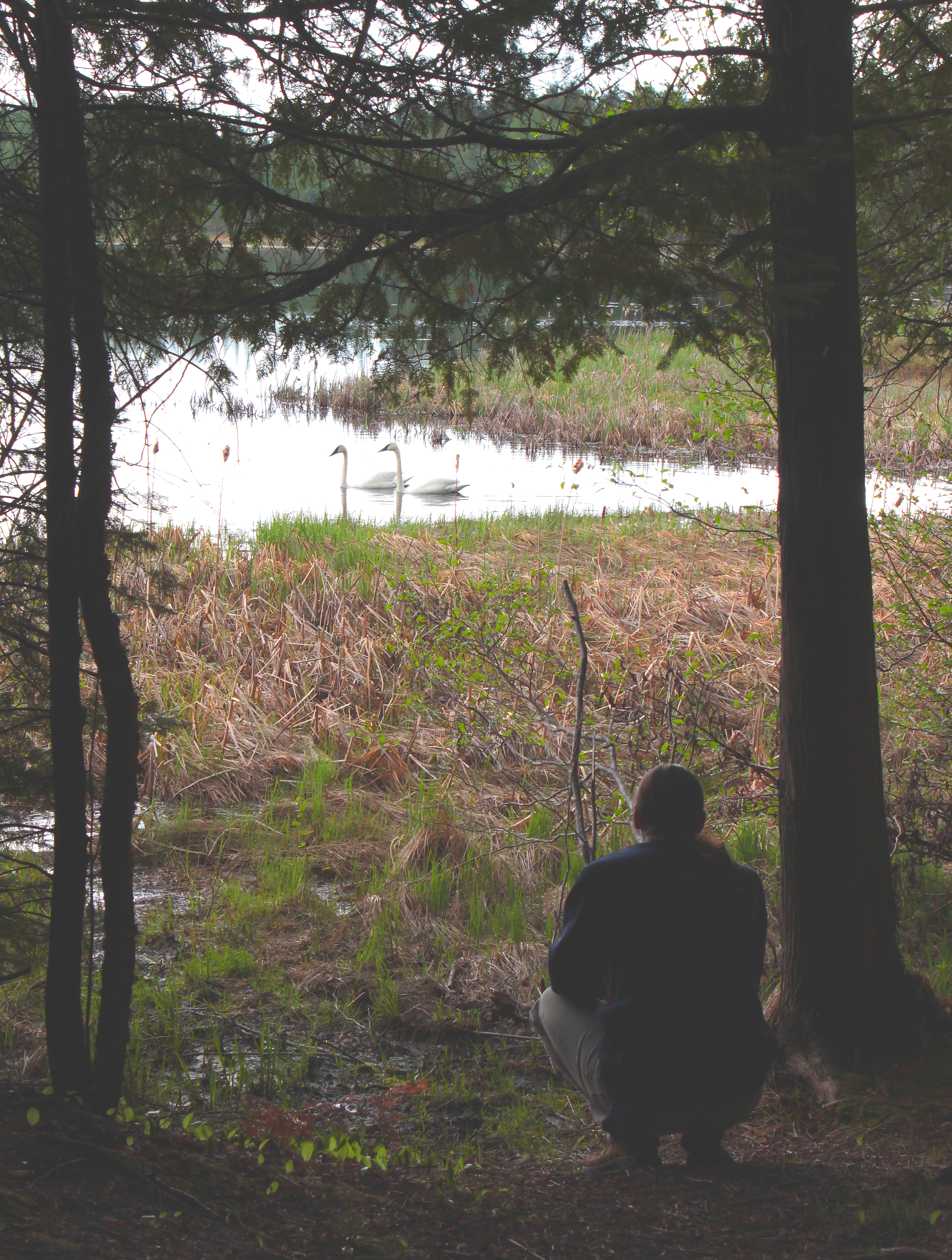
© 2015 – poem, essay and photograph, copyright Priscilla Galasso. All rights reserved.
Weekly Photo Challenge: Oops! Fun Fails
Walking along the Ice Age Trail in June can take you along the tops of glacial formations like kames and eskers and drumlins. It can also take you through kettles and boggy meadows. Wisconsin in June is often wet. We are blessed with abundant fresh water in the Great Lakes region. It’s a glorious thing to watch the greening of the landscape each year because of all that water. Things certainly bust out all over here. The tendency to misjudge the depth of water on the path is probably a pretty common “oops” for many hikers. But what a delight to pull off your soggy boots and socks and run barefoot in the new grass!

Weekly Photo Challenge: Eye Spy the Green Fire
Headlines today are full of accounts of killing. Too many people are spying through cross-hairs; that’s very scary to me. Looking into the eye of life – seeing living, sentient beings for what they are – is a sacred experience, I believe. Here is an amazing written account of that, by Aldo Leopold as told in “Killing the Wolf” from A Sand County Almanac, and Sketches Here and There:
We were eating lunch on a high rimrock, at the foot of which a turbulent river elbowed its way. We saw what we thought was a doe fording the torrent, her breast awash in white water. When she climbed the bank toward us and shook out her tail, we realized our error: it was a wolf. A half-dozen others, evidently grown pups, sprang from the willows and all joined in a welcoming melee of wagging tails and playful maulings. What was literally a pile of wolves writhed and tumbled in the center of an open flat at the foot of our rimrock.
In those days we had never heard of passing up a chance to kill a wolf. In a second we were pumping lead into the pack, but with more excitement than accuracy; how to aim a steep downhill shot is always confusing. When our rifles were empty, the old wolf was down, and a pup was dragging a leg into impassable side-rocks.
We reached the old wolf in time to watch a fierce green fire dying in her eyes. I realized then, and have known ever since, that there was something new to me in those eyes—something known only to her and to the mountain. I was young then, and full of trigger-itch; I thought that because fewer wolves meant more deer, that no wolves would mean hunters’ paradise. But after seeing the green fire die, I sensed that neither the wolf nor the mountain agreed with such a view.
May all beings be respected. May the green fire be rekindled in our time.


Eye Spy
Weekly Photo Challenge: Transition, part 2
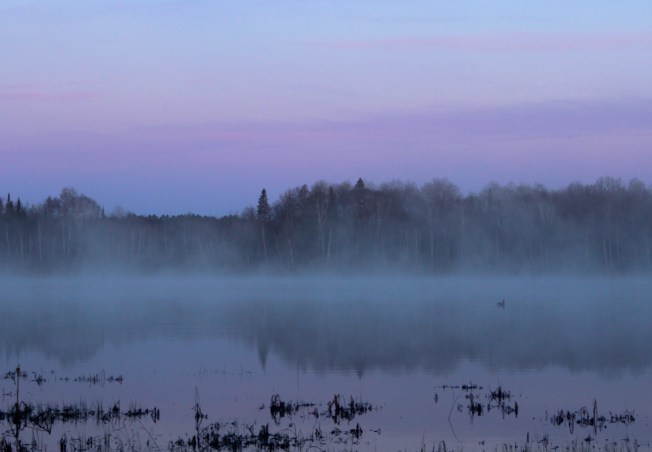 Dawn in the Whisker Lake Wilderness
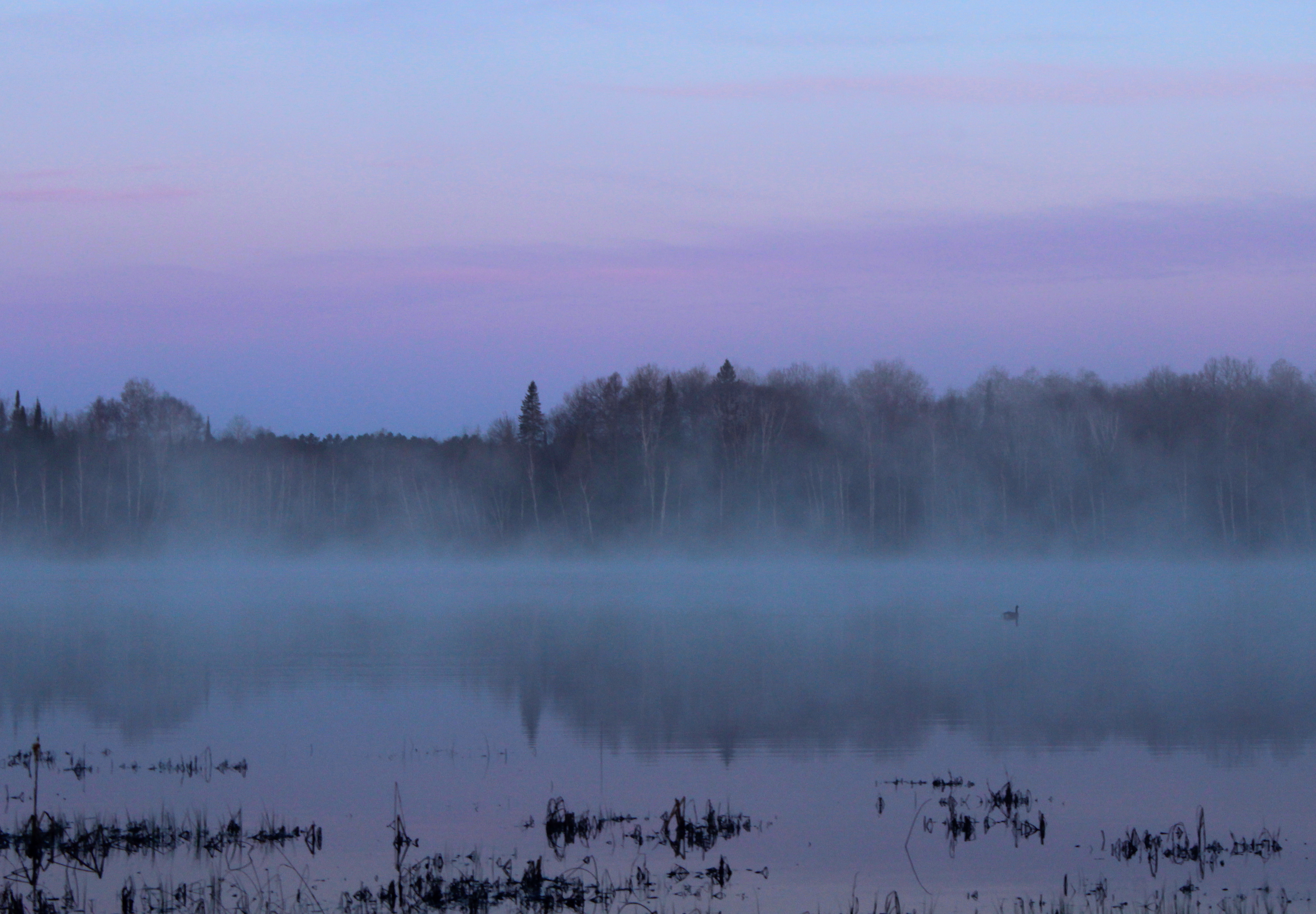
The “fringe” areas of the wild, where forest meets water, where sun meets horizon, are the most dynamic, teeming with diverse life and activity. In the solid middle of the night, or noon-day, it is quieter. The excitement of these transitional spaces is palpable. I rise at dawn to greet the sun with the birds and the frogs and the porcupine, rummaging in the leaves. I am thrilled by the feeling of life and change and movement. My eyes and ears and heart are open to what is happening. NOW is a transition, a flowing joy.
Weekly Photo Challenge: Transition
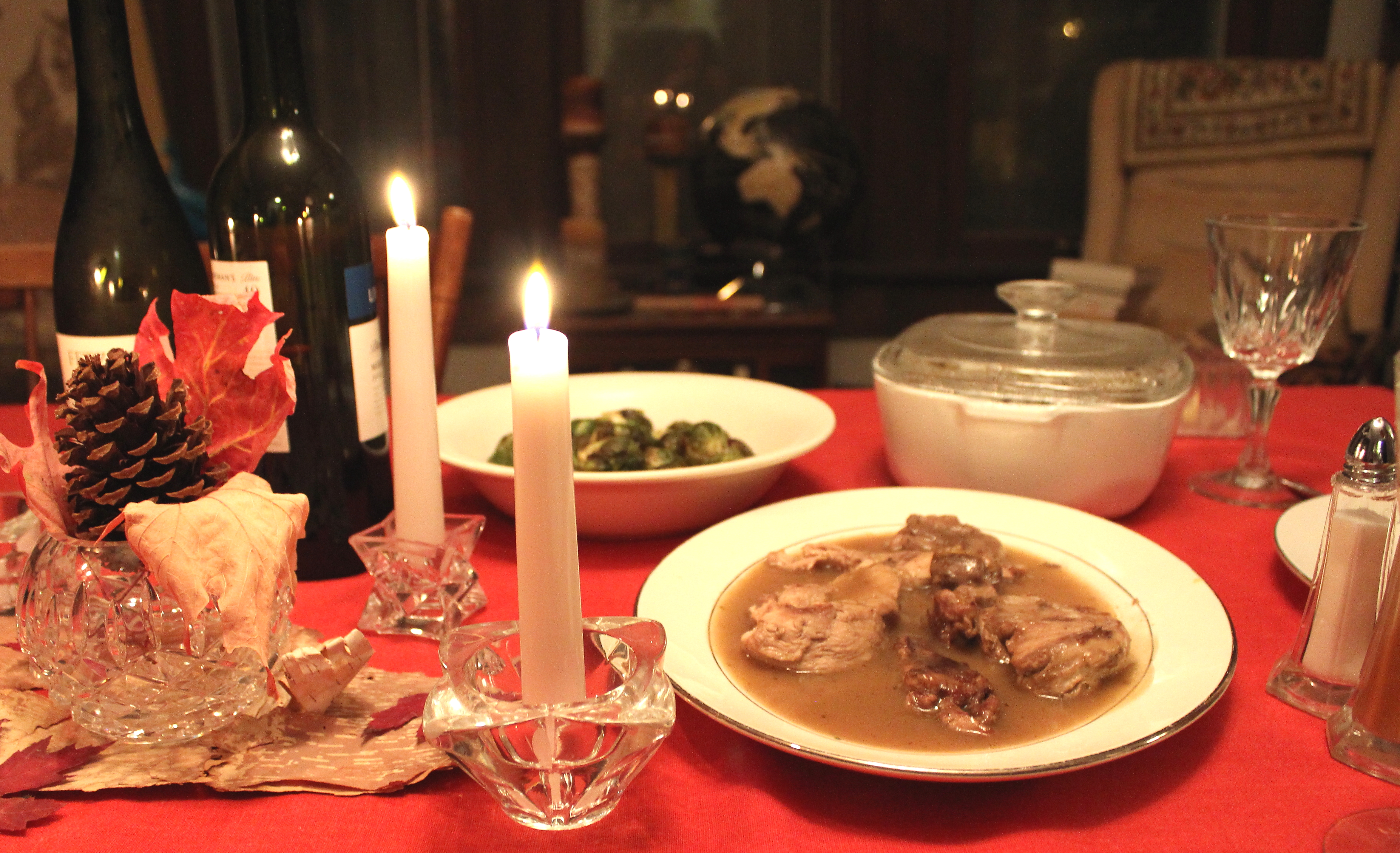
Moving a 20.5 lb turkey, already cooked, from my house to my son’s house 116 miles away. Hoping the bird doesn’t suffer too much in transition. I’m too involved in this project to post new photos, so here’s one of the bird we dined on last night ‘a deux’ – a pheasant courtesy my boss and his bird dog, Bhodi.
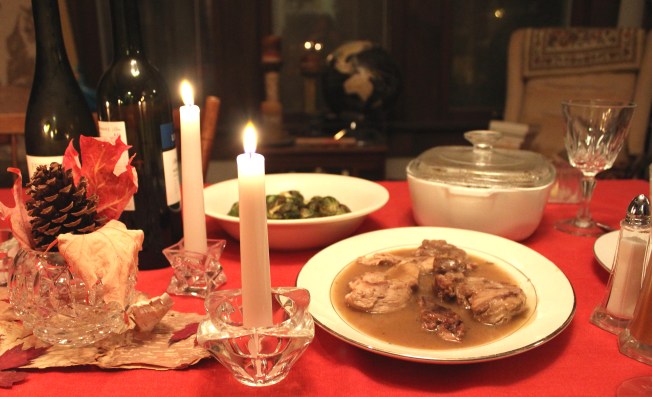 May your attitude of gratitude bring you joy, today and every day!
Weekly Photo Challenge: …and Baby Makes Three
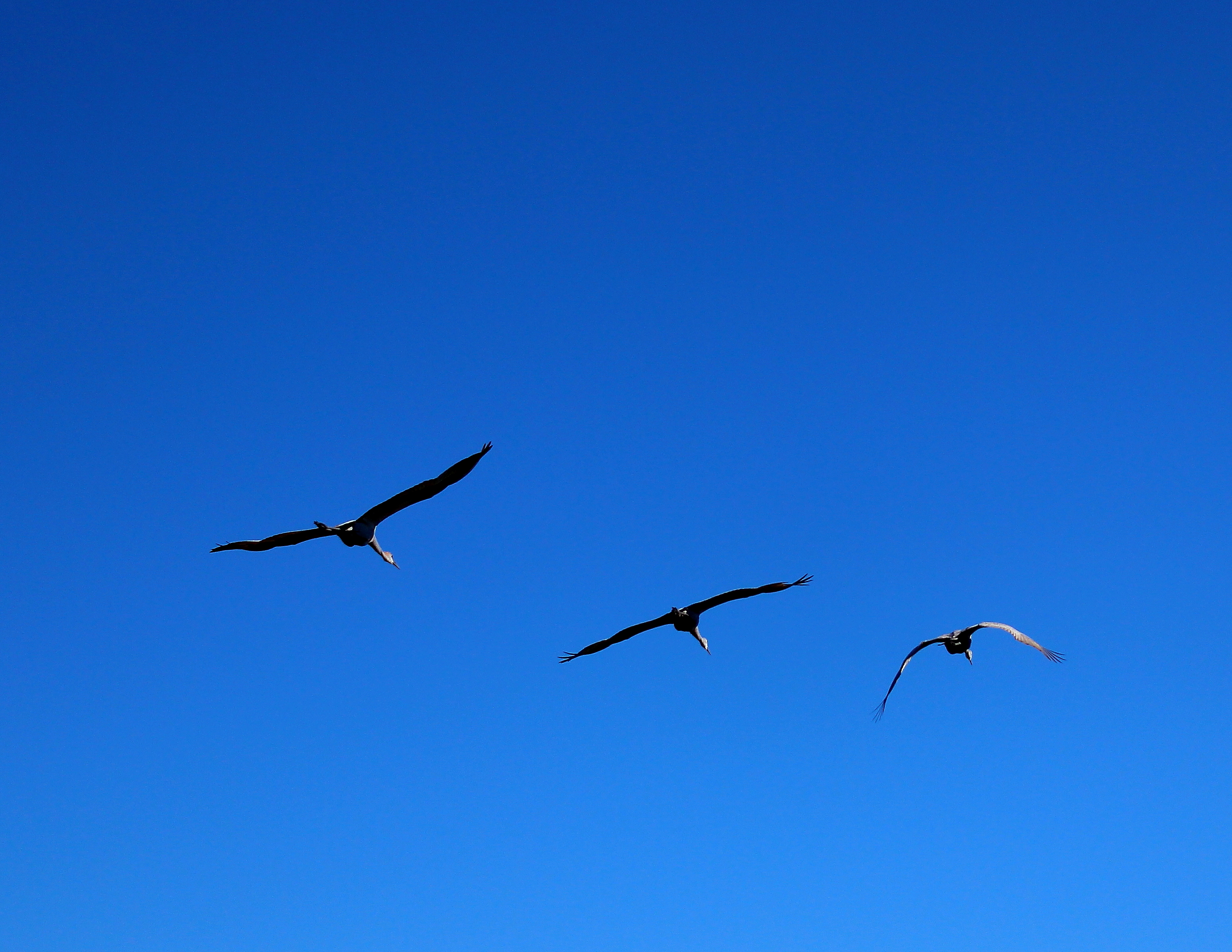
I had only just bought myself my first digital camera for my 50th birthday 8 days before I went hiking at Lapham Peak State Park and this family of sandhill cranes flew directly overhead. I knew it would be a long shot that I had all the settings on it correctly programmed, but I snapped away in hope. There they are…

…and there they go….
 Of course, three is a magic number. We all learned that from Schoolhouse Rock, didn’t we?


Trio
Reduce, Reuse, Recycle, Refuse
We are heading into the biggest retail season of the year, so I want to take this opportunity to invite you to consider mindfully and gracefully your relationship to….stuff. How do your buying habits impact the planet? Where do you shop? Where do the businesses you support get their resources? What do you do with stuff you don’t want anymore? How do you share what you have?

The resources that are expended on the manufacture, trade and transportation of goods on a global scale are staggering and crippling for our planet. It’s hard to imagine the impact that one shopper has in the whole of that web, but to make ethical and moral choices is the responsibility and joy of citizenry on Earth. You get to live out your values each day. That is the difference you make.
Now, I recognize that the urge to buy things can be deeply entrenched in complex psychological motivators, and I’m not about to claim any authoritative understanding of that. I just know that I don’t have a “shopper’s personality”. I don’t get excited about buying things or receiving material gifts. (This was an enigma to my husband, may he rest in peace, who really enjoyed giving me presents.) I do enjoy using something up completely and never replacing it if possible, finding new ways to use stuff that’s already around, and finding other people who can enjoy stuff that I no longer need.

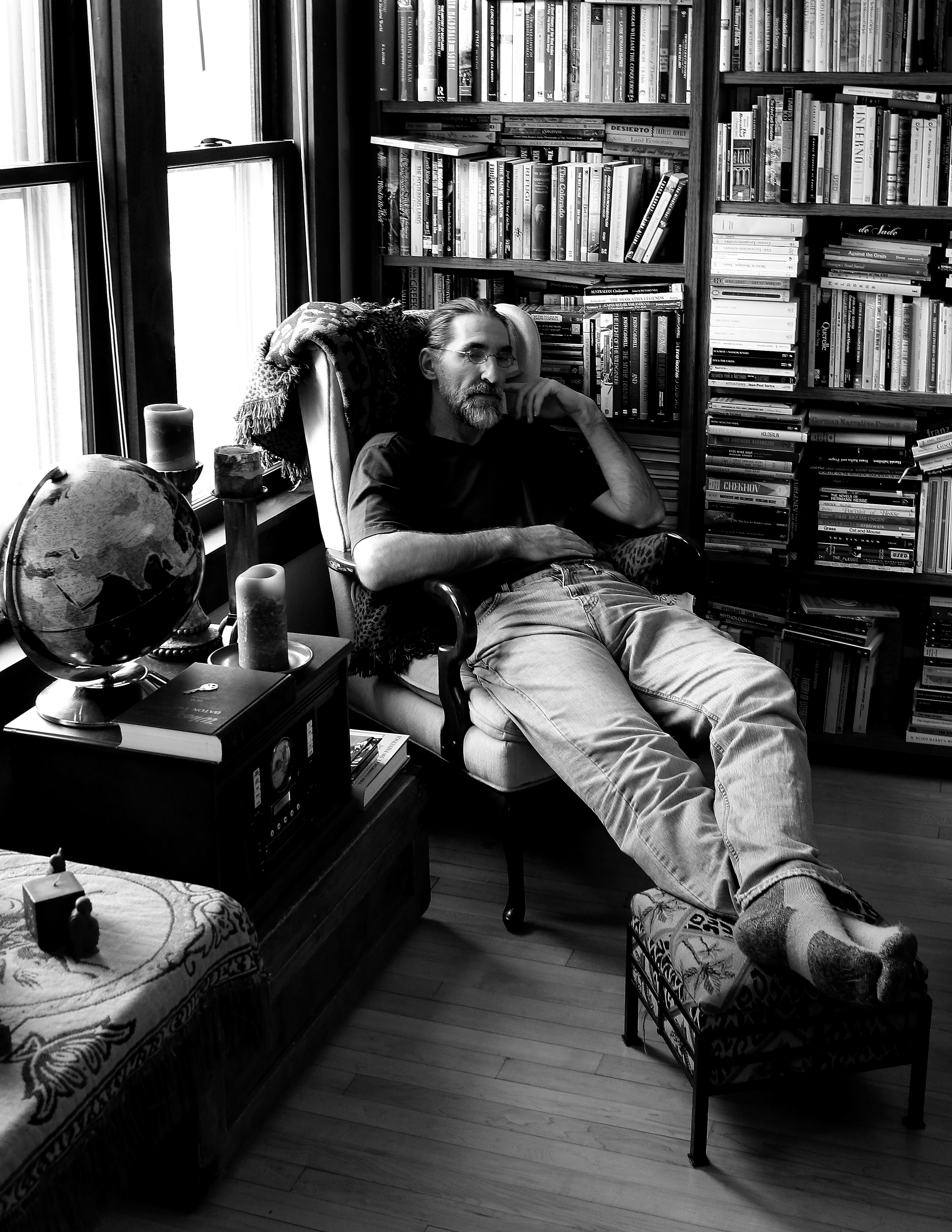
With all the stuff that’s already been made and is overflowing junk yards and landfills, I think we can all do a better job at using what’s already here. My partner Steve feels the same way. He’s been running an online used book store out of our apartment for the last 10 years or so. He goes to estate sales, book sales and thrift stores and buys good books, unusual books, quality books and lists them on retail websites as a third-party seller so that people who are looking for a specific used book can find it easily at a fair price. He loves books. He’s got a B.A. in English, and his very first job was at the public library. There’s nothing like the feel of a book in your hands or the smell of an old book from your grandmother’s attic!
Scholar & Poet
Steve’s small business is called Scholar and Poet Books. If you value or collect books, music, vintage printed material or puzzles, check out our inventory. You can see our listings on eBay Here, or browse our book list on ABE Books Here. If you shop on Amazon, you may see our name on the list of sellers for a particular item, but we can’t direct you to our inventory exclusively. (Many of Amazon’s third-party sellers are actually large warehouses.) If you have friends who are bibliophiles, you can share our Facebook page with them. Thank you for reading this post and considering my invitation. May your decisions about Stuff bring you joy and peace!
Think Continually of Those At Risk
I wrote this article for The Be Zine whose November issue was dedicated to “At-Risk Youth”.
Under the light of the half moon, David Attenborough speaks to the camera on Christmas Island, surrounded by a moving mass of red crabs. Tens of thousands of crawling females, heavy-laden with hundreds of fertilized eggs, are approaching the high tide in order to release their burdens into the surf. The water turns reddish brown as a surge of life heads out to sea. Millions, no, billions of little babies are set adrift. Enormous whale sharks cruise the waters nearby, ready to feed. Sir David explains that the hatchlings will spend one month in the water before returning to land to move into the forests and begin their lives as adults.
That’s probably not the first picture you conjure when you hear the phrase “at-risk youth”, but it’s the one that came to my mind. It may not be popular to approach this topic from a biological standpoint, but there is a meaningful truth in this perspective. If the “risk” you are referring to is death, that is something that youths face as much as anyone. Death is certain for all of us, and no one is guaranteed adulthood. The human species, however, is far from the threat of extinction. Our population is dominating the globe, in fact. So, “at-risk youth” is not about the peril of the demise of our race. I believe it is much more about social and behavioral dangers than biological ones. This is where we can be optimistic. We can create and control our societies and our behaviors much more readily than we can our biological tendencies.
What does it mean to “survive” to adulthood in our society? How do we measure the success of childhood? Certainly benchmarks in health, education, safety, justice, self-reliance and freedom come to mind. We set standards and often cast about for whom to blame if they are not met. Aren’t our children entitled to these milestones? Are they goals to strive toward if not guaranteed rights? And what about the risk of “merely” surviving?


 scillagrace