Unknown's avatar

Good Gawd, Y’all!

Another school shooting hit the news yesterday. The impact seems dull. Repetition has begun to numb my response. The predictable media storm continues, but just as raindrops seem less penetrating after your clothes are soaked, I simply can’t absorb this horror. And that is rather shocking.

 I Googled “List of school shootings in the U.S.” The Wikipedia article’s chronology goes by decade, starting with the 1760s. There is one entry there. The next listing is 9 decades later. Two items there. The narration continues to list shootings for every decade. When we get to this millennium, the bullet points are replaced by a chart. From 2000 – 2010, there are 46 different shooting events chronicled. From 2010 – 2014 (n.b. Not even half a decade!) there are 65, including yesterday’s. And I may have lost count of one while scrolling down through the list.

 Obviously, this storm is escalating. This is a flood. Our country is awash in violence being perpetrated against school children. School children! What can that be about? What madness has overtaken our culture that young people at their studies have become targets? I’m pretty sure it’s not so much about the targets as it is about target practice.

 Our culture has target practice deeply embedded in its psyche and readily available in its entertainment, military and politics. Angry? Take aim. Proud? Take aim. Patriotic? Take aim. Need security? Take aim. Impoverished? Needy? Insulted? Invisible? Defiant? Miffed? Whatever the uncomfortable feeling you have, you can get relief by pulling out a weapon and taking aim at some target. Children in school apparently make a pretty easy gallery.

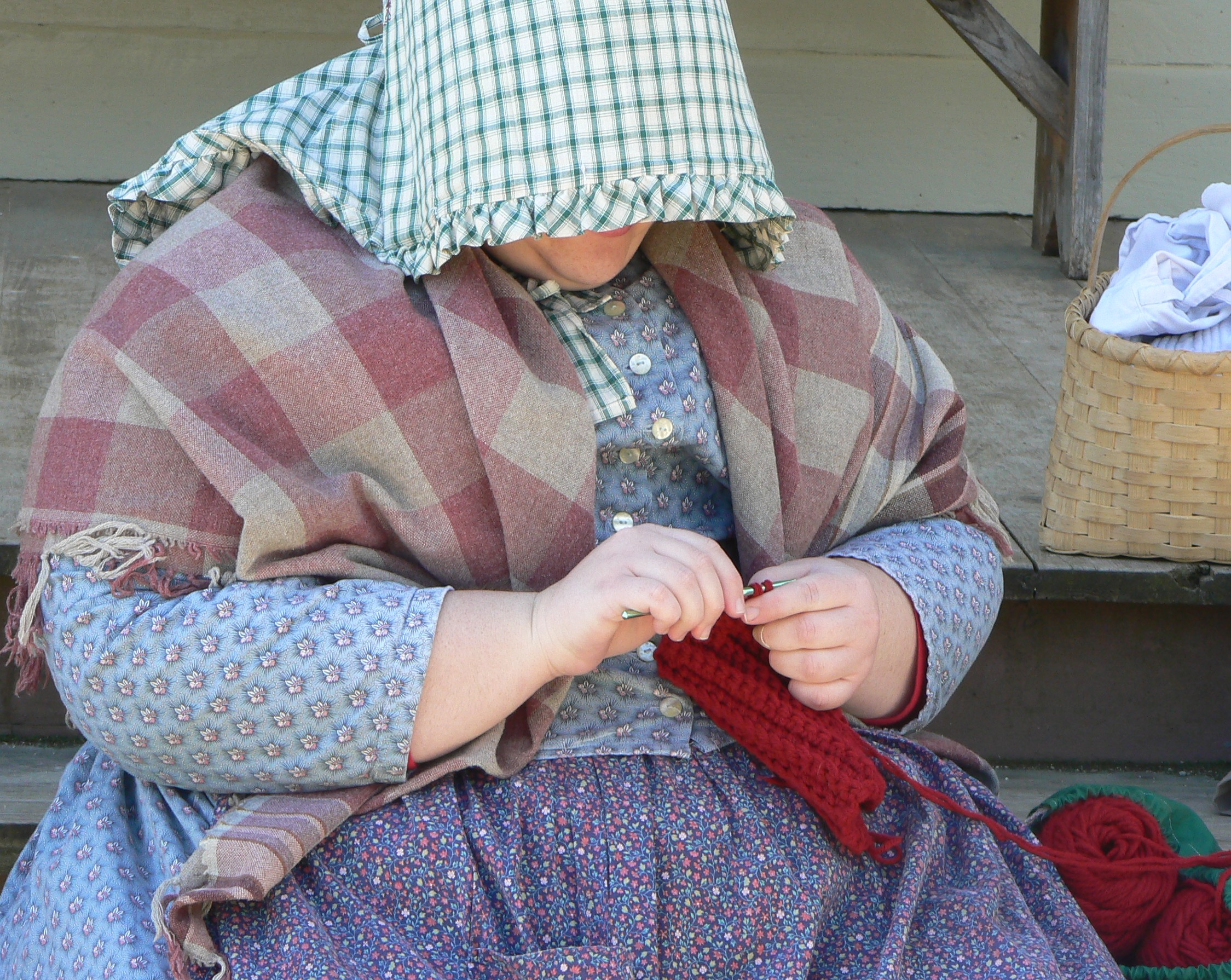
 This approach is like using the same tool for every situation, no matter what it is. Would you use a hammer to wind your watch or play your piano or punch down your bread dough or crochet a sweater? No. And how did you learn to lay your hands on the appropriate tool for each of these situations? Most likely, at a very young age, you watched someone do it. A role model. Perhaps a parent or grandparent. Someone you trusted, who spent time with you, doing everyday kinds of things.
P1040287

 Let’s look around. Where are the role models that are pulling out weapons for every crisis? Where are the role models who are negotiating, discussing, creatively engaging, brainstorming and experimenting with different non-violent approaches? Who are the role models who have multiple tools in their belts and use the appropriate ones for the situation? And violence, what is it good for? Is it ever the best tool for the job?

 And, c’mon, let’s be creative. Why does our entertainment have to follow this unimaginative formula of violence? There are a million other options. There are a million other roles to play. Playing something different will make us smarter, wiser, more flexible, more open, more like children. School children….our vanishing resource.

© 2014, essay and photograph, Priscilla Galasso, All rights reserved

Unknown's avatar

Weekly Photo Challenge: Beginning

Winter illumination

Winter illumination


Weekly Photo Challenge

My New Year’s resolutions have been made and clearly stated.  First, “Stop shaming myself”.  (read my post “A Cup of Kindness” for more) Second, “Stop spending so much time playing Solitaire”.  I realize that organizing cards and Mahjong tiles is not a bad thing necessarily.  I get a certain satisfaction out of putting them all to rights or trying again until I do.  But it’s kind of an OCD thing, too, so I don’t want to get sucked into doing it when I could do something else.  Like bring chaos to order.  I’ve been researching right brain/left brain behavior a bit (I recommend Jill Bolte Taylor’s TED talk “My stroke of insight”), and I’ve decided that I need to exercise my right brain more.  My creativity — expansiveness, inclusion and collage-thinking.  Here’s an exercise I came up with:  take a familiar, well-known and memorized quote and mix it up.  Use the same words in a different order, add new punctuation.  Voila!  Chaos out of order poetry.  Here are a few:

“What twilight’s proudly gleaming light,

Early hailed by the dawn’s last ‘Oh’

We can see, so say at you.”


“The forefathers, four score and seven, conceived new, created and brought forth years ago,

dedicated in proposition to all men on this continent that a nation are equal – our Liberty.”


“No other shalt have me, before thou gods.”


“The beginning: the word, the word, the word.

God was God. And was. And was with.”

My daughter Emily tells me that Facebook provides a random generator to make something new of words you’ve posted, too.  Hers are quite poetic.  So maybe it’s not an entirely original exercise, but it’s a start.  A beginning.  A way to set off on a new adventure, to shed habit and convention and embrace the unpredictable nature of life unfolding.  Stepping off into 2014 — we can create and uncreate a new beginning.  What will chaos bring to you this year?

Unknown's avatar

A Cup of Kindness

New Year's 2013Today is my mother’s birthday.  She is 79.  She is one of the most positive, enthusiastic, intelligent, and wise women I have ever known.  She continues to inspire me.  A week ago, she moved from her home of 36 years into an apartment at The Meadows, the assisted living facility where my sister and I worked as college students and where my father died in 2010.  She is having an absolute ball collecting stories from the residents, entertaining dinner companions, playing the piano in the chapel and lobby, and making connections within her collage of life.  She says that her Bucket List has been reduced to a Shot Glass List, and she’s grateful and content with all that she has enjoyed.  She told me that she doesn’t ‘make’ New Year’s Resolutions, she allows them to ‘surface’.  She shared that the phrase that is surfacing for her this year is “Live peace; take joy”.  That conversation made me think of what is surfacing for me.  What is surfacing is Shame.  And I’m resolved to do something about it.

I have been thinking about shame for some time.  Listening to Brene Brown’s TED talks on vulnerability and shame has brought about some introspective reflection on my history and patterns.  I was raised by a very authoritarian father, a devout and dogmatic Christian.  He was an intellectual, and my mother very candidly told me last night that although he could understand rationally that our behaviors and social constructs must evolve and change and that they weren’t based in any ultimate reality, he didn’t know how to navigate the emotions involved, and so he would fearfully nail those down into a ‘safe’ corner to protect himself.   What he then communicated to me, his daughter, was that we are all fallen creatures, sinners whose nature it is to be not good enough, and that we couldn’t be trusted, so to be saved, we must follow a carefully prescribed path and check ourselves frequently for deviation.   Our wills are suspect; God’s will is perfect.  My deepest desire was to please my father and to be loved by him, so I became a very compliant child.  And I bought the idea that whatever I wanted was probably not good, or good enough, and that I would fail to be good most of the time.  My best hope was to be obedient, and so I did that to the best of my ability.  I became accomplished in being obedient.  As I grew up and my father became less central in my daily life, I transferred that obedience to God, the Church, my husband.  Finally, after my husband died, I think I took that authority and transferred it to myself, but I ended up carrying out the same message.  Now, I tell MYSELF that I am not good, or good enough, and am likely to fail to be good most of the time.  In other words, I have taken over my dad’s role in shaming myself.

Needless to say, this is not freeing me to take risks, be vulnerable, be creative, be self-determinant or self-reliant.  Instead, it is keeping me in ‘customer service’ when Steve is itching to make me a full partner in a home business (or series of them) so that we can be self-employed and embody the values and lifestyle that WE find important.  How do I make the changes necessary to gain this freedom?  First, I have to stop telling myself that I can’t.  Or shouldn’t.   I have to stop shaming myself.  I have to become aware of the times when I do it, and I have to let go of them.  Like the bubbles surfacing in my champagne.  POP!  “So, here comes that shaming bubble.  I don’t have to analyze it, give it power, or trace it back to someone to blame.  I will just notice it, watch it pop and let it be gone.”  That’s my resolution for this coming year.  Take a cup of kindness, and stop shaming yourself, Priscilla!  Then move on.

I am also posting my blog summary for 2013 today.  I want to give big cyber hugs to my Bestest Blogger Buddies – Helen, Stuart, Jamie, Naomi and Elena.  Thank you for supporting this vulnerable venture and helping me trust myself to create something.  (Something ‘worthy’?  Something ‘good enough’?  STOP.  You don’t need to judge it.  Create something.  And just leave it at that.)

And here’s a sample of what I’ve created on this blog this year.  If you’re new and see something you like, please browse around!

Unknown's avatar

Advent Day #24 – Love

This is the last entry from my series of posts two years ago.  Not much has changed in my love for my family, except that those “significant otters” have become more formally (and legally) incorporated into the clan and that the arena of family celebration has moved from my duplex to my daughter’s house (and will take place on Saturday).  The snow is deep and sparkly here in Milwaukee.  Steve was out the door before 6 a.m. to deliver mail and packages for the US Postal Service.  Last night, he didn’t come home until 8:30 p.m.  The temperature is -2 degrees Fahrenheit (without the wind chill factor) this morning.  If you get a mail delivery today, give your carrier a warm smile and your gratitude and appreciation.  Remember the free gifts that come to you each day, regardless of season, with no carbon footprint.  Live life in gratitude and happiness and peace.  The world will benefit.

How About Love?

My December countdown was completed yesterday.  I did not have a chance to post about the gift of love because I was living it.  My four children plus two “significant otters” came over for feasting and gifting and sleeping over.  All six of them ended up on the living room floor under mountains of sleeping bags and pillows and blankets, just like they used to when they were kids in a cousins pile.  Except now, they’re all adults — beautiful, interesting, caring, amazing adults who actually like each other.  And me.  How did I get to be so blessed?  This morning, I repaid them all for years of running in and jumping on my king-sized bed full of eager energy at an early hour on Christmas.  I dived onto their sleeping bags one at a time and gave them a great big hug and kiss.

We have lived through a lot together.  And we have lived through a lot separately.  Their lives matter to me in a way that I can barely describe.  Steve keeps challenging me to come up with ways to articulate what this is.  He has no children, and philosophically wonders why family is esteemed so highly.  “Oxytocin,” my daughter replied one day.  That explains one level of it, I suppose.  My biology has loaded me with hormones that make me love my kids.  My religion loaded me with beliefs that urged me to love my kids.  My experience of life has loaded me with the joys of loving my kids.  And my kids are just plain lovable.  I can agree with the reasoning behind his argument that all people are equally valuable, but I just can’t help feeling that my kids are more valuable…to me.  Yes, I’m playing favorites shamelessly without really understanding why.  Is it possible that evolution favors fiercely loving families?  Do they tend to be larger and survive better?   This might have negative effects on the planet in terms of population.  Would it be better for the world if we were less filial and more agape in our love?  Less sentimental and more altruistic?


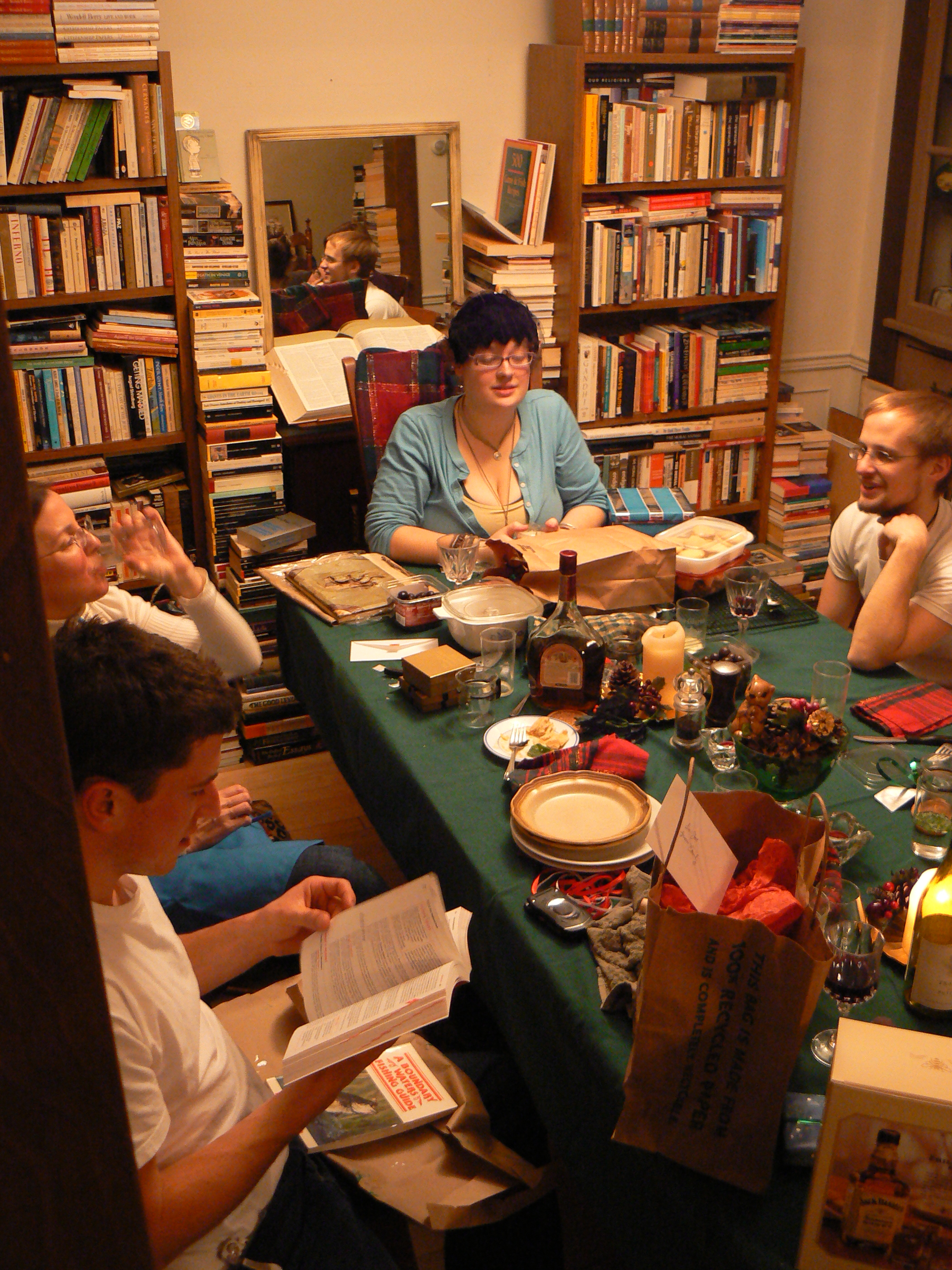
Table fellowship

I don’t think that I am going to do justice to the topic of love in a scholarly way when I am full of mince pie, chocolate, and happy memories of the hours I just spent.  I am starting to sink into that melancholy that bubbles up when all of the guests have gone home and you ask yourself if you can be truly happy without that rush of energy and affection.  Of course, I am happy and even more peaceful living without all my children still under my roof.   I am in love with the world, in love with my partner, and in love with my children every day.  And it is marvelous.

Unknown's avatar

Advent Day #23 – Peace

Peace On Earth

It is Day #23 in the December countdown.  Today’s gift is Peace.  Ahh, peace.  Take a deep breath.  Relax the muscles around your skull; feel  your ears and eyebrows pull backward; close your eyes and roll your head. Do you feel a sense of well-being?  Julian of Norwich claims that God himself spoke these often quoted words to her, “All shall be well, and all shall be well, and all manner of thing shall be well.”  Do you believe that’s true?  Do you believe that’s possible?  I do, although I don’t always act as though I do. I forget.

Wikipedia uses these phrases to define peace:  “safety, welfare, prosperity, security, fortune,  friendliness… a relationship between any people characterized by respect, justice and goodwill… calm, serenity, a meditative approach”.  Where does peace come from?  Buddha, the Dalai Lama and many others will tell you that peace comes from within, not without.

“The first peace, which is the most important, is that which comes within the souls of people when they realize their relationship, their oneness with the universe and all its powers, and when they realize that at the center of the universe dwells the Great Spirit, and that this center is really everywhere, it is within each of us.” – Black Elk

But perhaps, there are things outside of you that will remind you of the peace which dwells within you.

“Climb the mountains and get their good tidings. Nature’s peace will flow into you as sunshine flows into trees. The winds will blow their own freshness into you, and the storms their energy, while cares will drop away from you like the leaves of Autumn.” – John Muir

Do you feel peace in your mind and body and soul all at once?  Do you descend into peace from your head down?

“I do not want the peace which passeth understanding, I want the understanding which bringeth peace.” – Helen Keller

I suppose each of us must find his/her own journey into peace.  Anxieties and conflicts are particular and personal.  Facing each one head on is not a passive task.  Making peace is not for the weak of heart.  “Blessed are the peacemakers, for they shall be called children of God.”  Is God about making peace?  Is making peace the work of the Universe?  Is it perhaps that joyful effort that gives life meaning?

“Peace is not merely a distant goal that we seek, but a means by which we arrive at that goal.”  – Martin Luther King, Jr.

If we can make peace between ourselves and God, ourselves and Nature, can we then make peace between ourselves and others?

“If we are peaceful, if we are happy, we can smile and blossom like a flower, and everyone in our family, our entire society, will benefit from our peace.” – Thich Nhat Hahn

“What can you do to promote world peace? Go home and love your family.” – Mother Theresa

Steve constantly reminds me that in every situation, especially in those that cause anxiety and conflict to arise, I have 3 choices.  I can hide/run away.  I can try to change the situation.  I can change myself.  The first option doesn’t exactly make peace; it simply avoids confrontation.  You can hide away all day long and still feel the fear of whatever it is that scared you.  So, why do I often employ that choice?  Because I lack courage and I’m lazy.  I sometimes pick that choice first to give me time to screw up my will and motivation.  I don’t want to get stuck there, though.

Trying to change the situation requires engagement.  Making peace with hunger, poverty, sickness, and distress this way requires an understanding of  causes and effects on all different levels.  It requires negotiation, and it requires cooperation.  You don’t always get all that is required to change a situation.  Not all situations can be changed.  Death is the big one that comes to mind here.  You can’t hide or run away from it, and you can’t change the situation so that you don’t have to experience it.  Now what?

Change yourself.  Sometimes the only way to make peace with something is to change your thinking, your belief, your approach, your attachment, your aversion, your ignorance or some other aspect of yourself.  “If you can’t beat ‘em, join ‘em!” is the simplistic way to say it.  If you’d “rather fight than switch” (old cigarette commercial – pop philosophy at its finest), then you have chosen to fight, not to make peace.  Our egos make it really tough to change ourselves.  Sometimes we’d rather fight, sometimes we’d rather die, sometimes we’d rather do anything than change ourselves.  You have to ask yourself very seriously what your ultimate goal is to get past this one.  Is your goal to keep your ego intact or is your goal to make peace?   I’ve come across a lot of phrases that address this ego dilemma: “take up your cross”, “turn the other cheek”, “deny yourself”, “die to self”.  I think that dogma is probably more an ego thing than a peace thing.   If you can’t let go of your religious beliefs in the interest of peace, then your religion is more about yourself than it is about God, in my humble opinion.   I love the part of the movie “Gandhi” where he counsels a Hindu man who is distraught at having murdered a Muslim child.  “Raise a Muslim child and make sure you raise him as a Muslim, not as a Hindu. This is the only way you can purge your sins.”  This is true wisdom about peace.

Give peace a chance. It requires your will, it requires your strength, and it requires you to lay aside will & strength.  I am looking forward to enjoying the peace that my family and I have created.  We are still creating it, and will be our whole lives long.

Unknown's avatar

Advent Day #22 – Joy

Joy to the World

Gift of the Universe #22:  JOY!

I truly believe that joy is available to everyone.  No one is denied the opportunity to be joyful.  Many people on this planet will never have a full stomach or adequate shelter or enough material wealth to climb out of poverty, but believe it or not, some of those very people know joy.

“Joy is not in things; it is in us.”  – Richard Wagner

“Participate joyfully in the sorrows of the world. We cannot cure the world of sorrows, but we can choose to live in joy.”  – Joseph Campbell

My late husband was ill for many years.  He went under the knife for open heart surgery when he was just 31.  He suffered a host of medical problems stemming from diabetes, always believing that he would get the disease under control.  When he realized that was not going to happen, he said, “Okay, I’m sick.  I can be sick and miserable, or I can be sick and happy.  I choose happy.  Pain is inevitable, misery is optional.”  I really admire him for coming up with that maxim, and for embodying it.  The night before he died, he called me at work and asked if I’d like to go out to dinner.  Our daughters were out for the evening, and he took the opportunity to enjoy a ‘date’ with me.  We went to a local sports bar & grill and enjoyed veggie appetizers and sandwiches.  Our youngest called from rehearsal to say she was not feeling well and was coming home early, so we went home to be with her.   Jim was tired, so he took his medications, hooked up to his dialysis machine and CPAP and watched some TV.  When I came up to bed, he turned off the TV and the light.  We fell asleep holding hands.  He never woke up.  And he never complained.  Some people claim that “if you haven’t got your health, you haven’t got anything”.  I don’t buy that.  Jim didn’t have health, but he had joy and love and he knew it.

Many people would foreswear food, health, housing, and money in order to find joy in an ascetic lifestyle.  Mendicants, yogis, monks, and priests of different faiths have adopted austere practices in order to experience the bliss of enlightenment.

“Joy is the most infallible sign of the presence of God.”  – Pierre Teilhard de Chardin

“The fullness of joy is to behold God in everything.”  – Julian of Norwich

This is a deep and serious topic, and much too heavy for me to write about today.  My brain is circling closer to Dr. Seuss and The Grinch who puzzles how the Whos could be singing without “ribbons and tags, packages, boxes and bags”.  Perhaps joy means a little bit more than the glee we feel when we get a shiny, new present.  Happiness is fleeting.  Joy is deeply felt.

“This is the true joy in life, the being used for a purpose recognized by yourself as a mighty one; the being thoroughly worn out before you are thrown on the scrap heap; the being a force of Nature instead of a feverish selfish little clod of ailments and grievances complaining that the world will not devote itself to making you happy.”  – George Bernard Shaw

I’ve got to say that the way I have most felt this joy of being used for a mighty purpose and force of Nature is through mothering.  I know what it is to be thoroughly worn out and joyful.  I know what it is to feel like nobody is devoting himself to my happiness and not to complain because I am finding so much joy in devoting myself to someone else’s well-being.  Not that I didn’t complain occasionally (hey! I’m human!).  I always felt that mothering mattered.  That I was truly making a difference, a big one, to at least four people in the world.  I smiled at my babies even when I was not feeling joyful, and joy emerged.   Never underestimate the effect of a smile.  Check out this Still Face Experiment by Dr. Tronick on youtube.  http://www.youtube.com/watch?v=apzXGEbZht0

“Sometimes your joy is the source of your smile, but sometimes your smile can be the source of your joy.” – Thich Nhat Hahn


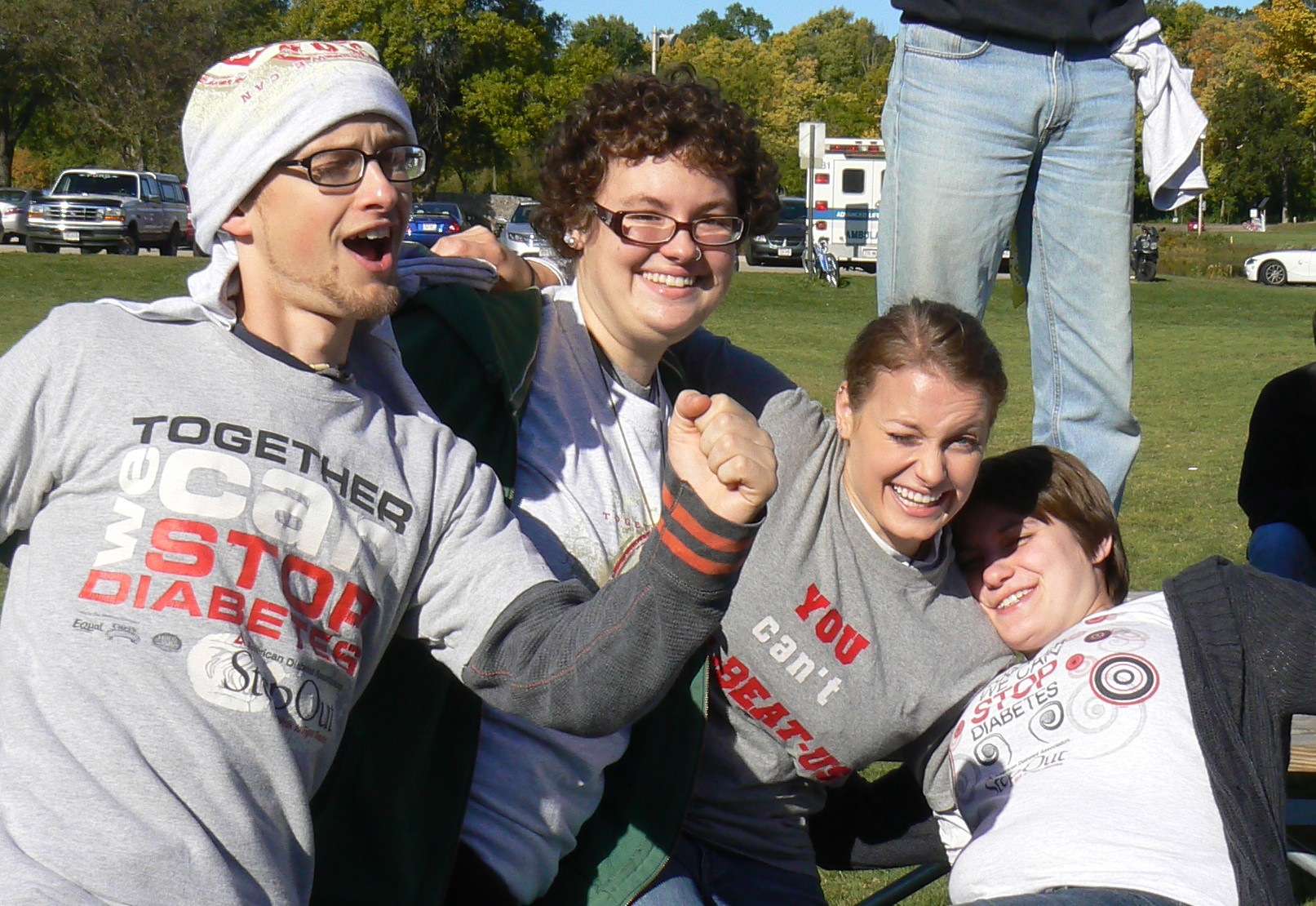
My joyful (and crazy!) kids

Are you smiling every day?  I’m sure I am.  I even busted a belly laugh today as Steve was describing a Giotto fresco…of Mary and Joseph… kissing at the gates of Bethlehem…with Snoopy in the background.  He speaks like a nerd who knows everything, and then I realize he’s bullshitting me.  I fall for it all the time and then get to laugh at him and at myself.  Steve’s identity motto, which he came up with at a psychology school retreat, is “I am the joy in change and movement”.  I am really benefiting from his perspective because I am often afraid of change and movement.  I so don’t need to be.  There is freedom in allowing joy into your life.

Let Heaven and Nature sing…and see if you don’t find yourself singing along.  Rejoice, my friends.

Unknown's avatar

Advent Day #21 – Passion

Don’t Curb Your Enthusiasm

Happy Winter Solstice, everybody in the Northern Hemisphere!  As the sun hits the lowest spot on the southern horizon, it seems to stop in a lyric caesura for a moment.  Now the earth begins to doe-Si-doe around its stellar partner, coyly tilting the top of her head toward him.   The night is long, and the dance goes on.  Passion builds towards the summer solstice when the sun will caress the earth with daylight for 24 hours at the North Pole.  Humans have celebrated these celestial events with festivals for centuries, and we still do.  As I write this, Strauss polkas punctuated with small, percussive explosions and various train whistles play in the background.  It is riotously fitting.  (Steve is cleaning, stacking and re-stacking his books.  We are expecting company for the weekend.)

The door marked 21 bangs open, and the gift unveiled is Passion.  Enthusiasm!  Energy!  I contend that this is another Universal endowment.  The word ‘enthusiasm’ has at its root the Greek ‘theos’, meaning God.  To be enthused is to be filled with God.  “In the throes of passion.”  See Bernini’s sculpture of “The Ecstasy of St. Theresa” for a marvelous visual example.  (We watched a video on this narrated by Simon Schama: “The Power of Art”.  Highly recommended!)  Is this kind of experience available to all or just the sainted few?

I believe that if you are open to the energy of passion, you will receive it.  And I believe this fact scares a lot of people, especially those in authority who are working to gain and maintain control.  Do you want to live in a passionless world?  Do you want to live in a tempest of energy?  Do you seek some Middle Way, a quiet infusion of God?  How have you marshaled and channeled energy by your own choices?  Have you felt someone else’s hand tempering your energy?


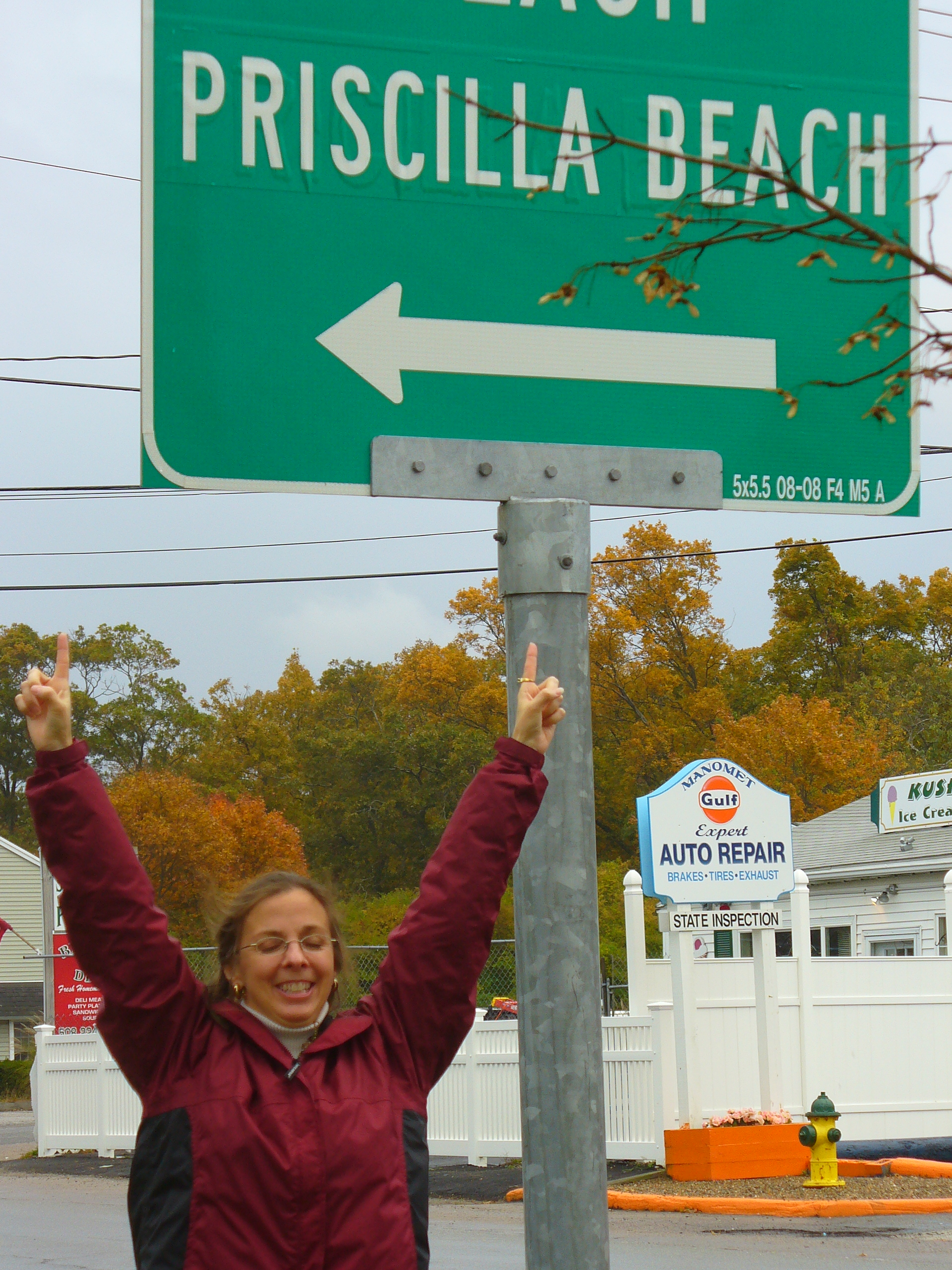
Excited to be back in Massachusetts (Photo by my oldest)

I think I was a pretty enthusiastic kid.  I was often told that I was loud.  My facial expressions were pretty dramatic.  I loved theater and the chance to “act out”.  My third grade teacher wrote in her notes to my mother that “the play’s the thing for your youngest daughter”.  I did feel that my parents were always asserting a more reasonable response.   They were intellectual and Anglican and well-mannered.  I wanted to please them, so I didn’t allow myself to be wild.  When I began voice lessons in college, one of the first things my teacher said to me was, “You sing as if you’d been told all your life to modulate your voice.”  How did she know?  So I had become outwardly prim and proper and covertly silly and animated.  My passion for my husband was greeted initially by my parents with the same kind of circumspection.   After all, I was only 15 when we met and 20 when we became engaged.  Gushing about how I “knew” he was the right one for me was unconvincing.  I prepared logical and practical reasons why I should marry before I graduated from college and while we were both unemployed.  His father was not at all persuaded.  My father had seen us courting and knew more intuitively that our determination was real, fueled by much more than reason, and that in a marriage, that is a definite harbinger of success.

I am still hesitant to show emotion and passion.  Steve is always delighted to see my enthusiasm about something, and frankly wary because it doesn’t assert itself in important decisions.  I was brought up to be very serious about decision-making, and to mistrust my enthusiasms.  Steve seems to approach the issues from the opposite direction.  He feels that the best reason for doing something is because you REALLY WANT TO!  In some ways, that seems like a no-brainer.  Problem is, I have esteemed The Brain far too much, I think.   So, I am learning to try to listen to those exuberant voices without shushing them so much.  And I am learning to be more open to the zeal of others.  My children, especially.  My parents modeled the “voice of reason”.   I can’t deny that I play that role in my parenting, but  I want to model the fervent voice of encouragement, too.  (This goes along with the ongoing safety/adventure discussion that I have with Danger Mommy.)  I keep trying to get away from dualism and embrace the dynamic whole.  “Don’t be so worried about ‘supposed to’,” says Judy Dench’s character in the movie “Chocolate”.

Is it possible to be both wise and passionate?  Is it possible for me to be both wise and passionate?  I’m hoping so.

Unknown's avatar

Advent Day #20 – Wisdom

Wise and Otherwise

December 20.  The 20th free gift of the month is something that can be acquired, but cannot be bought.  I don’t think that it can be given, either.  The gift is Wisdom.  According to Wikipedia, “Wisdom is a deep understanding and realization of people, things, events or situations, resulting in the ability to apply perceptions, judgements and actions in keeping with this understanding.”  In other words, “To recognize the significant in the factual is wisdom.” (Dietrich Bonhoeffer)  However, “We are made wise not by the recollection of our past, but by the responsibility for our future.”  (George Bernard Shaw)  And finally, “It is unwise to be too sure of one’s own wisdom. It is healthy to be reminded that the strongest might weaken and the wisest might err.”  (Mohandas K. Gandhi)

It would seem, then, that wisdom is something that can be acquired in living with awareness and engaging humbly with experiences.  It seems to me, though, that you can’t give someone the benefit of this process.  You might point out the process and talk about its benefit, you might set up the beginning of the process, but you can’t impart the journey or the result.  It has to be lived.  I’m a mother; trust me on this.  I wanted to give my children wisdom more than anything, probably for selfish reasons.  I wanted to be spared the pain.  I wanted to spare them the pain.  I asked God to give them wisdom…like on a magic platter descending from heaven…but spare them the pain.  Can’t be done.  Wisdom is born of pain and suffering and effort and failure.  You have to be awake through it all as well.  You can’t gain wisdom while you’re anesthetized.  I’ve made a great discovery, though.  This process is a great equalizer.  Keeping Gandhi’s wisdom in mind, my children and I are fellow travelers on this path.  We share our stories as friends, we perhaps contribute insights to this process, but we cannot assume the roles of provider and receiver.  I try to remember that as I talk to them.  It is too easy for me to slip into the “teacher” role and begin to spew language about what they “should” do and what is the “right” way to do something.  I often issue too many reminders and begin to sound like I’m micro-managing them.   They notice.  They mention it.  I have to challenge myself to be wiser and trust them to be wise.

I remember the day my father told me that something I said was wise.  It felt like a great victory for me.  I was 19 or 20.  I had been talking to my oldest sister about some article I had read in an evangelical Christian newsletter taking issue with science and carbon dating.  My father was eavesdropping from the breakfast room and jumped on the subject by voicing some objection to the fact that the money he was paying for my college education hadn’t stopped me from discoursing like an ignoramus.  I was scared of his strong emotion, ashamed of myself, and angry at his insult.  Embarrassed and hurt, I fled.  We didn’t speak for 3 days.  I realized that he wasn’t going to apologize to me or mention the event on his own, so I decided I needed to take the initiative to talk to him about my emotions, clear the air, and try to restore our relationship.  I’d never talked to my father about our relationship very much before.  He was always right, often angry, and anything that was amiss was my fault.  I also knew that he would not show his emotions, that it would be a “formal discussion” on his part, but that I would probably not be able to contain my tears, making me feel foolish and not his equal.  I decided to brave the consequences and approach him with Kleenex in hand.  I began to talk, and cry, and tell him how I felt.  Then he asked me if I wanted an apology.  “What do you want me to say?”  I told him that part was up to him.  My dictating an apology to him would be meaningless.  That’s when he said, “That is very wise.”   Suddenly, I felt I had grown up and been respected as an equal to my father in some way.   What I understood or didn’t understand about evolution and carbon dating and creation didn’t matter to me any more.  That I had been able to navigate emotions with my father and repair a broken relationship was far more significant.

Dad & me in 1992. Photo by my 8 year old daughter.

Wisdom isn’t easy to get, but it is available.  If you pursue it, you’ll probably get it eventually.  It’s completely avoidable, though, if you so choose.   I know which way I want to go, so I’ll keep paddling my canoe and checking the horizon.   For those of you heading the same way, STEADY ON!  I salute you.

Unknown's avatar

Advent Day #19 – Divinity

Have Some Divinity

The premise is this: for each day in December, instead of counting down on an Advent calendar, I’m counting the free gifts we all get every day.  Today’s gift is divinity, but I don’t mean the candy.  I mean The Divine, The Sacred, The Holy and experiences of them.  Don’t we all have the opportunity to receive that every day?  If you look for it, will you find it?  I think so.

So, what is sacred?  How do you recognize the divine and holy?  In art, there’s always a halo or a sunbeam to give you a clue.  What about here on earth?

‘Namaste’ is the Sanskrit greeting recognizing the existence of another person and the divine spark in that person, with the hands pressed together in front of the heart chakra.  I think the divine spark exists in every living thing as the breath of life.  Every encounter with a living thing is an experience of the divine.  We hardly ever act like that is true, however.  But we could.  Native Americans and many African tribes have hunting rituals that celebrate the sacred exchange of life.  The hunted animal is divine, sacrificing itself for the life of the hunter, and the hunter shows a holy appreciation.  Often, when I look at macro photography of living things, flower stamens, insects, mosses, I am compelled to worship the divine in the detail.  Life is sacred and beautiful.  Looking closely and deeply is a way to practice recognizing that.


Seeing macro, but lacking the lens

In a dualistic world view, the mundane and the divine are polar opposites.  One is worldly, one is sacred.  If this world were imbued with holiness, if God became incarnate and entered flesh in this world, those opposites would run together like watercolors.  Many cultures believe this is the truth about life.  The waters under the firmament and the waters above the firmament are separated in one telling of the creation story, but the Spirit of God was moving over all of the waters from the very beginning, even in that story.  The understanding that divinity is everywhere has inspired people all over the globe for centuries.  This place we inhabit is special; it’s valuable.  It’s all holy.  This is the beginning of respect for the Universe and everything in it.  Somewhere in Western history, that idea lost its power.  Earth and everything in it became base and fallen.  Good turned to bad and life turned to death.  I’m not sure if that new idea has been very helpful.  I rather think it hasn’t.  And I don’t think it has to be that way.  It’s an idea, after all.  So if it’s not a helpful idea, why support it?  How would you rather live?  In a fallen world or in a world where the sacred and divine can be found everywhere?  Just wondering out loud.  I’m not saying that one idea is right and the other wrong.  The glass is neither half full nor half empty.  It’s a glass, and there’s water in it.  The rest is conceptual.  Why argue?  Choose how to live with the glass and the water.   As for me and my house, “I choose happy.”  (One of Jim’s conclusive statements.)

I hope this gives you something to ponder for today.  If you like, you can add a scene of Edmund Pevensie in Narnia being asked by the White Witch what he craves.  “It is dull, Son of Adam, to drink without eating.  What would you like best to eat?”  “Turkish Delight, please your Majesty!” he responds.  What if he had said, “Divinity”?  Same story, nuanced.  I would like to taste the sacred in this world, and I believe it’s here.

Unknown's avatar

Advent Day #18 – Honesty

Honestly!

Where is there dignity unless there is Honesty?  — Cicero

Today I’m parading Honesty around the block, free for the taking – a gift for December.  Does it cost to be honest?  There definitely are consequences to being honest.  Integrity, for instance, but sometimes something much more harsh.  Here’s a Socrates Cafe question: is it ever morally defensible to tell a lie?  Here’s a Biblical philosophical question: what is truth?  (For 3 pieces of cheese, tell me who asked this question to whom?  For all the cheese in Wisconsin, tell me why that person never answered?!) *n.b. – My father used to play a game with us that we called “Bible Questions for Cheese”.  He would quiz us on our Biblical knowledge after dinner and reward us with bites from his cheese platter as he finished off his bottle of wine.

Which kind of honesty is the most difficult for you and why?  Telling yourself the truth about yourself, telling someone else the truth about yourself, telling yourself the truth about another, or telling your truth about another to that other?

Self-deception can be pretty intractable.  How do you even know that you’re not telling yourself the truth about yourself?  Do you have to depend on someone else telling you the truth about you?  How would someone else even know the truth about you?  I suppose I approach this by going the second route first.  I try telling someone else the truth about myself to see if they can believe it’s the truth.  This would seem like madness to some people.  Why are look looking outside yourself?  Why wouldn’t you trust yourself to know yourself?  How could anyone else know you better?  I have heard quoted many times, “Lean not on your own understanding”, and I suppose I took that to heart.  So now, I’m working on trying to be honest with myself and to trust myself.  This takes some courage and a lot of forgiveness.

Telling the truth about myself to others is something that I want to do.  It saves me the trouble of having to come up with a lie.  It allows me to get that feedback I need to find out if I’m deceiving myself.  But sometimes, I detect that TMI reaction.  Too Much Information divulged to your own offspring, for example, is not at all welcome.  Especially when they’re young.  I’ve done that a few times.  More often, I told them the truth about things, facts, at an early age that others did not think was appropriate.  For example, I told them that Santa is fictional.  I told them the correct names of body parts.  (My oldest was 4, I think, when she gave a word for the letter ‘V’ that rather shocked her nursery school teacher.)  I told them that their father had coronary artery disease.  (Again, my oldest could draw an anatomically correct heart from memory at the age of 6.)


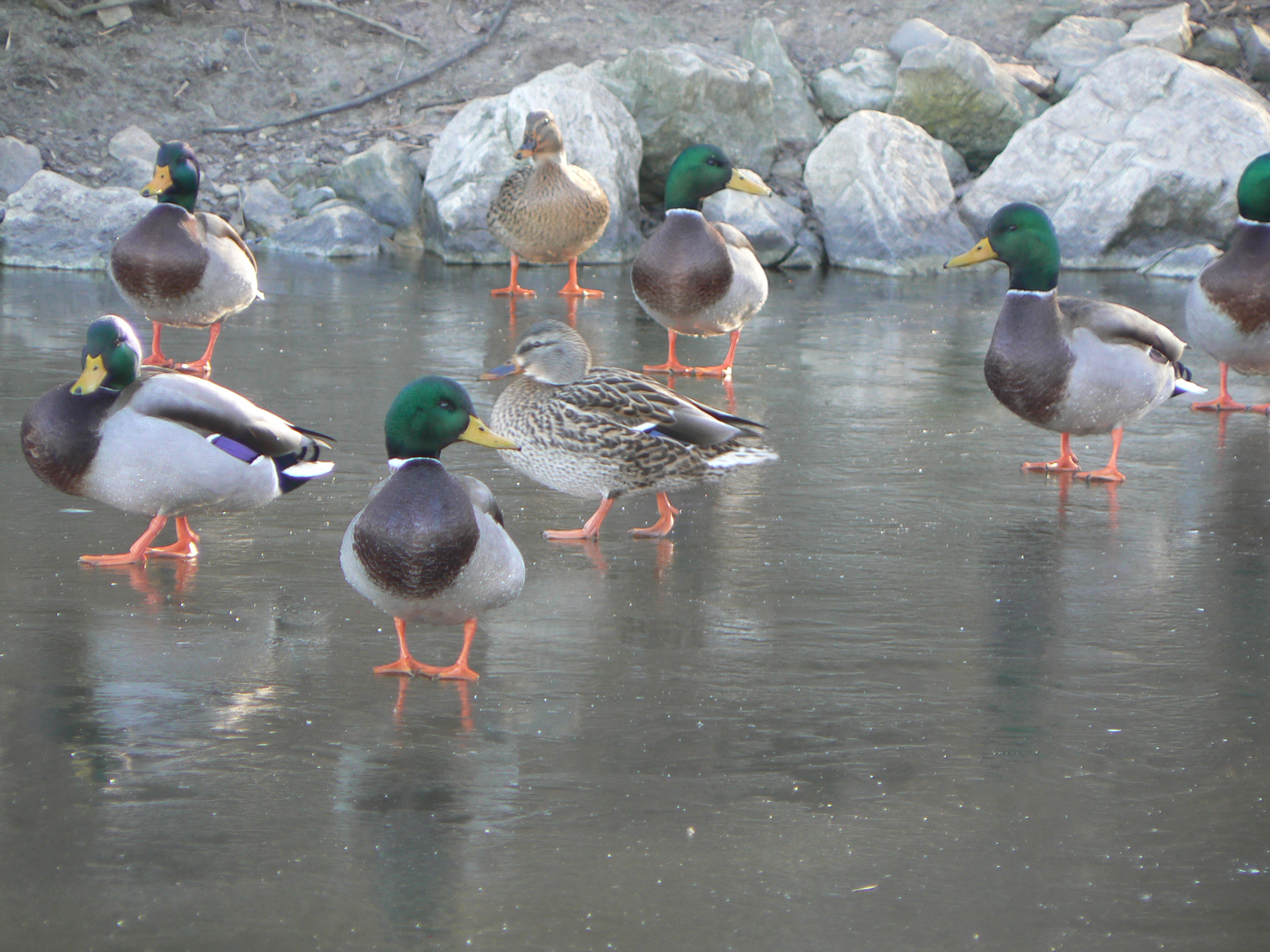
Ducks can walk on water. It’s the truth!

Telling myself the truth about another has been difficult only on a few occasions that I recall.  Telling myself that my father was not God and was not perfect was one.  Telling myself that my husband was dying was another.  However, in those situations, the truth was very valuable, and the difficulty was well worth it.  I guess that means I defend more delusions about myself than about those whom I love.  I believe that shattering delusions about myself will be similarly painful but beneficial, so I’m willing to keep at that.

Telling ‘your’ truth about another to that other is what Steve likes doing the most in relationships.  He doesn’t usually “tell” so much as he questions in order to draw out an opportunity for the person to tell the truth about him/herself.  He calls it “being challenging” or “being intense”, and he considers it a supreme act of love.  And he does it kindly, in my opinion, but more importantly, he is conscious of trying to do it kindly.  It isn’t always received that way, though.   Sometimes, no matter how tactful and kind you try to be, that ‘other’ is not going to want to hear your truth.  Hopefully, that reaction is only temporary.  Getting to the point of engaging with truth in a relationship is an important step to intimacy.  It’s what being ‘truly loving’ is all about.   It takes grace to invite someone to that point in a way that is non-threatening.  I appreciate therapists and psychologists and psychiatrists everywhere who take up that practice in the name of love.