Category Archives: Home Economics
Summer School
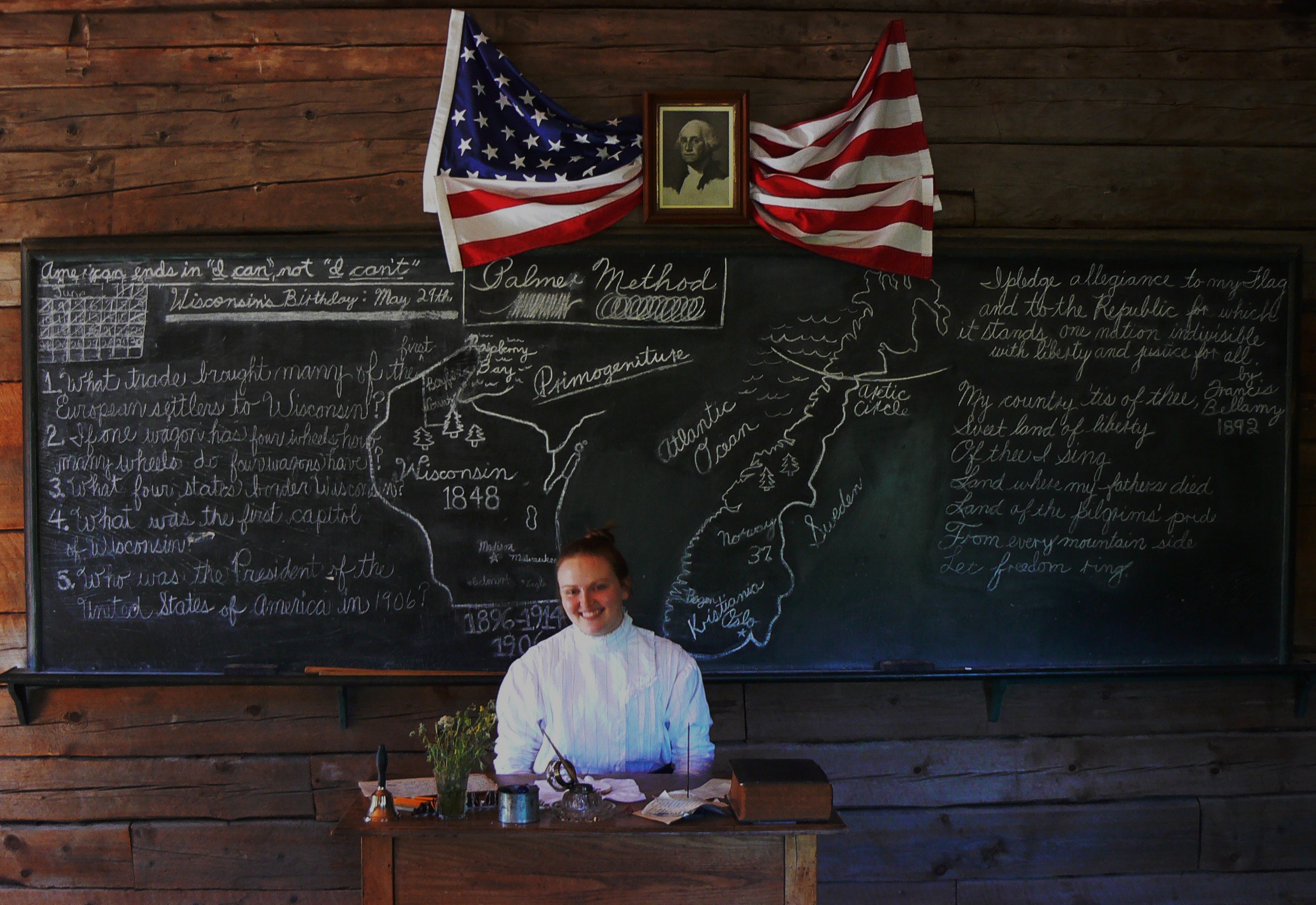
The Raspberry School is part of the Norwegian area of Old World Wisconsin. The one-room schoolhouse dates back to the late 19th century and brings back memories for lots of visitors who went to schools like this one. One fellow I talked to said he loved telling people that he graduated 3rd in his class…and omitting the fact that there were only 3 pupils in his grade level.
Multi-aged classrooms became a “new” education idea again in the 70s when I was in grade school and when my kids were in elementary school in the 90s, but ours only spanned two grades. I remember when we all walked home for lunch in the middle of the day. No lunch pails needed.
Each desk at the school has a slate and a slate pencil (no chalk, just slate on slate) and a copy of one of the McGuffey Readers. I never used one as a child. What about you?
But I found the most fascinating thing I learned last Monday at this school was about the Pledge of Allegiance. The 1892 version by Francis Bellamy reads: “I pledge allegiance to my flag and to the Republic for which it stands, one nation, indivisible, with liberty and justice for all.” With so many immigrants from different nations, allegiance to a new flag was part of public school education. It wasn’t until 1923 that the phrase “the flag of the United States of America” replaced “my flag”. Bellamy protested, but his opinion was ignored. Twenty years after that, in Japanese internment camps, all those over the age of 17 were asked if they would swear unqualified allegiance to the United States and “forswear any form of allegiance or obedience to the Japanese emperor, to any other foreign government, power or organization”. It wasn’t until 1954, when atheism and Communism were perceived as national threats, that “under God” was added. Francis Bellamy’s granddaughter asserts that the author of the original pledge would have objected to this change as well.
To what or to whom would you pledge your allegiance? Liberty and equality (which Bellamy wanted to include but knew the state superintendents were against equality for women and African Americans) and justice are the three great ideas of the American political tradition, according to Dr. Mortimer Adler. Are we in agreement on supporting these ideas in the U.S.A.? It’s something to think about as Independence Day approaches. Feel free to submit an essay in the comments section. Spelling counts, but neatness doesn’t (it’d be typed, after all).
Spinning Yarns
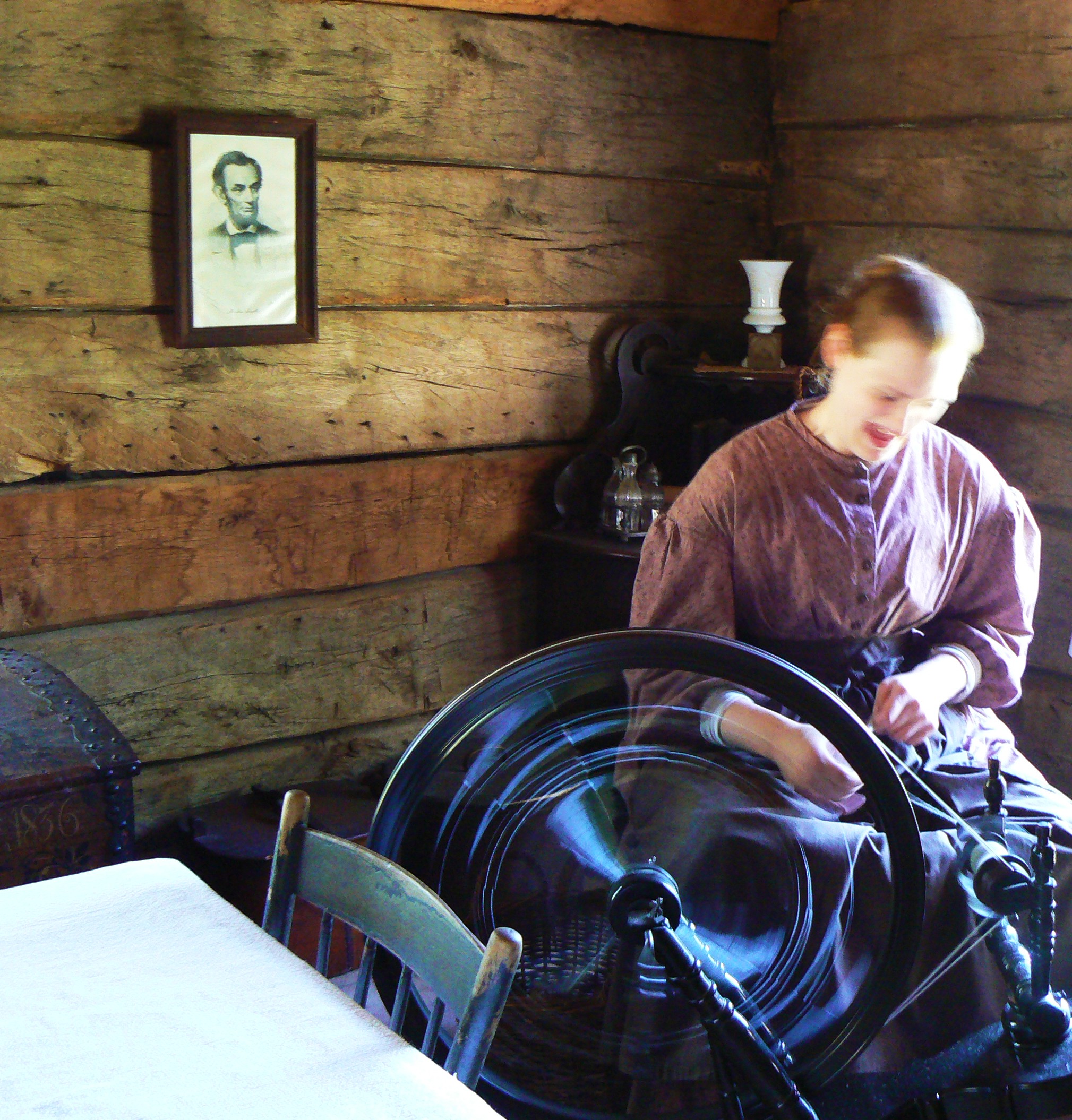
I took this picture yesterday at Old World Wisconsin. This is Rachel, one of my colleagues, at the spinning wheel in the Kvaale house. Rachel is over 6 feet tall, and it’s a wonder she hasn’t given herself a concussion every day as she passes from this room into the kitchen. The doorway is probably only 5 and a half feet tall.
The Norwegian immigrants knew how to stay warm – a very useful skill in Wisconsin winters, too.
Auf Wiedersehen, Schottler!
Today was my last day as the historic interpreter at the Schottler house at Old World Wisconsin. I’m going to miss Stud Muffin, the young male pig, and watching him grow fat. He still hasn’t figured out how to go outside…up one little ramp and down another on the other side…who said pigs were smart? I am going to miss the smell of cabbage roses and camomile in the garden. I will miss stringing rhubarb up to dry and making rhubarb pie. Oh! I have to tell you that the rhubarb pie I made DID get eaten after all, at least partially. They cut out a slice to display on a plate with a fork and some school group chaperone ate it while the interpreter was making sure the 45 kids running around didn’t break anything! I am satisfied that it was not too runny, as my objective was to improve upon the last display pie that was baked. And my darling daughter, the Approximate Chef, has told me that she whipped up some rhubarb and ginger sherbet the other day. She sent this photo along to share:
Today was a gorgeous day, though. Plenty of time for slowing down, too. One of the school groups was an hour late, so they skipped my area entirely. The other school group was 3 groups of only 9 kids, so it felt quite leisurely not to be herding 30 kids at one time. That meant that I could sit on the porch sewing, enjoying the quiet during the off hours. Three photographers with tripods and bunches of gear came by and snapped away. The Schottler farm is a still life paradise, really. And so monochrome friendly! Although the delphiniums in full bloom definitely deserve color.
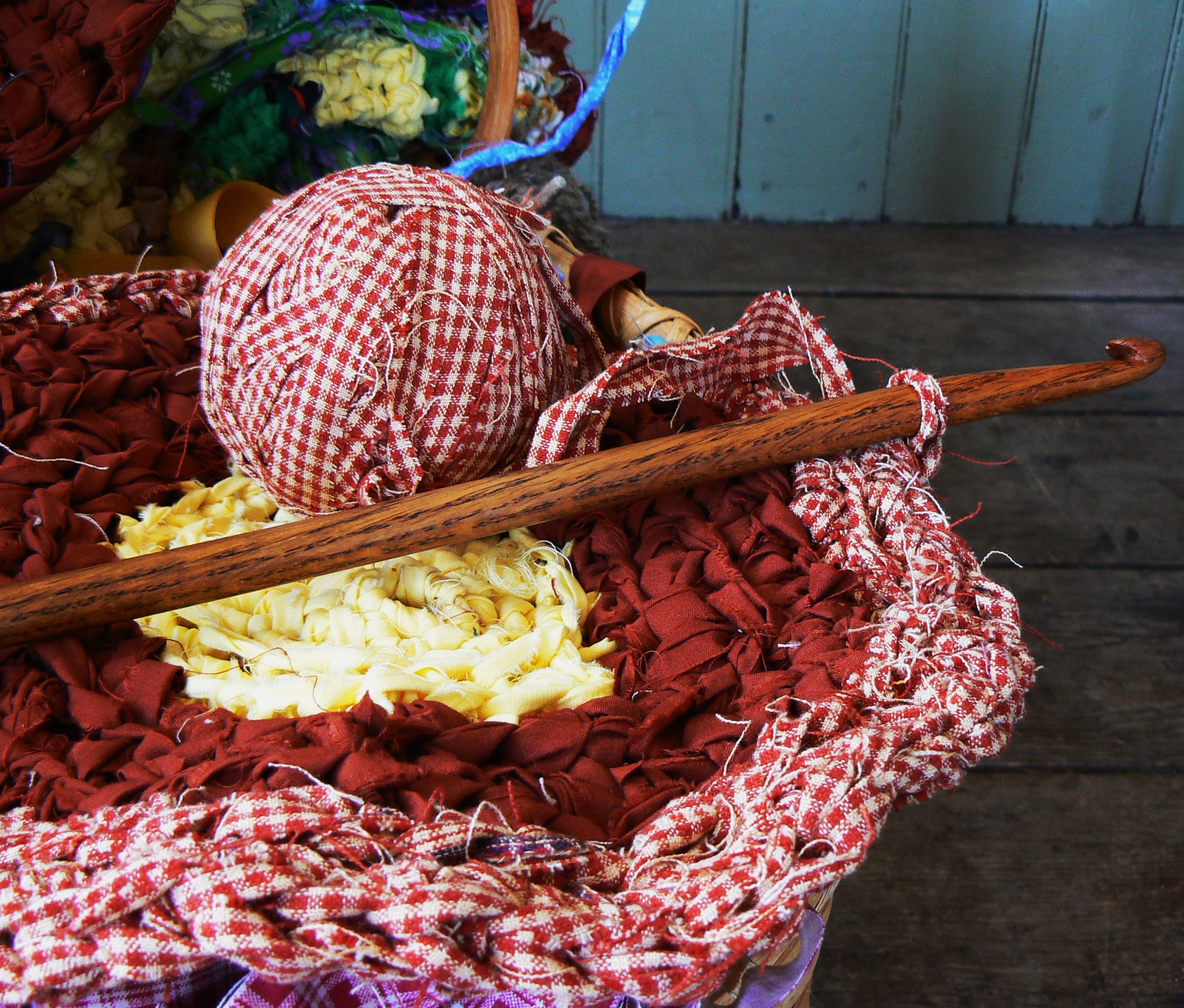
I’ll be a Villager next, five days a week. At Mary Hafford’s house, I do get a kitchen garden with lavender, sage, thyme, and rosemary. And I need to learn how to crochet rag rugs. It’ll be fun. Too bad I don’t know any welcoming phrases in Irish!
Sale Season
Happy First of June! It’s Garage/Yard/Rummage/Estate Sale season, and Steve is prowling the streets looking for used books and anything else that strikes his fancy. He came home today excited by a “find” he had made and eager to get my reaction. It wasn’t what he hoped for. He dug a little deeper, and I burst into tears. Poor guy! It must be tough living with a hormonal woman after all those years as a bachelor.
So, what exactly were my emotions? That’s always an interesting question to ask when the gates are down and everything is flowing, so to speak. I recognize that my typical posture is self-denial. I defer, I sacrifice, I put others before me. I was taught that was how “good Christian women” behave. So I’ve been living with Steve for a year and a half now, in his duplex, with all his stuff, his book business and collections and whatnot, without so much as a closet for my own things. He promised me a closet a year ago. “My” closet is stacked 6 rows deep in his books. Still. My photographs, in albums and framed pictures, are in his storage unit because there’s no room for them here. I miss having them available to look at when I’m feeling sentimental. That’s one angle. Here’s another. My late husband was a lot more materialistic than I am, too. He liked to spend his earnings on toys and gadgets and things that struck his fancy. The stuff he brought home was not second-hand, garage sale-priced stuff. It was usually the latest thing. I rarely saw the need for these purchases or agreed to the justifications, but I practiced swallowing my opinions because, hey, it was his money.
What do I really care about? It’s not about stuff, really. It’s about identity. Who am I when my environment is being shaped by someone else? I am the lady who loves baby pictures of her grown-up kids. I am the lady with a collection of elephant-shaped things. I am the lady with a few very sentimental pieces of jewelry. I have a million stories illustrated by artifacts which are now hidden away. I would like to tell my stories, display my pictures, showcase my collections and clear away the stuff that overpowers them. Or at least blend them with my partner’s. Equally. Fortunately, equality is really important to Steve, and he loved putting together “our museum case”, and he loves it when I stop deferring and actually tell him how I feel. So I told him.
Here are some photos I took last Friday of the Dodge Antique store in Algoma, owned by “Tom”.
Bee-bop-a-Ree-bop!
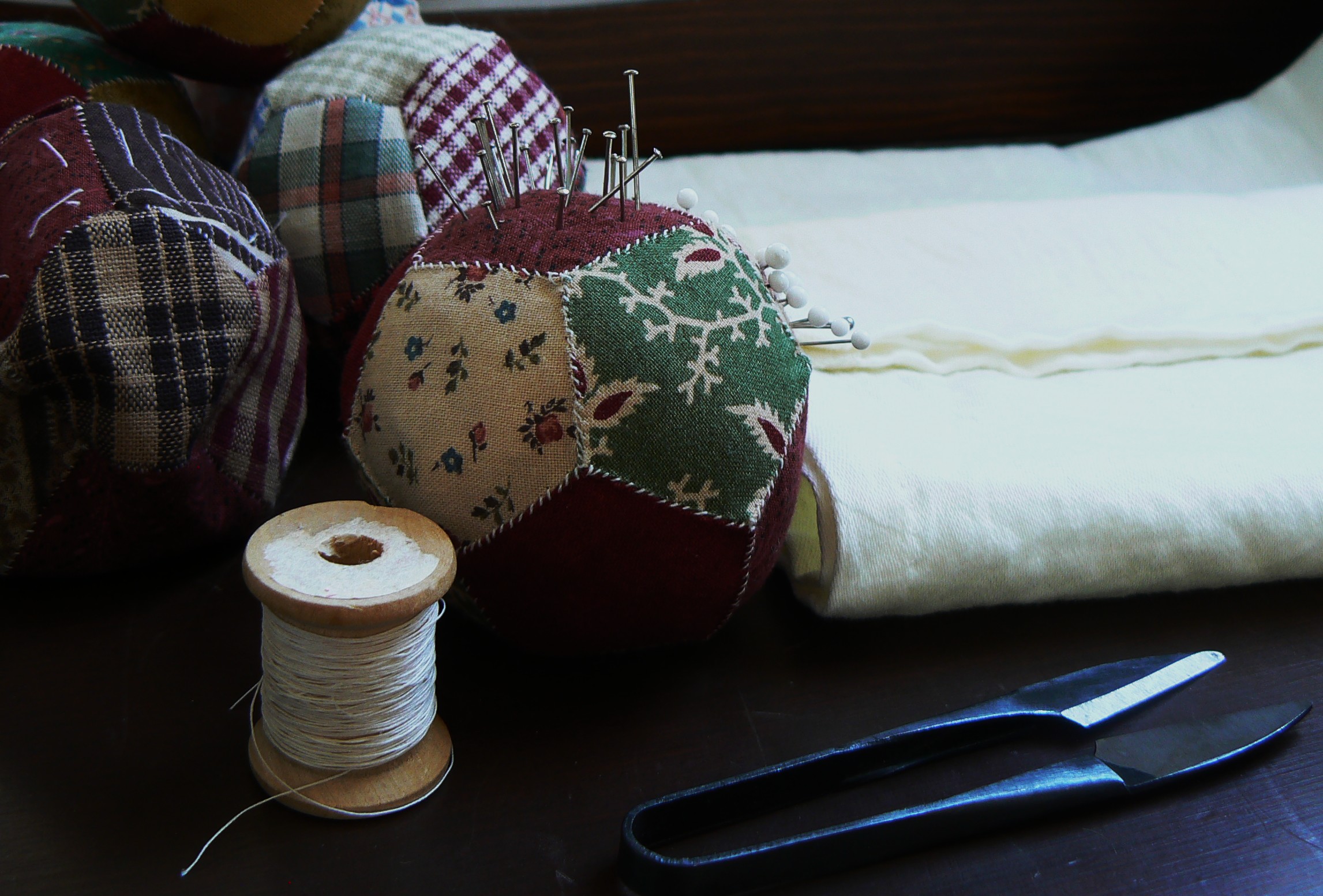
Guess what I made today in the wood stove at Old World Wisconsin? Rhubarb pie! First time I’ve ever made it and first time I’ve ever used a wood burning oven. It’s a display pie, meaning no one is going to eat it. The crust was a tad dark on one side, but it looked pretty good. I have no idea how runny or crunchy the inside is. Maybe someone will cut into it tomorrow. It was lovely just sitting by the wood-burning stove, keeping toasty in the 50 degree rainy weather, smelling the pie bake and hemming handmade linen towels. We didn’t have many visitors, so I felt like I was having a cozy day in my own little corner of the 19th century, by myself. Nice work, if you can get it, I think.
So now that I’m back home, I’ve got to figure out if there’s something I can whip up for dinner in this century. Plus, I’ve got 3 days of dirty dishes in the sink to wash. Domestic bliss. For your entertainment, let me showcase a guest photographer: Steve. He took this shot while we were hiking on the Ice Age Trail on Monday.
Exteriors
Another day at the living history museum under my belt. The new thing I did today was make rhubarb sauce from the gigantic rhubarb plants in the garden. Not that I actually ate any, I just boiled it in water on the wood stove for a few hours so that the smell would permeate the summer kitchen. I didn’t have any sugar at first, so my initial taste was very sour! It reminded me of my mom making rhubarb and custard from the rhubarb in our garden. My mother didn’t garden a lot, so this was impressive to me. I know she helped her parents with a “Victory Garden” during WWII, but she was pretty young. She shops at farmer’s markets and does delicious things with fresh produce, but she doesn’t grow it herself. I’m looking forward to more garden-to-table assignments.
I love that this job allows me to be outside so much. We had thunderclouds overhead for much of the day, but no rain. The humidity was high, but there was a breeze kicking up from the storm front miles away. And I noticed a fishy smell first thing today…I guess with storm conditions you can smell Lake Michigan from 50 miles away?! Unless there’s another explanation. Anyway, I thought I’d share some photos I took of outbuildings and such.
As you can tell, I’ve got a fabulous work environment! I’m loving this job. 🙂
Making New Friends
During training for my new job at Old World Wisconsin, I was introduced to many new friends. On the last day of training, I took some pictures. Here are some portraits and brief bios about my new co-workers.
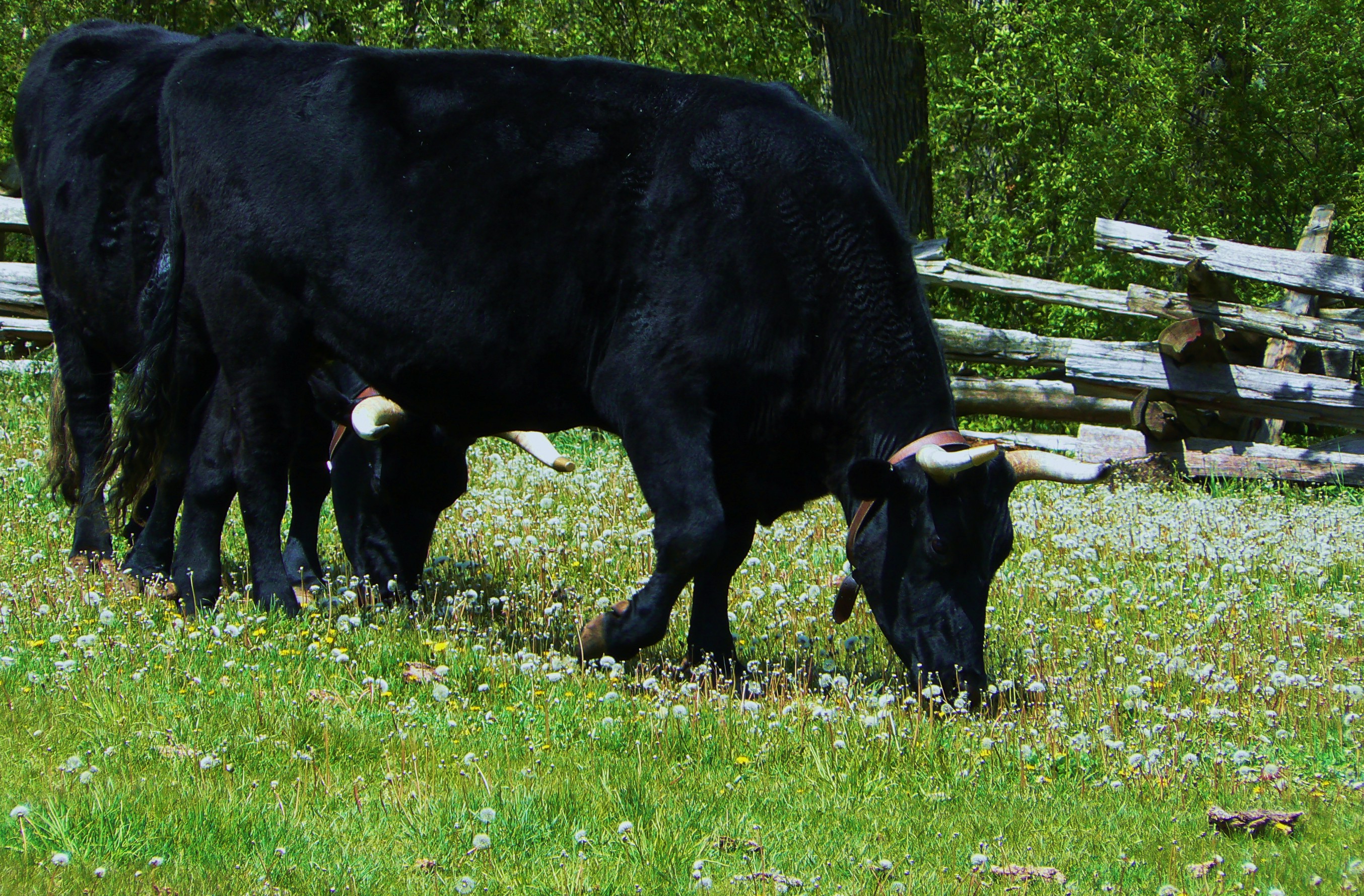
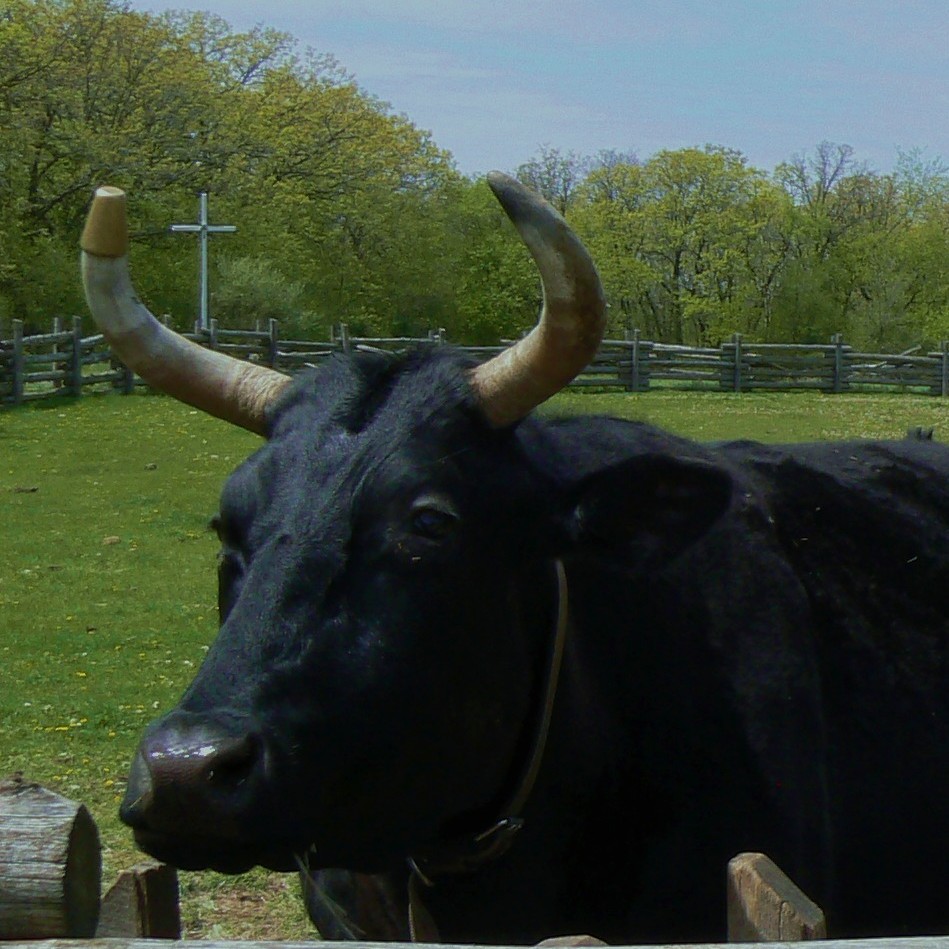
This is Bear and Ted, out in their favorite pasture next to the 1860 Schultz farm. They are a magnificent team of oxen. Bear is on the left, with a brass horn cap on his left horn. (“Bear left” is how I remember which one he is.) This is so that when he is yoked to his buddy Ted, he doesn’t gore him by accident. Each of them weighs about a ton (2,000 pounds). They like to be rubbed under their chins, but they will drool on you. I’ve been told that I will now enjoy good luck because Bear drooled on me. I like how this photo reminds me of the drawings for the book Ferdinand by Robert Lawson.
This is Ted with Bear behind. (Okay, I couldn’t stop myself.) They are clever escape artists, but also well behaved. They managed to bump up against the logs that cross the fence opening in such a way that they worked them free from their supports. They carefully stepped over them and went out to the garden in front of the homestead and helped themselves to the red cabbage growing there. Then, they went back into their pasture. The next morning, the staff looked at the obviously nibbled produce and the huge hoof prints in the garden and thought, “Oh no! The oxen are loose!” But there were Bear and Ted, looking innocent as can be from the pasture enclosure. But then they checked the gate, which these guys failed to close behind themselves, and their guilt was confirmed. I give them credit for sticking to the garden paths and returning home by themselves.
This is a close up of Ted. He’s a good worker, slow and steady. He pulls carts and plows and isn’t as skittish as a horse. You can hook up a cart to the team and go into town, but it’ll take you a while. They can run as fast as 30 miles an hour, but not for long. You can’t saddle them up and ride them because their spines form a peaked roof that’s uncomfortable for the rider (and probably for the animal as well). Sometimes a farmer would put a child on the ox’s back for a short time, just for fun. They are very docile, and these guys respond to commands like “Gee” and “Haw” and “Whoa” and “Get up” and “Back up” very cooperatively. They kick to the side instead of straight back, so when you walk beside them, you want to be in front of their back legs. So, that’s Bear and Ted. Here’s another team member. We call her Queen.
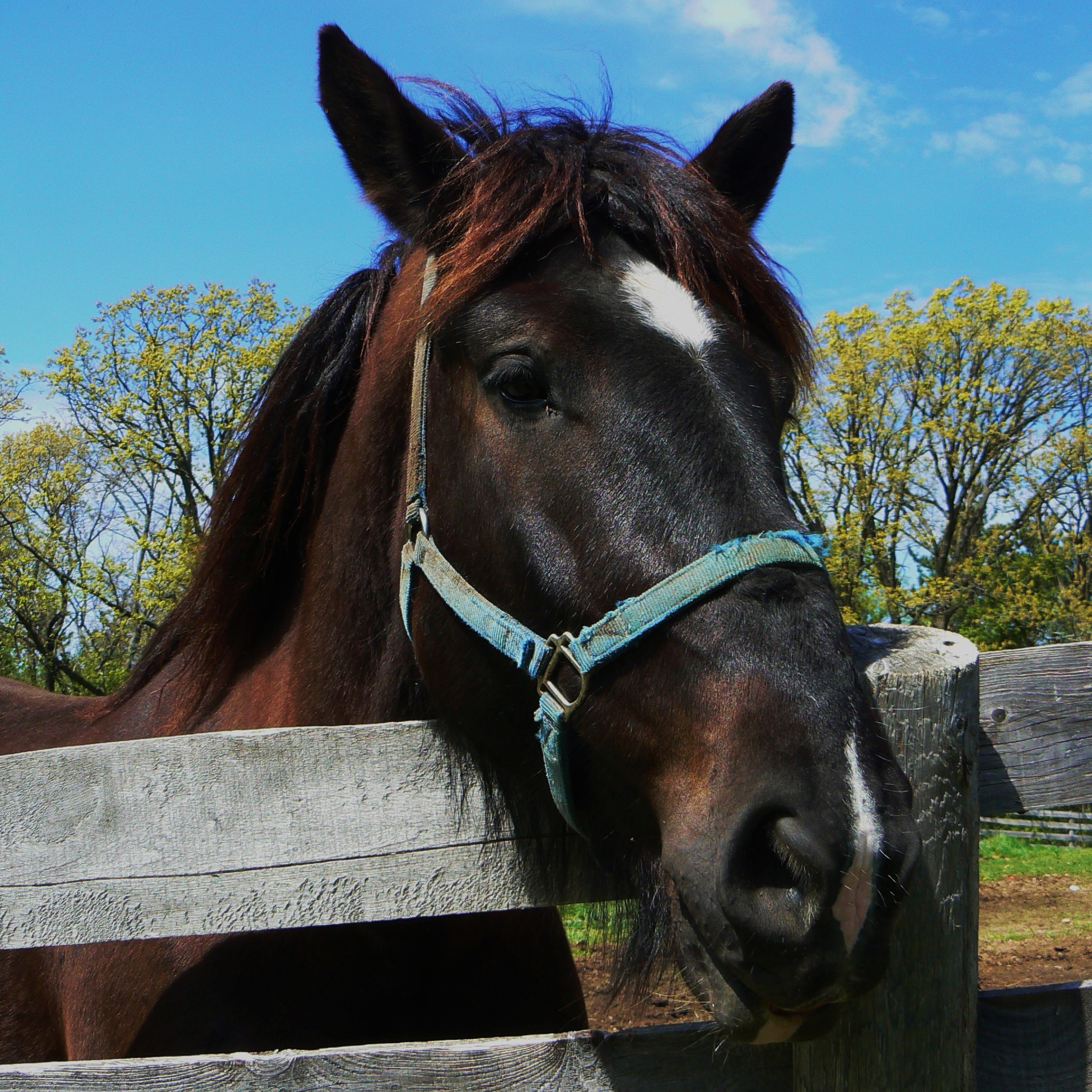
She and Quincy make up our team of Percherons. Stud horses were brought over from Europe in the mid 19th century and bred with local mares to improve the stock of draft horses for heavy farm work. I don’t know the pedigree of Queen and Quincy, but I imagine they’re crossbreeds. What non-profit museum could afford purebreds? They do a lot of wagon hauling in the harvest season, I think. Kids love to see them, but they’re massive and a tad dangerous. We have some quite elderly horses who provide the petting and photo opportunities for visitors with less risk. Steve put his apple core in Queen’s feed box just about 20 minutes before I snapped this photo. That may be why she’s giving me such a benevolent look.
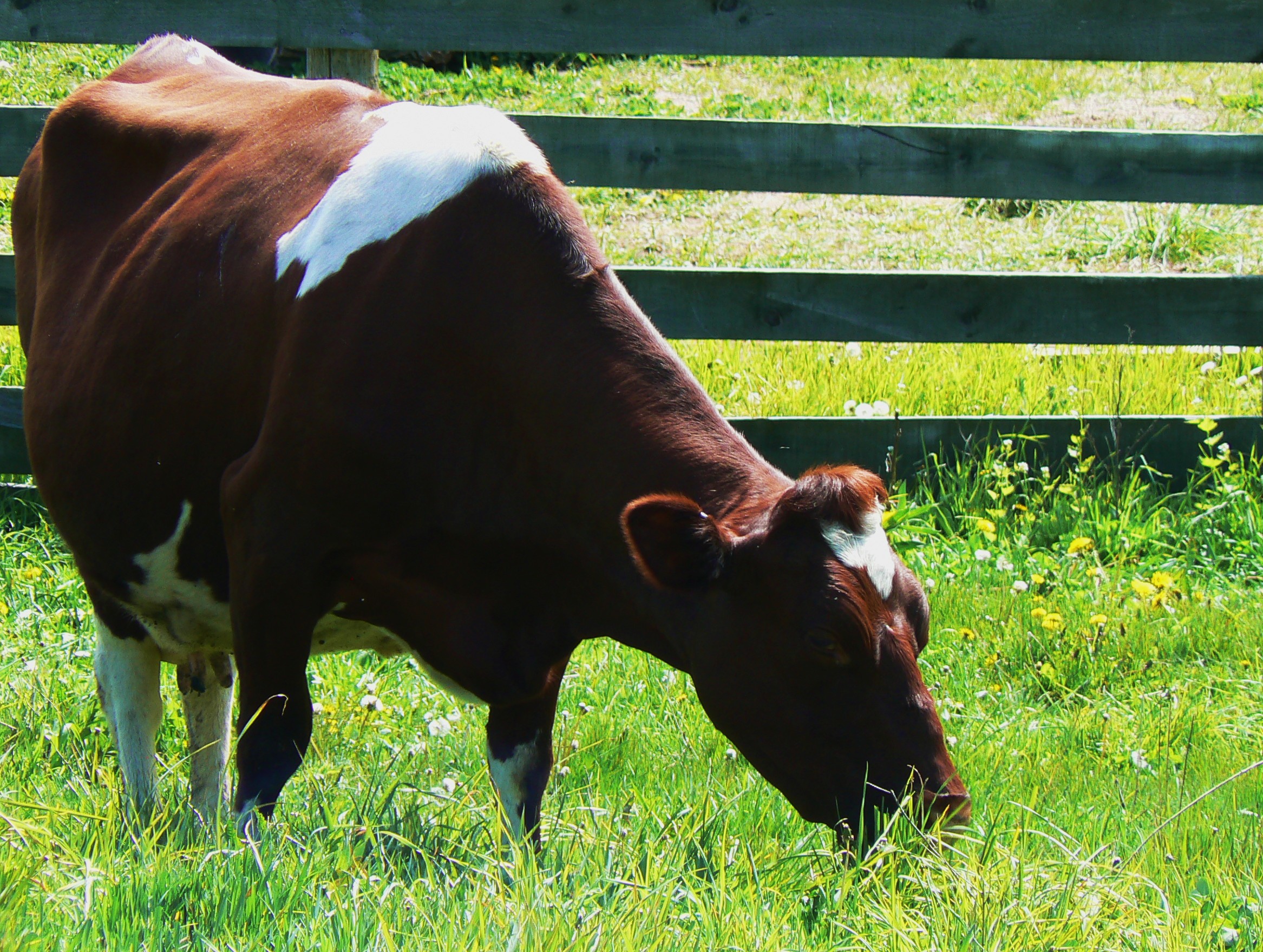
This is Lily. She and her paddock mate Daisy (who was known last year as Thelma) are over in the Koepsell farm, where they are installing a new exhibit called Life on the Farm. They’re erecting a petting barn for baby animals, and Lily will be used for milking after she’s calved. Oh, yes. She’s pregnant. Look in her eyes and you can see the fatigue and determination of a heavily laden mother-to-be, can’t you? She will be producing milk for our dairy demonstrations: cream separation, butter churning, cheese-making and such. I am hoping to get the opportunity to milk her. I used to milk goats at a camp when I was in college, and I really enjoyed it. We milk by hand at OWW, of course. It seems like a very intimate way to get to know another working mother. Perhaps it will produce a beautiful friendship.
The pigs who will be in the piggery over in my area haven’t been moved onto the site yet. One sow just gave birth to a litter of 7 about two weeks ago, and another is about to drop her litter any day. The piglets are still too young and the weather too cool, but I will get a batch in a few weeks, I imagine. I’ve been instructed to name them things like “Bacon” and “Hammie” if anyone asks. Hog butchering is one of our autumn events.
I am very excited about working with these creatures. I want to be more aware of my anthropocentric mindset and challenge myself to think outside of that box. I wonder about the relationships we have with animals and the domination that we assume in those relationships. I expect that there is a lot more to discover than what we are used to or instructed to consider.
Freecycling in the Family
Transitions. Stuff. Accumulation and de-acquisition. Now that I am almost 50 years old, I have seen a lot of cycles of hoarding and purging. When I was a kid, my mother would periodically declare that it was time for “one great hour of swearing”, meaning it was time to clear out clutter and clean house. She is a highly organized and tidy person, rarely sentimental about material things. However, she is also an historian, an archiver. Things that were deemed valuable were carefully stored. Sterling silver was always wrapped in the proper cloth. Her off-season shoes were in a zippered case, so were blankets. Photo slides and correspondence were kept in carefully hand-constructed boxes of just the right size and shape. Sometime in the 70s, recycling became a household habit. She always had her glass bottles in separate containers, according to color, and everything perfectly sorted. She’d load up the station wagon and make the trip to the recycling center about once a month. I got to help her throw stuff on the appropriate piles or in the dumpsters. Breaking glass can be fun! She’s worked for the past few decades as a museum docent, cataloging the music collections. She has my wedding dress stored in an archival quality box. She keeps a full pantry (for earthquake preparedness), but she is not a hoarder. I think she regularly updates her pantry and donates stuff she’s not going to use before its expiration date. She’s a great example to me, and ahead of her generation’s learning curve.
Steve’s aunt is delightful and messy. She thrills for a bargain. She will go to great lengths to capitalize on a sale. She knows that this creates problems for her, though, and is somewhat like a struggling addict, trying to quit. She lives alone in the house in which she cared for her mother. She’s never been married. She solicits our help in taming the clutter she has accumulated in that house. Steve is a willing worker, completely kind and patient, but always clear about his own limits. He has some professional experience with estate sales from the book business, so he has worked with elderly strangers as well doing similar service. He can assess and clear out an entire house in a weekend, if he must. No one boxes more efficiently, in my opinion.
What do we do with stuff?
Reduce, reuse, recycle, freecycle. Keep it out of the landfill, off the streets, out of the woods and wetlands. Don’t buy it if you don’t need it; if you do anyway, give it away. My mother has always had a habit of sending me “care packages” of stuff she acquired, often by mail order, that wasn’t quite what she wanted. She was always on the lookout for a good home for something she didn’t want. I would often end up taking some of that stuff to donate to Goodwill or the Salvation Army, but it didn’t get thrown away. We’re working on finding good homes for Steve’s aunt’s stuff. I’m fixing to give care packages to each of my children from what we brought home yesterday. Beauty and cleaning products from her bathroom, mostly. The unopened items will go to a local shelter. A bottle of shampoo that was used once and turned out not to be to her liking can make some useful suds. Would you just pour that down the drain? Somehow, I can’t.
How long do you figure it would take to use up the stuff that’s already been made before we make more? Depends on the stuff, of course. But there must be categories of products that we could use up…and then, maybe, discontinue forever. How many varieties of shampoo do we need? How many varieties of cleaning products? You could use Dr. Bronner’s Magic All-in-One Soap (made from hemp and essential oils) in peppermint to clean your entire body (including teeth), your clothes, your dishes, your surfaces, your car, etc., and we’d never need to make anything else. Sounds like de-cluttering to me. Of course, there are a million ways to disagree with me and get on your own soap box. We like choices. Depending on how old you are, you may be just beginning to explore all your options, and you’d hate to have anyone restrict you. Wait 50 years. Then you may be cleaning out your house and wondering, “Why do I have all this crap?!” You’ll give it to your kids, who want to have stuff but have no money to buy it. Some day there’ll be a story out there of a family who free-cycled the same object for 5 generations. Why not? I’m still using my grandmother’s electric mixer/food grinder. But nowadays, things are built cheaply according to the economic principle of Planned Obsolescence and the landfills overflow. It’s a sickening trend.
One great hour of swearing is not gonna cure the planet of its clutter these days. (sigh) We’re way out of scale. Something’s gotta give. I wonder what…and how… and when.
Home Economics
It’s ALIIIIVE!!! It’s in the kitchen, and it’s growing! I’m waiting for it to double in size, then I’ll screw up all my courage and give it a good punch! I’m gonna break it in half, then I’ll let it alone for about an hour while the two halves grow again. It sounds kind of like an amoeba, but actually it’s whole wheat dough. Yup, I’m making bread. By the time I get it baking, I’ll be making split pea soup as well, but I have to take a walk to the grocery store to get some dried mushrooms for that.
We have about 4 cubic feet of cookbooks in the dining room. I often just look up a recipe online, but that makes Steve cringe. He thanked me this morning for asking him to direct me to one of his books. So I am celebrating my participation in lower-tech food preparation. I will not get into my car and drive to Panera for bread and soup. I will make it myself. And I don’t want to pat myself on the back for this. This is not a revolutionary step. This is what almost every woman was able to do 100 years ago.
I’m not exactly sure what the comparative benefits are to this approach. I haven’t researched the whole economic picture of Panera restaurant vs. homemade. I just know that I’m not making an income (aside from being paid for giving one private voice lesson a week), and so I don’t want to spend much. Is it possible in this day and age to live without spending? Well, just yesterday, I ran across this news article about a grandmother in Germany who hasn’t used money for 16 years. http://wakeup-world.com/2011/07/18/happy-69-year-old-lady-has-not-used-money-for-15-years/ I really like that idea. Capitalism isn’t my best friend. WalMart makes me shudder. I read about theft in my town paper every week. What would happen if more of us were able to get off that treadmill somehow and live without using money or coveting goods? Would we be able to scale back on damage to the environment? Would we be able to scale back our population? I know all these issues are intertwined, and I’m still wondering how they effect each other in the big picture and in my personal life.
Steve & I have been thinking about going to a conference on Population that will be held in Telluride, Colorado over Memorial Day weekend. It’s called Moving Mountains Symposium: Population. It’s a film festival as well, and features Dave Foreman (of The Rewilding Institute) as one of its keynote speakers.
So all this is just rising in my consciousness as the bread is rising downstairs. I’m not quite ready to present it all sliced and buttered for this blog, but I like to think that IT’S ALIIIIVE in me in some way. Stay tuned!