Unknown's avatar

Retreat

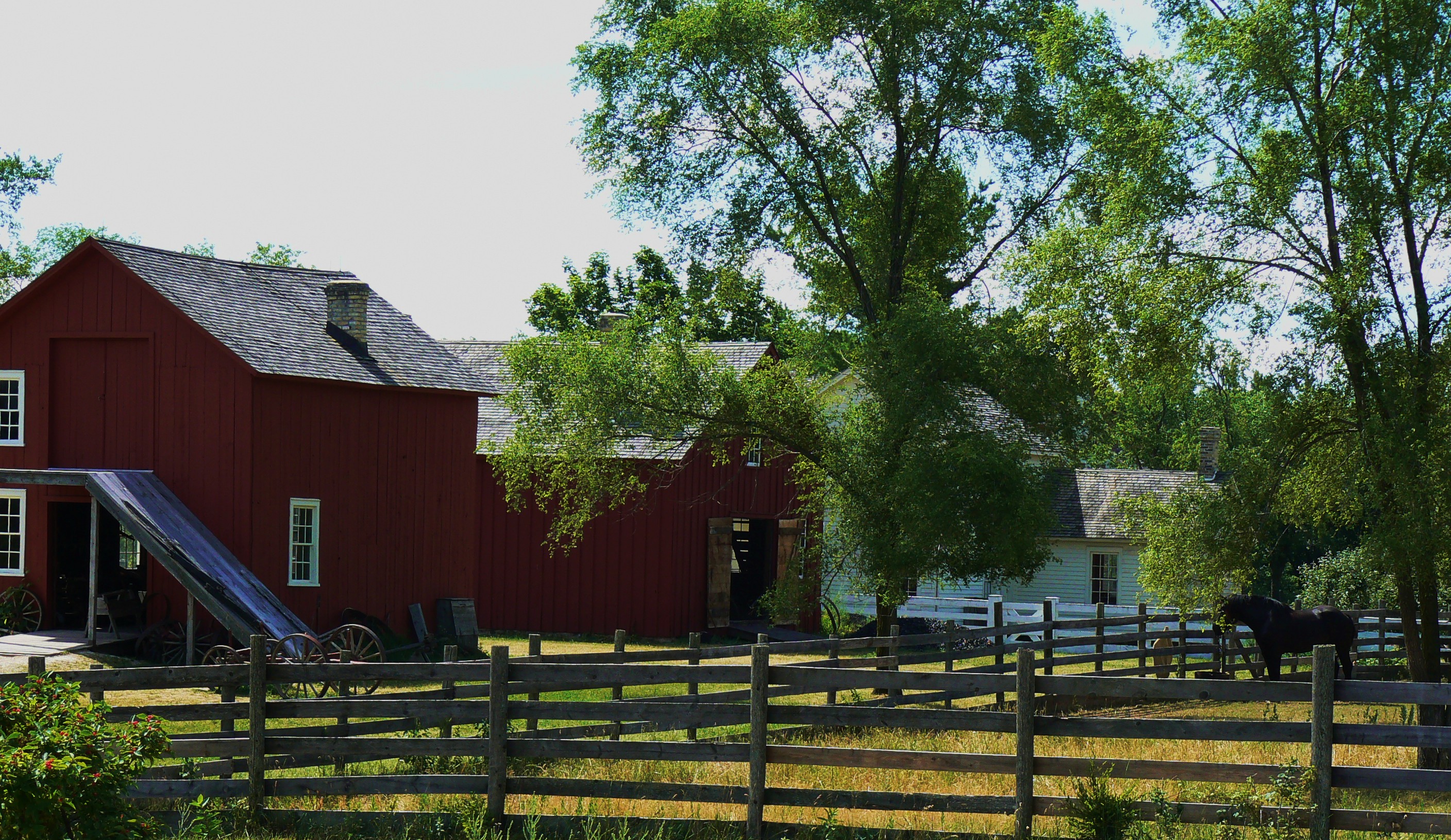
The Ketola family were Finnish immigrants who settled in Wisconsin just before the turn of the 20th century.  Their daughter had scoliosis and was mostly bedridden from the age of 20 until her death at age 40.  When her parents died (in their 90s!), her brothers took care of her.  They bought her a parlor piano and set it up in her bedroom so that they could keep up a public appearance of humble simplicity by closing the door when visitors came.  It wouldn’t do to have the neighbors think they’d squandered their earnings on such a luxury!  The brothers never married and lived in the house without electricity or plumbing well into the 1960s.  They had electricity in the barn, though, for milking. 

Your family, your bed, and your musicThat sounds like a nice retreat to me!  Healing wishes to all….

Unknown's avatar

Spinning Yarns

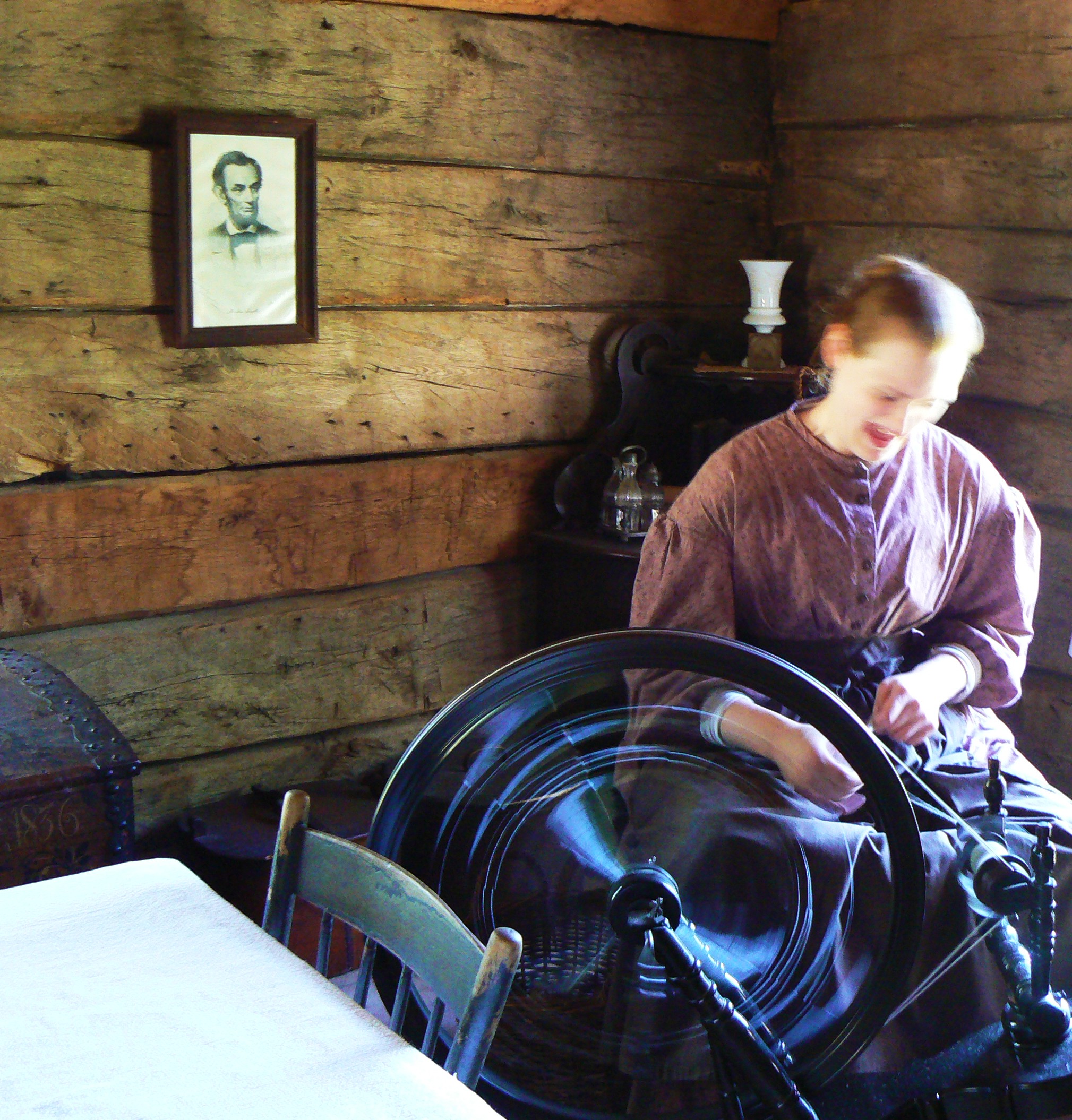
I took this picture yesterday at Old World Wisconsin.  This is Rachel, one of my colleagues, at the spinning wheel in the Kvaale house.  Rachel is over 6 feet tall, and it’s a wonder she hasn’t given herself a concussion every day as she passes from this room into the kitchen.  The doorway is probably only 5 and a half feet tall. 

The Norwegian immigrants knew how to stay warm – a very useful skill in Wisconsin winters, too.

Unknown's avatar

VIP Tour

Late in the afternoon yesterday, some VIPs came to tour Old World Wisconsin.  Unfortunately, they arrived only an hour before closing and didn’t have ample opportunity to view the 575 acres and 50 buildings that comprise this living history museum.  So today, my day off, I took them back to the site and gave them a personal tour.  I also secured for them a copy of the historical gardening book that our expert, Marcia Carmichael, published last year.  Putting Down Roots: Gardening Insights from Wisconsin’s Early Settler’s includes historical references, tools and plot layouts, produce recipes from each ethnic area, and a lot of other wonderful information and sumptuous photographs of the meticulously researched and maintained gardens.  I know this couple is beginning to practice organic gardening, and they are eager to learn all they can.  In addition to that, the young man is a carpenter, and was thrilled to see the craftsmanship on the original structures.  They were able to get some behind-the-scenes photos and detailed descriptions of the building methods of the 19th century.  Each of the interpreters in the various houses were in fine form, communicating information and interest  in a very friendly and professional manner.  The weather was perfect for our visit, and we skipped the tram rides and walked the entire circuit of trails through the site.  It was an altogether delightful tour, and I enjoyed seeing parts of the museum that hadn’t been included in my training schedule.  I consider it a privilege to have been invited to host this marvelous young couple.  Who were they?  My daughter, Rebecca, and her boyfriend Joe. 

In the sauna at the Finnish Ketola farm

One of the friendly faces on the tour


Unknown's avatar

Midsummer Magic

We’re closing the museum early tonight.  Bands with modern sound equipment, street vendors with FOOD, and other period inappropriate shenanigans will materialize in the Village for a midsummer festival (and fund-raiser).  Staff members get to mingle, eat, drink, and dance for free!  Guess where I’m going to be after hours!  Here’s a link to show you more.

Unknown's avatar

Be Cool!

Even though the calendar says that summer is still officially 2 days away, I beg to differ.  It’s 94 degrees F and humid here in Wisconsin.  Let’s just call it summer already!  At work, folks are already bringing in treats like ice cream sandwiches, freezer pops and a keg of root beer with a cooler of vanilla ice cream for making floats.  People stand around talking about the heat, which, frankly, doesn’t improve anything.  We work at an outdoor living history museum; we don’t have air conditioning, just like people for centuries didn’t have air conditioning.  I don’t have air conditioning in my 21st century home, either.  It’s not that big a deal!  Slow down, strip down, get wet, make a breeze, and evaporation will happen eventually.  And while you’re waiting, silent and still, be amazed at how much life is thriving around you!  Summertime!! 


Unknown's avatar

Friday Night Dancing

After the living history museum closes and I’m finished my work for the day as an interpreter in St. Peter’s Church, I’m changing out of my corset and bustle and into modern day country dancing togs!  There’s a barn dance tonight in the octagonal barn.  Square dancing is something that I’ve enjoyed since grade school when Mr. Maghita, the gym teacher, would call out the squares and teach us to promenade, doe-see-doe, and allemande left with our classmates.  I didn’t even mind the boy cooties.  Even better, though, was the Girl Scout square dances when I got to dance with my father.  Which reminds me of a funny story….

  On my 15th birthday, my older sister Sarah and I were staying with my father at the historic Broadmoor Hotel in Colorado Springs.  We had just delivered my sister Alice to the University of Colorado, Fort Collins and were heading back to California.  As we checked in, I noticed a sign in the lobby advertising that there would be square dancing on the patio that evening.  It sounded like a perfect way to celebrate my birthday, so after dinner, we made our way out to the terrace.  I noticed that there were a lot of people dressed in square dancing outfits – ladies in ruffled skirts that stuck straight out, gents with string ties and cowboy boots.  I lamented the fact that I hadn’t really packed for this occasion.  I also wondered why all these people had pinned on name tags with the same logo.  As the music started, people started squaring up, and my father promised me the first dance and asked my sister to wait her turn (since it was MY birthday).  When all the squares were completed, I spotted a rather disgruntled couple in costume sitting on the sidelines.  The caller and the dance started up, and the other couples in our square, in professional regalia, started ushering and dragging my father and I around to the dance steps being announced.  Finally, I started putting all these clues together and realized, to my complete teenaged humiliation and embarrassment, that my father and I had just crashed a Square Dancing Performance!!  I had always thought of square dancing as a teach-as-you-go, anyone-can-play kind of thing.  It never occurred to me that the hotel guests were supposed to be simply spectators!  My sister was so happy that it wasn’t her birthday, allowing her to be spared this special treatment.  Ah well, Daddy.  It makes up for there not being enough room for us to dance together at my wedding reception in the parish hall of the church 6 years later.

So tonight, Steve & I are dancing.  I’m pre-posting this because I intend to get home from Old World Wisconsin all hot and tired and in need of a shower and sleep.  Enjoy your Friday night, friends!  I hope you DANCE!!!

P.S. Becca – you know this reminds me of you!

Unknown's avatar

Little House in Old World Wisconsin

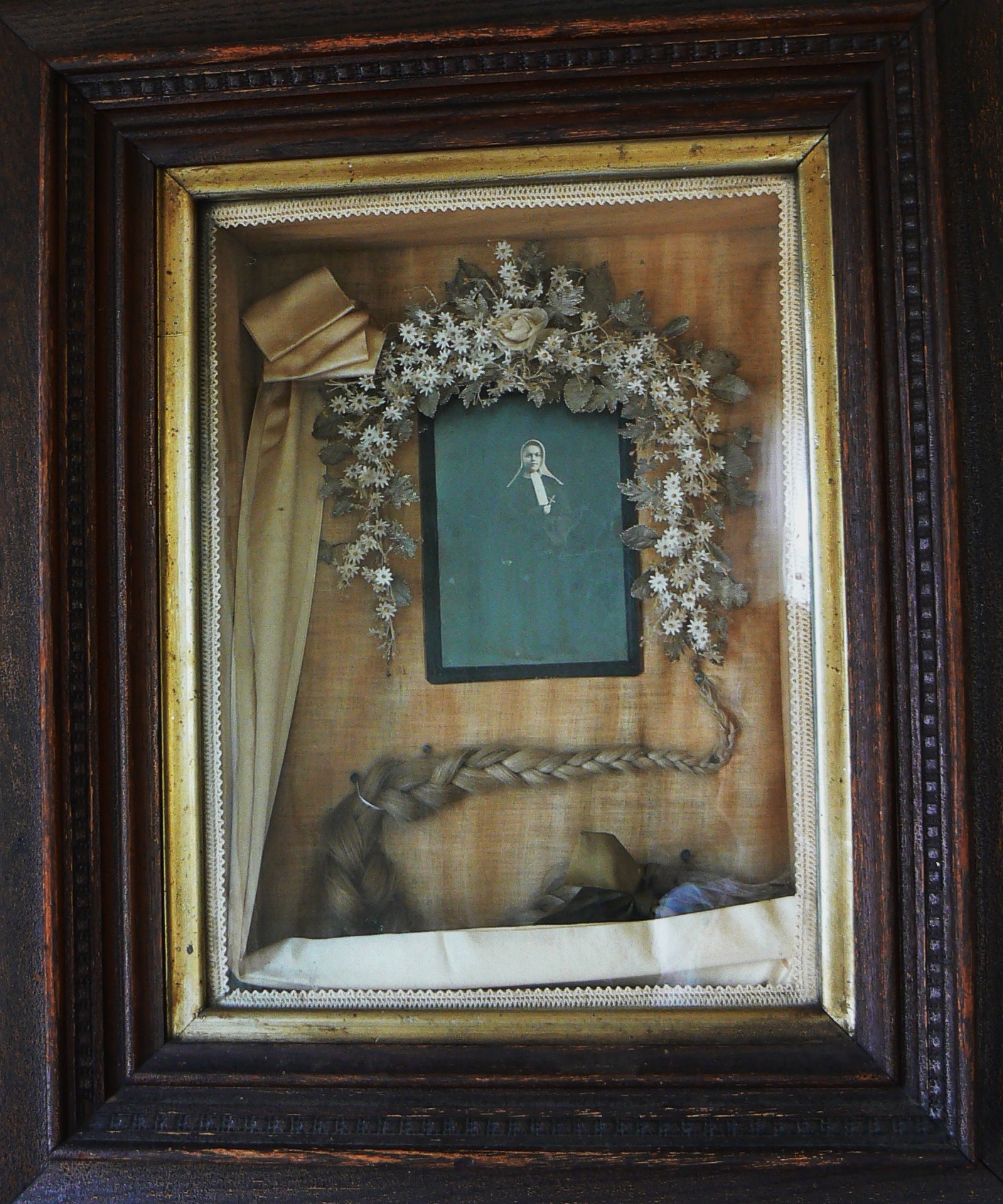
Laura Ingalls Wilder was born in Wisconsin in 1867, in a Little House in the Big Woods (near Pepin, WI, close to the border of Minnesota).  Mary Hafford, the Irish immigrant who lived in the house where I work as an interpreter for the living history museum, Old World Wisconsin, was widowed in the year 1868 with 3 small children and lived as a renter in a small village near Watertown, WI.   The Ingalls family continued to move west and eventually set up a homestead in South Dakota, but Mary Hafford worked away at her home laundry business and eventually achieved social and economic prominence in her little village.  In 1885, she had a new house constructed on the property that she had bought.  She never learned to read or write, but her children did.  Her youngest daughter, Ellen, studied dressmaking, a skilled trade, and became a live-in dressmaker.  Ellen was married in 1891 (six years after Laura Ingalls married Almanzo Wilder), and her mother hosted a reception and dinner for 75 guests.  Three months later, Mary Hafford died of dropsy.  I imagine Ellen Hafford Thompson and wonder what stories she might have written about her life in the Little House where she lived.  I have a burning question: what happened to her older sister, Ann, who is conspicuously absent from all records from the mid-1880s on?  Did she die?  If so, why isn’t she buried next to her father & mother?  Did she go into a convent?  Did she elope with a Lutheran?  The mystery remains unsolved!

The neighbors’ backyard

Trusty “Rapid Washer”

A shadow box memorial to a young woman who had taken religious vows. The braid that was cut off is all the family would ever see of this loved one after she went into the convent.


Unknown's avatar

New Digs (well, actually, really old digs)

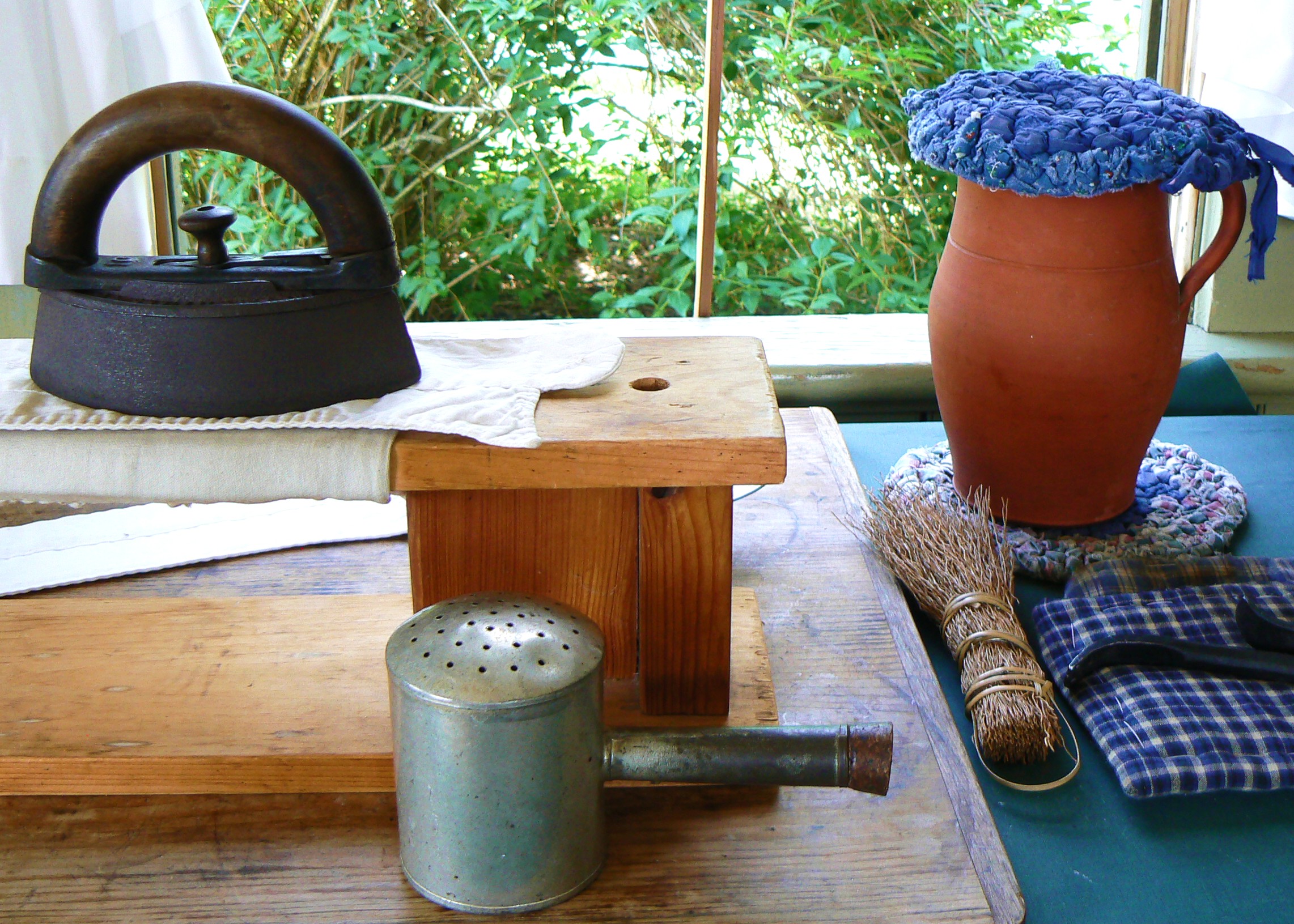
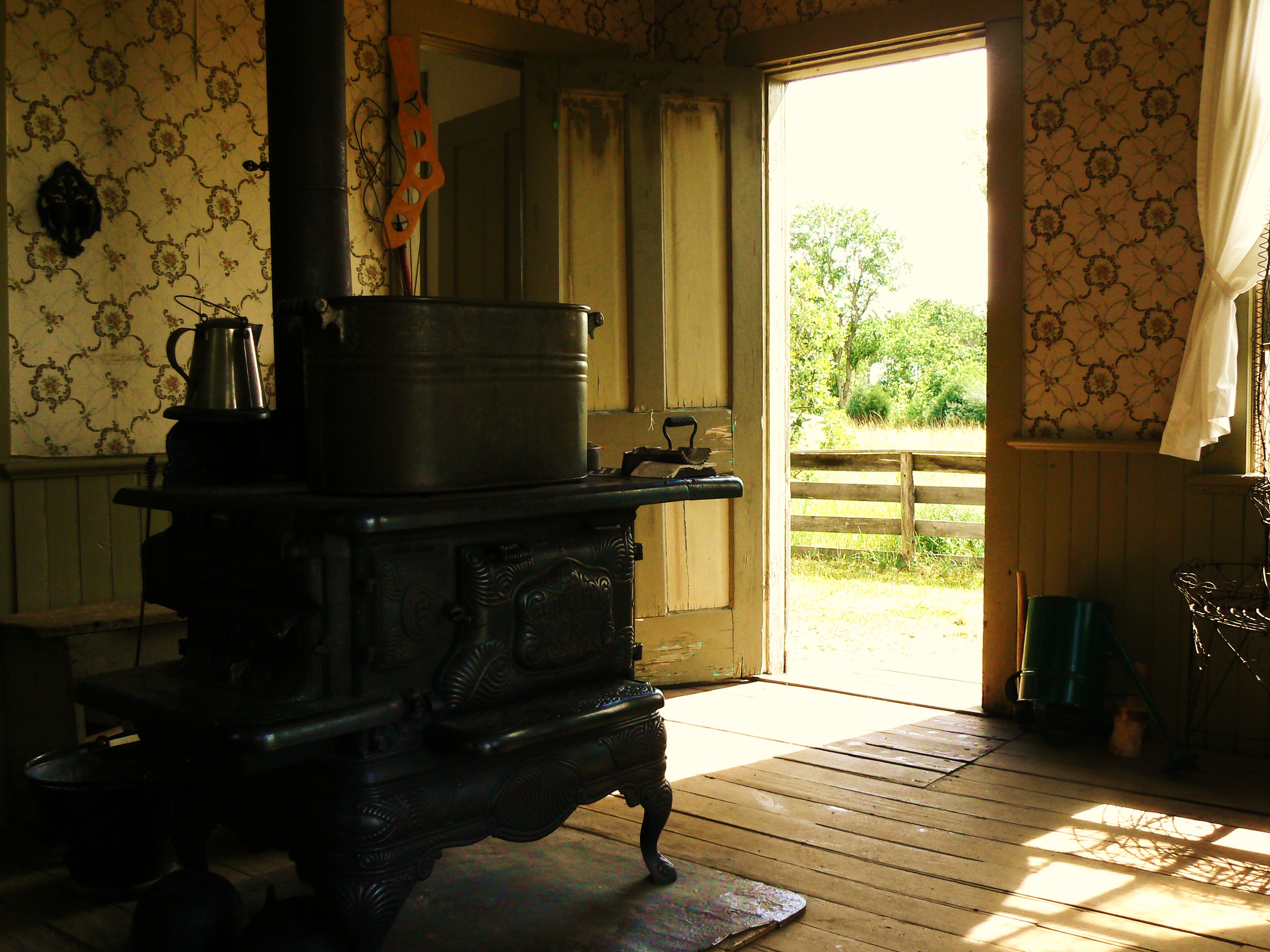
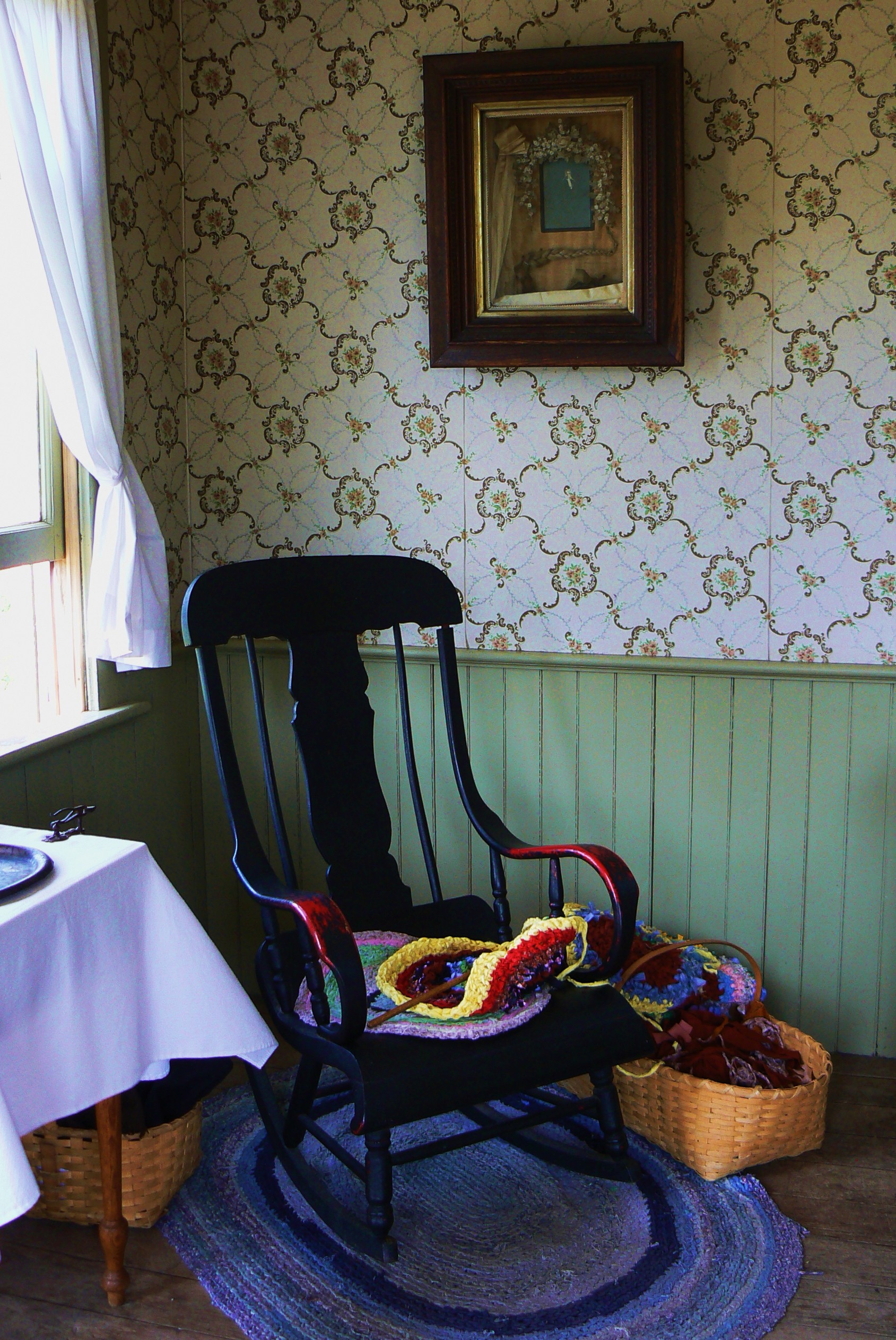
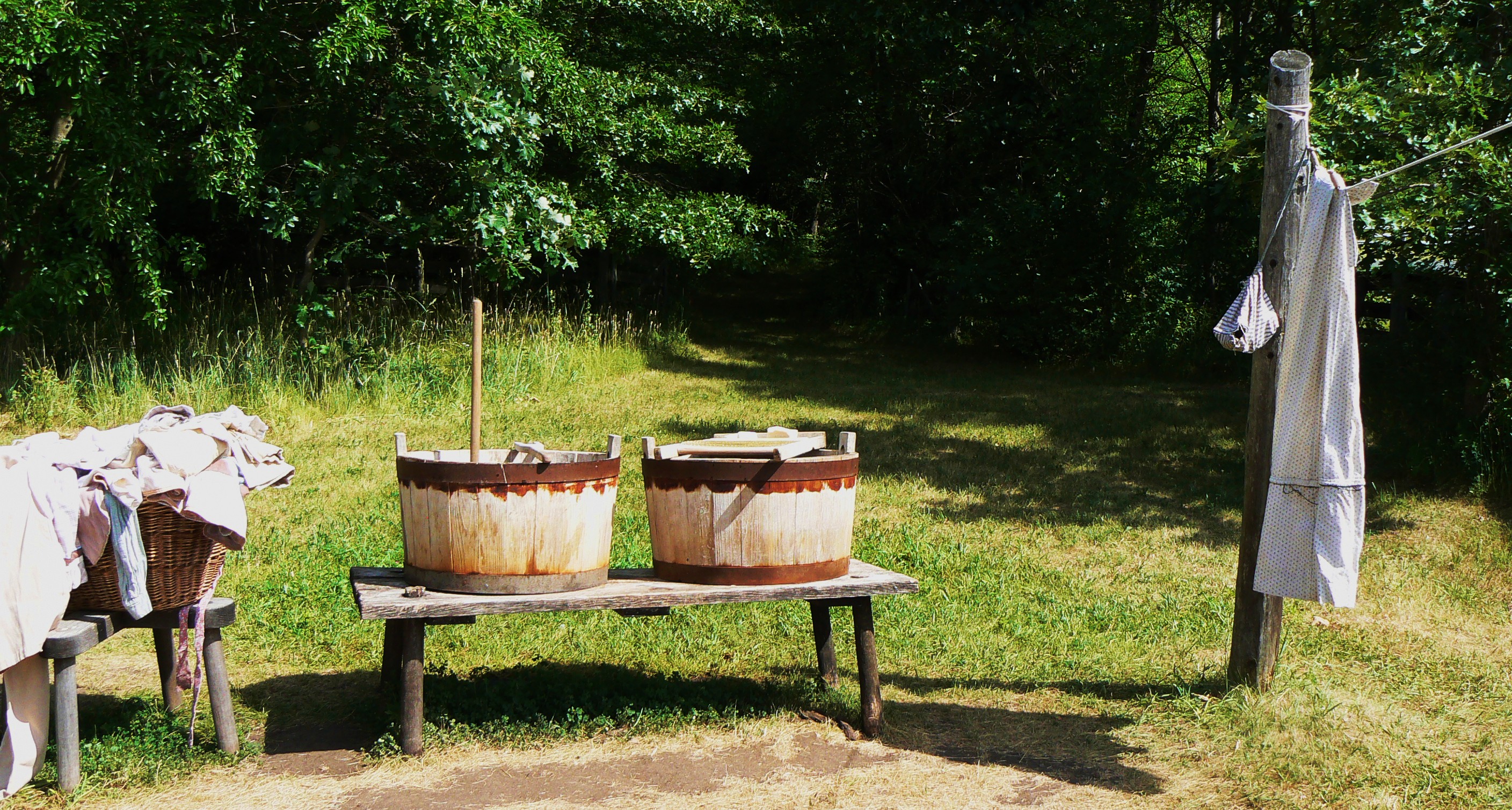
I am now working the summer schedule for Old World Wisconsin.  I am still at St. Peter’s Church playing the pump organ and singing to the rafters on Fridays, Saturdays, and Sundays.  I am also working at the Hafford house on Tuesdays and Wednesdays.  Mary Hafford was an Irish immigrant who came to the U.S. with her husband and son, living first in New Jersey and then settling in Wisconsin where she had family members who had also moved there.  She had two more children here, and then, at the age of 36, she was widowed.  Her husband had worked on the railroad and owned no land or property.  She could neither read nor write.  Somehow, she had assets (possibly from a railroad company’s pension plan?) amounting to $500, twice the average for the village where she lived.  She spent $150 to buy two lots in a rural village where she had been renting lodgings.  Presumably, there was a dwelling on that lot, a worker’s cottage.  She took in laundry and did the washing, ironing, and mending from her home so that she could look after her children.  By the time she was 53, in the year 1885, she was able to hire carpenters to upgrade her house to a more respectable cottage.  This home is the one that is now on Old World Wisconsin property, right next to St. Peter’s Church.  It has one large room (combination kitchen, dining room, living room) with a small bedroom and a pantry on the ground floor and two bedrooms upstairs.  It has a kitchen garden in which is growing lavender, sage, rosemary, alpine strawberries, thyme, and other fragrant herbs.  The wash tubs and clothesline are set up outside so that visitors (kids, mostly) can try their hand at washing without electricity or plumbing.  The laundering process in the 19th century could take up 3 days of the week.  For Mrs. Hafford, it would probably be 6 days a week.  Soaking, boiling, spot treating with lye soap, scrubbing on the washboard and rinsing would require multiple trips to the pump with two large buckets.  One article estimated that women carried 400 lbs. of water in a week for laundry.  After the clothes were dry, she would heat the irons on her wood stove and press them.  One of the irons we have weighs 6 lbs, though it’s only about 5 inches long.   I get the feeling this woman had no need for a gym membership.   She pumped iron, literally, at home often enough!  So this is the story I interpret for visitors.  When there are no guests to chat with, I sit in the rocker and crochet rag rugs.  I just learned this skill last week.  I pass the time wondering what it would be like to be unable to read and write.  Yesterday was my first day in this position.  Sorry I didn’t post a blog entry, friends, I was just too tired and hungry and out of time by the end of my day!  Here are some photos to whet your appetite.  More to come!

Unknown's avatar

I Love to Sing

As I was washing the dishes in the kitchen sink, a song came back to me from years ago when my children were toddlers. I had just finished giving a voice lesson to a Baptist pastor at his storefront church.  He’s coming along nicely, despite a rather constant battle with sinusitis (with which I sympathize, having finally had surgery for chronic sinusitis about 10 years ago).  He’s got an entire electronic sound system set up in the sanctuary, which is also in the process of being remodeled.  They raised the roof a few feet, improving the acoustics tremendously.  Today, I asked my student to try practicing The National Anthem while using  a microphone.  I want him to really begin to like the sound of his voice.  That will give him more confidence and more motivation to practice and play around with what he’s got in his “bag of tricks”.  I told him that I get a similar opportunity when I’m at the 1839 St. Peter’s church at Old World Wisconsin.  At the end of the day, before I sweep up and close the windows, I allow myself some singing time.  By that hour, visitors are heading to the parking lot and rarely step inside.   I do the figure 8 processional up and down the aisles singing “Jubilate Deo” or “Dona Nobis Pacem” or “Amazing Grace”. 

The acoustics in this Gothic Revival building are fabulous!  I really like the way my voice sounds echoing up in those wide, white spaces.  Yesterday, I stopped in a corner and tried out Schubert’s “Ave Maria”.  I haven’t sung that since I performed it at a wedding four years ago.  It was a paid gig, just four months after Jim’s death, on our Kiss Anniversary.  I was nervous, I was emotional, but I got through it.  Then I cried all the way home in the car from Lake Geneva, Wisconsin, to Illinois.  It’s a perfect song for St. Peter’s, the first Catholic cathedral in Milwaukee.  It sounds really lovely, but I need to find the music and remember the words! 

I am preparing to give another lesson this evening to my newest student.  She also has an amazing electronic set up…in her basement.  She’s a drummer; her husband plays and teaches guitar and writes songs for his rock ‘n’ roll band.  My student is going to try some Sarah McLachlan tunes.  She’ll do very well with that style.  So, I’m going to do a bit of listening now, but I’ll leave you with the song that started me off.  Enjoy!

Unknown's avatar

Auf Wiedersehen, Schottler!

Today was my last day as the historic interpreter at the Schottler house at Old World Wisconsin.  I’m going to miss Stud Muffin, the young male pig, and watching him grow fat.  He still hasn’t figured out how to go outside…up one little ramp and down another on the other side…who said pigs were smart?  I am going to miss the smell of cabbage roses and camomile in the garden.  I will miss stringing rhubarb up to dry and making rhubarb pie.  Oh!  I have to tell you that the rhubarb pie I made DID get eaten after all, at least partially.  They cut out a slice to display on a plate with a fork and some school group chaperone ate it while the interpreter was making sure the 45 kids running around didn’t break anything!  I am satisfied that it was not too runny, as my objective was to improve upon the last display pie that was baked.  And my darling daughter, the Approximate Chef, has told me that she whipped up some rhubarb and ginger sherbet the other day.  She sent this photo along to share:

Today was a gorgeous day, though.  Plenty of time for slowing down, too.  One of the school groups was an hour late, so they skipped my area entirely.  The other school group was 3 groups of only 9 kids, so it felt quite leisurely not to be herding 30 kids at one time. That meant that I could sit on the porch sewing, enjoying the quiet during the off hours.  Three photographers with tripods and bunches of gear came by and snapped away.  The Schottler farm is a still life paradise, really.  And so monochrome friendly!  Although the delphiniums in full bloom definitely deserve color.  

I’ll be a Villager next, five days a week.  At Mary Hafford’s house, I do get a kitchen garden with lavender, sage, thyme, and rosemary.  And I need to learn how to crochet rag rugs.  It’ll be fun.  Too bad I don’t know any welcoming phrases in Irish!