Unknown's avatar

Earth Work…Trip Phase 5

After a delicious Sunday breakfast buffet and a quick photo walk in downtown Parkersburg, Steve and I headed back into Ohio toward the Hopewell Culture National Historic Park.  Steve has always been drawn to Native American archaeology and has experience working for the National Park Service at Wupatki National Monument.  The information we gathered at the Hopewell site was truly fascinating.  The native Americans in the Scioto River valley constructed enormous earth works, mounds and borders of giant proportions, geometrical shapes duplicated exactly many miles apart.  The burial mounds contained artifacts made with materials from distant regions.  The scope of this culture, the complexity of the ideas they represent, is amazing.  Of course, our conjectures about the meaning of the clues they left behind will never be verified.  Mystery will always surround this place.  The sense of a sacred reverence hangs in the very air, though.  It felt, to me, very similar to what I felt when I visited Chichen Itza in Mexico.  Time, space, geometry, astronomy, mathematics, religion, life and death coming together in physical art.  These were a people who understood the interconnectedness of all things and represented that in a conscientious way.  To say that it’s “primitive” misses the mark completely.   It certainly seems more primitive to plow over the entire area time and time again to plant corn or bulldoze the hill to quarry gravel…which is just what the white settlers did and still are doing.  

We spent the afternoon slowly embracing the place and then drove home in the dark on speedy Interstate highways.  We were back by 11pm.  On Wednesday, we continued our research on Native American mounds and early Wisconsin history by going to Madison and visiting the Historical Museum on Capitol Square and the UW Madison Arboretum (which has an impressive bookstore!).  We are still in the process of discerning how we will contribute to the conservation of this sacred planet on a local level, to what work we will devote our energy, and how we will live in awareness of the impact we make here.   It’s a time to stay open to possibilities and opportunities and to be ready to move with a purpose when a specific vehicle of conveyance appears pointing toward our goal.


Unknown's avatar

Adventure!

The season for Old World Wisconsin ends in October.  Steve and I are gearing up for a 2-3 week road trip.  We have about 9 possible itineraries, National Forests and Parks mostly.  We’ve come to call this “our trip to metaphorical Maine” because although Maine is one of the top contenders, it is really just serving as the title of an unknown eventual destination.  This is how Steve prefers to travel, and he is teaching me to appreciate the spirit of living in the moment rather than planning for safety and control.  Not that Steve is an “extreme” kind of guy, a risk-taker for the sake of it, or anything like that.  It’s really more a Zen kind of thing of being aware of conditions as they arise and dancing with them rather than putting on blinders and sticking to a railroad track. 

We recently borrowed the DVD of “The Sheltering Sky” starring Debra Winger and John Malkovich.  I’m sure the book was better, but the film has some terrific cinematic landscapes and brings up a lot of interesting questions.  Like, “What is the difference between a tourist and a traveler?”  A tourist wants the comforts of home.  A traveler seeks adventure.  I recently had a conversation with a co-worker who talked about a visit to France and only mentioned that there were no bugs or birds and that French waiters substitute Sprite for lemonade.  This guy never thought he’d leave the country in his lifetime.  Maybe he shouldn’t have!

I feel like I have been working on my personal demons (neuroses, grief, all that baggage) and have gained some courage and self-confidence since our last big trip.  I did have one memorable meltdown in a rest stop off the highway in the pouring rain from about 2-4 in the a.m.  That was April of 2011, and we were on the road for 4 weeks.  Here’s a shot taken somewhere near the Colorado River in Utah that illustrates one of the many decision discussions we had.  Do you want to take this road or not?  Why? 

There’s no “right answer” and there’s no judgement, Steve told me.  “I just want to know what you think about when you make decisions.”  What are we here for?  What do we call “living”?  Is it “to be safe and have children and grandchildren”?  Is it “to learn to praise God and serve Him”?  There are a million ways to answer that question.  Steve describes his answer to me every time we have a conversation.  He wants to meet life with awareness, engage in nuance and complexity, question and think critically, try to discover delusion, respond in the moment to what is before him, and participate in the adventure of living, as holistically as he can.  Yesterday, I read a short science fiction story by E.M. Forster called “The Machine Stops”.   It describes a futuristic world where the human race is run by Machine and never ventures to the surface of the earth.  It’s eerie how much that could be the life of modern individuals plugged into the Internet with no experience of the physical phenomenons of Earth.   What kind of life do I really want to live?  What kind of courage do I have to face the adventure of living?  Do I prefer comfort to challenge?  These are good questions to take out for a road test.   I’m looking forward to it! 

Unknown's avatar

Pointing Your Canoe

Who do you want to be?  How do you want to live?  What do you want to do with your life?  Where do you want to point your canoe? 

Doesn’t matter where your canoe came from…Steve found this one at a garage sale

Strap it down and get ready to roll…

Set a course for your adventure and enjoy the ride!

Unknown's avatar

VIP Tour

Late in the afternoon yesterday, some VIPs came to tour Old World Wisconsin.  Unfortunately, they arrived only an hour before closing and didn’t have ample opportunity to view the 575 acres and 50 buildings that comprise this living history museum.  So today, my day off, I took them back to the site and gave them a personal tour.  I also secured for them a copy of the historical gardening book that our expert, Marcia Carmichael, published last year.  Putting Down Roots: Gardening Insights from Wisconsin’s Early Settler’s includes historical references, tools and plot layouts, produce recipes from each ethnic area, and a lot of other wonderful information and sumptuous photographs of the meticulously researched and maintained gardens.  I know this couple is beginning to practice organic gardening, and they are eager to learn all they can.  In addition to that, the young man is a carpenter, and was thrilled to see the craftsmanship on the original structures.  They were able to get some behind-the-scenes photos and detailed descriptions of the building methods of the 19th century.  Each of the interpreters in the various houses were in fine form, communicating information and interest  in a very friendly and professional manner.  The weather was perfect for our visit, and we skipped the tram rides and walked the entire circuit of trails through the site.  It was an altogether delightful tour, and I enjoyed seeing parts of the museum that hadn’t been included in my training schedule.  I consider it a privilege to have been invited to host this marvelous young couple.  Who were they?  My daughter, Rebecca, and her boyfriend Joe. 

In the sauna at the Finnish Ketola farm

One of the friendly faces on the tour


Unknown's avatar

Little House in Old World Wisconsin

Laura Ingalls Wilder was born in Wisconsin in 1867, in a Little House in the Big Woods (near Pepin, WI, close to the border of Minnesota).  Mary Hafford, the Irish immigrant who lived in the house where I work as an interpreter for the living history museum, Old World Wisconsin, was widowed in the year 1868 with 3 small children and lived as a renter in a small village near Watertown, WI.   The Ingalls family continued to move west and eventually set up a homestead in South Dakota, but Mary Hafford worked away at her home laundry business and eventually achieved social and economic prominence in her little village.  In 1885, she had a new house constructed on the property that she had bought.  She never learned to read or write, but her children did.  Her youngest daughter, Ellen, studied dressmaking, a skilled trade, and became a live-in dressmaker.  Ellen was married in 1891 (six years after Laura Ingalls married Almanzo Wilder), and her mother hosted a reception and dinner for 75 guests.  Three months later, Mary Hafford died of dropsy.  I imagine Ellen Hafford Thompson and wonder what stories she might have written about her life in the Little House where she lived.  I have a burning question: what happened to her older sister, Ann, who is conspicuously absent from all records from the mid-1880s on?  Did she die?  If so, why isn’t she buried next to her father & mother?  Did she go into a convent?  Did she elope with a Lutheran?  The mystery remains unsolved!

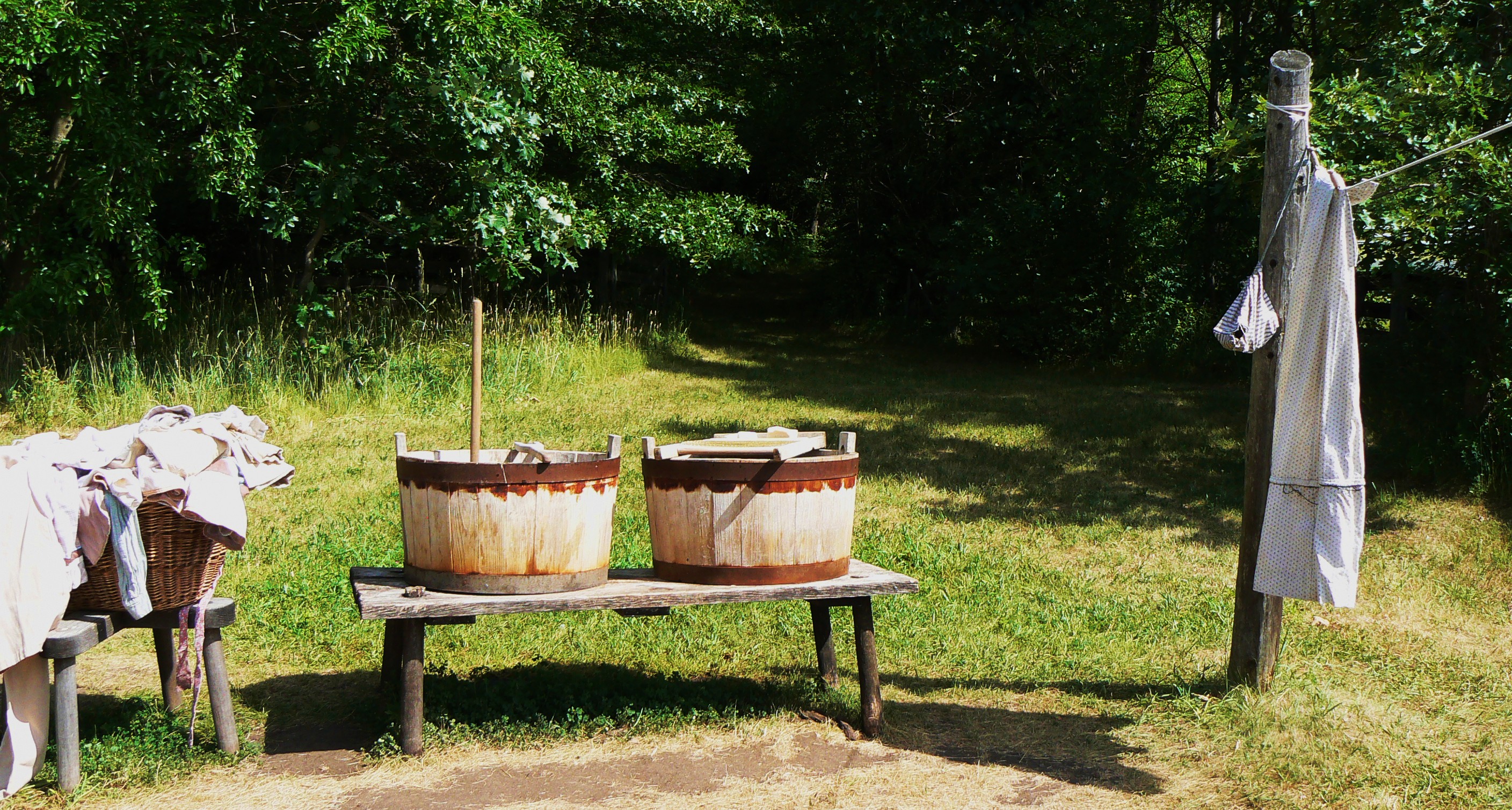
The neighbors’ backyard

Trusty “Rapid Washer”

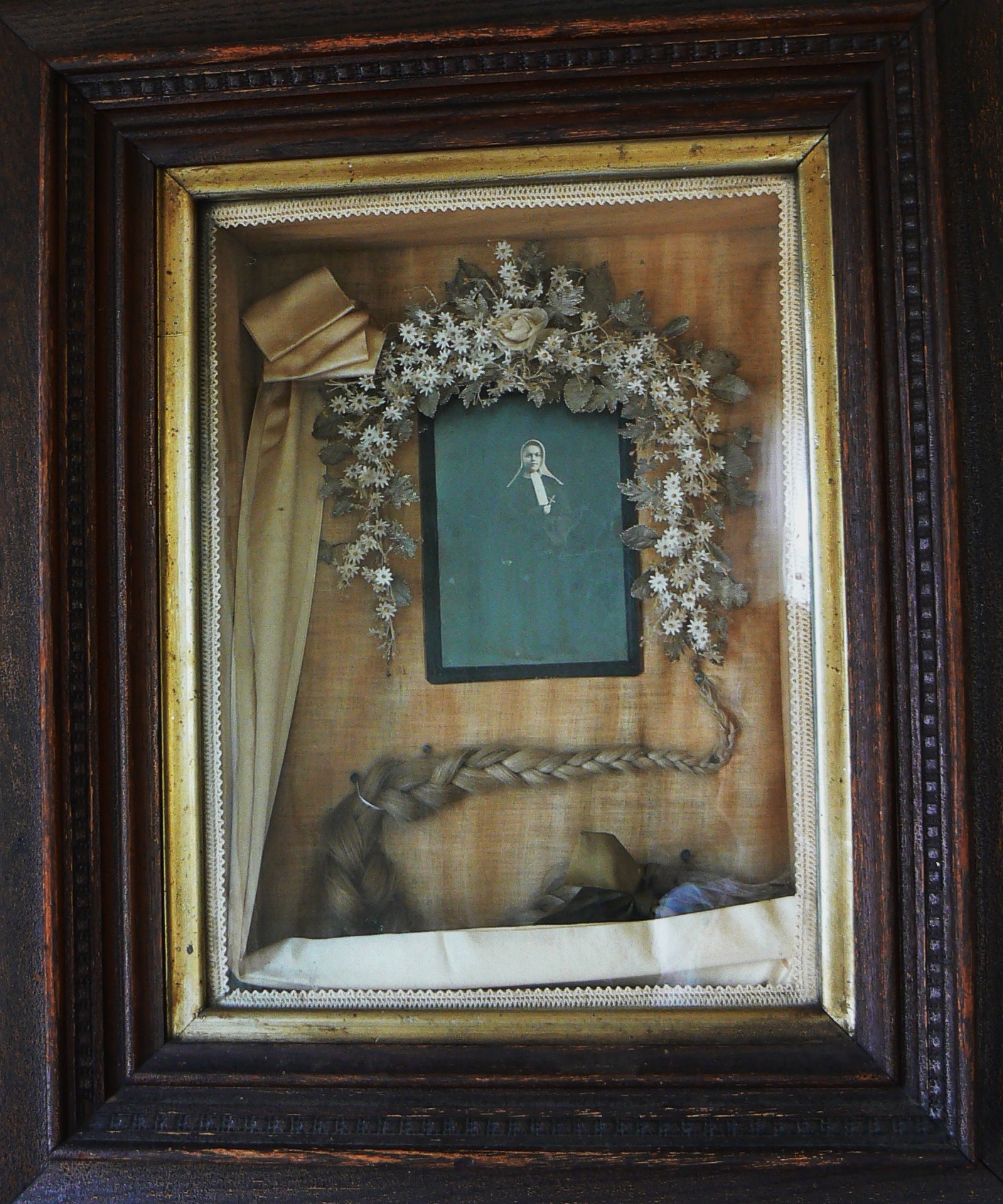
A shadow box memorial to a young woman who had taken religious vows. The braid that was cut off is all the family would ever see of this loved one after she went into the convent.


Unknown's avatar

New Digs (well, actually, really old digs)

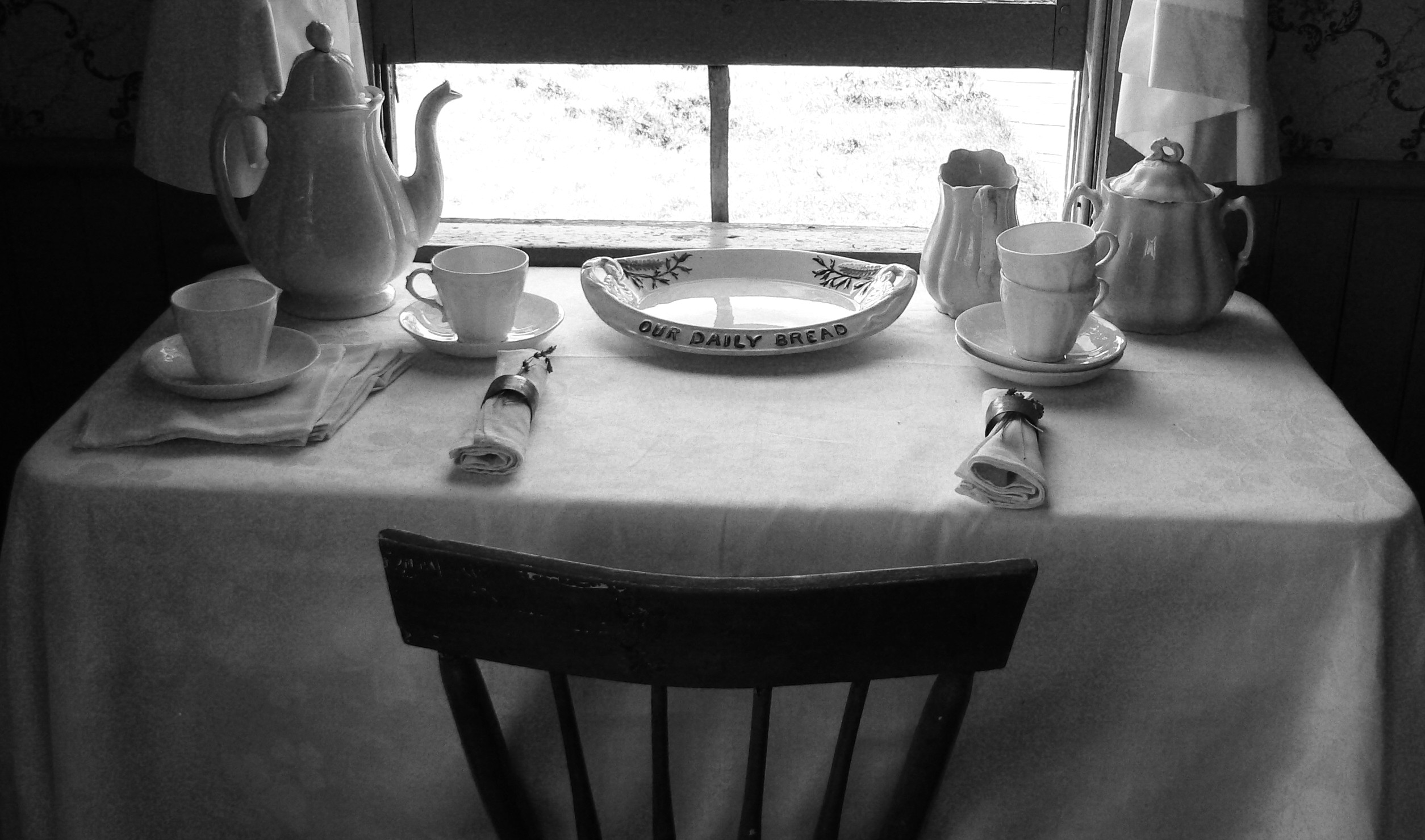
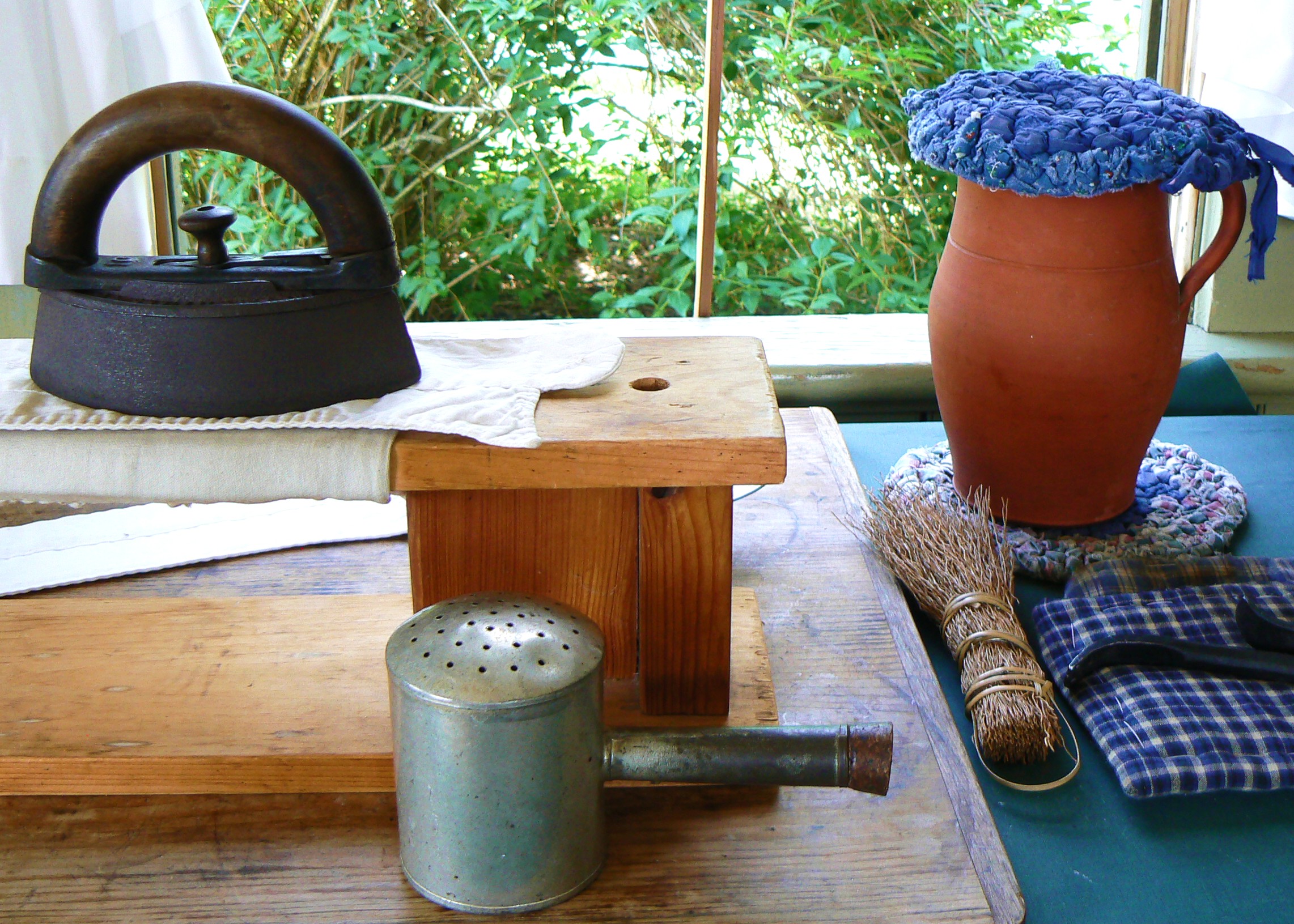
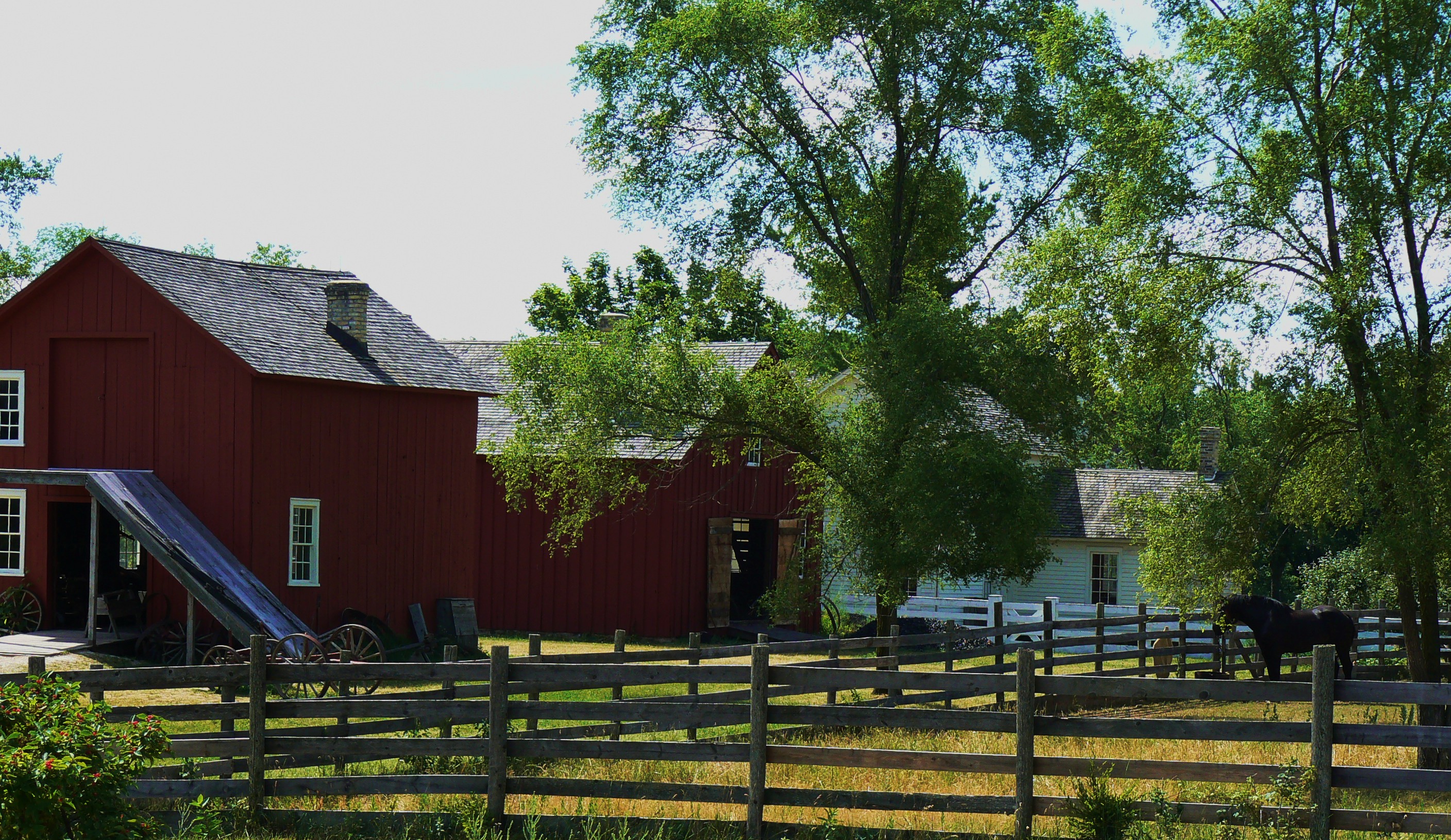
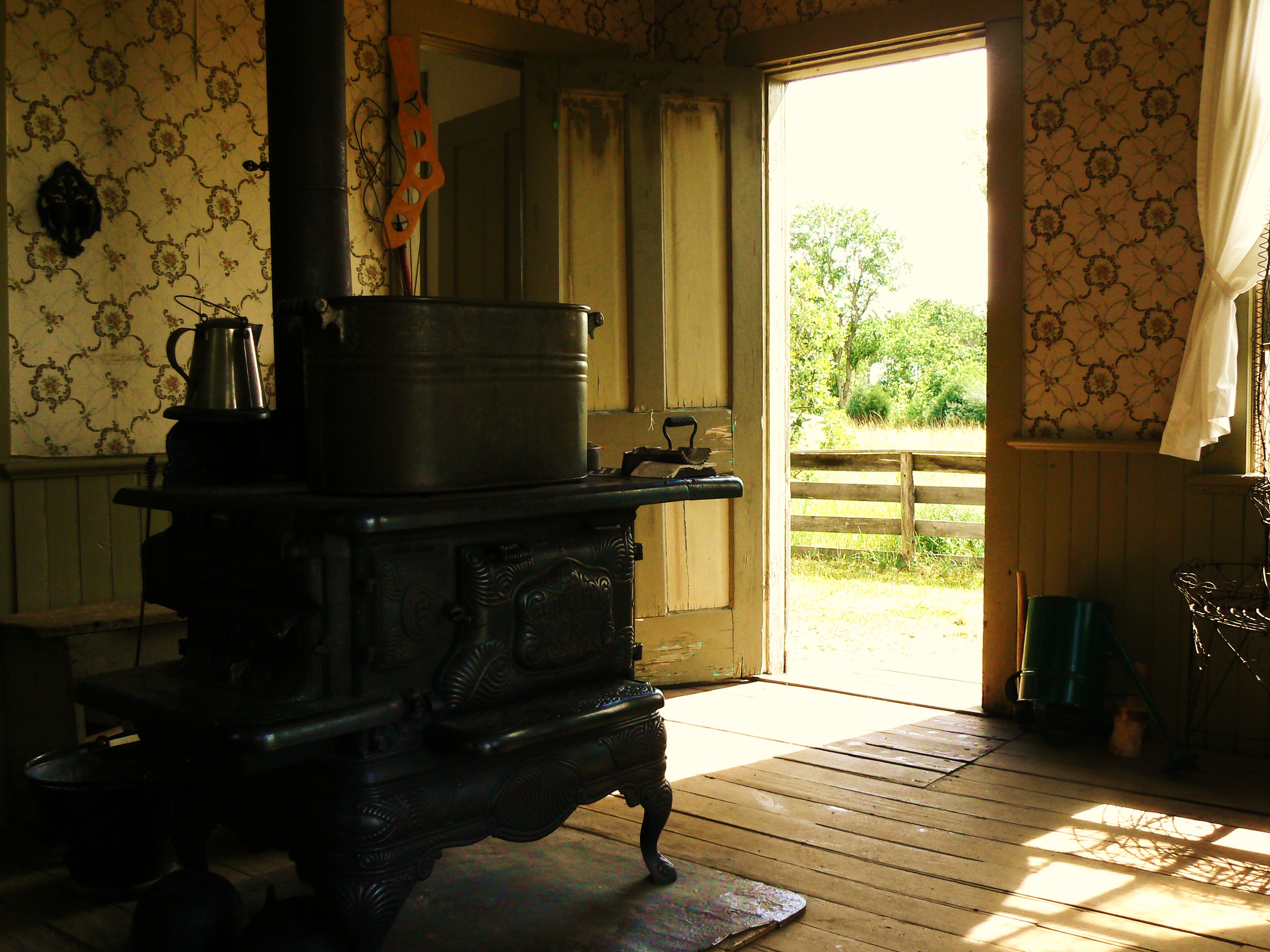
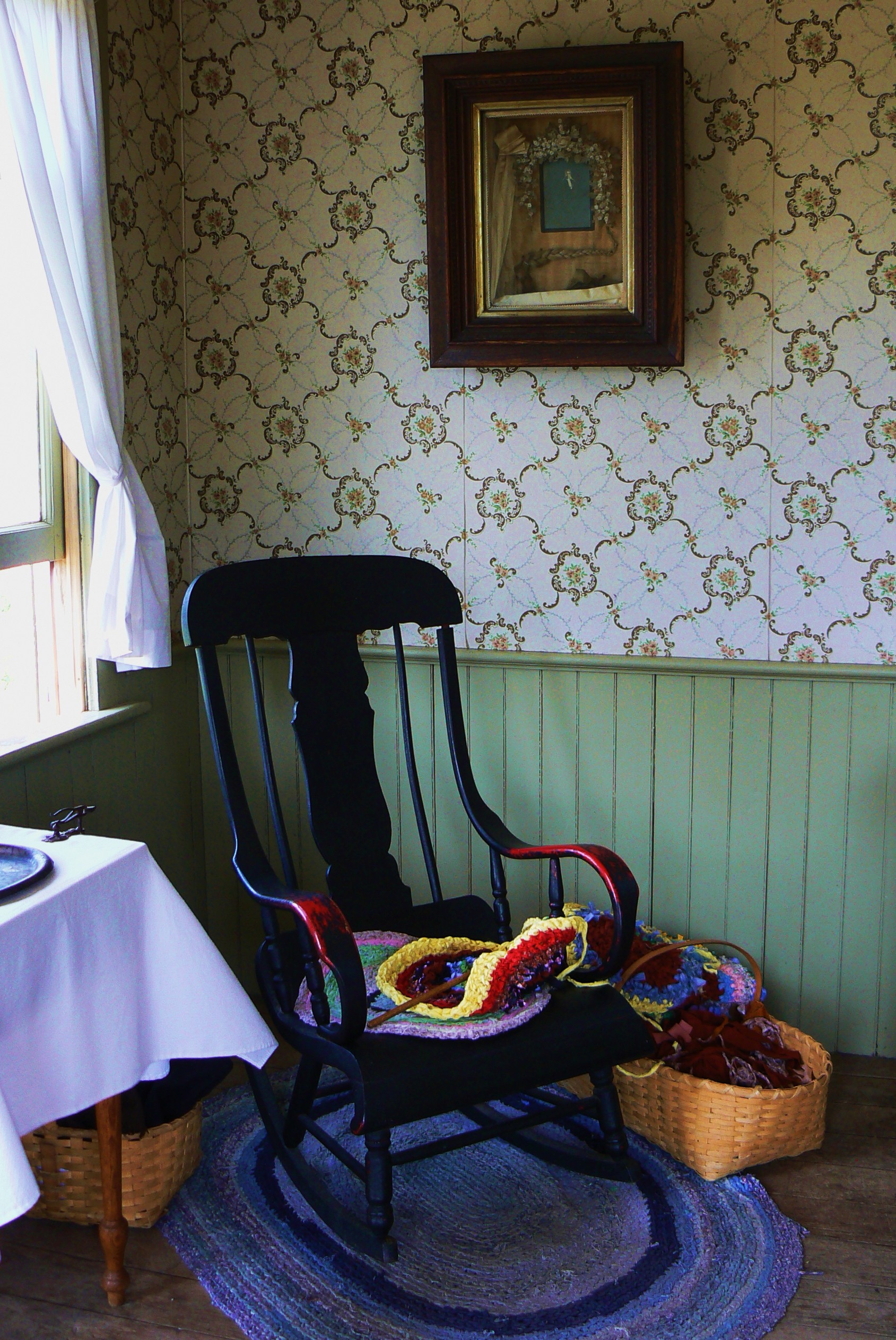
I am now working the summer schedule for Old World Wisconsin.  I am still at St. Peter’s Church playing the pump organ and singing to the rafters on Fridays, Saturdays, and Sundays.  I am also working at the Hafford house on Tuesdays and Wednesdays.  Mary Hafford was an Irish immigrant who came to the U.S. with her husband and son, living first in New Jersey and then settling in Wisconsin where she had family members who had also moved there.  She had two more children here, and then, at the age of 36, she was widowed.  Her husband had worked on the railroad and owned no land or property.  She could neither read nor write.  Somehow, she had assets (possibly from a railroad company’s pension plan?) amounting to $500, twice the average for the village where she lived.  She spent $150 to buy two lots in a rural village where she had been renting lodgings.  Presumably, there was a dwelling on that lot, a worker’s cottage.  She took in laundry and did the washing, ironing, and mending from her home so that she could look after her children.  By the time she was 53, in the year 1885, she was able to hire carpenters to upgrade her house to a more respectable cottage.  This home is the one that is now on Old World Wisconsin property, right next to St. Peter’s Church.  It has one large room (combination kitchen, dining room, living room) with a small bedroom and a pantry on the ground floor and two bedrooms upstairs.  It has a kitchen garden in which is growing lavender, sage, rosemary, alpine strawberries, thyme, and other fragrant herbs.  The wash tubs and clothesline are set up outside so that visitors (kids, mostly) can try their hand at washing without electricity or plumbing.  The laundering process in the 19th century could take up 3 days of the week.  For Mrs. Hafford, it would probably be 6 days a week.  Soaking, boiling, spot treating with lye soap, scrubbing on the washboard and rinsing would require multiple trips to the pump with two large buckets.  One article estimated that women carried 400 lbs. of water in a week for laundry.  After the clothes were dry, she would heat the irons on her wood stove and press them.  One of the irons we have weighs 6 lbs, though it’s only about 5 inches long.   I get the feeling this woman had no need for a gym membership.   She pumped iron, literally, at home often enough!  So this is the story I interpret for visitors.  When there are no guests to chat with, I sit in the rocker and crochet rag rugs.  I just learned this skill last week.  I pass the time wondering what it would be like to be unable to read and write.  Yesterday was my first day in this position.  Sorry I didn’t post a blog entry, friends, I was just too tired and hungry and out of time by the end of my day!  Here are some photos to whet your appetite.  More to come!

Unknown's avatar

A Wisconsin Tradition

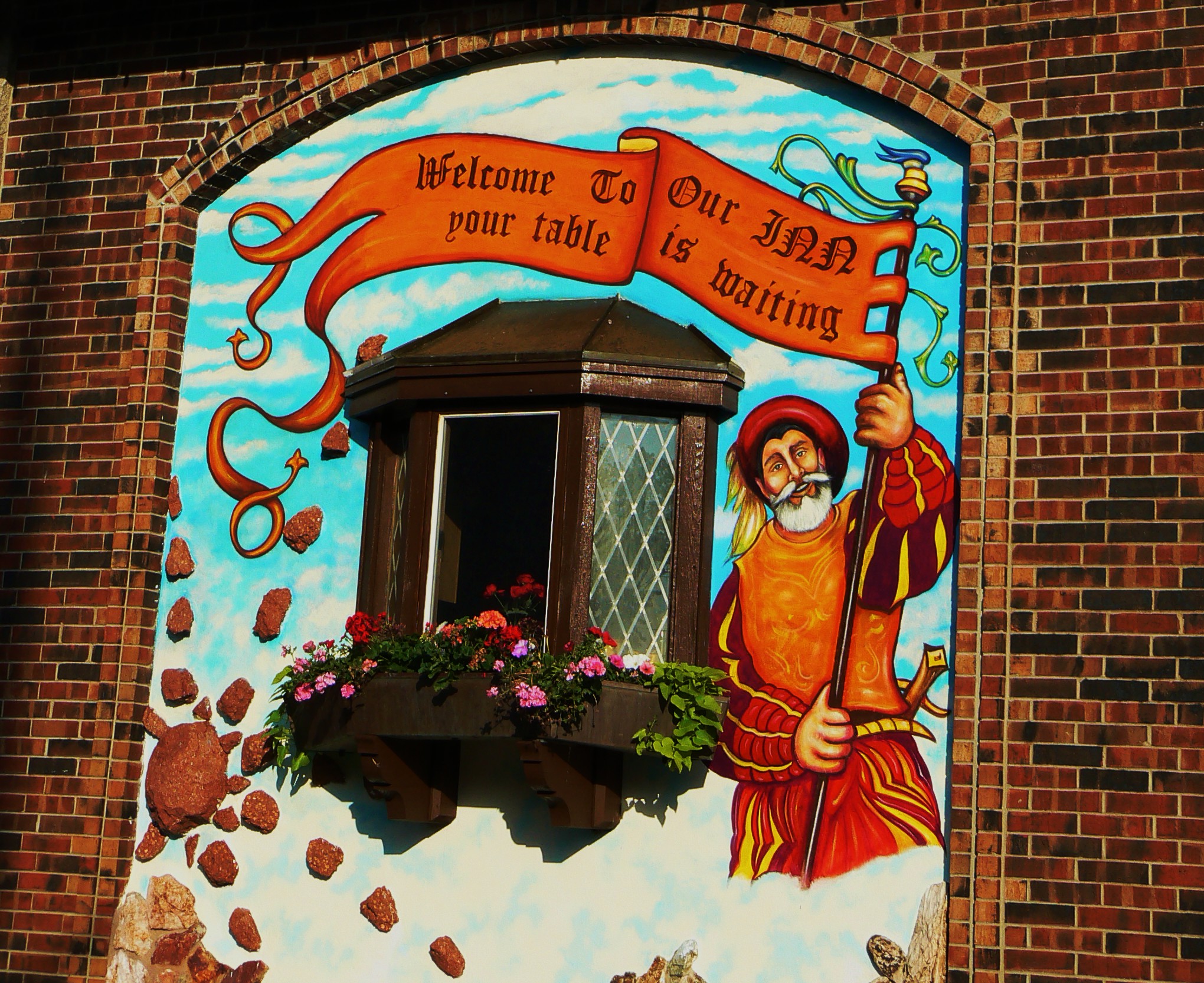
Steve and I have long talked about partaking of a certain Wisconsin tradition…the Friday Night Fish Fry…and two days ago, we finally had our first experience.  It was a gorgeously golden afternoon, and I got a hankering for dining by the water somewhere.  There’s lots of water in Wisconsin.  It’s not the Land of 10,000 Lakes, but I’ll wager is got a good couple hundred.  So, we went to the Post Office to mail off 4 boxes of parcels for the book biz, and we asked our good buddies behind the counter if they had a recommendation for Fish served Lakeside.  “The Golden Mast in Okauchee” was the unanimous reply.  With just our old road map as a guide, we were able to find it quite easily.  No Google or nothin’.  And Steve didn’t even find a dead end first.  There was a wedding reception going on, and all was a-bustle with the ‘walk-ins only’ Friday crowd.  Our P.O. friends must think we are a bit fancy.  Truth is, we took a hike in the state park before dinner and arrived a bit sweaty, but no matter.  Friday Fish Frys are casual, even at a nice place.  The meal is served family style, even for two.  We chose the cod over the perch.  All the sides arrive first: applesauce, ketchup, tartar sauce, coleslaw, potato salad, rye bread and lemon.  Then comes the french fries and potato pancakes and all-you-can-eat fried cod.  Steve had a stein of dark beer, but I went with Southern Comfort on the rocks (I guess I was thinking of my Dad and the Ideal Fish Company restaurant in Santa Cruz).  After dinner, we walked around a bit.  Here are some of the shots I took:


The lake is surrounded by summer homes of all descriptions, settled in cheek by jowl.  Typical Midwestern range of economies, some new construction, some barely standing.  Not nearly as picturesque as my grandmother’s cottage neighborhood on Lake Michigan, but this lake is much smaller, and apparently, not really suitable for swimming, judging from the number of swimming pools in the area.  My favorite one was this one:

Unknown's avatar

Baseball & Brides

Ah, June!  Yesterday’s weather was picture perfect for Wisconsin summer.  Life at Old World Wisconsin was happily busy.  Sorry I didn’t post last night, but I was just too tired.  We had the first Vintage Baseball game of the summer, so families were treated to an exciting and genteel sporting event, and our team won (Wullah, wullah, wullay!).  No baseball mitts, no walks, and different terminology were the biggest differences one guest reported.  I didn’t get to see the action in the baseball field because I was working at the church, and briefly, at the Irish washer-woman’s house.  I finally had a visitor willing to join me in singing a round of “Dona Nobis Pacem” a capella in the church.  The acoustics are terrific, and we really did a lovely job, I think.  I thanked her enthusiastically for the privilege.  I had a Brownie troop who filled the front pews like a classroom and stayed a good half hour, I think, asking questions about everything.  It was nice not to feel rushed like I do during a scheduled school tour, but just to let the conversation flow.  They were a great group.  Finally, about an hour before closing, a wedding party came by from the Clausing Barn area where they had their service to take pictures by the church.  They didn’t come inside, but the groomsmen invited me into a picture with them on the front steps.  I think they were attracted to my bustle.  They then staged the same shot with the bride in my place.  Perhaps I’ll be comic relief in their wedding album some day soon.  The men all wore different hats: the groom’s was a black cowboy hat which he wore with dark sunglasses.  He smoked a cigar throughout the photo session.  The bride and several of the bridesmaids were sporting elaborate tattoos.  The bride’s covered her upper back and was quite colorful.  Another guest saw them leaving and asked if they had been dressed in period costume.  “Oh, no.  Those weren’t period tattoos, either,”  I replied, and she laughed.


Today’s game is described on the Old World Wisconsin website like this:

“On Sunday the girls of summer, from the World War II Girls Baseball Living History League, will play their brand of 1943 ball. Joining the team on Sunday will be Milwaukee Public Radio coordinating producer Stephanie Lecci. Original girls-league players will be invited as our special guests, including Joyce Westerman who will be available after the game to sign copies of the Wisconsin Historical Society Press book about her life and sporting career, Joyce Westerman: Baseball Hero.”

Our costumer, Rachel, plays on this team.  I wish I could see them.  It reminds me of my days in the church softball league.  I played second base. 

For more information on 1860s baseball, visit the Old World Wisconsin website here.  Rules, schedule, photos and more are included.

photo courtesy of OWW website

Unknown's avatar

Lake Effect

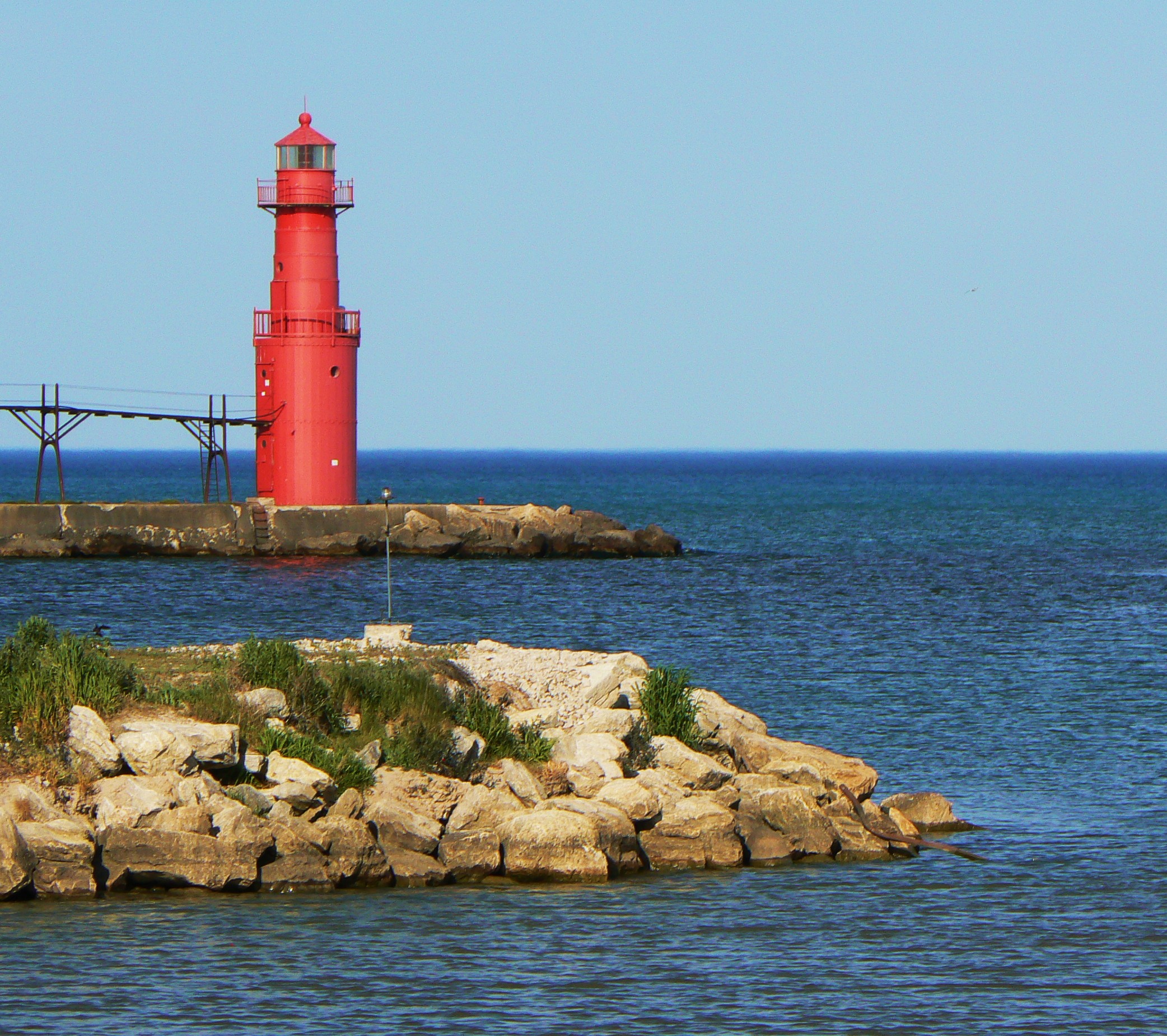
Memorial Day weekend.  Boats wind their way down suburban streets in search of water.  Summertime’s officially opened.  Here in Wisconsin, there are lots of little lakes and one Big Lake, Lake Michigan.  Steve and I found our way to the shore on Friday, where we were taken for the first of the summer traffic.  We stopped south of Door County (which is way too commercialized) and met some of the locals in Algoma.  Two guys named Tom told us their stories: one owns an antique store, the other is handicapped and zips around town in an electric car that looks like a mini Smart Car with a yellow caution siren on top.  Both of them invited us to go visit their barns and have a beer with them later.  Unfortunately, we had to drive back to Milwaukee right after our early supper.   I can picture us becoming a pair of “colorful locals” some place.  Steve, with his long ponytail, and me “au naturale” (meaning without makeup or coif) — we look like aging hippies, I guess.  Tom of the electric car has renovated his barn and made part of it a stage for storytelling.  He shares this space with local artists.  It’s the greatest discovery, he tells us, this “sharing”.  It makes his life fulfilling.  Here are some photos I have to share:


St. Agnes-by-the-Lake Episcopal Church

Boardwalk…or birdwalk?

Enjoy your local color, everyone!