Tag Archives: history
Earth Work…Trip Phase 5
After a delicious Sunday breakfast buffet and a quick photo walk in downtown Parkersburg, Steve and I headed back into Ohio toward the Hopewell Culture National Historic Park. Steve has always been drawn to Native American archaeology and has experience working for the National Park Service at Wupatki National Monument. The information we gathered at the Hopewell site was truly fascinating. The native Americans in the Scioto River valley constructed enormous earth works, mounds and borders of giant proportions, geometrical shapes duplicated exactly many miles apart. The burial mounds contained artifacts made with materials from distant regions. The scope of this culture, the complexity of the ideas they represent, is amazing. Of course, our conjectures about the meaning of the clues they left behind will never be verified. Mystery will always surround this place. The sense of a sacred reverence hangs in the very air, though. It felt, to me, very similar to what I felt when I visited Chichen Itza in Mexico. Time, space, geometry, astronomy, mathematics, religion, life and death coming together in physical art. These were a people who understood the interconnectedness of all things and represented that in a conscientious way. To say that it’s “primitive” misses the mark completely. It certainly seems more primitive to plow over the entire area time and time again to plant corn or bulldoze the hill to quarry gravel…which is just what the white settlers did and still are doing.
We spent the afternoon slowly embracing the place and then drove home in the dark on speedy Interstate highways. We were back by 11pm. On Wednesday, we continued our research on Native American mounds and early Wisconsin history by going to Madison and visiting the Historical Museum on Capitol Square and the UW Madison Arboretum (which has an impressive bookstore!). We are still in the process of discerning how we will contribute to the conservation of this sacred planet on a local level, to what work we will devote our energy, and how we will live in awareness of the impact we make here. It’s a time to stay open to possibilities and opportunities and to be ready to move with a purpose when a specific vehicle of conveyance appears pointing toward our goal.
Steve’s on TV!
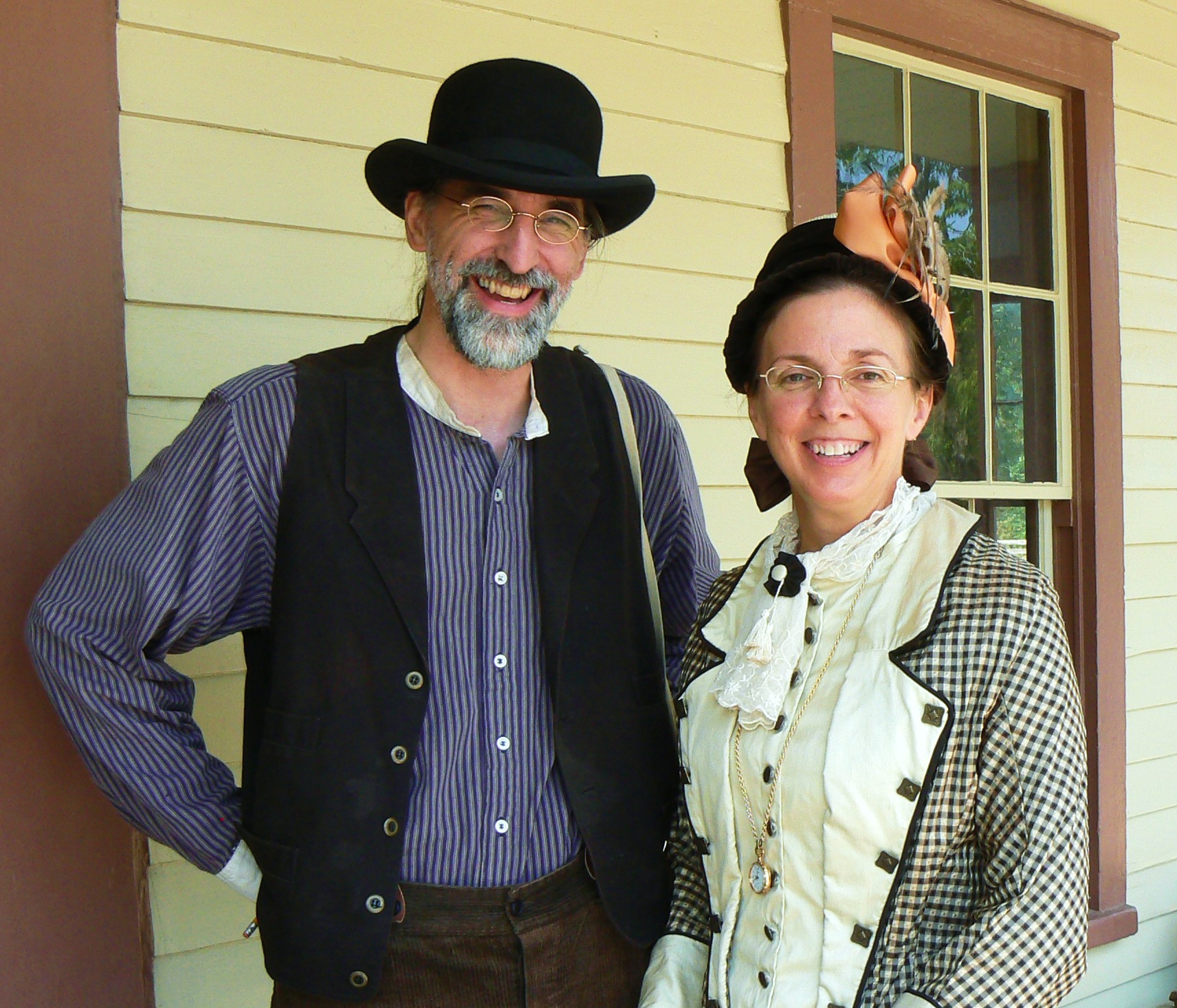
For NBC’s new show “Revolution”, Vince Vitrano reported from Old World Wisconsin on Living Without Power. My honey, Steve, teaches him how to split wood in the clip. Visit this link, go to Most Recent Video with the News tab highlighted, and scroll down to find “Living Without Power” by Vince Vitrano. Enjoy!
Broadcast News
I was interviewed by a local news station on the 4th of July and asked about what it’s like to wear 19th century clothing in 106 degree heat. The interview lasted about 10 minutes, and I talked about the resilience of the pioneers and how they adapted to their environment and lived in harmony with it instead of attempting to control it at all costs…or something like that. In my mind, I was reaching for a thoughtful perspective. However, the editors chose about 10 seconds of me talking about evaporation, hydration and not lacing up my corset so tight that I can’t breathe. I can’t figure out how to link to the MOV file that I have in order to show you. Watching myself on camera is humbling. Why are my nostrils so large?
Pinball Wizard
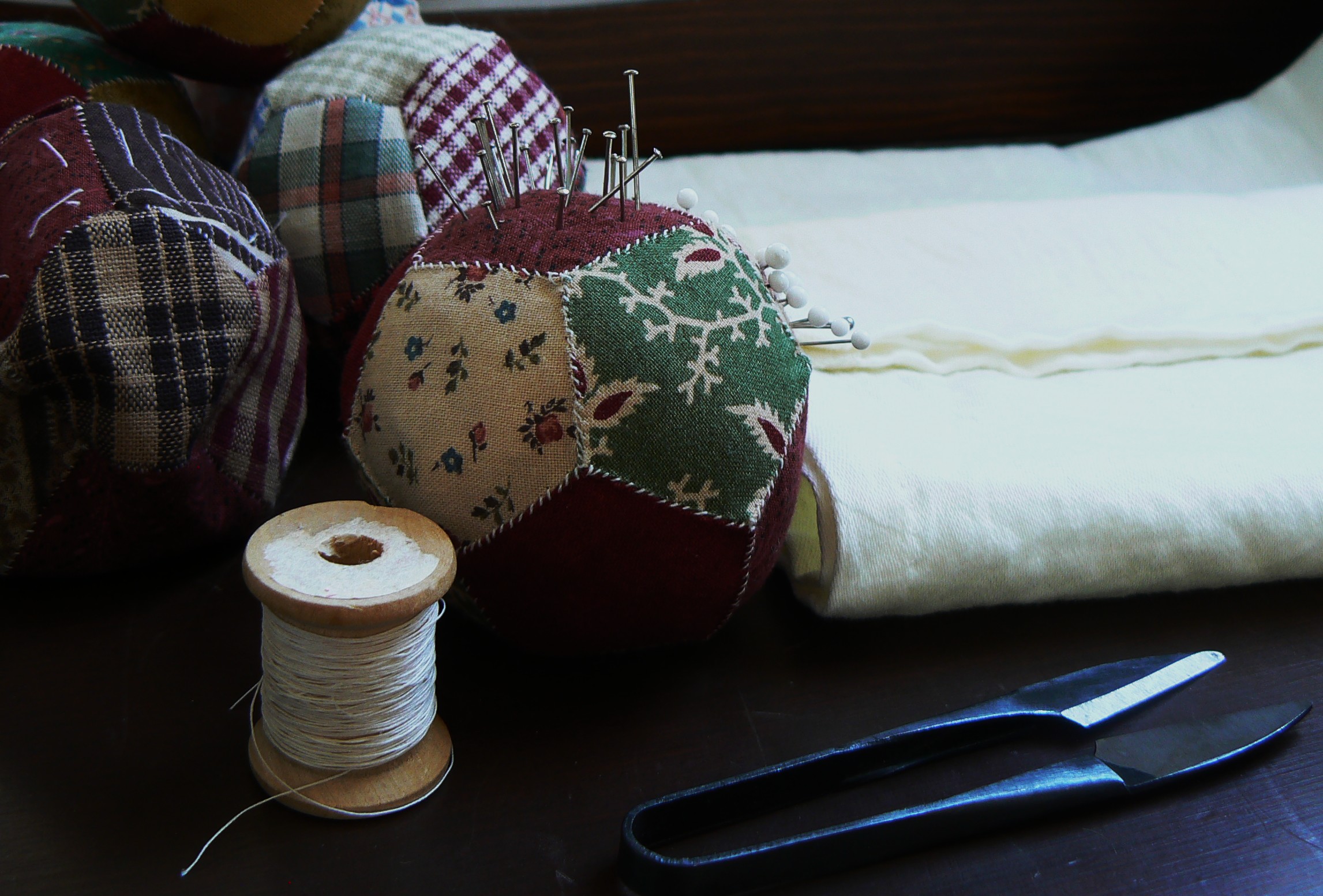
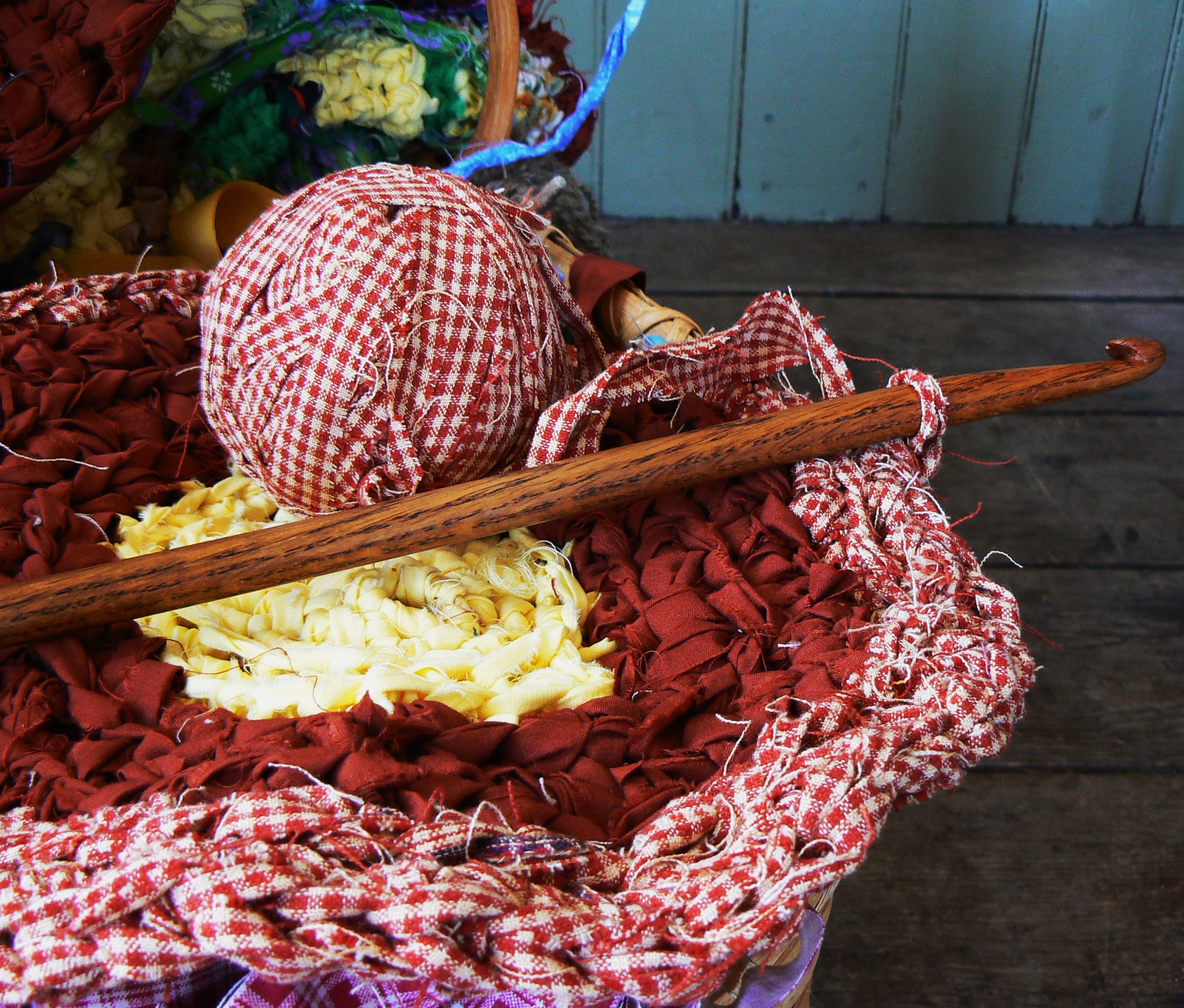
My weekend working at Old World Wisconsin is over for this week. We’ve survived the brutal heat, although the beeswax candles in St. Peter’s did not…one suffered from heat exhaustion to the point that it fell out of its holder and now lays tangled in the brackets of the sanctuary lamp chandelier. Another of its mates is listing at about a 90 degree angle. We’ve had no significant rainfall since June 16. Crowds have been sparse, way off the season norms. How do I stay sane while the sweat drips down my corset? I meditate and sew. I was taught to make pinballs during my training week. These are dodecahedrons (12-sided spheres) of 5-sided bits of fabric, sometimes called “Bucky balls” (named after Buckminster Fuller and his geodesic domes). They hold pins and needs like a pincushion, but can also be used for playing hackey sack or juggling, or hung with a ribbon on a Christmas tree (not that anyone in the 19th century used them for that!). I find it fun to pick out the bits of fabric and mix and match the colors…and it’s a whole lot simpler than quilting. I can sew 12-20 stitches per inch by hand. I’ve made about 10 of these so far; a few have not been stuffed yet because finding the scrap wool and fabric to put inside requires a “supplies requisition form”. I have begun to hand hem linen towels as well, and when I’m at the Hafford House on Tues. and Wed., I crochet rag rugs. So here are some photos of my handiwork, and a shot of my favorite visitor today: a butterfly who landed on the 173 year old wood and spread his magnificent wings for me.
Hope you had a great weekend; maybe unlike you, I look forward to Mondays because it’s my day off!
Interesting Inconsistency vs. Efficiency
People are inconsistent. We must be; we’re alive, living, responding, changing. Funny thing is, in the West we’re often taught that this is a bad thing. It isn’t efficient. It isn’t dependable. It goes against all kinds of Protestant ethics of order and purpose and such. But in Eastern cultures, it’s often celebrated. “If you see the Buddha in the road, kill him.” When the Buddha becomes a monolith, a never-changing dogma, it is no longer a life-giving source. I look to historical information and try to understand why people did what they did for a living now; I’m a historic interpreter. I keep fighting this penchant for landing on the “right answer”, the one that describes order and purpose and makes sense. I’m learning more that the joy of interpreting history is found in saying “we don’t know why”. We’re quirky; isn’t that marvelous? We change, we evolve, we digress, we’re capricious. In many cultures, gods were like that, too. It was acceptable, maybe expected. But in Western theology, that became a bad characteristic for a god, and immutability became important. We want something dependable, something stable, so much that we’re willing to construct it and enshrine it. Why? Because it allows us to stop trying to be responsible in the world? The effort of responding is perhaps a constant drain, and we are lazy by nature? I think of cultures that are resilient, flexible, responsive to the environment, and I think that consistency is maybe not that important or beneficial after all.
“A foolish consistency is the hobgoblin of little minds, adored by little statesmen and philosophers and divines.” Ralph Waldo Emerson, Self-Reliance, 1830
What made me think about this? I was looking into Wisconsin history, and the history of the Upper Peninsula, and came across the story of Henry Schoolcraft. His first wife was half Ojibwa and helped him in his scholarship of Native American cultures. His second wife wrote a popular anti-Tom novel in response to Harriet Beecher Stowe’s famous book and disapproved of mixed-race unions, thereby alienating her stepchildren completely. Why would the same man be married to both of these women? “I don’t know why.”
I recognize in myself a tendency to try to put my partner in a box, to figure out the consistent rules that will help me predict his behavior. There aren’t any, really. But he is hardly a sociopath. He simply wants to be allowed to communicate his thoughts and feelings as they arise, to be understood in the moment, known intimately for the authentic and complicated man he is. He is more than willing to talk and reason and explain honestly and even to make promises and act on them in order to gain my trust. Perhaps it is simply my natural laziness that wants to put labels on him and save myself the trouble of paying attention. Truly caring about a person requires great effort. It is hardly efficient. It necessitates all kinds of little adjustments. And that is a valuable process, a craftsmanship of sorts. Which reminds me of this clip my brother-in-law sent me which he titled: Precision East German manufacturing in the workers paradise. I’m not sure if he was trying to be cynical. I think it illustrates a very authentic part of human process.
Happy Interdependence!
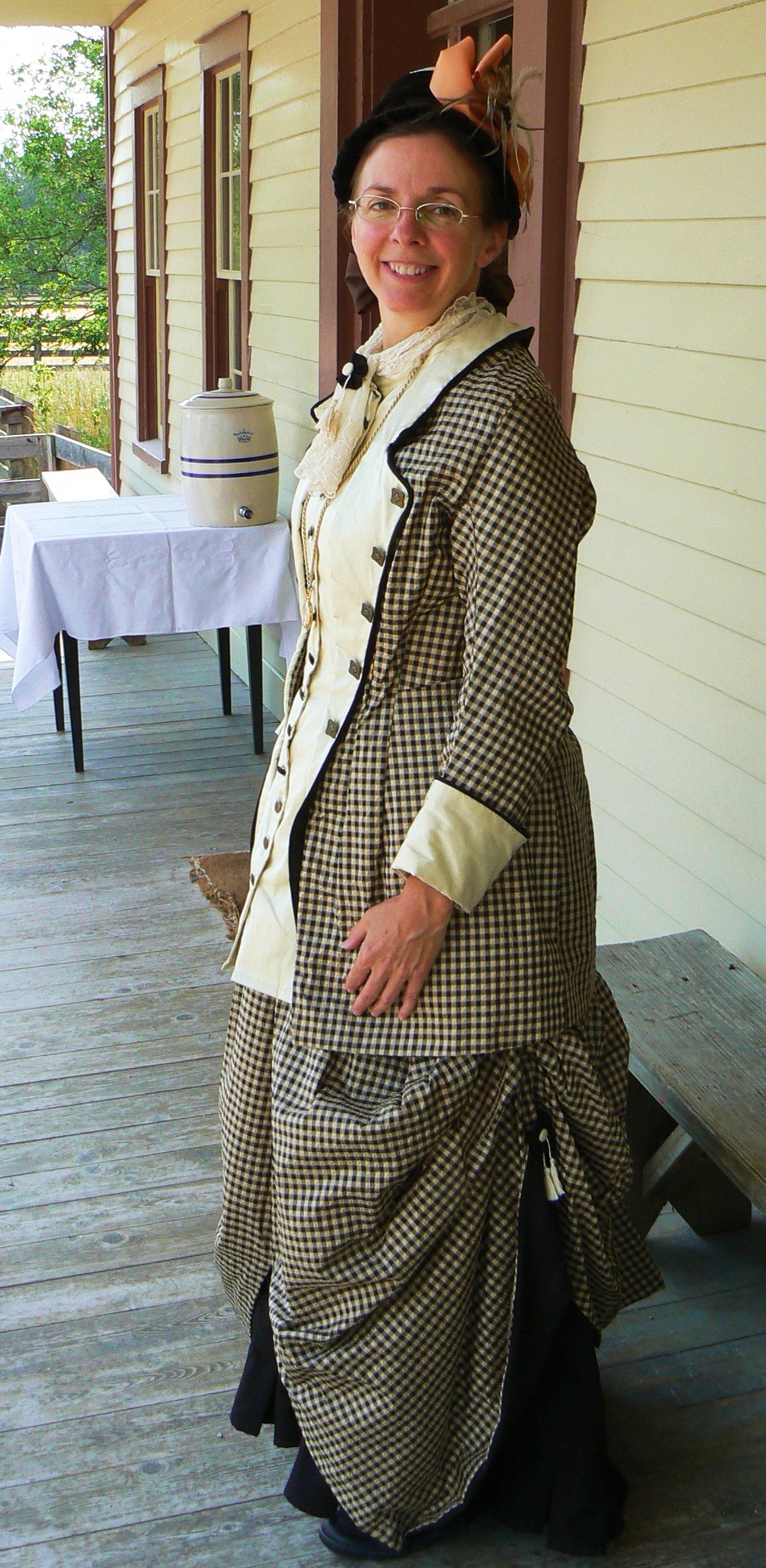
We survived the festivities at Old World Wisconsin in 104 degree heat! I wore a very special costume that had only been worn once before. It was silk and “tropical weight” wool with beautiful accents of military buttons and lapels and florets.
I was interviewed by Fox 6 News about my experience wearing 19th century clothing in the heat. I relayed information about what I was wearing and how it felt and then said that I thought people in the 19th century lived more closely in harmony with their environment instead of trying to manipulate or change it. Therefore, they get used to variations in temperature and become more resilient….or something like that. Then I went into the church and played a few hymns on the pump organ while the assembly sang. Then another interpreter took over and I sang descants along to some more hymns. When that concluded, we closed the building and got ready for the parade. I was part of the Temperance Society and marched singing a song to the tune of the Battle Hymn of the Republic urging the whiskey shops to close! Steve carried the banner of the Democratic candidate who lost to Rutherford B. Hayes. There were stirring speeches, but we omitted the reading of the Declaration of Independence in order to keep the program short. It was, after all, about 95 degrees in the shade. After that program, I got to go take my lunch in the air-conditioned break room and sample the potluck goodies (including root beer floats!) that the staff had contributed. The afternoon visitors were few and far between, so I spent the time doing some sewing and mopping my head and neck with a handkerchief dipped in cold pump water.
After work, I dropped my costume off and changed into 21st century clothes. Now I’m home sipping a cold Wisconsin beer and lying nearly naked in front of a fan. It’s 90 degrees in the house, but that’s still cooler than it is outside! No matter how independent we think we are, we are still part of the environment, still interconnected to life, still dwellers in a habitat, trying to survive. That teaches me to respect the planet and everything on it and to strive to become happily interdependent in the world.
Summer School
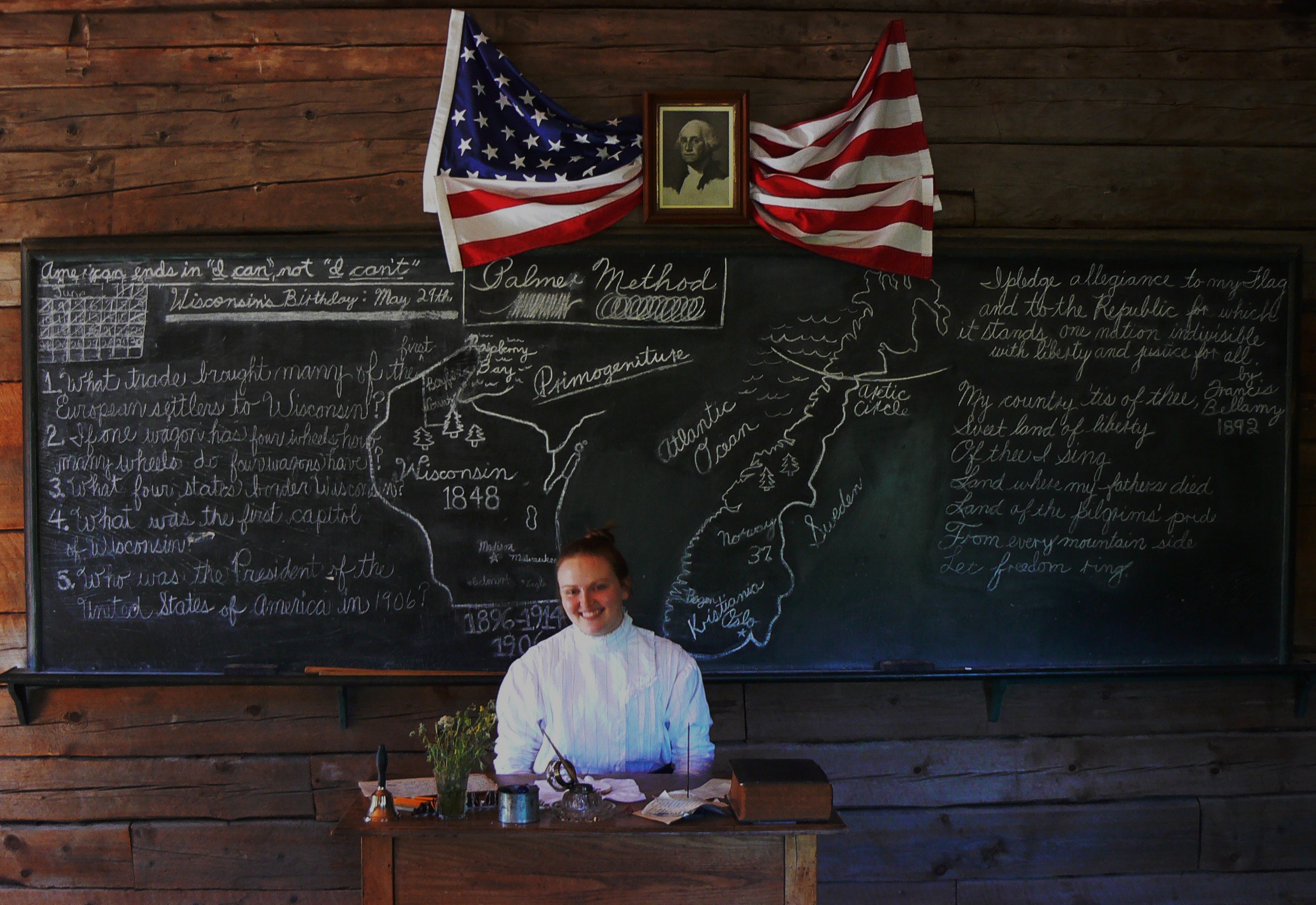
The Raspberry School is part of the Norwegian area of Old World Wisconsin. The one-room schoolhouse dates back to the late 19th century and brings back memories for lots of visitors who went to schools like this one. One fellow I talked to said he loved telling people that he graduated 3rd in his class…and omitting the fact that there were only 3 pupils in his grade level.
Multi-aged classrooms became a “new” education idea again in the 70s when I was in grade school and when my kids were in elementary school in the 90s, but ours only spanned two grades. I remember when we all walked home for lunch in the middle of the day. No lunch pails needed.
Each desk at the school has a slate and a slate pencil (no chalk, just slate on slate) and a copy of one of the McGuffey Readers. I never used one as a child. What about you?
But I found the most fascinating thing I learned last Monday at this school was about the Pledge of Allegiance. The 1892 version by Francis Bellamy reads: “I pledge allegiance to my flag and to the Republic for which it stands, one nation, indivisible, with liberty and justice for all.” With so many immigrants from different nations, allegiance to a new flag was part of public school education. It wasn’t until 1923 that the phrase “the flag of the United States of America” replaced “my flag”. Bellamy protested, but his opinion was ignored. Twenty years after that, in Japanese internment camps, all those over the age of 17 were asked if they would swear unqualified allegiance to the United States and “forswear any form of allegiance or obedience to the Japanese emperor, to any other foreign government, power or organization”. It wasn’t until 1954, when atheism and Communism were perceived as national threats, that “under God” was added. Francis Bellamy’s granddaughter asserts that the author of the original pledge would have objected to this change as well.
To what or to whom would you pledge your allegiance? Liberty and equality (which Bellamy wanted to include but knew the state superintendents were against equality for women and African Americans) and justice are the three great ideas of the American political tradition, according to Dr. Mortimer Adler. Are we in agreement on supporting these ideas in the U.S.A.? It’s something to think about as Independence Day approaches. Feel free to submit an essay in the comments section. Spelling counts, but neatness doesn’t (it’d be typed, after all).
Keeping Cool – Old Style
We haven’t had rain in a few weeks, and things at Old World Wisconsin (the outdoor living history museum where I work) are very hot and dry. We closed down to a skeleton crew on Thursday because the heat index was over 100 degrees. Only 25 visitors came the entire day. I worked both yesterday and today, and now I have my swollen ankles propped up on the couch. I don’t have air conditioning at home, either, but I do have a ceiling fan and a strategic plan to keep the house cool. That plan involves making it as dark and cave-like as possible. Here are some other tips for surviving the heat:
-
cheat on the number of petticoats you wear (I went down to only one, but I don’t think anyone knew).
-
hide a wet dishcloth under your skirts or drape one around your neck.
-
plunge your hands and wrists into cold water from the pump.
-
skip the corset, if you dare (I haven’t tried this yet).
-
move as little as possible. This means I opt for sewing over playing the pump organ.
-
drink lots of water and stay in the shade (well, that’s obvious).
-
take a cue from the oxen, Ted & Bear, and get a friend to lick your ears. Strategic evaporation, you know.