Unknown's avatar

Honoring My Father (Reblog)

George William Heigho II — born July 10, 1933, died March 19, 2010.

Today I want to honor my dad and tell you about how I eventually gave him something in return for all he’d given me.

My dad was the most influential person in my life until I was married.  He was the obvious authority in the family, very strict and powerful.  His power was sometimes expressed in angry outbursts like a deep bellow, more often in calculated punishments encased in logical rationalizations.  I knew he was to be obeyed.  I also knew he could be playful.  He loved to build with wooden blocks or sand.  Elaborate structures would spread across the living room floor or the cottage beach front, and my dad would be lying on his side adding finishing touches long after I’d lost interest.  He taught me verse after verse of silly songs with the most scholarly look on his face.  He took photographs with his Leica and set up slide shows with a projector and tripod screen after dinner when I really begged him.  He often grew frustrated with the mechanics of those contraptions, but I would wait hopefully that the show would go on forever.  It was magic to see myself and my family from my dad’s perspective.  He was such a mystery to me.  I thought he was God for a long time.  He certainly seemed smart enough to be.  He was a very devout Episcopalian, Harvard-educated, a professor and a technical writer for IBM.  He was an introvert, and loved the outdoors.  When he retired, he would go off for long hikes in the California hills by himself.  He also loved fine dining, opera, ballet, and museums.  He took us to fabulously educational places — Jamaica, Cozumel, Hawaii, and the National Parks.  He kept the dining room bookcase stacked with reference works and told us that it was unnecessary to argue in conversation over facts.
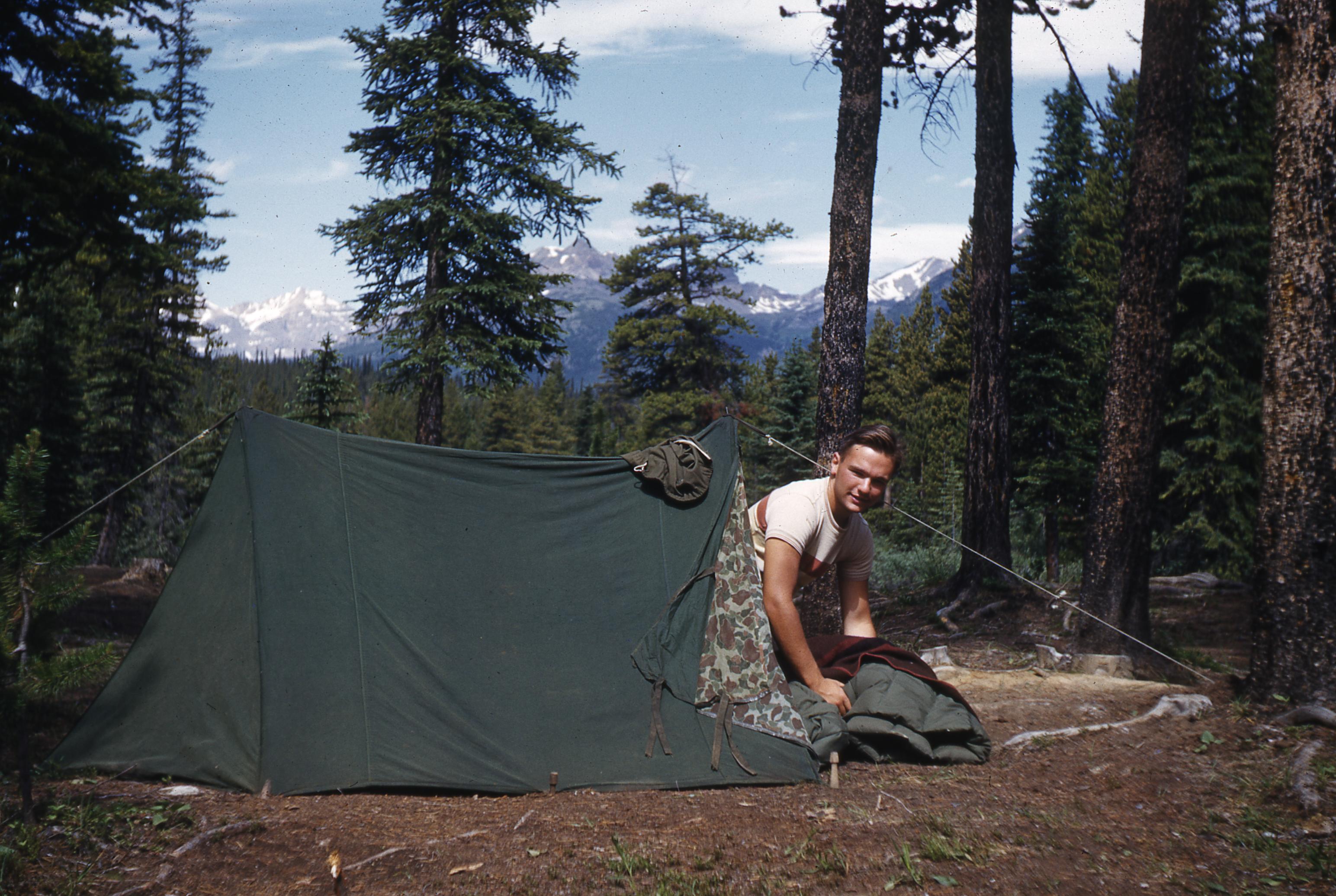
Camping in Alaska the summer after his senior year in High School: 1951.

My father was not skilled in communicating about emotions.  He was a very private person.  Raising four daughters through their teenaged years must have driven him somewhat mad.  Tears, insecurities, enthusiasms and the fodder of our adolescent dreams seemed to mystify him.  He would help me with my Trigonometry homework instead.
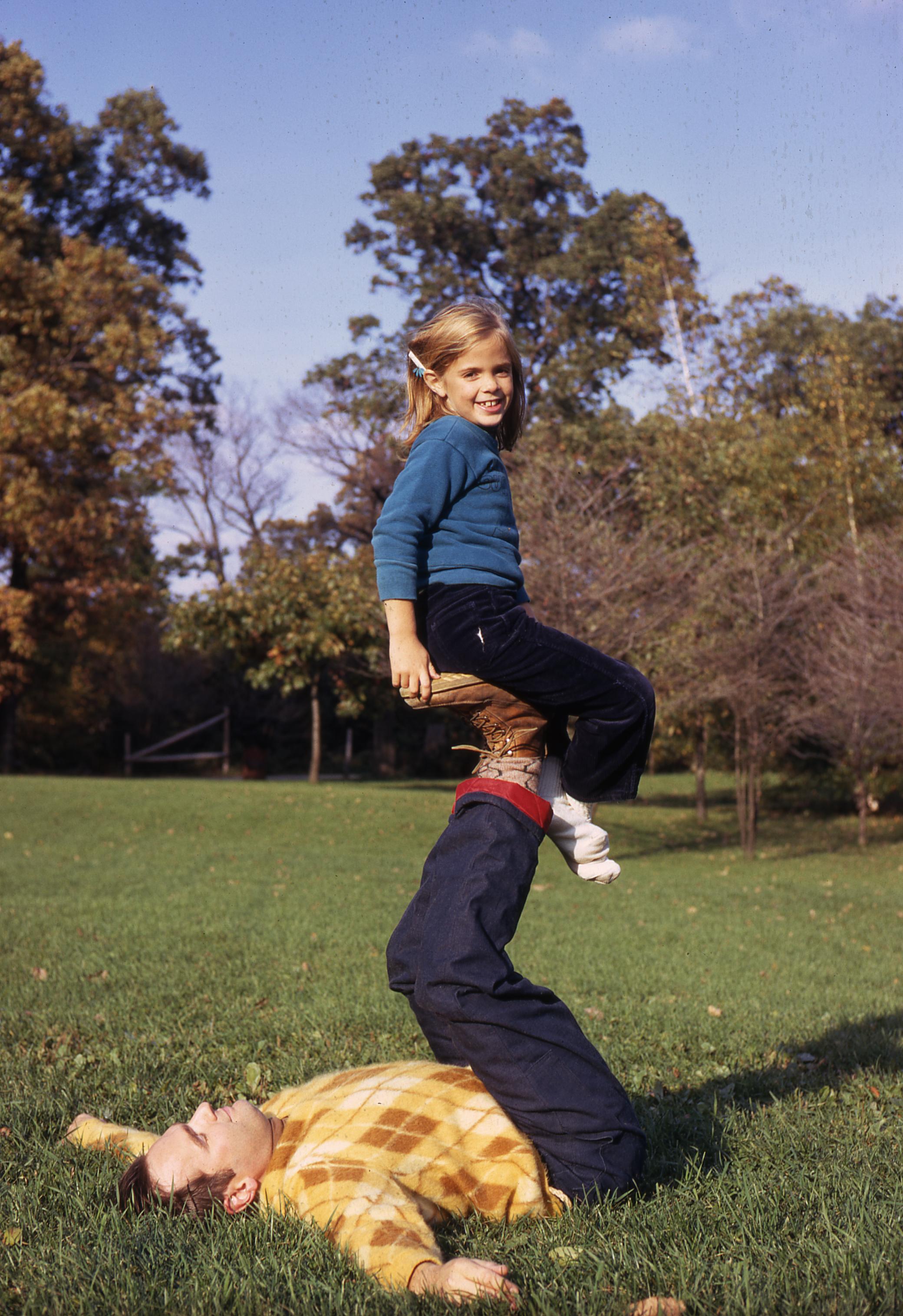
Playing with my dad, 1971.

I married a man of whom my father absolutely approved.  He walked me down the aisle quite proudly.  He feted my family and our guests at 4 baptisms when his grandchildren were born.  I finally felt that I had succeeded in gaining his blessing and trust.  Gradually, I began to work through the  more difficult aspects of our relationship.  He scared my young children with his style of discipline.  I asked him to refrain and allow me to do it my way.   He disowned my older sister for her choice of religion.  For 20 years, that was a subject delicately opened and re-opened during my visits.  I realized that there was still so much about this central figure in my life that I did not understand at all.

Grandpa George

In 2001, after the World Trade Center towers fell, I felt a great urgency to know my father better.  I walked into a Christian bookstore and picked up a book called Always Daddy’s Girl: Understanding Your Father’s Impact on Who You Are by H. Norman Wright.  One of the chapters contained a Father Interview that listed dozens of questions aimed at bringing out the father’s life history and the meaning he assigned to those events.  I decided to ask my father if he would answer some of these questions for me, by e-mail (since he lived more than 2,000 miles away).   Being a writer, this was not a difficult proposition for him to accept.  He decided how to break up the questions into his own groupings and sometimes re-phrase them completely to be more specific and understandable and dove in, essentially writing his own memoirs.   I was amazed, fascinated, deeply touched and profoundly grateful at the correspondence I received.  I printed each one and kept them.  So did my mother.  When I called on the telephone, each time he mentioned how grateful he was for my suggestion.  He and my mother shared many hours reminiscing and putting together the connections of events and feelings of years and years of his life.   On the phone, his repeated thanks began to be a bit eerie.  Gradually, he developed more symptoms of dementia.  His final years were spent in that wordless country we later identified as Alzheimer’s disease.

I could never have known at the time that the e-mails we exchanged would be the last record of my dad’s memory.  To have it preserved is a gift that is priceless to the entire family.  I finally learned something about the many deep wounds of his childhood, the interior life of his character development, his perception of my sister’s death at the age of 20 and his responsibility in the lives of his children.   My father is no longer “perfect”, “smart”, “strict” or any other concept or adjective that I could assign him.  He is simply the man, my father.  I accept him completely and love and respect him more holistically than I did when I knew him as a child.  That is the gift I want to give everyone.

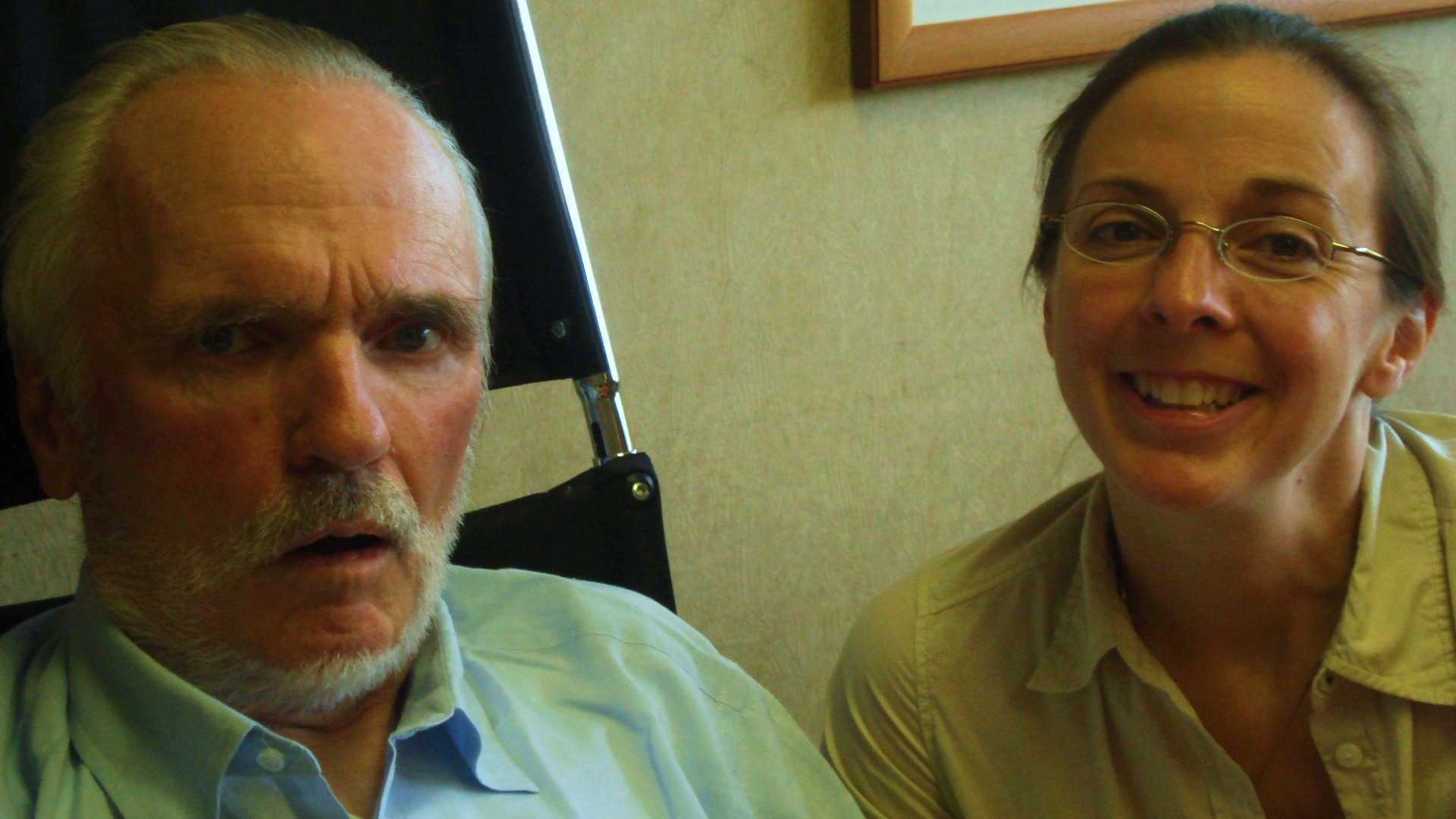
I will close with this photo, taken in the summer of 2008 when my youngest daughter and I visited my father at the nursing home.  I had been widowed 6 months, had not yet met Steve, and was anticipating my father’s imminent passing.  My frozen smile and averted eyes are fascinating to me.  That I feel I must face a camera and record an image is somehow rational and irrational at the same time.  To honor life honestly is a difficult assignment.  I press on.
Unknown's avatar

Memorial Day: A ‘Hair’ Piece (Part 2)

Alice and I were two of four daughters growing up in the 1960s when hair was a revolution. My mother’s practical and aesthetic notions of hair were of the previous generation. She preferred our hair bobbed and easy to care for, and since we inherited her thin, fine locks, that was what often looked best on us. Somehow Alice managed to get permission to grow hers long when the rest of us didn’t. Since there was more of it, it seemed thicker, more luxurious than mine. I begged to be allowed to brush it, comb it, braid it, style it and pet it. It was a special bonding time between us, and my affection for Alice was cemented during the hours I spent grooming her. Our other sister competed for this opportunity for devotion as well. We sometimes quarreled over who would be allowed this privilege. Alice enjoyed arranging hair as well, and learned how to cut it, too. She cut our brother’s hair and our father’s hair. When she died, at the age of 20, this task was passed on to me. The summer that she died, she also cut my boyfriend’s hair. I swept it off the porch and stuffed it in a red, heart-shaped pillow I made. Jim became my husband 4 and a half years later.


Alice and Mike - summer 1979

Alice and Mike – summer 1979

Jim’s hair was a true marvel, not just to me, but to everyone who knew him. It was thick, curly, blond and the crowning glory of this California dream man. In his late teens, he had the “surfer dude” look: in the humidity of the ocean air, a front lock would fall down on his forehead just like Superman’s. When he took a job in the 80s, it was shorter, casually parted in the center, and more like Huey Lewis’. He didn’t have to use “product” to achieve that decade’s big hair, while I was perming and mousse-ing like crazy. As he aged, he very gradually acquired some gray strands at the temples. He died at the age of 47 of heart disease and complications from diabetes. Our priest remarked at observing his body in the funeral parlor, “Look at his hair – barely gray and still as stylish as a Ken doll.”

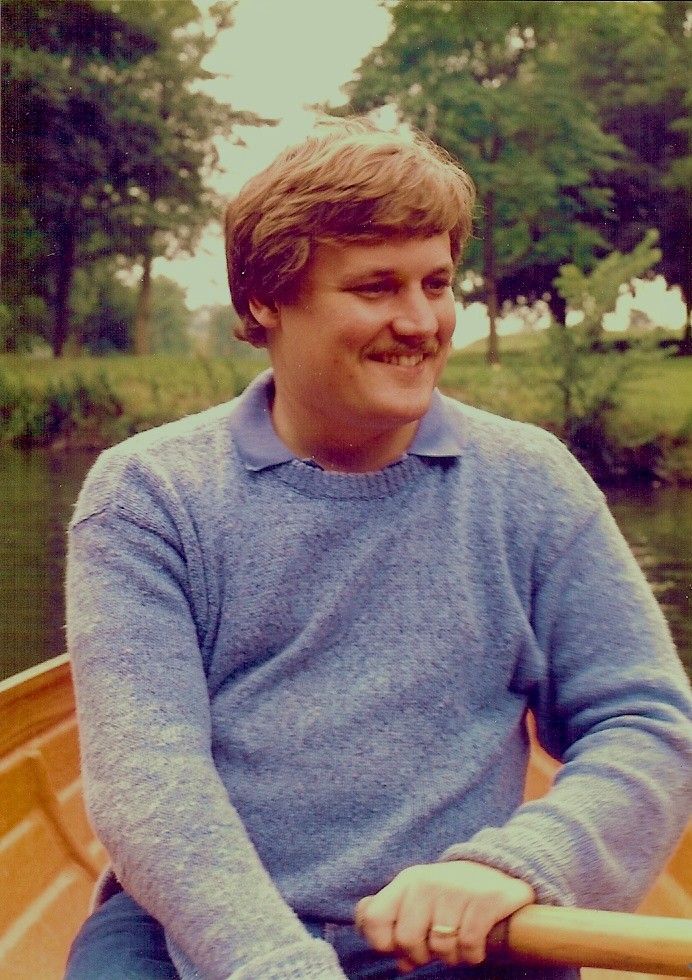
 Jim in England

My father died of Alzheimer’s disease two years later. He was thirty years older than Jim ever got to be, his emphatically straight hair a dazzling white. As a young man at IBM, he parted his hair to one side and kept it meticulously short and neat. When he moved to California, he began to comb it straight back from his forehead and let it grow a little longer in back. As a teenager, I would cut it for him while he sat on the redwood deck in the back yard. I only needed to even the ends at his neck and trim around his ears. As the clippings fell to the boards at his feet, he would reflect on the change in the color mixture. Each year, more gray and white, less dark brown. The most wonderful aspect of cutting my father’s hair was that I was allowed to touch him, to smooth and caress his noble head. This was as intimate and affectionate as I could imagine being with him, and it was like knowing God to me.


Grandpa George

Grandpa George

My daughter Susan visited me the other day. It was our Mother’s Day and Master’s Graduation celebration, in a way, but really just a lovely, rainy day to be together, talk about her upcoming wedding, do a jigsaw puzzle, cook a meal, drink martinis and listen to jazz. And play with her hair. When she was in high school, I would fashion her hair into an “up-do” for proms and homecoming dances. I could probably do a decent job for her wedding day; why pay an expensive stylist? We began to experiment. Her silky soft, light brown hair felt like her baby’s locks in my hand. The wispy ends of a layered cut growing out gave the outline of that toddler hair I remember so well, framing her youthful, round cheeks. The tactile experience of this person whom I love stays with me, in my mind and memory, in my fingers, in my heart. I will have wedding photos soon to go along with the graceful curl in her baby book and the little red heart pillow, strands of love and memories woven together over time. A satisfying memorial, to my mind.

Unknown's avatar

Memorial Day: A ‘Hair’ Piece (part 1 of 2)

Close your eyes. Imagine someone who is near and dear to you. You have a picture of how they look in your memory, the sound of their voice, probably some associations with certain smells, and memories of a tactile nature…the texture of their hair, perhaps. Did you used to watch your mother unpin a bundle of long hair and brush it out each night before bed? Did you perch on the counter and watch your father shave, feeling his scratchy face like Judy in Pat the Bunny and then the smooth, mobile skin of his smiling cheeks? Do you have a lock of your baby’s hair tied with a ribbon and taped to a page? Do you touch the ends of that fine, feathery stuff in wonder every so often at the turning of another year?


Hair. An intimate part of us mammals, dynamic and changing through our lifetime and, when preserved, a vault of information about culture, diet, and ancestry. It makes a very satisfying memorial, to my mind. Some people these days may find it distasteful, but at the turn of the last century, it was quite a popular material for crafting. Think of all the time, money and material spent these days on scrapbooks and photo albums. Money and photographs were hard to come by in the 19th century, but HAIR, hair was cheap and plentiful…and personal. Why not use it?


I first encountered examples of Victorian era hair art (see http://textilecollection.wisc.edu/featured_textile_articles/hair_wreath.html) while staying at a bed and breakfast establishment in Plymouth, Illinois. The lady who owned the place sold antiques, ran the village bank, and opened her home to guests…and cats. She told us that she had the largest private collection of hair wreaths in the nation. I looked at the framed pieces in awe. It was hard to believe that the fine strands so intricately woven were actually human hair. I couldn’t help picturing the mass of guck that clogs my bathtub drain and lurks in the corners on my bathroom floor. It made me think of how careless we are in managing our resources these days.


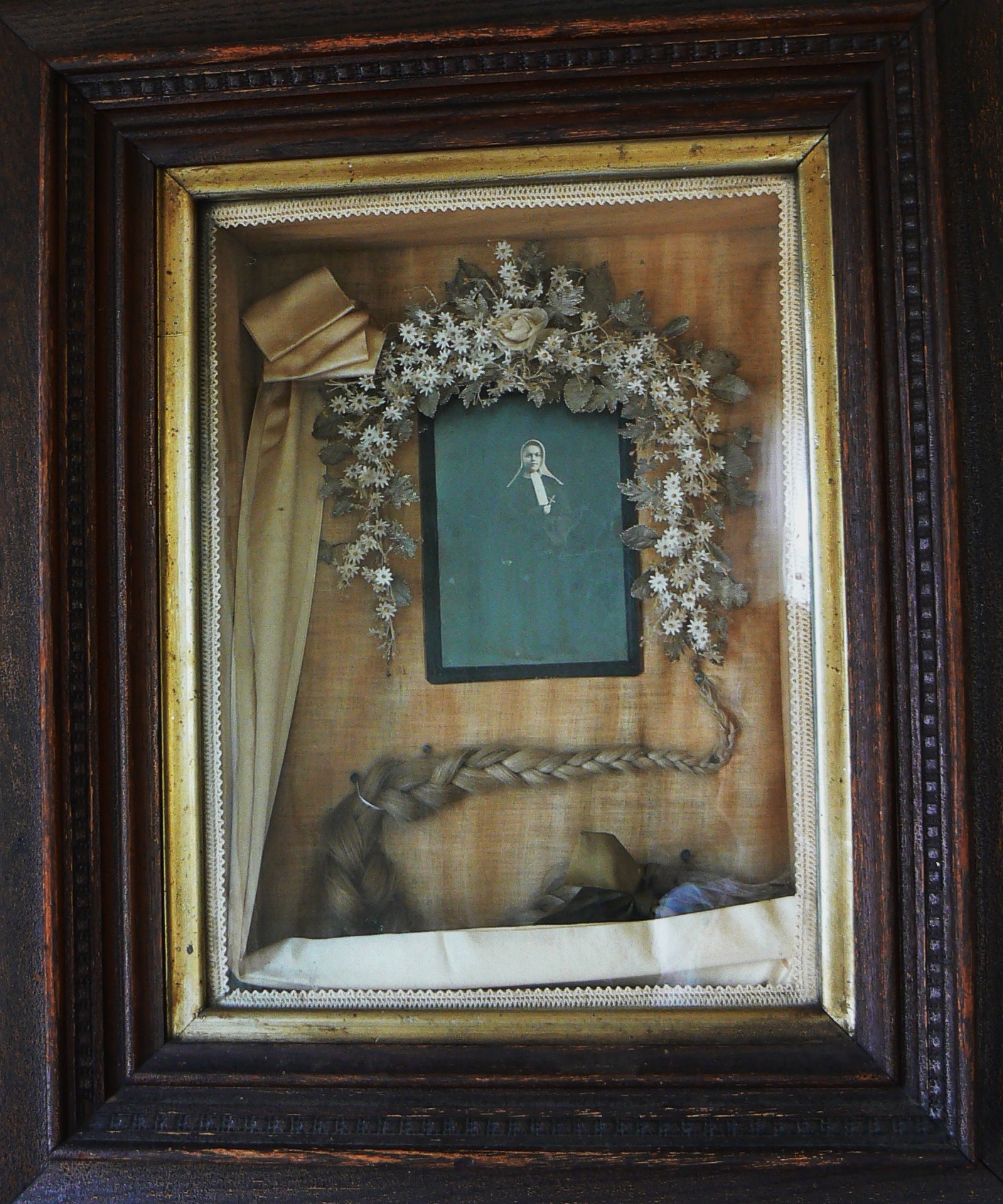
In the Hafford House at Old World Wisconsin, there hangs a shadow box that features a crown of small, white flowers and trailing ribbon, a photograph of a young woman in the habit of a nun, and a golden braid. When a novice took her vows, her hair would be cut as part of the ceremony of transformation. Families would not see this young woman once she was cloistered, so why not save her hair as a remembrance? This is possibly what Mary Hafford did to memorialize her daughter Ann, of whom we have no record beyond her eighteenth year. The artifact we have is not actually Ann Hafford, but it makes a good illustration for interpretation.

P1040610


My partner, Steve, told me that his mother honors her loved ones on Memorial Day by visiting their graves. While I was growing up, my family never observed this tradition, probably because all my parents’ relatives are buried far from the states where we lived. I had considered Memorial Day a day for commemorating military casualties, but I welcome the occasion to remember three very important people in my life. My sister Alice, my husband Jim, and my father are buried in the same ground: the columbarium at St. Luke’s Episcopal Church in California, where I was married. I am in Wisconsin and too far away to make a pilgrimage, so instead, I am visiting them in memory…and thinking about their hair.

(Part 2 to be posted on Friday…)


Unknown's avatar

Weekly Photo Challenge: Home

Home

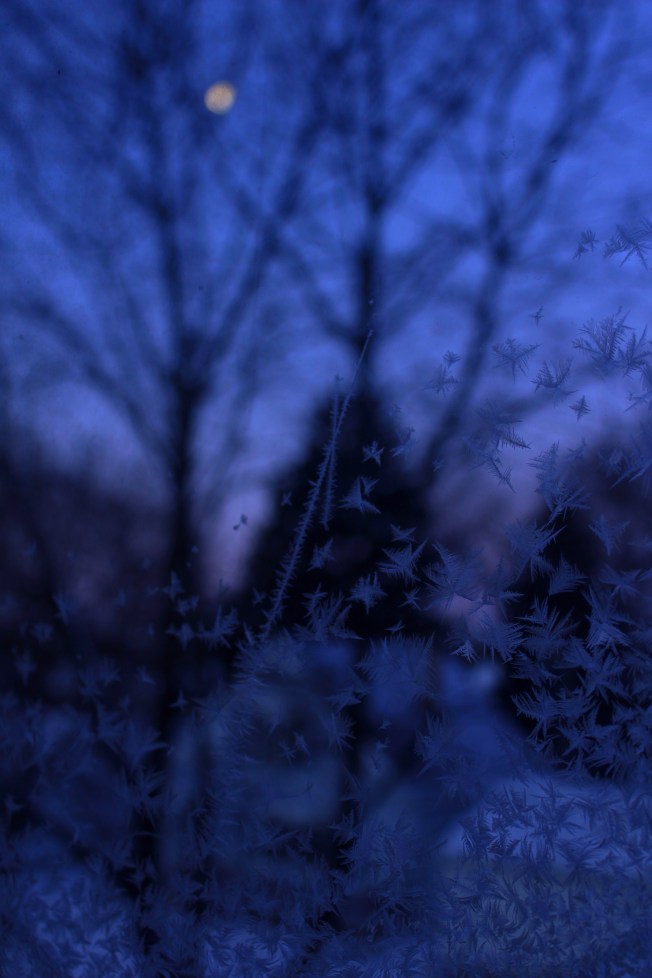
Home.  A weighty concept in some ways, but also tending toward the sentimental.  It can connote fortification, shelter….and yet, homey can be quaint and trivial.  We invent and reinvent our relationship to home throughout our lives.  A place to go to, a place to run from, a place without, a place within.  Maybe the truth about ‘home’ is that it is changing and fluid.  That’s what I want to illustrate. 

This photo was taken out of my bedroom window, from within the warm nest where I find safety, comfort, and respite.  And yet, the window is transparent.  It doesn’t completely shield me from the cold visually, nor does it keep me from feeling it (it’s an old drafty house, not well insulated at all!).  It lets me come face to face with the physical realities of frost and even pulls me beyond the immediate perimeter of my house, across the street, up into the trees, and all the way out of the Earth’s atmosphere to the Moon.  And still, this is all my home, too.  The Universe is where I live.   Home is near as well as far.  And why should I not feel safety and belonging in all of the world’s manifestations?  Cold and death and distance and infinity do not annihilate me, nor do they exalt me.  They are familiar and comforting, too.  I do not control my home as I do not control the weather…I live in it.  And life is bigger than most of us imagine.  

For another picture of home, mundane and temporal but nevertheless real and interesting, my last post was about our home business, Scholar and Poet Books.   Please click here and take a look!


Unknown's avatar

Examining Entitlement – the “Feed and Frustrate Formula”

I am working on finding The Middle Way in my life and on communicating what I can of that journey to anyone who might find that helpful…with my own children in mind as always.  The other day, I came up with a phrase that I am finding useful in describing the continuum of experiences needed to grow and develop as a person:   “Feed and Frustrate”.   We all need a certain amount of feeding, starting in infancy when we are in our most dependent phase, and continuing through adulthood.  We have physical needs, emotional needs, and intellectual needs.  How do you determine what is a ‘need’ and what is a ‘want’ and what that certain amount actually is?  That’s a good question and leads to examining entitlement, which I will get to in a moment.  I want to take a look now at the other end of the continuum and describe our need for frustration. 

Frustration, challenge, resistance, a force up against we must push is a very necessary part of development.  Consider the emergence of a butterfly from its cocoon.  Many well-meaning folks have discovered a curious thing.  If, in their effort to be kind to animals, they assist a butterfly in its struggle to free itself from the structures surrounding it, the insect will weaken and die.  The butterfly needs the activity of straining to get fluids moving to its wings, to strengthen them for flight and to dry them out.   A similar thing happens if you facilitate a chick in hatching from an egg.  The work to chip away at the shell, the time and effort it takes to accomplish that task on its own, is vital to the chick’s health and makes it more robust.   Without that hindrance, the chick remains weak.  We need to frustrate our children and ourselves enough to stimulate our ability to access our own strengths. 

Working out the balance of feeding and frustrating is a lifelong endeavor.  I find myself looking at my adult children and wondering how I did as a parent.  I became a mom at the tender age of 22 and felt all those biological and hormonal urges to protect, provide, nurture, and “spoil” my kids.  I also had a pragmatic sense of limitations.  My mom might say that’s the Scotch in me.  I am frugal.  My kids call me “cheap and weird”.  I’m not sure I had a notion of the value of frustration, even though I’m sure I frustrated my kids unintentionally anyway.  So, they didn’t get everything they wanted, but I’m not sure I taught them a “work ethic” or a “frustration ethic” very well.  I am not sure if my parents taught me that, either.  Regardless, the responsibility of developing that ethic is my own.  It is the responsibility of each individual to examine their ideas of entitlement and challenge themselves to develop the resources necessary to achieve their goals. 

I like to learn through story and art.  I think of examples of characters who live out their “feed and frustrate” scenarios and find some tales to be inspiring, some to be cautionary.  Too much feeding as well as too much frustration can lead to helplessness and hopelessness.  One story I’ve been following lately is that of a young man who is an NBA basketball player in his second year as a pro.  I like watching Jimmy Butler play.  He has the kind of untapped strength that seems to increase with the number of challenges he’s given.  While his teammates recover from injury, he gets to play more minutes, and he seems to be growing up before my eyes.  I did some background checking and learned that he was abandoned by his father as an infant and kicked out of his mother’s house when he was 13.  A friend’s mom eventually took him into her home and gave him some strict rules to follow…and he blossomed.  The feed/frustrate formula made him confident in his ability to improve himself, which he keeps on demonstrating on the basketball court. 

This idea is not only pertinent to individual lives, but also to systems.  Politically and economically, how are we balancing the feed and frustrate formula in order to support a robust society?  Are we giving too much assistance?  Are we giving too little?  It’s a good thing to re-evaluate over time. 

So, perhaps I’ve given you something to think about.  How do you see the feed/frustrate balance in your life?  Where do you think an adjustment might help?  If you’re a writer, what is happening on this level in the story you’re working on now?  How does that dynamic work in your characters’ lives?  Thanks for listening to me hash out my thoughts! 

And one more point.  “Ahem!  This theory, which is mine…” footnote reference to Monty Python sketch featuring Miss Ann Elk...I own it and it’s mine.  I might use it in an article or something.  If this gives you an Aha! moment and you want to share it, please reference this blog post.  Thanks for your respect!

Unknown's avatar

Weekly Photo Challenge: Unique

I really like the photo posted on The Daily Post at Word Press today for the photo challenge.  The single, blooming red tulip in a field of budded yellow ones is an immediate visual image of what it means to be unique.  Outstanding in your field, the only one of your kind, different from all the rest.  Snowflakes.  People.  We’re all unique like that…so does that make being unique – not so unique?  Tricky concept, really. 

I’ve been spending a lot of time this week photographing vintage games, toys, and books from an estate and putting them up for resale on e-Bay.  Part of that time has also been spent researching the object to find out if other people are selling it and for what price.  Manufactured goods are not so unique.  They’re usually mass produced.  But after 50, 60, or 70 years, they begin to be more rare.  Others of their kind have been destroyed or lost for good.  They begin to show wear in unique ways: non-duplicated tears, rubs, bumps, scratches.  But usually, there is another one of that item’s “siblings” out there, somewhere.  I guess what I’m learning is that differences and similarities are rather fluid.  We are the same AND we are different at the same time.  We are connected in mass and atom and substance in numerous ways that we only dimly understand.  Categorizing and separating is something that we like to do because it narrows the overwhelming complexity of the world into an order that our little brains can comprehend.  But it’s all a game, really.  The truth is closer to wonder, the moment when you see something and exclaim “Look at that!” not because it’s necessarily different or special or anything else but just because it IS!  Wow!  There it is being the way it is and isn’t it marvelous!! 

Okay, with that in mind, here’s something I picked up at Mammoth Cave National Park in Kentucky, and I didn’t know what made it the way it was, but it seemed familiar and strange at the same time. 

unique

My best guess is that these leaves are from the tulip poplar tree.  The lobes are not formed in the typical way on these individuals.  Mutants?  Perhaps.   I only found one that was like a perfect heart.  The yellower one was a relative, sort of the link to the “normal” tulip poplar shape.   I examined the edges very carefully to determine whether someone had shaped them on purpose.  They appeared to be completely natural. (oh, and the acorn is just for composition and because it had a really sexy luster!)

Variety, diversity, uniqueness.  “And I think to myself…….what a wonderful world!”

Unknown's avatar

Reckoning Love

“What’s in a love letter, anyway?” he asked. 

I was in a mood.  A little pouty and weepy, my inner 4-year-old whining, “I just don’t feel special!”  God, why does this keep happening every month?  It’s so ridiculous.   Okay, rather than stuff it and wait for it to go away, I will wrap that little girl in my own arms and listen to her.  She wants to feel loved.  She doubts her self-worth every once in  awhile and wants someone to show a preference for her and please her.  “Little One, you are precious,” I tell her.  I am taking responsibility for caring for this vulnerable one.  Me.  Passing that burden on to anyone else is manipulative and fosters a kind of co-dependency.  I don’t want that any more.  Oh, but I used to rely on it pretty routinely.  I had a husband who, for 24 years, lavished me with gifts and compliments and love letters.   I have been with Steve now for 4 years.  He has never even bought me a greeting card.  I do not want him to be other than he is, and I believe he loves me profoundly.  So, what is the love letter game about?  “What’s in a love letter, anyway?” Steve asked.

Six parts flattery to one part youth…or is that a martini?  So I began to make a list of the elements of a love letter,  Cat Stevens’ song “Two Fine People” running through my brain.  In one column, I put the parts that I know Steve would never embrace.  In the other column, I put the bits that I think he does communicate, albeit in person and not in writing.  The list began to resemble another amusing song: “Title of the Song” (by DaVinci’s Notebook), which you really must click on and listen to if you never have before.      …Now, wasn’t that fun?

So I showed Steve the little orange Post-It note that carried this weighty list.  On the left, I’d written “flattery; promises: to rescue, for future, to provide; declaration of desire”.  On the right I’d written “honesty, appreciation, gratitude, description of how I love”.  I told him that his description of how he loves is unique and authentic to him and doesn’t resemble Cat Stevens’ (“…though Time may fade and mountains turn to sand…’til the very same come back to the land”).  He walked to one of his bookshelves and took down his “Bible”, a copy of Walt Whitman’s Leaves of Grass.  “How’s this for a love letter?”  he asked and read from “Song of Myself”:

The smoke of my own breath;
Echoes, ripples, buzz’d whispers, love-root, silk-thread, crotch and vine;
My respiration and inspiration, the beating of my heart, the passing of blood and air through my lungs;
The sniff of green leaves and dry leaves, and of the shore, and dark-color’d sea-rocks, and of hay in the barn;
The sound of the belch’d words of my voice, words loos’d to the eddies of the wind;
A few light kisses, a few embraces, a reaching around of arms;
The play of shine and shade on the trees as the supple boughs wag;
The delight alone, or in the rush of the streets, or along the fields and hill-sides;
The feeling of health, the full-noon trill, the song of me rising from bed and meeting the sun.

Have you reckon’d a thousand acres much? have you reckon’d the earth much?
Have you practis’d so long to learn to read?
Have you felt so proud to get at the meaning of poems?

Stop this day and night with me, and you shall possess the origin of all poems;
You shall possess the good of the earth and sun—(there are millions of suns left;)
You shall no longer take things at second or third hand, nor look through the eyes of the dead, nor feed on the spectres in books;
You shall not look through my eyes either, nor take things from me:
You shall listen to all sides, and filter them from yourself.

The little girl opens her wet eyes and looks wide.  Wondering, feeling alive, an equal to the sun and the trees and the birds in the sky and every playmate in the Universe.  Is this not Love, this embrace?  I reckon that it is. 

075

Unknown's avatar

I’m 50! Me & Jodie Foster

I’m not a media watcher.  I don’t even own a TV, but for some reason, I found myself drawn to Jodie Foster’s acceptance speech at the Golden Globe Awards this morning.  I read the transcript online, then did a youtube search to see her performance of it.  How do you get to be a gracefully aging woman of 50?  How do you leave behind the fluff and come out real and wise and honorable?  That’s what my blog project has been about, so I wanted to see Ms. Foster’s take on it.  I was not disappointed.  No doubt the lady is intelligent.  No doubt she has compassion for the human race.  What essence did she distill and pour for us in those 6 minutes of impromptu address being recorded for millions to see?  Art is significant work.  Media without privacy is exposure and becomes ridiculous and dangerous.  Gratitude is important.  Relationships are essential even though understanding is fleeting and loneliness is inevitable.  And change is the atmosphere we live in, grow in, and die in.   Resisting it is a waste of energy.  Embracing it is mystically regenerative.   I get that.  I concur.  Maybe I could be her soul sister, too. 

Unknown's avatar

Oh! The Humanity!

Internet news gives me a stomach ache.  I just feel sick after browsing through photos and videos and stories about cruelty, stupidity, fear, and all kinds of petty, human activity.  I really appreciate bloggers and others who post genuine evidence of our more noble capabilities.  Although, sometimes this is attributed to “angels among us” or some non-human inspiration.  Is kindness not a human trait?  Justice?  Wisdom?  What do we gain by hesitating to credit people for exhibiting these admirable qualities and then splashing our media with all the “awkward” examples we can fit on a screen?  Bleh…I just feel like I’ve been gorging on rancid movie popcorn.  Humans plugged into more and more machinery, morphing into robo-sapiens, give me the same sour taste.  

Please, somebody show me a living mensch!  A human being, acting gracefully.  Are there so few left?  Browsing through my photo file, I realize that only a handful of pictures actually contain people.  Is it because I find beauty in nature and form and so rarely in mankind?  

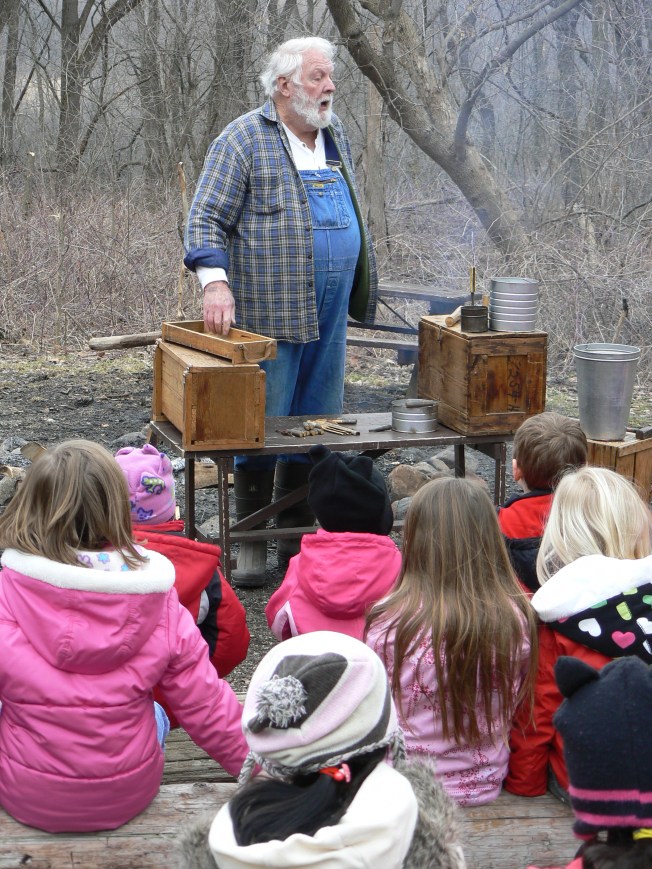
Here’s one I did uncover.  I took this shot last March.  It shows a retired thespian giving a presentation to school kids on the process of making maple sugar one hundred years ago.  He’s describing hand made tools, telling the story as if he were remembering his boyhood.  He peppers his talk with jokes to make the kids laugh and pay attention.  He is a teacher of old ways, engaging with new minds, passing on a respect for trees.  He’s not doing it for remuneration or applause, he’s doing it because it’s important to him.  And I think he’s a good example.  Can you show me others?  My stomach will thank you!

The old man and the maples

The old man and the maples

Unknown's avatar

Weekly Photo Challenge: Resolved

When Steve asked me on Sunday if I’d made New Year’s resolutions yet, I grumbled at him, “I don’t jump on that bandwagon.”  I had a sore throat that turned into a head cold and was definitely sending out the “leave me alone!” vibe.  I make resolutions to do better every single day of my life, and it often becomes an exercise in self-flagellation.  Someone I admire does this kind of thing much better than I do: visit her New Year’s post here. (plugging my daughter’s blog – I typed ‘blugging’ first; suppose I can coin a new word?)  

Actually, Steve and I had spent quite a bit of time last week discussing and deciding on goals for this new year.  We call it “pointing our canoe”.  One of the things I put on my list was to submit something to a publisher every month of this year.  Another thing on our mutual list was to plan a weekly field trip to learn and research and engage in our love of the land (land ethics, land management, environmental education) and to get outside every day for a walk.  I skipped the first two days of this year with a head cold, but I’ve managed in the last couple of days to walk to the car repair shop, the grocery store, the bank, and the cafe where we breakfast with his mom.  Now, this might not sound like a big accomplishment, but let me add one bit of info – I live in Milwaukee.  And this is what is forming outside my upstairs window:

tri cicle

That, my dear readers, is a tri-cicle (three-pronged icicle; just coined another word – where do I collect?) photographed through the screened window.  The center section of this bad boy is about 4 feet long now.   This is what outside is like here, and this is where I want to be every day.  I don’t want to make it more comfortable, I don’t want to avoid it.  My resolution is all about facing the world as it is and appreciating its wonder as a thing that I don’t comprehend or control.