Unknown's avatar

Saving the Planet: a Rational and Emotional Goal

We were going to watch another episode of The Life of Mammals featuring Steve’s hero, David Attenborough.  Somehow, despite a huge allergy attack and the resultant stuffed up head, Steve’s critical mind was able to detect something nagging at him.  The media, entertainment, and complacency: is this a distraction from what we really want to pursue?  Sure, it’s about animals and nature, but is it likely to help us get closer to saving our desperate planet?  Are we sinking into a kind of complacency and pacifying our outrage by convincing ourselves that we’re doing the best we can just by appreciating nature through the media?  What is the best we can do?  How about coming up with solutions to systemic problems?  Why would that be impossible?  It’s no more impossible than writing a dissertation or an 800 page book on the life of Henry VIII.  It takes energy and research and time and focus.  That’s all.

Okay, at 9:30pm, I am not up to solving systemic problems, or even thinking about them.  I had a headache and a backache, and I started crying.  So I took a couple of ibuprofen and suggested we talk about it in the morning.

So, this morning I wake up with this phrase in my head, “If you’re not part of the solution, then you’re part of the problem.”  Well, of course I’m part of the problem.  I drive a gasoline-operated vehicle.  I contribute to an economic system that is full of gross inequalities.  There is plenty on that side of the list.  I would like to be part of the solution.  I would like to know what the solution is first, though.  That seems rational to me.  Steve counters that in order to be motivated to find a solution, we need the energy of emotion.  My British heritage and upbringing say, “No way.  You can’t motivate me by appealing to emotion.  I want to be rational.  I want to do the right thing for a rational reason.”  Is there a rational reason to do the right thing?  Why do you want to do something beneficial?  Because it’s good to do good.  Ah, but that is a tautological argument.  Good = Good doesn’t prove anything.  It’s like saying, “Because I said so.”   Okay, fine.  I do want to be part of the solution for an emotional reason.  And the minute I say that, I want to back away from it.  “Emotion never got anything done; it’s so uncivilized.”  Wow, does that sound British or what?  Ah, but the energy that comes with emotion can be very useful.  Are we ever going to make drastic changes in our destructive trajectory if we don’t get angry or scared or fed up or sad in some way about how things are?

It's not easy being green

Okay, so how about striking a balance and coming up with a both/and approach?  Rationally, polluting the planet and alienating ourselves from all life around us through exploitation and indifference is not wise.  It may lead to our ultimate destruction.  Emotionally, the defacing of the original cathedral of our adoration, all of life, makes me sad, angry and scared.  I want to put energy, research, time and focus into finding ways to live differently.  Recognizing that “all life” is interconnected, this will involve looking critically at economic systems, ecological systems, biological systems, psychological systems, political systems, sociological systems, philosophical systems, religious systems, etc.  A complete overhaul.  Why not? What else have I got to do with my life?  I could just sit back and be complacent or sneer and be cynical or throw up my hands and despair, but I think I’d rather just get to work.  I don’t expect the first attempts will be perfect or even adequate, but we may as well point the canoe and start paddling.

Is this nuts?  Is this manic?  Is this taking responsibility?  What do you think?


Unknown's avatar

Sundays: Prayers and Practices

Sundays were full of ritual in our house.  We went to church every week to sing in the choir, to serve at the altar, to teach or learn in Sunday School, and to meet up with familiar folk.  There were the formal rituals of the liturgy and the informal rituals of getting everyone up and dressed and in the car.  After church, we had rituals of brunching on bagels and sleeping in front of the Bears’ game.  These habits gave our Sundays a certain shape and form that became very comfortable to me.  I didn’t think very hard about them after a while.  They seemed fairly easy and routine, a balance of early busy-ness and later laziness.  We’d dress up and then let down.  It was what we did, week after week.  Gradually, this practice began to unravel as the kids grew up, moved out, and developed their own habits.  When they came back into my home, this routine was questioned.  Do I have to get up and dress up and go to church?  I’m used to sleeping in on Sundays now.  Why do you do this routine anyway?  Is it obligation?  Okay, you committed to being in the choir.   You’re obligated, I’m not.  Do you think I’m obligated to you because you’re my mother?  It became obvious that it was time to think critically about our family habits and evaluate them.  I admit that I was not above manipulation.  I  liked to have my kids with me in church.  I liked to hear them sing.  I liked being seen by others as a mother with devoted children.  I wanted to have time together as a family because I worried about how ‘dysfunctional’ we were becoming.  I thought I could get what I wanted by imposing ‘rules’, but when my authority over them came into question, I resorted to bribing them with food…or guilt.  “It’s a family thing!  Don’t you want to go to brunch at Egg Harbor with us?”  Occasionally, I would even be satisfied if they skipped church and met up with us at a restaurant afterwards.

After Jim died and I began dating Steve, I invited him to come to church with me.  He observed the whole morning routine respectfully and rather silently.  I finally asked for his feedback.  His first comment was that I had become a totally different person than the one he knew.  I had adopted a persona that he didn’t recognize.  I had put on my social ‘face’ and performed my part in the choir, but he saw nothing of the spirituality we talked about while hiking in the prairie.  He asked me whether I thought my church habits contributed to my spiritual growth, and I couldn’t answer right away.  He also asked me why I neglected to inquire about his bagel preferences when I picked up brunch afterwards.  That was embarrassing!  I was in my familiar bubble and not even thinking about my guest.  “We always do it this way, and you can just follow along,” is something I am very used to accepting and enforcing.  Steve doesn’t like to be treated that way, though.  He values participating as an equal in what is happening.   His theological questions came next.  If you’ve never been to an Episcopal mass before, you would probably be bursting with questions about the symbolism alone by the end of the service.  Steve was wondering if there would be an occasion that he could stand up and ask about what was going on.   Can you imagine?  “Uh, excuse me?  Hi.  I’m Steve and this is my first time here.  Can you tell my why you’re doing that with that cup (or candle or incense diffuser or garment or….) and what that means?”  I had to admit that the whole social construct was not designed to be very inclusive or open.  It was another case of “we always do it this way, and you can just follow along”.  I began to wonder how much of my long-standing religious faith was about simply following along.

Holy Hill, from far away

Here, I am living without religious habit or routine for the first time in my life.  I have decided that I don’t want to live without practice, though, because practice leads to mindfulness.  I am working out how and what to practice.  Back in May, I began to write my own Daily Offices, reminders for certain times of the day.   Here’s what I put together:

I.  Matins – Make Love Every Morning

I become aware of a new day, of the sun rising in the east once more. I feel the security of its constant faithfulness and a deep gratitude and contentment washes over me. I appreciate the sun. I hear birdsong or a cat mew, and I become aware that other creatures greet the new day with me, each one appreciating this regular phenomenon in her own way. I feel the lightness of the sky reflected in the lightness of my body. Food digested, shadow of darkness lifted, I feel buoyant and relaxed and open. The energy of a new day and new opportunities fills me with each breath. I notice the particulars of this morning, the weather, my body, my surroundings, where I am, who is with me. I am grateful for these particulars as they are. I am aware that each of my loved ones greets the morning in some way, and I think of them with appreciation for the connection we have on this planet. I am aware of myself. I am appreciative of my body, of my inner being, and I hold myself in a place of unconditional love. I belong on the earth today. I have an important part to play here along with everything else. I want to be aware of that all day long. I become aware of any anger or fear that might arise in me as I spend time with myself. I notice any of these “stuck spots” with compassion. I review my 3 options: run away, change my circumstances, change myself.

 II.  None – The Ninth Hour – After School Snack

I pause after a few hours’ work to refresh myself. I am grateful for the food I eat and for the earth that nourishes me. I appreciate the way my body repairs itself while resting. I note the work that I have done so far today, the satisfaction of taking responsibility for my life. I become aware of any places I may have become “stuck” today. I re-direct my energy so that flow resumes. I notice changes in the sun’s light, in the weather, in the activity and mood of the afternoon. I feel grateful for these particulars as they are. I spend time with myself and nurture my inner child coming back home.

 III.  Compline – Now I Lay Me Down To Sleep

As I slow down at the end of the day, I pay attention to any anxieties that have gathered around me during the day. As darkness falls, I let go of these anxieties, breathing out slowly and gratefully. I look deeply within for the security and safety I seek, remembering that the world proceeds according to natural laws, life and death have their place, my days will be as they will be, and fear need not preoccupy my thoughts. I ask for peace, for every living thing to be free from suffering.

I was having panic attacks back in Spring because of the enormous transitions I was going through, and wanted to practice being mindful that the world is a continuously unfolding and wonderful place, not a dangerous place of uncertainty and chaos.  Thich Nhat Hahn talks about tending the gardens we grow in our lives by nurturing seeds that we want to see in full bloom.  I want peace to bloom in my garden.  I want love to bloom without manipulation.  I want a mindful connection to the Divine to bloom.  I want responsibility and intentional participation to bloom.  I want to develop practices that will encourage these to grow.

Unknown's avatar

Bibliophilia

Steve's office, next to the bedroom

Books are amazing.  They’re so diverse, so intriguing, so satisfying.  I live with about 40,000 of them in this house, and yet, there are so many more to look at.  We went to a Friends of the Library Book Sale in West Berlin today.  Tables and tables full of boxes of books lined the room.   Every time I think I might be getting sick of looking at books, a cover catches my eye.  A picture or a title throws a thought against my consciousness, and I’m hooked again.  I can’t resist a book on natural history or a cookbook on chocolate or a biographical picture book on Roberto Benigni.  The world is a fascinating place.  So, after the book sale, where did we go?  To a bookstore… to meet with the Socrates Cafe group.  Steve has been talking about them since we first started dating, but he hasn’t gone to a meeting for about a year.  They were very glad to see him again.  I was introduced to the group of 2 women and 7 men as the only newbie.  We put 3 questions up on the dry erase board and voted for our favorite.  “Is life meaningless?” was the winner.   Is life meaningless?  We’re surrounded by books, words and pictures about life.  If  life is meaningless, we’re certainly doing our damnedest to create meaning to put in it.  Ah, but is there a capital M – Meaning as in a meaning that was put into life by something or someone bigger and other than us?  The discussion goes on.  The group dynamic plays out on the stage.  An hour and a half goes by, and then the leading couple asks us out to dinner.  A charming pair of psychologists make great dinner companions, in my book (pun intended).  I had a thoroughly enjoyable day.  It felt great to meet with and talk to new people.  I feel like I’ve brought a hundred new friends home with me as well.  I feel alive and engaged!  Life has meaning and death has meaning; everything has meaning and everything is valuable!  I feel like Walt Whitman in one of his litanies of affirmation.  If you spent an hour browsing through a library or a bookstore, how would you feel?  Expanded?  Sensitized,  like tiny hairs of consciousness were prickled on your mind?

Before the meeting, we walked on the shore of Lake Michigan looking past the breakers where spinnakers danced on the horizon.  Gusts of wind and sunshine exhilarated our senses.  I wish I had brought my camera.  I like to try to hold on to the bedazzlement of life.  I suppose that books do the same thing, symbolically trying to capture something of wonder.  From the snatches that I read this morning, here is a dazzling quote:

“I wish I could translate the hints about the dead young men and women, And the hints about old men and mothers, and the offspring taken soon out of the laps.  What do you think has become of the young and old men?  And what do you think has become  of the women and children?  They are alive and well somewhere.  The smallest sprout shows there is really no death, And if ever there was it led forward life, and does not wait at the end to arrest it, And ceas’d the moment life appear’d.

All goes onward and outward, nothing collapses, And to die is different from what any one supposed, and luckier.”   Walt Whitman, “Song of Myself” from Leaves of Grass

Unknown's avatar

Dear Prudence

Last night, we watched the movie “Into the Wild” which tells the story of Christopher Johnson McCandless, who walked into the wilderness of Alaska to live off the land and do battle with some personal demons.   After 113 days, he died of starvation.  The story brings up some very interesting questions about society, “prudence”, and responsibility.

“Society!  So – ci – e – ty!!!” yells Vince Vaughn in a bar scene.   His character is bonding with Chris in a less-than-articulate but heartfelt acknowledgement that we fuck each other up regularly.  Parents and children, systems, administrations, organizations, rules, protocol and expectations.   It’s all pretty neurotic when you step back and look at it.   Some days, maybe most of us would like to walk to Alaska to get away from it all, to experience the freedom and dignity of making our own choices and engaging with the world head on.   After 100 days of complete solitude, Chris writes that he is lonely.  I think of that Life of Mammals scene with all the baboons on an African mountain.  We are social animals; it’s in our DNA, and we can’t walk away from that.  Maybe that’s another part of life to engage head on.

The first time my mother met Steve, she made a comment about him being “prudent”.  He denied it immediately.  To him, ‘prudence’ has to do with conforming to the cultural norm for being sensible.   However, other definitions indicate “wisdom, judiciousness” as its characteristics.   Chris had no desire to conform to any cultural norm; to him, the culture was hypocritical and dishonest.  It wasn’t sensible at all.  His personal wisdom and judgment seemed pretty embryonic, which is probably why he wanted to challenge it and gain maturity through experience.  He was certainly intelligent.  But why didn’t he take the time to prepare more thoroughly for his wilderness adventure?  Why did he choose not to use a compass or a map?  Why didn’t he tell anyone where he was going or make any emergency plans?  Those decisions bring up the question of responsibility.

It seems that most people assume that our primary responsibility is to survive.   Many people held Chris responsible for his return from the wild.   The fact that he didn’t return led many to suspect that he was basically suicidal.  Are the oldest people in our society the most “responsible” ones?   Is cheating death for as long as possible the mark of wisdom?  If we’re all going to die some day, our success in survival is simply an incremental one.   It seems to make life about quantity.   What about quality and the way we live?   Would it be responsible to sacrifice your life for something you value highly?  Some people believe that Chris was doing that.  They think he was a hero.  Others think his adventure was “a pointless fuck up”.

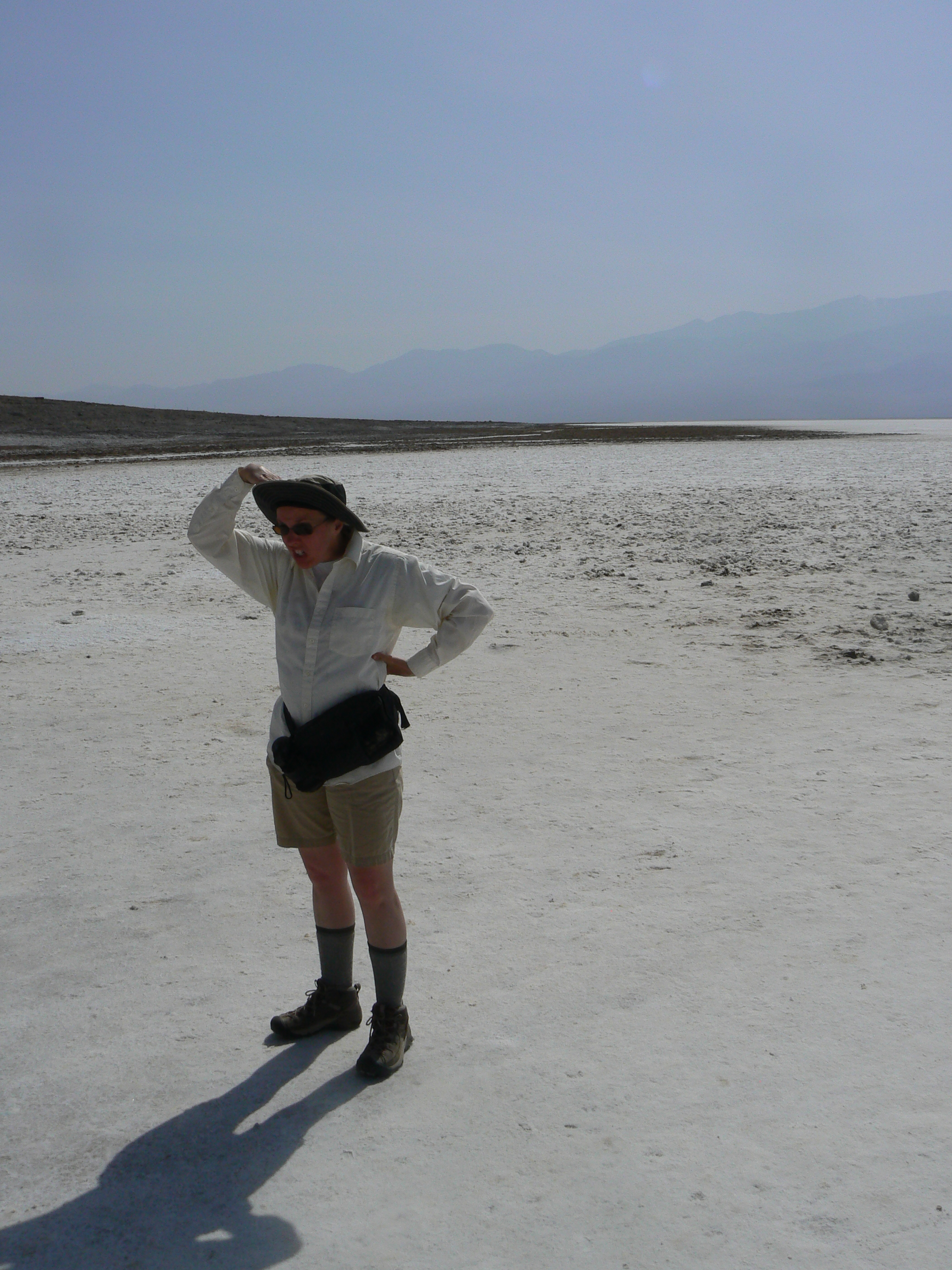
Prudence in Death Valley: wear a hat, bring water

This judgement about what is responsible is the stuff that made me a neurotic mother.  Am I “responsible” for navigating the waters of life for myself , my husband, and all my children?  How much responsibility do I take?  Which risks are worth it?  Do I allow my kids to walk to school alone, to learn to drive, to travel?   Do I ‘allow’ my diabetic husband to eat ice cream?  If someone in my family dies, does that mean that I have failed?  We’re all going to die; does that mean I’m doomed to fail at life?  You see – this can start a very vicious cycle of paranoia and dread.  Is it wise to live with that?

I think that I used to abdicate that issue of responsibility and pass it on to God.  I figured He was responsible for my life and my death, and I was off the hook.  That was useful for a while.  My grandmother used to hedge her bets by saying, “Trust in God, but do your homework.”   I suppose that’s useful advice as well.   I find that Buddhism gives a useful perspective, too.  It says simply that life and death is what we’re given, and that we can choose how we live.  Jim used to say, “I can be sick and miserable or I can be sick and happy.  I choose happy.  Pain is inevitable; misery is optional.”   All good stuff to think about.

Unknown's avatar

“Jerry”, Faulkner and the Laundromat

*Note: this was originally posted on Sept. 15, 2011.  It has been edited for submission to Into The Bardo, A Blogazine.  “The Bardo” is a place of transition, perhaps akin to Purgatory.  It is common ground and a sacred space of sorts.  It’s intriguing to think of the Laundromat as a place like that.*

David Attenborough makes a point in The Life of Mammals video about “Social Climbers” – monkeys.  He says that you can tell how large a monkey’s social group is by the size of his brain.  Baboons live in large, complex social structures and have the largest brains of all the monkeys.  Surviving and thriving in a social environment means that you have to be able to assess situations and make an array of decisions – how to make allies and with whom, how and when and whom to fight, how to secure a mate and improve your chances of passing on your genes.  Navigating social life is even more brain-bending if you’re human, I think.  More subtleties are involved.  Here’s a case in point: the laundromat.

When Jim and I were first married, I did laundry at the laundromat.  I hated going there, for several reasons.  First of all, I was pregnant.  The smells nauseated me; the physical demands of standing to fold and hoisting large loads of clothes around exhausted me.  It was a depressing place to be physically, but perhaps even more uncomfortable was the social aspect.  You never know what strangers you might encounter.  I have had some rather pleasant days at the laundromat.  I met a psychic, once, who was very interesting.  She could tell I was skeptical and not receptive, but she kept on talking to me nevertheless.  Gradually, I relaxed and figured out how to respect her and appreciate her and communicate that to her.  We parted with a hug and wished each other well.  Mostly, I get a pleasant experience if I can do my laundry in silence and read a few short stories at the same time.  What I often find is that the laundromat is a place to observe human suffering, my own and others’.

I happened to have selected a book of short stories by William Faulkner as my laundry companion.  I grabbed it off of Steve’s stack figuring that short stories would fit nicely into those periods of time between cycles, and I wouldn’t mind being interrupted or distracted as much as I would if I were trying to tackle “heavier” reading.  What I didn’t think about was that these stories of post-Civil War race relations would be cast for me on a backdrop of the urban reality of this century…and that the same awkward tensions would result.   I felt like some of his characters, eavesdropping in the kitchen, when people in the laundromat would chatter on their cell phones to friends and social agents.   Outwardly, I guess I was trying to be invisible.   I couldn’t help picking up snatches of their lives and wondering about their stories.   For example, Jerry and his family…

I’ve seen Jerry twice now.  Yesterday, I recognized him as I approached the laundromat.  He was wearing a diaper under sweatpants, shoes, and no shirt.  He was hitting his head repeatedly and grunting.  Or maybe it was more like moaning.   The woman he was with may have been his mother.  She was in a wheelchair with an artificial leg that looked like a sandbag.  He was with another woman as well, perhaps his sister.  She was the one doing the laundry.  I remembered them from a month ago.  They came with about 7 large, black garbage bags full of clothes.  They took a social services shuttle bus to get there; I knew this from hearing the mother make cell phone calls about being picked up.  This woman had the sweetest, kindest voice you would ever hope to hear.  Her voice was full of compassion and pain; it was lilting and rich and Southern.  I would cast her as a black Mammy in one of Faulkner’s stories.  Her manners were impeccable.  If she had to pass around me, she excused herself, and I felt like apologizing profusely for being in the way.  Her daughter (?), the other woman, spoke almost unintelligibly as she did the laundry and corralled Jerry.  Even the woman in the wheelchair told her, “I can’t understand what you’re saying.”    Jerry likes to wander.  They don’t want him to wander out to the street and get hit by a car.  They don’t want him to bother the other people in the building.  Their voices called out periodically, “Jerry.  Jerry, come over here.”  “Jerry, honey.  Stop!  Jerry, come here.”

When Jerry wanders near me, I don’t know what to do.  I keep my head down and my eyes in my book.  Would I frighten him if I made eye contact?  Would he frighten me?  Another gentleman was there.  He helped bring Jerry back inside when he wandered out.  The mother thanked him, “You’re so sweet.  Thank you, sir.”  They exchanged names.  He told her that he has a grandson who was hit by a car at age 7; the grandson is now 25 and has brain damage.  “Oh, so you know.  You understand,” she sighed.  I learned that Jerry is 32 years old.

In the other corner of the room, there was a mother with a 5-year old daughter, London.   She looked about 5, anyway.  London had a pacifier.  I heard her mother yelling at her.  “London!  Get up offa that floor!  Sit your butt down here!”  Her voice was sharp and angry.  London began to cry.  There is not much to interest a 5 year old in the laundromat.  She hadn’t brought any toys or books to occupy her.  The mother talked on her cell phone while London played with the lid of the laundry hamper.  I made eye contact with the child as we went about our business.  She silently bent her wrist toward me, while sucking her pacifier.  “Oh, did you hurt yourself?” I asked.  “London!  Get out of the way!” her mother said.

In the Faulkner story, Master Saucier Weddell is trying to get back to Mississippi from Virginia.  He is the defeated.  He and his traveling companion, his former slave who is very attached to him and his family, find themselves in Tennessee at a farmhouse.   These victors are extremely suspicious.  They think Mr. Weddell is a Negro.  Actually, he’s Cherokee and French.  The story is short, but intense.  The traveler and the farmer’s younger son end up being killed in an ambush by the farmer and his Union soldier son, Vatch.  The last two sentences read, “He watched the rifle elongate and then rise and diminish slowly and become a round spot against the white shape of Vatch’s face like a period on a page.  Crouching, the Negro’s eyes rushed wild and steady and red, like those of a cornered animal.”

I finished my laundry in silence.  I waved my fingers and mouthed “goodbye” to London who had been banished to the corner.  Her mother didn’t see me.

At home, the late afternoon sun shines down on the quilt on my bed.  Steve isn’t home, and it’s very quiet.  I feel like crying.  My brain is not big enough to figure out why.

001

Unknown's avatar

Cold Snap

In my tree-house bedroom, I sleep with an open window 3 feet from my head.  The moon shines on my pillow, the air rushes in off the waving branches.  It got down to 37 degrees Farenheit last night.  We wondered if we’d find many insects on this morning’s nature walk with a home school group.  We found a few live ones, a bunch of dead ones, and some merely sluggish ones.   One spider was keeping warm by wrapping a big leaf around itself  and its egg case.  I found a wooly bear caterpillar that didn’t even make it to the beginning of winter.  Change and impermanence.  And beauty.  Here are some shots from the Nature Center.

Follow the goldenrod path

Or go down the silver tunnel

Riches all around.  Seize the day, bottle the sunshine, put up some vegetables, ’cause change is in the air.   I have a ham bone in the freezer from Aunt Rosie.  Anybody have a good pea soup recipe?

Unknown's avatar

The Daily Planet

Awareness, Appreciation, and Action.   I have an idea about awareness.  Here’s the issue: our culture has gotten so technical and anthropocentric that we are no longer aware of the changes and events of the planet.  We live mostly in cities, far removed from wilderness or even farmland and our connection to the earth.  We are more aware of Lindsay Lohan’s activity in the fashion world than we are of the seasonal changes happening in the natural world.   I get “news” items popping up on my browser all the time about some celebrity and her latest beau or who was seen wearing the same red dress and who wore it better.  OMG!  Is this news?  I don’t think so.  What if I could replace all those items with some news about the natural world?  What is happening in monarch migration, for example.   Or how are various species preparing for the winter?  Who hibernates, who sleeps, who migrates, who stays put?  And I would want local news for each area.  We know so little about our local ecology.  What if we had a daily conservation report similar to the Dow Jones?  How are soils doing in my area?  How is the water and the air?  What species became extinct today across the nation?   Which species are making a comeback?   The Old Farmer’s Almanac is still being published; it covers weather patterns, moon cycles and gardening advice.  How many people still read even this much information about the earth?  We just had a gorgeous harvest moon last night.  How many people in my city know what a “harvest moon” is, and how many do you suppose looked up and noticed it?   More to the point: how many care?

An American goldfinch takes his daily echinacea

Caring for our planet is our responsibility.  The Bible talks about stewardship, Buddhism talks about respecting all of life.  As technology advances, it seems that we develop new and more elaborate ways to abuse and exploit the planet faster than we come up with ways to protect it and safeguard its resources.  How backwards is that?  Carl Sagan wonders in his Cosmos series if the reason we haven’t been contacted by other intelligent life forms is that once a civilization develops to the point of having the technology necessary for galactic space travel, they have destroyed themselves and their planet in the process.  A sobering thought.

I care.  I want to be more aware.  I appreciate lots and want to know more.  Most of all, I want to know what actions I can take to really do something about the care of our planet.  I figured education would be a good place to start.  Tomorrow I’m off to the Wehr Nature Center to help run a field trip program about insects.  What do you know about creatures who “Fly, Flutter and Crawl”?   Would that kind of information be more important to you than knowing which celebrity pasta sauces scored highest in a taste test?  Just wondering, not judging.

Unknown's avatar

In Other News…..

Today is September 11, 2011.  It is National Grandparents’ Day and the 105th anniversary of the beginning of Ghandi’s non-violent protest campaign in South Africa.  It is also a sunny, bright, warm fall day in the Midwest, just as it was 10 years ago.  The 4 U.S. plane crashes on this day a decade ago have almost completely commandeered the date and the collective memory.   Pivotal days have a way of doing that…or not.  What I remember of September 11, 2001 is similar to what I remember of August 18, 1978.  Many people died on the first date, none of whom I knew personally.  My sister died on the second date, while I sat beside her in her overturned car.   What I remember is how blue the sky looked behind a stalk of prairie grass on the side of the interstate.   I went to the prairie on 9/11, and the sky was a brilliant blue that day, too.   Life as I knew it changed forever, and didn’t change.  It’s peculiar how our minds perceive things and how we turn the world on our own anthropocentric axis, meanwhile the universe keeps “unfolding as it should”.

Please don’t misunderstand my musing.  I don’t mean to say that the plane crashes were something that “should” have happened or that my sister’s crash “should” have happened.  I also don’t mean to say that they “shouldn’t” have happened.  They did happen, and other stuff happened.  Where I attach importance, though, is exactly that – me attaching importance, and I want to keep that in mind.

In Buddhism, there are 3 described causes of suffering: attachment, aversion and ignorance.  Attaching importance to something can cause suffering.  My daughter remembers an early crushing loss: we were driving home from a church event, and she had a balloon animal in her hand that was whisked out of the car window by a gust of fast air.   She was so surprised to be so suddenly bereft of her “mousie” and cried all the way home.  I was curious how she got so attached to something she’d only had for an hour.   I can’t quite imagine how to live without any attachments, but I am becoming more aware of the nature and consequences of attachments.  I still choose to be attached to some things, knowing that I may have to suffer their loss one day.

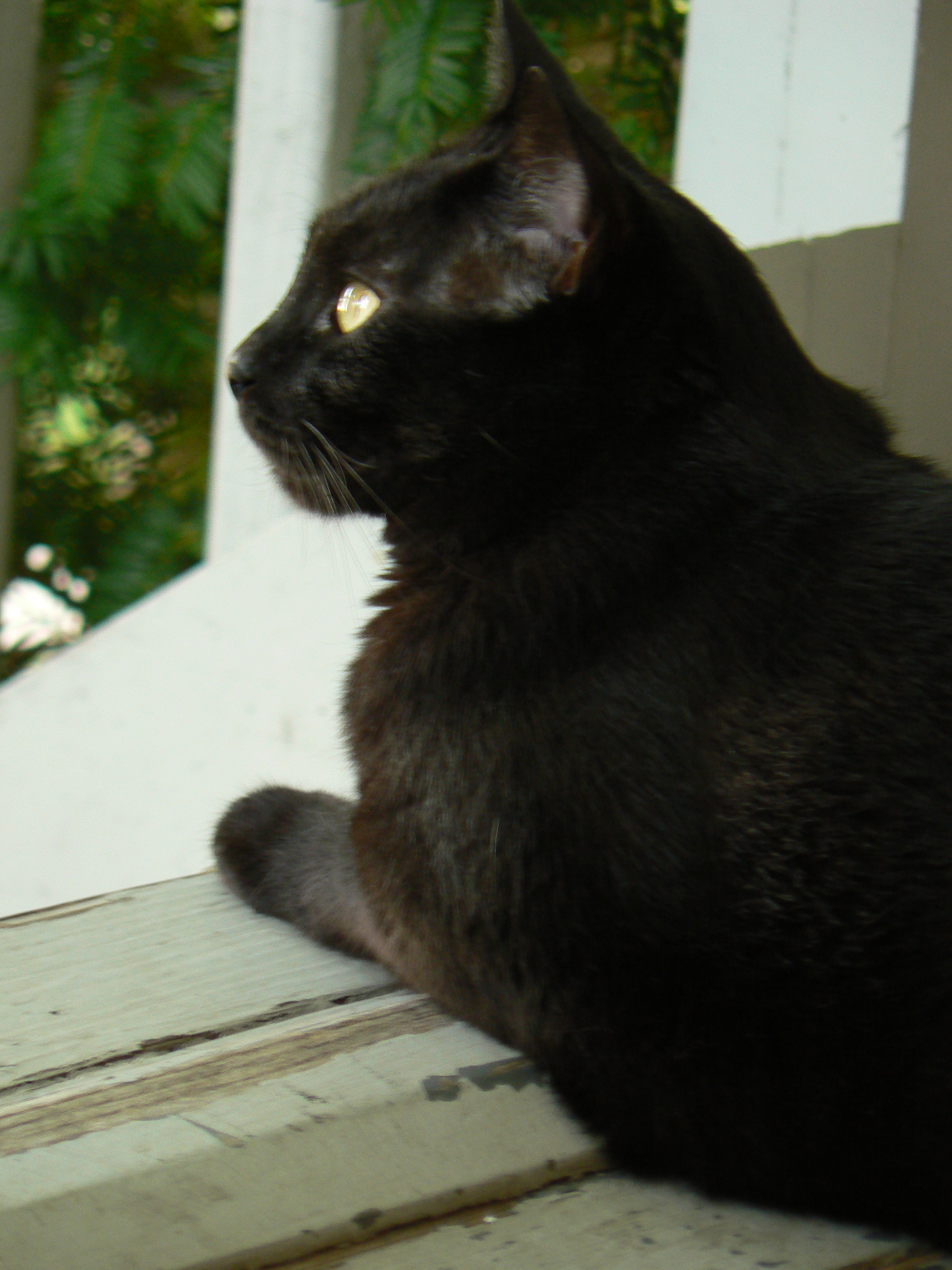
We got attached to Pinkle. She doesn't seem to miss us at all. Cats are very Zen.

What do we teach our children about attachment?  What do we teach ourselves?  When do we say, “Get over it” and when do we say, “That’s terrible!”  What do we do with a cultivated love for impermanent things?   I have a cultivated love of summer: warm temperatures, sunny skies, green things all around.  I feel the changes in the air, the shortening of the daylight hours and begin to suffer from my attachment a little.   I remind myself that I love Fall as well.  My very favorite colors in the universe show themselves wherever I look.   Rich red burgundies, intense golden yellow, muted soft green.  Then the branches are bare, and I begin to despair until the first gentle snowflakes against a night sky drop magic all around.  When it’s piled up 18 inches here in Wisconsin for the 8th week in a row,  I get SAD (S. A. D.) until a crocus peeks out bright green in the mud.   The cycle keeps turning.   Steve did an identity exercise some years ago that brought him to this conclusion: I am the joy in change and movement.  That has been his touchstone ever since.  I am beginning to relax and enjoy the change and movement in life and fight against it a little less each day.   Every day is pivotal and beautiful, just like that morning ten years ago.

Unknown's avatar

Taking Action, Stepping Out, Making Meaning

My husband was diagnosed with diabetes after his first heart attack when he was 31 years old.  He died 16 years later from coronary artery disease, kidney failure, and other complications of diabetes.  He was sleeping in bed next to me and never woke up.  I unplugged his dialysis machine, his CPAP machine, and his insulin pump that morning and set him free.  That was 3 and a half years ago.  My eldest child got the idea the next year that she wanted to do something to honor her father and take action to support diabetes research.  She and 2 of her siblings participated in a fundraiser called StepOut Walk to Stop Diabetes.  I was really impressed by her initiative and her civic action.  I joined her the next year with Steve; the siblings had moved west by then.  This year, we are all going to participate together.  All 4 siblings and mom with a few significant others alongside.   Our goal is to raise some money, to honor Jim, and to be involved in positive action as a grieving family.   (If you want to donate money on behalf of our team, go to http://main.diabetes.org/goto/pgalasso)

Team Galasso 2010

Do I expect that our participation will cause this disease to be eradicated?  Well, not really.  Do I imagine that Jim will feel honored and bring some good fortune to us from the spirit world?  Not exactly.  Do I hope that our sorrow will abate and our self-esteem will soar as we pat ourselves on the back for “giving back” to the community and “fighting” for a cause?  Actually, I don’t.  All of those things are ego-based and not very realistic.  What am I really doing, then?  Well, I think of it as “pointing the canoe” again.  I see that people suffer from this disease.  I see that certain kinds of medical technology and education have been used to ease that suffering.   I want to paddle my canoe, make some effort, toward helping those who suffer, not because I believe that I can rescue someone, but because it is how I want to live.  I want to honor Jim and remember him because that’s how I want to live.  I want to work with my family’s grief because that’s how I want to live.  I don’t know if any particular thing will result; I don’t expect to become noble or perfect or anything.  I do know that paddling in that way lets me choose a purpose and work toward it.  I suppose it helps my mind to be directed toward meaning.

So, why are we humans always looking for meaning?  Inquiring minds want to know…

That Steven Colbert report clip from the Approximate Chef suggests that we want to feel safe about the ending of the story.  We tell ourselves, “It’s okay, because it turns out this way; I know it does”.  That gives us, what, control?  Last night I had a dream about  meeting “the woman who owned the house” of the estate sale I went to yesterday.  I don’t even know that a woman lived there.  In fact, it was quite a masculine log cabin, with a boat and a mounted moose head dominating the decor.  What was my subconscious trying to figure out?  Well, I was trying to assure myself that this family was okay.  They were selling all their stuff.  They were letting strangers into their house to buy their belongings.  There has to be a story there.  I just went through the sale of my family home.  I had emotions about it.  I had a story.  I imagine that there are people behind these things with an emotional story, and I want to be told that they are okay.  I want to be satisfied that there is some meaning to the sale of these possessions.   Ultimately, I want to know that I’m okay, that my story has a happy ending.  (Steve always tells me that everyone in your dream is really you.)

Man’s Search for Meaning by Victor Frankl comes to mind.  I read parts of it.  Is this how we keep ourselves sane in “stressful” circumstances?  Is it just a game?  If it works, does it matter?  If I am not dogmatically asserting that my actions are ultimately meaningful, just saying that I find meaning in them and that is useful to me, does that make my position more authentic?  Can I make up a satisfying story about the family in the cabin and then say, “I know it’s not ‘true’, but I like to tell myself this story to calm my neuroses” and still be considered ‘sane’?  Do most of us do this anyway?  Does that make it ‘normal’ then?  I suppose I could give that up and face the fact that I won’t know every story.  Perhaps I would be far more sane to learn to live with ambiguity and uncertainty and meaninglessness.   What do you think?

Unknown's avatar

The Final Frontier

Today was the final day of my volunteer training.  We did lesson plans about the Moon, Mars, and spent the last 20 minutes in the SkyLab.    As I lay on my back on the floor under that dome of plastic sheeting, I remembered trips to the Adler Planetarium when I was a kid.  Oh, those comfy seats!  I sometimes fell asleep as the narrator talked softly about constellations and Greek mythology, as I’m sure did many young visitors.  Today wasn’t a just a trip down memory lane, though, because science is constantly changing.  Robots are patrolling space right now and taking pictures of stuff we’ve never seen before.  I didn’t know there was a Kuiper belt before this morning.  I didn’t know that there is now a dwarf planet that isn’t named after something in Greek mythology.  It’s called Makemake, and it’s named after the god of creation in the culture of the Canary Islands.

Last night, we watched a Russian film by Andrei Tarkovsky, one of Steve’s favorite directors.  Solaris was adopted from the novel by a Polish writer, originally written in French.  We’ve also been borrowing the Cosmos series with Carl Sagan from the library.   I feel like I’m finally homeschooling myself in astro-physics because I never took Physics in high school.  Aside from trying to wrap my brain around conceptual numbers and the nature of sub-atomic particles, I’m wondering about moral and philosophical questions about what it means to be human and what part we may play in any larger community of intelligent life forms.

And then, today, we found ourselves at an estate sale in Lake Geneva where a VERY wealthy family is selling off furniture, antiques, and toys of rather astronomical proportions.  A horse-drawn sleigh and a mounted buffalo head, for instance.  Who has these things in their garage?!

So, now I feel like I’m in the synthesis stage of learning.  Pulling these bits of information and experience together, what meaning emerges?  Who are we and what are we doing here?  We live in a world that is much more vast than our consciousness can grasp, and yet we have this ability to be aware of our conscious mind and how we choose to live with it.  The Approximate Chef sent me a video clip she called “unexpected existentialism of Stephen Colbert” where he jokes about our penchant for knowing the end of the story and being comforted by that expected “happy ending”.  What is the best we can do with consciousness?  Use it to feel happy?  Use it to be compassionate?  Use it to reach toward expanding our awareness and capability?  Use it to gather the most impressive bits of this world into a collection we defend as our own?

I suppose we each have to answer that question for ourselves.  What do you want to do with your consciousness?  I do want to use it to be happy.  I want to use it to learn how to be less neurotic, anyway.  I do want to use it to be compassionate.  I do want to expand my awareness and capability, but I often wonder how much I can learn before I’ll just be forgetting most of it anyway.  I want to use it to make a positive impact in the world, but I’m not sure what that will be.  I want to use it to touch the Divine, if I can.

“To go into solitude, a man needs to retire as much from his chamber as from society.  I am not solitary whilst I read and write, though nobody is with me.  But if a man would be alone, let him look at the stars.  The rays that come from those heavenly worlds, will separate between him and vulgar things.  One might think the atmosphere was made transparent with this design, to give man, in the heavenly bodies, the perpetual presence of the sublime.”  Ralph Waldo Emerson

Perseid meteors over a castle in Hungary

Try the “Astronomy Picture of the Day” from NASA.  http://apod.nasa.gov/apod/