Category Archives: Relationships
International Poetry Month
This post was written for The Be Zine which is dedicating its April issue to International Poetry Month. As a Contributing Editor, I am honored to be able to join with truly accomplished poets in celebrating Poetry, but I am well aware that my skills do not match those of my colleagues! Treat yourself to some truly substantial fare by visiting the magazine here.
My favorite poetry is philosophy dressed in dreaming, not logic. It imagines a larger reality, a more expansive love. Rilke is the gold standard, I think. Oh, but that is the pièce de résistance, and there’s so much more besides that. I am a poem consumer, not a gourmet chef. I know very little of form or craft, but I love to taste and participate. So I’ve written a love poem to my late husband because, well, you might as well start with breakfast.
Exclusive
Thick, boyish lashes fringe
Other eyes, perhaps as blue,
Open, tender toward Beloved
Still smiling youths may offer
Eager grins, warm confidence
Gleaming ‘neath soft whiskered lips
Clear voices might ring
Thrilling, gentle as yours when
You sang at daybreak just for me
Surely now first loves make vows,
Grow mature together, devotion’s
Friendly joy becoming solid strength
Fathers must bend heart and arm
Wrap manhood’s grace boldly around
Each golden, blessed child – like you
No doubt live sorrowing pairs
With looming loss, still holding,
Fingers trembling, to brave last words
I cannot boast an only, greatest grief;
I know this storied world is vast.
But still I weep in fond belief
That you and I loved first and last.
Weekly Photo Challenge: From Both Sides Now
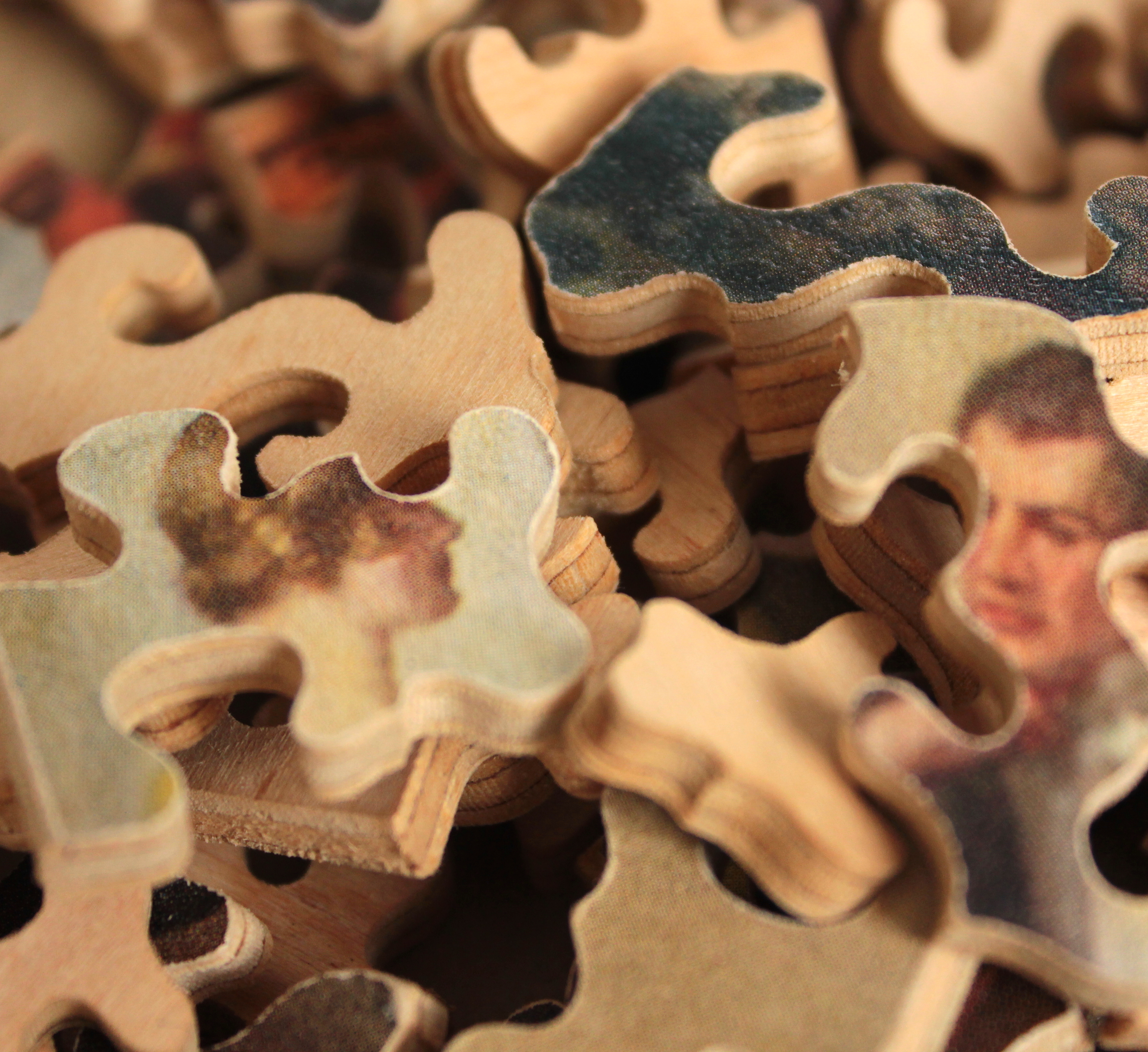
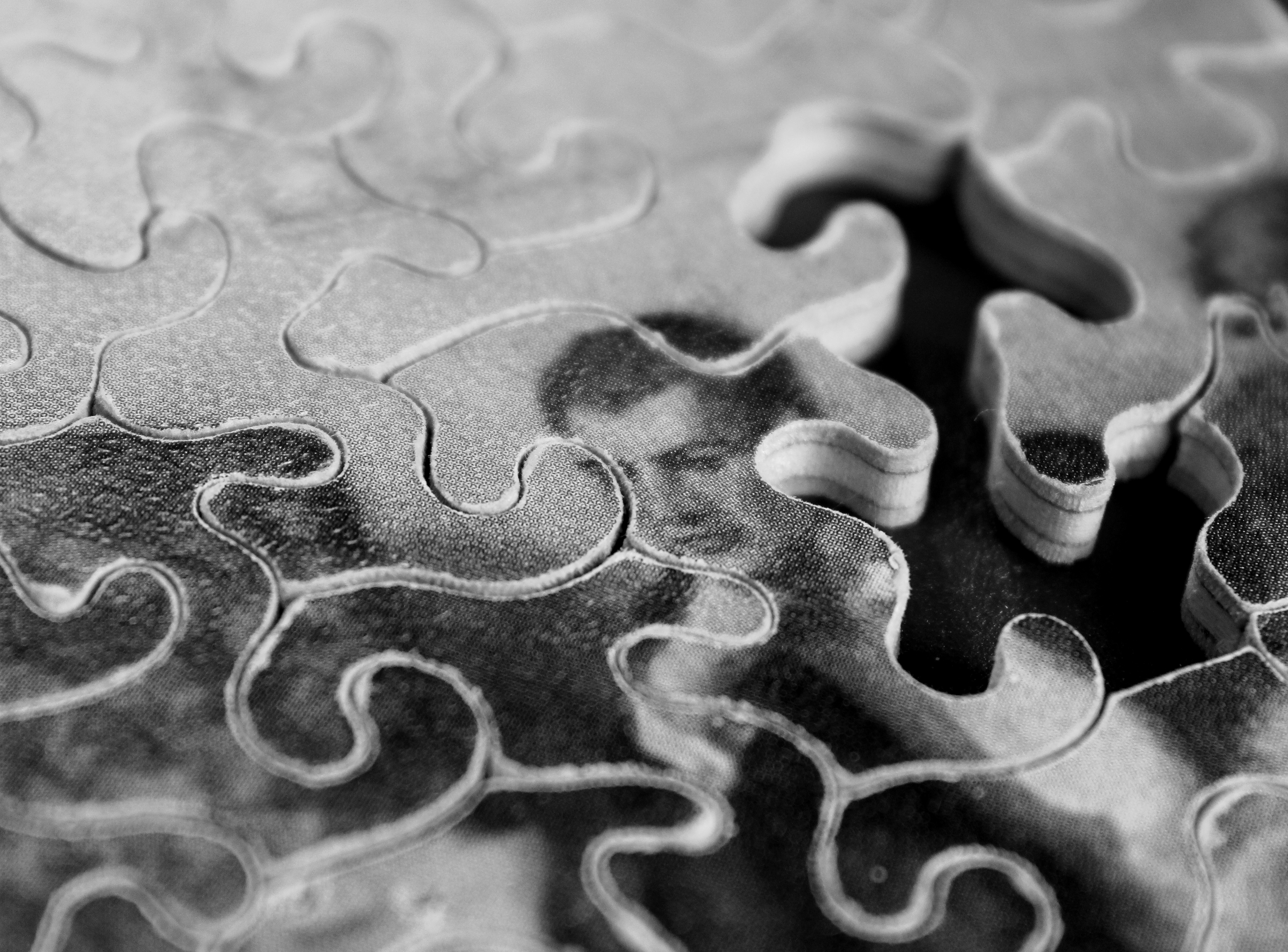
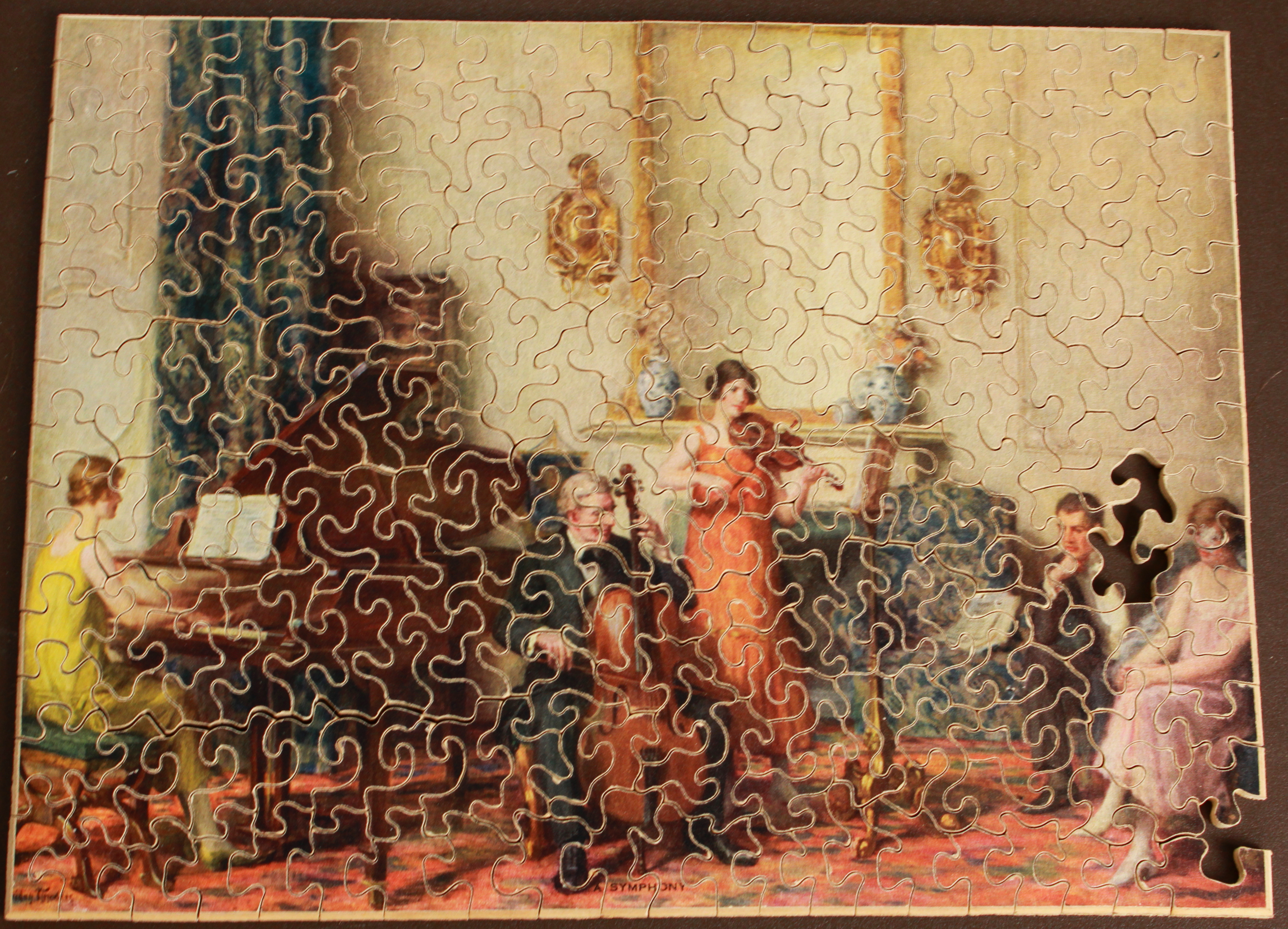
Whenever you’re trying to solve a puzzle, it’s important to look at it from different angles.
To read “A Little Story About Loving Yourself”, a story I created for this puzzle series, click HERE.
A Little Story About Loving Yourself
If you’re puzzled by relationships…
…and feel that perhaps something is missing in your life…
…and you’ve done the same thing over and over, hoping something different might result…
imagine what might happen if you simply followed your bliss and did what you love.
A life may emerge that is not what you dreamed or expected or even what you may have been promised. Still, it is actual and dynamic…and there you are, being yourself and still doing what you love. That’s not a bad outcome, is it?
© 2015, essay and photographs, Priscilla Galasso, All rights reserved
Present Moment, Beautiful Moment
January 7 – past and present
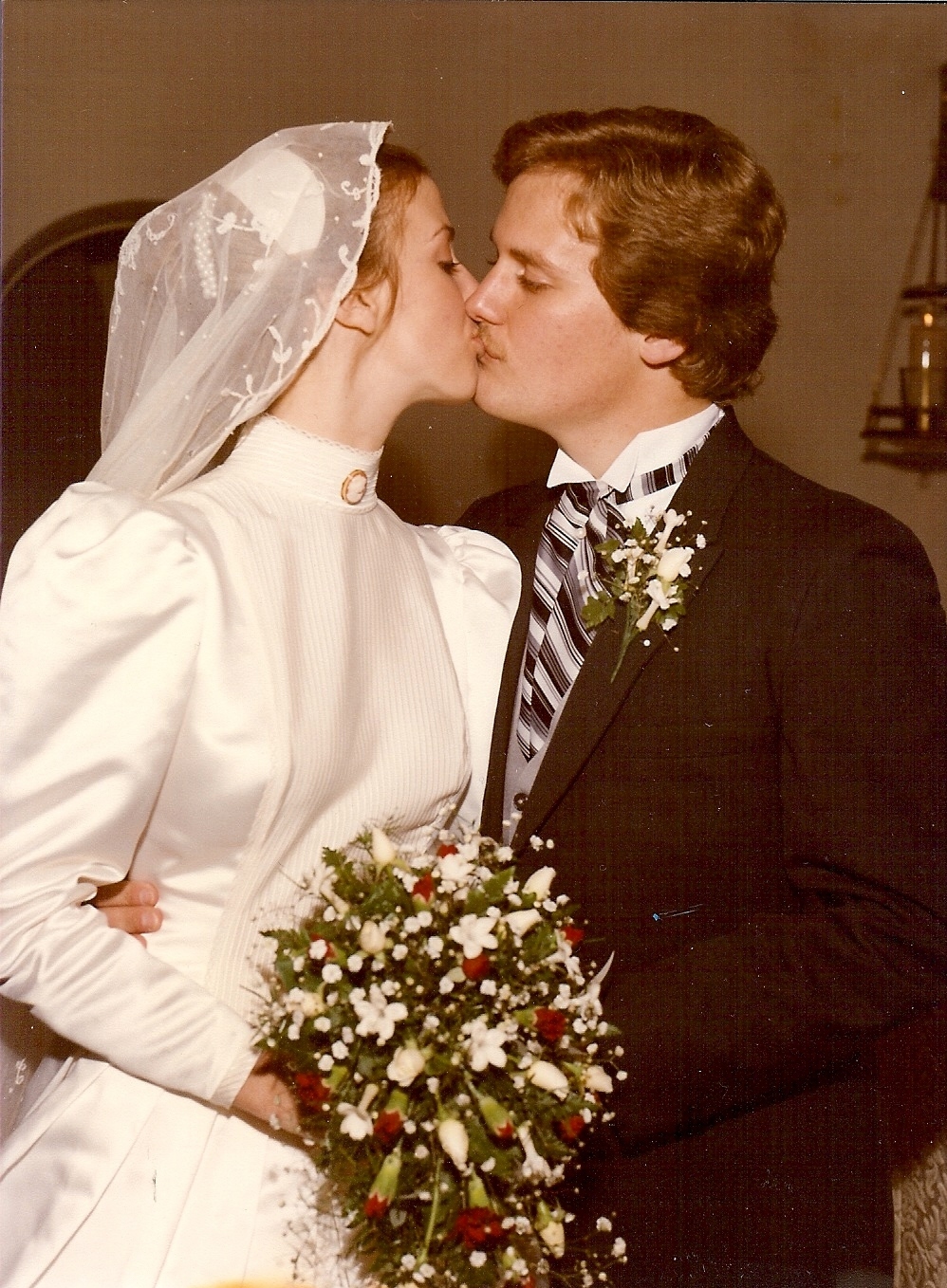
1984 – It’s my wedding day. The weather is chilly and foggy in Northern California. I am too excited to sleep late. I have a date with my fiance for a morning meeting. He comes to pick me up at my parents’ house. My grandmother is aghast that we are seeing each other before arriving at the church; it’s just not done. But we know what we want. We want to focus on each other, on the meaning the day has for us personally before being caught up in the ritual. We park the car under some oak trees in the foothills. We decide it’s too damp and cold to walk, so we sit in the car and talk. We are calm and happy. He drops me off at the house. The next time I see Jim, he is standing at the altar, grinning. I take his hand. I notice it’s cold and clammy, so unlike the warm bear paw I expect. I smile at him. He’s caught up in excitement. The wedding mass is a long event. We emerge from the church and see sunlight for the first time that day. It doesn’t last long. The reception in the Parish Hall is intimate and bustling. It’s dark when we leave. I get home and change. My mother takes care of the dress. The station wagon is packed with my belongings, gifts, and leftover bottles of champagne. We drive south to Pebble Beach. I’m hungry. I hope the restaurant at the inn is still open by the time we get there. We find we are able to get sandwiches at the bar. We retire to our room. I feel so incredibly grown up; in one day, I’ve suddenly matured. I’m married. I’m 21 years old.
January 7 – this morning
The sun comes in the southeast window, and I begin to stir. As my mind brightens, I remember the day. Steve is sleeping beside me. I pull out the battered photo album from the box in the corner and settle back on the bed. Was it really cloudy that day? I flip through the pages in front of me, my mind turning over more leaves than my fingers. My phone beeps. My daughter is texting me to let me know she’s thinking of me today. Her baby face smiles at me from a photograph. She will be turning 30 in a few weeks. Steve begins to stir. I look at his face as his eyes open. “What are you doing here?” he asks. That’s a good question! “It’s a long story,” I laugh. But that doesn’t really answer the question. I am living. I am aware now of the present moment. As I look around, I see the beauty of this day, this year. The air is cold and dry. The trees outside are bare, the branches dusted with snow. I look down at my left hand. It is lined by swollen veins and wrinkles. There’s a brown spot just there. I have a ring on my index finger with a blue topaz heart set in it. No other rings. My fingers press Steve’s arm. “I am waking up. And you?” “I am Steve-ing.”
© 2015, essay and photograph, Priscilla Galasso, All rights reserved
A Celebration of Femininity
Female energy. I see it as a sisterhood of excitement…
…and of compassion.
I recognize it in generations of curiosity and understanding…
… and in powerfully individual dreams.
It is the energy of a sparkling and fecund Universe…
…and our human response to it.
A response that encourages our own growth…
…and the growth of other lives around us.
It is creative…
…and loving…
…and life-affirming.
Feminine energy in harmony and peace is a vibrant good in the world.
May it resound across dividing spaces, bringing us closer in union with All.
* Dedicated especially to my mother, my three sisters, and my three daughters. Your energy brings me life!
© 2015, essay and photographs, Priscilla Galasso, All rights reserved
This photo essay is featured in The B Zine, Vol. 1, Issue 3 – An online publication of The Bardo Group/Beguine Again. Please visit the site to see my colleague’s works by clicking HERE. Enjoy!
80 Years in Eight Days — Day Number Eight: 10 Inspirational Instructions
This is the end — the last day of the year, the last installment of my mother’s birthday project, and the last entry on this blog for 2014. My mother is 80 years old today. Here is a list of 10 Inspirational Instructions that she has embodied throughout her life. They are also serving as my New Year’s Resolutions for 2015. My mom is indeed an inspiration, and I hope she’ll keep breathing life in for many more years.
1) “Trust God, but do your homework.” This quote she always attributed to her own mother. I think it’s a great motto to pass on from generation to generation. In essence, it acknowledges our humility but does not absolve us from responsibility. We are not in control of all things, but we are in control of some. When you’re able to dance on that line with grace, you’re living wisely.
2) Regularly make the effort to right-size and divest. This comes from her organizational practice, and it’s a great reminder at the end of every year. I’ve watched mom go through “weeding out” stages my whole life. She systematically keeps her possessions under control: clothes, books, papers, housewares, pantry stock, music, everything. Steve & I are furiously reducing inventory at the book business now. Part of the fun is putting those things you divest into the hands of someone who will use and appreciate them. Recycle generously!
3) Gather experiences, not things. I remember my mother answering all inquiries about what she wanted for a gift with some version of this philosophy. She wanted something to live, not something to dust. I hope she gets lots of what she wants for a long time.
4) “Look wider still.” This is a Girl Scout challenge from International Thinking Day… “and when you think you’re looking wide, look wider still.” My mother loves this slogan. It applies so well to being broad-minded, tolerant, open and forever learning. It’s a big world. Even after 80 years, there’s a wider view to see.
5) “Only connect.” This phrase became the name of a BBC quiz show in 2008. It is derived from E. M. Forster’s novel Howard’s End, where a character says, “Only connect! That was the whole of her sermon. Only connect the prose and the passion, and both will be exalted, and human love will be seen at its height. Live in fragments no longer. Only connect, and the beast and the monk, robbed of the isolation that is life to either, will die.” The phrase has also been used to describe the liberal education, which celebrates and nurtures human freedom. I just learned these references from Google. From mom, I learned that rush of joy, that flush of understanding and the pure delight of living that shows in her face when she utters this phrase at the end of a stimulating discussion. That I learned years ago.
6) Don’t disown your own. “Only connect” applies to people, too, even and especially those near and dear who have a greater capacity to disappoint us. Looking wider than our expectations and our attachments allows us to see that we do not exist in isolation except by our own dogmatic choosing. Long after I learned this from watching mom, I heard it echoed in the writing of Thich Nhat Hahn. “We inter-are,” he says. The cosmos is held together in inter-being. Acting as though we’re separate and separating in judgment is an act of violence against the Universe. Peace is understanding there is no duality.
7) Let go; let God. My mother has always had the capacity for anxiety. She likes to do things “the right way”, she pays attention to details, and she fears the usual things from failure to death. So do I. Face it, we live in a pretty neurotic culture. Mom showed me by her example how to recognize this in yourself and then to strive to be a “non-anxious presence”. That doesn’t mean she was good at it. It means she practiced. That’s inspiring.
8) “Don’t let the sun go down on your anger.” This one comes straight out of the Bible (Ephesians), and it was a practice that she and my father adopted religiously. Every night, I’d hear them from behind their bedroom door, talking in low voices and then praying in unison. Taking responsibility for your emotions and communicating them is another inspiring example. Own your anger; it is about you. Talk about your anger to someone else. Then you are re-connected and at peace. It’s not magic; it’s useful.
9) “Underneath are the Everlasting Arms.” This also comes straight out of the Bible (Deuteronomy), but in the very next line, those arms are thrusting out against enemies and doing violence. The everlasting arms that my mother referred to were supportive. They were secure and safe. If I am to grow out of my neuroses at all, I think I need to begin to trust that the World is a good place. I belong here. Even though I myself and everyone I know will die, we end up right here. That’s the way it is, and there’s nothing wrong.
10) “Let nothing disturb thee, nothing affright thee. All things are passing; God never changeth. Patient endurance attaineth to all things. Who God possesseth in nothing is wanting. Alone God sufficeth. ” Teresa of Avila, translated by Longfellow. Mom had these words written up in her small hand and pasted on the inside of her desk cubbyhole door. It was like a secret she showed me when we were worried about something. All things are passing. This fear, this problem, this moment. Patience. Change and movement is how Life is, and it is well. I really believe that and strive to remember it. I think that all of Life is embraced in that dynamic, including God.
All things are passing, year into year, life into life, microscopically and macroscopically. We are so fortunate to be aware of our experience of it! I am ever grateful to my mother for sharing her life and her awareness and so many of her experiences with me. I look forward to more!
May each of you be happy and at peace in this year’s ending and in the continuation of Life in the New Year!
80 Years in Eight Days — Day Number Seven: 10 Lessons Learned
For many of us, Mom is our first and best teacher. Celebrating my mother’s 80 years brings to mind crucial life skills that she patiently nurtured in me. Here’s a list of 10:
1) How to make a friend. My first friend was the boy who lived next door. He was a year younger than I, and I don’t remember much about him except that we called him “B” even though his name was Todd. I was only 4 when we moved. Our next house was much larger and our next door neighbors didn’t have children. I remember sitting on the front steps feeling lonely when a boy from up the street walked up our driveway. I ran inside to tell my mother that someone was in our yard. She came out with me, greeted him, and asked him his name. He rattled off 4 names so fast it made my head spin. She asked him to repeat it, slower. With her coaxing, we finally learned his name, that he lived 2 doors down, and that he was a year younger than I. I had my new friend!
2) How to take a break. My mother enforced nap time, even when we were on vacation. I was 10 when the family went to Hawaii. My 3 older sisters and I wanted to go swimming in the hotel pool as soon as we got settled, but Mom was pregnant and jet-lagged, so nap time was enforced. We squirmed around for an hour in our room but didn’t sleep, insisting we were too old for naps. By dinner time, I was face down in my coconut chicken. I have been an avid napper ever since.
3) How to join a community. My mom was my first Girl Scout leader. She eagerly got involved in meetings, field trips, camping, and promoting the Girl Scout way. I stayed with Girl Scouts through my senior year in High School, traveled to New England on a National Opportunity, learned to ski, and served as cookie chairman for my troop. I made a lot of friends, gained a lot of skills, and finally developed some self-confidence. It wasn’t always cool to be a Girl Scout, but it turned out to be a useful path to awesome for both of us.
4) How to make a pie. This is a skill that goes beyond simply following instructions. Pie crust is tricky. It crumbles and breaks a lot, but it’s supposed to. You must treat it delicately but not too tentatively. At first, my job in pie-making was to “pie pray”. That meant that my mother would tell me to pray as she was lifting the rolled dough up into the pan. She wasn’t ready to let me actually handle it. Eventually, I earned the right to do the whole process. Making a pie involves a lot of decisions. Making a pie with an apprentice involves a lot more. What and when do you delegate? When do you give up control? It’s as much about negotiating as it is about baking.
5) How to iron…or not iron. My father insisted on using cotton handkerchiefs his whole life. He did not use Kleenex. They were washed in hot water and ironed to sterilize them. He cycled through hundreds of handkerchiefs in a month, and my mother had all 4 of her daughters taking a share of the ironing. We also learned to iron our own clothing and were expected to keep our ironing pile under control. I ironed weekly throughout junior high and high school. When I got to college, the iron was stored on my top shelf and was only used on my choir uniform. My museum costume gets ironed, otherwise I’d probably not even own one now. Just because you have a skill doesn’t mean you have to use it.
6) How to study. My mother and I have similar learning styles. We retain organized information easily, and we never forget a song. The most detailed and peculiar stuff can be absorbed if we draw up a study chart and create a mnemonic device. This is how I got top grades and a B. A. in music. Write it down; make it up. Works for us!
7) How to interview for a job. The hardest thing for me to learn in this area was not to disqualify myself in the first place. I really wanted a job as a camp counselor when I came home from college my sophomore year, but I had a million excuses in my way. I didn’t want to be too far away from my boyfriend; I didn’t know how to drive very well; I didn’t have a car; I didn’t have enough experience or a resume. My mother lit a fire under me. We found a camp just up the mountain listed in the Yellow Pages; she copied an article from Sierra Club News that had a picture of me playing the guitar to a bunch of kids to show the interviewer; she drove me to the interview and sparked up an enthusiastic conversation with the director. The rest is history. I worked there for two years and the director was a bridesmaid in my wedding. It’s still true that my biggest limitations are the ones I imagine in my own mind. I’m grateful that my mother doesn’t live in my head and can draw me out of it.
8) How to be appreciative. One of the greatest gifts we have to give the world is our appreciation. It’s a win-win activity. It makes others feel good that we’re feeling good about something. It’s easy to do, really, because there’s so much in this world to appreciate. The trick is not to be shy. Take a risk, show your appreciation, and be specific. When I first attempted to make bread in Home Ec class in junior high, I brought a slice home, wrapped in a napkin. I have a distinct picture of my mother sitting on the side of her bed, tenderly unwrapping it and remarking enthusiastically on its texture and its smell and then finally taking a small, leisurely bite. “Oh! It’s like Anadama bread!” She showed such pleasure that I was grinning all afternoon. She is not a bread-baker, but I find it one of the simplest, most rewarding things I do now.
9) How to be tolerant and open. It’s easy to throw judgments about other people around, habitually, casually or accidentally, and even easier to harbor them in your own wounded psyche. My grandmother and my father, though near and dear to my mom and me, were both guilty of rejecting others and treating them unkindly. It was very confusing to me to see these people whom I liked and admired showing such prejudice, but my mother was good at including and befriending others despite her mother’s or her husband’s disapproval. I don’t remember any big arguments or scenes, just that my mother kept up her associations loyally, somehow, nevertheless. My own sister was not welcomed by my father for 25 years, until Alzheimer’s made it impossible for him to recognize her. She always had a place in Mom’s life, though, and we would visit together while my dad went out. I can only wonder how these differences were discussed between my parents.
10) How to keep learning. Stay open, stay interested, stay enthusiastic. I trust that my mother is delighted by something new each day. I hear about the new people she’s meeting at her senior living community and her discovery of the binder containing their biographies. She relates bits of fascination every time we talk. She is always making connections between people and stories and places and ideas like she’s weaving a great, joyful tapestry together. I hope I’m like her when I’m 80!
© 2014, essay and photographs, Priscilla Galasso, All rights reserved
80 Years in Eight Days — Day Number Four: 10 Parenting Principles
If you’re just visiting this blog for the first time, you’ve stepped into the fourth day of my birthday project for my mom, who is turning 80 years old on New Year’s Eve. Today’s list of 10 things is about Parenting Principles. My mother is, naturally, my primary example of mothering. She and I both became parents for the first time at the age of 22. She raised 5 children to adulthood; I raised 4. Wisdom doesn’t come with numbers or statistics, though. Wisdom comes in the actual practice of decision-making in love. It’s not about adopting a “right way”, it’s about living out of your values and making choices that you deem appropriate. Keeping that in mind, here are 10 ideas of mothering that Mom communicated to me over the years.
1) Your marriage comes first. This piece of advice she always attributed to her mom. The simple logic is this: your family starts out with just the two of you and will end up with just the two of you. That twosome is the foundation for all that happens in the middle. Obviously, this arrangement isn’t what everyone chooses or how events transpire for all. But in the throes of child-rearing, it helps to keep a perspective on who you want to be. If you want to be all about the kids, then it’s likely they will grow up happily at center-stage and leave happily stage left, and you’ll be left standing unhappily onstage with a stranger. Keep the action going between you, and let the other characters come and go.
2) Learn to feed yourself before feeding your family. This is like the airline adage, “Place the mask over your own nose and mouth before assisting other passengers.” After her wedding, my mother immediately took up the challenge of feeding her new husband “in the manner to which he was accustomed”, meaning that she taught herself how to make recipes handed down from his nurse/nanny, Agnes. Her time of early experimentation and solid study in the culinary arts led to her success as an accomplished gourmet later. I had planned to have 5 years of marriage under my belt before attempting motherhood, but I got pregnant 4 months after the wedding. I was immediately nauseated by the smell of food before I’d even learned how to cook on my own. I lost weight in the beginning of the pregnancy and rapidly after the baby was born. Postpartum depression reduced me to 98 pounds while I was trying to breastfeed. I was literally struggling for survival. Bottom line: learn to cook and eat, even if it seems like the last thing you want to do.
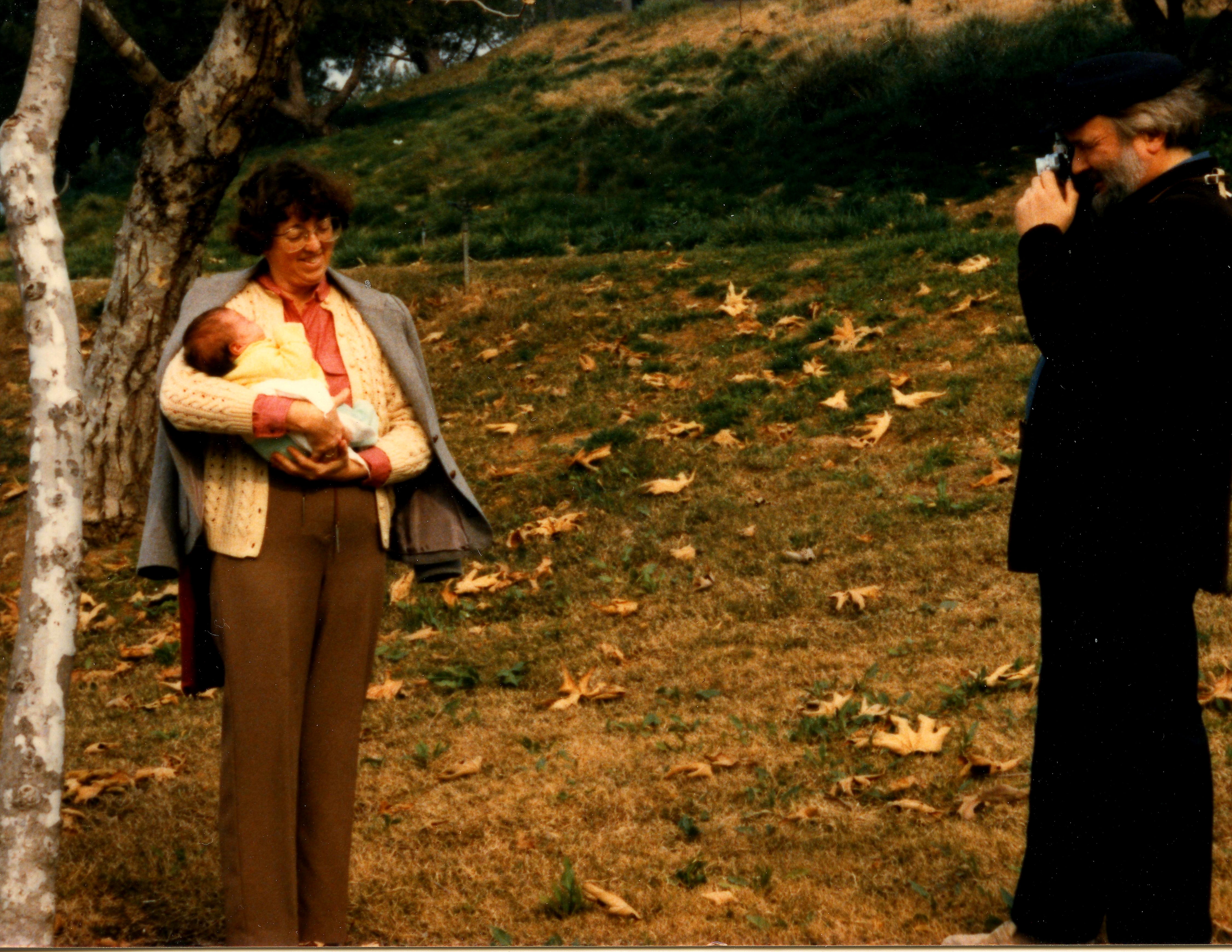
3) Prepare for delivery. My mother is a model of responsibility in many ways, not the least of which is her health. She educated herself about her body and her options in childbirth and made her decisions with my father, I’m sure, but not based on his participation. He was not ready to be one of those Sensitive New Age Dads who goes to Lamaze or presides in the delivery room. He stayed at home in 1957, 1959, 1960, 1962 and in 1973. I’m sure he had other options by the last birth, but his choice was to let my mom “carry on”. For her first four births, she had her labor induced. Why? Well, she was living on the Marblehead Neck and could be separated from the mainland by a storm at any time. She prepared.
4) Breasts have a clear purpose. In America in the ’50s, scientists tried to impress society with ‘modern’ and ‘better’ ways to live. It was all about innovation and technology and product placement. Sound familiar? Mom wasn’t buying. She was also not washing and sterilizing and mixing formula. She had the correct equipment already on hand, thank you. And she intended to use it. And when she turned 50 and the doctors told her that her equipment was sprinkled with carcinoma in situ, she said, “Well, I’m not going to worry myself into a state while that progresses in any way. I’m done using them. Take them away.” She’s 30 years cancer free. A survivor, a pragmatist, an example of responsibility to me.
5) Cotton is best. It’s natural, it breathes, and it doesn’t irritate your skin. Use cotton diapers, cotton balls and cotton clothing. No plastic diapers or synthetic wipes or flame-retardant coating. Following Mom’s advice, I used a diaper service that delivered fresh, clean cotton diapers to my home every week when I was raising babies in California and Illinois in the late ’80s and early ’90s. I was amazed to find 4 years ago that there are NO diaper services AT ALL in metropolitan Milwaukee any more.
6) There’s always room for one more, especially in your heart. This is an attitude of abundance and inclusion that is very generous and non-anxious, which I like. However, with 7 billion people flooding the global eco-system these days, it begs careful examination and consideration. Make your decisions accordingly. Mom gave me some “outside of the box” advice when baby number 4 came along while we were still living in 1050 square feet of house in Southern California. Lacking another bedroom, another crib, or even another bassinet, The Domestic Engineer suggested we could always pull out the bottom dresser drawer and line it with blankets or use the bathtub.
7) Don’t think you’re too old for one more, either. My mother gave birth at 39 to her last child. The gap between me and my brother is just 3 days short of 11 years. Everyone was surprised, even Mom, but the pregnancy was never ‘an accident’, and she finally had a son. You’re never too old for one more plot twist as well. I became pregnant after my husband had had a vasectomy, when my youngest was 6. It was certainly unexpected, but I was thrilled. I had a miscarriage at 10 weeks, which was not entirely anticipated, either. Stay light on your feet.
8) Never miss a teaching opportunity. When my brother was borne home from the hospital, I was 11 years old and my sisters were 13, 14, and 16. We were ripe to learn babysitting skills at least and mothering skills for the future. It went over well with prospective employers to tell them that I had been helping care for an infant at home for a year before I started babysitting other children. As my brother grew, I watched my mother’s parenting from a different perspective. I noted how much time she took with him, reading to him, letting him explore, listening to his talk, getting involved in his schooling, etc. I saw patience and willingness and diligence and, yes, worry. Parenting is not easy; it is complicated, and it requires effort. But it is rewarding on many levels.
9) Even worst case scenarios are teaching opportunities. My mother has survived the number one stress on the parenting list. On any list. The death of a child. Alice was technically an adult at 20, but she was still my mother’s child. She was driving from California to Ohio to begin her senior year at college. Alice fell asleep at the wheel in Nebraska, going 80 mph on Interstate 80, rolled the car and was killed instantly. I was her only passenger. I saw my mother’s grief first hand, also her capability. She flew out on several connecting flights to reach me the morning after the accident. She comforted me in my confusion and shock and made all the legal and practical arrangements to get us back to California. She navigated the complex waters of all of the ripples and storms caused in that one, tragic moment with grace, with authentic grief, and with compassion for everyone affected. Somehow, she did all this without a therapist, too. I think she’s always been good at knowing herself, at learning and communicating, and at being patient and allowing healing to arise. That makes for good parenting, for your children and for your own inner child.
10) Trust yourself. A happy family isn’t beyond you. Just remember, you have to allow your idea of “happy” to be fluid. My mother came to the dinner table one night before my sister was killed, and recounted a visit with some door-to-door evangelists. She had told them proudly that we already had a “happy Christian family”. Many things changed beginning that night and afterward that challenged that idea, many more than I can go into here. Nevertheless, my mother remains happy with her family. That is her, again, taking responsibility. She is not a complainer. She is not dogmatic about attachments and expectations. She allows herself to create, co-create and re-create happiness as life unfolds. Her progeny goes beyond the children she has produced to a host of other projects. Parenting is about life-giving and life-nurturing, a worthy work for a lifetime. I think my mom is doing a great job….still.
© 2014, essay and photographs, Priscilla Galasso, All rights reserved