Unknown's avatar

Weekly Photo Challenge: The World Through Your Eyes

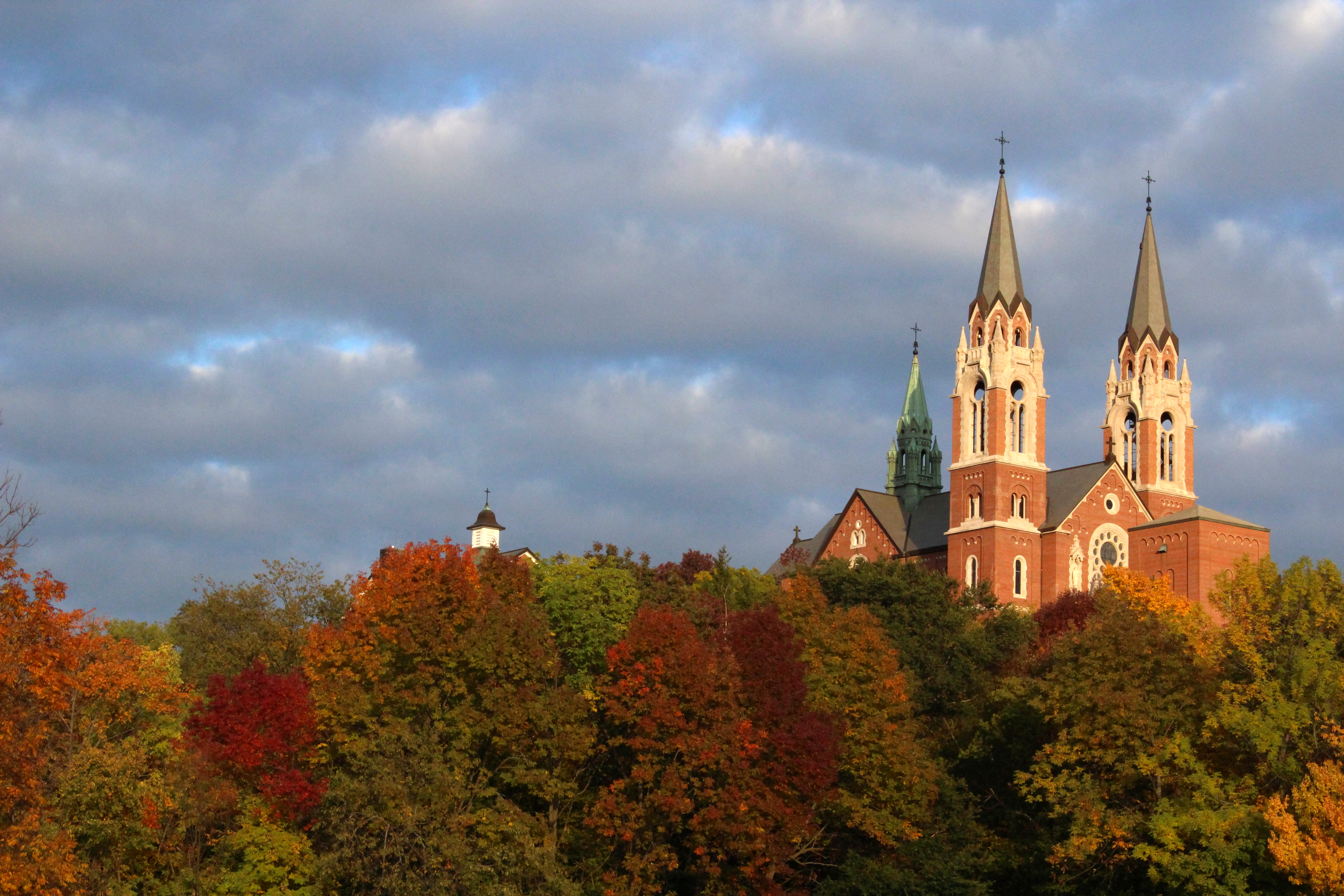
This week’s photo challenge was a tough one for me.  The “assignment” was to show “a visual interpretation of one’s vision. A story, captured in a frame.”  This seems to me to be something close to photojournalism.  I think black and white.  I think action, or a reference to action.  I look through my portfolio, and most of what I have is nature portraiture and still life.  The world through my eyes would seem posed, maybe even inert.  Hmmm.  This IS a challenge.  In order to capture a story, I would have to show more of a scene, not just a subject.  The backdrop, the context.  That would probably mean I have to be more ready with my camera, “quicker on the draw”, so to speak.  I will keep that in mind.  Tomorrow, I go to my daughter’s Bridal Shower, and I intend to bring my camera.  Maybe I can practice this assignment in that setting.  For now, I will give you my best approximation at photojournalism, taken last October on our adventure to “Metaphorical Maine” (which actually turned out to be Kentucky, West Virginia and Ohio).  Here ’tis:

My vision

Unknown's avatar

Honoring My Father (Reblog)

George William Heigho II — born July 10, 1933, died March 19, 2010.

Today I want to honor my dad and tell you about how I eventually gave him something in return for all he’d given me.

My dad was the most influential person in my life until I was married.  He was the obvious authority in the family, very strict and powerful.  His power was sometimes expressed in angry outbursts like a deep bellow, more often in calculated punishments encased in logical rationalizations.  I knew he was to be obeyed.  I also knew he could be playful.  He loved to build with wooden blocks or sand.  Elaborate structures would spread across the living room floor or the cottage beach front, and my dad would be lying on his side adding finishing touches long after I’d lost interest.  He taught me verse after verse of silly songs with the most scholarly look on his face.  He took photographs with his Leica and set up slide shows with a projector and tripod screen after dinner when I really begged him.  He often grew frustrated with the mechanics of those contraptions, but I would wait hopefully that the show would go on forever.  It was magic to see myself and my family from my dad’s perspective.  He was such a mystery to me.  I thought he was God for a long time.  He certainly seemed smart enough to be.  He was a very devout Episcopalian, Harvard-educated, a professor and a technical writer for IBM.  He was an introvert, and loved the outdoors.  When he retired, he would go off for long hikes in the California hills by himself.  He also loved fine dining, opera, ballet, and museums.  He took us to fabulously educational places — Jamaica, Cozumel, Hawaii, and the National Parks.  He kept the dining room bookcase stacked with reference works and told us that it was unnecessary to argue in conversation over facts.

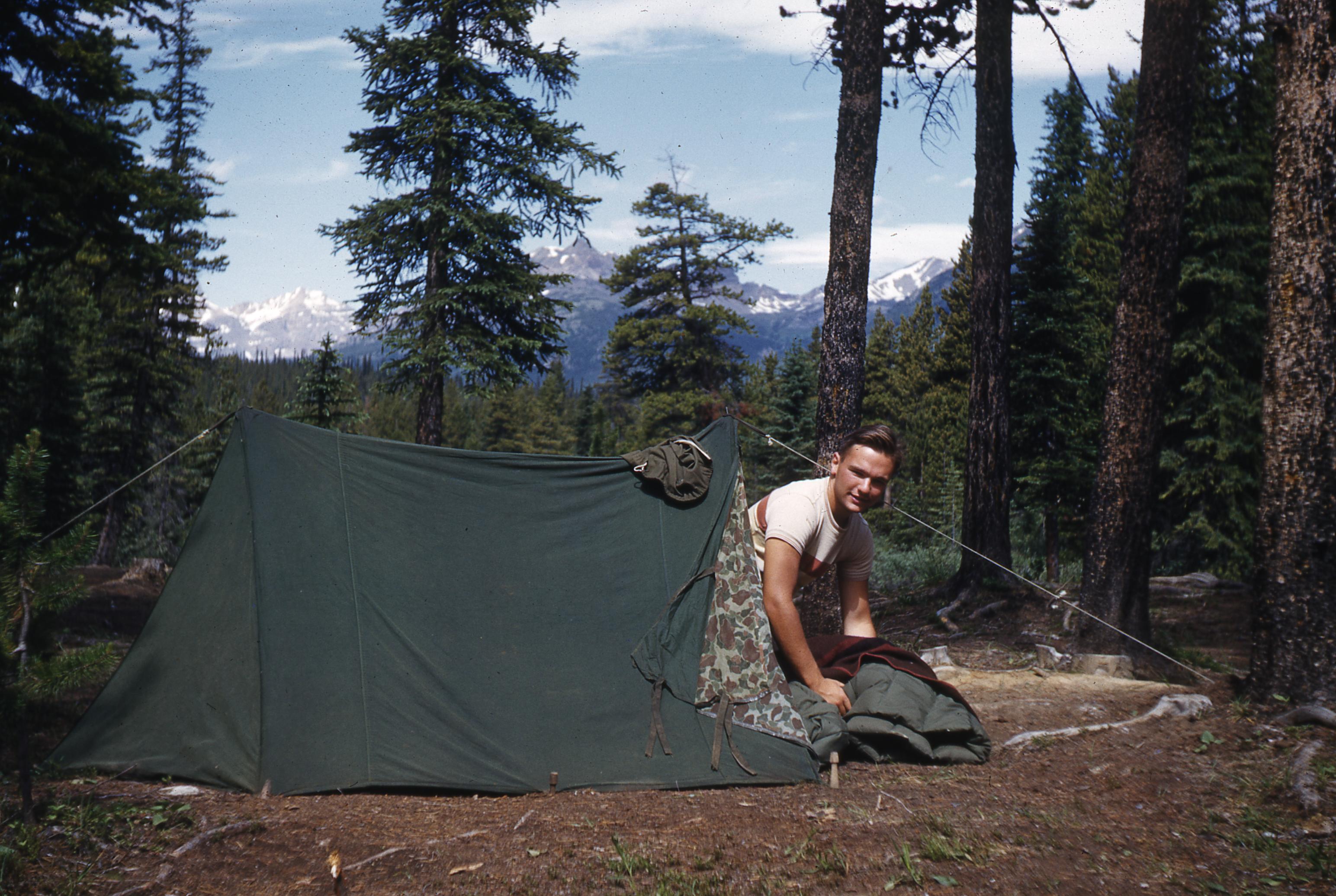
Camping in Alaska the summer after his senior year in High School: 1951.

My father was not skilled in communicating about emotions.  He was a very private person.  Raising four daughters through their teenaged years must have driven him somewhat mad.  Tears, insecurities, enthusiasms and the fodder of our adolescent dreams seemed to mystify him.  He would help me with my Trigonometry homework instead.

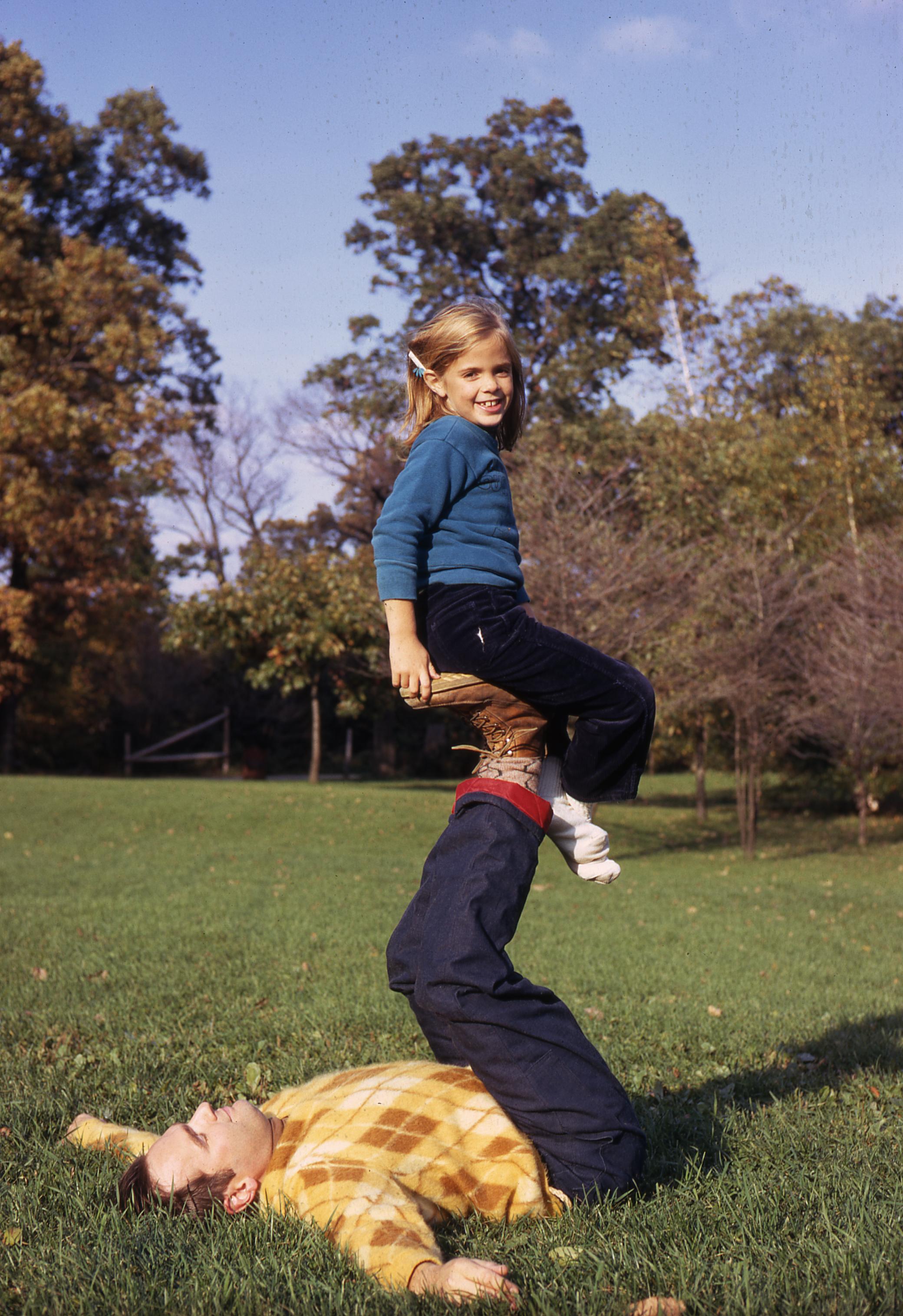
Playing with my dad, 1971.

I married a man of whom my father absolutely approved.  He walked me down the aisle quite proudly.  He feted my family and our guests at 4 baptisms when his grandchildren were born.  I finally felt that I had succeeded in gaining his blessing and trust.  Gradually, I began to work through the  more difficult aspects of our relationship.  He scared my young children with his style of discipline.  I asked him to refrain and allow me to do it my way.   He disowned my older sister for her choice of religion.  For 20 years, that was a subject delicately opened and re-opened during my visits.  I realized that there was still so much about this central figure in my life that I did not understand at all.

Grandpa George

In 2001, after the World Trade Center towers fell, I felt a great urgency to know my father better.  I walked into a Christian bookstore and picked up a book called Always Daddy’s Girl: Understanding Your Father’s Impact on Who You Are by H. Norman Wright.  One of the chapters contained a Father Interview that listed dozens of questions aimed at bringing out the father’s life history and the meaning he assigned to those events.  I decided to ask my father if he would answer some of these questions for me, by e-mail (since he lived more than 2,000 miles away).   Being a writer, this was not a difficult proposition for him to accept.  He decided how to break up the questions into his own groupings and sometimes re-phrase them completely to be more specific and understandable and dove in, essentially writing his own memoirs.   I was amazed, fascinated, deeply touched and profoundly grateful at the correspondence I received.  I printed each one and kept them.  So did my mother.  When I called on the telephone, each time he mentioned how grateful he was for my suggestion.  He and my mother shared many hours reminiscing and putting together the connections of events and feelings of years and years of his life.   On the phone, his repeated thanks began to be a bit eerie.  Gradually, he developed more symptoms of dementia.  His final years were spent in that wordless country we later identified as Alzheimer’s disease.

I could never have known at the time that the e-mails we exchanged would be the last record of my dad’s memory.  To have it preserved is a gift that is priceless to the entire family.  I finally learned something about the many deep wounds of his childhood, the interior life of his character development, his perception of my sister’s death at the age of 20 and his responsibility in the lives of his children.   My father is no longer “perfect”, “smart”, “strict” or any other concept or adjective that I could assign him.  He is simply the man, my father.  I accept him completely and love and respect him more holistically than I did when I knew him as a child.  That is the gift I want to give everyone.

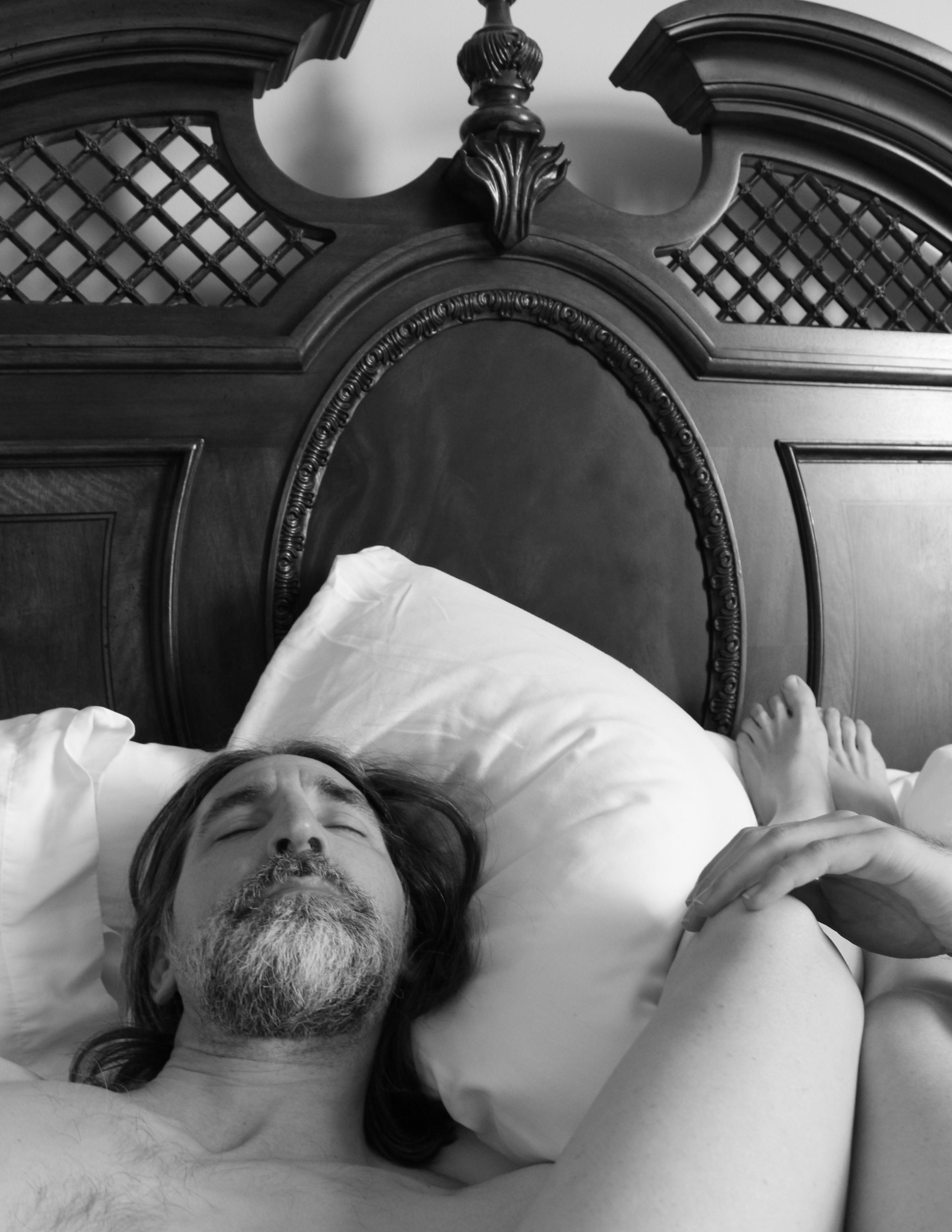
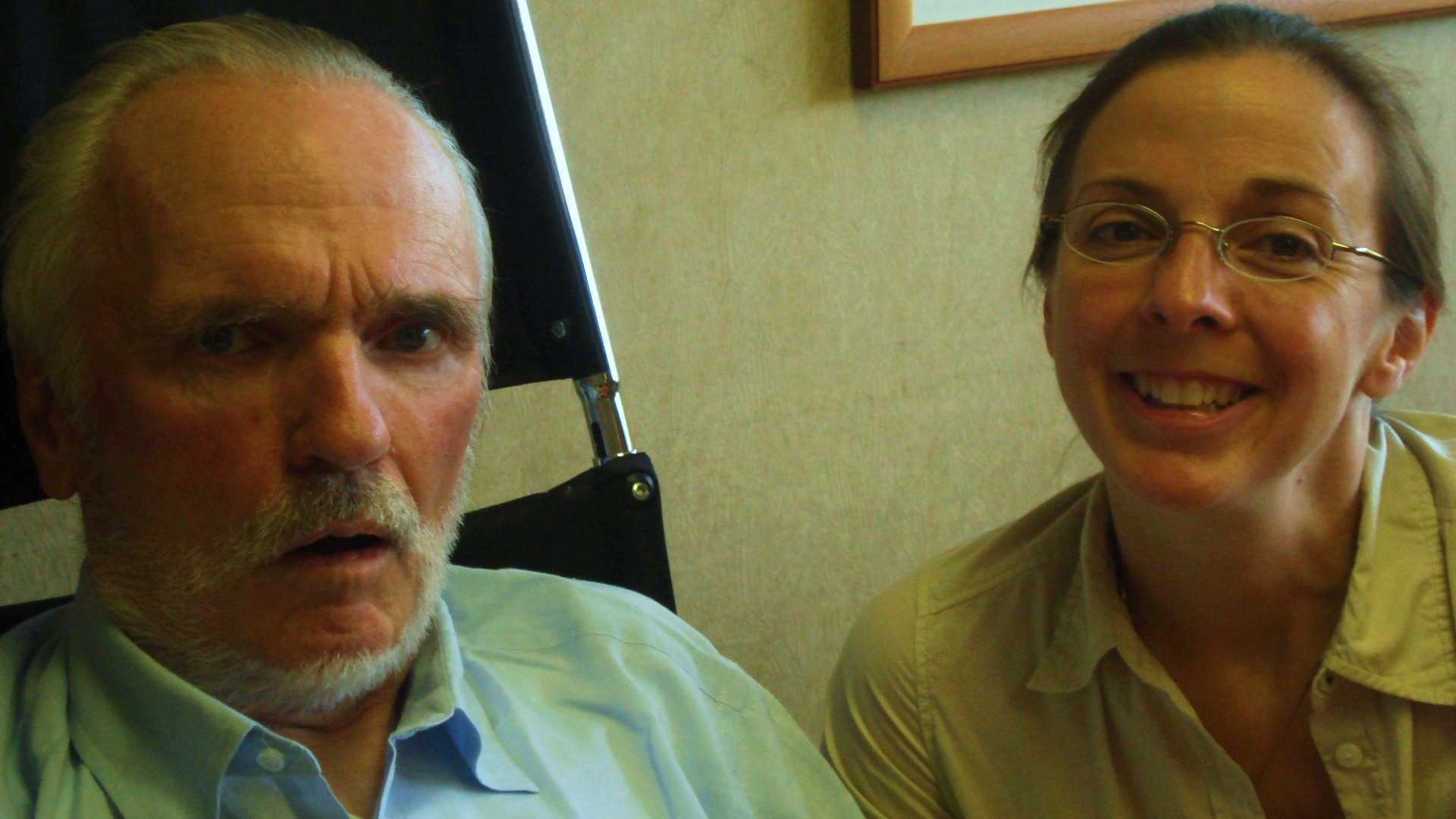
I will close with this photo, taken in the summer of 2008 when my youngest daughter and I visited my father at the nursing home.  I had been widowed 6 months, had not yet met Steve, and was anticipating my father’s imminent passing.  My frozen smile and averted eyes are fascinating to me.  That I feel I must face a camera and record an image is somehow rational and irrational at the same time.  To honor life honestly is a difficult assignment.  I press on.

Unknown's avatar

Weekly Photo Challenge: Curves

Curves…

How many internet “news” headlines associate that word with female celebrities on the red carpet?  SOOOooo not my style of subject.

The curve ball?  The cosmic 2 by 4 upside the head?  Ah, yes.  That experience is one with which I am familiar.  I appreciate a good twist of fate/destiny/plot/philosophy.  I’ve been reading a 1917 copy of Best Russian Short Stories compiled by Thomas Seltzer.  Intense!  Revolutionary!  Profound!  I recommend The Shades, A Phantasy by Korolenko:  Socrates investigating the justice of religion, and for lighter fare, How a Muzhik Fed Two Officials by Saltykov: like Mark Twain satire, only Russian.

Visually, curves are naturally graceful.  Is there anything in nature that is completely straight?  I’ve thought about that several times, and the closest thing I can come up with is a pine needle.  Any other ideas out there?

So, here are some curves from my photo files:

This slideshow requires JavaScript.

Unknown's avatar

Weekly Photo Challenge: Fleeting

I must be sharing some head space with Cheri at Word Press.  I’ve been thinking about ephemerals as I photographed the woodland wildflowers a few weeks ago.  An entire hillside was covered in trout lily, and I was excited at the prospect of seeing them all bloom at once.  I went back two weeks later to discover that I’d missed it. 

Fleeting.  Short life cycles.  Tomorrow is the 35th anniversary of the first time I kissed my husband.  He died at the age of 47.  “It’s not the years in your life, but the life in your years that counts.”  That quote is attributed to Abraham Lincoln, and my sister-in-law read it at Jim’s memorial.  Living, sentient beings change over time, rapidly or slowly doesn’t matter.  We are all impermanent.  Is that an aberration?  Or is that just the way it is?  Rage or accept as you will, the wheel turns, the cycle moves.

This slideshow requires JavaScript.

Unknown's avatar

Weekly Photo Challenge: The Sign Says

“And the people bowed and prayed
To the neon god they made
And the sign flashed out its warning
In the words that it was forming
And the sign said, “The words of the prophets are written on the subway walls
And tenement halls”
And whispered in the sounds of silence” – Simon & Garfunkel

This is absolutely the first thing that came to mind when I read the prompt for this photo challenge, and the first image that I thought of is this shot that I took last Friday at the trail head to the section of the Ice Age Trail we hiked that day.

signsGraffiti….is it art or is it disrespect?  I suppose that depends on what it is and where.  How about on an ancient Egyptian wall?  Yeah, that made the news this week.  Is that a prophecy of destruction?  There are many examples of that abroad on our planet.  How about prophecies of hope and healing?  They seem harder to come by.  Here’s one I found this morning:

http://www.youtube.com/watch?feature=player_embedded&v=TqFaiVNuy1k

Signs point the way; they are not the Way, nor are they the goal.  It isn’t wise to get attached to the sign and miss the reality.  It might be a good challenge to toss out your favorite signposts periodically to see if you can still find the Way….

Unknown's avatar

Memorial Day: A ‘Hair’ Piece (Part 2)

Alice and I were two of four daughters growing up in the 1960s when hair was a revolution. My mother’s practical and aesthetic notions of hair were of the previous generation. She preferred our hair bobbed and easy to care for, and since we inherited her thin, fine locks, that was what often looked best on us. Somehow Alice managed to get permission to grow hers long when the rest of us didn’t. Since there was more of it, it seemed thicker, more luxurious than mine. I begged to be allowed to brush it, comb it, braid it, style it and pet it. It was a special bonding time between us, and my affection for Alice was cemented during the hours I spent grooming her. Our other sister competed for this opportunity for devotion as well. We sometimes quarreled over who would be allowed this privilege. Alice enjoyed arranging hair as well, and learned how to cut it, too. She cut our brother’s hair and our father’s hair. When she died, at the age of 20, this task was passed on to me. The summer that she died, she also cut my boyfriend’s hair. I swept it off the porch and stuffed it in a red, heart-shaped pillow I made. Jim became my husband 4 and a half years later.


Alice and Mike - summer 1979

Alice and Mike – summer 1979

Jim’s hair was a true marvel, not just to me, but to everyone who knew him. It was thick, curly, blond and the crowning glory of this California dream man. In his late teens, he had the “surfer dude” look: in the humidity of the ocean air, a front lock would fall down on his forehead just like Superman’s. When he took a job in the 80s, it was shorter, casually parted in the center, and more like Huey Lewis’. He didn’t have to use “product” to achieve that decade’s big hair, while I was perming and mousse-ing like crazy. As he aged, he very gradually acquired some gray strands at the temples. He died at the age of 47 of heart disease and complications from diabetes. Our priest remarked at observing his body in the funeral parlor, “Look at his hair – barely gray and still as stylish as a Ken doll.”

 Jim in England

My father died of Alzheimer’s disease two years later. He was thirty years older than Jim ever got to be, his emphatically straight hair a dazzling white. As a young man at IBM, he parted his hair to one side and kept it meticulously short and neat. When he moved to California, he began to comb it straight back from his forehead and let it grow a little longer in back. As a teenager, I would cut it for him while he sat on the redwood deck in the back yard. I only needed to even the ends at his neck and trim around his ears. As the clippings fell to the boards at his feet, he would reflect on the change in the color mixture. Each year, more gray and white, less dark brown. The most wonderful aspect of cutting my father’s hair was that I was allowed to touch him, to smooth and caress his noble head. This was as intimate and affectionate as I could imagine being with him, and it was like knowing God to me.


Grandpa George

Grandpa George

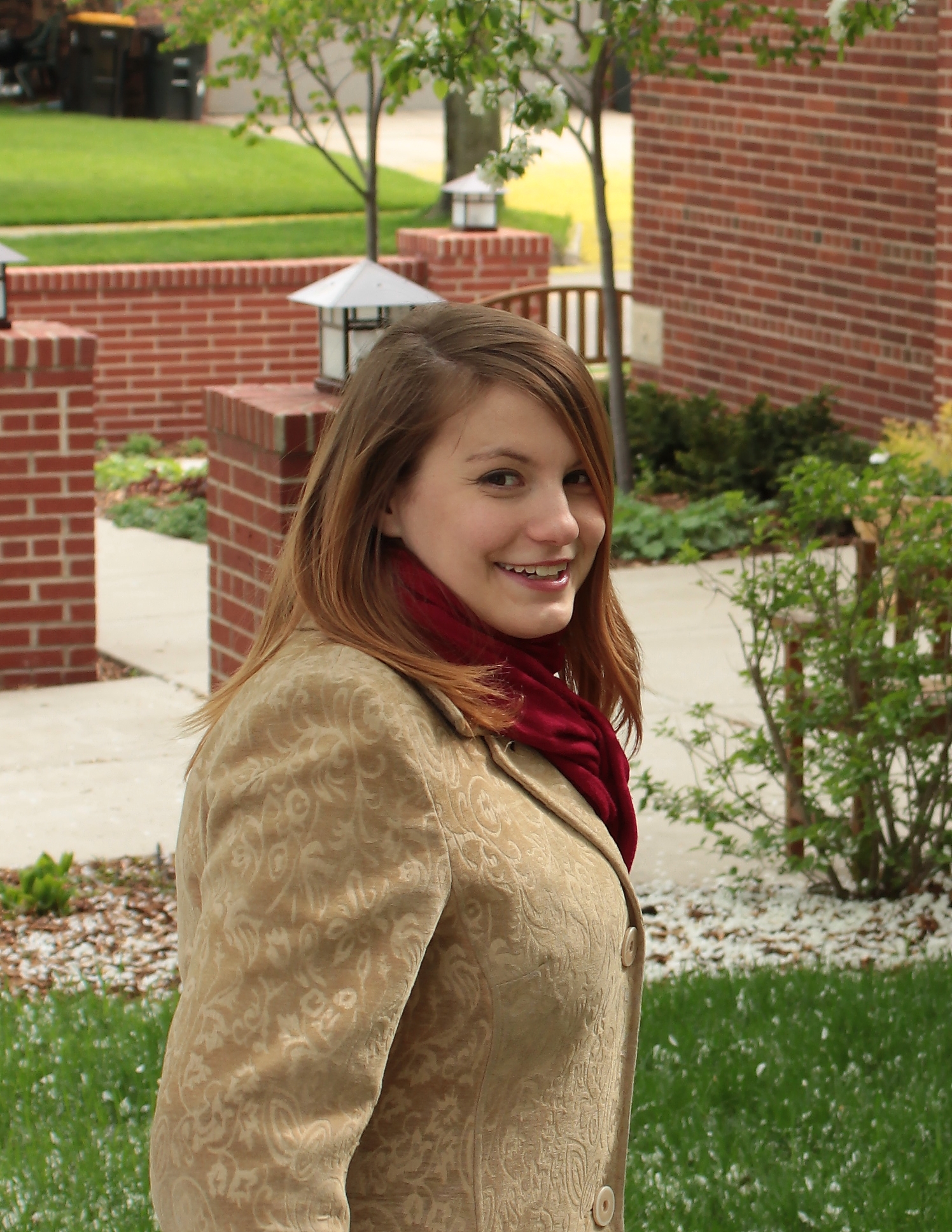
My daughter Susan visited me the other day. It was our Mother’s Day and Master’s Graduation celebration, in a way, but really just a lovely, rainy day to be together, talk about her upcoming wedding, do a jigsaw puzzle, cook a meal, drink martinis and listen to jazz. And play with her hair. When she was in high school, I would fashion her hair into an “up-do” for proms and homecoming dances. I could probably do a decent job for her wedding day; why pay an expensive stylist? We began to experiment. Her silky soft, light brown hair felt like her baby’s locks in my hand. The wispy ends of a layered cut growing out gave the outline of that toddler hair I remember so well, framing her youthful, round cheeks. The tactile experience of this person whom I love stays with me, in my mind and memory, in my fingers, in my heart. I will have wedding photos soon to go along with the graceful curl in her baby book and the little red heart pillow, strands of love and memories woven together over time. A satisfying memorial, to my mind.