Unknown's avatar

The Melting Pot

One of the school boys doing a tour at the Schottler farm at Old World Wisconsin asked me, as he was working with rye dough, “Did they make pizzas?”  I told him that pizza is an Italian food and that these German immigrants probably would have no idea what that was.  This boy looked to be Hispanic.   Would it be an epiphany for a 10 year old to look around at all the things that seem to be “normal” to his life and realize that they all came about in a particular way and have a particular story?  How did pizza get to be part of life in America?  Another kid said that he thought the dough smelled like beer.  How did beer get to be part of life in America?  Other kids said that they were making tortillas.  Or pita bread. 

I wonder what kind of connections they’re making….or not making.  In 20-minute rotations through so many presentations and activities, what kind of sense are they making about all this converging and co-mingling history?

Migration, immigration and assimilation are fascinating.  Everyone approaches it differently.  Some people are very proud of their origins and hang on to ways of life and culture with a firm grip.  Others push to assimilate as quickly as possible and let go of the old ways.  Some have their culture systematically stripped from them, often under the pretense that it’s “for their own good”.   Just tracking down how a family name has been changed can reveal a lot.  Who changed it?  Under what circumstance, and why?

I suppose the thing that I’m learning most is this: respect everyone’s history.  We are all inter-connected, we all change each other. 

I am thinking also today of the man who was my father-in-law for 24 years.  Today would have been his 78th birthday.  I carry his family name with me and intend to do so until I die.  Maurice Galasso’s dad, Antonio, was born in Italy.  He emigrated to the United States and eventually moved to the Monterrey Peninsula.  Mo (as my father-in-law was called) recalled that his father had various jobs, for example, gelato vendor and dance instructor.  Antonio died when Mo was only 7.  As the “man of the house”, little Maurice was quite resourceful and ingenious.  He eventually became a highly respected structural engineer and owned his own company.  Their family story is full of struggle, creativity, serendipity, stubbornness and grace.  As is, perhaps, everyone’s.  The more I listen to stories, the more I understand about people, and the more compassionate I am capable of becoming.  I want to honor Maurice Galasso today and thank him for the connections I have because of him.  
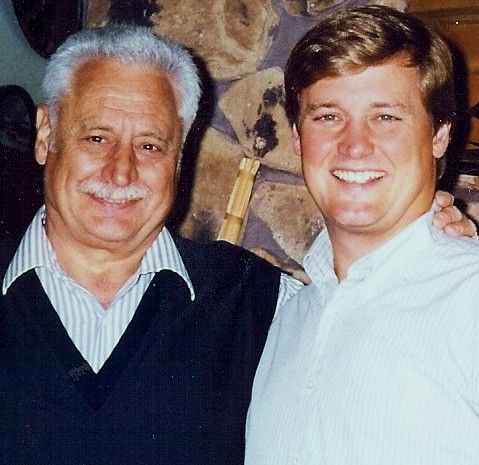
Maurice and his son, Jim Galasso

Mo and his Galasso grandchildren (my kids). Taken at the grave site after the interment of Jim’s ashes.

 

Unknown's avatar

We Amid The Flood

It’s been pouring and thundering and lightning all day.  The Bustle Hustle was cancelled, and I ended up waiting out the storm in the basement of 4-Mile Inn, which flooded.  Rain went down those cellar steps and right into the staff room where we were sitting around chit-chatting.  Out came the mops and buckets and dust bins…anything to scoop the water up.   Suddenly the whimsical display of brightly colored swim fins and floaties and paddles someone had tacked to the back of the door made sense.  When it let up a bit, I made the trek down the road to St. Peter’s under my umbrella.  I didn’t stop to think that an umbrella isn’t wide enough to cover my enlarged behind!  My bustle was soaking wet…on the outside.  I didn’t feel it under all those petticoats, but when I sat on the pews, I left water marks.   I needed to inject some humor into the situation, so I pumped up the organ and began to play “A Mighty Fortress is Our God”….a bulwark….our helper, He, amid the flood (of mortal ills prevailing).   Visitors finally trickled in along with the rain, but I only had about ten in 5 hours. 

I met some new volunteers and staff people in the course of the day, and enjoyed talking to them about dreams and lifestyles.  How do you want to live?  What are you finding important at this stage of your life?  Many are retired or old enough to be.  Hobby farms, family history, grandparenting and traveling were hot topics with this crowd.  There are also the college students, who talk about classes and shopping at Good Will and how to survive on minimum wage.  Most took cover under ground in the storm, a few stayed out on the porch to watch the power of nature in the sky.   The horses turned their rear ends to the oncoming winds and whinnied a bit, but weathered the day in their own way. 

I think about resilience, expectations and comfort.  The immigrants whose stories we tell at Old World Wisconsin were of heartier stock than us 21st century types.  They pushed across miles of unknowns without a “smart phone” to tell them where they were, what was ahead, and what the weather pattern was likely to be.   They looked up and around, assessed the situation to the best of their ability, and went ahead.  What happened…happened.  They made their own fun, they solved problems with their own strength and wits, and they passed on what they could to their children.   I like their spirit. 

And when the rains come, “don’t forget to wear your rubbers!”  (My mother’s voice echoes from my childhood…)

Unknown's avatar

The Village People

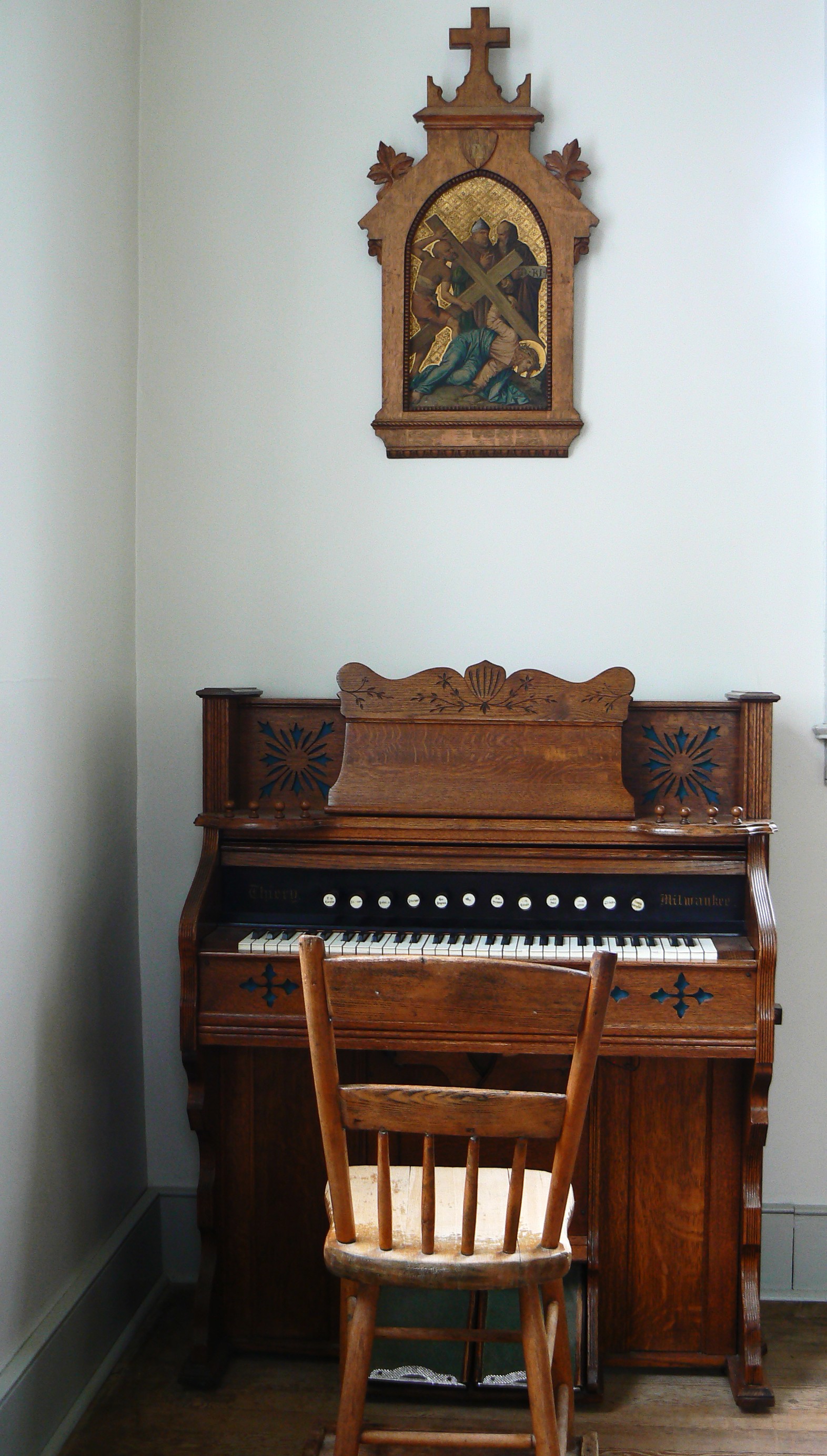
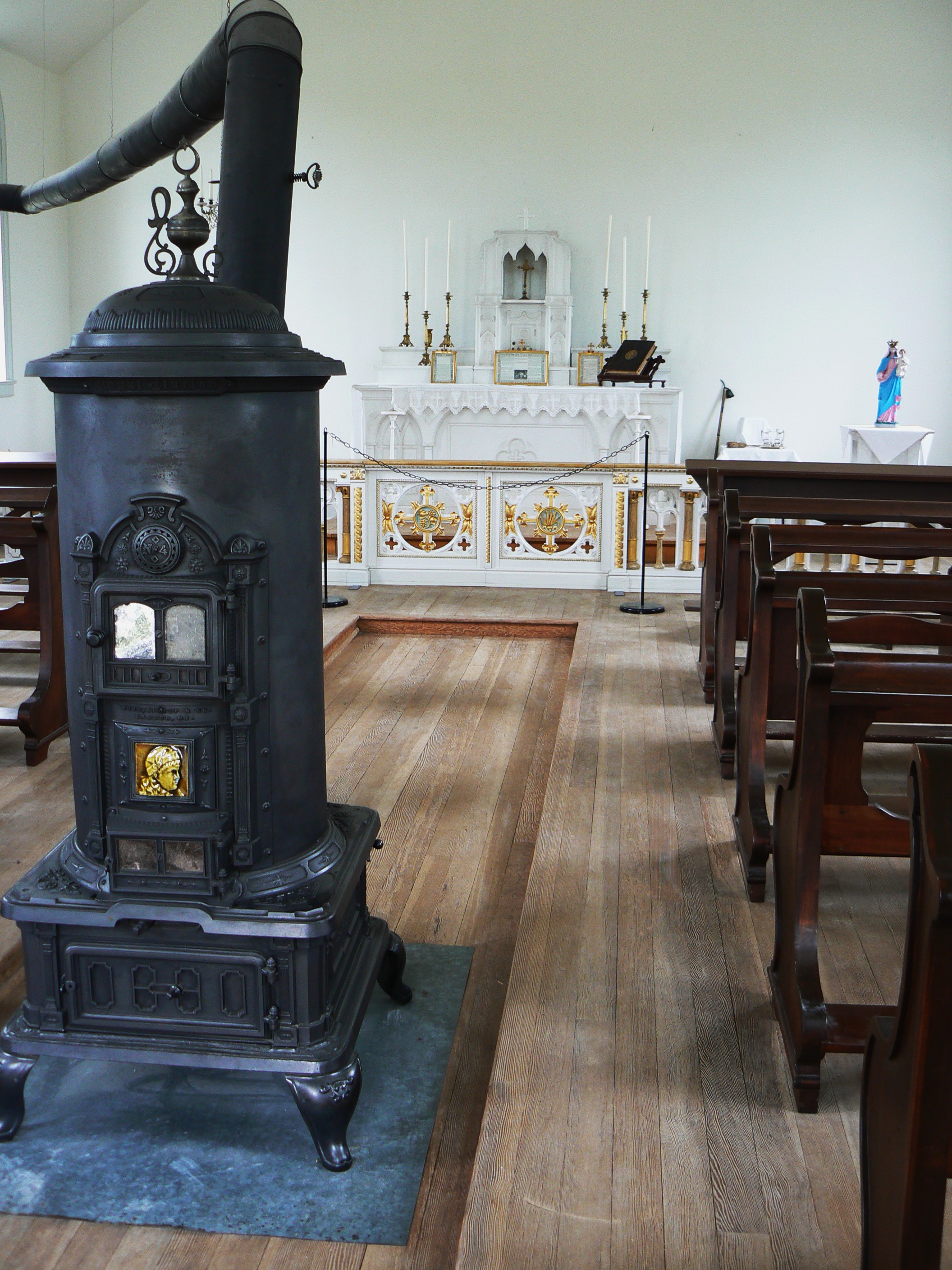
Today was my first day as one of “The Village People” at Old World Wisconsin.  I interpret St. Peter’s Church, built in 1839 as Milwaukee’s very first Roman Catholic chapel and cathedral.  Only 7 years after the cornerstone was laid, the parish had grown from 20 members to 100 families and they began to construct a new cathedral to accommodate the growing population of Catholic immigrants.  St. Peter’s was preserved and used for Sunday school, meetings, and a boys’ school (in the basement).  It was also moved around (3 times), added to, and then restored to its original design.  We acquired it in 1975 and restored it to its 1889 appearance.  The wood stove is no longer used for heat; since we store some of our collections artifacts in the basement, we’ve updated to central heating.  Still, it was chilly and damp today.  Here’s the interior and a close up of the altar.  The framed pieces are the Missal (service prayers) in Latin.


I hang out at the back of the church, stitching my pin cushion for the Christmas Bazaar or playing the pump organ.  I am getting used to pumping with my feet, adding volume and overtones with my knees, and keeping all ten fingers busy on the keyboard.  The organ is placed underneath one of fourteen Stations of the Cross displaying the German woodwork of that time.

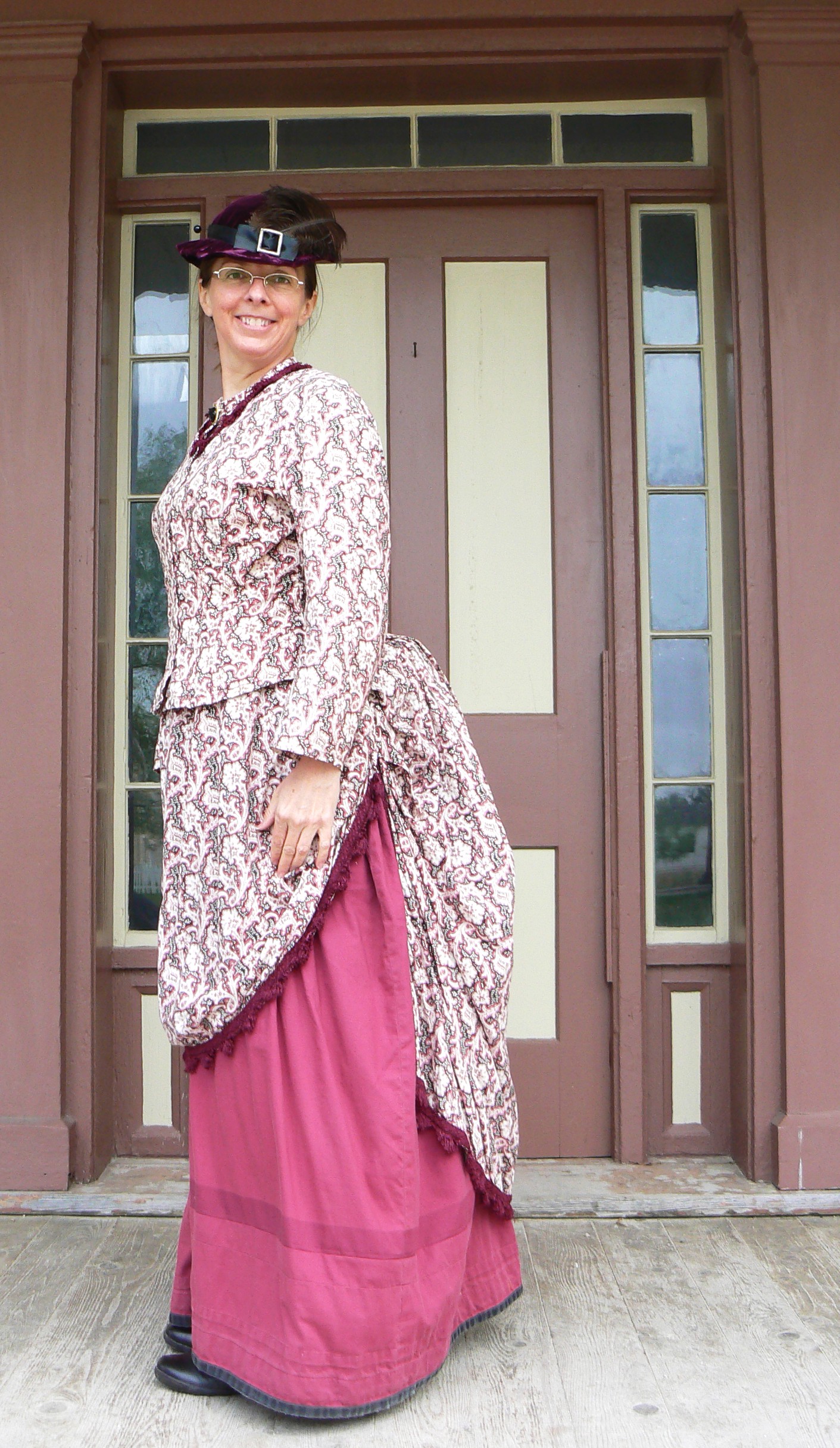
Of course, I sit on that little chair and play while in costume, complete with corset and bustle.

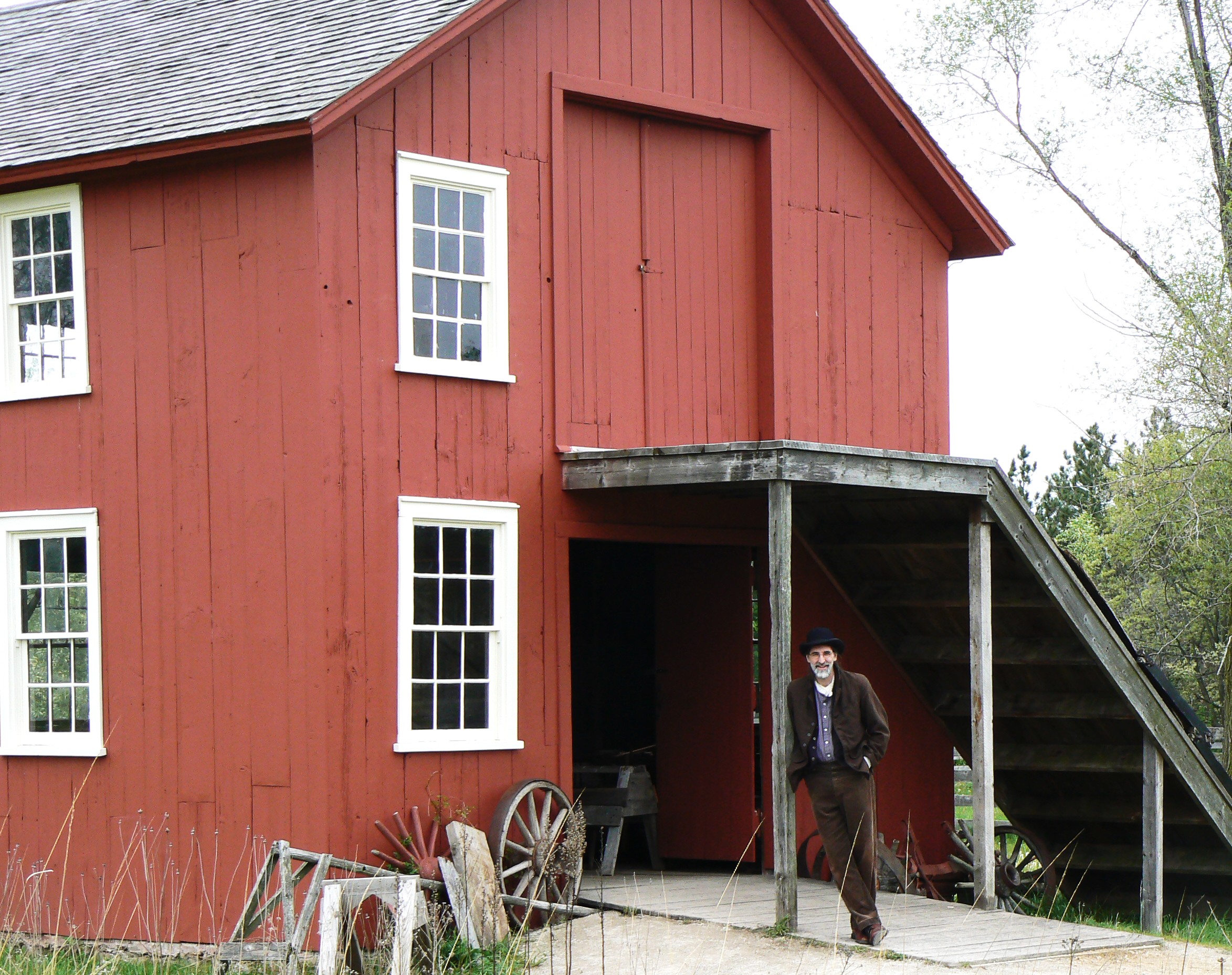
Tomorrow is the 5K Bustle Hustle, a run/walk event for all ages (children can do a 1K route).  I will be cheering the participants on before taking my place in the church.  So tonight, I am turning in early!  Before I close, though, I have to share a photo of the most handsome man of The Village People standing outside The Wagon Shop. 

I said, “Young man! There’s a place you can go…”

Unknown's avatar

Interiors

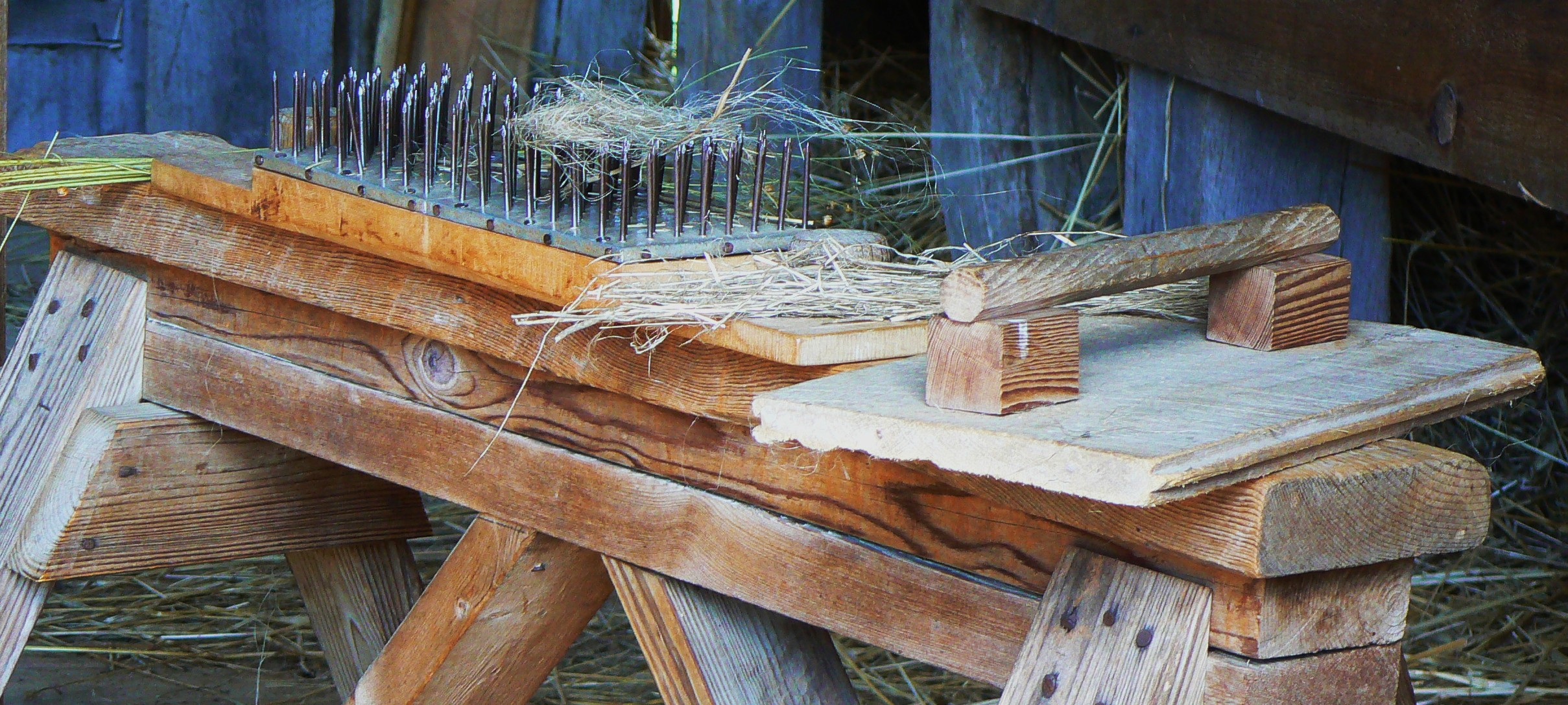
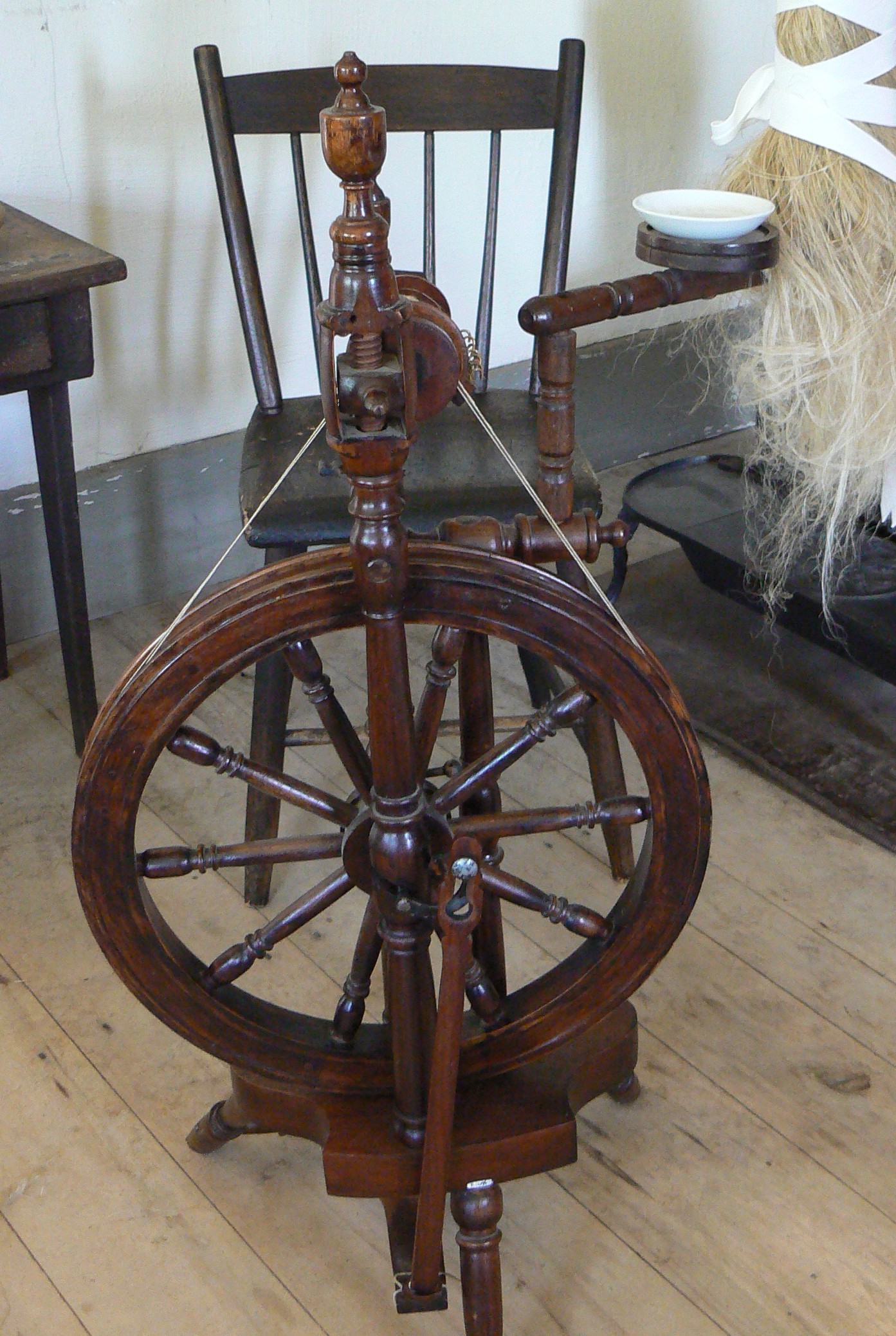
I’m back in the 21st century today, having breakfast with Steve’s mother, doing laundry at the laundromat, that kind of thing.  My heart is still somewhere in the world of 150 years ago.  The deep connection with the land is something that I miss in this century.  I learned about the process of making linen from flax.  It is a very complex  procedure, actually.  The fibers of the flax plant are like the phloem and xylem in a maple tree.  They run from root to branch tips, and they are beneath the green outer husk and outside of the hard woody core.  That corresponds to the sapwood in a tree that lies under the bark and around the heartwood.  The flax is pulled up from the roots so as not to shorten those fibers.  Then, it’s placed in running water or on dewy ground to rot away the green outer husk.  This can take a month.  Next, you take it to the threshing floor of the barn to break up the woody chaff.  There are a few different machines that aid in that step.  Combing the strands through a nail board leaves long hanks of golden fibers and short curly bits that are stuck in the spikes, which is called tow.  That’s where we get expressions about flaxen hair and towheads.   The fibers are wound on a distaff for spinning; tow can be spun like wool.  I’d never tried spinning before.  It’s a lot more difficult than it looks at first!

Thatched roof barn

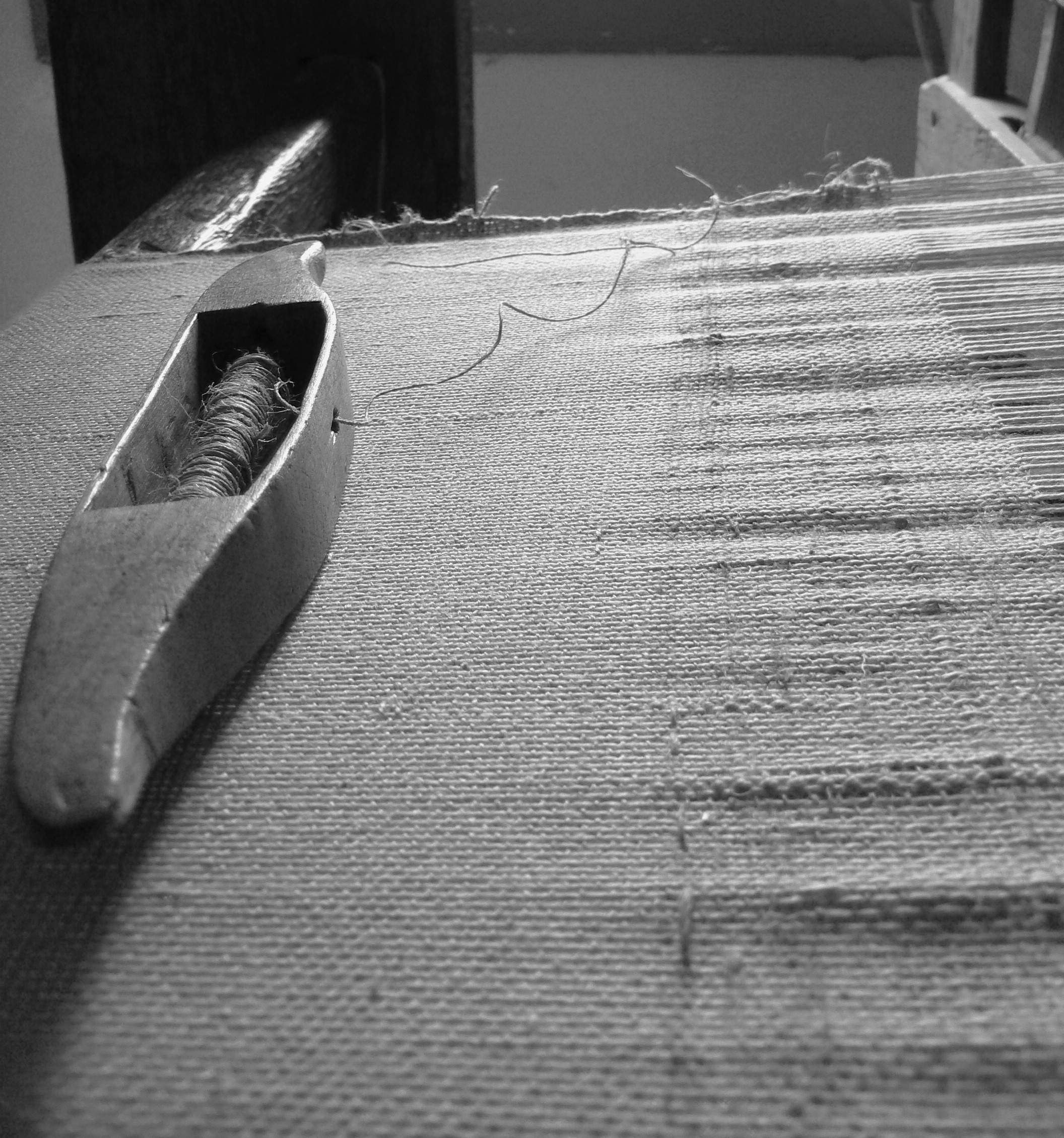
Linen making is extremely labor intensive.  The retting process where microorganisms dissolve the outer husk is the prohibitive part for Old World Wisconsin, apparently, so they buy their flax at about $40 pound ready to break and spin.  Which finally gets you around to having skeins of linen.  But then, just setting up the loom seems like it would take forever!  Imagine setting up a loom for a 400-count cotton sheet…that’s 400 threads per inch.  Of course, that’s all done on industrial machines now.  Factory-made cotton cloth was available and cheaper by the mid-19th century, but linen was sometimes useful as a back-up during the Civil War.  Factory made shoes were available as well.

We’re off to have breakfast with Steve’s mom.  I’m imagining eating in the ladies’ parlor at 4-Mile Inn….

Unknown's avatar

Exteriors

Another day at the living history museum under my belt.  The new thing I did today was make rhubarb sauce from the gigantic rhubarb plants in the garden.  Not that I actually ate any, I just boiled it in water on the wood stove for a few hours so that the smell would permeate the summer kitchen.  I didn’t have any sugar at first, so my initial taste was very sour!  It reminded me of my mom making rhubarb and custard from the rhubarb in our garden.  My mother didn’t garden a lot, so this was impressive to me.   I know she helped her parents with a “Victory Garden” during WWII, but she was pretty young.   She shops at farmer’s markets and does delicious things with fresh produce, but she doesn’t grow it herself.  I’m looking forward to more garden-to-table assignments. 

I love that this job allows me to be outside so much.  We had thunderclouds overhead for much of the day, but no rain.  The humidity was high, but there was a breeze kicking up from the storm front miles away.  And I noticed a fishy smell first thing today…I guess with storm conditions you can smell Lake Michigan from 50 miles away?!  Unless there’s another explanation.  Anyway, I thought I’d share some photos I took of outbuildings and such. 

The blacksmith shop with St. Peter’s in the background.

When “nature calls”, you can head for the woods…

…or use the 3-holer out by the garden. Good idea planting the fragrant lilacs right beside it!

As you can tell, I’ve got a fabulous work environment!  I’m loving this job.  🙂


Unknown's avatar

Making New Friends

During training for my new job at Old World Wisconsin, I was introduced to many new friends.   On the last day of training, I took some pictures.  Here are some portraits and brief bios about my new co-workers.

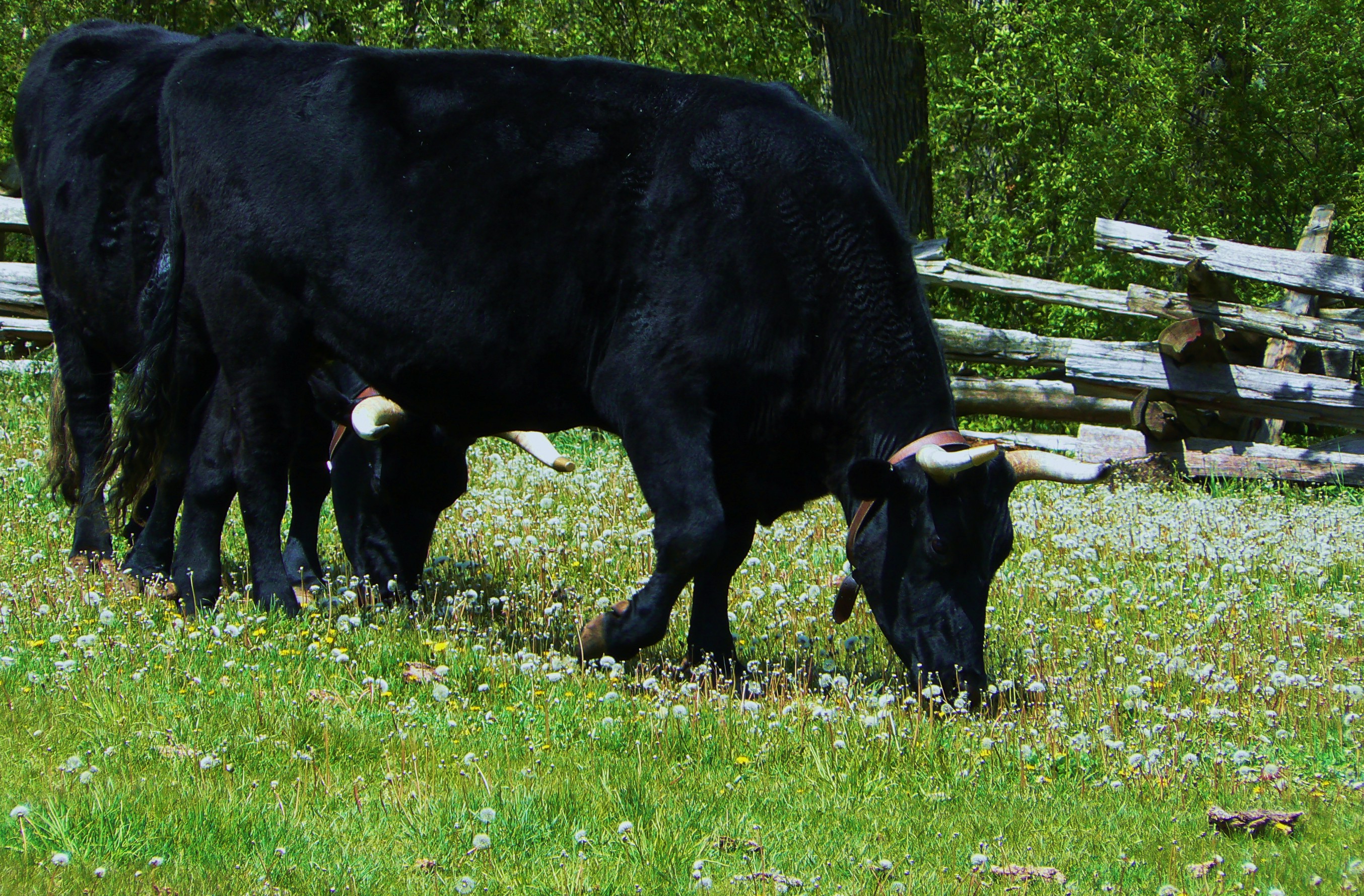
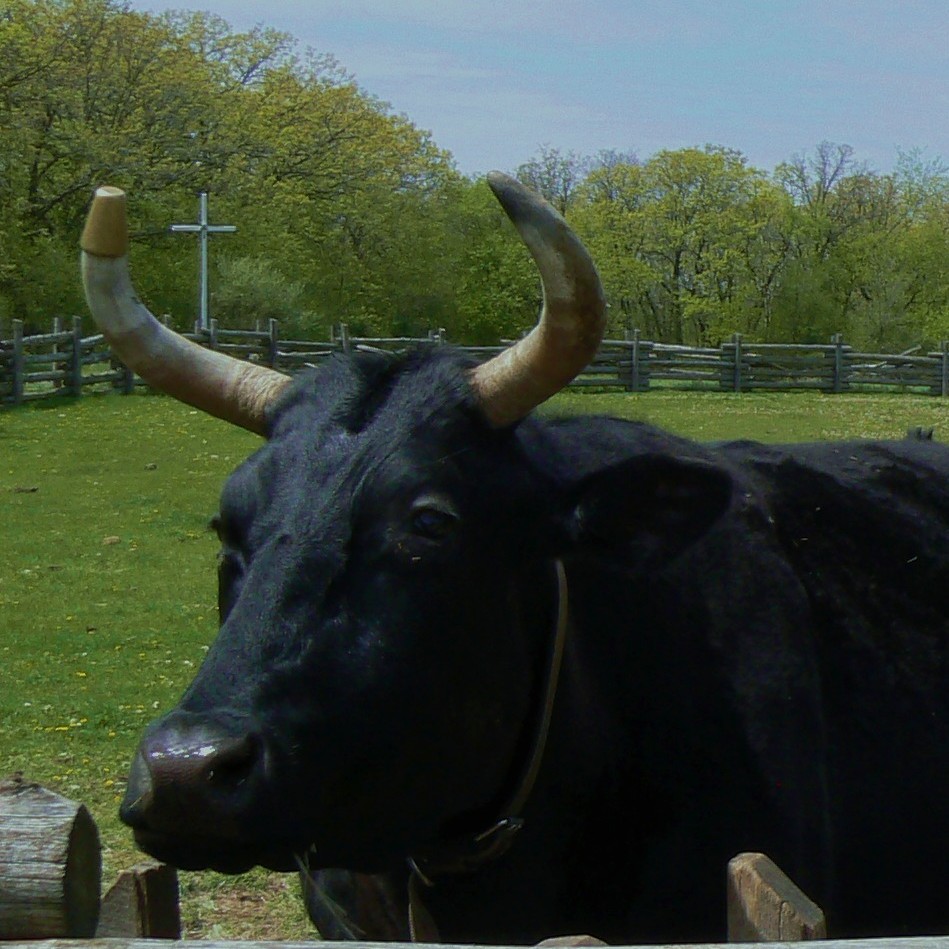
This is Bear and Ted, out in their favorite pasture next to the 1860 Schultz farm.  They are a magnificent team of oxen.  Bear is on the left, with a brass horn cap on his left horn.  (“Bear left” is how I remember which one he is.)  This is so that when he is yoked to his buddy Ted, he doesn’t gore him by accident.  Each of them weighs about a ton (2,000 pounds)They like to be rubbed under their chins, but they will drool on you.  I’ve been told that I will now enjoy good luck because Bear drooled on me.   I like how this photo reminds me of the drawings for the book Ferdinand by Robert Lawson.

This is Ted with Bear behind.  (Okay, I couldn’t stop myself.)  They are clever escape artists, but also well behaved.  They managed to bump up against the logs that cross the fence opening in such a way that they worked them free from their supports.  They carefully stepped over them and went out to the garden in front of the homestead and helped themselves to the red cabbage growing there.  Then, they went back into their pasture.  The next morning, the staff looked at the obviously nibbled produce and the huge hoof prints in the garden and thought, “Oh no!  The oxen are loose!”  But there were Bear and Ted, looking innocent as can be from the pasture enclosure.  But then they checked the gate, which these guys failed to close behind themselves, and their guilt was confirmed.  I give them credit for sticking to the garden paths and returning home by themselves.  


This is a close up of Ted.  He’s a good worker, slow and steady.  He pulls carts and plows and isn’t as skittish as a horse.  You can hook up a cart to the team and go into town, but it’ll take you a while.  They can run as fast as 30 miles an hour, but not for long.   You can’t saddle them up and ride them because their spines form a peaked roof that’s uncomfortable for the rider (and probably for the animal as well).  Sometimes a farmer would put a child on the ox’s back for a short time, just for fun.  They are very docile, and these guys respond to commands like “Gee” and “Haw” and “Whoa” and “Get up” and “Back up” very cooperatively.  They kick to the side instead of straight back, so when you walk beside them, you want to be in front of their back legs.  So, that’s Bear and Ted.  Here’s another team member.  We call her Queen.

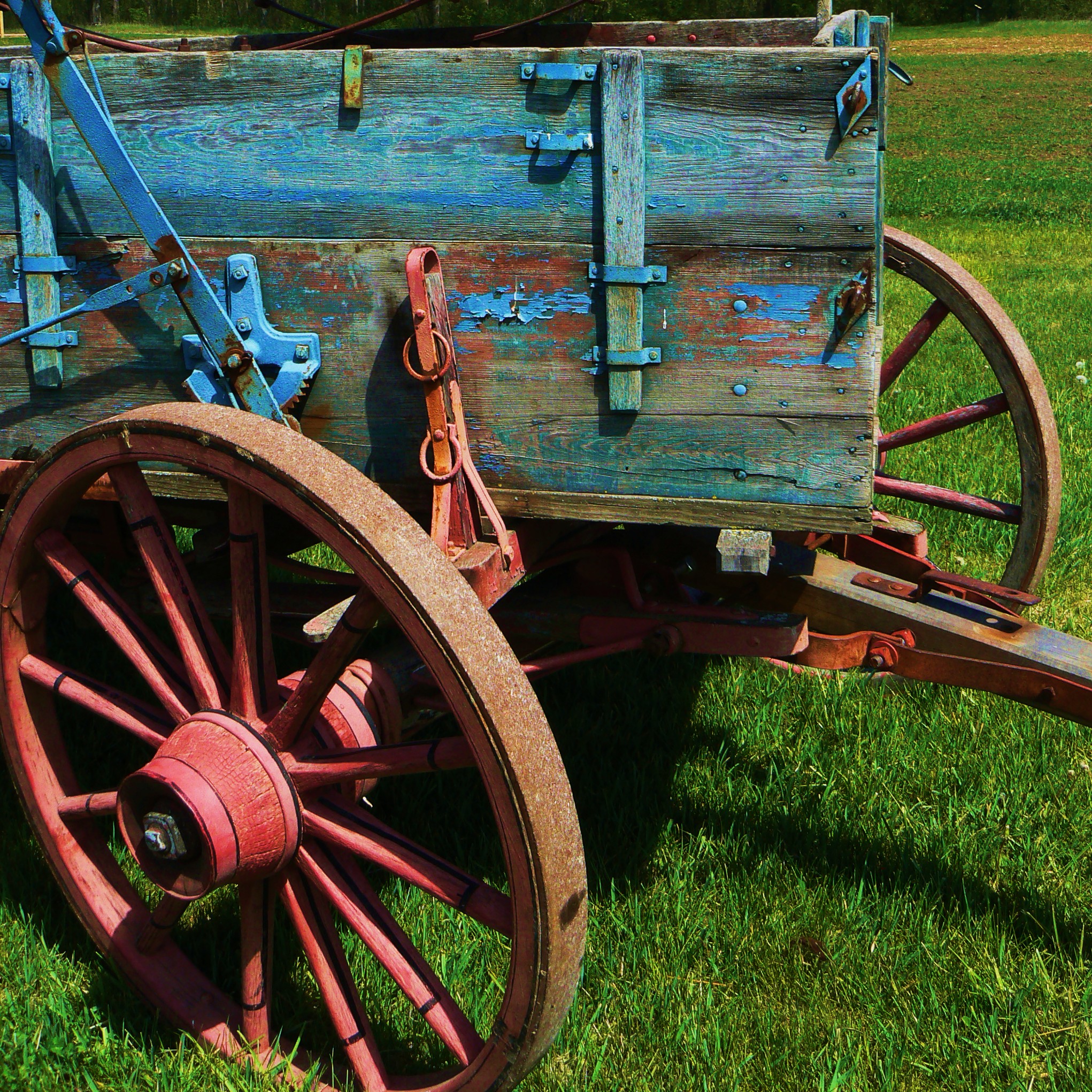
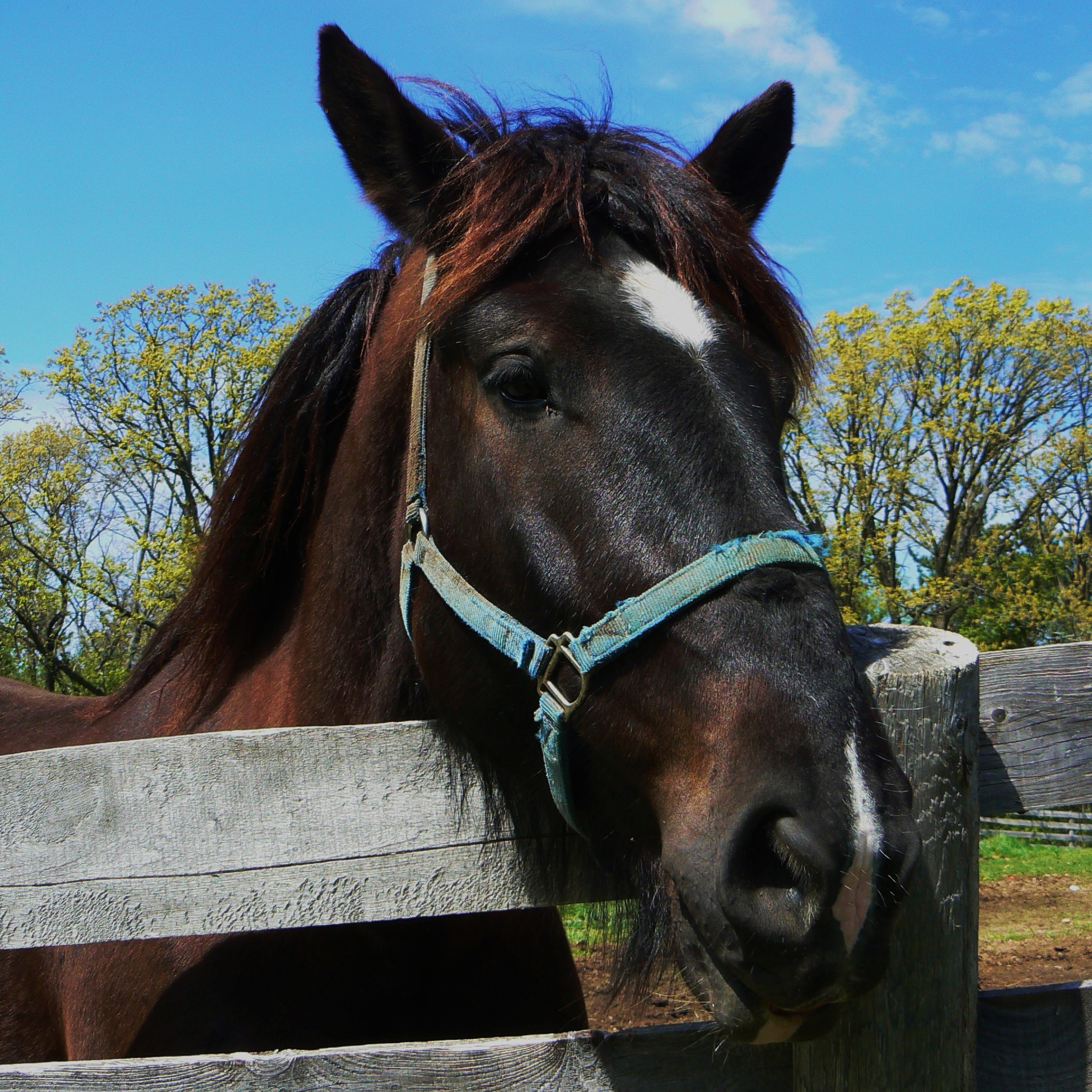
She and Quincy make up our team of Percherons.  Stud horses were brought over from Europe in the mid 19th century and bred with local mares to improve the stock of draft horses for heavy farm work.  I don’t know the pedigree of Queen and Quincy, but I imagine they’re crossbreeds.  What non-profit museum could afford purebreds?  They do a lot of wagon hauling in the harvest season, I think.  Kids love to see them, but they’re massive and a tad dangerous.  We have some quite elderly horses who provide the petting and photo opportunities for visitors with less risk.   Steve put his apple core in Queen’s feed box just about 20 minutes before I snapped this photo.  That may be why she’s giving me such a benevolent look.

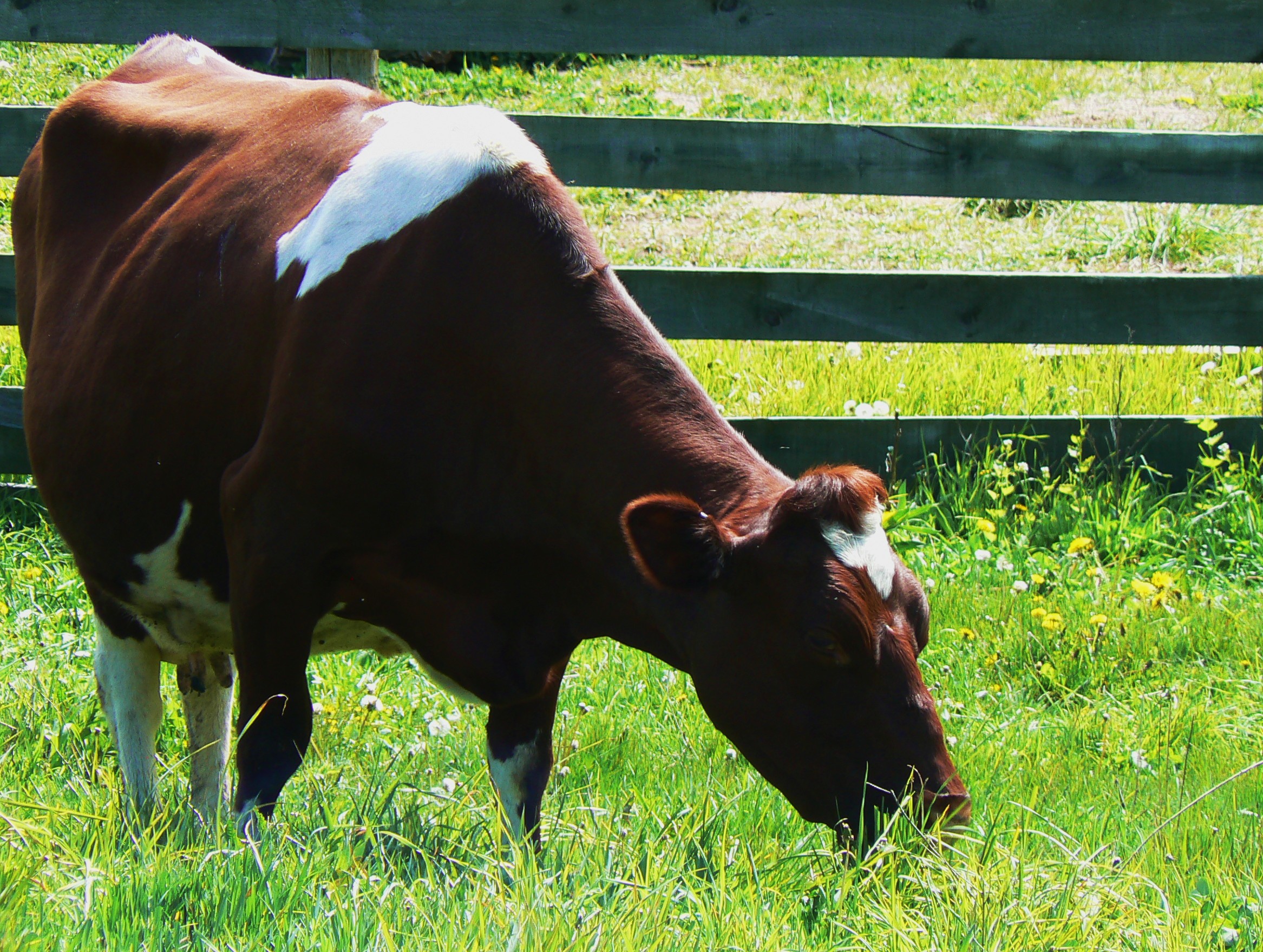
This is Lily.  She and her paddock mate Daisy (who was known last year as Thelma) are over in the Koepsell farm, where they are installing a new exhibit called Life on the Farm.  They’re erecting a petting barn for baby animals, and Lily will be used for milking after she’s calved.  Oh, yes.  She’s pregnant.  Look in her eyes and you can see the fatigue and determination of a heavily laden mother-to-be, can’t you?  She will be producing milk for our dairy demonstrations: cream separation, butter churning, cheese-making and such.  I am hoping to get the opportunity to milk her.  I used to milk goats at a camp when I was in college, and I really enjoyed it.  We milk by hand at OWW, of course.  It seems like a very intimate way to get to know another working mother.  Perhaps it will produce a beautiful friendship.  

  The pigs who will be in the piggery over in my area haven’t been moved onto the site yet.  One sow just gave birth to a litter of 7 about two weeks ago, and another is about to drop her litter any day.  The piglets are still too young and the weather too cool, but I will get a batch in a few weeks, I imagine.  I’ve been instructed to name them things like “Bacon” and “Hammie” if anyone asks.  Hog butchering is one of our autumn events. 

I am very excited about working with these creatures.  I want to be more aware of my anthropocentric mindset and challenge myself to think outside of that box.  I wonder about the relationships we have with animals and the domination that we assume in those relationships.  I expect that there is a lot more to discover than what we are used to or instructed to consider.     

Unknown's avatar

Field Trips

Today was another great day of training at Old World Wisconsin.  School groups are coming tomorrow!  Today I learned how to use a wood burning stove.  I made a fire in both the stove and the bake oven and made coffee and creamed bratwurst on the stove.  The rest of the crew from the German area came over for lunch bringing fried potatoes and caramelized turnips to complete our lunch.  It was so satisfying to play hostess knowing that I’m beginning to truly feel at home in that way of life.  I offered tin cups of hot coffee to the menfolk, and chairs to the most senior members of the group.  I swept the floor after everyone left, did the dishes, and then had about an hour completely on my own to read up on the history of the buildings and to begin to darn some wool socks.   When I returned to the training facility at the end of the day, my costumes were ready for me to try on.  I have one for my role in the farmhouse and one for my role as the organist at the Catholic Church in the village.  I get to wear a hooped bustle and a fancy hat with a hatpin for that one! 

I feel like I’m being paid to cook over a campfire…I usually have to pay for that privilege!  I need to practice up on my school group presentation for tomorrow.  No poetry tonight, sorry!

Unknown's avatar

Inheriting a Homestead

I spent several hours today in the homestead that I will demonstrate and interpret for visitors to Old World Wisconsin.  Tomorrow I will learn to light a fire in the cookstove and the bake oven and actually cook something.   The house and land was purchased by Adam Schottler, an immigrant from southern Germany who had a larger farm nearby.  He rented the house out until his son Matthias was married, and then he gave his son and daughter-in-law the property.   The Wisconsin Historical Society acquired the house and a few other buildings from the period, and assembled them together to form a homestead for the museum.  The restoration date targeted is 1875.  At that time, Matthias and Caroline Schottler had 2 children.  They had 11 children total during their marriage.  Here’s a photo that shows the zigzag fence, the granary and pig pen, the barn, the summer kitchen (or bake house), and behind it, the house.  The granary, summer kitchen, and house are all one behind the other in this photo, so you can’t see much of them.  The wooden crossbar frame standing outside is for butchering hogs (which we’ll do in the fall).  The green field in the background is planted with ryeI am supposedly going to help make a rye straw basket, and to raise dough in it for rye bread, which I will bake in the bake kitchen oven…an oven that holds 24 loaves at a time!


I will also be busying myself chopping wood and gardening in order to prepare food in that summer kitchen.  Today I saw rhubarb and asparagus and currents and thyme and sage and rosemary and lemon balm and dill and horseradish already growing in the garden.  All of this produce is to be used on site during the season.  I don’t get to take any home, but I do get to help use it.  I have been wanting to learn more about how to “live off the land” for a while now, and this is going to be a great introduction, I think. 

Right now I’m learning all kinds of logistics to interpreting this area for school groups beginning a week from today, but I think of the feel of the sun on my cheeks and the 13-stripe ground squirrel that peeked into the kitchen today, and I imagine moments that I will have simply soaking up the homesteading life, pondering the way of a woman who worked hard, raised 11 children, and knew the land around her intimately.   What will I learn from her?  What appreciation and meaning will take root inside me?  Gratitude, a sense of life rooted and grounded, a hope for my own children to live honestly in the simple abundance of the earth?  It’s a connection that I’m eager to explore.

I apologize for leaving out a poetry challenge for today, but I am too sunburned and tired to concentrate on that today.  Tomorrow I have another early day out at the site.   I am looking forward to sleep!  And to getting my costume….more to come!

Unknown's avatar

Dodging Art

What an amazing day!  Training at Old World Wisconsin included visits to the Animal Barn, the Garden curator, and the Collections curator.  I met two oxen, each weighing a ton, and stroked their noses and chins.  I was introduced to three horses who are each in their 90s in “people years”.  I saw a sow who had given birth for the first time just this week and her seven pink little piglets.   Oh, how their little faces captivated me (and made me wish I’d brought my camera)!  I visited a greenhouse full of tiny sprouting seeds which will become food and decor to an entire community, a future rooted in the present and informed by the past.  I browsed through shelves of antique artifacts that illustrate the lives and time of people whose stories encompass miles of external and internal territory.  So much to take in, visually, mentally, physically and spiritually!  I came home to my usual tasks of dinner and chores and a phone call from my darling youngest…and now I’m sitting at my computer and entering this century of technology for the first time today.  It feels kinda weird!  I can only imagine how this feeling will intensify as I spend more time in the Old World. 

I have one more week of the poetry challenge from NaPoWriMo to complete, and already I can tell that it’s not going to be easy to be in the mood to concentrate on composing verse each day after training!  Still, I hope to have a little time to dabble in the word pond.  Today’s prompt is to write an “ekphrastic” poem, a graphic description of a work of art.  “Ode on a Grecian Urn” is a famous one.  I went through some art photos that I had collected for a game I invented, and this one caught my eye.  It’s a self-portrait by Van Gogh.  Here’s the picture and the poem, and then I think I’ll call it a day here in the 21st century and get ready to go back 150 years again tomorrow!

Freckled, wistful world

Speckled, swirling molecules

Boundaries camouflaged

Fits and bits punctuating disappearance

Addled, dappled, sparks in the dark

Furtive sideways glance to the canvas

Back to dabbing, daubing, repetition

Poking at the flat reality

Testing the surface, then

Bouncing off again

Unknown's avatar

The End of an Exciting Day

For my second day of training at Old World Wisconsin, I got to finally get away from paperwork and training videos and get on site to see the historical buildings where I’ll be a costumed interpreter.  I gotta tell you, I AM SO EXCITED!!!!  My first stop was to see St. Peter’s Catholic Church in the Yankee Village area.   This church was built in 1839 and has a wood stove right smack dab in the middle of the center aisle of the nave.  No bridal procession is gonna get around that sucker!  One of my jobs will be to pull the rope on the carillon to start and end the day.  Swingin’!  I also got to play the pump organ.  I have never even attempted this kind of feat before today.  It was a bit like trying to pat my head and rub my stomach at the same time, as my feet had to keep the bellows going while my fingers worked out the four-part harmony, but I managed to squeeze my way through a verse of Amazing Grace without too much difficulty.  What fun!  After some consideration, I realize that hymn is probably not Catholic, although it may be from the right period.  I still have so much research and learning to do!

I had to cut my time in the Village short and ride up to the German immigrant area to see the place I’ll be working on week days and with school groups.  It’s an 1870s farm with a two-story house, bake house (or summer kitchen), granary, pig barn, regular barn, smoke house and three garden plots.  I will be the interpreter for all these areas.  I will be making bread in the big brick oven (it goes back about 8 feet!), tending the garden, keeping an eye on the pigs so they don’t escape, chopping wood with a mallet and froe, greeting guests and inviting them to interact with the place.  Oh, so much fun going on!  AND, I got fitted for my corset today!  I can hardly stand it!!

Came home to turn my computer on for the first time and saw more than a dozen e-mails.  Then I checked the poetry prompt for the day.   It looks like fun, but frankly, I’m too pooped to poet.  I have so much homework to do, so many questions to answer about the world I am stepping into.  Instead, I will leave you with these sunset shots from our trip to the Mississippi and let you think about settlers moving west into the unknown.  Why is history important… in the big picture?  Why is experience important?  Why is it important to share experiences through stories?