Unknown's avatar

Sap Rising

Yesterday I went to another Maple Sugar presentation training.  This one was a “Living History” demonstration.  A theater veteran of 35 years took on the persona of “Amos” and told the kindergarteners how he would go with his father and grandfather, beginning at the age of 10, into the woods for a month every year to make maple syrup. When the daytime temperatures are above freezing and the nighttime temperatures still dip below, the sap starts rising in the trees.  We’ve had some very warm nights now, and the leaf buds may already be popping, which means our maple syrup season has been shortened by several weeks.  Once the leaves come out, the sap turns bitter.  It takes about 40 gallons of sap to make a gallon of syrup.  You have to keep your fires going continually to boil it down.  One hundred years ago, it wasn’t unusual for a farm to have 700 taps going at once, so collection and boiling was an intense process.  The kids got pulled out of school and lived in the Sugarbush camp while the sap was running; they spent their time making spiles (spouts), tending fires, collecting buckets and stirring buckets of boiling sap.  And they didn’t bathe the whole time!  (Kindergarteners get a kick out of hearing that!)  For extra energy during the work day, they kept a chunk of Jack Wax in their pockets.  This is maple syrup that has been poured out on some clean snow and frozen into a hard candy.  The kindergarteners got to do a taste test, comparing real maple syrup with two different pancake syrups, and sampling maple sugar clinging to a Popsicle stick.  Real maple syrup is not as sweet and sticky as the high fructose corn syrup blends, and it has a more distinctive flavor.  It’s delicious, but it’s expensive because it is very labor intensive to produce.  Here’s another little factoid: squirrels like maple sap.  They climb into the tops of the trees and bite off the end of a twig and just lick away at the running sap.  I have yet to see this, but I’m hoping I might catch my little friend in the sugar maple outside my bedroom window doing just that.

The trails were very muddy out there in the woods, but the moss was very green.  Spring is in the air!

Boiling the sap over a walnut & hickory fire

Just to reassure you, tapping trees for maple syrup doesn’t hurt the tree.  The bark scabs over and the tree keeps producing plenty of sap to stay alive.  Trees that are big enough to hug (36-45 inches in circumference) are big enough to tap…and then to thank with a appreciative embrace!   Enjoy your neck of the woods, wherever you are!

Unknown's avatar

Process, Procedure, Product, and Practice OR Fail Before You Bail

I’m in the midst of a baking day.  Steve’s Aunt asked me to bake two different kinds of cookies to mail to her nephew out of state.  I was happy to participate in producing a care package.  I like caring, even if I don’t know the person.  The first recipe was written out on an index card with rather sketchy instructions.  For instance, nowhere did it suggest how long to cook them!  These are rolled and filled cookies.  I’ve never attempted anything like that before in my life, nor have I witnessed anyone else’s attempt, nor had I seen a representation of the final product.   But for some reason, I decided to plow ahead and do my best using my intuition.  Only after they were out of the oven did I look around online for images.  I wasn’t too far off, I guess, but I know I’d make some changes next time.   “But what have you learned, Dorothy?”

Edible, I suppose

I’ve learned that this kind of thing teaches me a lot about myself.  There was one point in the procedure when my brain did actually shoot off an almost audible “F*** this!” and I felt like quitting.   I have a perfectionist streak in me that easily loses patience.  I suppose that things should go smoothly if I’m doing them right.  When things stop going smoothly, I’m in danger of failing, and this is where the perfectionist wants to bail.  I often go to this conclusion even before I’ve begun a job.  I see this tendency dangling from various branches  in my family tree.  But I figure that if I continue to live this way, I am going to eliminate a lot of experiences prematurely and end up not doing much with the time I have left.   So I might as well just roll up my sleeves and dive in.

I think we live in a culture of “professionalism” and “experts” that contributes to this kind of self-elimination.  How often are we told that we can’t do something because we’re not qualified, we don’t have the skills, we don’t have the right background, or we don’t have the resources and we simply give up on the idea?  Only a charlatan would continue to try to do something he hasn’t been trained for!  But how do you get experience?  By trying something you’ve never done!  We get caught in the Catch-22 all the time, beginning as children, probably now more than ever.  If you haven’t had the 2-yr-old class on foreign languages, you’re not going to get into the right pre-school, and if you don’t get into the right pre-school…(usw)…you won’t get into Harvard!  Gone are the days when a self-taught person could go from a log cabin to the White House.   Now we think we’re not qualified to make improvements in our lives, in our communities, in our government, in our international relations, and we can’t solve global problems.   Well, maybe we actually can but we’ve eliminated the possibility prematurely because the feeling that things aren’t going smoothly is tempting us to bail before we fail.   If you’re going to bail, why not fail first so that you have an experience to learn from?  Or why not fail frequently and refuse to bail?

My kids are in their 20s now.  I hope they have the courage to fail many times.  I hope they don’t bail before they try something that interests them.  I hope I still have some of that left in my future as well.


Unknown's avatar

Unbelievable, Unseasonal

So, here it is, the last day of January in Wisconsin, and the temperature is….53 degrees Fahrenheit?!

Global warming is no hoax.

One of my Nature in the Parks programs for tomorrow was postponed because parents felt that the first of February would be too cold to send their darling children outside for a field trip.  They re-scheduled for the 29th of February.  What do you want to bet that tomorrow will be about 20 degrees warmer than the temperature by the end of the month?  Of course, you never know.  But don’t you think kids are resilient enough to be allowed to go outside every day of the year?  They pull on their snow pants, and they’re as protected as if they were wearing bubble wrap!  And they love it!  They dive headlong into any accumulated snow just so that they can bounce back!

Today’s group at the Wehr Nature Center didn’t go outside because they were doing the Skylab unit under the big inflated planetarium dome.  But I went out on the trails.  Here are some shots:

Mirror, mirror, on the lake


Sky Jellies


Grandmother Willow


Snow Boardwalk

I’ve been on the phone and on the computer for about three hours now, doing some “business”.  It’s time to go back outside, before the sun sets!

Toodles!


Unknown's avatar

27 years ago today – My Greatest Adventure began

I crossed a threshold.  My life was completely altered, impacted, and enhanced by a single event: I gave birth.  What that has taught me about myself, from biology to personal philosophy, and about the rest of the world by extension, might fill a future book.  Today, I’ll just touch on a few categories.

Biology – I was 21 when I got pregnant, 22 when I gave birth.  I weighed about 105 lbs. starting out and 128 lbs. at delivery.  Baby Sooz weighed 7 lbs. 4 oz.  I had never experienced so much physical change in so short a time, and each new symptom and sign astonished me.   I remember looking at myself in a full length mirror and thinking that I looked like a road map, every vein in bright blue following the landscape of my pregnant body.  Weird!  I read every bit of literature the doctor handed me with utter fascination, and photographs of babies in utero by Lennart Nilsson kept me spellbound for hours.

Family – My mother had given birth just 11 years before me, and that had been the most exciting thing in my life at the time.  I would rush home from school every day to play with the baby.  I read all the baby magazines that came in the weekly diaper service delivery.  At 22, I wanted to be as confident, as devoted, as blissful a mother as I found my own mother to be.   My father helped me pick a name.  I had originally intended to name my first daughter after my sister who had died at 20, but then, the thought of using that name all the time for another person began to seem odd.  Then my father told me that he dreamed about a little girl named Susan, and that name sounded just right with my sister’s name following.  And, of course, she got my husband’s Italian last name to add the exotic touch.  First grandchild on both sides.  Three generations assembled for her baptism.  A whole lot of expectation going on.

Personality – Just after delivery, I was wheeled to the recovery room with the baby in my arms.  The baby.  Susan.  Not my baby, not my daughter, not my family’s latest addition.  Susan.  A person I had just met.  She had a bunch of dark hair on the top of her head.  My husband and I were blonde.  I looked into her completely alert brown eyes and told her, “I love you.”  It was a conscious act of will.  She hadn’t done anything, yet.  I didn’t feel anything, yet.  I was stating my intent for our relationship, for my own benefit.  I don’t think anyone else was paying attention.  I wanted to start things off with a pledge to her, and I wanted to leave room for her to be herself.  I remember being conscious of that position when I spoke to her for the first time.  I love that she has been teaching me about who she is ever since.

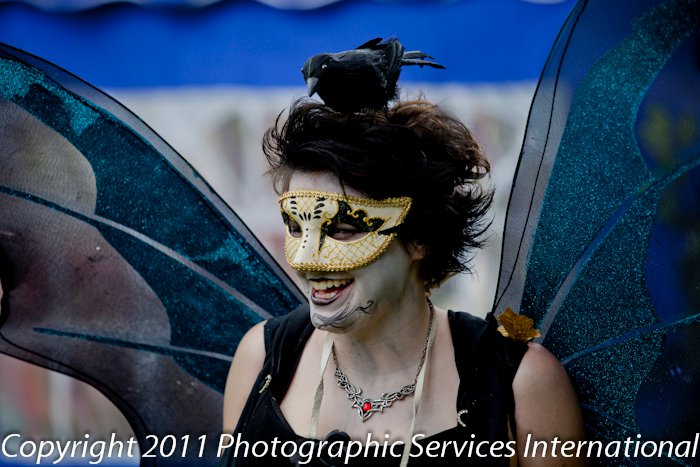
As Tenebrous at The Faerie Festival

Education – Showing a young person the world for the first time is an absolute joy – a shared joy, too.  I’ve always loved teaching.  I’ve always loved learning.  To have the opportunity to engage enthusiastically with new experiences day after day is the greatest part of parenting, I think.  Language acquisition, scientific experiment, art, music, dance, games, literature….oh, wow!  The truth is, I was afraid to take her out into the world outside much.  We lived in a rather nasty section of Southern California.  I didn’t feel safe in the neighborhood, so we spent a lot of time indoors, truthfully.  I did take her to my college town a few miles away for outdoor exploration pretty regularly, though.  What I remember is a lot of time together looking at books and that when a friend asked to test her IQ just out of curiosity, her gross motor skill were the only ones that weren’t advanced for her age.  So, she’s not an athlete.  But, man, does she read!

Literature – My father delighted in bringing literature into her life.  When she was able to sound out words of three letters just before her third birthday, he wrote her little stories containing only words of three letters or less.   He sent her cassette tapes of family readings of Dr. Seuss books and various musical selections.  We visited the children’s library every week and took home as much as we could carry.  Very early, it was Richard Scarry for vocabulary, Peter Spier for detailed illustrations to talk about, A.A. Milne for poetry and stories.  Later, I remember going through all of Dr. Seuss and Bill Peet and Chris Van Allsburg and Steven Kellogg and Robert McCloskey because it was quicker to just find their stuff all at once and check out…this was when I had younger kids in tow.  Then the day I knew would come finally did.  She surpassed me.  Her reading speed and voracity and curiosity outstripped mine.  She read Stephen King’s It at the age of 9.  I hadn’t read it, and I didn’t want to read it.  She was on her own.  (Not that she didn’t do that earlier; she probably did.  But this was the one I remembered.)

Psychology – This section would require her approval and collaboration.  Suffice it to say that we have learned a lot together about who we are, who others are, and how to be in relationship.  We have always “gotten along”, though, and shared a remarkable honesty.  As adults, we really enjoy each other’s company and we genuinely like each other.  We stimulate each other in all sorts of ways…like sharing a history that enables us to reference entire concepts and discussions with one or two words.

I think that our first conversation was prophetic:

“I love you.”

*brown eyes alert, gazing back, positive*

Stay tuned for Sunday’s blog, where I’ll probably write about how we celebrated her birthday in Madison the night before….
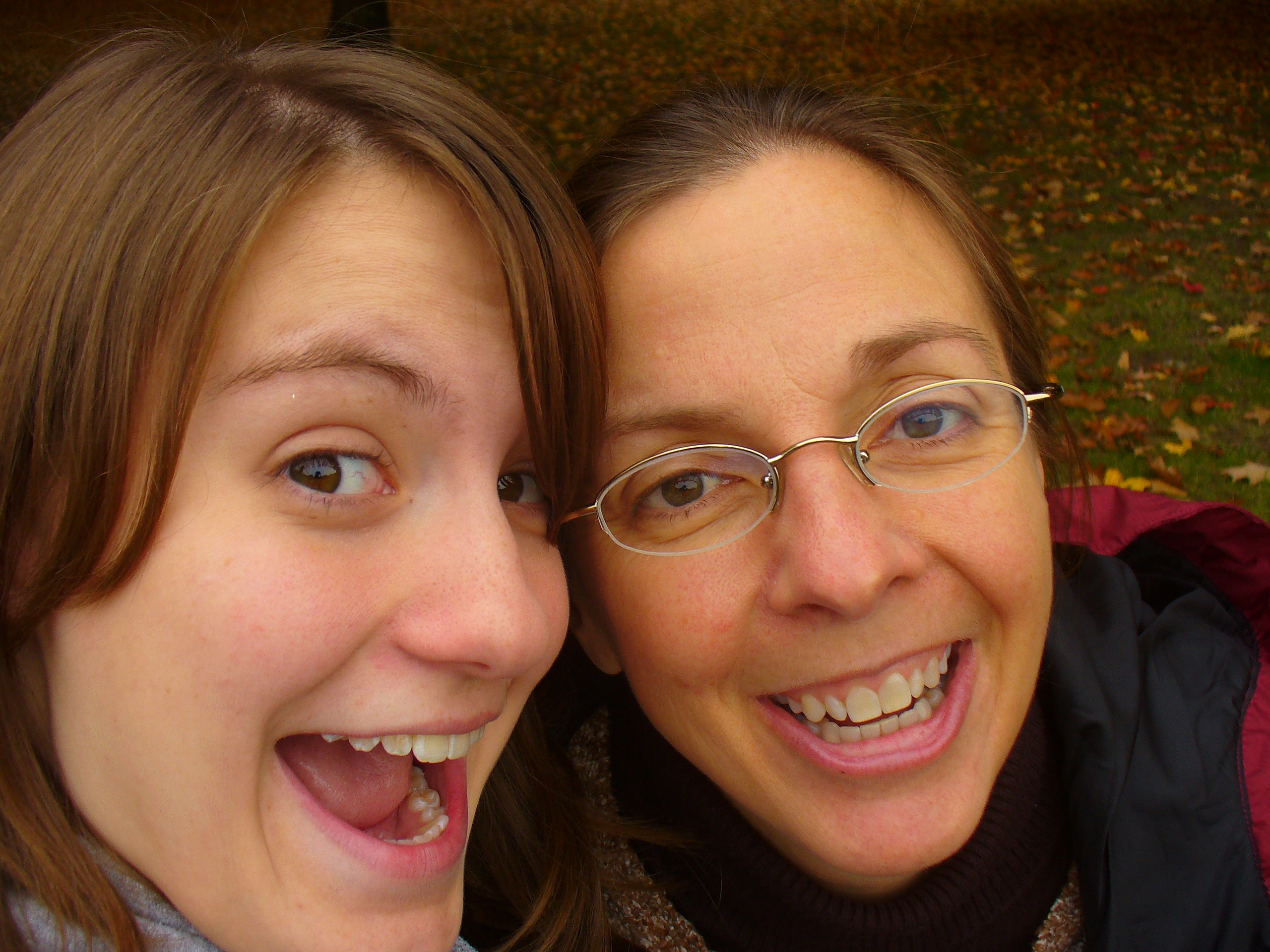
one of those arm's-length self-portraits she took of us on our road trip to Massachusetts

Unknown's avatar

Parenting On the Dotted Line and Over the Rainbow

Steve & I borrowed a DVD from the library called “Between the Folds”.  It’s a documentary about origami, but not just the decorative, brightly-colored little figures that school kids make.   It’s about science and mathematics and art and exploring the fusion of all those disciplines.  To learn more, click here.  One of the fascinating paper-folders interviewed is Erik Demaine, “an associate professor of electrical engineering and computer science at the Massachusetts Institute of Technology. Called one of the most brilliant scientists in America by Popular Science, he received a MacArthur Genius Fellowship at the age of 22. Demaine’s work combines science and art, geometry, paper folding and computational origami.”  The interview also includes footage of him with his dad, who apparently home-schooled him as a single parent and prepared him to enter college at the age of 12.  These two bear a touching family resemblance of soft-spoken, constantly smiling Geekdom, complete with pony-tails, facial hair and glasses.  It is obvious that they have enjoyed sharing a couple of decades exploring the world with bright-eyed curiosity.

I also happened upon a Mom Blog called RaisingMyRainbow.  Its blurb reads: “Adventures in raising a slightly effeminate, possibly gay, totally fabulous son.”  Her son is 4 years old.  She writes with wit and whimsy and a very open attitude, chronicling how their family navigates what seems to be a mainstream suburban life with an emerging non-mainstream human being.  It seems very honest to me, no agenda, no axe to grind, no added drama, just very loving and willing to engage with what arises.

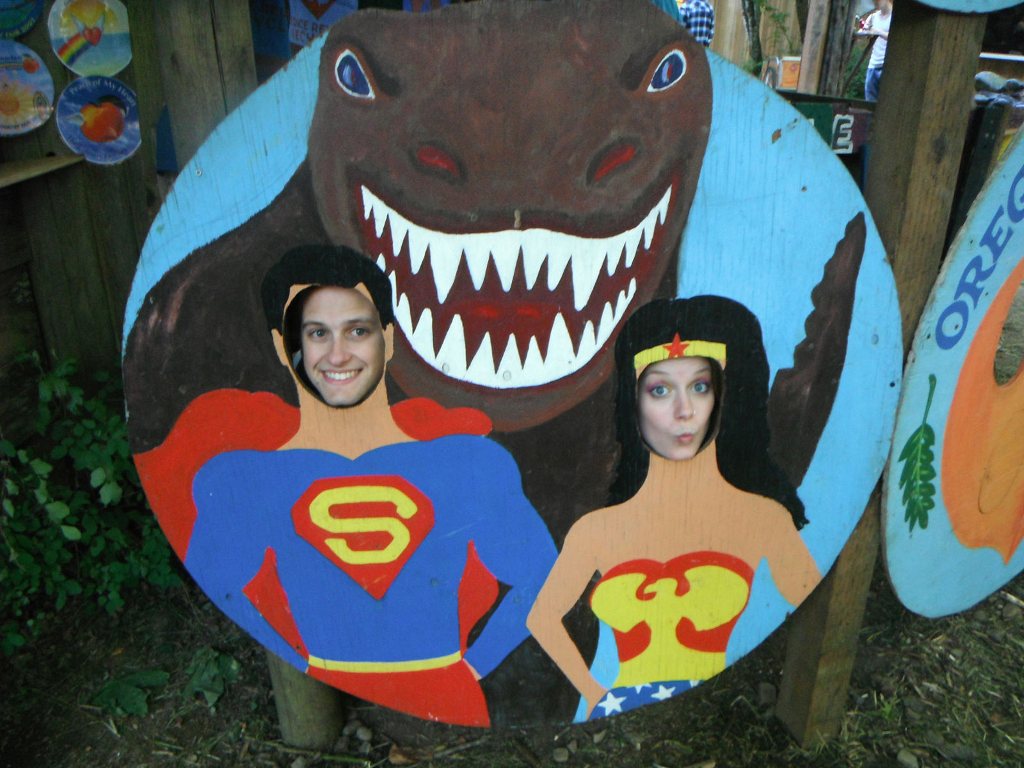
Super Kids (photo by Joe Griessler)

I am inspired by this kind of parenting, and I want this to be what I pass on to my children.  My own kids are already in their 20s, though.  But I figure it’s never too late to model something positive.  After all, they may be parents themselves some day.  My parenting models were quite limited.  Growing up in the 60s & 70s, I didn’t know one kid whose parents were divorced until I got to High School.  My dad’s own parents were divorced, but he never talked about that.  My best friend’s parents had been divorced from previous marriages, but that didn’t seem to impact their family life when I knew him.  I got the strong impression that there was a ‘right way’ and a ‘wrong way’ to do everything, and the ‘wrong way’ was to be avoided at all costs.  Consequently, I complied and conformed and walked the narrow way.  It wasn’t a bad response, but it wasn’t necessarily the right response or the only reasonable response.  The difficulties with my response became apparent as my circle of awareness widened.  Other people were living other responses.  Do I tolerate, embrace, include or exclude those people?  What if some of those people are my own children?

“There are as many different ways to be a Christian as there are Christians”, my spiritual adviser told me one day.  He was a former Jesuit priest, born in India, married to a former nun, both still very active in the Catholic Church.  I couldn’t have been more astonished.  My father would never have said that.  There are as many different ways to be a parent as there are parents.  Those ways may be judged according to certain values.  To make any kind of distinctions, you really have to look at those values.  Do you value conformity?  Okay, then call it ‘conformity’.  Do you value love?  Okay, then look very closely at what you think ‘love’ is.  Does love punish?  Does love shame?  Does love reject?  Do you value certain beliefs that you respect?  Why do you respect them?  Because someone told you to?  Because they support something you’ve experienced?  There are so many good questions to consider, but it’s hard to find a safe place to consider them.  As a parent, I felt attacked, judged and defensive.  Competition crept into my parenting way too much.  I own those as my issues, but I also believe the suburban environment supported that.  Parental support groups I was in may have effectively reinforced the competition rather than offered support.

Hindsight.  I was 22 when I became a parent.  I didn’t think about a lot of this stuff beforehand.  However, I have four totally fabulous children nevertheless.   I give them credit; I give me and my husband credit; I give the Universe credit.   In general, if I lighten up on my ego, I can avoid creating stuff that’s FUBAR.  Instill wonder, curiosity, creativity.  Play alongside the kids, and step back.  We are all learning and growing up together, folding rainbows into the process.

Unknown's avatar

The Power of Concepts

Steve and I have been talking about concepts lately.  We humans think conceptually, like it or not.  Words, thoughts, concepts and the associations they suggest invariably bring with them emotional reactions and suffering.  Trying to leave concepts behind, or to do without them somehow, is what “enlightenment” points to…I think.  Maybe it’s not so much trying to eradicate them as it is to acknowledge their fabrication and refrain from investing them with a lot of meaning or credence.

The most troubling concept for me is death or mortality.  I have huge emotional associations with that concept that do tend to exert a lot of influence on me.  And yes, this causes suffering.  I suppose I can say that I come by this honestly, having had both my sister and my husband die at my side during my lifetime.  Consequently, I often feel the weight of a burden hanging around my head and shoulders, casting a shadow over my footsteps, causing me to be slow and rather plodding instead of eager and light on my feet.  You might call this a certain level of pervasive depression.  I find that, as I get older, I am more circumspect, less enthusiastic, and can easily convince myself out of an adventure.  I can never dismiss the danger of death with a casual “Oh, that’ll never happen to me!”  Instead, I tend to think: Why bother?  What’s the point?  Why start anything now, with the end so near in sight?  That kind of thing.

Let me direct your attention to Exhibit A:  Stephen Hawking.

As many of you know, Dr. Hawking celebrated his 70th birthday today.  When he was 21, and shortly before his first marriage, he was diagnosed with ALS (Lou Gehrig’s disease) and told that his life expectancy was about 2-3 years.  “Why start anything now?” was a question that occupied his thoughts to some extent as he wrestled with the idea of starting his doctorate.  Wikipedia reports that the turning point came with his marriage. “When his wife, Jane, was asked why she decided to marry a man with a three-year life expectancy, she responded, ‘Those were the days of atomic gloom and doom, so we all had a rather short life expectancy.”‘

We all still have a rather short life expectancy.  None of us has a guarantee on the next minute.  What do you do with that concept?  “Refrain from investing (it) with a lot of meaning or credence.”  What do you invest in?  Your passion.  Your bliss.  That’s what Stephen Hawking did.  The speech he would have delivered today in person included this admonition: “Remember to look up at the stars, not down at your feet. Try to make sense of what you see and wonder about what makes the universe exist. Be curious.”

I took a walk along the Ice Age Trail at dusk.  Driving home, I asked Steve to pull over at a cornfield so that I could look up.  Here’s what I saw:

And this is just with my own myopic vision through some vari-focal glasses and a point and shoot digital camera.  I am curious about my experiences.  I am curious about how I think about them.  In the end, though, I think I want to concentrate mostly on being aware of being alive.

Unknown's avatar

“Weasel”ing Out of This One

I enjoy feeling like a little kid.  Doing my training at the Nature Center affords me to opportunity to look wide-eyed and ask questions, blurt out associations that spring to mind, and sometimes just be the smart alec  in the front row.   I find myself pointing at things for the rest of the day, going “Oh!  Look at that!”  The world is amazing.  So, I’m just going to post some photos today as my way of poking you in the shoulder and saying, “Lookee, lookee!”

Guess what we learned about at the Nature Center?  Winter camouflage.  The short-tailed weasel becomes the ermine in winter.  He gets to change his name as well as his coat.

They're smaller than I thought, about 6 inches without the tail.

From my bedroom window, I can watch the sun set at about 5pm each evening.  Last night, we got some intense colors.  I wish I had a better camera.  I’d set up a tripod…maybe on the porch roof, looking west, and do a long exposure.

I found this poor Canada goose just off the sidewalk of a church.  I wonder if he fell from the sky or tried to land on the parking lot.  There’s no open water anywhere in the vicinity.

We ask our 3 year old class what the colors of winter are.  I always think of blue: sky blue, ice blue, pale blue.

And in the “they just don’t make ’em like they used to” category…

I’m going to go take my inner 4-year old outside again.  The sun is still shining, and we have very little snow.  Carpe Diem!

Unknown's avatar

Space in 3D

I went back to school today at the Wehr Nature Center for volunteer teacher training, and I finally figured out how the moon’s phases and eclipses are produced.  It took a hands-on experiment with a classroom of adults to finally get the concept across.  There was a bare light-bulb illuminated on a stand.  We all stood around in a circle, facing it.  Then we were each handed a four-inch Styrofoam ball on a stick.  This represented the moon.  We were the earth.  Placing the ball in front of us at arm’s length to block out the light from the bulb, we got the concept of a solar eclipse.  Moving the ball slightly so that the shadow no longer fell on our faces symbolizes the new moon.  Taking the “mooncicle” in an orbit to our left, we watched the crescent of light appear and grow larger until it reached the quarter moon position at a 90 degree angle.  Then, we circled it around until we were between the “moon” and the “sun”.  Our shadow cast on the moon is a lunar eclipse.  Eclipses don’t happen every month, because the moon’s orbit isn’t in synch like that.  Crescent on the left is waxing, crescent on the right is waning .  Got it.  Then our naturalist asked us, “Does the moon rotate?”  Um.  Well, there’s a dark side of the moon that we never see, so….no?  Wrong.  If the moon didn’t rotate, we’d see the dark side eventually.  Because the moon rotates just once every month, we always see its face.  Huh?  It wasn’t until two volunteers did a “do-Si-doe” maneuver and then an earth-facing cycle that I realized that the moon rotates in order to always face the earth.  Ah, the light dawns!!

Then we did an experiment that proved to me that learning about astronomy from a 2-dimensional textbook was not helpful!  We partnered up.  One person got a 4-inch ball for the earth.  One got a pom-pom sized ball for the moon.  We were asked to hold those objects at the distance we figured would represent a scale model of the actual distance the moon is away from the earth.  I eye-balled it at about 12 inches.  That’s what I remember from illustrations and posters.  We were then handed a piece of string that had been measure to the real scale.  I took my end and began walking.  I ended up 10 feet away.  In order to put that scale into a textbook, the dot for the moon would be too small for most kids to see.

Waxing Crescent

Here’s another little blip of information that I discovered.  During the month of August, my birth month, the predominant constellation visible in the southern sky is called Aquila.  Aquila means “eagle” and according to mythology, he was a pet of Jupiter and did many tasks for him (like continually attacking Prometheus while he was bound to a mountain side).  There is also a character in the Bible named Aquila.  He was the husband of Priscilla.  I wonder if my parents were aware of this ancient coincidence when they named their August girl Priscilla?

I could barely wait to get home and tell Steve what I learned.  I love school!


Unknown's avatar

Imagine That!

Do animals have imagination?  Do they think in concepts or toss ideas around?  Or is that strictly a human thing?

Animals have some pretty incredible artistic skills.  I think of weaver birds or bower birds, birds that display their expertise in foiling predators and attracting mates.  Does that indicate imagination?  Cats, chimps, elephants and others have created art with paintbrushes or paws dipped in colors.  Is that imagination?  Maybe.

What good is imagination?  Why is it a useful skill or a precious gift?

It keeps us from getting bored.  It motivates us to engage in possibility.  It fuels hope.  But I suppose it could also be said that it fuels depression or despair.  So, it’s a tool that we have in our skull-shaped kit box.  We can use it however we want.  We get to be creators.  And it’s free.  You don’t need electricity to run it; you don’t have to have an account or a password.  This is one of the greatest gadgets ever!  Do we celebrate it?  Encourage it?  Teach it?  Or do we try to corral it, censor it, mold it, sterilize it?  Well, historically we have done all of these, to be truthful.  What have you done with yours lately?  Do you have a secret place where you put the workings of your imagination?  A journal, a sketchbook, a doodle pad, a workbench, a tape recorder, a music staff, a photo album?  Do you unwrap these presents for yourself sometimes?

When I was in college, I worked summers at a Christian camp.  I was in charge of the arts & crafts area.  It was called “Imagination”.  Over the doorway in blue paint and gold glitter, the name hung like a talisman.  Each day, I wondered which kid was going to come in and blow my mind with something s/he created.  I remember one tall, skinny, shy kid with a speech disorder, named Devin.  He was 14.  He would come in and look bored.  I gave him some clay and googly eyes.  He joked around, embarrassed, and then made a pretty good likeness of E.T. from that summer’s most popular movie.   The next day, five campers came into the shop asking if they could make an E.T. head.  Not that the art was original, it was completely derivative.   But the idea to create something started a fad, like the kids were just waiting for someone to allow them to explore their own imaginations.

Steve came up with a book from his bookstore collection called Artful Jesters by Nicholas Roukes.  “Innovators of Visual Wit and Humor” it says.  Here’s the cover:

The artwork is by Willie Cole; it’s called “Burning Hot I – Sunbeam iron with yellow and red feathers”.  I would love to raid all the recycling containers on my block, set up a workshop in my garage, and make “Imagination” come to life again.  I’d invite all those shy, awkward kids and the ones who pay too much for entertainment, and see if they’d engage in this wonderful ability we humans seem to have inherited from somewhere.  We are co-creators in this world.  It’s a pretty nifty gig.  I appreciate all my blogging friends, my musician friends, artists, knitters, chefs, actors, gardeners, sculptors, photographers, architects, designers…thanks for opening up your shops and showing us it can be done.

Unknown's avatar

A Magical Bond

Last night we watched Werner Herzog’s film “Grizzly Man”, an amazing documentary featuring Timothy Treadwell’s video footage of grizzly bears in Alaska.  He spent 13 summers among them, mostly alone, and eventually he and his girlfriend were attacked and eaten by one.   This man was quite a character — often childlike, flamboyant, furious, arrogant, gentle, fearless and completely whacked.  At the core, though, he seemed to be straining toward a connection he deeply valued.  He wanted to bond with the bears, he may have even imagined he could become a bear.  It approximates a desperately unrequited love.  His affection for them (and for the foxes that follow him around and play with him like puppies) is palpable, although sometimes articulated in a corny, self-help guru fashion.  “Thank you, Mr. Chocolate, for being my friend…”  Okay, Fred Rogers he’s not; more like Richard Simmons.  It’s kinda weird.  But, still, he loves them; he would rather die with them than be anywhere else.  The pristine wilderness shots convey the aching beauty of the ideal.  The close ups reveal more reality: flies cover the lens and buzz around the speaker without ceasing.  Then there’s the inherent danger.  Treadwell is aware of the risks he’s taking; he talks about them quite theatrically to the camera, but they do not seem important.

Is he nuts?  Is he an idealist?  Is he wrong?  Is he inspiring?  What do we tell our kids about such passions?

I led 4 small groups of Boy Scouts on nature hikes this morning.  They were earning their Webelos Naturalist merit badge.  I had one directive: teach them about decomposers, producers, and consumers.  I added a goal of my own — introduce the Four As: awareness, appreciation, attitude, action.   For 10-year-olds, I thought this might fly.  I suppose I secretly hoped to see some of that childlike enthusiasm, the wonder and joy that can be ignited by spending a half hour on the trail.  Well, there weren’t many ‘Eureka!’ moments.  I forgot that boys can get more interested in hitting things with sticks and calling each other names than looking at mushrooms and picking up litter.   ‘Awareness’ to them meant “look out for things that could hurt you” instead of “look out for everything because the world is awesome!”  I think I may have impressed some of them by leading them to a decomposing deer carcass.  That may have provoked a “Cool!” from a few.  I wish I could do a one-on-one hike, take more time to slow down and eliminate some of the group social pressures, but these kids come with a program, so I only get one shot with a group of 8 for 30 minutes.   I wish I had taken more time to do this with my own 4 kids.

One thing to be aware of at Wehr

How do we bond with nature?  Will we ever fit in?  Are our brains just too big to allow us play nicely in the sandbox with the rest of the world?  Will we always be too distracted, too confused, too technological, too exploitative, too manipulative, too dominant, or too tasty?  I have to admit that to survive for 13 summers in Alaska among grizzlies is probably about the best record on that front.  Jane Goodall’s 45 years spent among chimpanzees is another monolithic example.   Will there be anyone like that in this next generation?  I can only hope…and volunteer to take as many as I can out on the trails.