

Tag Archives: history
It’s a Mystery
Geoffrey Rush’s voice must read the title of this post.
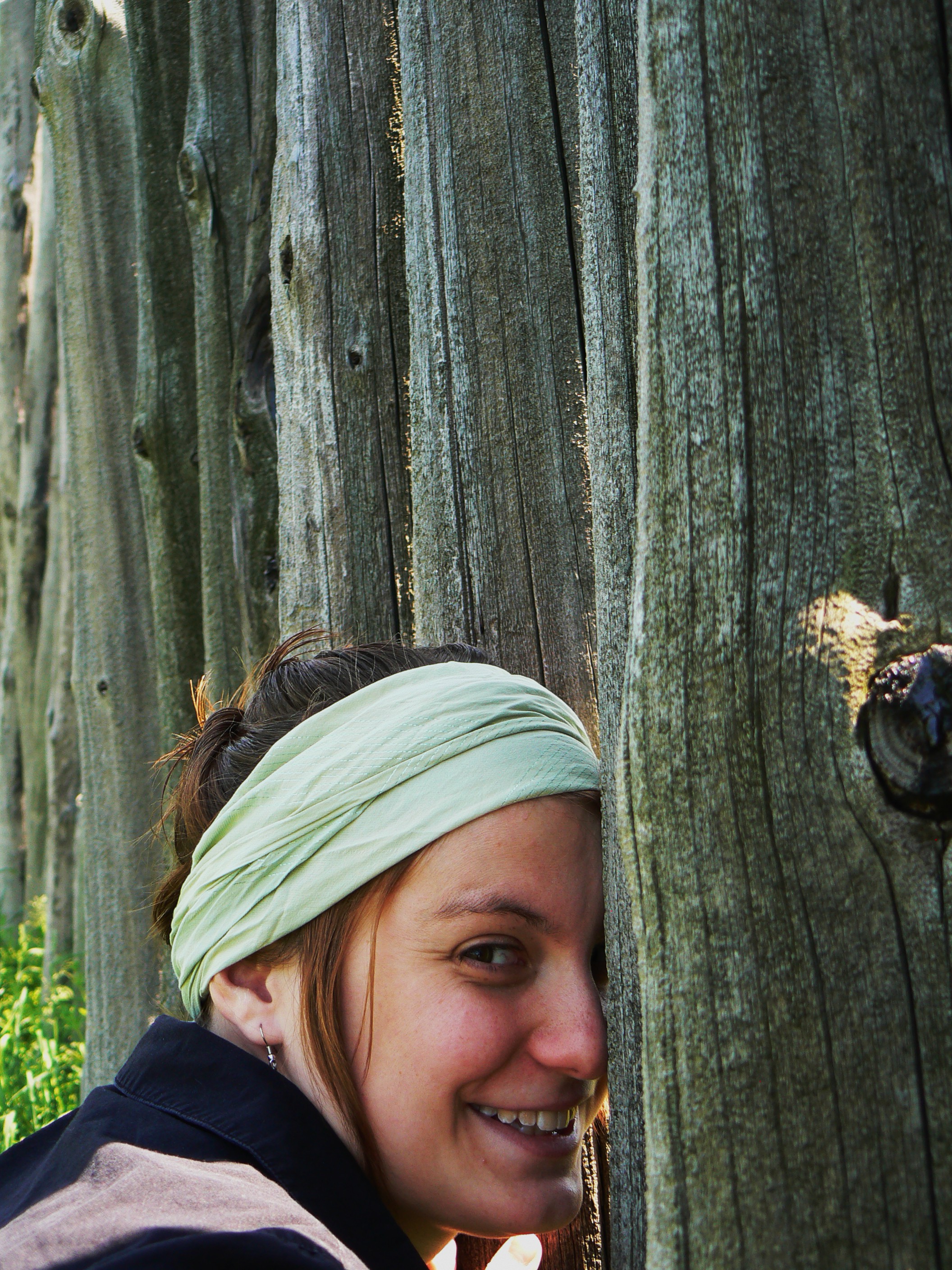
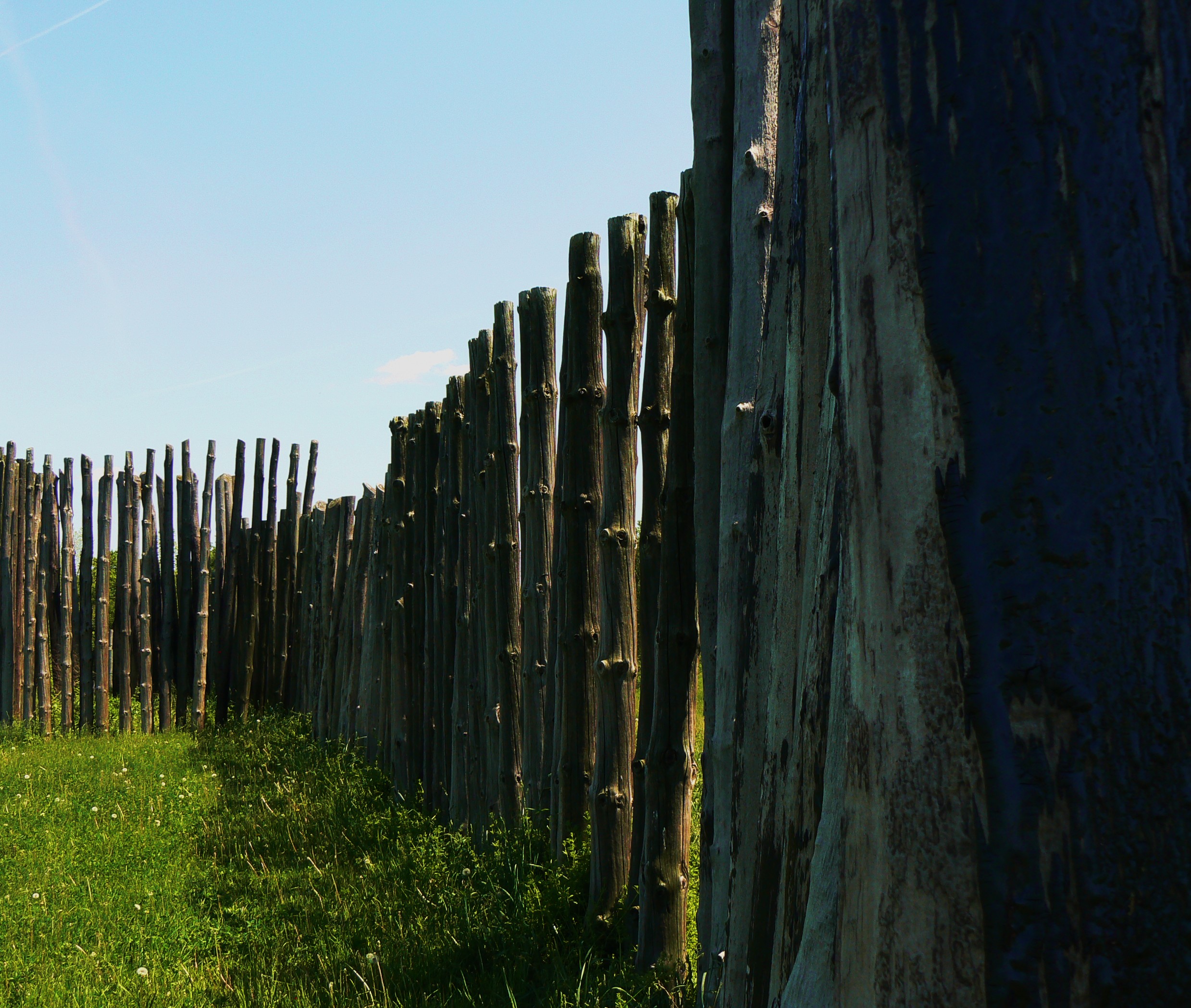
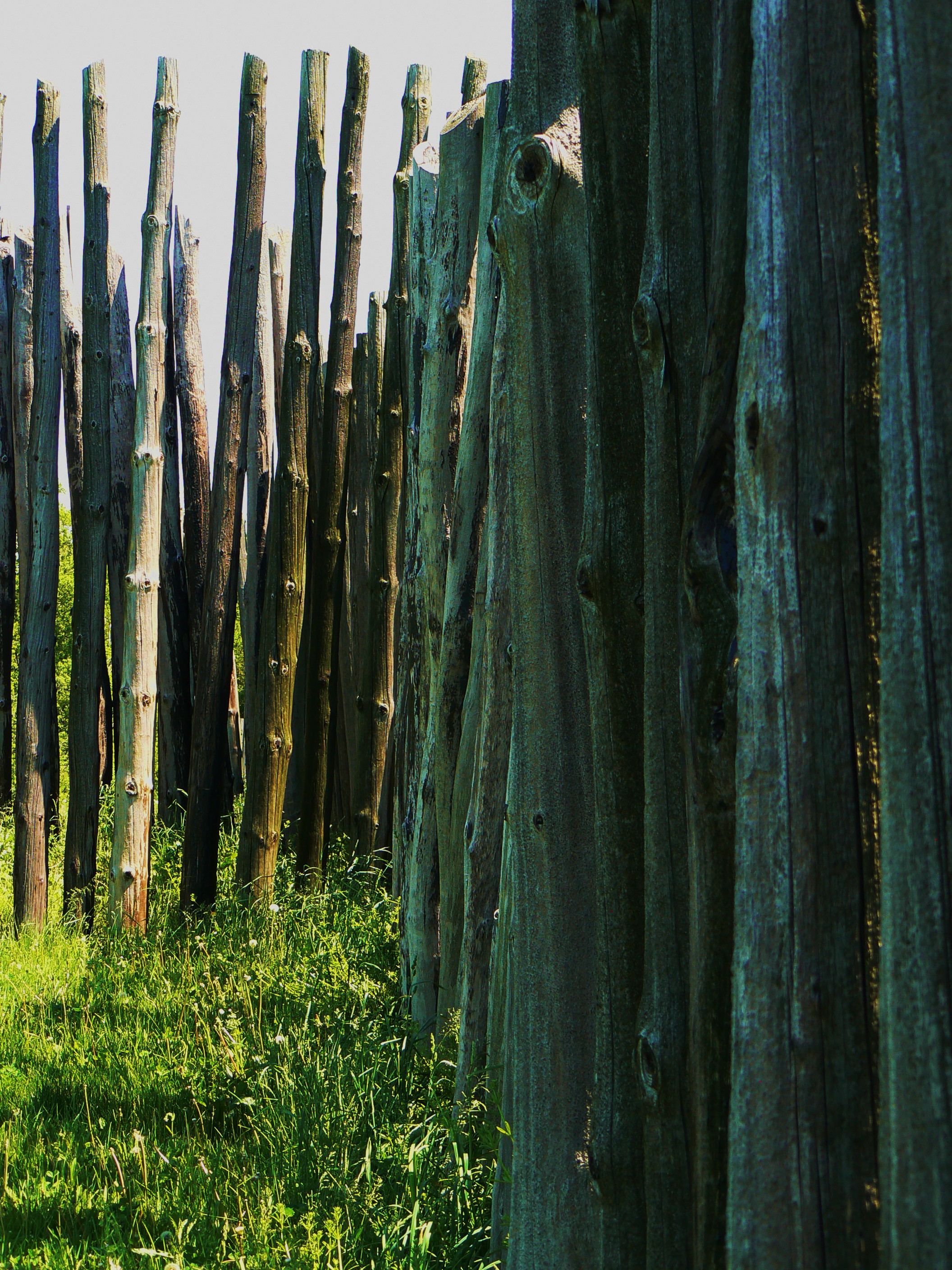
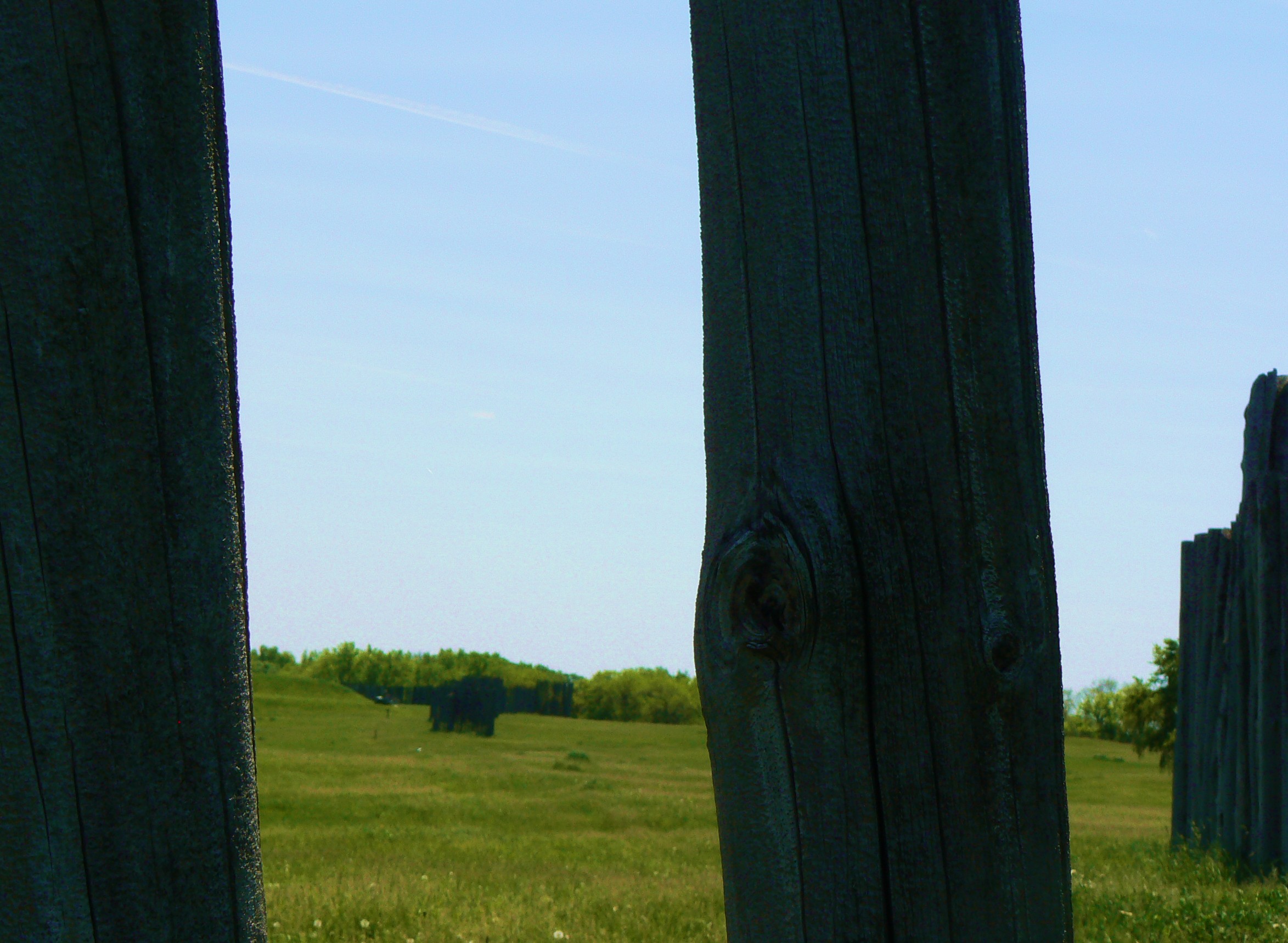
And here are the photo mysteries of the day: why are these posts sticking out of the ground? What are they for? Who put them there? When? I would love to get some sample conjectures. I am fascinated, as a historic interpreter, at the way we take clues and put them into the context of a story. So tell me the story of these…
How Old is Old?
I am trying to wrap my brain around history. As an interpreter at Old World Wisconsin, I talk about St. Peter’s Church, the first Catholic chapel & cathedral in Milwaukee, which was built in 1839. The liquid glass in the windows is rippled with age. Kids who come by can’t believe that the pump organ isn’t hooked up to speakers and that the stops don’t produce drum patterns or other synthetic sound loops when I pull the knobs. My blog friend, Stuart, is posting amazing photos of Gloucester Cathedral (you must pay a visit…click here to see his shots) built in 1350 or so. Stone masonry and stained glass and soaring vaults predating the little immigrant church by 500 years – shows you that history isn’t about straight-line ‘progress’, it’s a complicated story with twists and turns and explosions and annihilation thrown in. Then compare this photo of Mesa Verde in Colorado, a cliff dwelling inhabited somewhere between 600 and 1300 AD, most likely closer to 1200 AD.
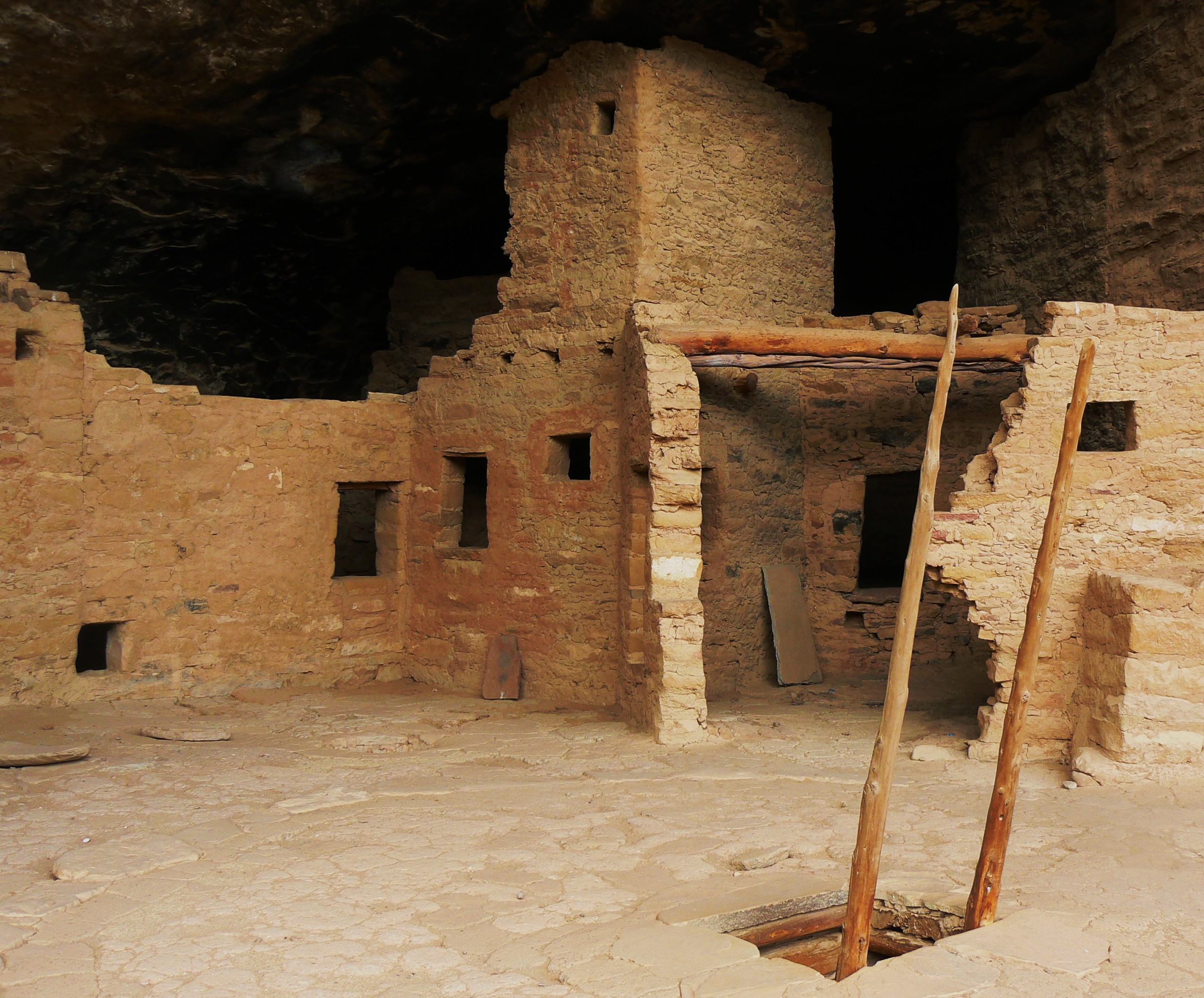
What we do with the raw materials at hand, the technology available and our cultural values is totally up to us. So much is possible. So much has always been possible. What are we doing today? How will our imprint appear in 500 years? It’s a lot to think about.
Draggin’ My Wagon
I had the first truly busy workday at Old World Wisconsin today, full of great surprises. The first was that a former co-worker showed up as a guest, with a motorcycle club from Willow Creek Church in Barrington. It was wonderful to see her and to have a group of 40 visitors from my old stomping grounds. What a contrast for them to be at St. Peter’s Church, though! Imagine, leather clad moderns stepping into a Catholic Chapel that was built in 1839. The church where they worship has 2 “sanctuaries” that hold some 13,000 people…balconies and upper balconies equipped with jumbo screens so that they can see the preacher or the lyrics of the worship song that a band is cranking out at how many volts? Here I am seated at the pump organ in my bustle playing for a congregation of 20. Quite a juxtaposition of growth. What is the value of history, of retaining some artifact or memory of a time before? Before growth, before technology, before the cultural shifts and changes that dominate our lives today? Steve suggests that an important value in our culture now is convenience. Willow Creek Church has a food court. You can get a pizza or a coffee or a host of other fast foods without even leaving the building. That’s convenient if you’re going from Worship to a class or meeting hosted there that same day. Was convenience an important value in the 19th century? I can bake 24 loaves of bread at one time in the bake oven at the Schottler farm. I suppose that’s convenience making headway. Also, I learned today that Sears Roebuck sold a Dixon Ticonderoga #2 pencil with a nickel clasped eraser at the end in 1905. You have your pencil lead and eraser on one tool, and you can order a box from the catalog and have it delivered to the train depot. Was that convenient? I suppose it was more convenient than whittling them by hand.
I like the feeling of being out chopping wood or trimming grass with a sickle around the homestead, and looking up to see the clouds or listen to a woodpecker. I think it’s convenient to be right there on the land so that any time I drop what I’m doing, I feel connected to the whole earth. Driving for a half hour away from the city to get to the country is not convenient.
Tomorrow, I’m back at St. Peter’s for another day of the Church Bazaar, the Temperance Rally and all the Women’s Work and Reform activities. Tonight, I am really tired! I’m draggin’ my wagon, and I’m off to bed now.

Another Day Behind the Rhubarb Curtain
One of my activities today was to string rhubarb up for drying. Dried rhubarb will keep for a while, and then you can boil it down for rhubarb sauce and pie later. So there are two strands of rhubarb hanging on the wall of the summer kitchen. Maybe in a week or two we’ll have enough for one of those super 70s-like door curtains, you know, the kind they made out of love beads? Do you suppose that’ll become a fashion trend? Okay, maybe not.
I opened the door to the stairs where we store our flour and sugar in plastic containers and our newspaper and matches for lighting the fire. Something smelled like death. Sitting next to the pile of newspapers is a “tin cat” – a metal mousetrap. I made a mental note to ask my supervisor to show me how to check it. I built a fire in the woodstove and in the bake oven. The smell was forgotten quickly as smoke billowed out the chimney. After fetching water and setting up some rinsing basins, I stepped outside to sit down and enjoy the sunshine. A black and white cat came ambling up the gravel path. He sniffed at the doorway into the summer kitchen, mewed at me a few times, and moved on. I wondered if he smelled a mouse. When my lead came by after lunch, I mentioned my suspicion to her, and she showed me how to open the trap. Sure enough, a dead mouse was inside. She wrapped it in a plastic bag and disposed of it in the trash, so as not to spread any more poison into the food chain. I apologized for asking her to perform such an unsavory task right after lunch, but she laughed it off with a comment about what she does to be paid the “really big bucks” at Old World Wisconsin.
A school tour group came by in three installments. I was surprised to see how many kids had brought phone cameras. I was also surprised that some of the teen girls didn’t want to knead the bread dough. What? Too squishy? Afraid to get your hands dirty? Don’t want to put down the camera? Whatever….
A homeschooling family of four arrived later, each with massive lenses and expensive camera equipment. They were taking pictures for our annual photo contest…for the eighth year. They had each won prizes in last years’ contest. The teenaged boys enjoyed chatting about the merits of Nikon vs. those of Canon and making “Saskquatch” prints in the garden. They snapped away as I opened the bake oven door and placed the 8 foot pile inside (the bread paddle). I wished them good luck in the contest and mentioned other great photo opportunities I had taken, like the oxen and the zigzag fence.
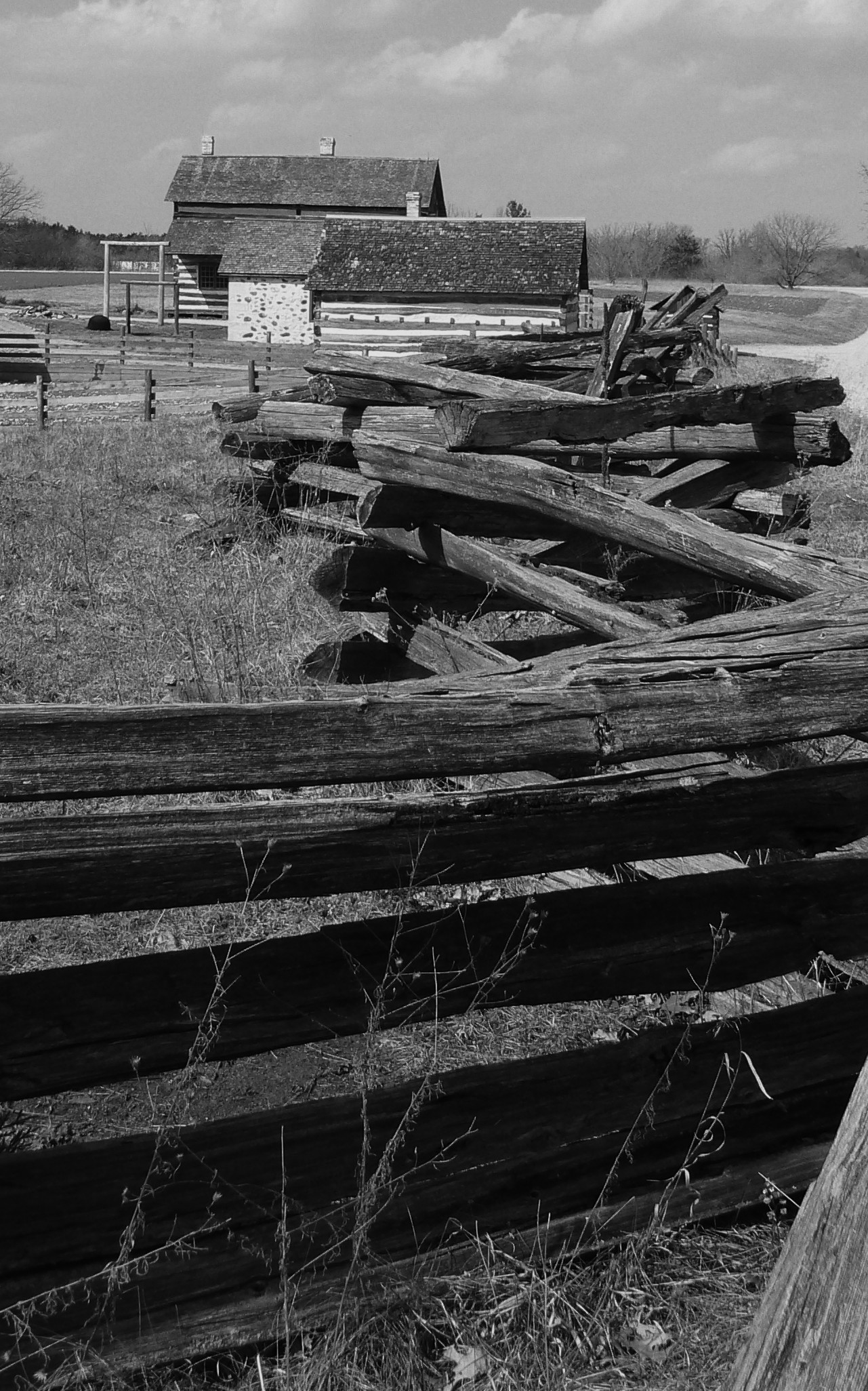
Cash prizes, folks! Photo contest reception is September 7. Come on by and take some pictures! And say “Guten tag!” to me!
Living Mystery
I am reading a book called After the Fire: The Destruction of the Lancaster County Amish by Randy-Michael Testa. Kirkus’ Review sums up the basics thus: “As a Harvard graduate student, former third-grade teacher at a Denver private school, and serious ethical thinker of Catholic persuasion and “morally tired” condition, Testa spent the summer of 1988 living with an Amish family in Lancaster County, where he conducted fieldwork for a Ph.D. thesis exploring a “community of faith”.”
Here is an excerpt that echoes all the discussions Steve & I have about living a life that embodies our values, a grounded life, a life of depth.
“…Dorothy Day once quoted from the Archbishop of Paris: ‘To be a witness does not consist in engaging in propaganda or even in stirring people up, but in being a living mystery; it means to live in such a way that one’s life would not make sense if God did not exist.’
“I stand barefooted thinking of Elam. Earlier in the week, he and I trooped across the Franklin and Marshall College campus to the library to look for some maps of the county. In lieu of classes, campus had been taken over for the summer. Everywhere there were boys in soccer gear and coaches in black shorts and white and black striped shirts blowing whistles and clapping their hands and yelling, ‘Atta boy! Good work! Good WORK!’
“Elam and I had just driven in from the farm. I had been up since five working in the sweltering barn, where I am regularly stung in the eyes by sweat rolling off my head. My white shirts are permanently stained yellow. I have gained ten pounds and back muscles. I sleep so soundly in the Stoltzfus house I sometimes awaken myself with my own snoring. So for all that, hearing the word ‘work’ in teh context of a soccer camp seemed like complete insanity.
“Elam turned to me and asked, ‘What is this?’
‘It’s a soccer camp,’ I said. I felt my soul tense.
‘What is ‘soccer’? Elam asked blank-faced.
‘It’s a sport. Like baseball.’ (I knew some Amish played baseball at family outings.) ‘These boys are here to learn how to play it better,’ I replied quickly.
‘But why? It’s a game,’ Elam said, puzzled.
‘These boys have paid money to come here to learn how to play a sport better,’ I repeated tersely.
‘But why would they go to school to learn a sport?’ he persisted.
‘Because the outside world doesn’t have or value productive, meaningful work for its young men, so it teaches them that it’s important to know how to play a sport well. This keeps them occupied until they go to college and THEN THEY PAY A LOT OF MONEY TO COME HERE AND ASK WHAT IS THE MEANING OF LIFE!!!’
“I practically turned on him- and my own world. I shocked Elam with my vehemence. I shocked myself as well. I wondered what was happening to my view of the world.
“Now, standing in Levi’s meadow in the middle of the night, suddenly I understand what has happened. At this hour, in this stillness, among these people, life makes perfect sense. The outside world does not. I have become a witness.
“I return to the upstairs bedroom as the blue mantel clock in Elam and Rachel’s room chimes three, and fall asleep to a cow lowing in the moonlight.”
To live in a way that embodies your deepest values, despite persecution, propaganda, and perspiration. That seems like an honest life to me. I hope I have the courage to live like that.

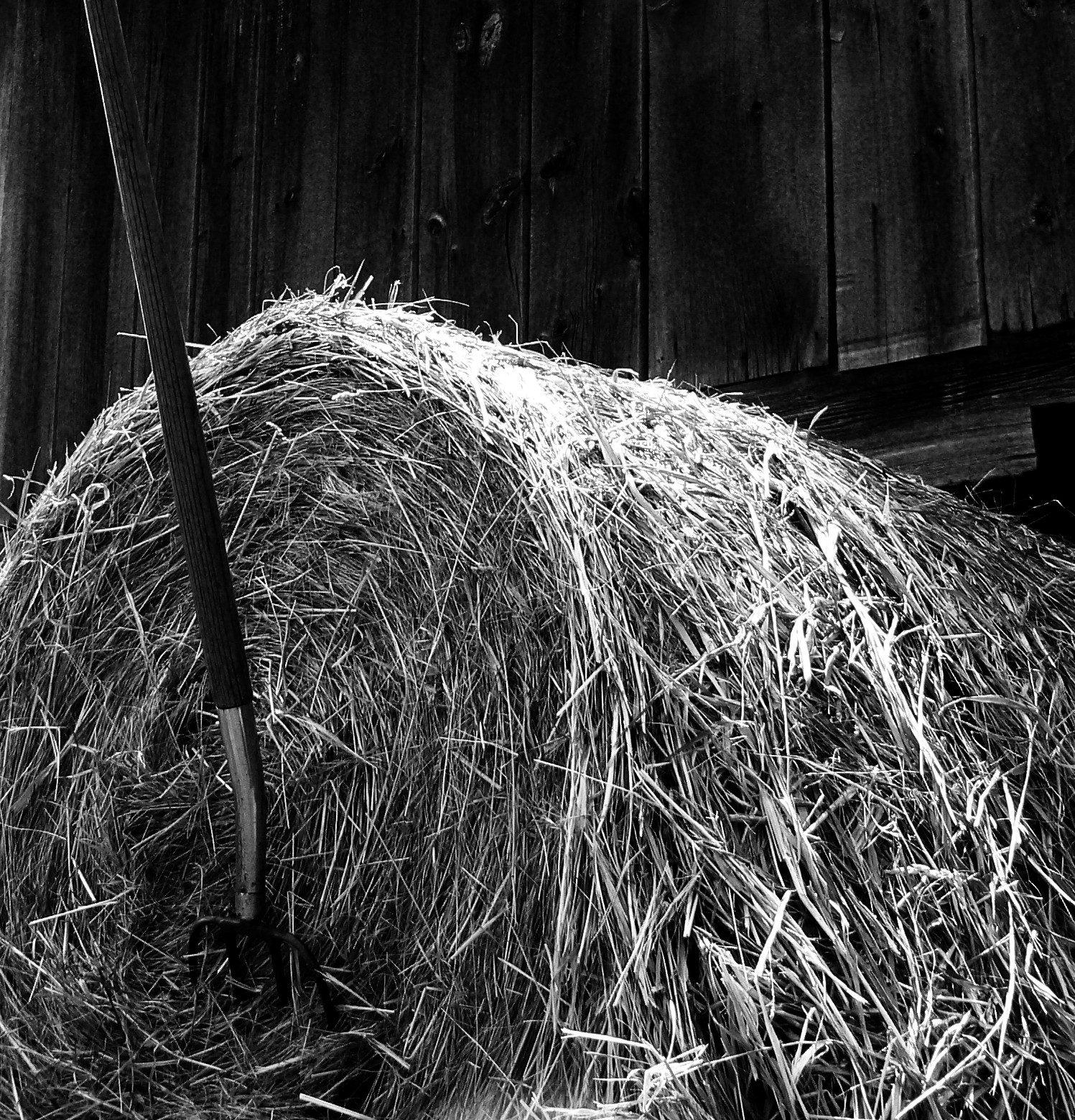
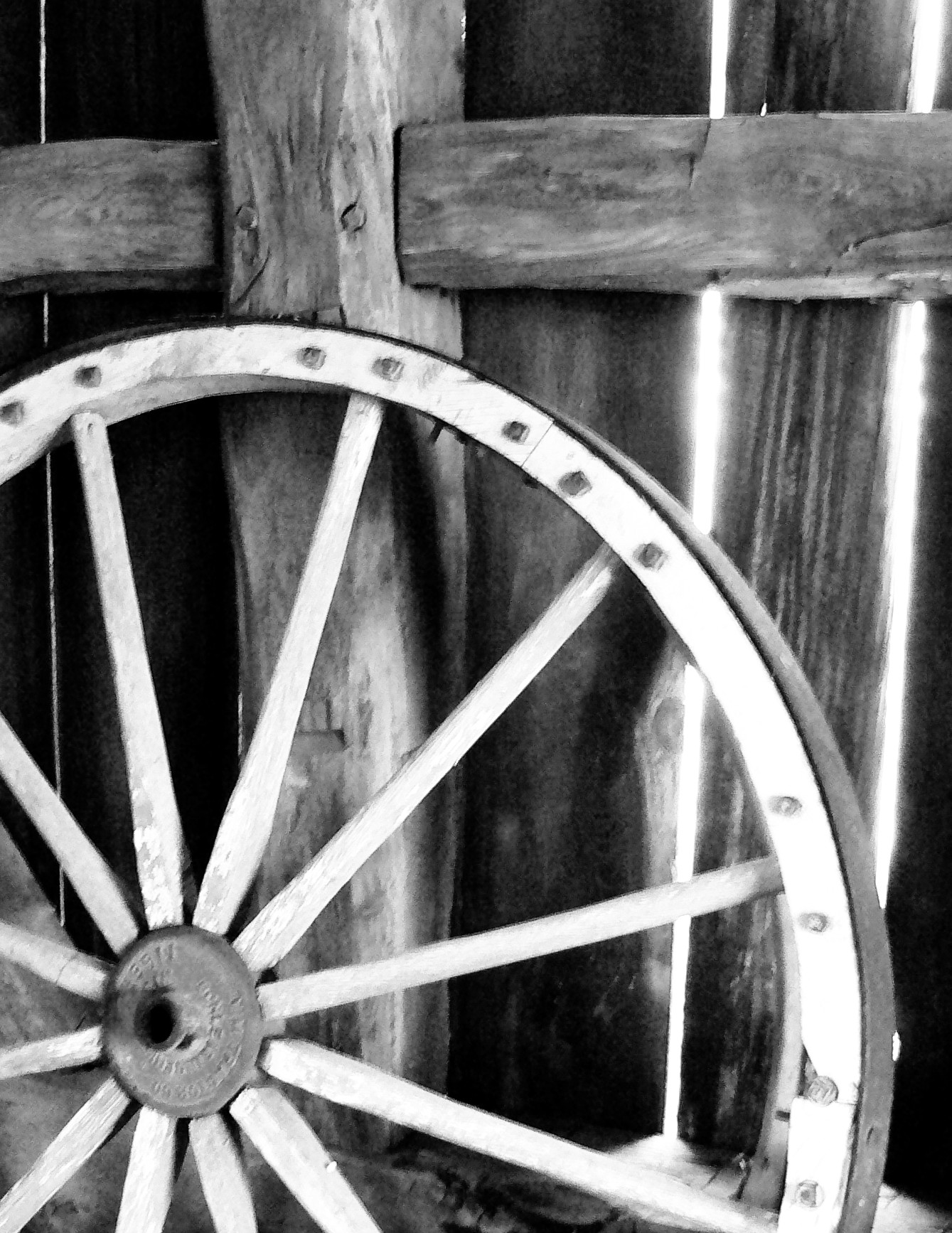
(photos taken at Old World Wisconsin, the living history museum where I work as a costumed interpreter)
The Melting Pot
One of the school boys doing a tour at the Schottler farm at Old World Wisconsin asked me, as he was working with rye dough, “Did they make pizzas?” I told him that pizza is an Italian food and that these German immigrants probably would have no idea what that was. This boy looked to be Hispanic. Would it be an epiphany for a 10 year old to look around at all the things that seem to be “normal” to his life and realize that they all came about in a particular way and have a particular story? How did pizza get to be part of life in America? Another kid said that he thought the dough smelled like beer. How did beer get to be part of life in America? Other kids said that they were making tortillas. Or pita bread.
I wonder what kind of connections they’re making….or not making. In 20-minute rotations through so many presentations and activities, what kind of sense are they making about all this converging and co-mingling history?
Migration, immigration and assimilation are fascinating. Everyone approaches it differently. Some people are very proud of their origins and hang on to ways of life and culture with a firm grip. Others push to assimilate as quickly as possible and let go of the old ways. Some have their culture systematically stripped from them, often under the pretense that it’s “for their own good”. Just tracking down how a family name has been changed can reveal a lot. Who changed it? Under what circumstance, and why?
I suppose the thing that I’m learning most is this: respect everyone’s history. We are all inter-connected, we all change each other.
I am thinking also today of the man who was my father-in-law for 24 years. Today would have been his 78th birthday. I carry his family name with me and intend to do so until I die. Maurice Galasso’s dad, Antonio, was born in Italy. He emigrated to the United States and eventually moved to the Monterrey Peninsula. Mo (as my father-in-law was called) recalled that his father had various jobs, for example, gelato vendor and dance instructor. Antonio died when Mo was only 7. As the “man of the house”, little Maurice was quite resourceful and ingenious. He eventually became a highly respected structural engineer and owned his own company. Their family story is full of struggle, creativity, serendipity, stubbornness and grace. As is, perhaps, everyone’s. The more I listen to stories, the more I understand about people, and the more compassionate I am capable of becoming. I want to honor Maurice Galasso today and thank him for the connections I have because of him.
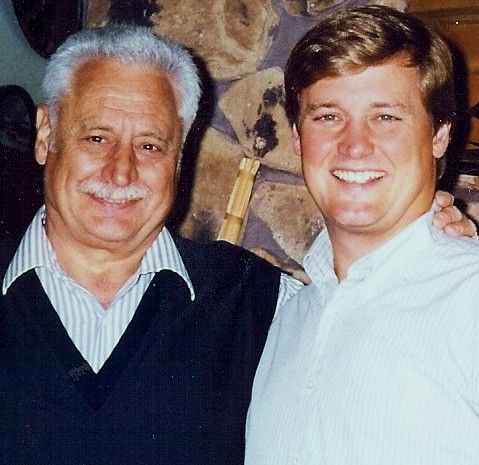
Maurice and his son, Jim Galasso

Mo and his Galasso grandchildren (my kids). Taken at the grave site after the interment of Jim’s ashes.
We Amid The Flood
It’s been pouring and thundering and lightning all day. The Bustle Hustle was cancelled, and I ended up waiting out the storm in the basement of 4-Mile Inn, which flooded. Rain went down those cellar steps and right into the staff room where we were sitting around chit-chatting. Out came the mops and buckets and dust bins…anything to scoop the water up. Suddenly the whimsical display of brightly colored swim fins and floaties and paddles someone had tacked to the back of the door made sense. When it let up a bit, I made the trek down the road to St. Peter’s under my umbrella. I didn’t stop to think that an umbrella isn’t wide enough to cover my enlarged behind! My bustle was soaking wet…on the outside. I didn’t feel it under all those petticoats, but when I sat on the pews, I left water marks. I needed to inject some humor into the situation, so I pumped up the organ and began to play “A Mighty Fortress is Our God”….a bulwark….our helper, He, amid the flood (of mortal ills prevailing). Visitors finally trickled in along with the rain, but I only had about ten in 5 hours.
I met some new volunteers and staff people in the course of the day, and enjoyed talking to them about dreams and lifestyles. How do you want to live? What are you finding important at this stage of your life? Many are retired or old enough to be. Hobby farms, family history, grandparenting and traveling were hot topics with this crowd. There are also the college students, who talk about classes and shopping at Good Will and how to survive on minimum wage. Most took cover under ground in the storm, a few stayed out on the porch to watch the power of nature in the sky. The horses turned their rear ends to the oncoming winds and whinnied a bit, but weathered the day in their own way.
I think about resilience, expectations and comfort. The immigrants whose stories we tell at Old World Wisconsin were of heartier stock than us 21st century types. They pushed across miles of unknowns without a “smart phone” to tell them where they were, what was ahead, and what the weather pattern was likely to be. They looked up and around, assessed the situation to the best of their ability, and went ahead. What happened…happened. They made their own fun, they solved problems with their own strength and wits, and they passed on what they could to their children. I like their spirit.
And when the rains come, “don’t forget to wear your rubbers!” (My mother’s voice echoes from my childhood…)

The Village People
Today was my first day as one of “The Village People” at Old World Wisconsin. I interpret St. Peter’s Church, built in 1839 as Milwaukee’s very first Roman Catholic chapel and cathedral. Only 7 years after the cornerstone was laid, the parish had grown from 20 members to 100 families and they began to construct a new cathedral to accommodate the growing population of Catholic immigrants. St. Peter’s was preserved and used for Sunday school, meetings, and a boys’ school (in the basement). It was also moved around (3 times), added to, and then restored to its original design. We acquired it in 1975 and restored it to its 1889 appearance. The wood stove is no longer used for heat; since we store some of our collections artifacts in the basement, we’ve updated to central heating. Still, it was chilly and damp today. Here’s the interior and a close up of the altar. The framed pieces are the Missal (service prayers) in Latin.
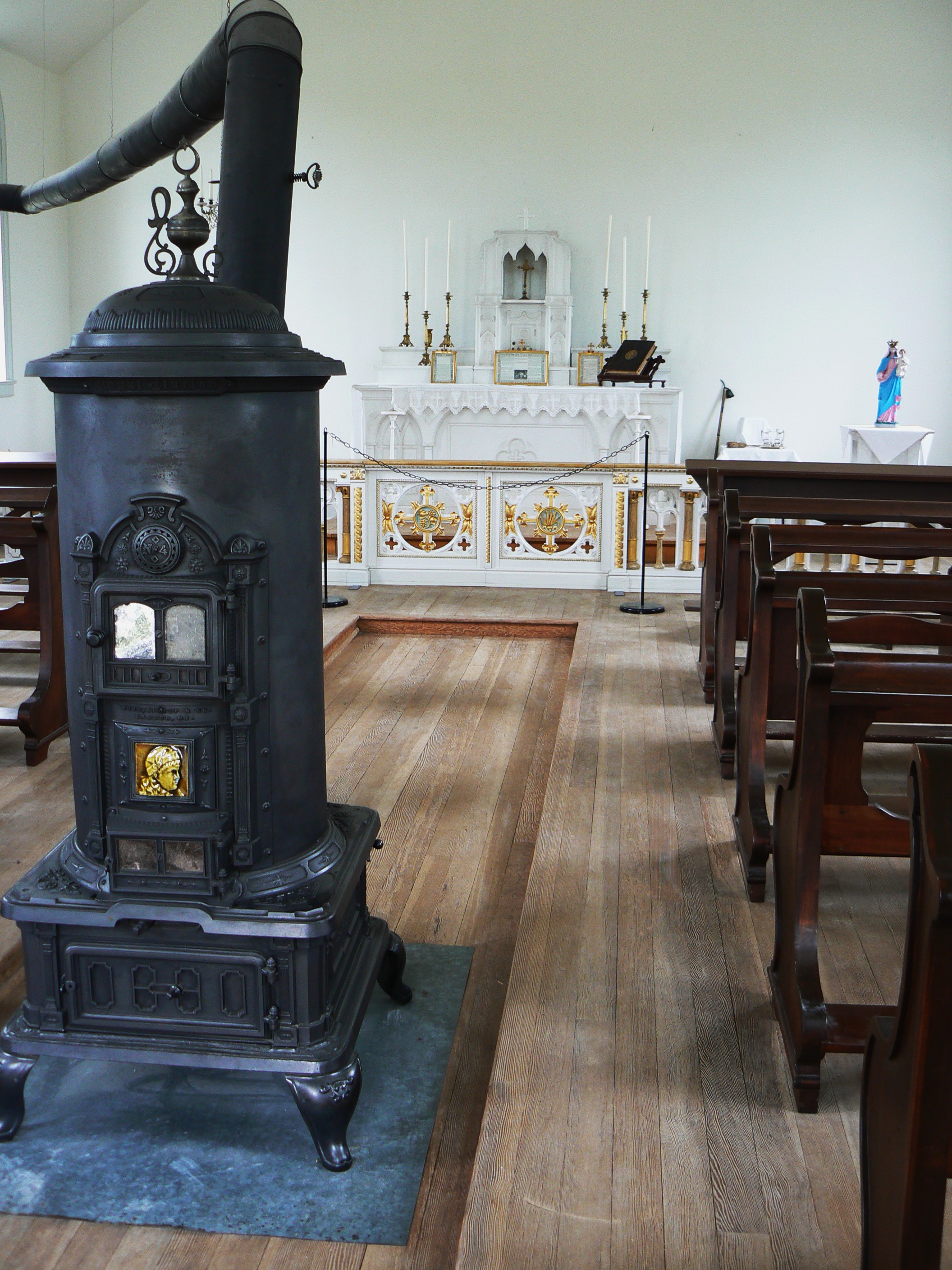

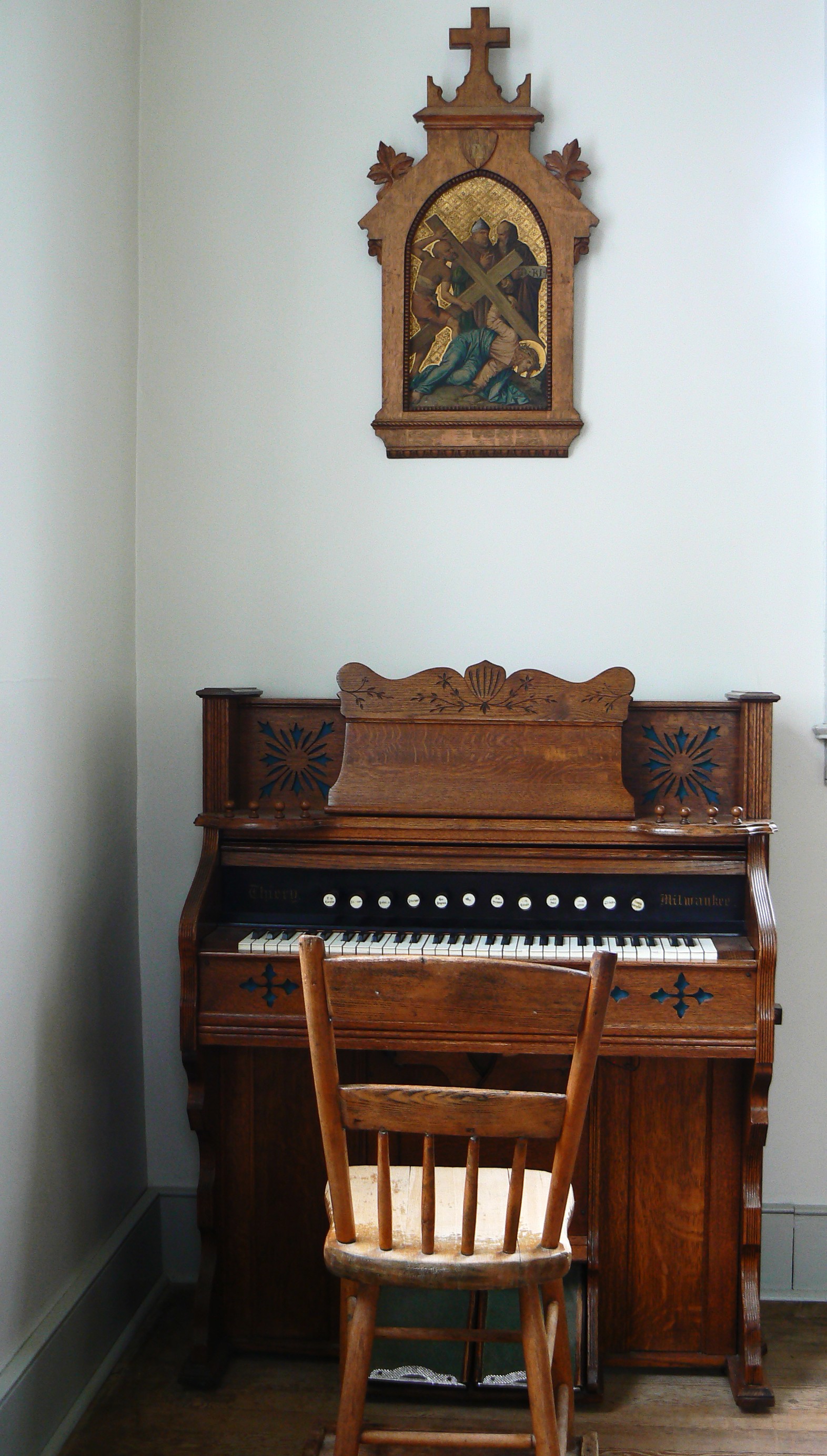
I hang out at the back of the church, stitching my pin cushion for the Christmas Bazaar or playing the pump organ. I am getting used to pumping with my feet, adding volume and overtones with my knees, and keeping all ten fingers busy on the keyboard. The organ is placed underneath one of fourteen Stations of the Cross displaying the German woodwork of that time.
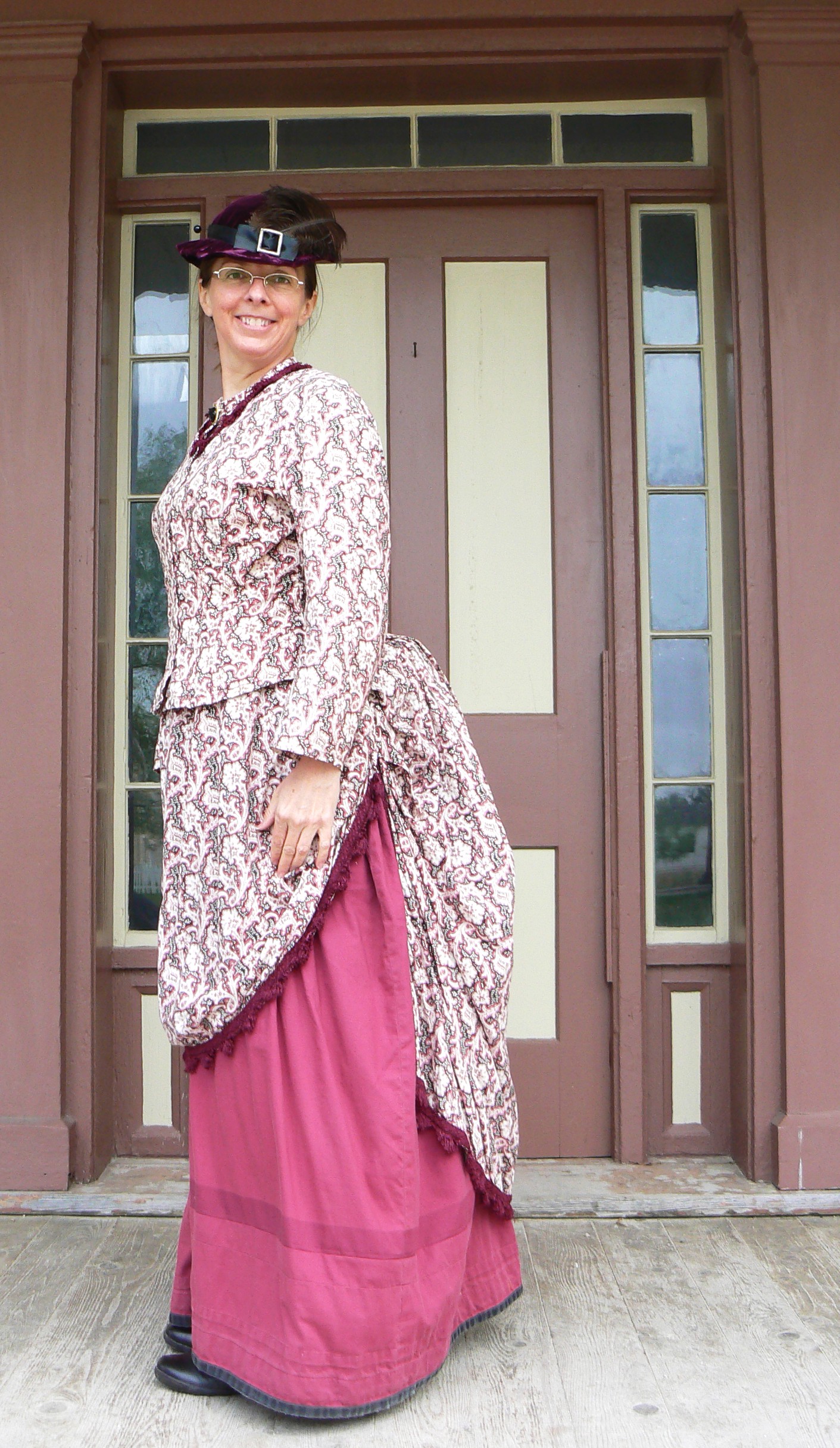
Of course, I sit on that little chair and play while in costume, complete with corset and bustle.
Tomorrow is the 5K Bustle Hustle, a run/walk event for all ages (children can do a 1K route). I will be cheering the participants on before taking my place in the church. So tonight, I am turning in early! Before I close, though, I have to share a photo of the most handsome man of The Village People standing outside The Wagon Shop.
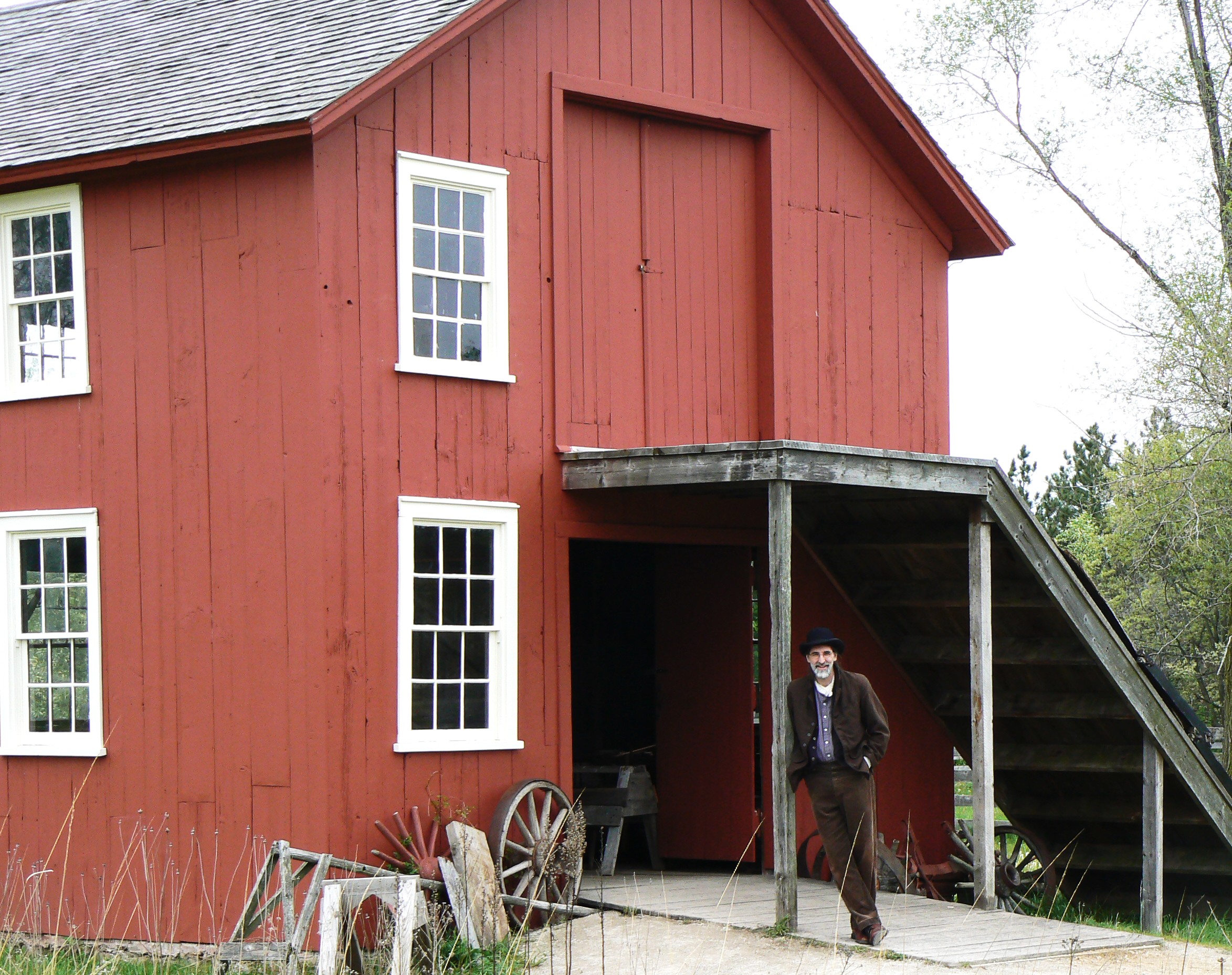
I said, “Young man! There’s a place you can go…”
Interiors
I’m back in the 21st century today, having breakfast with Steve’s mother, doing laundry at the laundromat, that kind of thing. My heart is still somewhere in the world of 150 years ago. The deep connection with the land is something that I miss in this century. I learned about the process of making linen from flax. It is a very complex procedure, actually. The fibers of the flax plant are like the phloem and xylem in a maple tree. They run from root to branch tips, and they are beneath the green outer husk and outside of the hard woody core. That corresponds to the sapwood in a tree that lies under the bark and around the heartwood. The flax is pulled up from the roots so as not to shorten those fibers. Then, it’s placed in running water or on dewy ground to rot away the green outer husk. This can take a month. Next, you take it to the threshing floor of the barn to break up the woody chaff. There are a few different machines that aid in that step. Combing the strands through a nail board leaves long hanks of golden fibers and short curly bits that are stuck in the spikes, which is called tow. That’s where we get expressions about flaxen hair and towheads. The fibers are wound on a distaff for spinning; tow can be spun like wool. I’d never tried spinning before. It’s a lot more difficult than it looks at first!

Thatched roof barn
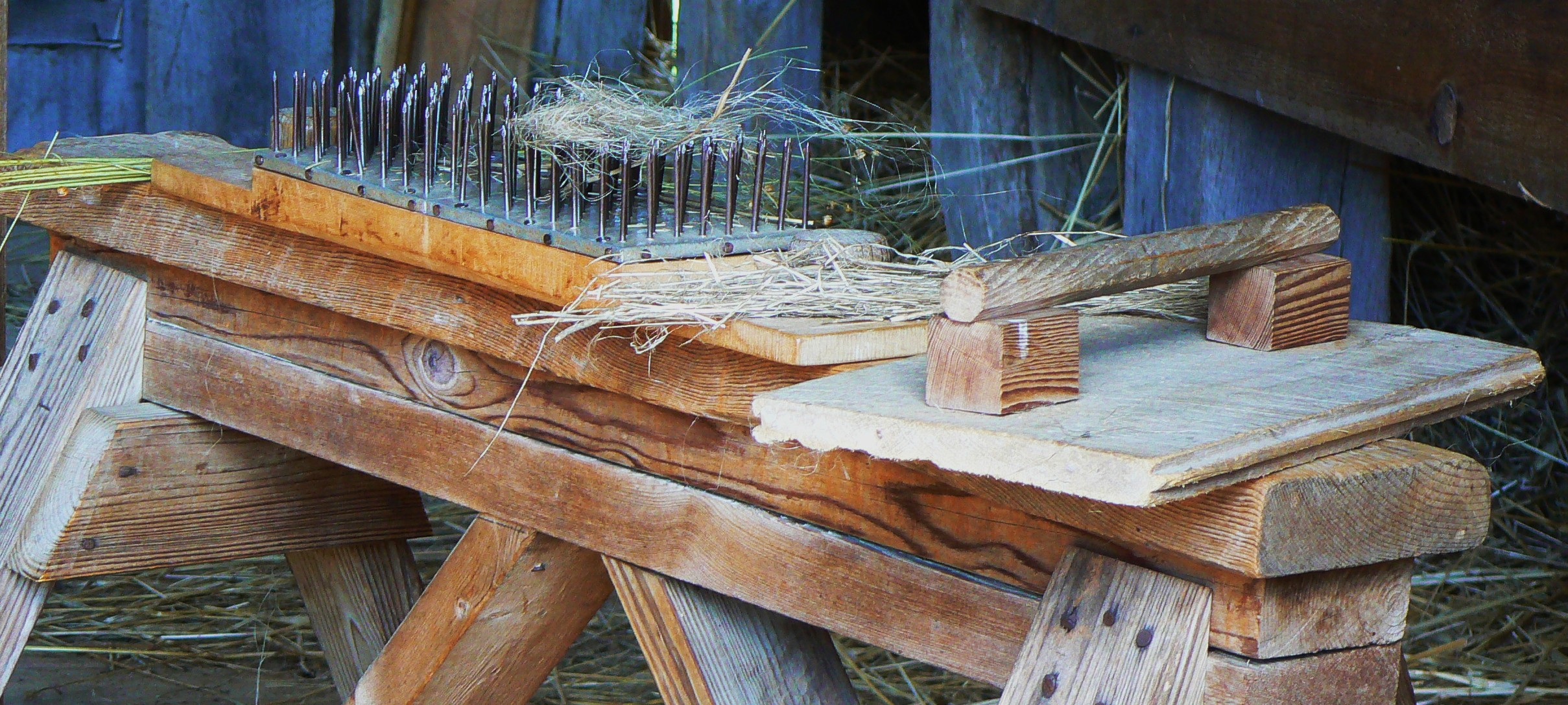
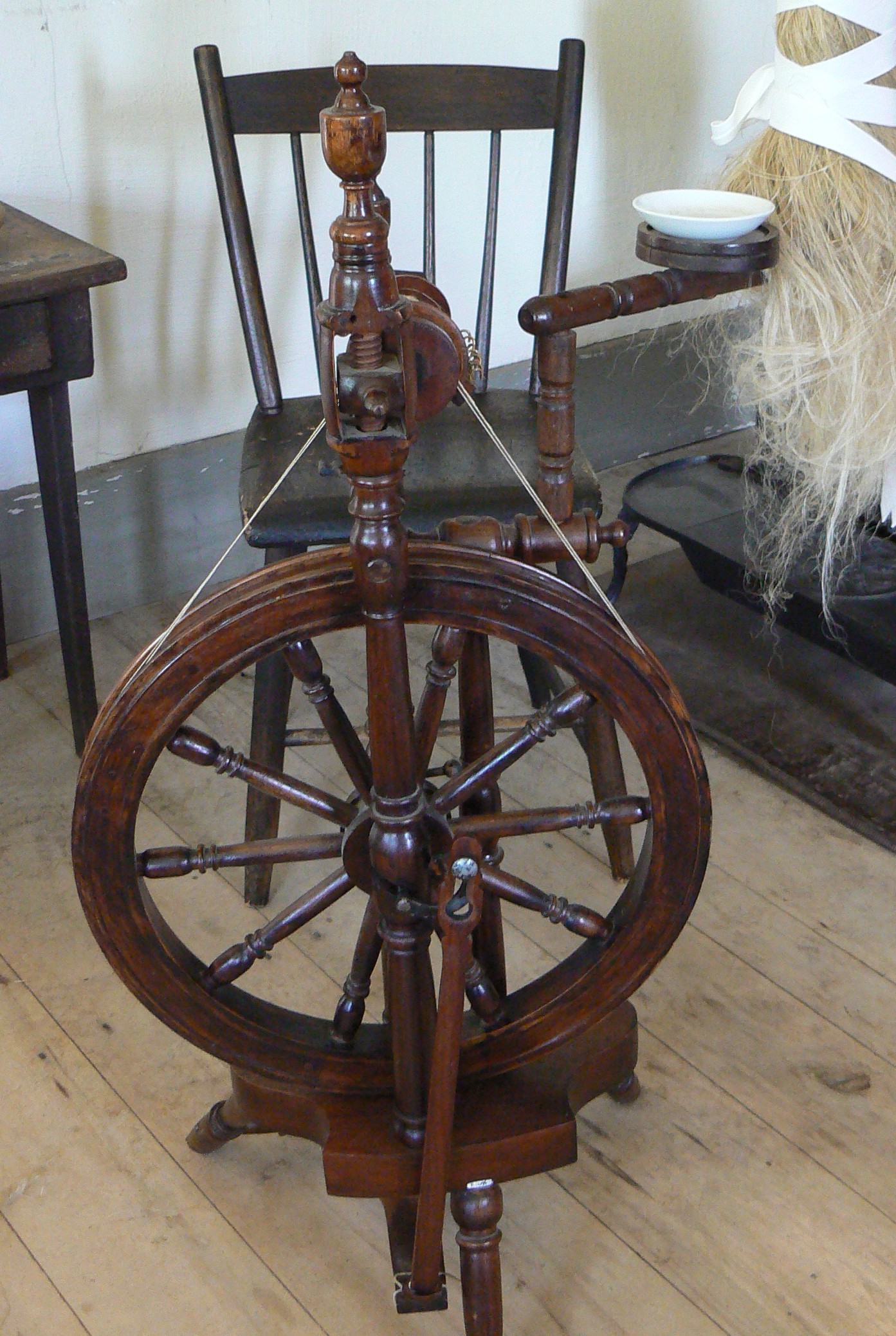
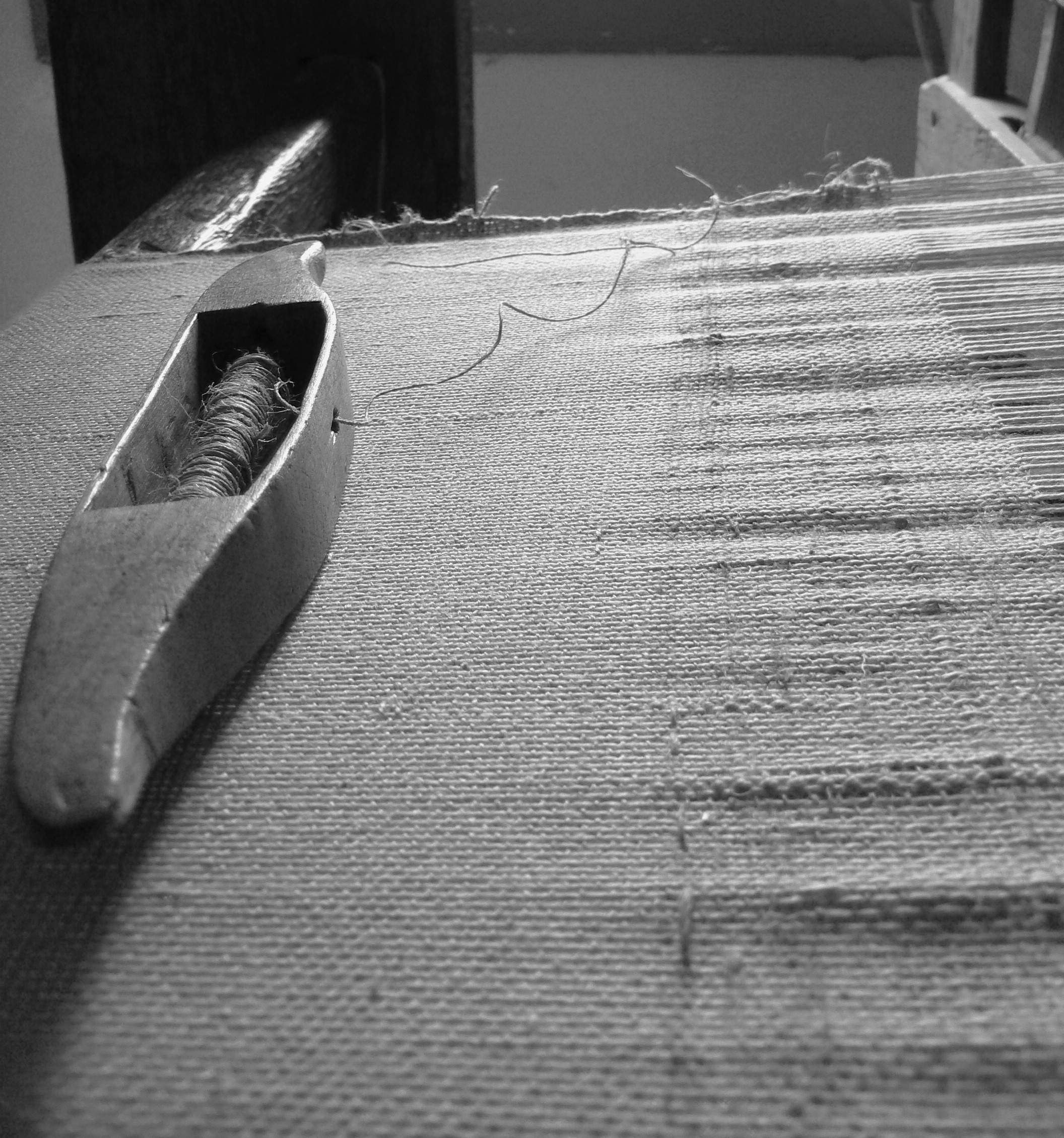
Linen making is extremely labor intensive. The retting process where microorganisms dissolve the outer husk is the prohibitive part for Old World Wisconsin, apparently, so they buy their flax at about $40 pound ready to break and spin. Which finally gets you around to having skeins of linen. But then, just setting up the loom seems like it would take forever! Imagine setting up a loom for a 400-count cotton sheet…that’s 400 threads per inch. Of course, that’s all done on industrial machines now. Factory-made cotton cloth was available and cheaper by the mid-19th century, but linen was sometimes useful as a back-up during the Civil War. Factory made shoes were available as well.

We’re off to have breakfast with Steve’s mom. I’m imagining eating in the ladies’ parlor at 4-Mile Inn….

 scillagrace