An American Adventure: Part Four
Black Canyon of the Gunnison National Park
I was 9 years old and seeing the mountains of Colorado for the first time the last time I was here. Frankly, the only thing I remember of it from back then is the name. It kind of scared me.
It is a National Park, a deep gorge, a wild river, a cross-section of geography, and a wilderness where humans are temporary visitors at best. From the Visitor Center parking lot, a glimpse of the scale of its depth is merely a tease.
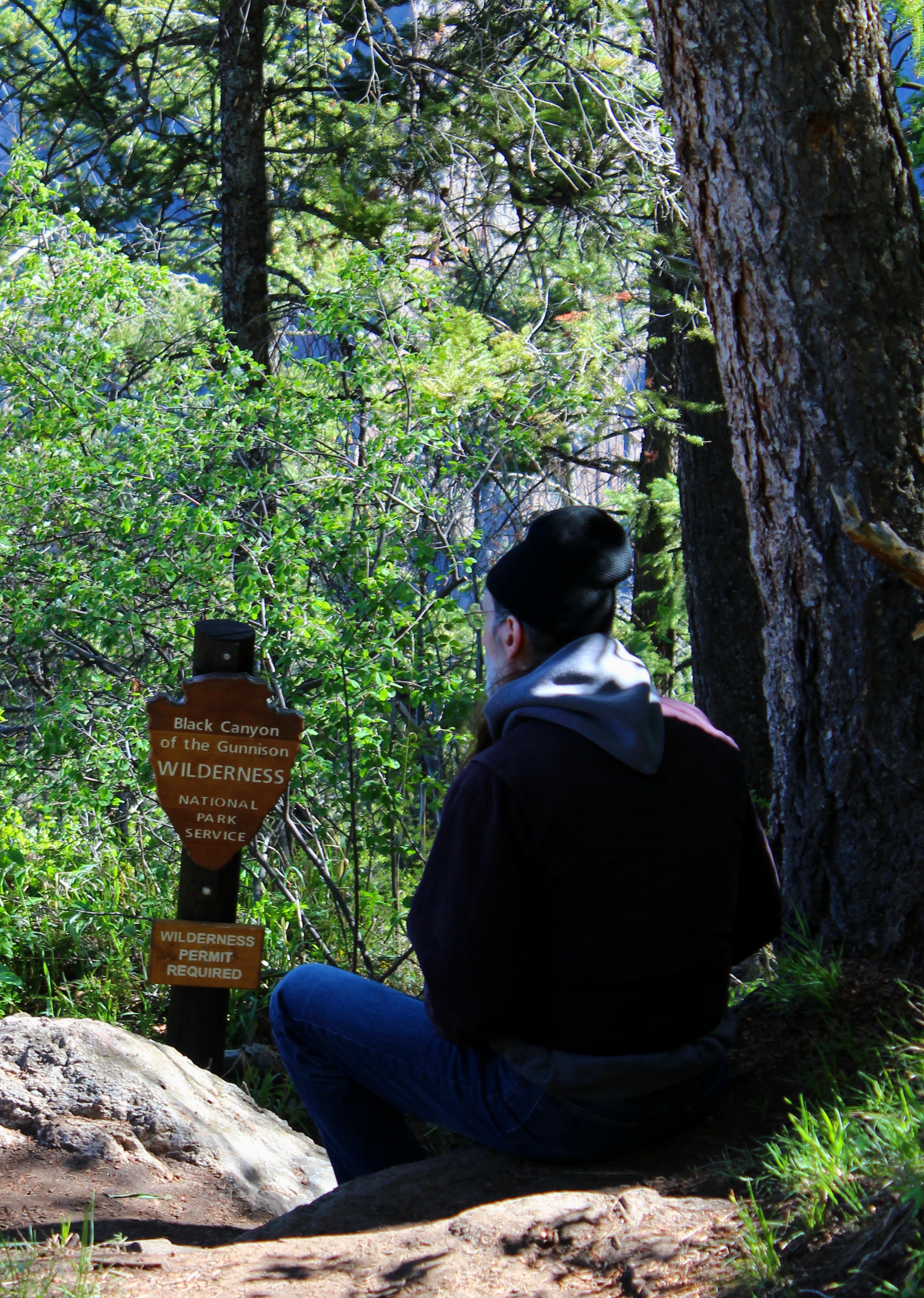
After a good night’s sleep, we walked the canyon rim from the campgrounds to the Visitor Center and got a closer look.
The early morning silence, the delicate frost in the shadows, the warm fragrance of juniper and sage, the glimmer of rushing water at the canyon floor…I had stepped into a holy sanctuary that Sunday morning and wept with awe and joy…and sadness.
I feel the threat to wild land as a pain deep in my gut. The river that carved this place is running high this year and being “managed” and diverted and manipulated to provide irrigation and recreation and serve a host of human needs. I don’t know how all the demands are weighed on this issue. My desire is to listen to the place itself, to let it simply Be, and to learn what I can with my brain, my heart, and my soul.
A volunteer guided us on a wildflower walk later that afternoon and introduced us to Western species new to us. Many of the Gambel oaks had just budded when that late snowstorm hit, and their tiny, crisp, shriveled leaves looked woefully sad. They are a hardy bunch and will hopefully recover, but the acorn yield in the fall will likely be diminished. The colorful blooms along the trail seemed to be not at all harmed.
This plant tour proved very useful. We saw a lot of Oregon grape, which is quite common and looks a lot like poison oak when it shows up as just three leaves with a reddish tinge. However, it does get additional leaves and yellow flowers which make it obviously distinct.
The campsite we found later in the Manti-La Sal National Forest was covered with it. I was glad to know I wasn’t risking a poison oak rash every time I went in the brush to pee!
An American Adventure: Part Three
Watershed and Finally…Bed.
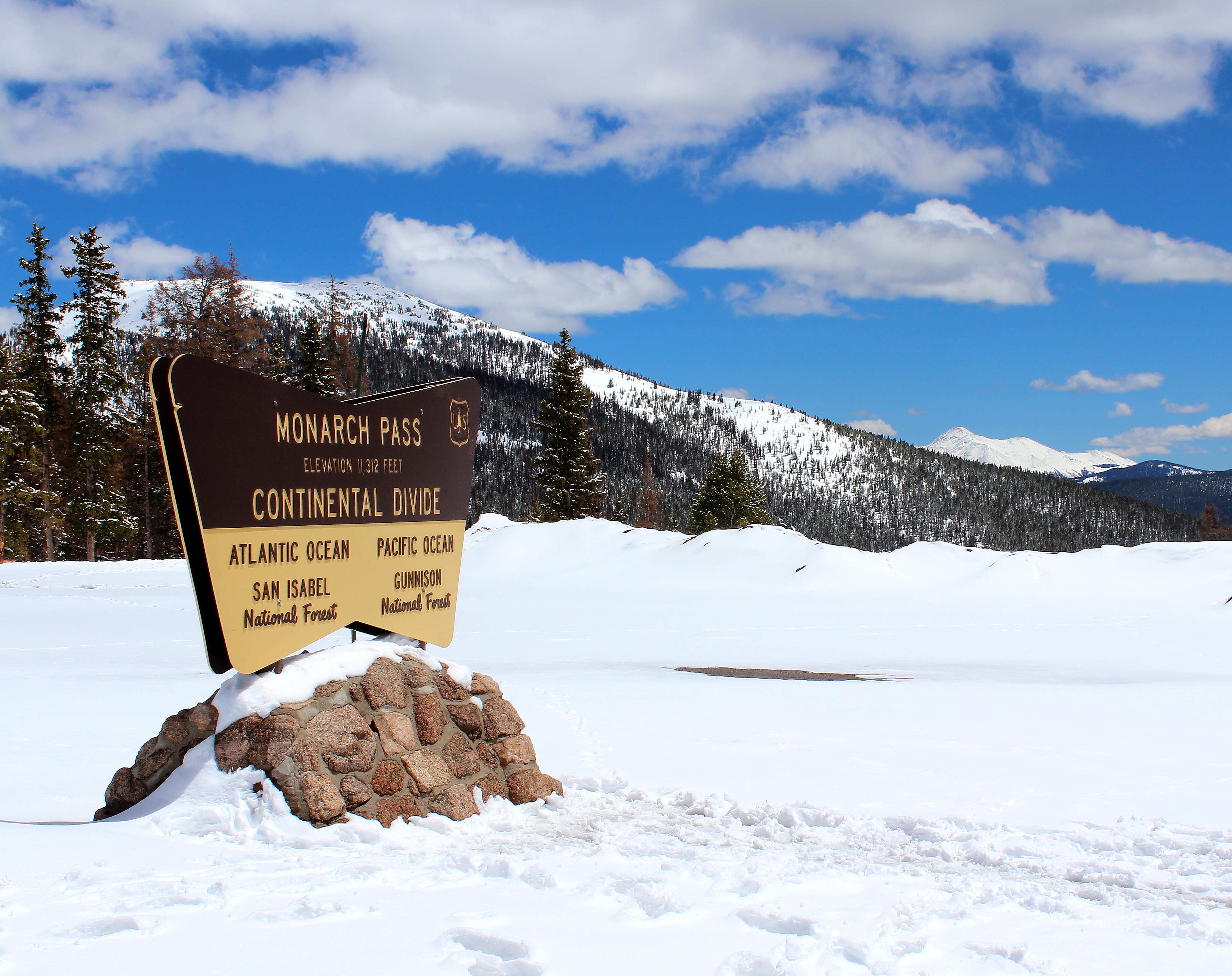
Since Florissant Fossil Beds National Monument had no campground, we were still looking for a place to stretch out horizontally and get some serious sleep. We decided to press on to the Gunnison National Forest. This meant crossing the Continental Divide.
I work for a land trust that focuses on the watershed of the Cedar Lakes, which includes a Sub-continental divide. Up on Washington Street, Highway 33, about two miles from my home, there is a brass plaque denoting this spot. From that hilltop, the water in the east flows down the Milwaukee River to Lake Michigan and out to the Atlantic Ocean via the St. Lawrence seaway. The water to the west of that divide flows to the Mississippi River and down to the Gulf of Mexico. That divides the Eastern portion of the continent of North America. It is, therefore, the sub-continental divide. It’s on a hilltop. In Wisconsin. At an elevation of about 1,180 feet above sea level.
This is the Continental Divide that we drove over in Colorado. 

At 11,312 feet above sea level, it looks nothing like Wisconsin.
So, after reaching this high point in our motor trip, we figured it was time to look for a campground. We followed the Gunnison River down the mountain at a steep decline. Every time we saw the road signs indicating a grade of 6% or more, Steve would call out “Truck on a wedge”. It sounded to me like short order diner slang, so I’d respond with “Truck on a wedge, hold the pickle!” This is what happens when you’re punchy.
After cruising the recreational areas through this canyon and downshifting to lower gears to avoid wearing down the brake pads too much, Steve noticed that the engine light on the dashboard of my 2005 Honda Accord (with 172K miles on it already) was lit up. Whaaaaat?
Decision point. Do we press on into the early evening looking for a campground on the mountain or do we get the car into town before 5 p.m. on this Saturday night to see what that engine failure light is about? This is when I learn that I am the person who would rather have as much information as I can get before making longer term choices.
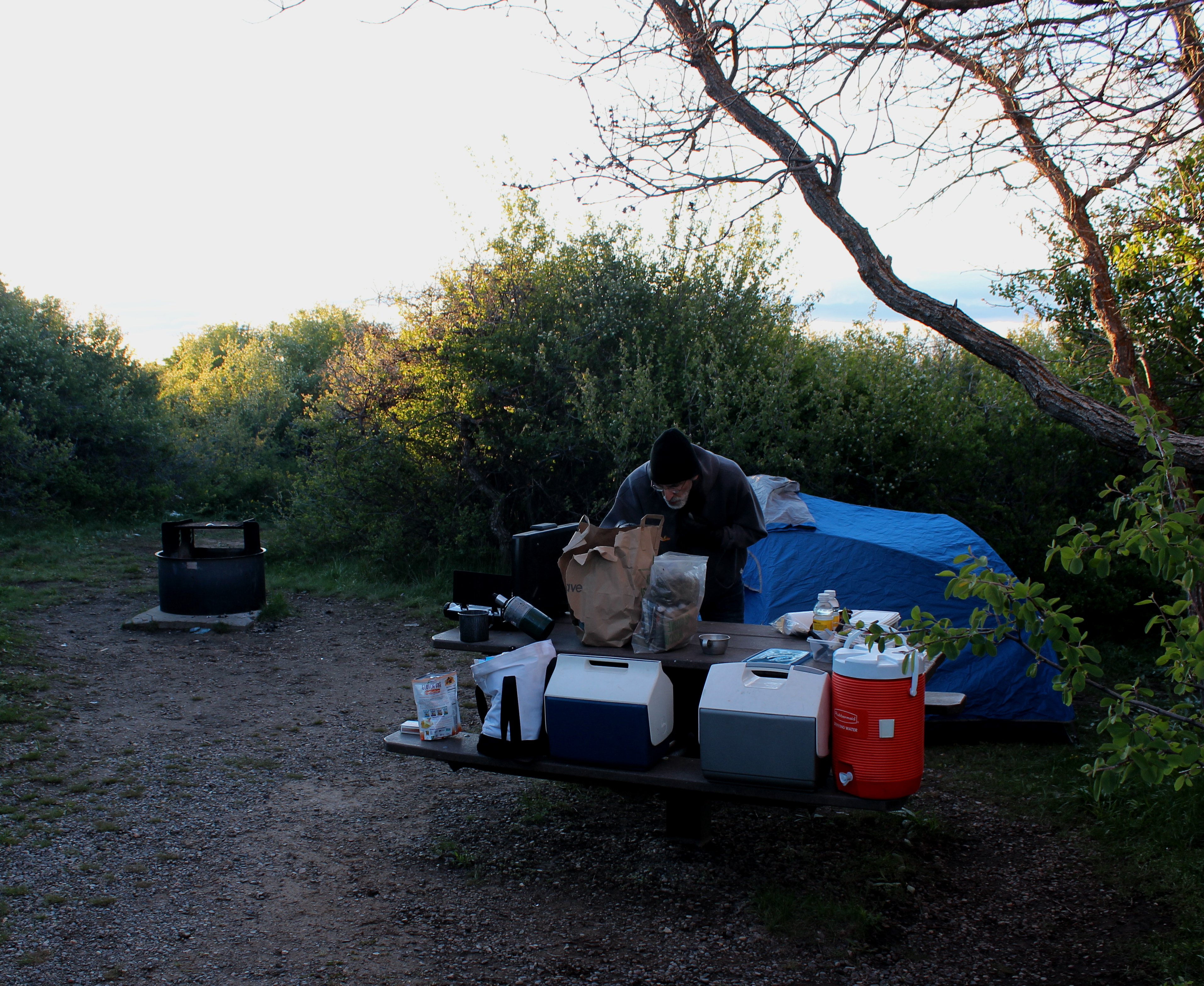
We learned at an auto parts store that the light was telling us that only the oxygen sensor has failed. The car was not going to die and leave us stranded on a mountain. The part was available (at another store). The labor wasn’t, at least not until Monday morning. We bought the part and headed back into the mountains towards Black Canyon of the Gunnison National Park. We didn’t have the daylight or stamina to search for free dispersed camping in the forest this time. So we made camp in the park at a developed camp site. 

Steve was exhausted and hadn’t had dinner. Further decision-making would have to wait.
An American Adventure: Part Two
“National parks are the best idea we ever had. Absolutely American, absolutely democratic, they reflect us at our best rather than our worst.” ― Wallace Stegner
The American landscape is spectacular. While other aspects of my country have deeply disappointed me lately, the land itself stands with timeless dignity. Preserving and respecting it is perhaps the best insurance we have against even more desperately dismal times. Experiencing our natural history firsthand teaches a kind of wisdom that is inimitable. In the face of sweeping geology, teeming biology, mysterious archaeology and the interconnection of every aspect of life, how can we not be humbled and fascinated?

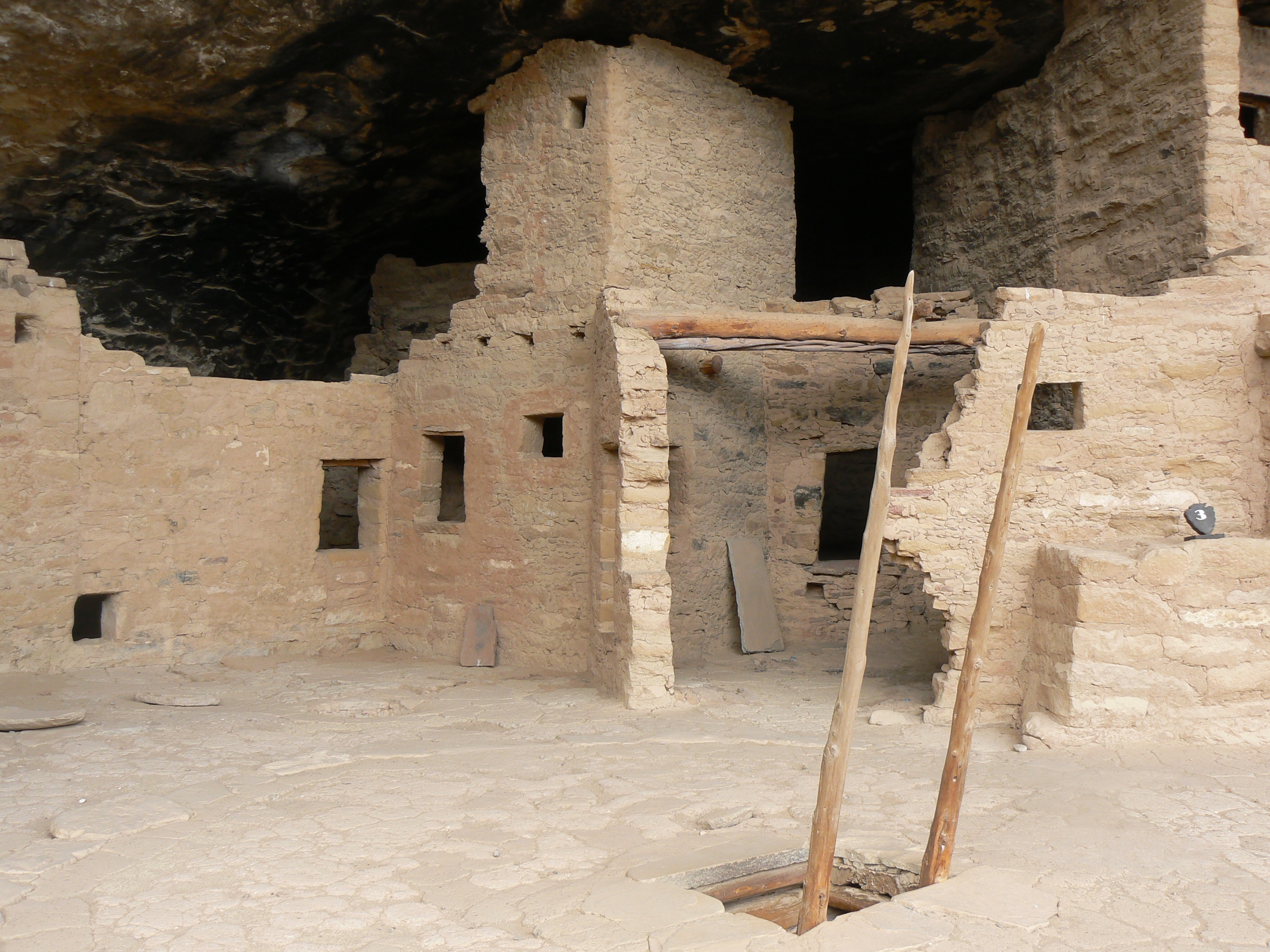
National Parks and Monuments provide opportunities to camp out at a living history museum. Steve and I prefer to spend several days in one spot and explore in depth…but this time, we didn’t do that. By the end of our two weeks, we had gone through eight national sites. The Memorial Day weekend crowds were one factor. The start of the summer season also influenced the Park Service staff resources. Park Service rangers are the best. I love having these enthusiastic and well-informed guides on hand — they are so much better than Google! Walking through the park and asking them questions gets my inner four-year-old awake and engaged. It’s more difficult to get this kind of ranger time when they are new to their post and in training or helping out a crowd of Junior Ranger visitors. Still, each one we met was friendly, intelligent and helpful. I wish there were more of them.

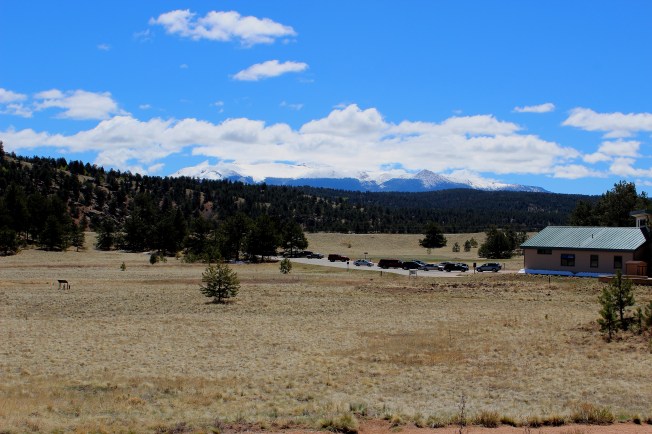
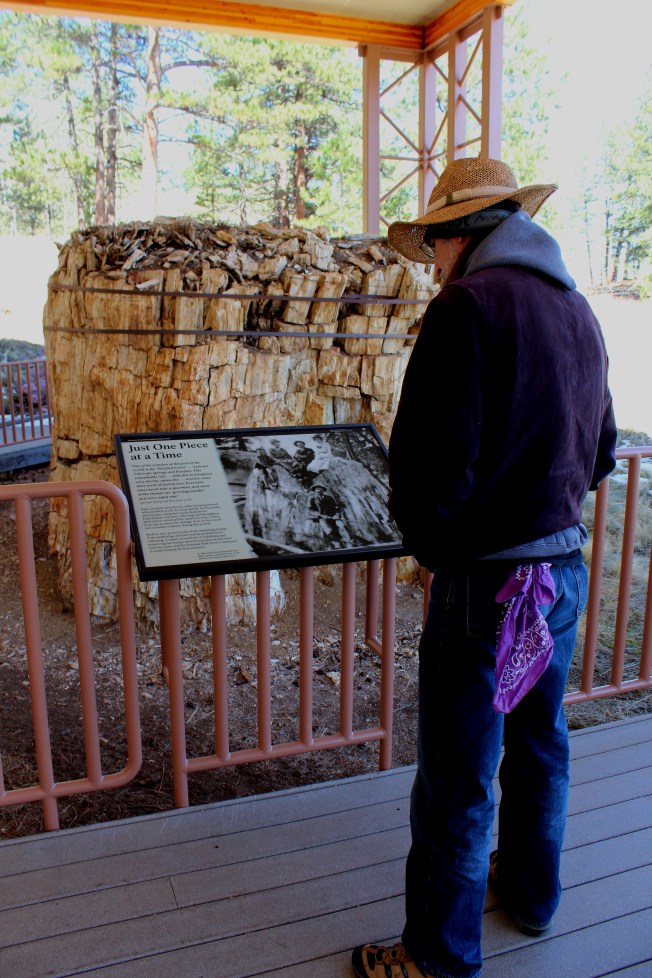
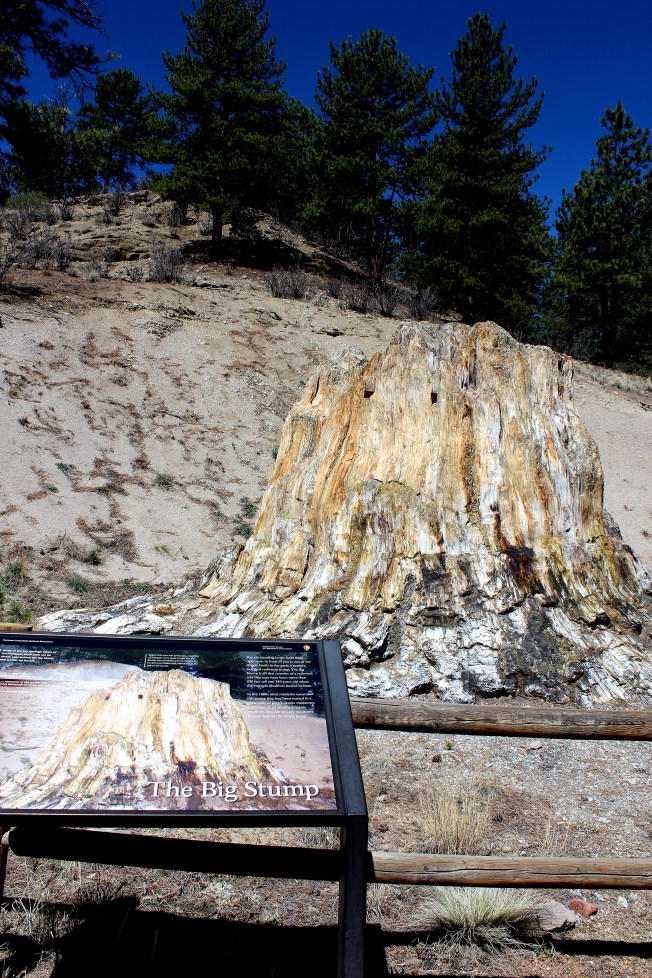
Florissant Fossil Beds National Monument was the first park we visited, so I bought my inter-agency Annual Pass there. The site exhibits petrified sequoia trees and fossils from the Ecocene. My new word for that day was permineralization. Walking the trails, groggy and cramped from 30 hours in the car, was a sweet liberation.