Unknown's avatar

Think Big

How often do you think big….sooooo big!?

How do you keep the bigger picture in mind in a culture so enamored of minutiae?  What reminds you to “look up from your life”?  What words do you use to communicate the unknowable edges of the universe?  How do you maintain a posture of humility in an egocentric nation?  How often do you forsake the light of a screen to seek the light of the stars?

After traveling for 4 weeks to the west coast and back, my favorite memory became the night sky over Bandolier National Monument in New Mexico.  The heavens came down to the horizon without tall trees to push them back.  The stars spoke to me of vast possibilities, of fates and predictions thrown to the night winds.  I had the feeling that anything could happen.  I was far away from home, far away from my past.  I looked up and felt that it was time for me to dream new things.  I felt that my younger ambitions had already played their hand — I had been married to my teenage sweetheart until we were parted by death, I had raised 4 children to the age of majority, I had dabbled in the entertainment of various interests — and that greater things still revolved untouched before me.  I cried tears of relief and felt rested in the engulfing spaciousness.

My former spiritual director used to talk about “the MORE” of life.   The MORE is the mystery, the vastness, the infinity of which we can be aware without ever grasping.  The trick is to be aware of that while living out a particular life of responsibility.  Loving the whole universe can be done by practicing love for a specific part.  Here are some ways that has been illustrated: Mother Theresa used to say, “We can do no great things only small things with great love.”  My husband and I used to lead workshops for engaged and married couples for our church.  I told the couples that “my marriage informs my image of God and my image of God informs my marriage”.  Wendell Berry writes (in The Body and the Earth) “To live in marriage is a responsible way to live in sexuality, as to live in a household is a responsible way to live in the world.  One cannot enact or fulfill one’s love for womankind or mankind, or even for all the women or men to whom one is attracted.  If one is to have the power and delight of one’s sexuality, then the generality of instinct must be resolved in a responsible relationship to ta particular person.  Similarly, one cannot live in the world: that is, one cannot become, in the easy, generalizing sense with which the phrase is commonly used, a ‘world citizen.’  There can be no such thing as a ‘global village.’  No matter how much one may love the world as a whole, one can live fully in it only by living responsibly in some small part of it.  Where we live and who we live there with define the terms of our relationship to the world and to humanity.  We thus come again to the paradox that one can become whole only by the responsible acceptance of one’s partiality.”  So, think universally, act locally.

Living between mountains and grains of sand

What is thinking universally?  How do you keep the MORE of life in mind?  And how do you act on this mindset?

Wendell Berry, again, from Home Economics:

“To call the unknown by its right name, ‘mystery’, is to suggest that we had better respect the possibility of a larger, unseen pattern that can be damaged or destroyed and, with it, the smaller patterns.  This respecting of mystery obviously has something or other to do with religion, and we moderns have defended ourselves against it by turning it over to religion specialists, who take advantage of our indifference by claiming to know a lot about it.  What impresses me about it, however, is the insistent practicality implicit in it.  If we are up against mystery, then we dare act only on the most modest assumptions.  The modern scientific program has held that we must act on the basis of knowledge, which, because its effects are so manifestly large, we have assumed to be ample.  But if we are up against mystery, then knowledge is relatively small, and the ancient program is the right one.  Act on the basis of ignorance.  Acting on the basis of ignorance, paradoxically, requires one to know things, remember things — for instance, that failure is possible, that error is possible, that second changes are desirable (so don’t risk everything on the first chance), and so on.”

Remembering that we act on the basis of ignorance (because we really have no choice) should keep us humble.  Allowing that every seemingly random thing, like the way the rain falls from the sky, might be a pattern that we are just too myopic to recognize should keep us looking to the bigger picture.  Practicing love without the will to power (as Jung defines it) in particular relationships should keep us honest.  That is the way I want to point my canoe.

Unknown's avatar

Righteous Depression

Ya know, in general, I think I’m a pretty happy, positive person.  I want to be like that.  Also peaceful, calm and occasionally insanely silly.  I did have a wicked period of postpartum depression after my first child was born and a bout with post-traumatic stress syndrome when Jim had heart surgery at 31. Okay, but I’m a pretty happy person, I think.  I’ve noticed now that since I’m a widow, if I get started crying about something, I can go on leaking for hours.  Now, could this be due to my new agenda of trying to face the reality of the world honestly?  The truth is the truth hurts.  Suffering exists in the world.  Various coping strategies and religions exist primarily to soften the blow of that blunt piece of honesty.  I am trying to be open, and it leaves me vulnerable.  Ouch.  It felt better to be Polyanna.

What to do about the responsibility and challenge to look deeply into the suffering of the planet, to become aware of the failures of systems and cultures, of relationships and communication from the large-scale to the intimate?  I feel sad about the truth.  Can I call this righteous depression?  Is this deep or simply pathological?

I am suddenly reminded of one of my life stories.  My sister and I were in a car accident when I was 17 and she was 20.  She was driving, and flipped the car at 80 miles per hour on the Interstate.  We were transported in an ambulance together to the Lincoln, NE hospital.  I was aware that they had been doing CPR on her the whole time with no response.  I had seen her covered in blood slumped next to me in the car before I was extricated from it.  I was in shock, but I was able to comprehend what was going on.  The hospital has policies about who can release information to patients, though, and everything must be done according to protocol.  So I found myself in an examining room with a nurse.  I had been checked out and aside from a bump on the head and some cuts, I am fine.  I know that my sister is not fine.   A nurse comes in and sits in the chair in the corner and says something about how they’re also examining my sister.  “It’s very bad,” she says, looking worried and vague, but directly at me.  “It’s just very bad.”  I felt like she was trying to talk to me in code or something.  She wanted to say something specific, but she couldn’t.  Instead, she just kept repeating how bad it was.  Was this supposed to prepare me for something?  Or was it supposed to fill me with a sense of doom and dread?  I realize she was probably a very sympathetic woman who felt terrible at being in the position of not having more comforting things to say or even more authority to speak the truth.  The result was just….awkward.  What do I do with this?  I suppose I could put her out of her misery and say, “It’s okay.  I’ve guessed that she’s dead.  I will deal with it.  I have a plan.”  Honestly, this is what I want to do in these situations.  I want to take responsibility and make everyone around me feel better.  Then I suppose I can feel righteously depressed.  It’s bad; it’s very bad, but I am going to try to do the right thing.

There are some very seriously bad things happening around us.  Global climate change, deforestation, greenhouse gases, ozone depletion, drought, famine, economic devastation, war, oppression and domination, political atrocities, nuclear poisoning, chemical poisoning, racial hatred, bullying, on and on and on.  How much of this can I be open to?  What if I bit off just a tiny portion and tried to chew on that only, to save myself from being overwhelmed?  What if I tried to absorb the totality and sank into a dark depression?  What do we do with deep sadness?  Share it?  Ignore it?  Fight it?  Meditate?  I’m open to suggestions.

Unknown's avatar

Dear Prudence

Last night, we watched the movie “Into the Wild” which tells the story of Christopher Johnson McCandless, who walked into the wilderness of Alaska to live off the land and do battle with some personal demons.   After 113 days, he died of starvation.  The story brings up some very interesting questions about society, “prudence”, and responsibility.

“Society!  So – ci – e – ty!!!” yells Vince Vaughn in a bar scene.   His character is bonding with Chris in a less-than-articulate but heartfelt acknowledgement that we fuck each other up regularly.  Parents and children, systems, administrations, organizations, rules, protocol and expectations.   It’s all pretty neurotic when you step back and look at it.   Some days, maybe most of us would like to walk to Alaska to get away from it all, to experience the freedom and dignity of making our own choices and engaging with the world head on.   After 100 days of complete solitude, Chris writes that he is lonely.  I think of that Life of Mammals scene with all the baboons on an African mountain.  We are social animals; it’s in our DNA, and we can’t walk away from that.  Maybe that’s another part of life to engage head on.

The first time my mother met Steve, she made a comment about him being “prudent”.  He denied it immediately.  To him, ‘prudence’ has to do with conforming to the cultural norm for being sensible.   However, other definitions indicate “wisdom, judiciousness” as its characteristics.   Chris had no desire to conform to any cultural norm; to him, the culture was hypocritical and dishonest.  It wasn’t sensible at all.  His personal wisdom and judgment seemed pretty embryonic, which is probably why he wanted to challenge it and gain maturity through experience.  He was certainly intelligent.  But why didn’t he take the time to prepare more thoroughly for his wilderness adventure?  Why did he choose not to use a compass or a map?  Why didn’t he tell anyone where he was going or make any emergency plans?  Those decisions bring up the question of responsibility.

It seems that most people assume that our primary responsibility is to survive.   Many people held Chris responsible for his return from the wild.   The fact that he didn’t return led many to suspect that he was basically suicidal.  Are the oldest people in our society the most “responsible” ones?   Is cheating death for as long as possible the mark of wisdom?  If we’re all going to die some day, our success in survival is simply an incremental one.   It seems to make life about quantity.   What about quality and the way we live?   Would it be responsible to sacrifice your life for something you value highly?  Some people believe that Chris was doing that.  They think he was a hero.  Others think his adventure was “a pointless fuck up”.

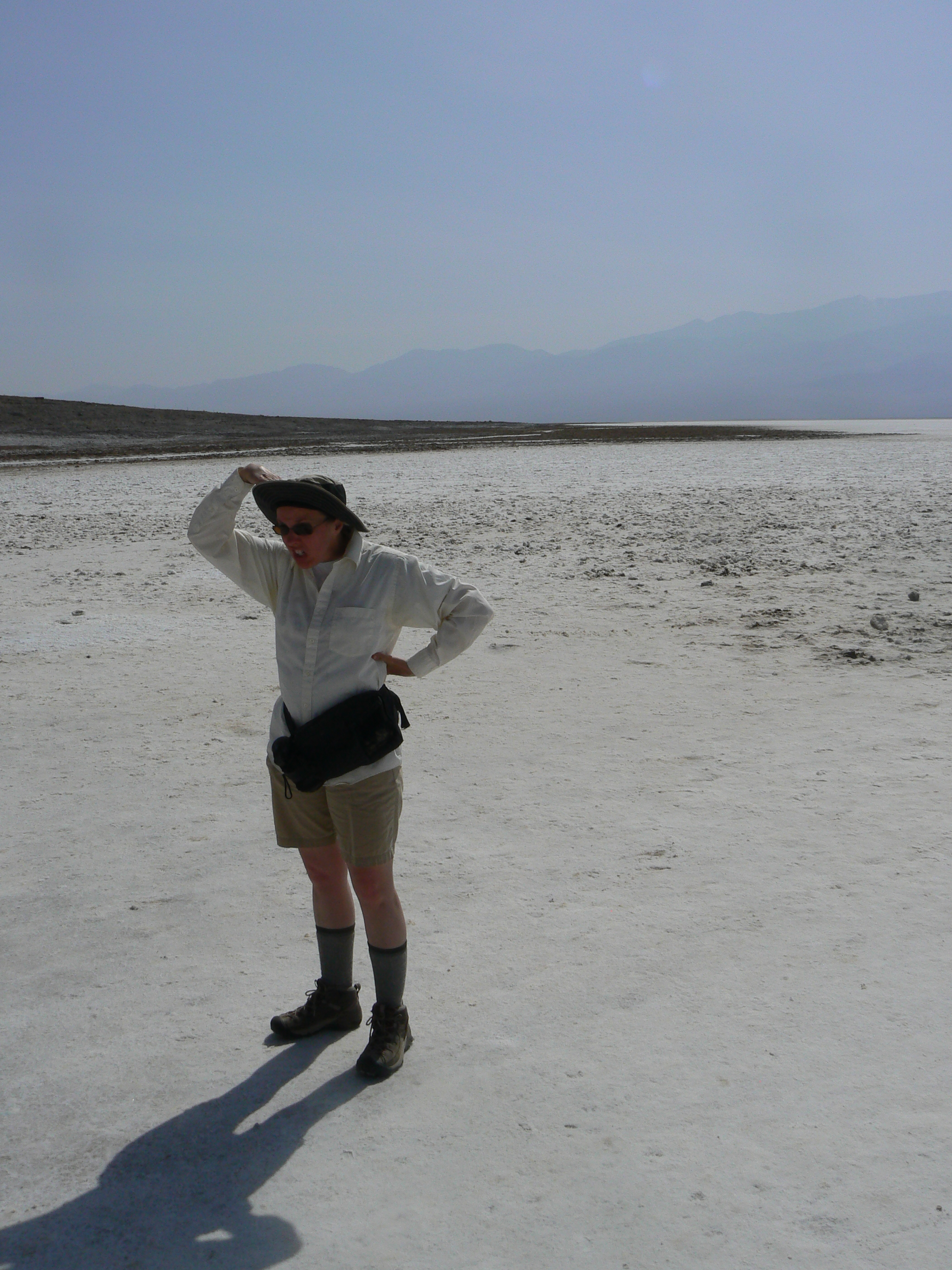
Prudence in Death Valley: wear a hat, bring water

This judgement about what is responsible is the stuff that made me a neurotic mother.  Am I “responsible” for navigating the waters of life for myself , my husband, and all my children?  How much responsibility do I take?  Which risks are worth it?  Do I allow my kids to walk to school alone, to learn to drive, to travel?   Do I ‘allow’ my diabetic husband to eat ice cream?  If someone in my family dies, does that mean that I have failed?  We’re all going to die; does that mean I’m doomed to fail at life?  You see – this can start a very vicious cycle of paranoia and dread.  Is it wise to live with that?

I think that I used to abdicate that issue of responsibility and pass it on to God.  I figured He was responsible for my life and my death, and I was off the hook.  That was useful for a while.  My grandmother used to hedge her bets by saying, “Trust in God, but do your homework.”   I suppose that’s useful advice as well.   I find that Buddhism gives a useful perspective, too.  It says simply that life and death is what we’re given, and that we can choose how we live.  Jim used to say, “I can be sick and miserable or I can be sick and happy.  I choose happy.  Pain is inevitable; misery is optional.”   All good stuff to think about.

Unknown's avatar

In Other News…..

Today is September 11, 2011.  It is National Grandparents’ Day and the 105th anniversary of the beginning of Ghandi’s non-violent protest campaign in South Africa.  It is also a sunny, bright, warm fall day in the Midwest, just as it was 10 years ago.  The 4 U.S. plane crashes on this day a decade ago have almost completely commandeered the date and the collective memory.   Pivotal days have a way of doing that…or not.  What I remember of September 11, 2001 is similar to what I remember of August 18, 1978.  Many people died on the first date, none of whom I knew personally.  My sister died on the second date, while I sat beside her in her overturned car.   What I remember is how blue the sky looked behind a stalk of prairie grass on the side of the interstate.   I went to the prairie on 9/11, and the sky was a brilliant blue that day, too.   Life as I knew it changed forever, and didn’t change.  It’s peculiar how our minds perceive things and how we turn the world on our own anthropocentric axis, meanwhile the universe keeps “unfolding as it should”.

Please don’t misunderstand my musing.  I don’t mean to say that the plane crashes were something that “should” have happened or that my sister’s crash “should” have happened.  I also don’t mean to say that they “shouldn’t” have happened.  They did happen, and other stuff happened.  Where I attach importance, though, is exactly that – me attaching importance, and I want to keep that in mind.

In Buddhism, there are 3 described causes of suffering: attachment, aversion and ignorance.  Attaching importance to something can cause suffering.  My daughter remembers an early crushing loss: we were driving home from a church event, and she had a balloon animal in her hand that was whisked out of the car window by a gust of fast air.   She was so surprised to be so suddenly bereft of her “mousie” and cried all the way home.  I was curious how she got so attached to something she’d only had for an hour.   I can’t quite imagine how to live without any attachments, but I am becoming more aware of the nature and consequences of attachments.  I still choose to be attached to some things, knowing that I may have to suffer their loss one day.

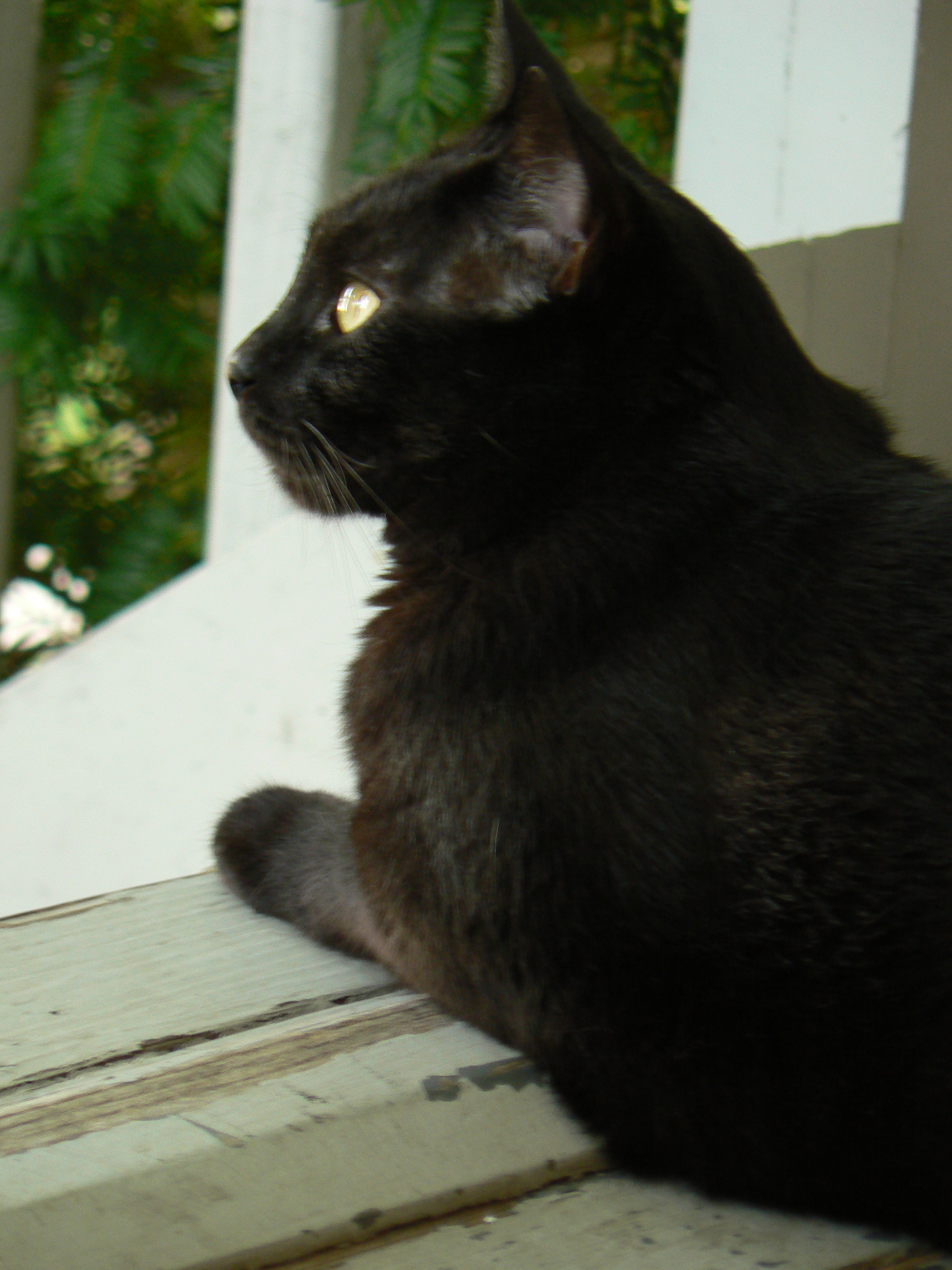
We got attached to Pinkle. She doesn't seem to miss us at all. Cats are very Zen.

What do we teach our children about attachment?  What do we teach ourselves?  When do we say, “Get over it” and when do we say, “That’s terrible!”  What do we do with a cultivated love for impermanent things?   I have a cultivated love of summer: warm temperatures, sunny skies, green things all around.  I feel the changes in the air, the shortening of the daylight hours and begin to suffer from my attachment a little.   I remind myself that I love Fall as well.  My very favorite colors in the universe show themselves wherever I look.   Rich red burgundies, intense golden yellow, muted soft green.  Then the branches are bare, and I begin to despair until the first gentle snowflakes against a night sky drop magic all around.  When it’s piled up 18 inches here in Wisconsin for the 8th week in a row,  I get SAD (S. A. D.) until a crocus peeks out bright green in the mud.   The cycle keeps turning.   Steve did an identity exercise some years ago that brought him to this conclusion: I am the joy in change and movement.  That has been his touchstone ever since.  I am beginning to relax and enjoy the change and movement in life and fight against it a little less each day.   Every day is pivotal and beautiful, just like that morning ten years ago.

Unknown's avatar

Taking Action, Stepping Out, Making Meaning

My husband was diagnosed with diabetes after his first heart attack when he was 31 years old.  He died 16 years later from coronary artery disease, kidney failure, and other complications of diabetes.  He was sleeping in bed next to me and never woke up.  I unplugged his dialysis machine, his CPAP machine, and his insulin pump that morning and set him free.  That was 3 and a half years ago.  My eldest child got the idea the next year that she wanted to do something to honor her father and take action to support diabetes research.  She and 2 of her siblings participated in a fundraiser called StepOut Walk to Stop Diabetes.  I was really impressed by her initiative and her civic action.  I joined her the next year with Steve; the siblings had moved west by then.  This year, we are all going to participate together.  All 4 siblings and mom with a few significant others alongside.   Our goal is to raise some money, to honor Jim, and to be involved in positive action as a grieving family.   (If you want to donate money on behalf of our team, go to http://main.diabetes.org/goto/pgalasso)

Team Galasso 2010

Do I expect that our participation will cause this disease to be eradicated?  Well, not really.  Do I imagine that Jim will feel honored and bring some good fortune to us from the spirit world?  Not exactly.  Do I hope that our sorrow will abate and our self-esteem will soar as we pat ourselves on the back for “giving back” to the community and “fighting” for a cause?  Actually, I don’t.  All of those things are ego-based and not very realistic.  What am I really doing, then?  Well, I think of it as “pointing the canoe” again.  I see that people suffer from this disease.  I see that certain kinds of medical technology and education have been used to ease that suffering.   I want to paddle my canoe, make some effort, toward helping those who suffer, not because I believe that I can rescue someone, but because it is how I want to live.  I want to honor Jim and remember him because that’s how I want to live.  I want to work with my family’s grief because that’s how I want to live.  I don’t know if any particular thing will result; I don’t expect to become noble or perfect or anything.  I do know that paddling in that way lets me choose a purpose and work toward it.  I suppose it helps my mind to be directed toward meaning.

So, why are we humans always looking for meaning?  Inquiring minds want to know…

That Steven Colbert report clip from the Approximate Chef suggests that we want to feel safe about the ending of the story.  We tell ourselves, “It’s okay, because it turns out this way; I know it does”.  That gives us, what, control?  Last night I had a dream about  meeting “the woman who owned the house” of the estate sale I went to yesterday.  I don’t even know that a woman lived there.  In fact, it was quite a masculine log cabin, with a boat and a mounted moose head dominating the decor.  What was my subconscious trying to figure out?  Well, I was trying to assure myself that this family was okay.  They were selling all their stuff.  They were letting strangers into their house to buy their belongings.  There has to be a story there.  I just went through the sale of my family home.  I had emotions about it.  I had a story.  I imagine that there are people behind these things with an emotional story, and I want to be told that they are okay.  I want to be satisfied that there is some meaning to the sale of these possessions.   Ultimately, I want to know that I’m okay, that my story has a happy ending.  (Steve always tells me that everyone in your dream is really you.)

Man’s Search for Meaning by Victor Frankl comes to mind.  I read parts of it.  Is this how we keep ourselves sane in “stressful” circumstances?  Is it just a game?  If it works, does it matter?  If I am not dogmatically asserting that my actions are ultimately meaningful, just saying that I find meaning in them and that is useful to me, does that make my position more authentic?  Can I make up a satisfying story about the family in the cabin and then say, “I know it’s not ‘true’, but I like to tell myself this story to calm my neuroses” and still be considered ‘sane’?  Do most of us do this anyway?  Does that make it ‘normal’ then?  I suppose I could give that up and face the fact that I won’t know every story.  Perhaps I would be far more sane to learn to live with ambiguity and uncertainty and meaninglessness.   What do you think?

Unknown's avatar

That Bwessed Awwangement

Today is my parents’ wedding anniversary.  They were married in 1955, and my dad died in 2010.   My mother was 20 when she got married, not even legally allowed to drink the champagne cocktails they served.  I was 21.  We wore the same veil and the same hooped petticoat when we walked down the aisle.  We said the same words from the Episcopal nuptial mass.  We are both widows now.  Time and society have changed Marriage quite a bit, and I’m sure that will continue.   We redefine our social institutions, and why not?  We made them up.  Kind of like the bowling game Steve invented (see my post “Hope for a recovering perfectionist”), your experience grows outward into broader concentric circles.  If you’re a linear person, you may not see it this way at first, but imagine an aerial view of the game as it progresses, and that may help.  So, what is marriage for?  When I was 21, I was absolutely thrilled to be getting married.  It had been a goal of ours for 5 and a half years!  Jim and I wanted to marry and “have lots of sex and babies” (best Alan Rickman voice there).  We wanted to merge our lives, our fortunes, our fate, our names, the whole bit.  And we wanted to do it in the context of a social community that we had become invested in: our families and our church.   This commitment to our relationship, the larger circle of people supporting us, and to our belief in a personal God who was also invested in us, was a very spiritual thing.  It was central to our lives and how we lived them out.  I didn’t think very much about the legal arrangement; it was rather swallowed up and incorporated in the religious ritual.  I enjoyed a very successful, loving marriage for 24 years.  And I don’t want another one.  My experience has shifted into another circle.

I have always and will always value relationships very highly.  I have a wonderful relationship with Steve.   We started talking about getting married in December of 2008.  My previous experience was that when you talk about marriage with a boy, you’re engaged and then you get married.  Well, when Steve talks about something, he really explores it deeply.  We now laugh and recall that what he really meant to communicate back then was that he was not afraid of marriage.  He is willing to marry.  But what kind of marriage would it be?  How would we define it?  How would we want to live it out?  What is the purpose of a legal marriage?   How is our personal ‘contract’ with each other different than a social contract?  What part do we want ‘society’ to play in our life, including family, the state, the country, the world?  At this stage of my life, I’m not about setting up a family that will interact with society.  I am about developing a committed, working partnership that will support our growth into deeper living on many levels.  We may encounter some legal situations that would give us good reasons to get married…like if we travel internationally and find that married couples navigate the system more easily, or if we start filing taxes as a family business or something…and we may decide to marry then.   I definitely wouldn’t want to change my name.  I want to have the same last name as my children.  Besides, I would rather die than give up the only thing that may possibly give me an Italian identity!

What about the giddiness of being in love, of beginning something special that you share with your friends and family, of having a big party with presents?  Well, we’ve talked about that, too.  Speaking of “Don’t Super-size Me” (my last post), have you ever been to a wedding that wasn’t out of scale in some way?  There is so much going on in weddings.  Traditions upon traditions upon social customs upon personal expression, etc.  Steve and I are often confused by those layers of social business, and we prefer to communicate one-on-one.  So maybe, when we have a place that we feel will be our settling place for some time, we will want to invite people who are part of our social contract to hear more about our partnership in that place and celebrate it with us.  Actually, we are doing that anyway every time we invite people over for dinner.

Committed partners

And then there’s dancing.  I didn’t have dancing at my wedding.  I don’t think my mother did, either.  Steve and I are going dancing tonight…at Old World Wisconsin in a barn with a bunch of strangers and their children.  This will be our third time.   I love dancing there.  I feel connected to my body, to people, to music, to my thoughts, my emotions, to the prairie and nature and the wooden floor, to history and to life.  For me, that’s a blessed arrangement indeed.  So, like the song says, “I hope you dance.”

Unknown's avatar

Hope for a recovering perfectionist

Western thinking is set up in a dualistic manner.  We have pairs of opposites: good and bad, right and wrong, black and white, body and soul.  Things are separated and put into boxes.  I was raised on this philosophy in my Judeo-Christian upbringing.   Human nature or sin nature is in opposition to divine nature.  We are told to die to sin and human nature and live out of divine nature.  It’s an either/or proposition.  And it’s impossible to do.  I simply cannot stop being human – and I don’t really want to.  When I think I ought to because of some person’s judgment, then I end up hating my humanness, and hating myself.  I feel guilty for being imperfect and human.  It is a cause of suffering.   When Jesus comes along to take the blame for my sins, the system isn’t really undone, it still seems like we are the Bad Ones and he is the Good One.

Eastern thinking is not dualistic.  It is both/and.  Good and bad are not separate.  Nor are right and wrong, body and soul, etc.  Every decision is somewhat good and somewhat bad.  Joseph Campbell talks about this in The Power of Myth.  The great mythic tales often point out this seeming ambiguity and emphasize that this is the real nature of life.  Yin and yang are not separate; two sides of a coin are not separate.   I am not separate from my human nature, from my mistakes, from my less effective parenting episodes.  They’re all me, and they do not need to be separated from me and judged.  We tend to get all up in arms about issues and pick a side, thinking that this is the obviously correct side.  Really, things are about 60/40 at best.  I often bring this up when one of my children is fretting about a decision and terrified that they will make “the wrong” choice.  Nonsense, I say.  You will make “a choice”, and if things don’t go in a way that seems beneficial after that choice, then you can make other choices.   Steve told me that when he was a kid, he had a plastic bowling set and used it to play a game that he made up.  He’d set up the pins in the usual pyramid arrangement, then bowl the ball and scatter them.  He would then set the pins up exactly as they had fallen, and bowl the next frame in the new arrangement.  Each time, he would just set the pins up where they were and start from there.  He never knew how the game would play out…I suspect that his pins were all over the yard after a half an hour.  I suppose the object of the game wasn’t the traditional “Knock ’em all down, Daddy”, meaning knock ’em all down at once.  It became more “Knock ’em all down eventually”.  After all my years of living, I rather think this new model is more like how life plays out.

So Steve & I have adopted a metaphor of decision-making that we call “Pointing the Canoe”.  We make good decisions, I believe, ones that take some time and try to consider many aspects.  They are not perfect decisions that knock all the pins down at once, but they are decisions that we hope will bring us closer to the light on the horizon.  I don’t know how to make a perfect decision, and if I live in fear of that, I most likely won’t make any decisions at all.  I make a good decision, and then I look up at the horizon.  If I’m not heading toward the place I want to get to, I make another decision.  I point my canoe and paddle on one side or the other, and I get there eventually.

Every week, we get together to have a Summit Meeting.  This is where we discuss the decisions we are making and how to point the canoe so that we’ll be living the life we want to live.   We put our values out on the horizon and see how we’re lining up.  We want to live more simply and sustainably.  We want to be spending most of our time, not on “small fires”, but on things that we find very important, like Spirituality, Music and Nature.  We want to be kind.

Today, I got to live out of a decision I made last week.   I interviewed at a county park that has a Nature Center.  I wanted to volunteer to be an interpretive trail guide and be involved in educating people about nature.  Today, I spent 5 hours at Astronomy Day telling kids (and their parents) about NASA’s Discovery program and the Dawn Spacecraft that is sending back information about asteroids.   I don’t know how long I’ll be doing this volunteer work; it’s not a perfect answer to “what should I do with the rest of my life?” (because it’s not paying me anything and won’t sustain me), but it’s closer.   I am also a Certified Teacher with TakeLessons.com now.  This means that a music lessons match-up organization in San Diego is trying to get me private voice students.  I’m not sure if that’s what I want to be doing with the rest of my life, but it is teaching and it is music, so it might bring me a bit closer.  I have yet to get my first student.

I still spend a lot of time wondering about who I am and what I “should” be doing.  It feels good to be in the canoe and moving toward my horizon, doing my own paddling.  I have been so fearful about how to live my life after being widowed.  Not so much any more.  Recovering from perfectionism helps.

Unknown's avatar

Favorite Memories of Jim

In the Galasso family, we have a birthday tradition.   When we are all gathered together for the birthday meal, we go around the table, and each person relates his or her favorite memory of the birthday person.  When I was with Emily last Sunday, she wouldn’t let me leave until she had told me her favorite memory of me.  I had almost forgotten this ritual, and I’m so glad she didn’t.   Today would have been Jim’s 51st birthday.  We would be celebrating our combined 100th birthday.  (We went to a couple’s 100th birthday party once…huge affair with fireworks and everything!)  Well, in Thich Nhat Hahn’s words, it is another Continuation Day.  Jim continues in all kinds of ways on this earth.  Ripples of his deeds, his attitude, his progeny, his molecules and other whatnot are still around.

Jim Galasso

So here is a favorite memory of Jim that came to me on my birthday this past Sunday.  Steve and I were at the Ravinia music festival in Chicago.  We had what they call “lawn seats”, which means we were picnicking on the grounds around the pavilion where we could hear the music on the loudspeakers and see the band (Lyle Lovett and his Large Band) on the jumbo screen.  In other words, the cheap seats.  It’s a great family set up.  People bring their kids, their food, their lawn chairs and everyone picnics in their own style.  Right in front of us was a family with 2 daughters and a newborn son.  I watched the father lie down flat on their picnic blanket and place his little squirming boy on top of his chest.  His daughters were hovering around touching the baby, but it was clear that Dad was not giving up his position of baby bed.  I looked long at them.  I thought of how obvious it was that the father was enjoying having a son, although he might have been just as proud and affectionate with his infant daughters.  And, of course, I thought of Jim.  With little infant Josh on his huge barrel chest, he looked just like that.  Happy, comfortable, proud, protective.

Daddy moments

Why is that one of my favorites?  Because I loved seeing him take deep pleasure in his life, in things that wholly involved him.  In these moments there is suffering, there is sacrifice, there is emotion and responsibility and joy.  He didn’t often have words to articulate all that was stirred up in him, but he would look up at me with a tear in his eye, and I’d know what he felt.  I think that was when he was closest to touching the water, to experiencing the ultimate dimension of reality.

So now it’s your turn.  What’s your favorite memory of Jim?

Unknown's avatar

Happiness Is

A couple of days before my 5th birthday, I got the chance to perform on a stage for the first time.  It was in a talent review put on by the Wabaningo Club of the Sylvan Beach neighborhood association.  That was where my grandmother owned a beach cottage on Lake Michigan.  I rehearsed the song “Happiness Is….” from the musical You’re a Good Man, Charlie Brown and performed it with 13 other little kids, including my sister, a second cousin, and the two daughters of my parent’s friends, the Pulvers.  I know these details because I found the program online in the Wab Club’s archives.  All I remember is standing on the stage and looking out at people’s faces, smiling at me.  I saw a photo of this group performance hanging on the wall of the Pulvers’ cottage in 2007, 40 years later.   I stuck out.  I was a step in front of the whole line up, my eager face displaying a huge, open mouth.  I guess I was kind of a ham.

The songs lists a bunch of cute, juvenile reasons for happiness.  Two kinds of ice cream, five different crayons, getting along — “everything and anything at all that’s loved by you”.   It rather assumes that things outside of you are what will make you happy.   I bought into this idea pretty thoroughly, and I know a lot of others who did (and do), too.  My list included having approval, good grades, someone who loves me, kids who are successful, good health, and a bunch of other stuff.  I would get anxious, upset, and sometimes downright terrified if I felt that any of these conditions might end.  In moments of loss, when something that had made me happy changed, I would often hear people comfort me by saying, “God loves you.  It’s OK.”  But again, that felt like something outside of me that I could lose, another idea of happiness that made me fret about whether I possessed it or not.

In a videotaped speech of Anthony de Mello’s, I heard about the idea of “attachment” and how we suffer from it.  We suffer in the loss, the impermanence of our attachments.  I’ve been thinking about this for about 10 years now.  I think back on how the attachments I had to certain ways of being affected my parenting.  We went through a lot of suffering as a family.  I felt so angry that we couldn’t seem to do things according to my expectations.  I rejected the way things were and tried to fix them.  I asked God to fix them.  And we kept suffering.   Slowly, I began to loosen my grip.  Finally, I prayed that I would be able to accept things as they are and be strong enough to accept the things that were to come, even though I was terrified of what that might be.  Yes, Jim died.  That was what I was fearing the most.  Interestingly, when that became a reality instead of a fear, some of the suffering was relieved.  More suffering was relieved when I began to look at other realities with less judgment and more acceptance. I am still working on the practice of non-attachment and the understanding of happiness.  Here’s a quote that puts it quite simply:

“The Kingdom of God is also said to be like a treasure that someone finds and hides in a field.  Then, in his joy, he sells all he has and buys that field.  If you are capable of touching that treasure, you know that nothing can be compared to it.  It is the source of true joy, true peace, and true happiness.  Once you have touched it, you realize that all the things you have considered to be conditions for your happiness are nothing.  They may even be obstacles for your own happiness, and you can get rid of them without regret.  We are all looking for the conditions for our own happiness, and we know what things have made us suffer.  But we have not yet seen or touched the treasure of happiness.  When we touch it, even once, we know that we have the capacity of letting go of everything else.

“That treasure of happiness, the Kingdom of Heaven, may be called the ultimate dimension of reality.  When you see only waves, you might miss the water.  But if you are mindful, you will be able to touch the water within the waves as well.  Once you are capable of touching the water, you will not mind the coming and going of the waves.  You are no longer concerned about the birth and the death of the wave.  You are no longer afraid.  You are no longer upset about the beginning or the end of the wave, or that the wave is higher or lower, more or less beautiful.  You are capable of letting these ideas go because you have already touched the water.” — Thich Nhat Hahn Living Buddha, Living Christ

Steve at Lake Michigan, on the shore opposite the cottage

Anthony de Mello quoted Kabir, an Eastern poet, saying, “I laughed when they told me the fish in the water was thirsty.”  I keep thinking about that one…

Unknown's avatar

Claiming Rights of Passage

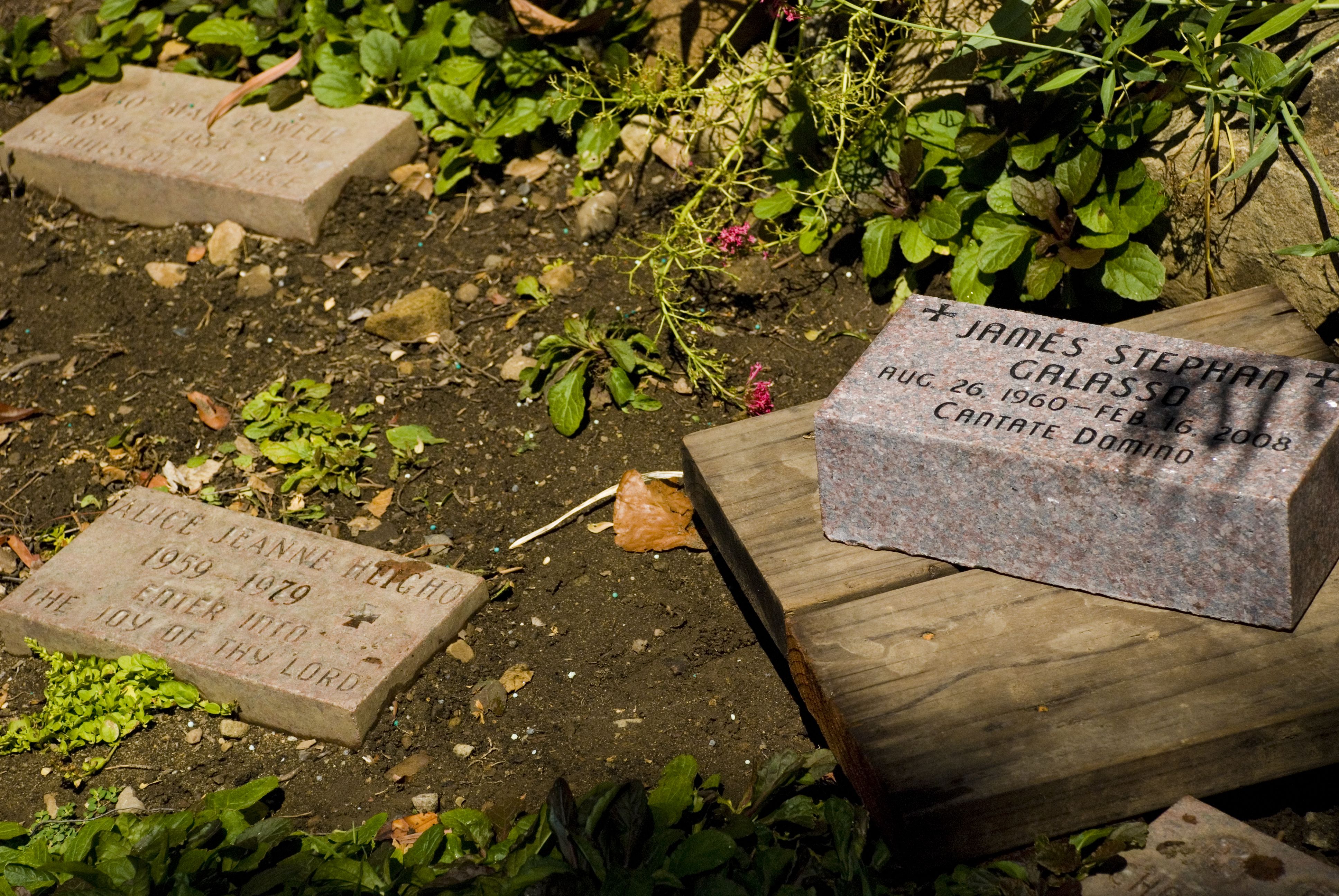
St. Luke’s columbarium

A few years ago, I went to an exhibit on mummies at the Milwaukee Public Museum.  It was fascinating.  Listening to the whispered comments and questions of other patrons was fascinating as well.  We have a very scattered cultural approach to death, with so many various ways of marking the rite of passage, including not really marking it at all.  Our American culture, as a whole, has been dominated by technology to the point that important parts of our lives are relegated to “experts” and taken out of our hands completely.   My mother fought against this trend in the late 50s when she insisted on breastfeeding her babies instead of allowing the “experts” to convince her that artificial formula on an artificial schedule was better for them.   Birth experiences have become sterilized, institutionalized, and anesthetized as well in the mainstream.  My 4 were all born in a hospital under the HMO system (but not under any pain killers!) because in my 20s, I wasn’t brave enough to seek more creative options.   However, my sister birthed one of her children at home, and I once assisted a friend who had a home birth.  It’s not impossible to choose to take full responsibility in this event.  Death is another part of life that more and more people deal with by proxy.  Of course, the hospice movement is a wonderful example of the purposeful effort to maintain the grace and dignity of this stage of life by bringing it back into the home, away from institutions.  I recently watched an Ingmar Bergman movie set at the turn of the century, called Cries & Whispers (well, it’s actually called something in Swedish, but that’s the English title).  This intense family drama deals with the death of a spinster sister from cancer.  The action all takes place at home, in this case an elegant manor.  The doctor’s largest role is in an affair with one of the sisters, in flashback.  When I think of the family drama of my husband’s death, experts and technology played a huge part.  Unfortunately, that became a distraction from entering into the rite of passage, from experiencing the more intimate aspects of the dynamics that were changing my family.  What I mean to say is that it enabled denial.

The last photo of Jim; coming out of surgery Feb. 5

What does it mean to choose to take responsibility for my life?  Not to delegate the more painful or complicated bits to an “expert”, not to live by proxy or by representative?  In which situations do I most often abdicate my ability to decide a course of action?  Financial, political, medical, social, spiritual, emotional, physical.  I am only beginning to wake up and ask myself these questions.  Steve often puts it to me this way: in every situation, you have at least 3 options.  1) Run away and hide  2) Try to change the situation  3) Change yourself.

This is a good time for me to think about aging, about how I want to live and address the changes that are happening now and will continue to happen.  What do I want?  I want to experience life in a more authentic way, not behind a duck blind or a proxy, not behind a curtain of denial or dogma, not by avoiding discomfort or hard work.  I want to make decisions about who I am and how to live proactively.  How do I embody this?  At this point, I am still figuring out who I am and want to be and recognizing places where that has been dictated and I have responded without looking deeper.   My father and my husband took great care of me.  I want to learn to do that myself.   I often dream about Jim returning as if he’d never died.  Last night, I had a powerful dream about him, set in the house I sold, with my young children around.  My consciousness struggled with it; I knew that the house was emptied and I’d moved.  I couldn’t understand why the furniture was back and the place looked so “lived in”.  I couldn’t understand why Jim was there.  He told me he was going out to work because he wanted to support me and the kids.  In a choked whisper, I closed the door behind him and said, “Don’t come back.”  I woke up crying.  Talking about this dream with Steve, I realized that I do want him to come back and float through my subconscious and consciousness without confusing me, without affirming me or correcting me, just visiting.  I suppose when I gain the confidence to affirm and care for myself, my dreams will change.