Unknown's avatar

In Search of a Good Life

I am reading a book called Back from the Land: How Young Americans Went to Nature in the 1970s, and Why They Came Back by Eleanor Agnew.  I am glad to have found this book at the beginning of my homesteading research.  Many of the reasons hippies started a “back-to-the-land movement” are the same reasons I have for being drawn to that kind of life in this decade.  I, too, am fed up with capitalism, the technologically-driven status quo, agri-business, election politics and the failure of progressive promises.  I have the desire for freedom, natural good health, self-sufficiency, community, sustainable living and a gentle relationship with the land.  If these motivators moved more than one million Americans in the 70s from urban lifestyles into homesteads, communes and small farms, why aren’t they still there?  “A study by the Stanford Research Institute estimated that ‘from four to five million adults were wholeheartedly committed to leading a simple life and that double that number adhered to and acted on some but not all of its basic tenets.”  Economic uncertainly fueled some survivalist rationales in that decade and could certainly be applicable today, right?  What happened in the “Me Generation” that brought these people back into the consumerist culture?

I’m only on Chapter 5, but I’m beginning to see the pendulum of privilege to poverty coming into play.  The homesteading hippies were largely white middle class folk who had no family experience of farming or living on the land.  The longer they stayed out there, the more “improvements” they began to incorporate into their lives.  The authors writes that she and her husband spent all of the capital they had on land ($1,000 for 62 acres in Maine!) and planned to heat their cabin with wood.  Their house in the city didn’t sell until late November, so it was December when they moved into the 34 x 24 foot log cabin heated with one wood stove.  The temperature inside the house was largely unaffected by the one stove, so they bought another stove and stayed with neighbors for 10 days until the thermometer hit 60 inside.

You could say that most of these folks were naive about the realities of nature.  Living more closely with natural surroundings means living more closely to natural processes.  Weather.  Change.  Unpredictable events.  Death.  I suppose being realistic would be to decide well in advance how you would prepare for certain conditions and how you would accept conditions for which you were not prepared.  And then to do the preparing you could do.  Am I prepared to be cold or injured or repulsed by sights, smells and sensations?  Am I prepared to be afraid?  Am I prepared to experience failures and setbacks on many levels?  Do I want the freedom of danger?

Is it all golden leaves and smiles?

There are also pages and pages of first hand accounts that assert that the years spent homesteading were the best years of life.  For many, the positives far outweighed any negative memories.  So the question for our next Summit Meeting is: How do you want to live?  And I want details as well as values.  Do we have electricity? Plumbing?  Do we slaughter animals?  How will we use money?  How will we build community?

I don’t want to say that somewhere out there is a perfect way of life.  I’m not sure that is true.  I want to say instead that in the discussions and efforts and experiences of this process, we will find ourselves living.  Let that be the epiphany we celebrate.

Unknown's avatar

Homesteading

Because I’m going on the road today to visit my children, I’m not going to spend a lot of time on the internet.  So here’s my suggestion: spend the time you may have spent reading my blog checking out this website.

www.urbanhomestead.org

This family is amazing.  They settled in an urban house in Pasadena in 1985 and converted it to a working small farm that produces nearly all of their food and subsistence needs, including biodiesel, clothing, health care products, and much more.  They now have an institute and do educational outreach all over the country.  Having lived in Southern California myself for 11 years, I find this fascinating.  I hope you’re inspired.


Unknown's avatar

Crimes Against Nature

Have you read about the exotic animal farm incident in Ohio?  If not, here’s the recap.  Apparently, there was a man keeping exotic animals (big cats, monkeys, wolves, etc.) in a small town in Ohio.  He’d had a history of run-ins with the authorities over permits and conditions.  So a few days ago, he opens the cages and then kills himself.  The authorities then decide that the 50-some animals need to be rounded up and shot.  Only a handful were re-located to a zoo.

This just strikes me as a tragedy all around.  First of all, Ohio is no place for a Bengal tiger.  A zoological conservatory would be perhaps a defensible home for a tiger should it require being in Ohio, but a small farm?  Second, if you can’t take care of a Bengal tiger at your home in Ohio, leave it alone.  Let it stay where it was, for crying out loud.  Third, if you get the tiger to your home in Ohio and later discover that you are not doing an adequate job of caring for it, find someone who can help, like that zoological conservatory.  Don’t just let it out to wander the small town streets creating bad press for animals and protective agencies alike!!  What a mess.  It seems like such a string of poor decisions, lack of responsibility, and lack of respect.  If that man had not taken his life, I’m sure he would have been slapped with a few violations and fines.  (okay, a truckload of violations and fines)  But then again, when we fine people for crimes against nature, does that act as a deterrent to others?   Do people really learn to respect animals or habitats because of punitive measures?

The Nature Center where I volunteer has a posted fine of $250.50 (not sure why that particular amount) for bringing pets into the area.  There are other Milwaukee public parks specifically for dog-walking, but Wehr is a preserve, meaning a place where wildlife and habitat are protected.  A place where animals and plants can be free from the stress of dog traffic.  A place where nature lovers can be free from the stress of dog traffic.  In other words, NO DOGS ALLOWED.  One of the volunteers was leading a group of school kids down a path and encountered a couple with a dog.  “Excuse me.  I’m sorry, but dogs are not allowed in the nature preserve,” she said.  “Oh, it’s okay.  We do this all the time,” was their response.

What we have here is a failure to communicate.

We try to teach the kids to respect the nature center.  “Why don’t we want dogs here?  What do you think?” we ask.  “Because they’ll eat the wild animals?”  Well, probably not.  But they will probably scare some, make them nervous and upset.  We want them to feel safe here.  “Why don’t we want people picking flowers and plants here?  We have 50,000 visitors a year.  Even if they only took one plant, what might happen?”  There would be less for the animals to eat, fewer for the insects, and even for the other people to enjoy.

How do you teach respect?  How do you teach empathy?  How do you communicate something about making considered choices about what you buy, what you throw away, and what you do with that big recycling container that sits by your garage unused?  I do not feel comfortable in confrontations, and as a rule, I avoid them.  I have played “police” with my kids, and it was my least favorite part of parenting.  I wish I had been better at teaching respect and consideration without using “rules” and “punishment” because frankly, that seemed to invite more disrespect.  What if I just showed them the consequence of some disrespect that happened and just let them look good and hard until they felt something on their own, and then talked gently with them about what they saw, what they felt, what they thought, and what they wanted for their own actions and decisions?

Take a good look at the pictures of the animals that were shot in Ohio this week.  Look deeply.  Feel deeply.  Think deeply.  Invite someone else to look as well and talk about it.

Unknown's avatar

Cats and the Philosophy of Health Care

At our Socrates Cafe meeting on Saturday, we discussed the ethics of rationing health care.  How are decisions made about administering medical care?  Should health care be awarded to the wealthiest, the most fit, the least at-risk or the most at-risk?  Is health care a commodity that can be administered according to social and economic guidelines?  Is health care distinct from “illness care”?  And so on.  Our group is rather small and not especially representative of any particular demographic.  I don’t think we’re “solving” anything, we’re just enjoying discussion and engagement and some brain activity.  I’m exploring the results of allowing other people to comment on the products of my own bizarre thinking.  Which is kind of what blogging is about as well.

As I put in my own perspective on this issue, I realize that I speak from experiences that have centered mostly around my husband’s illness and death and from observances of non-human beings.  Jim used to chalk up a lot of his medical interventions as “better living through technology”.  He was the recipient of some very technical and somewhat heroic (although now pretty standard) procedures.  It was a complicated arena of insurance issues, multiple specializing doctors, drug interactions and availability, and the donor list system.  There were layers of decision-making involved and a fabric of responsibility that was pretty nebulous.  When his pulmonologist found out that he’d died, he asked me, “What are you doing about it?”  I wasn’t sure what he was talking about.  “I’m grieving!” I answered.  “I mean legally,” he explained.

Who is responsible for my health?

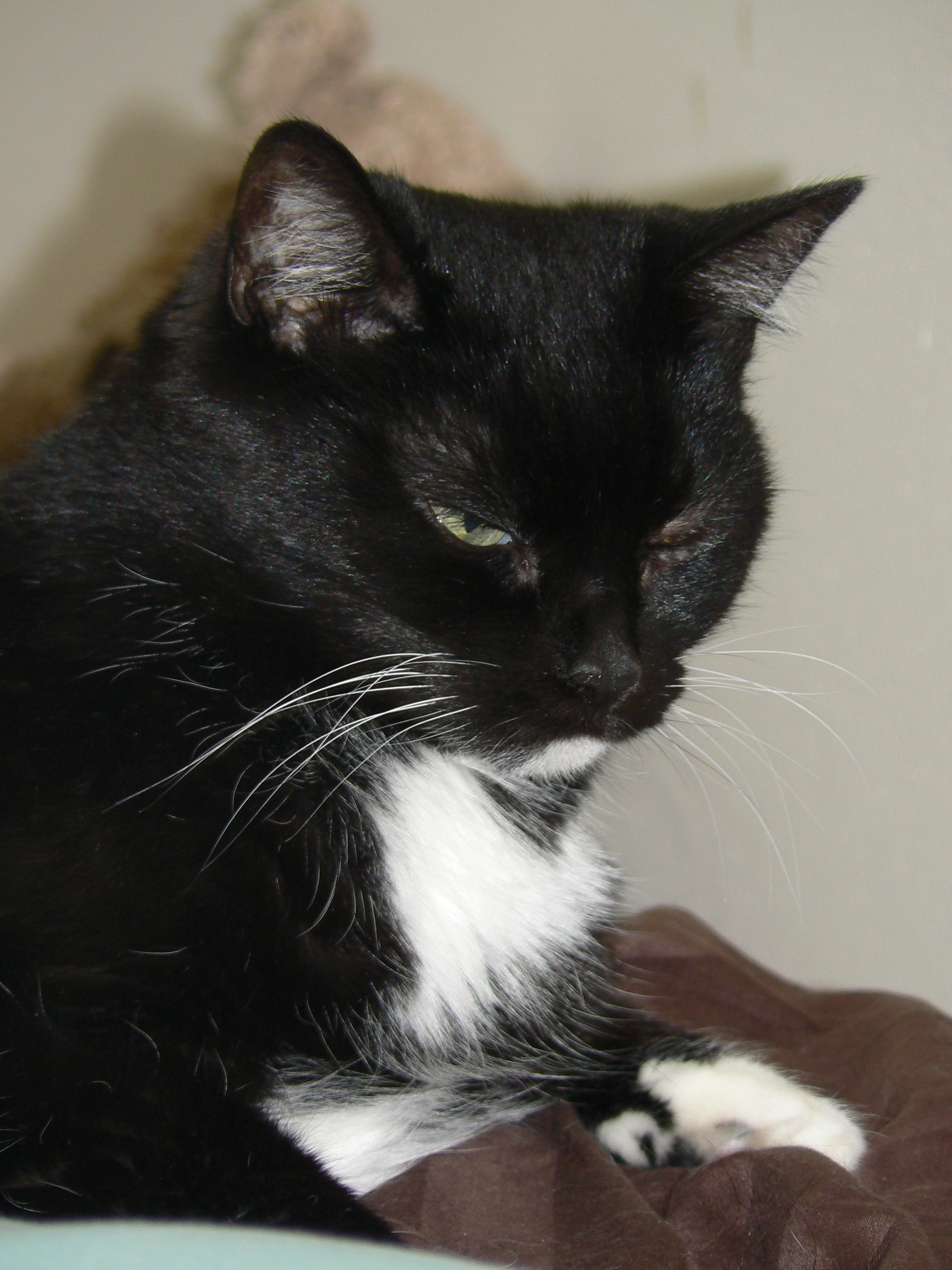
As for the observance of non-humans and their health, I look to the pets I have known.  Specifically cats.  I learned a lot from Pinkle, who somehow got injured up in the attic one day.  She simply stopped using her back legs until they had healed.  She slept.  She ate.  She tried out putting weight on them gradually, and eventually got back to doing all the things she had been doing.  She didn’t complain.  She didn’t seem miserable.  She didn’t worry or push herself or engage in any neurotic behavior that we could detect.  She took responsibility for herself, for the most part, and we provided food and shelter and quiet.  Phantom is another cat I have observed.  She is 16 years old now, and not living with me any more.  She had some urinary tract issues in the past when I did care for her.  I gave her antibiotics in pill and liquid form (which was an ordeal she did not welcome) and changed her food.  She had a bladder stone removed surgically as well.  That was maybe 10 years ago.  Her litter mate died of cancer a couple of years ago.  Cats don’t complain about pain much, and they don’t complain about death.  My kids tell me that Tabitha was purring as she died of the injection that ended her suffering.  Cats (and many other animals) have a tendency to seek out a quiet place to die.  They don’t make a big fuss.  We’re the ones who fuss.

Phantom del'Opera

Pinkle Purr (see poem by A.A. Milne)

What if we focused on healthy living and didn’t sweat so much about “illness care”?  What if we made it our social/economic/political responsibility to work hard to provide clean water, clean air, healthy food, shelter, education about health, and quiet (less stress) for as many of us as we can, and let illness play out as it would naturally?  What if we as a community took responsibility for supporting health but abstained from taking responsibility for preventing death?  It’s not like we’d be successful in that effort ultimately anyway, right?  We’d do our best to give you the basic needs, and the rest is up to you and nature.  That’s how human life went before technology kicked in, and plenty of people lived to reproduce (or we wouldn’t be here today).   Is there anything wrong with that model?

That’s my two cents for the health care debate.

Unknown's avatar

Mad Farmers

I picked up a book of Wendell Berry’s poetry from off Steve’s shelf.  The book is called The Country of Marriage, and this poem is contained therein.

Manifesto: The Mad Farmer Liberation Front

Love the quick profit, the annual raise,
vacation with pay. Want more
of everything ready-made. Be afraid
to know your neighbors and to die.

And you will have a window in your head.
Not even your future will be a mystery
any more. Your mind will be punched in a card
and shut away in a little drawer. 

When they want you to buy something
they will call you. When they want you
to die for profit they will let you know.
So, friends, every day do something
that won't compute. Love the Lord.
Love the world. Work for nothing.
Take all that you have and be poor.
Love someone who does not deserve it. 

Denounce the government and embrace
the flag. Hope to live in that free
republic for which it stands.
Give your approval to all you cannot
understand. Praise ignorance, for what man
has not encountered he has not destroyed. 

Ask the questions that have no answers.
Invest in the millenium. Plant sequoias.
Say that your main crop is the forest
that you did not plant,
that you will not live to harvest. 

Say that the leaves are harvested
when they have rotted into the mold.
Call that profit. Prophesy such returns.
Put your faith in the two inches of humus
that will build under the trees
every thousand years. 

Listen to carrion -- put your ear
close, and hear the faint chattering
of the songs that are to come.
Expect the end of the world. Laugh.
Laughter is immeasurable. Be joyful
though you have considered all the facts.
So long as women do not go cheap
for power, please women more than men. 

Ask yourself: Will this satisfy
a woman satisfied to bear a child?
Will this disturb the sleep
of a woman near to giving birth? 

Go with your love to the fields.
Lie down in the shade. Rest your head
in her lap. Swear allegiance
to what is nighest your thoughts. 

As soon as the generals and the politicos
can predict the motions of your mind,
lose it. Leave it as a sign
to mark the false trail, the way
you didn't go. 

Be like the fox
who makes more tracks than necessary,
some in the wrong direction.
Practice resurrection.

 Has much changed since 1971? Are there mad farmers occupying Wall Street? 
Unknown's avatar

The Shadow Side of Abundance

I’ve connected a few strands in the cobweb of my mind.  Follow me, if you will.

I’ve been thinking about my shadow side, my dark side, and I’ve located an area that I think could be it.  It lurks in my ego, in the part of me that craves attention for myself at the possible expense of others.  This is where I am tempted to be manipulative and fake.  The origins of this desire are nebulous, but I can identify manifestations in my childhood.  I was daughter #4 in my family, the youngest child for 11 years, the only blonde, with a ski-jump nose and a pouty lower lip.  I was cute (pardon my use of this hated word, Steve!), especially to strangers.  My family used to tease me for being “touched by waiters” because every time we went out to eat, the waiter would pat me on the head or something.  I loved being cute.  I loved the attention because my deep-seated fear was that I was redundant.   With three older sisters, there was always someone near at hand who was smarter, more accomplished, and better than me at everything.  I struggled to find a niche where I could have my own spotlight.  I actually found that in music, so I majored in Voice Performance in college.  My mother was very musical, but a rather shy performer.  I pushed myself to overcome my natural fear of being judged so that I could stand out every once in a while.  This thread leads to….

Salieri in “Amadeus”.  His dark ego leads him to all kinds of hateful thoughts about Mozart and about the God who favors him.  This fear of redundancy gripped him.  He saw the world as a competitive arena.  “This town ain’t big enough for the both of us” is a theme in a lot of movies, actually.  Walking to the farmer’s market today, I noticed redundancy all over.  Nature is full of it.  How many leaves gather in the gutter?  How many stands of squash and potatoes gather for market?  How many people, how many birds, how many mice or ants or whatever do we really need?  What is the point of abundance and why is redundancy a bad thing?  Follow “Amadeus” to….

Cynthia Nixon, who played Mozart’s maid and Salieri’s “spy”.  This is the only performance of hers that I’ve actually seen.  I did find an article on her when I read and researched the Pulizer Prize winning play, “Wit”.  I discovered that she is in a lesbian relationship now, and she was quoted as saying that she never thought of herself as a lesbian.  What she did say was that “here was this undeniable person”.  That phrase stuck with me.  I wonder at all the things we find redundant and ask if we are denying them.  Of all the leaves that I encountered on this windy day, did I deny most of them and only notice a few?  I actually picked up only one to look at it more closely.

We don’t know what to do with abundance.  We can’t possibly take it all in, so we deny much of it and acknowledge only a portion.  The rest we call “redundant” because we have no use for it.  But Nature is abundant for some reason.  Could it be that it’s not just for us?  Oh, that’s hard for our egos to imagine.  Think of the use of pesticides.  Why in the world would there be so many little critters who eat vegetation?  We don’t need them. It must be a mistake.  Let’s kill them off.  What’s the result?  Dead soil – no humus, no living matter mixed with the rock, no space for air and water and roots.

Do we need all these beetles? Hey, maybe it's not about what 'we' need.

We live in an abundant world, and we are part of that abundance.  How do we refrain from denial and keep our minds open to more than we can comprehend?  The balance between abundance and scarcity in Nature keeps populations in flux and unpredictable.  Therefore, I suppose redundancy has its place in an uncertain future.  This is an ancient wisdom.  When we eliminate redundancy because it doesn’t make sense to our economic mindset, we are dangerously engaged in hubris.  Why are we allowing our seed banks to be monopolized and diminished, for instance?   Why are we allowing the rate of extinction to skyrocket?  Why are we allowing our denial to be imprinted on the planet?  We act in ignorance because we have no choice, that is to say that we will never understand the world completely.  But we need not act impetuously out of false assumptions driven by our egos.

Unknown's avatar

Hanging Out Locally

For many, the study of nature begins in your own backyard.  Here in my second floor bedroom, I look out on some beautiful maple trees.  One of them would be inside my bedroom if I removed the screen.  My squirrel friend, Itchy Twitchy (or one of his kin), has been hanging out eating maple seeds off the ends of branches, fattening up for the winter.  He’s an amazing little acrobat, able to hang on with his toes leaving his hands free to grab up the dangling seeds.


I’m glad to see he’s selecting healthy, natural squirrel fare instead of diving into the trash can!

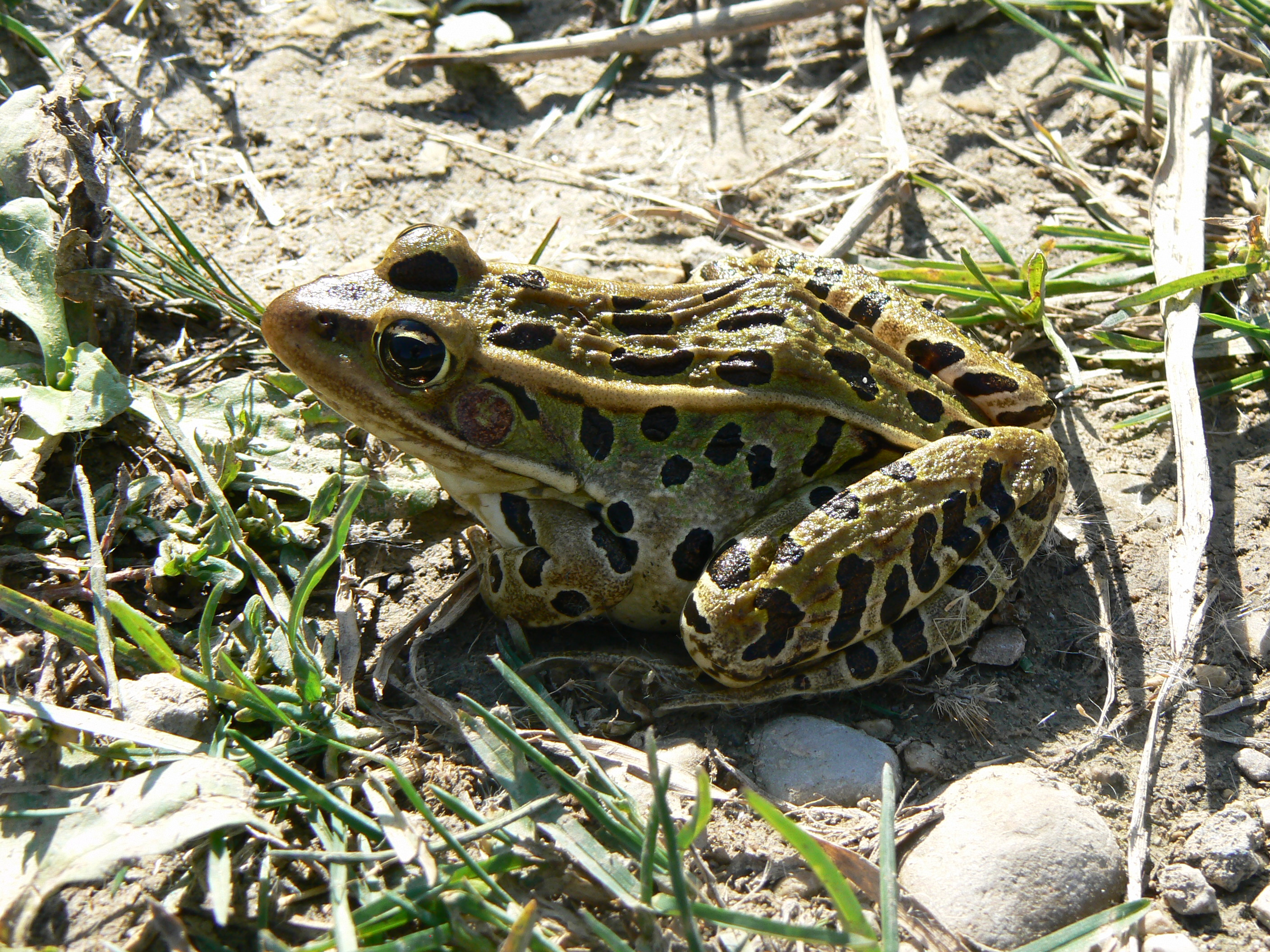
I am participating in the Wehr Nature Center’s Halloween event this weekend.  They present a nature walk lit by jack o’ lanterns that features various costumed characters who teach about wildlife and traditions of Halloween.  There are some lovely teenaged girls volunteering who represent decomposers like Millipede and Roly-poly.  They do a rap song.  I am playing two different characters.  I am V.C. Frog for two nights and the Witch for our sold out Saturday night.  I suppose you’re wondering what V. C. stands for.  (That’s actually one of my lines.)  It stands for Very Crabby.  VC has litter and algae and petroleum products clinging to him.  He is looking for a clean pond.  One of the visitors listening to my schtick piped up to say that he is a Boy Scout, and he regularly scoops litter out of his local pond.  I thanked him on behalf of frogs everywhere.

Doing my part last night entailed standing on a wood chip path in the rain in a fleece frog suit with mosquito netting covering my face.  The full moon eventually shone through the dissipating clouds.  The Canada geese on the pond were making as much noise as the volunteer owl who ‘hooted’ loudly at intervals.  I was croaking softly as the walkers approached me.  I do a pretty good croak.  It was strangely surreal, though.  Natural and fake at the same time.   Is this harmonizing with the planet?

Happy Frog at Vernon State Wildlife Area

I read in our local paper that there is a 420-million year old tropical reef here in Wauwatosa.  This piece of land has been hidden behind an industrial site for decades.  Before that, it was part of a quarry.  A recent purchase of the land by the Historic Preservation Committee will allow limited access to the public.  Fossils from this site that were collected by a local pioneer physician are housed at Harvard.  I look forward to exploring the area and trying to imagine this place under equatorial waters.

What’s in your backyard?

Unknown's avatar

Discoveries

In 14 hundred and ninety-two, Columbus sailed the ocean blue…

Happy Columbus Day.  In my family, the tradition is to play selections from Stan Freeburg’s “The United States of America” on this day.  Especially the song “It’s a Round, Round World”.  Just because it’s silly and we’ve memorized the whole record.  Yes, record.  As in vinyl.  It was from Jim’s collection.

“You have a dream?”  “Yes, I do.”   “Would you like to talk about it?”

Yes, I would.  My dream is to live a life of discovery, to open my eyes and ears and arms and senses to the vast experiences of this round, round world.  To open my mind to possibilities for living, to find ways of peace, of tolerance and acceptance.  To learn from the earth, from the other living things around me, what it is to be in harmony with my surroundings.  I want to discover how to live in grace.

To look far off

and close up

to notice relationships

and contrasts

Awareness, appreciation, attitude, action, activism and education.  Discovery, embodiment, and teaching.  The way of the bodhisattva, actually.

Yes, that’s my dream.

Unknown's avatar

Squirrely Business

A whole lot of chattering is going on in the trees outside my bedroom window.  A whole lot of rustling is going on below.  Animals are harvesting and gathering and hiding food away for the winter.  We have a special friend whom I call Itchy Twitchy.  He sits on the fence above our landlord’s garbage can and munches on whatever he’s gleaned from inside it.  He has (or his friends have) chewed a couple of holes in the plastic can big enough to fit through, so he has easy access to the people food in the bottom.  I have found him working on Eggo waffles and chicken legs before.  When he’s not eating, he’s itching and scratching.  He probably has some kind of insect parasite problem.  He has to do some pretty nifty acrobatics to clean thoroughly while still perched on the fence.


Sometimes it looks as if he has a belly ache from something he ate.

I really appreciate his visits.  He reminds me that despite my suburban surroundings, there are other critters making a living here besides the human neighbors.  Steve and I were talking about hubris and anthropocentricism at dinner again, and we keep coming back to a desire to be open to the wider world.  I think my landlord considers Itchy a pest, and he keeps saying, “Yeah, I need to get a new can.”  But he hasn’t done it yet.  I’m not sure waffles are the best squirrel food, though.  Maybe it would be better to fix the can and put out the occasional corn cob or plant sunflowers and echinacea?

I have grand ideas about saving the planet, but maybe I should start in my own back yard and figure out how to have a good relationship with the squirrels first.  In other words, address my own hubris.

Unknown's avatar

Harvest and Hunting

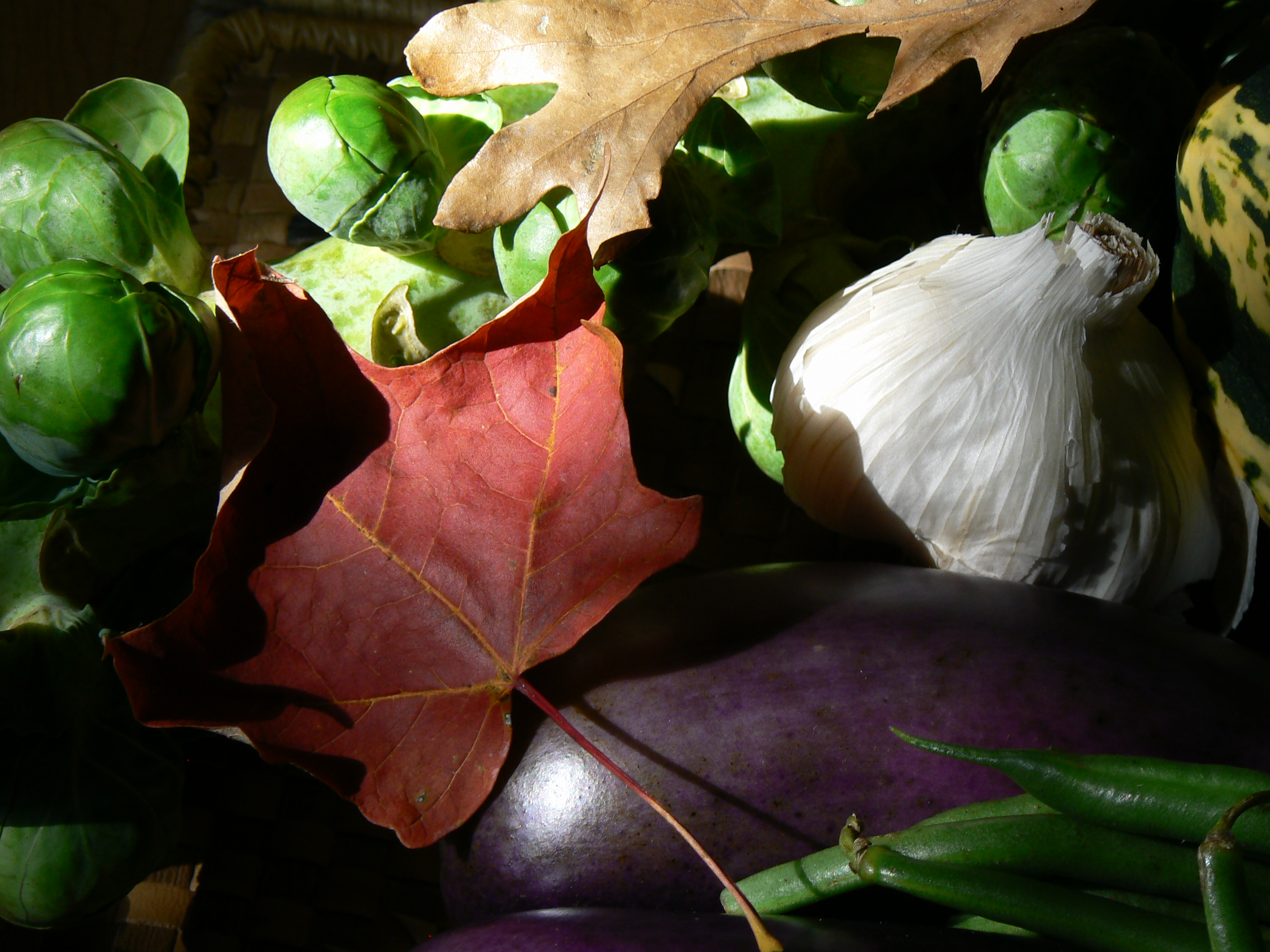
Next Saturday will be the last Farmer’s Market day for ‘Tosa.  Today’s was spectacular, though.  Here’s a picture of my morning harvest.

Oh, it’s so beautiful, I have to show you another:

As we walked to the market place in the village, we noticed a deer on someone’s front lawn grazing on fallen crabapples as the leaves blew around her.  Such a picturesque view of Fall, but unfortunately, I didn’t have my camera with me.  This evening,  I made a risotto using the Japanese eggplant, green beans, garlic, onion, and red pepper.  Supplemented with a couple of unfinished bottles of red wine plus a loaf of Kalamata rosemary bread, also from the Farmer’s Market.  Dessert was Amaretto and brownies.

In the afternoon, Steve and I went walking in the Vernon State Wildlife Area.  Emily will remember this place.   Oh, and we took the D.H. Lawrence novel we’re reading with us.

Our reading spot

Our reading was punctuated by the sound of rifle fire not far away.  Also, up the river was a duck blind and a bunch of decoys.

Not the real thing

We had a lot of questions.  Are there supposed to be people hunting waterfowl in a wildlife refuge?  The signs that were posted were confusing.  There’s no waterfowl hunting whatever beyond certain signs.  No one is allowed in the refuge area from Sept. 1 to November 30 except for gun deer hunters.  You can’t hunt on the dikes between the signs.  We took the long way around the perimeter of the area, and ended up on the railroad tracks for a while to avoid the marshy path.

Taking a higher road out of the marsh

We finally got back to the parking lot at about 4:30pm and noted more cars and people in camouflage gear with guns taking to the trails.  What was going on?  The sign in the parking lot did indicate that Hunting was one of the features of this wildlife area.  But is it deer hunting season already?  As concerned citizens, we wanted to know.  Steve jumped online when we returned home and learned that this weekend is Youth Deer Hunt weekend.  The Wildlife Area is a public hunting area, and only a portion of it is a refuge.  From the Department of Natural Resources website: “Youth hunting events give hunters ages 10 to 15 an opportunity to hunt and gain valuable experience without competing against adult hunters. Special seasons for a variety of species allow only youngsters to hunt during these days under the supervision of their mentor.”  Here is a picture:

From the DNR website

This morning, we were talking about children taking responsibility and how there ought to be a way to give kids a more meaningful role in society – somewhere between child labor and “playing” at adult roles while mom or dad do all the real stuff because adults are more efficient.  So I’m asking myself, is “hunter” a meaningful role in today’s society?  Are these kids helping the family to eat for the winter?  Are they participating in a traditional family role?  Do they partake in any ritual of acknowledging the deer’s part in this event, as many hunting cultures do?  I don’t want to be dogmatic, and I don’t like killing for sport.  I wonder what these kids are taught by their “mentors” about hunting.  I suppose I would have to speak to a hunter to find out.  I have questions.