Unknown's avatar

My Biology, My Self

There’s one question that keeps coming up, begging for my attention.  “Who am I?”  Perhaps this is a Socrates Cafe revolving door.

How much do you identify with your body?  Or your gender?  Or your ego?  How much do you identify with your Big ‘S’ Self?

What’s a Big ‘S’ Self as opposed to a small ‘s’ self (or what I call the Big Ass self)?  Steve describes it like the tip of a pyramid.  It has a base, but sits on top of a much, much bigger base –  The Big ‘S’ Self  – which is all about simply recognizing the world as it is without trying to impose any ego imprints on it.  My question today is “Where does my biology fit in?”  At almost 50 years of age, I certainly recognize how my biology has impacted life as I experience it.  It seems intrinsic to my being.  I couldn’t possibly imagine being a man.  My reproductive cycles, my hormonal moods, my childbirth experiences, my posture of surrender, my physical life and psychological attitudes that arise from that seem to be very much “me”.  And yet, all of that is in flux, changing all the time, even while The Change is looming in my not-too-distant future.  So maybe there’s a Big ‘S’ Self that isn’t affected by all that.  Would that be my soul?

How do I bring my Self and my self into a relationship?  How do I interact with someone else’s Self and self?

Sometimes it seems like it would be so much simpler just to have a body without such a brain dominating it.  Eat, sleep, have sex, die.  Nothing to philosophize about.  Sometimes it seems like I’m trying too hard to live well.  Morally.  Conscientiously.

Sigh.

Steve surprised me.  He bought me a picture book about a baby elephant.  It came in the mail today.  Sometimes the simplest thing is just to accept a gift….like life.

Unknown's avatar

The Sound of Silence

I was at the Wehr Nature Center this morning with a group of 11 first graders, looking for ingredients to cook up a batch of soil.  Soil.  It’s one of the two most precious substances on this planet (along with water).  We wouldn’t have anything to eat if it weren’t for soil.  So why not teach first graders to appreciate it?  We went out on the trail to find the living and non-living ingredients in soil.  It’s been raining pretty heavily and steadily this week, so all the trails are soft with soggy wood chips and all the leaves are damp.  Suddenly, I noticed something: silence.  The cloud cover and the moisture and the dropping temperatures are keeping people away, I surmised.  After waving goodbye to the kids, I decided to spend an hour on the trails alone, relishing the quiet.

There is a graciousness to quiet.  It’s very hard to cultivate in an urban setting.  Noise pollution is ubiquitous, so mostly we deny it.  I am particularly aware of this functional denial because I employ it every moment.  I have a cyst on the arachnoid membrane beneath my skull.  I discovered this about 6 years ago when I went to the doctor with tinnitus and got an MRI.  My hearing was tested, and I got a follow-up image 6 months later.  Basically, the cyst has put some pressure on my auditory nerve and caused the ringing in my right ear.  It’s not growing, and I don’t get headaches, so I opted to leave it alone.  I have ringing in both ears now, but it’s not usually a recognizable tonal ringing, more of an ‘ocean sound’ that causes some hearing difficulties.  It’s very easy to ignore.  When is life ever so quiet that you’d hear the blood rushing in your ears?  The only time that it bothers me is when I am lured by the elusive possibility of complete silence.  Sort of like light pollution.  When does light bother you except when you are lured by the elusive possibility of a perfect starry night?  Or when you’re trying to fall asleep?  And when is it ever a good time to have elective brain surgery??  Certainly not while my husband was dying, and certainly not now when I don’t have medical insurance.  So I’ll skip it.

But stillness and quiet at the side of a pond is a magical gift.  I did startle some mallards who were hiding by the reeds.  Two flew away, but the other two just paddled a few feet out and then turned around.  I came quite close to a fat, male cardinal and a red-headed woodpecker.  I got the feeling that everything was in a subdued mode.  The colors were muted, the sounds were muted, animal activity was less raucous than usual.  A holy hush, perhaps.

The Lord is in his holy temple, let the all the earth be silent before him. (Hab. 2:20)

That reminds me of my Dad.  So did the cardinal.  Dad could whistle the cardinal’s song and used it to call us to attention.  I learned to do it, too.  (My kids probably hate the sound, but it works.)  Who do you think of in silent moments?  What calls to you out of silence?

Unknown's avatar

Suffering Attachment

Today was a cottage industry day.  Mondays are good days to get all the book orders from the weekend off to the Post Office.  It’s always interesting to peruse the stack and see who’s buying what and where it’s going.  Today there was a book on mourning going out.  I couldn’t help myself, I had to look into the table of contents and see what helpful and insightful pearls of grief I may have missed.  Philosophical or practical nuggets on this subject still pertain, right?  So there I was, reading about identity and widowhood, and it still struck a chord.  How am I almost 50 years old and still not sure who I am?  I have been working really hard on this for 3 and a half years now.  I am working on updating relationships, working on being as honest as I possibly can in order to face myself and my changes directly.  I am working on my memories a bit more slowly, I suspect, because I don’t live with my kids who share those memories, and I don’t mention all the ones that occur to me when I’m with Steve (not that he’d object in any way).  What do I mean by “working on my memories” anyway?  Well, I guess I mean identifying the emotions associated with them.  Maybe the primary work is the identification of attachment and expectation and the acknowledgement of the suffering that produces.

Jim was my first love, my high school sweetheart, my only husband, and my best friend for 30 years.  I expected to be reminded of that head-over-heels falling in love stage on a daily basis for the rest of my life.  It’s starting to fade.  I see my daughter and her boyfriend together, and I am reminded of that youthful, giddy feeling…and I realize that I don’t feel it anymore.  It’s an attachment I developed.  It’s not necessary in any way.  Many people don’t feel that way and never did.  Why can’t I just get over it already?  Jim was a singer.  He sang to me frequently.  I expected to be serenaded throughout my life, I suppose.  It’s not happening.  I miss it.  The fourth finger of my left hand feels occasionally naked, and I will twirl the phantom ring that is no longer there with the surrounding fingers every once in a while.  I wish I could just stop doing that.  In brainstorming with my kids about possible homestead arrangements, it feels weird that Jim isn’t part of that family meeting.  I suspect that I have a million small expectations and maybe a couple of dozen rather large ones that I have not been able to exorcize.

Grief seems to be the gift that just keeps on giving.  My identity was very much associated with being Jim’s wife, and I am working on getting to know myself as just myself.  And I keep on working.  Here are a few things I know about me:  I am a visual person; I like pictures.  I like figuring out how to do stuff.  How do you treat deer skin after you’ve field dressed your kill, and turn it into leather? (I wake up in the middle of the night wondering about stuff like that.  No kidding.)  I am an introvert.  I managed to live without “partying” and “dating” for my entire life so far.  I am a “natural woman”.  What do you mean by that?  I liked getting pregnant and having babies.  I like taking care of people.  I like preparing food.  I also like being silly and childlike and entertaining.  I like sensual experiences: fragrance, textures, tastes, sounds, sights, juxtapositions.  I like enjoying them unhurried.  I have a million insecurities and anxieties and a huge desire to be a good person.  I have fantasies of being really good at something and recognized for it.  I am a bit on the “dreamy” side and rather afraid of meeting the world head on, but I work hard at being practical.  Relationships are really important to me.  I want to be loved, and I want to be loving.

I like camping and building fires.

And all of this might change.  What happens if I get to know me and get attached to me and then develop Alzheimer’s like my dad did?  Best to stay light on my feet and light in my thinking, not get dogmatic about it.

Life is suffering and life is wonderful.  And sometimes I just feel sad about the attachments I’ve developed.  And that’s the truth.

Unknown's avatar

Functional family time

I love my family.  I love hanging out with my kids and doing stuff together.  I visited my “twins” (they’re 2 years apart, but they are best friends) in their new location for the first time this weekend.  My youngest was there as well.  We played in the dirt and planted trees, we played on the roof and planted an antenna, we sang, we brainstormed, we drew pumpkin decorating designs, we walked the dog, we ate pizza and drank wine, we watched a Bears game.  And we talked.  About dreams, about their dead dad, about relationships, about farting, about how children learn to talk, and how growing up is an organic and holistic process.  My favorite thing was that my youngest daughter remarked that she is so happy that she doesn’t feel the need to hide anything from me anymore.  We’ve been through a lot together, my kids and I.  Can I say that they are my best friends?  For someone who thought she had no friends, this is a happy epiphany.

Girls play in the dirt, too

I invested a lot in my relationships with my kids.  My youngest was in junior high when I started my first full-time job.  Ever.  I am forever grateful to my husband for making it possible for me to be at home all those years.  The world my kids will inherit will be a different place.  Things are changing, protests are raging, systems will fail and fall.  And that’s all good.  In order to feel “safe”, it seems like options spread out between building a fortress of security and being light on your feet.  Maybe the best of that spectrum is having an inner fortress that includes confidence in being loved and an outer flexibility of skills and adaptability to change.  We are each of us working on building those things, and we support each other in our growth.  The dream we have is to live together somewhere, on some land, in some place and work on that in community.  Right now, we are all renters in 4 different places in two states.  Some day, we’d like to be on a multiple-family homestead supporting  ourselves (and perhaps others) sustainably.

“Inch by inch, row by row, gonna make this garden grow.  All it takes is a rake and a hoe and a piece of fertile ground.”  And hard work.  And a dream.  And love.  I am grateful for inspiration and pioneers like the Dervaes family and for reminders to stay open in the process.  We are pointing our canoe and paddling.  We’ll see where we get to.

Unknown's avatar

Friendship

I woke from a dream this morning feeling the hostility of people whom I thought were my friends.  It made me wonder about myself and about friendship.  My late husband, Jim, was a very popular person.  About 300 people came to his memorial service.  Collecting friends was as easy as collecting dust for him.  Everyone liked him.  He was easy-going, out-going, always going.  He had friends from the P.B.A. (bowling buddies), friends from church, friends from music groups he was in, friends to golf with, friends he worked with, friends from Junior High School he still played cards with on occasion, friends he met through me, even, who probably liked him better.  He was gifted in the social dance and spun like a well-balanced top.  I admire that, and I’m not like that.  Does that mean there’s something wrong with me?

Before I got too heavily into my little pity party, Steve woke up and asked me what I was thinking.  Then he asked, “So, what is a friend?”
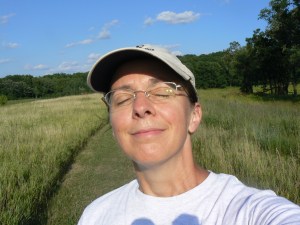
With my friends the sun and the prairie

I have never really had more than one good friend at a time.  Neither has Steve.  We’re both introverted, which is one way to label us.  What does that mean?  We go inward, downward.  We get introspective and deep.  We challenge ourselves, and we challenge others. Often, this makes other people uncomfortable.  Steve has no problem being uncomfortable; he’s just that confident and always has been.  When I feel uncomfortable or that I’ve made someone else uncomfortable, I get very judgmental of myself.  I hide from the discomfort.  That can make me seem aloof, I suppose.  When I am with my one friend whom I trust, I can risk being uncomfortable and be honest.  This is what I want most in a friendship.  I have a lot of questions that I want to ask, but I’m afraid to ask most of them.  It takes me a long time to feel that I’m in a safe enough space to be my questioning, challenging, unsure self.  Providing that space is a wonderful gift.  Really interacting with me in that space is a rare and holy experience, and one that I think I have sought out throughout my life.  I have been in prayer groups, Bible study groups, leadership groups, workshop groups, meditation groups, and interactive groups of all kinds ever since my teenaged years looking for that.  I thought I was just looking for acceptance, but now I think I was looking for much more.  I don’t crave being social.  I crave the mystery and vulnerability of authenticity.  I want to feel free to go into dangerous inner territory, and I’d like a companion to help me feel safe.

Years ago, my spiritual director asked me if I thought Jim was my “soul mate”.  I replied, “Sometimes.”  We’d get to places of depth, and then he’d pull up.  I accepted that.  Then I’d go to another prayer group or walk alone in the prairie or write some poetry.  It worked.  We were very good companions, but different.  There is no “right” way to be a friend.  We aren’t guaranteed a soul-mate.  Although, if you look at Yahoo news items, they will give you a list of how many friends you’re “supposed” to have and what kind and then give you 6 tips on how to make more friends.  I imagine that is fear-based, and that’s what I want to avoid.  “I’m afraid that no one likes me” “I’m afraid there’s something wrong with me” “I’m afraid I’ll die alone and unloved”.   I am who I am.  I will be who I will be.  We all die on our own.  I will go down to the depths with myself, if no one else, and that will be fine.  God is within me, at the depths, around me, everywhere.  That space that allows me to be how I am is God.  There is nothing to be afraid of.

After breakfast, Steve played his favorite song.  It always makes him (and now me) cry.  The last verse goes like this:

His head was bent in sorrow/ green scales fell like rain/ Puff no longer went to play along the cherry lane.

Without his life-long friend, Puff could not be brave/ So Puff that magic dragon sadly slipped into his cave.


Life changes.  Sometimes we slip into a cave and become our own best friend.  We can still explore the depths there and thrill to that dangerous territory.

Unknown's avatar

Crimes Against Nature

Have you read about the exotic animal farm incident in Ohio?  If not, here’s the recap.  Apparently, there was a man keeping exotic animals (big cats, monkeys, wolves, etc.) in a small town in Ohio.  He’d had a history of run-ins with the authorities over permits and conditions.  So a few days ago, he opens the cages and then kills himself.  The authorities then decide that the 50-some animals need to be rounded up and shot.  Only a handful were re-located to a zoo.

This just strikes me as a tragedy all around.  First of all, Ohio is no place for a Bengal tiger.  A zoological conservatory would be perhaps a defensible home for a tiger should it require being in Ohio, but a small farm?  Second, if you can’t take care of a Bengal tiger at your home in Ohio, leave it alone.  Let it stay where it was, for crying out loud.  Third, if you get the tiger to your home in Ohio and later discover that you are not doing an adequate job of caring for it, find someone who can help, like that zoological conservatory.  Don’t just let it out to wander the small town streets creating bad press for animals and protective agencies alike!!  What a mess.  It seems like such a string of poor decisions, lack of responsibility, and lack of respect.  If that man had not taken his life, I’m sure he would have been slapped with a few violations and fines.  (okay, a truckload of violations and fines)  But then again, when we fine people for crimes against nature, does that act as a deterrent to others?   Do people really learn to respect animals or habitats because of punitive measures?

The Nature Center where I volunteer has a posted fine of $250.50 (not sure why that particular amount) for bringing pets into the area.  There are other Milwaukee public parks specifically for dog-walking, but Wehr is a preserve, meaning a place where wildlife and habitat are protected.  A place where animals and plants can be free from the stress of dog traffic.  A place where nature lovers can be free from the stress of dog traffic.  In other words, NO DOGS ALLOWED.  One of the volunteers was leading a group of school kids down a path and encountered a couple with a dog.  “Excuse me.  I’m sorry, but dogs are not allowed in the nature preserve,” she said.  “Oh, it’s okay.  We do this all the time,” was their response.

What we have here is a failure to communicate.

We try to teach the kids to respect the nature center.  “Why don’t we want dogs here?  What do you think?” we ask.  “Because they’ll eat the wild animals?”  Well, probably not.  But they will probably scare some, make them nervous and upset.  We want them to feel safe here.  “Why don’t we want people picking flowers and plants here?  We have 50,000 visitors a year.  Even if they only took one plant, what might happen?”  There would be less for the animals to eat, fewer for the insects, and even for the other people to enjoy.

How do you teach respect?  How do you teach empathy?  How do you communicate something about making considered choices about what you buy, what you throw away, and what you do with that big recycling container that sits by your garage unused?  I do not feel comfortable in confrontations, and as a rule, I avoid them.  I have played “police” with my kids, and it was my least favorite part of parenting.  I wish I had been better at teaching respect and consideration without using “rules” and “punishment” because frankly, that seemed to invite more disrespect.  What if I just showed them the consequence of some disrespect that happened and just let them look good and hard until they felt something on their own, and then talked gently with them about what they saw, what they felt, what they thought, and what they wanted for their own actions and decisions?

Take a good look at the pictures of the animals that were shot in Ohio this week.  Look deeply.  Feel deeply.  Think deeply.  Invite someone else to look as well and talk about it.

Unknown's avatar

Mexico in Milwaukee

It’s 49 degrees outside, and raining.  Through the cracks in the window casements of this old duplex comes a rushing wind.  It got dark before dinner.  After a simple supper of red potatoes, acorn squash and chicken breast, Steve and I curl up on the couch to read aloud from D.H. Lawrence’s The Plumed Serpent.  We take turns with each chapter.  Our Spanish accents are not too bad, subtle for the most part.  In a matter of minutes, we are transported across time and climate.

“It was sunset, with a big level cloud like fur overhead, only the sides of the horizon fairly clear.  The sun was not visible.  It had gone down in a thick, rose-red fume behind the wavy ridge of the mountains.  Now the hills stood up bluish, all the air was a salmon-red flush, the fawn water had pinkish ripples.  Boys and men, bathing a little way along the shore, were the colour of deep flame.

Kate and Carlota had climbed up to the azotea, the flat roof, from the stone stairway at the end of the terrace.  They could see the world: the hacienda with its courtyard like a fortress, the road between deep trees, the black mud huts near the broken highroad, and little naked fires already twinkling outside the doors.  All the air was pinkish, melting to a lavender blue, and the willows on the shore, in the pink light, were apple-green and glowing.  The hills behind rose abruptly, like mounds, dry and pinky.  Away in the distance, down the lake, the two white obelisk towers of Sayula glinted among the trees and villas peeped out.  Boats were creeping into the shadow, from the outer brightness of the lake.”

At the end of the chapter, we talk about the book.  What is happening between the characters?  I remember feeling that way once…  What did you think about the parallels drawn between these characters and Salome and John the Baptist?  I like how he describes invisibility and hidden places in the characters and then echoes that in his description of the flora and fauna.  Socially and culturally, this comment is very interesting.  Do you think Lawrence was racist?….

Two hours go by.  We feel close, connected, stimulated emotionally and intellectually.  And warm, relaxed.  This is good.  I’m so glad we don’t own a TV.

Another corner where I curl up with a book

Unknown's avatar

Autumn Sentiments

The autumn years of life.  The harvest of a lifetime.  Gathering together the products of work and character.  There’s something nostalgic and lonesome about autumn, sweet and melancholic.  Glossy photos of food and family and warm colors seem so appetizing.  I am planning to host Thanksgiving dinner for Steve’s family, and I keep daydreaming about how the table will look.  I want my home to be filled with warmth and love, good smells, earthy colors, sparkles of glass, silver, and candlelight.  Of course, this will be on a modest scale.  Martha Stewart does not live anywhere near here.  I have song lyrics stuck in my head from Barry Manilow’s “Paradise Cafe 2:00am” CD… “Oh, how I hate to see October go.”  How will I get my Thanksgiving vegetables now that the farmer’s market is closed?  The acorn squash and broccoli we had last night were delicious, dressed only in butter, salt & pepper.  The earth is so good to us and autumn is the applause before a winter curtain.  How do you feel when you’re giving a standing ovation, damp-faced and shining, heart bursting, swallowing hard, delaying your exodus into the next moment?  I feel that way about autumn.  I remember driving home from dropping one of my children off at preschool one cloudy November day and bursting into tears.  I tried to figure out what that was about and ended up writing this poem:

Change

In autumn, the trees start to sing once again

of the bittersweet mystery of change.

Is it beauty or pain now attached to my soul?

Is it grief…or relief…or nostalgia?

In the scarlet and gold,

the blood-red of life’s hold…on my heart

and the warmth of its love

mingles memories and years

into afternoon tears

falling softly…as leaves…to the ground.

Unknown's avatar

The Shadow Side of Abundance

I’ve connected a few strands in the cobweb of my mind.  Follow me, if you will.

I’ve been thinking about my shadow side, my dark side, and I’ve located an area that I think could be it.  It lurks in my ego, in the part of me that craves attention for myself at the possible expense of others.  This is where I am tempted to be manipulative and fake.  The origins of this desire are nebulous, but I can identify manifestations in my childhood.  I was daughter #4 in my family, the youngest child for 11 years, the only blonde, with a ski-jump nose and a pouty lower lip.  I was cute (pardon my use of this hated word, Steve!), especially to strangers.  My family used to tease me for being “touched by waiters” because every time we went out to eat, the waiter would pat me on the head or something.  I loved being cute.  I loved the attention because my deep-seated fear was that I was redundant.   With three older sisters, there was always someone near at hand who was smarter, more accomplished, and better than me at everything.  I struggled to find a niche where I could have my own spotlight.  I actually found that in music, so I majored in Voice Performance in college.  My mother was very musical, but a rather shy performer.  I pushed myself to overcome my natural fear of being judged so that I could stand out every once in a while.  This thread leads to….

Salieri in “Amadeus”.  His dark ego leads him to all kinds of hateful thoughts about Mozart and about the God who favors him.  This fear of redundancy gripped him.  He saw the world as a competitive arena.  “This town ain’t big enough for the both of us” is a theme in a lot of movies, actually.  Walking to the farmer’s market today, I noticed redundancy all over.  Nature is full of it.  How many leaves gather in the gutter?  How many stands of squash and potatoes gather for market?  How many people, how many birds, how many mice or ants or whatever do we really need?  What is the point of abundance and why is redundancy a bad thing?  Follow “Amadeus” to….

Cynthia Nixon, who played Mozart’s maid and Salieri’s “spy”.  This is the only performance of hers that I’ve actually seen.  I did find an article on her when I read and researched the Pulizer Prize winning play, “Wit”.  I discovered that she is in a lesbian relationship now, and she was quoted as saying that she never thought of herself as a lesbian.  What she did say was that “here was this undeniable person”.  That phrase stuck with me.  I wonder at all the things we find redundant and ask if we are denying them.  Of all the leaves that I encountered on this windy day, did I deny most of them and only notice a few?  I actually picked up only one to look at it more closely.

We don’t know what to do with abundance.  We can’t possibly take it all in, so we deny much of it and acknowledge only a portion.  The rest we call “redundant” because we have no use for it.  But Nature is abundant for some reason.  Could it be that it’s not just for us?  Oh, that’s hard for our egos to imagine.  Think of the use of pesticides.  Why in the world would there be so many little critters who eat vegetation?  We don’t need them. It must be a mistake.  Let’s kill them off.  What’s the result?  Dead soil – no humus, no living matter mixed with the rock, no space for air and water and roots.

Do we need all these beetles? Hey, maybe it's not about what 'we' need.

We live in an abundant world, and we are part of that abundance.  How do we refrain from denial and keep our minds open to more than we can comprehend?  The balance between abundance and scarcity in Nature keeps populations in flux and unpredictable.  Therefore, I suppose redundancy has its place in an uncertain future.  This is an ancient wisdom.  When we eliminate redundancy because it doesn’t make sense to our economic mindset, we are dangerously engaged in hubris.  Why are we allowing our seed banks to be monopolized and diminished, for instance?   Why are we allowing the rate of extinction to skyrocket?  Why are we allowing our denial to be imprinted on the planet?  We act in ignorance because we have no choice, that is to say that we will never understand the world completely.  But we need not act impetuously out of false assumptions driven by our egos.

Unknown's avatar

Think Big

How often do you think big….sooooo big!?

How do you keep the bigger picture in mind in a culture so enamored of minutiae?  What reminds you to “look up from your life”?  What words do you use to communicate the unknowable edges of the universe?  How do you maintain a posture of humility in an egocentric nation?  How often do you forsake the light of a screen to seek the light of the stars?

After traveling for 4 weeks to the west coast and back, my favorite memory became the night sky over Bandolier National Monument in New Mexico.  The heavens came down to the horizon without tall trees to push them back.  The stars spoke to me of vast possibilities, of fates and predictions thrown to the night winds.  I had the feeling that anything could happen.  I was far away from home, far away from my past.  I looked up and felt that it was time for me to dream new things.  I felt that my younger ambitions had already played their hand — I had been married to my teenage sweetheart until we were parted by death, I had raised 4 children to the age of majority, I had dabbled in the entertainment of various interests — and that greater things still revolved untouched before me.  I cried tears of relief and felt rested in the engulfing spaciousness.

My former spiritual director used to talk about “the MORE” of life.   The MORE is the mystery, the vastness, the infinity of which we can be aware without ever grasping.  The trick is to be aware of that while living out a particular life of responsibility.  Loving the whole universe can be done by practicing love for a specific part.  Here are some ways that has been illustrated: Mother Theresa used to say, “We can do no great things only small things with great love.”  My husband and I used to lead workshops for engaged and married couples for our church.  I told the couples that “my marriage informs my image of God and my image of God informs my marriage”.  Wendell Berry writes (in The Body and the Earth) “To live in marriage is a responsible way to live in sexuality, as to live in a household is a responsible way to live in the world.  One cannot enact or fulfill one’s love for womankind or mankind, or even for all the women or men to whom one is attracted.  If one is to have the power and delight of one’s sexuality, then the generality of instinct must be resolved in a responsible relationship to ta particular person.  Similarly, one cannot live in the world: that is, one cannot become, in the easy, generalizing sense with which the phrase is commonly used, a ‘world citizen.’  There can be no such thing as a ‘global village.’  No matter how much one may love the world as a whole, one can live fully in it only by living responsibly in some small part of it.  Where we live and who we live there with define the terms of our relationship to the world and to humanity.  We thus come again to the paradox that one can become whole only by the responsible acceptance of one’s partiality.”  So, think universally, act locally.

Living between mountains and grains of sand

What is thinking universally?  How do you keep the MORE of life in mind?  And how do you act on this mindset?

Wendell Berry, again, from Home Economics:

“To call the unknown by its right name, ‘mystery’, is to suggest that we had better respect the possibility of a larger, unseen pattern that can be damaged or destroyed and, with it, the smaller patterns.  This respecting of mystery obviously has something or other to do with religion, and we moderns have defended ourselves against it by turning it over to religion specialists, who take advantage of our indifference by claiming to know a lot about it.  What impresses me about it, however, is the insistent practicality implicit in it.  If we are up against mystery, then we dare act only on the most modest assumptions.  The modern scientific program has held that we must act on the basis of knowledge, which, because its effects are so manifestly large, we have assumed to be ample.  But if we are up against mystery, then knowledge is relatively small, and the ancient program is the right one.  Act on the basis of ignorance.  Acting on the basis of ignorance, paradoxically, requires one to know things, remember things — for instance, that failure is possible, that error is possible, that second changes are desirable (so don’t risk everything on the first chance), and so on.”

Remembering that we act on the basis of ignorance (because we really have no choice) should keep us humble.  Allowing that every seemingly random thing, like the way the rain falls from the sky, might be a pattern that we are just too myopic to recognize should keep us looking to the bigger picture.  Practicing love without the will to power (as Jung defines it) in particular relationships should keep us honest.  That is the way I want to point my canoe.