Unknown's avatar

Nerd Love

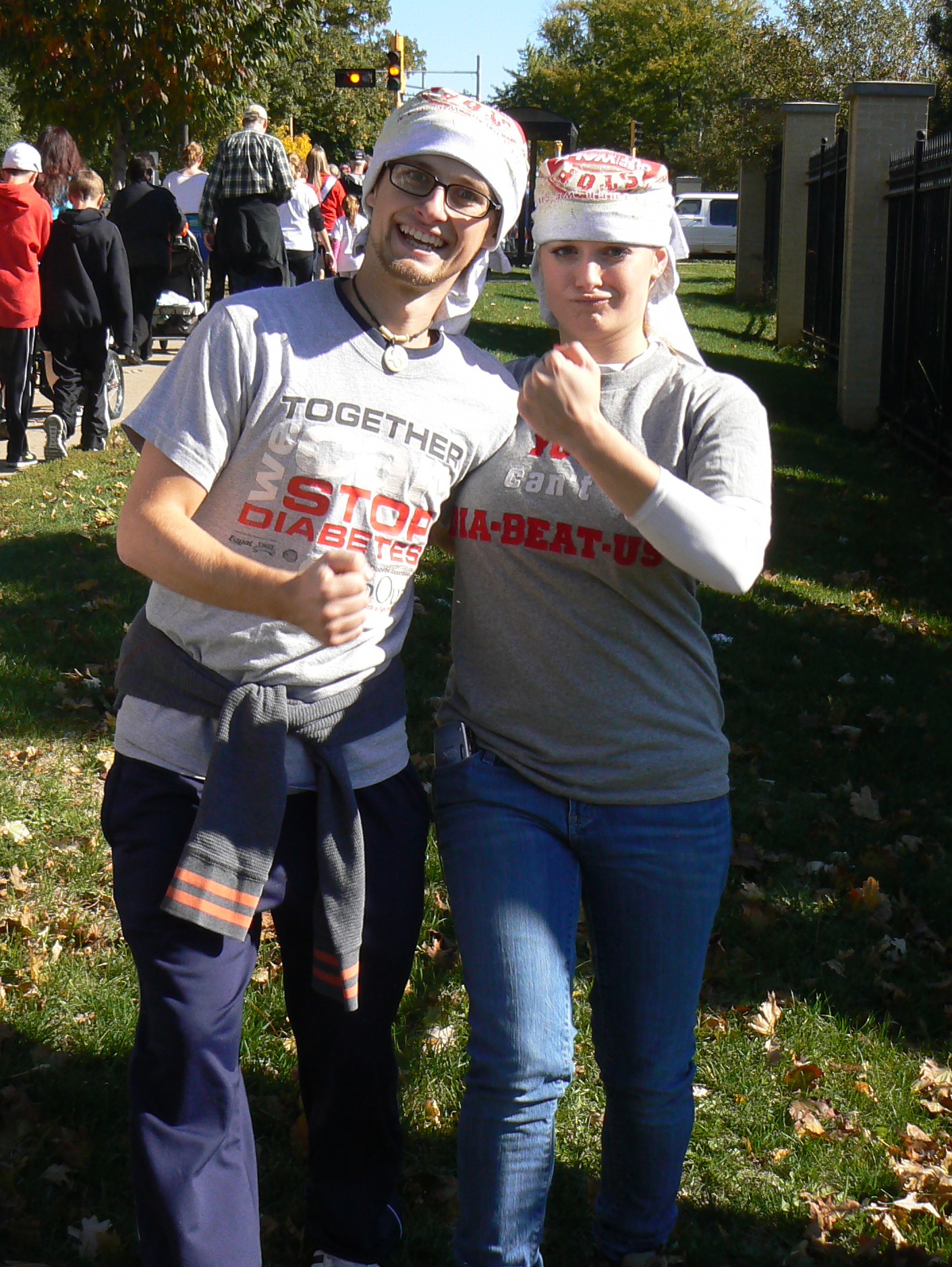
Last night, we watched the 1955 Academy Award winner for Best Picture, “Marty”, starring Ernest Borgnine.  The year this movie was released was the same year my parents graduated from college and got married.  My mother could have played the heroine, a gentle, intelligent young woman with a narrow Celtic jaw and a fabulously stylish but thrifty wardrobe.  Except she was just 20 when she got married, and Clara in the movie is a dangerously spinster-approaching 29.  Marty is “the stocky fellow”, an Italian butcher and a bachelor at 34.  My dad was “that cute boy on crutches” who was a little soft around the middle due to a bum knee that kept him from vigorous exercise.  The social game of the day in New York City was to go to The Stardust Ballroom, a dance hall “loaded with tomatoes”.  Marty and Clara are the kind who get turned down for dances.  He owns up to the fact that they are “dogs”, but awkwardly, tenderly, they begin to treat each other like real human beings.  They speak honestly together while Marty’s Italian family covers up true emotions with white lies and secrets and his buddies pretend machismo.  The two of them create a little oasis of sanity in the desert of social confusion.  And it’s charming, really.
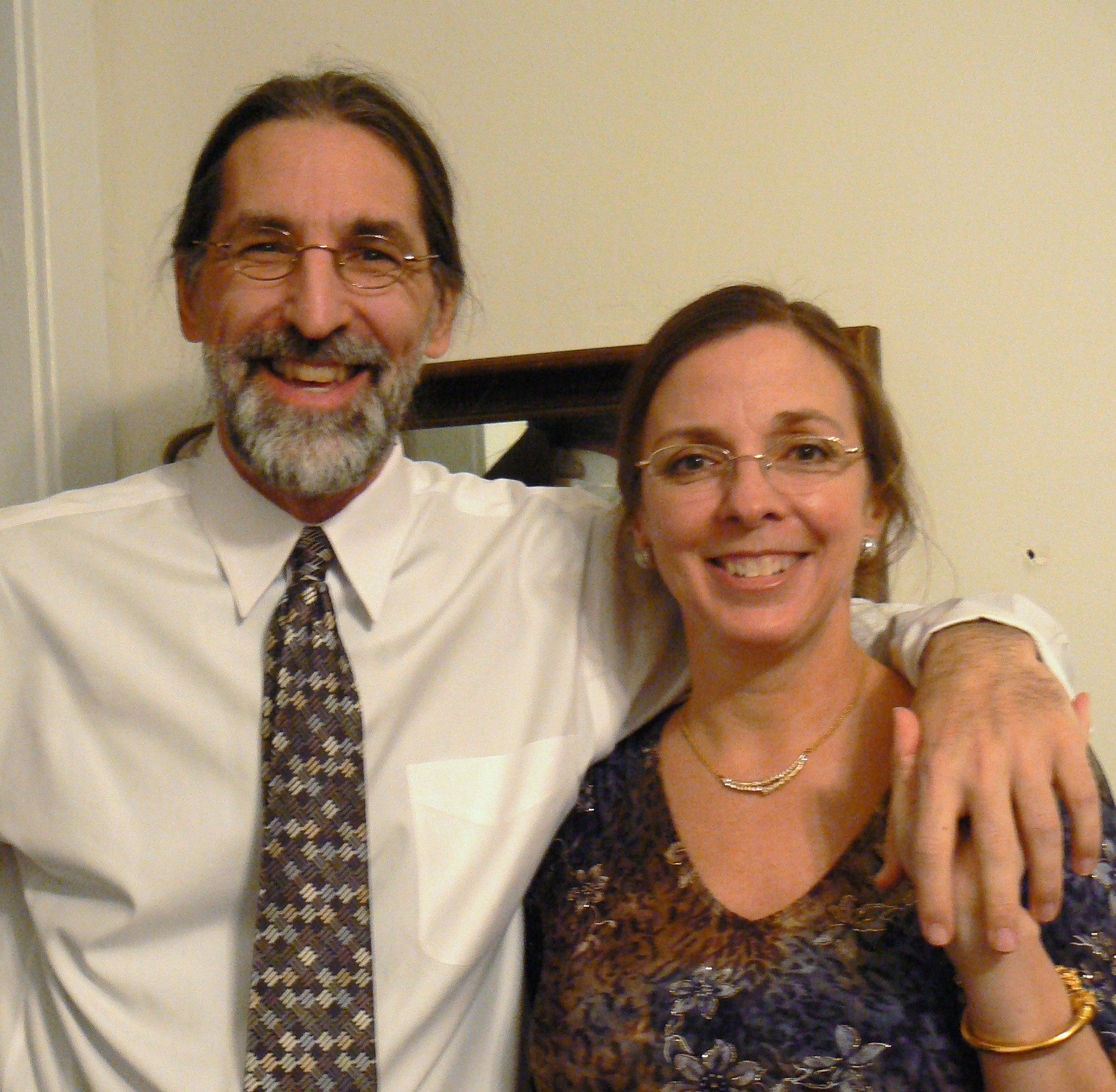
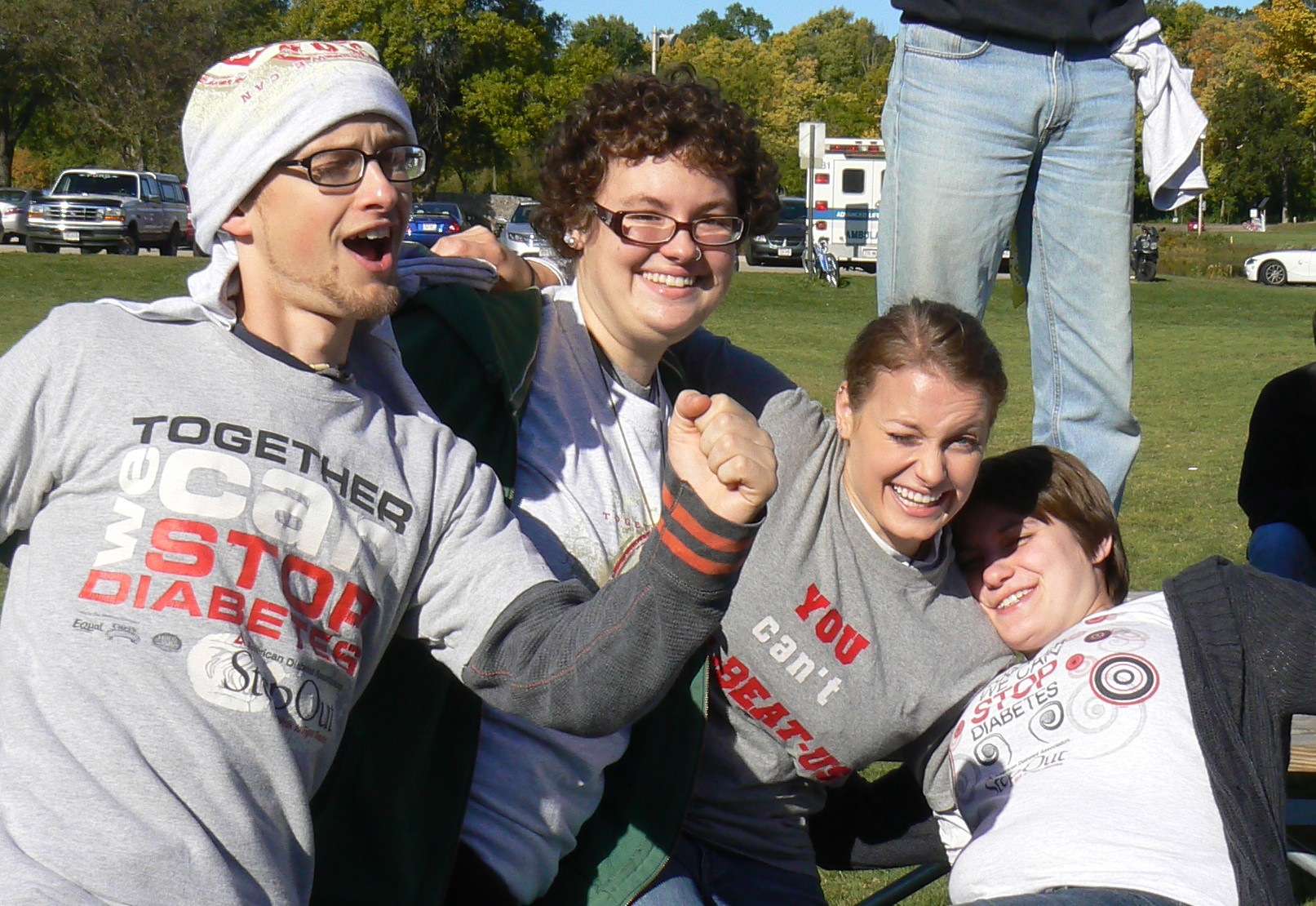
Happy nerds on opera night

All of us who grew up believing “that love was meant for beauty queens and high school girls with clear skin smiles who married young and then retired” (Tara Mclean) might find a champion in Marty, who recognizes a chance for happiness in being himself, like Motel in “Fiddler on the Roof” who asserts that “even a poor tailor is entitled to some happiness”.   Why does our society put so much pressure and competition into the process of discerning your identity and living authentically?  I suppose that our economy runs on producing that neurosis.  “You couldn’t possibly find love or happiness without our product!”  Maybe there’s a lurking sense that civilization is actually advanced by feeding that neurosis in order to produce those marvelous, gorgeous, socially admirable types.   God forbid that the misfits should breed.  And so, the universal theme emerges: misfits and nerds are humans, too, and we all belong in that category, really.  The “in crowd” and the “out crowd” are fantasies.  We are ‘the crowd’, that’s all.

The Italian mothers in Marty’s neighborhood keep up this refrain: “You oughta be ashamed of yourself.  34 years old…when are you gonna get married!”  Shame.  God, what a horrible thing to put on someone.  I am a mother, I oughta know.  I used it enough.  Now I feel like shouting out, “Never mind what I said before!  Be happy!!”   Aren’t we all entitled to life, liberty and the pursuit of happiness  as long as we aren’t harming anyone?  Ah, yes, it can get complicated.  The pursuit of my happiness might impinge on the pursuit of your happiness.  It happens.  I can’t be a happy Italian mamma unless all my sons are married to Italian women and producing grandchildren that I can feed.  Maybe happiness has to be a responsibility that doesn’t require someone else’s participation.  Can I be a happy Italian mamma all by myself, cooking for myself, caring for myself, doing things I enjoy, entering into relationships by mutual agreement, not by obligation?  Marty’s aunt keeps saying, “I’m 56 years old, a widow.  This is the worst time of life.  I’ve got no one to cook for, to clean for…”  Marty’s girl suggests that she take up some “hobbies” and the old women stare at her as if she’s just shot a hole in her own forehead.  God forbid I should take responsibility for my own happiness!  No, make that “God require that I should take responsibility for my own happiness”.

Be happy, people!  Live happy, love happy.

Unknown's avatar

Walking in a Winter Wonderland

Believe it or not, we had a green Christmas here in Milwaukee, and we STILL haven’t gotten snow.  I appreciated not worrying about my kids driving on the roads to visit me, and I’ve enjoyed going hiking in the warmer temperatures.  But I also enjoy snow hiking, even though I don’t own snowshoes.  The transformation of familiar objects and landscapes in winter is always interesting.  Without foliage, the contours of the land come out more strikingly.  With snowfall, they soften and blossom like ripe flesh.  We headed out to Lapham Peak yesterday in bright sunshine.  We discovered that they had created snow for some of their cross country ski trails.  Man-made, electricity-dependent snow.  Because this is Wisconsin, dammit, and we just can’t wait around for Mother Nature; winter break is NOW and it oughta be snowing already!  (sigh)  It’s sad to me that humans can’t slow down to fall in step with the planet.  We keep pushing it to keep abreast of us.  It’s like watching parents push their toddlers to be grown up by signing them up for language, dance and art lessons before they even hit nursery school.  It smells manipulative and inauthentic.  I am sniffing around in the other direction, trying to learn to open up to what exists.

The snow-making machine looks like a lunar landing module.

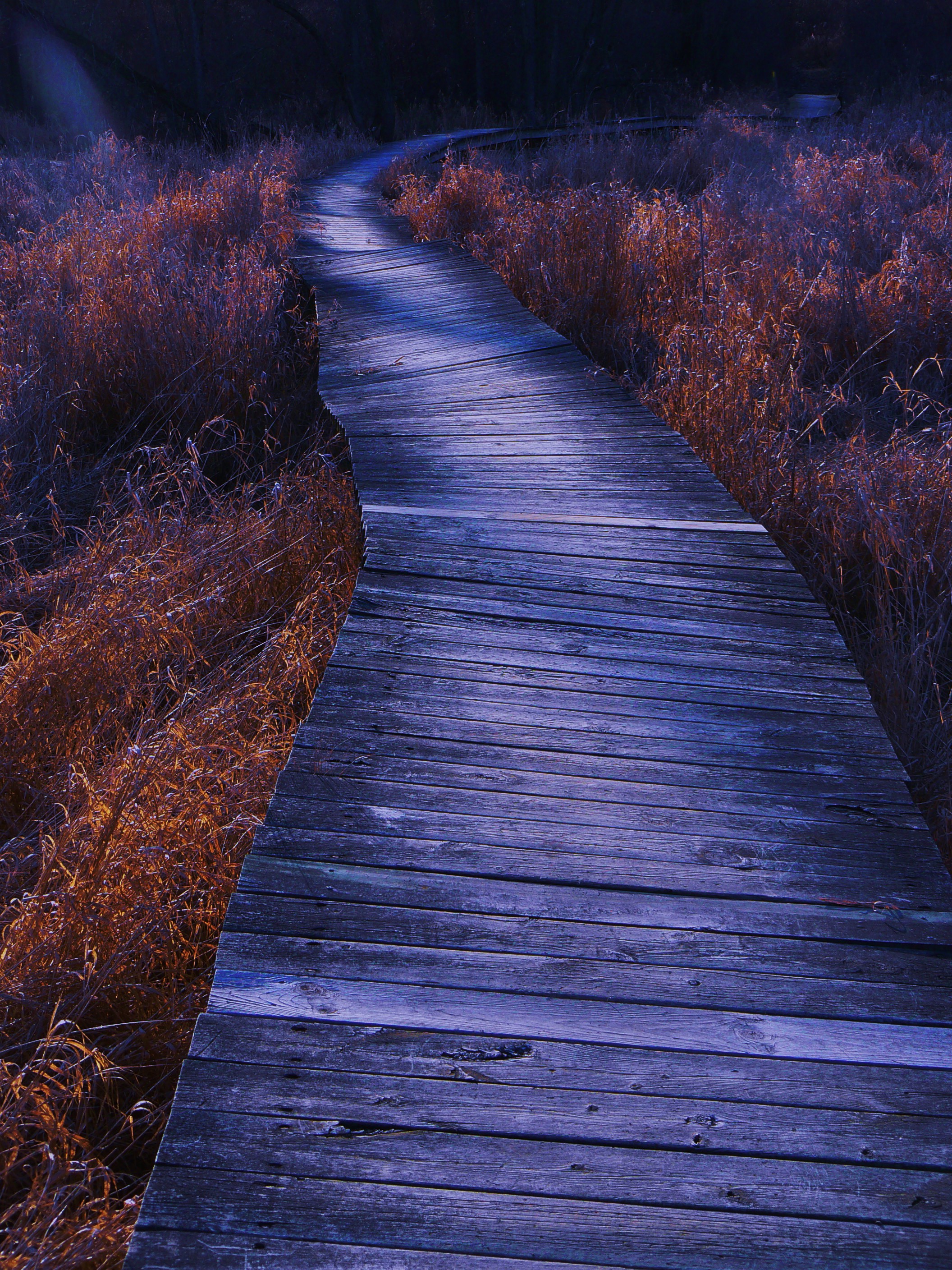
The boardwalk through the wetland has buckled and twisted in the process of freezing and thawing.  It reminds me of the changeable dynamic of a journey, a path in constant flux.  It tells me that my progress was not intended to be in a straight line, that meanders are natural and meaningful.  And that makes them interesting and challenging.  They invite me to adjust my balance, to pay attention, to dance with them.

  I have no idea what is around the bend.  There’s a new year coming up, full of mystery and thrilling movement.  I am feeling less afraid and unsafe in this realization, and more eager to take the fun house walk.

Unknown's avatar

Peace On Earth

It is Day #23 in the December countdown.  Today’s gift is Peace.  Ahh, peace.  Take a deep breath.  Relax the muscles around your skull; feel  your ears and eyebrows pull backward; close your eyes and roll your head. Do you feel a sense of well-being?  Julian of Norwich claims that God himself spoke these often quoted words to her, “All shall be well, and all shall be well, and all manner of thing shall be well.”  Do you believe that’s true?  Do you believe that’s possible?  I do, although I don’t always act as though I do. I forget.

Wikipedia uses these phrases to define peace:  “safety, welfare, prosperity, security, fortune,  friendliness… a relationship between any people characterized by respect, justice and goodwill… calm, serenity, a meditative approach”.  Where does peace come from?  Buddha, the Dalai Lama and many others will tell you that peace comes from within, not without.

“The first peace, which is the most important, is that which comes within the souls of people when they realize their relationship, their oneness with the universe and all its powers, and when they realize that at the center of the universe dwells the Great Spirit, and that this center is really everywhere, it is within each of us.” – Black Elk

But perhaps, there are things outside of you that will remind you of the peace which dwells within you.

“Climb the mountains and get their good tidings. Nature’s peace will flow into you as sunshine flows into trees. The winds will blow their own freshness into you, and the storms their energy, while cares will drop away from you like the leaves of Autumn.” – John Muir

Do you feel peace in your mind and body and soul all at once?  Do you descend into peace from your head down?

“I do not want the peace which passeth understanding, I want the understanding which bringeth peace.” – Helen Keller

I suppose each of us must find his/her own journey into peace.  Anxieties and conflicts are particular and personal.  Facing each one head on is not a passive task.  Making peace is not for the weak of heart.  “Blessed are the peacemakers, for they shall be called children of God.”  Is God about making peace?  Is making peace the work of the Universe?  Is it perhaps that joyful effort that gives life meaning?

“Peace is not merely a distant goal that we seek, but a means by which we arrive at that goal.”  – Martin Luther King, Jr.

If we can make peace between ourselves and God, ourselves and Nature, can we then make peace between ourselves and others?

“If we are peaceful, if we are happy, we can smile and blossom like a flower, and everyone in our family, our entire society, will benefit from our peace.” – Thich Nhat Hahn

“What can you do to promote world peace? Go home and love your family.” – Mother Theresa

Steve constantly reminds me that in every situation, especially in those that cause anxiety and conflict to arise, I have 3 choices.  I can hide/run away.  I can try to change the situation.  I can change myself.  The first option doesn’t exactly make peace; it simply avoids confrontation.  You can hide away all day long and still feel the fear of whatever it is that scared you.  So, why do I often employ that choice?  Because I lack courage and I’m lazy.  I sometimes pick that choice first to give me time to screw up my will and motivation.  I don’t want to get stuck there, though.

Trying to change the situation requires engagement.  Making peace with hunger, poverty, sickness, and distress this way requires an understanding of  causes and effects on all different levels.  It requires negotiation, and it requires cooperation.  You don’t always get all that is required to change a situation.  Not all situations can be changed.  Death is the big one that comes to mind here.  You can’t hide or run away from it, and you can’t change the situation so that you don’t have to experience it.  Now what?

Change yourself.  Sometimes the only way to make peace with something is to change your thinking, your belief, your approach, your attachment, your aversion, your ignorance or some other aspect of yourself.  “If you can’t beat ’em, join ’em!” is the simplistic way to say it.  If you’d “rather fight than switch” (old cigarette commercial – pop philosophy at it’s finest), then you have chosen to fight, not to make peace.  Our egos make it really tough to change ourselves.  Sometimes we’d rather fight, sometimes we’d rather die, sometimes we’d rather do anything than change ourselves.  You have to ask yourself very seriously what your ultimate goal is to get past this one.  Is your goal to keep your ego intact or is your goal to make peace?   I’ve come across a lot of phrases that address this ego dilemma: “take up your cross”, “turn the other cheek”, “deny yourself”, “die to self”.  I think that dogma is probably more an ego thing than a peace thing.   If you can’t let go of your religious beliefs in the interest of peace, then your religion is more about yourself than it is about God, in my humble opinion.   I love the part of the movie “Gandhi” where he counsels a Hindu man who is distraught at having murdered a Muslim child.  “Raise a Muslim child and make sure you raise him as a Muslim, not as a Hindu. This is the only way you can purge your sins.”  This is true wisdom about peace.

Give peace a chance. It requires your will, it requires your strength, and it requires you to lay aside will & strength.  I am looking forward to enjoying the peace that my family and I have created.  We are still creating it, and will be our whole lives long.  That’s what children of God do.

Unknown's avatar

Joy to the World

Gift of the Universe #22:  JOY!

I truly believe that joy is available to everyone.  No one is denied the opportunity to be joyful.  Many people on this planet will never have a full stomach or adequate shelter or enough material wealth to climb out of poverty, but believe it or not, some of those very people know joy.

“Joy is not in things; it is in us.”  – Richard Wagner

“Participate joyfully in the sorrows of the world. We cannot cure the world of sorrows, but we can choose to live in joy.”  – Joseph Campbell

My late husband was ill for many years.  He went under the knife for open heart surgery when he was just 31.  He suffered a host of medical problems stemming from diabetes, always believing that he would get the disease under control.  When he realized that was not going to happen, he said, “Okay, I’m sick.  I can be sick and miserable, or I can be sick and happy.  I choose happy.  Pain is inevitable, misery is optional.”  I really admire him for coming up with that maxim, and for embodying it.  The night before he died, he called me at work and asked if I’d like to go out to dinner.  Our daughters were out for the evening, and he took the opportunity to enjoy a ‘date’ with me.  We went to a local sports bar & grill and enjoyed veggie appetizers and sandwiches.  Our youngest called from rehearsal to say she was not feeling well and was coming home early, so we went home to be with her.   Jim was tired, so he took his medications, hooked up to his dialysis machine and CPAP and watched some TV.  When I came up to bed, he turned off the TV and the light.  We fell asleep holding hands.  He never woke up.  And he never complained.  Some people claim that “if you haven’t got your health, you haven’t got anything”.  I don’t buy that.  Jim didn’t have health, but he had joy and love and he knew it.

Many people would foreswear food, health, housing, and money in order to find joy in an ascetic lifestyle.  Mendicants, yogis, monks, and priests of different faiths have adopted austere practices in order to experience the bliss of enlightenment.

“Joy is the most infallible sign of the presence of God.”  – Pierre Teilhard de Chardin

“The fullness of joy is to behold God in everything.”  – Julian of Norwich

This is a deep and serious topic, and much too heavy for me to write about today.  My brain is circling closer to Dr. Seuss and The Grinch who puzzles how the Whos could be singing without “ribbons and tags, packages, boxes and bags”.  Perhaps joy means a little bit more than the glee we feel when we get a shiny, new present.  Happiness is fleeting.  Joy is deeply felt.

“This is the true joy in life, the being used for a purpose recognized by yourself as a mighty one; the being thoroughly worn out before you are thrown on the scrap heap; the being a force of Nature instead of a feverish selfish little clod of ailments and grievances complaining that the world will not devote itself to making you happy.”  – George Bernard Shaw

I’ve got to say that the way I have most felt this joy of being used for a mighty purpose and force of Nature is through mothering.  I know what it is to be thoroughly worn out and joyful.  I know what it is to feel like nobody is devoting himself to my happiness and not to complain because I am finding so much joy in devoting myself to someone else’s well-being.  Not that I didn’t complain occasionally (hey! I’m human!).  I always felt that mothering mattered.  That I was truly making a difference, a big one, to at least four people in the world.  I smiled at my babies even when I was not feeling joyful, and joy emerged.   Never underestimate the effect of a smile.  Check out this Still Face Experiment by Dr. Tronick on youtube.  http://www.youtube.com/watch?v=apzXGEbZht0

“Sometimes your joy is the source of your smile, but sometimes your smile can be the source of your joy.” – Thich Nhat Hahn

My joyful (and crazy!) kids

Are you smiling every day?  I’m sure I am.  I even busted a belly laugh today as Steve was describing a Giotto fresco…of Mary and Joseph… kissing at the gates of Bethlehem…with Snoopy in the background.  He speaks like a nerd who knows everything, and then I realize he’s bullshitting me.  I fall for it all the time and then get to laugh at him and at myself.  Steve’s identity motto, which he came up with at a psychology school retreat, is “I am the joy in change and movement”.  I am really benefiting from his perspective because I am often afraid of change and movement.  I so don’t need to be.  There is freedom in allowing joy into your life.

Let Heaven and Nature sing…and see if you don’t find yourself singing along.  Rejoice, my friends.

Unknown's avatar

Don’t Curb Your Enthusiasm

Happy Winter Solstice, everybody in the Northern Hemisphere!  As the sun hits the lowest spot on the southern horizon, it seems to stop in a lyric caesura for a moment.  Now the earth begins to doe-Si-do around its stellar partner, coyly tilting the top of her head toward him.   The night is long, and the dance goes on.  Passion builds towards the summer solstice when the sun will caress the earth with daylight for 24 hours at the North Pole.  Humans have celebrated these celestial events with festivals for centuries, and we still do.  As I write this, Strauss polkas punctuated with small, percussive explosions and various train whistles play in the background.  It is riotously fitting.  (Steve is cleaning, stacking and re-stacking his books.  We are expecting company for the weekend.)

The door marked 21 bangs open, and the gift unveiled is Passion.  Enthusiasm!  Energy!  I contend that this is another Universal endowment.  The word ‘enthusiasm’ has at its root the Greek ‘theos’, meaning God.  To be enthused is to be filled with God.  “In the throes of passion.”  See Bernini’s sculpture of “The Ecstasy of St. Theresa” for a marvelous visual example.  (We watched a video on this narrated by Simon Schama: “The Power of Art”.  Highly recommended!)  Is this kind of experience available to all or just the sainted few?

I believe that if you are open to the energy of passion, you will receive it.  And I believe this fact scares a lot of people, especially those in authority who are working to gain and maintain control.  Do you want to live in a passionless world?  Do you want to live in a tempest of energy?  Do you seek some Middle Way, a quiet infusion of God?  How have you marshaled and channeled energy by your own choices?  Have you felt someone else’s hand tempering your energy?

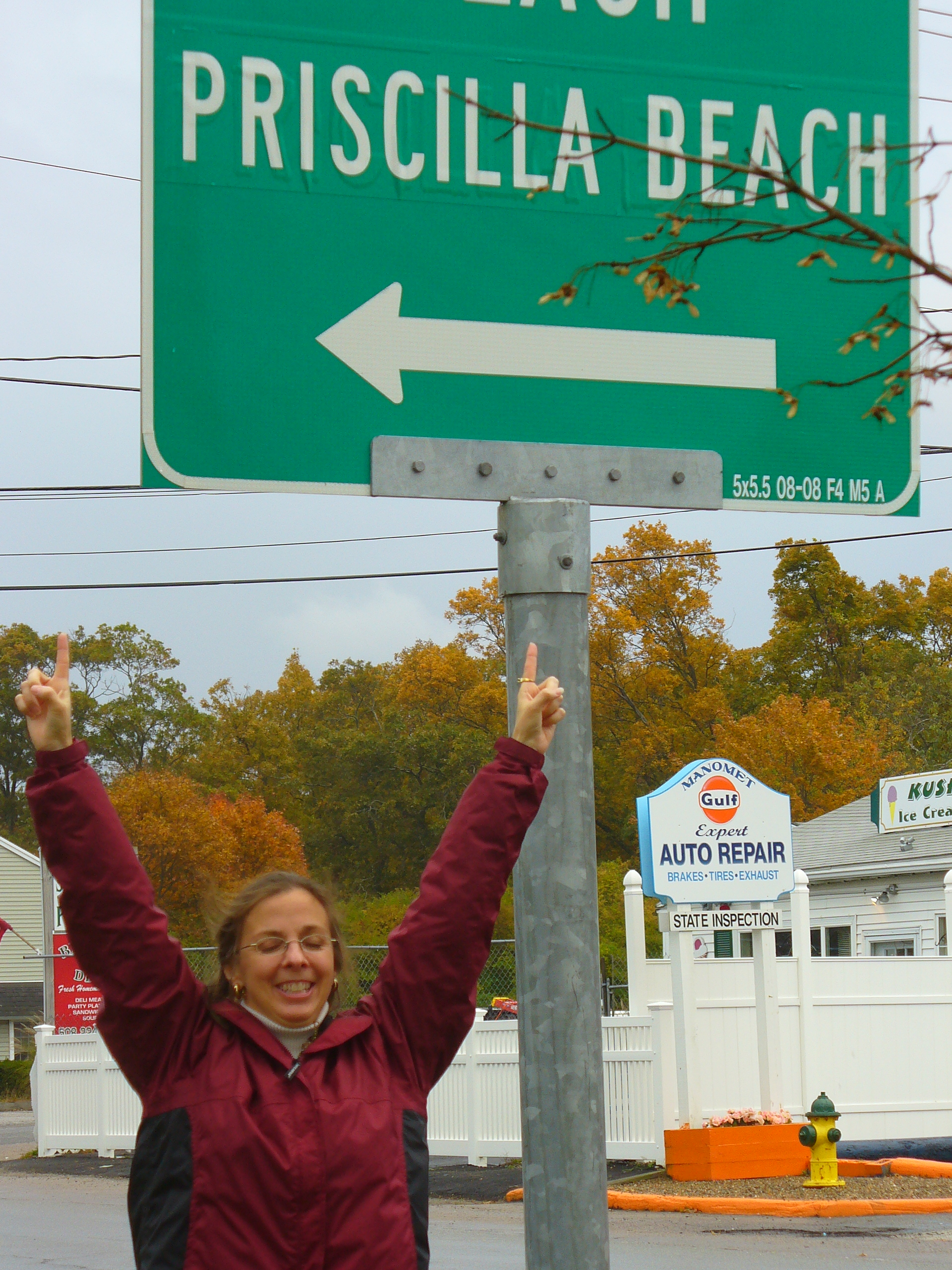
Excited to be back in Massachusetts (Photo by my oldest)

I think I was a pretty enthusiastic kid.  I was often told that I was loud.  My facial expressions were pretty dramatic.  I loved theater and the chance to “act out”.  My third grade teacher wrote in her notes to my mother that “the play’s the thing for your youngest daughter”.  I did feel that my parents were always asserting a more reasonable response.   They were intellectual and Anglican and well-mannered.  I wanted to please them, so I didn’t allow myself to be wild.  When I began voice lessons in college, one of the first things my teacher said to me was, “You sing as if you’d been told all your life to modulate your voice.”  How did she know?  So I had become outwardly prim and proper and covertly silly and animated.  My passion for my husband was greeted initially by my parents with the same kind of circumspection.   After all, I was only 15 when we met and 20 when we became engaged.  Gushing about how I “knew” he was the right one for me was unconvincing.  I prepared logical and practical reasons why I should marry before I graduated from college and while we were both unemployed.  His father was not at all persuaded.  My father had seen us courting and knew more intuitively that our determination was real, fueled by much more than reason, and that in a marriage, that is a definite harbinger of success.

I am still hesitant to show emotion and passion.  Steve is always delighted to see my enthusiasm about something, and frankly wary because it doesn’t assert itself in important decisions.  I was brought up to be very serious about decision-making, and to mistrust my enthusiasms.  Steve seems to approach the issues from the opposite direction.  He feels that the best reason for doing something is because you REALLY WANT TO!  In some ways, that seems like a no-brainer.  Problem is, I have esteemed The Brain far too much, I think.   So, I am learning to try to listen to those exuberant voices without shushing them so much.  And I am learning to be more open to the zeal of others.  My children, especially.  My parents modeled the “voice of reason”.   I can’t deny that I play that role in my parenting, but  I want to model the fervent voice of encouragement, too.  (This goes along with the ongoing safety/adventure discussion that I have with Danger Mommy.)  I keep trying to get away from dualism and embrace the dynamic whole.  “Don’t be so worried about ‘supposed to’,” says Judy Dench’s character in the movie “Chocolate”.

Is it possible to be both wise and passionate?  Is it possible for me to be both wise and passionate?  I’m hoping so.

Unknown's avatar

Wise and Otherwise

December 20.  The 20th free gift of the month is something that can be acquired, but cannot be bought.  I don’t think that it can be given, either.  The gift is Wisdom.  According to Wikipedia, “Wisdom is a deep understanding and realization of people, things, events or situations, resulting in the ability to apply perceptions, judgements and actions in keeping with this understanding.”  In other words, “To recognize the significant in the factual is wisdom.” (Dietrich Bonhoeffer)  However, “We are made wise not by the recollection of our past, but by the responsibility for our future.  (George Bernard Shaw)  And finally, “It is unwise to be too sure of one’s own wisdom. It is healthy to be reminded that the strongest might weaken and the wisest might err.”  (Mohandas K. Gandhi)

It would seem, then, that wisdom is something that can be acquired in living with awareness and engaging humbly with experiences.  It seems to me, though, that you can’t give someone the benefit of this process.  You might point out the process and talk about its benefit, you might set up the beginning of the process, but you can’t impart the journey or the result.  It has to be lived.  I’m a mother; trust me on this.  I wanted to give my children wisdom more than anything, probably for selfish reasons.  I wanted to be spared the pain.  I wanted to spare them the pain.  I asked God to give them wisdom…like on a magic platter descending from heaven…but spare them the pain.  Can’t be done.  Wisdom is born of pain and suffering and effort and failure.  You have to be awake through it all as well.  You can’t gain wisdom while you’re anesthetized.  I’ve made a great discovery, though.  This process is a great equalizer.  Keeping Gandhi’s wisdom in mind, my children and I are fellow travelers on this path.  We share our stories as friends, we perhaps contribute insights to this process, but we cannot assume the roles of provider and receiver.  I try to remember that as I talk to them.  It is too easy for me to slip into the “teacher” role and begin to spew language about what they “should” do and what is the “right” way to do something.  I often issue too many reminders and begin to sound like I’m micro-managing them.   They notice.  They mention it.  I have to challenge myself to be wiser and trust them to be wise.

I remember the day my father told me that something I said was wise.  It felt like a great victory for me.  I was 19 or 20.  I had been talking to my oldest sister about some article I had read in an evangelical Christian newsletter taking issue with science and carbon dating.  My father was eavesdropping from the breakfast room and jumped on the subject by voicing some objection to the fact that the money he was paying for my college education hadn’t stopped me from discoursing like an ignoramus.  I was scared of his strong emotion, ashamed of myself, and angry at his insult.  Embarrassed and hurt, I fled.  We didn’t speak for 3 days.  I realized that he wasn’t going to apologize to me or mention the event on his own, so I decided I needed to take the initiative to talk to him about my emotions, clear the air, and try to restore our relationship.  I’d never talked to my father about our relationship very much before.  He was always right, often angry, and anything that was amiss was my fault.  I also knew that he would not show his emotions, that it would be a “formal discussion” on his part, but that I would probably not be able to contain my tears, making me feel foolish and not his equal.  I decided to brave the consequences and approach him with Kleenex in hand.  I began to talk, and cry, and tell him how I felt.  Then he asked me if I wanted an apology.  “What do you want me to say?”  I told him that part was up to him.  My dictating an apology to him would be meaningless.  That’s when he said, “That is very wise.”   Suddenly, I felt I had grown up and been respected as an equal to my father in some way.   What I understood or didn’t understand about evolution and carbon dating and creation didn’t matter to me any more.  That I had been able to navigate emotions with my father and repair a broken relationship was far more significant.

Dad & me in 1992. Photo by my 7 year old daughter.

Wisdom isn’t easy to get, but it is available.  If you pursue it, you’ll probably get it eventually.  It’s completely avoidable, though, if you so choose.   I know which way I want to go, so I’ll keep paddling my canoe and checking the horizon.   For those of you heading the same way, STEADY ON!  I salute you.


Unknown's avatar

Have Some Divinity

The premise is this: for each day in December, instead of counting down on an Advent calendar, I’m counting the free gifts we all get every day.  Today’s gift is divinity, but I don’t mean the candy.  I mean The Divine, The Sacred, The Holy and experiences of them.  Don’t we all have the opportunity to receive that every day?  If you look for it, will you find it?  I think so.

So, what is sacred?  How do you recognize the divine and holy?  In art, there’s always a halo or a sunbeam to give you a clue.  What about here on earth?

‘Namaste’ is the Sanskrit greeting recognizing the existence of another person and the divine spark in that person, with the hands pressed together in front of the heart chakra.  I think the divine spark exists in every living thing as the breath of life.  Every encounter with a living thing is an experience of the divine.  We hardly ever act like that is true, however.  But we could.  Native Americans and many African tribes have hunting rituals that celebrate the sacred exchange of life.  The hunted animal is divine, sacrificing itself for the life of the hunter, and the hunter shows a holy appreciation.  Often, when I look at macro photography of living things, flower stamens, insects, mosses, I am compelled to worship the divine in the detail.  Life is sacred and beautiful.  Looking closely and deeply is a way to practice recognizing that.

Seeing macro, but lacking the lens

In a dualistic world view, the mundane and the divine are polar opposites.  One is worldly, one is sacred.  If this world were imbued with holiness, if God became incarnate and entered flesh in this world, those opposites would run together like watercolors.  Many cultures believe this is the truth about life.  The waters under the firmament and the waters above the firmament are separated in one telling of the creation story, but the Spirit of God was moving over all of the waters from the very beginning, even in that story.  The understanding that divinity is everywhere has inspired people all over the globe for centuries.  This place we inhabit is special; it’s valuable.  It’s all holy.  This is the beginning of respect for the Universe and everything in it.  Somewhere in Western history, that idea lost its power.  Earth and everything in it became base and fallen.  Good turned to bad and life turned to death.  I’m not sure if that new idea has been very helpful.  I rather think it hasn’t.  And I don’t think it has to be that way.  It’s an idea, after all.  So if it’s not a helpful idea, why support it?  How would you rather live?  In a fallen world or in a world where the sacred and divine can be found everywhere?  Just wondering out loud.  I’m not saying that one idea is right and the other wrong.  The glass is neither half full nor half empty.  It’s a glass, and there’s water in it.  The rest is conceptual.  Why argue?  Choose how to live with the glass and the water.   As for me and my house, “I choose happy.”  (One of Jim’s conclusive statements.)

I hope this gives you something to ponder for today.  If you like, you can add a scene of Edmund Pevensie in Narnia being asked by the White Witch what he craves.  “It is dull, Son of Adam, to drink without eating.  What would you like best to eat?”  “Turkish Delight, please your Majesty!” he responds.  What if he had said, “Divinity”?  Same story, nuanced.  I would like to taste the sacred in this world, and I believe it’s here.

Unknown's avatar

Honestly!

Where is there dignity unless there is Honesty?  — Cicero

Today I’m parading Honesty around the block, free for the taking – a gift for December.  Does it cost to be honest?  There definitely are consequences to being honest.  Integrity, for instance, but sometimes something much more harsh.  Here’s a Socrates Cafe question: is it ever morally defensible to tell a lie?  Here’s a Biblical philosophical question: what is truth?  (For 3 pieces of cheese, tell me who asked this question to whom?  For all the cheese in Wisconsin, tell me why that person never answered?!) *n.b. – My father used to play a game with us that we called “Bible Questions for Cheese”.  He would quiz us on our Biblical knowledge after dinner and reward us with bites from his cheese platter as he finished off his bottle of wine.

Which kind of honesty is the most difficult for you and why?  Telling yourself the truth about yourself, telling someone else the truth about yourself, telling yourself the truth about another, or telling your truth about another to that other?

Self-deception can be pretty intractable.  How do you even know that you’re not telling yourself the truth about yourself?  Do you have to depend on someone else telling you the truth about you?  How would someone else even know the truth about you?  I suppose I approach this by going the second route first.  I try telling someone else the truth about myself to see if they can believe it’s the truth.  This would seem like madness to some people.  Why are look looking outside yourself?  Why wouldn’t you trust yourself to know yourself?  How could anyone else know you better?  I have heard quoted many times, “Lean not on your own understanding”, and I suppose I took that to heart.  So now, I’m working on trying to be honest with myself and to trust myself.  This takes some courage and a lot of forgiveness.

Telling the truth about myself to others is something that I want to do.  It saves me the trouble of having to come up with a lie.  It allows me to get that feedback I need to find out if I’m deceiving myself.  But sometimes, I detect that TMI reaction.  Too Much Information divulged to your own offspring, for example, is not at all welcome.  Especially when they’re young.  I’ve done that a few times.  More often, I told them the truth about things, facts, at an early age that others did not think was appropriate.  For example, I told them that Santa is fictional.  I told them names of body parts.  (My oldest was 4, I think, when she gave a word for the letter ‘V’ that rather shocked her nursery school teacher.)  I told them that their father had coronary artery disease.  (Again, my oldest could draw an anatomically correct heart from memory at the age of 6.)

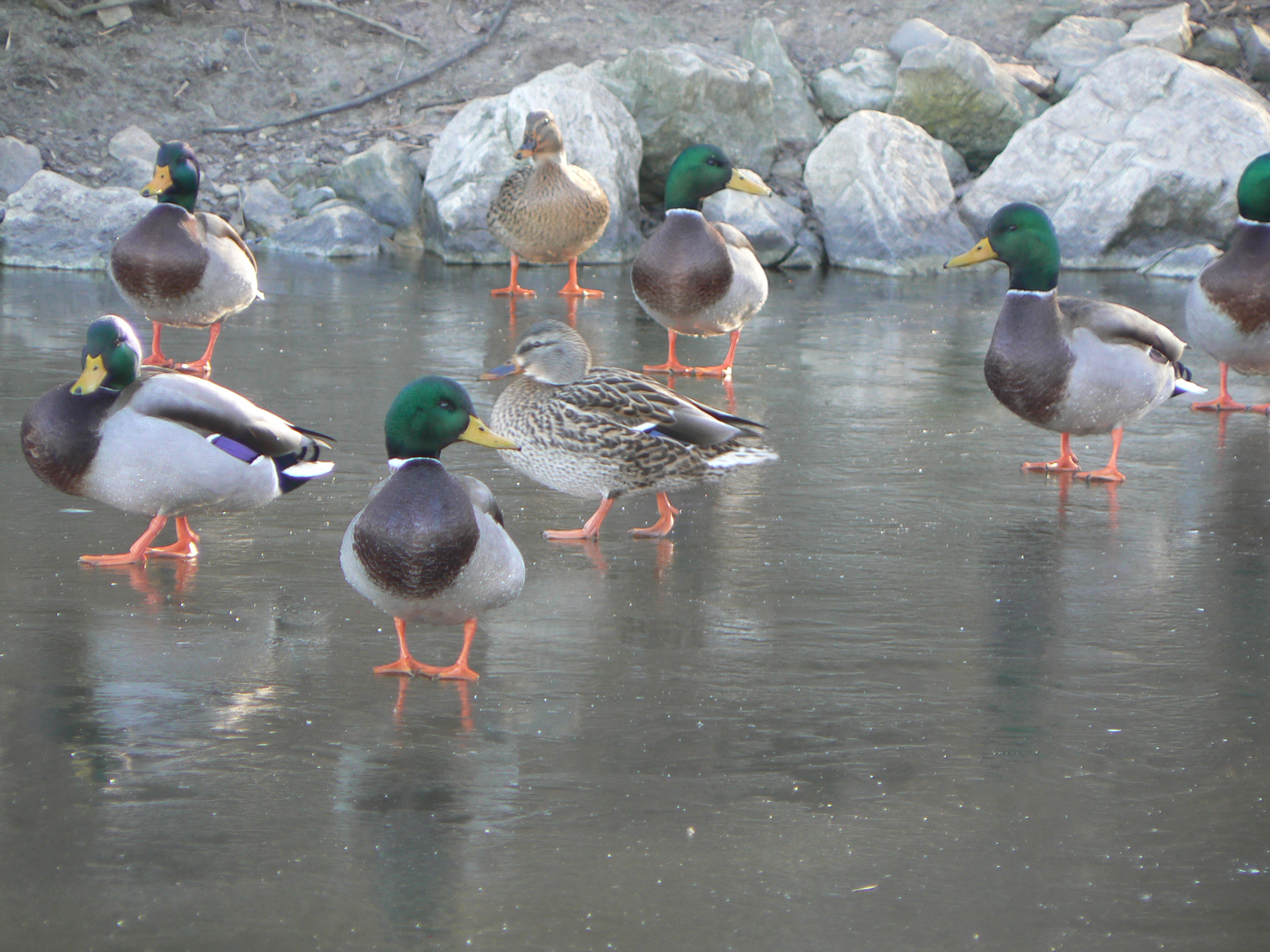
Ducks can walk on water. It's the truth!

Telling myself the truth about another has been difficult only on a few occasions that I recall.  Telling myself that my father was not God and was not perfect was one.  Telling myself that my husband was dying was another.  However, in those situations, the truth was very valuable, and the difficulty was well worth it.  I guess that means I defend more delusions about myself than about those whom I love.  I believe that shattering delusions about myself will be similarly painful but beneficial, so I’m willing to keep at that.

Telling ‘your’ truth about another to that other is what Steve likes doing the most in relationships.  He calls it “being challenging” or “being intense”, and he considers it a supreme act of love.  And he does it kindly, in my opinion, but more importantly, he is conscious of trying to do it kindly.  It isn’t always received that way, though.   Sometimes, no matter how tactful and kind you try to be, that ‘other’ is not going to want to hear your truth.  Hopefully, that reaction is only temporary.  Getting to the point of engaging with truth in a relationship is an important step to intimacy.  It’s what being ‘truly loving’ is all about.   It takes grace to invite someone to that point in a way that is non-threatening.  I appreciate therapists and psychologists and psychiatrists everywhere who take up that practice in the name of love.

Unknown's avatar

Who Could Ask For Anything More?

Companions.  The gift of friendship, togetherness, to know we’re not alone.

Steve brought me breakfast in bed this morning.  I am having one of my cyclical let-downs, when I have wearied myself in contending with life and death and love and loss.  We were discussing E.M. Forster’s novel “A Room With A View” when this came on.  Hormones, of course, have everything to do with it as well.  Lucy Honeychurch gets “peevish” when she plays Beethoven, and I get “peevish” reading Mr. Emerson’s speech on life and “muddles”.  Steve gets Slavic and moody listening to Mahler, or perhaps he listens to Mahler when he feels moody and Slavic.  We are beginning to know each other’s moods better and better.  And I really believe we are lucky, blessed, in a state of grace in that we accept those moods and are not threatened by the most peculiar of them.  That’s why he’s my best friend.

I’ve never had a lot of friends, and all of my best friends have been male.  Maybe that’s because I grew up with 3 older sisters.  I am a little suspicious of females.  I have a feeling it’s because I compare myself to them far too much.  A sly competitiveness creeps in and makes me uneasy.  I pull away.  With guys, I don’t compare.   I can be ‘other’ and so can he.  It seems simpler.  It’s a mindset that should apply to females as well except for my own perverse insistence that it can’t.   Growing up, I played with a boy who was a year younger than I and lived two doors down.  We were best friends for 9 years.  We played in the woods across the street.  We played house and wedding, and he was always the bride.  He had older step-sisters who kept being married off, and I think he found that really enchanting.  I suspect he grew up gay, actually.  I Googled him and found out a few pieces of information that might support that assumption.  But it’s just an assumption.  I know for a fact that at least one of my high school boyfriends came out after we broke up.   What does that matter?  I suppose I enjoy creative, artistic, sensitive male companionship.   Jim was definitely my best friend as well as my husband, and that description could fit him, too.

Brother & sister and best of friends

Friends to suffer with your moods, enjoy the stuff of life, travel with you through adventures of all kinds.  Old friends, new friends.  Situational companions.  Steve likes to imagine how he’d be if he were stuck in an elevator with a few people for hours.  He would definitely skip the small talk about the predicament and enjoy a captive opportunity to get to know them really well.  He’s kind of intense like that.  Scares some people.  Yesterday, I saw a news video about a policeman who crawled under a bus to hold the hand of a 24 year old woman who was run over and pinned.  The photo of them together on the asphalt and his interview afterward just filled my heart.  I know what it’s like to be so afraid and to just cling to another person for the reminder that we are never alone in our fears.   We suffer together.  We are interconnected.  And if anything is God, it is there as well.  Presence.  Abiding.  Being with each other.  It is the ultimate ‘yes’ of living.  Which brings me back to Forster  and Mr. Emerson.  “In his ordinary voice, so that she scarcely realized he was quoting poetry, he said:

“‘From far, from eve and morning/ And yon twelve-winded sky/ The stuff of life to knit me/ Blew hither: here am I’

“George and I both know this, but why does it distress him?  We know that we come from the winds, and that we shall return to them; that all life is perhaps a knot, a tangle, a blemish in the eternal smoothness.  But why should this make us unhappy?  Let us rather love one another and work and rejoice.  I don’t believe in this world sorrow.”  Miss Honeychurch assented.  “Then make my boy think like us.  Make him realize that by the side of the everlasting Why there is a Yes — a transitory Yes if you like, but a Yes.”

Ah, Yes.  To love one another and work and rejoice.  Companioned.  Who could ask for anything more?

Unknown's avatar

To Sleep, Perchance To Dream

And if tonight my soul may find her peace
in sleep, and sink in good oblivion,
and in the morning wake like a new-opened flower
then I have been dipped again in God, and new-created.
~D.H. Lawrence

Now, blessings light on him that first invented sleep!  It covers a man all over, thoughts and all, like a cloak; it is meat for the hungry, drink for the thirsty, heat for the cold, and cold for the hot.  It is the current coin that purchases all the pleasures of the world cheap, and the balance that sets the king and the shepherd, the fool and the wise man, even.  ~Miguel de Cervantes, Don Quixote, 1605

All men whilst they are awake are in one common world:  but each of them, when he is asleep, is in a world of his own.  ~Plutarch

I imagine that sleep is a gift for all, but some may disagree.  They might attribute sleep to the just, the innocent and the carefree and argue that it is refused to many who would try to attain it.  I propose, then, that it is meant for all, for health, rest, and restoration.  According to the National Sleep Foundation, “New evidence shows that sleep is essential to helping maintain mood, memory, and cognitive performance. It also plays a pivotal role in the normal function of the endocrine and immune systems. In fact, studies show a growing link between sleep duration and a variety of serious health problems, including obesity, diabetes, hypertension, and depression.”  Two of my family members were diagnosed with sleep apnea, one with the addition of Periodic Limb Movement Disorder.  For each of them, a CPAP machine was prescribed.  That’s a Constant Positive Air Pressure mask which blows air into their nose and mouth all night long to keep their airways open.  How anyone could sleep with that thing on is a mystery to me. 

The CPAP seems like a very scientific approach to something that may be more of a spiritual process.  Sleep, relaxation, the natural cycle of repair and regeneration can be picked apart and studied, but will chasing it down and corralling its components help us to enter into its presence?  If we approach it calmly and reverently, will we be more likely to be invited into its sanctuary?  It seems like such a gentle grace, a benevolent angel of mercy.  I’d be afraid to scare it off. 

Steve in dreamland

Many people contend with sleep.  I do a bit.  I gave up my super-comfy, air-controlled, king-sized bed to my daughter, and now I sleep on a futon mattress with a sleeping bag and a suede comforter tucked under the sheet to make it a bit more yielding.  It’s not really the same, but I could do worse.  I’ve always been a light sleeper, a result of having 4 children, but I’ve always gone to bed pretty early.  I’m not good at sleeping late, and I do enjoy napping.  Sleep is not elusive for me, simply delicious.  And I dream.

I was thinking this morning that I live in two alternate universes, something like Plutarch mentions in the quote above.  In the world of my sleeping dreams, my dead husband keeps popping up.  He very calmly occupies a place beside me, and eventually in the course of the dream, I will mention that he’s supposed to be dead.  Last night, he was driving when I mentioned it, and then suggested that I take the wheel.  I have the feeling that he’s supposed to vanish when I say that word, but he didn’t.   He just slid into the passenger side and kept talking.  This is my brain working on “what’s right” and “what’s real” about death.  I still don’t have it figured out.  I have a lot of anxiety dreams that also have to do with this preoccupation of mine about “doing things right”.  Performance anxiety is a big theme.  I’m often onstage, backstage, in front of a classroom, or trying to get to a class.  When I was married to Jim, the worst nightmares I had were about the two of us being angry or false with each other.  I feared anything that would threaten our togetherness, and it was manifested in some social context.  I never had a big monster carrying me off or something adventurous like that.  I suppose you could call that a “girlie” nightmare.  My son has huge, plot-driven adventures in his dreams.  He’s got to fight, to battle and overcome in his dreams.  I just get upset and wake up.  

I did have a nightmare two nights ago.  I had indigestion when I went to sleep, and I dreamed a horrible dream that ended in watching someone eat their own limbs.  “Someone” in that weird way where you are everyone in your dream.  So I was eating myself.  It was unsettling for my brain.  My stomach was already unsettled.  Peculiar how the sleeping mind works.  I do have a favorite phrase to throw in when someone is describing a dream.  The disjointed narrative goes on and on, and then I interject, “Oh, I know that dream!  Yeah, that all happens, and the next thing you know, the pope comes in with a tray of enchiladas and…”   Yup.  Absurdity.  It’s pretty entertaining, really, this alternate universe. 

I feel lucky to be able to sleep when I am tired, to dream when I am perplexed, to regenerate every night and wake to a new day each morning.  Wagner describes it musically when Brunhilde wakes to Siegfried’s kiss.  Listening to it is like going through the resurrection weeping tears of joy and wonder.  Once again, music gives voice to life’s mysteries. 

Well, the sun is shining through the west window making puddles of warmth on my bed.  Think I’ll take a catnap.