Unknown's avatar

Weekly Photo Challenge: Achievement

Hoo, boy.  This challenge is monumental.  What is “achievement”?  Stay with me, folks…

It’s rather an emotional concept to me.  I was just discussing ‘success’ with Steve yesterday.   I am 52 years old, currently unemployed, and trying to venture into an area of work for which I never had any formal education.  I feel rather ‘late to the party’ trying to become an environmental writer/National Park Service guide/eco-activist (or whatever it is I will become) at this stage of life.  My perfectionist voice keeps talking about how unqualified I am.  What have I ever done to merit respect in this field?

Well, here’s what: I’ve grown.  Every day that I read more about the health of our planet, every part-time customer service or education job I took, every decision I re-examined over these years is a stepping stone toward living a life I’ll be proud of.  I can do better at being the person I want to be.  And I can keep working on that goal until the day I die. 

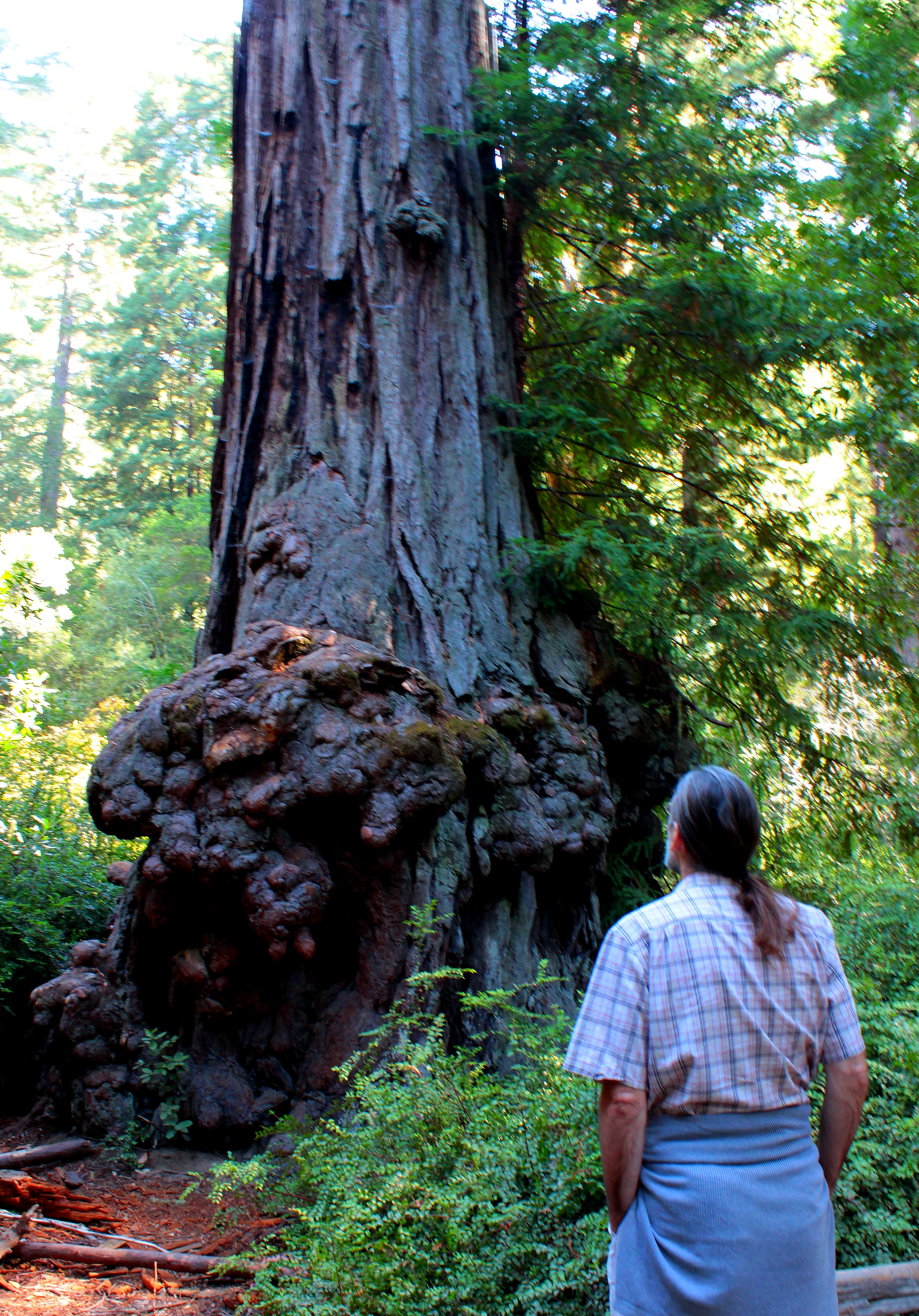
Maybe “Achievement” is simply growing into being the best you can be, year by year.  Here’s my illustration (and inspiration): sequoia sempervirens. 

achievementNow THAT’S something to look up to!

© 2014, essay and photographs, Priscilla Galasso, All rights reserved

Unknown's avatar

Elect Eco Leaders!

As you head to the polls, I want to encourage you to Look UP! 

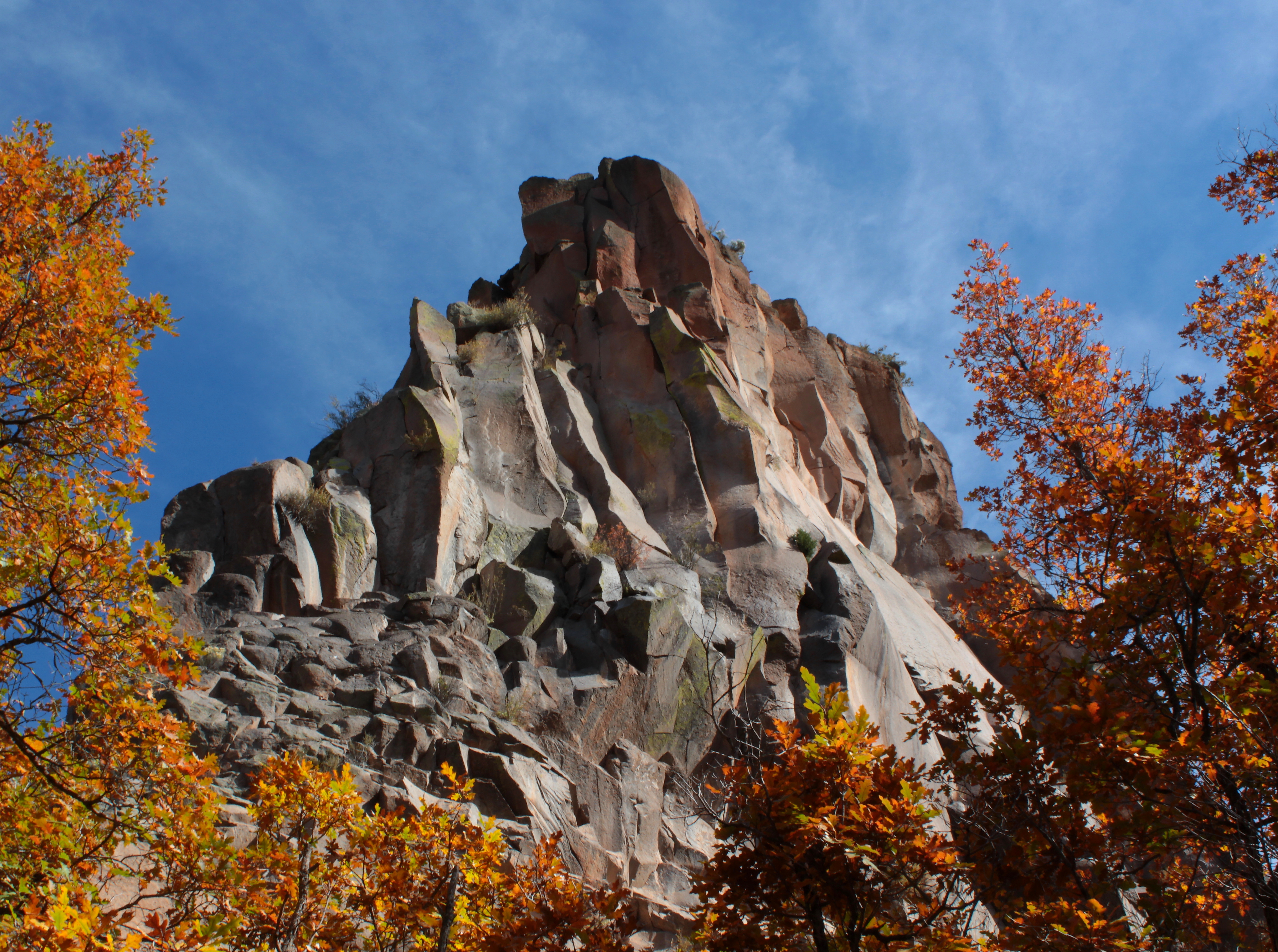
Battleship Rock

Battleship Rock, Jemez Mountains, New Mexico

Look up from your life, past your own career, beyond your own neighborhood.  Look to the wider world when you vote.  What kind of leadership are you electing for the future?  What kind of vision are you supporting?  Are you helping to put in place legislatures that will protect natural resources or exploit them?  Are you voting for human development or for the environment that hosts all life?  These are challenging times, and much hangs in the balance. 

How will you stand on the Earth? 

© 2014, essay and photographs, Priscilla Galasso, All rights reserved

Unknown's avatar

Wilderness and the Myth of Nothing

“There’s nothing out there!  It’s a barren landscape.  Why would you want to go there?  Why should we preserve that useless place?” 

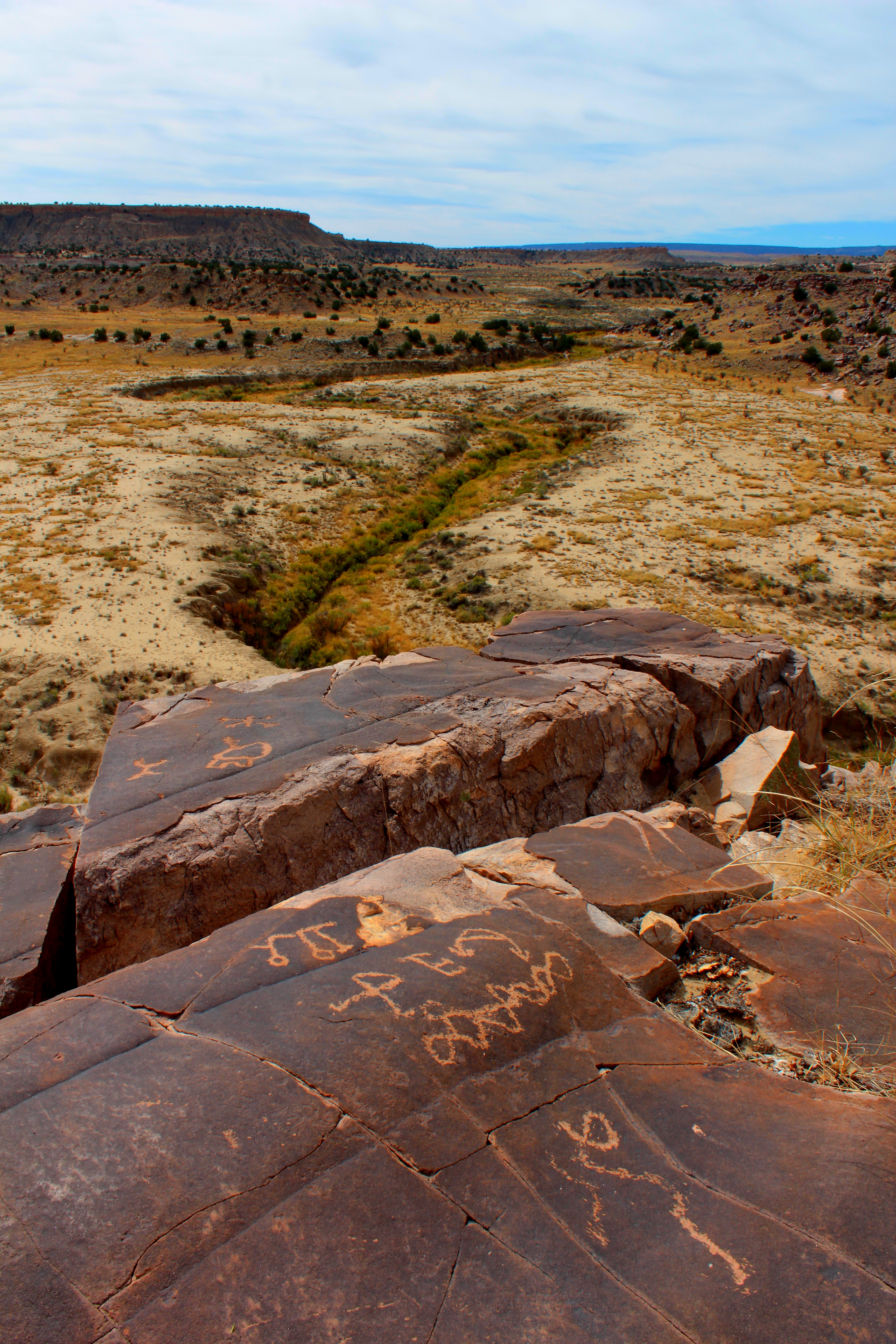
Nothing out there, eh?  Well, if that’s Nothing, it’s pretty spectacular.  It’s vast, for one thing.  Stretching in all directions, as far as the eye can see and further.  And it’s limited, encased in a single droplet from a juniper berry, sweet and pungent in my mouth, yet powerful enough to stimulate a rush from my salivary glands and wet my parched throat.  You could live on Nothing.  Many have, and left their artwork in symbols on the rocks.  Yes, they had time for Art in ‘subsistence living’.  Do you have time for Art in your life?  It is barren of some things.  There are no strip malls.  There are no straight lines.  There is a meandering curve of vegetation down there.  It’s a lot more narrow than it used to be.  The air is warming.  The climate is changing.  Fecundity is fighting the curse that foists barrenness upon it. The energy of life will not give up easily.  And that’s why I want to go there.  To learn.  We must preserve it in order to let it teach us.  We are ignorant.  We ignore the wilderness and call it Nothing.  There is a story there.  A Myth.  One day we may get wise. 

the myth of nothing

The Ojito wilderness

© 2014, essay and photographs, Priscilla Galasso, All rights reserved

Unknown's avatar

What’s Important? – revisited

Way back in February of 2012, I wrote a post titled “What’s Important?”.  It was an essay describing the evolution of my  ideas of “right” (as in “being in right relationship with”, “righteousness”) from the evangelical Christian tradition to a broader, Buddhist-influenced experience.  It led to a string of great comments and word analysis. 

My moral development has been challenged lately by the speakers, storytellers, and advocates I heard at the Wilderness 50 conference.  What is “Right Ethic” or a right relationship with our planet?  Where do we experience the emergence of this ethic?  Does it come from the top down, imposed by authority in law?  Does it bubble up from feelings of connection to places, plants, animals, ecosystems, communities?  How do we evaluate our interactions with Earth?  And how important or trivial is that interaction in our daily lives? 

Having immersed myself in a 5-day arena of wilderness philosophy, it’s very strange to return to the Internet world and gaze on its landscape.  Yahoo! news articles bombard my senses: “How to Crack an Egg”, “Romantic Move Goes Awry”, “Horse Rescued from Pool”, J-Lo, Renee Zellweger, sports teams, iPhones, who wore it best, etc.  Is this what life on Earth is about?  Really?!  Even gazing on the more thorny parts of the landscape seems a little flat.  Is death news?  Is human drama relevant or manufactured?  And what about the lives of the non-human inhabitants of this planet?  The life of the Ebola virus, for example.  What do we really care about that, other than the way that humans are effected? 

What is important about Life?  Just my life?  Just human life?  Just life that I recognize?

The keynote speaker in many of the Wilderness 50 sessions was Dave Foreman.  He is a much-loved, original eco-warrior who is now 68 years old and retains the spit and vinegar of his activist days.  Raised in the Texas atmosphere of Biblical preachers, he knows how to tell a story and describe a cause.  He used this illustration in a few of his addresses: he visited a ficus tree, of the fig and banyan family, whose broad canopy is one of the biggest in the entire world.  It stretched over his head and spread out in a space bigger than a football field.  And each limb supported hundreds of leaves.  A massive thing, this tree!  He likened it to the Tree of Life and stood in awe.  And then he realized that human beings, our species, of which there are more than 7 billion individuals, represent just ONE leaf on this great tree.  That one little leaf right….there.  That’s us.  How important are we?  How aware are we of the rest of the tree?  Of how we influence it and how it influences us?  Do we think about that…often? ever?  Or do we pay more attention to our celebrities, bank accounts and pet peeves. 

What’s important?  What fills your landscape?

new-mexico.jpg

© 2014, essay and photographs, Priscilla Galasso, All rights reserved

Unknown's avatar

Weekly Photo Challenge: Cover Art

The weekly photo challenge came out on Friday morning, as usual.  Only this Friday, I was setting up camp in the Dog Canyon campground in Guadalupe National Park, a wilderness park in Texas where there is no Internet (ya think?).  I returned to Milwaukee just this evening, after 2 days of driving with only a 3.5 hour stopover to sleep in a rest area off the interstate in Missouri.  Needless to say, I’m tired.  This is a going to be a quick post.  But the Cover Art example on the Daily Post reminded me so much of a shot I took during this 2.5 week journey, that I have to share it.  To see the prompt and the example, click here.  My ‘magazine’ is a periodical covering aspects of wilderness preservation.  (Having spent 5 days at the Wilderness 50 Conference during this trip, I have much more to say about that…but I won’t go into it…yet.)  And here is the cover shot:

Cover art

I’ll be sharing a lot more about Wilderness and environmental ethics on this blog in upcoming posts.  Stay tuned, please!

Unknown's avatar

Weekly Photo Challenge: Refraction

Refraction is the change in direction of a wave due to a change in its transmission medium.

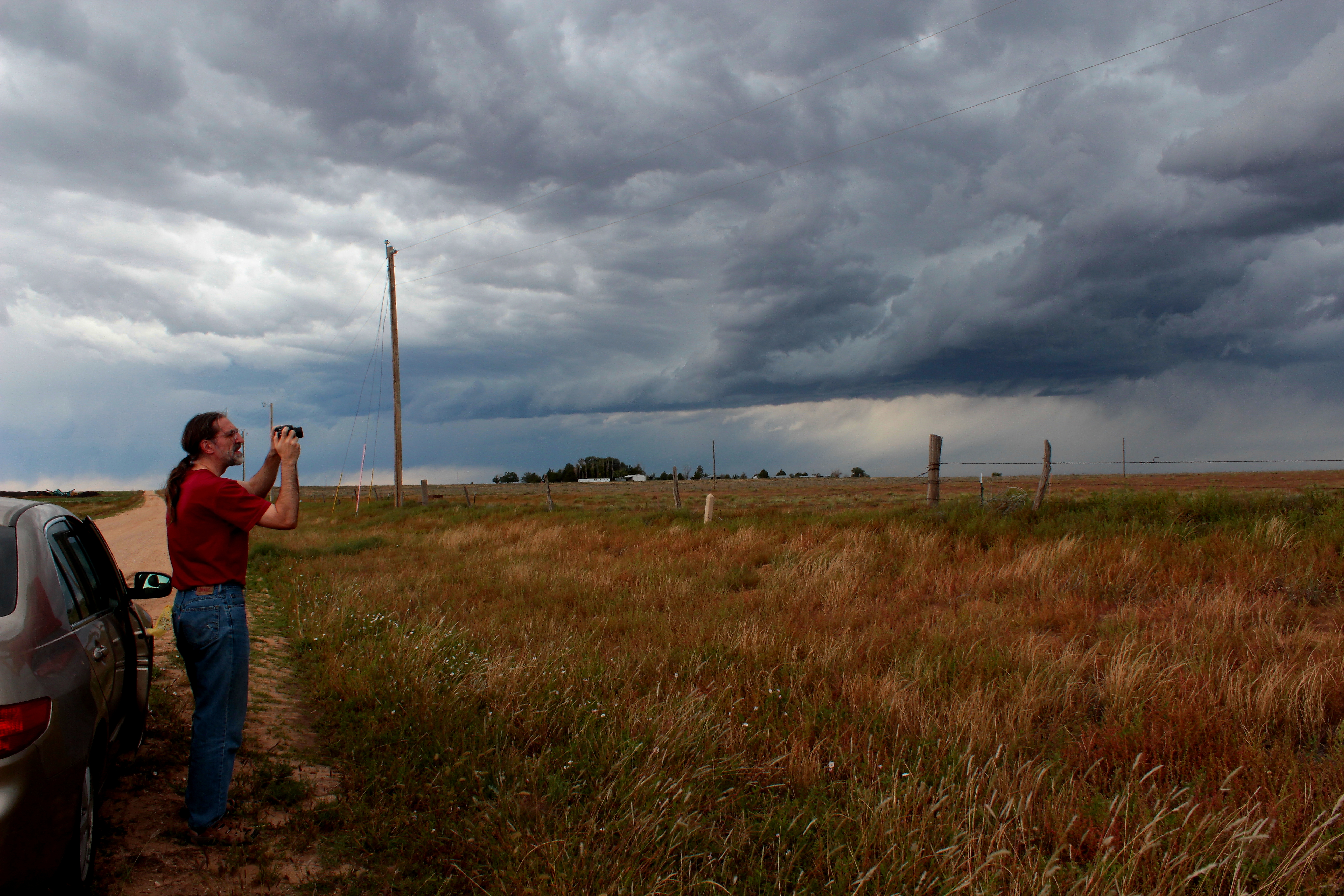
Storm in Western Oklahoma

Storm in Western Oklahoma

We set off from Milwaukee, Wisconsin last Saturday on a cross-country trip to Albuquerque, New Mexico to attend the Wilderness 50 Conference.  As we got to western Kansas, we noticed clouds gathering to the west and north.  It’s difficult to judge distances across such a huge, flat landscape.  I thought maybe the storm was in Colorado.  We cut south through the Oklahoma panhandle, and tumbleweeds flew across the highway.  Steve thought this would be a great place to get out of the car and take a picture.  Unfortunately, I missed the lightning flashes on the horizon (I wish I’d brought a tripod to take a timed exposure!).  The winds were crossing in all directions, curling plumes of rainfall came down from the clouds in mixed directions, as if forming quotation marks across the sky.  What are the winds trying to say?  We camped that night in the Kiowa National Grassland, at the Mills Canyon Rim campground (elevation 5900 ft.).  The rain barely wet the high desert ground, but the WIND was fierce!  Eventually, it blew the clouds away, revealing a waning gibbous moon and a host of stars undimmed by human lights anywhere in the area.  In the morning, the winds were so strong that I had to put our camp stove underneath the picnic table and bank it with coolers in order to keep the flame from blowing out.  By the afternoon, the wind was gone, the skies completely clear.  When the sun set, the air got very cold, very fast.  And a blanket of stars swept over the sky, banded by the Milky Way. 

Waves of wind, changing direction, crossing different mediums (clouds and stars) are an example of refraction and one of the pleasures of wild space.  We are here at the Wilderness conference to celebrate the 50th anniversary of the signing of the Wilderness Preservation Act into law and to find our direction in the call to protect and respect Earth.  When the conference concludes, we will venture back into wild lands in New Mexico for more adventures.  Stay tuned!

Unknown's avatar

Harvesting Hope

I have just finished reading a very informative book by Jane Goodall on the subject of Food.  Harvest for Hope: A Guide to Mindful Eating has led me to reconsider the way I buy and cook and eat food.  Much of it is based on common sense and natural practices (What would a chimp choose to eat?  Have you ever seen an overweight chimp in the wild?), and much of it exposes the insanity that is our factory food production here in the “civilized” world. How civilized is it to cram thousands of chickens together in a cage, remove their beaks so that they can’t peck each other to death, pump them with antibiotics and force them to cannibalize their own kind by giving them non-vegetarian feed?  And then to slaughter them, ship their polluted flesh over thousands of miles burning fossil fuels, and eat it?  I was not thinking about that when I bought Super Saver packages of chicken breasts at my local super market.  I think about it now.

And here is the surprising gift of hope: my children have been thinking about this for years.  I didn’t lead the way. 

Here is another arena of hope: reclaiming, salvaging and recycling living space.  My daughter and her fiance purchased a home that had been severely water damaged and mold and mildew infested.  The inhabitants had moved out to hospice care and died; the house was abandoned, but the water wasn’t shut off.  In the winter freeze and thaw, the pipes broke and flooded the place.  What a mess!  But Joe comes from a family line of carpenters and construction wizards.  He has completely re-worked the house: plumbing, electric, heating, floor plan and surfaces.  He’s gotten neighbors, friends and family involved in the labor and in donating fixtures. The final step will be relocating the back yard garden.  You see, this house is just a few doors down the street from the one they’ve rented for the past 3 years.  So, by their wedding date one year from this month, they will have their own home and garden.  They are marvelous role models for sustainable living, and I am so proud of them! Yesterday I went down to visit and take pictures.  They sent me home with a bunch of produce from their garden.  I am so grateful and awed by how life unfolds.  The next generation is certainly capable of taking responsibility and working hard in a sustainable direction.  Let’s just hope many of them choose to!

Unknown's avatar

Weekly Photo Challenge: Endurance

The Word Press Daily Post Photo Challenge states: “As we sift through fleeting status updates, toss yet another egg carton in the recycling bin, and watch as seasons change around the world, it can seem like life is made of constant change.”

Well, isn’t it?

And maybe, to step outside of constant change is to see constant continuation.  Thich Nhat Hahn doesn’t celebrate his birthday, he calls it a “continuation day”. 

If you look deeply into the palm of your hand, you will see your parents and all generations of your ancestors. All of them are alive in this moment. Each is present in your body. You are the continuation of each of these people. To be born means that something which did not exist comes into existence. But the day we are “born” is not our beginning. It is a day of continuation. But that should not make us less happy when we celebrate our “Happy Continuation Day.” Since we are never born, how can we cease to be? This is what the Heart Sutra reveals to us. When we have tangible experience of non-birth and non-death, we know ourselves beyond duality. The meditation on “no separate self” is one way to pass through the gate of birth and death. Your hand proves that you have never been born and you will never die. The thread of life has never been interrupted from time without beginning until now. Previous generations, all the way back to single cell beings, are present in your hand at this moment. You can observe and experience this. Your hand is always available as a subject for meditation.

–Thich Nhat Hanh, Present Moment, Wonderful Moment

Continuation and endurance are kindred concepts.  It’s not about effort, it’s about the flow of life: life to life.

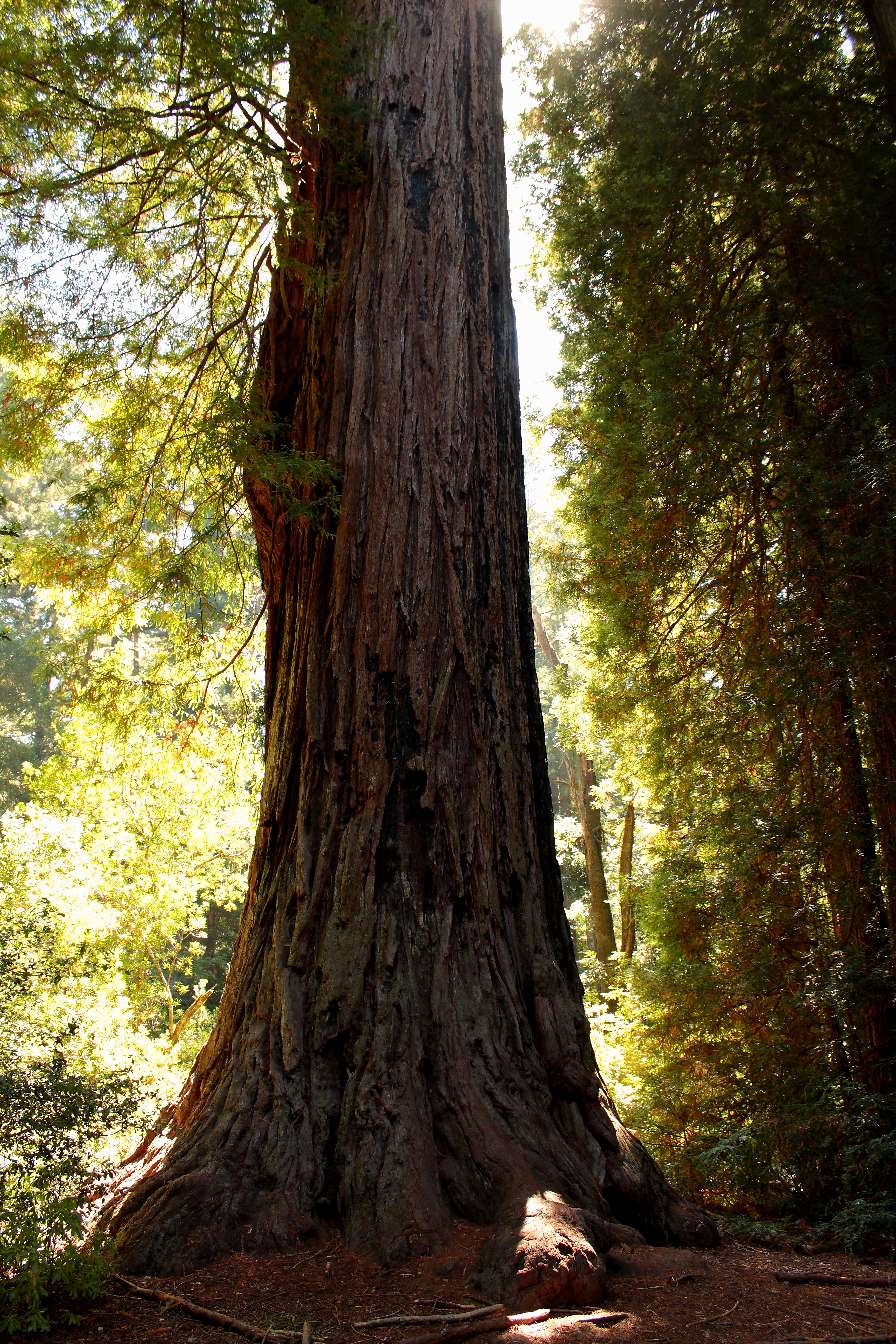
And now, for my illustration.  Sequoia sempervirens, the coastal redwood.  Amongst the oldest living things on earth, the species includes the tallest living trees on the planet.  This particular tree is located in Big Basin Redwoods State Park, about 25 miles from the house I lived in as a high school student, where my brother lives now.  It’s nicknamed The Grandfather.

endurance

If these trees continue to exist in 50 years, they may exist for a thousand.  If they’re gone in 10 years, they’ll be gone forever. Redwoods reproduce by seed cone and asexually through lignotubers, called ‘burls’.  Redwood burls are beautiful swirls of richly colored wood when they are sliced open.  Unfortunately, poachers take these burls for decorative furniture and cut off the reproductive possibilities.  Here’s an article describing how 2 men were arrested and charged for poaching redwood burls in a National Park.

Redwood Poachers

This May 21, 2013 photo provided by the National Park Service shows wildlife biologist Terry Hines standing next to a massive scar on an old growth redwood tree in the Redwood National and State Parks near Klamath, Calif., where poachers have cut off a burl to sell for decorative wood. The park recently took the unusual step of closing at night a 10-mile road through a section of the park to deter thieves. (AP Photo/Redwood National and State Parks, Laura Denn)

What will endure for the next generation?  How do I choose my path, living in continuation and protecting continuation in all life on our interconnected planet?

© 2014, essay and photograph, Priscilla Galasso, All rights reserved

Unknown's avatar

Wilderness Week continues!

September 3 marked the Golden Anniversary of the signing of the Wilderness Act into law by President LBJ.  I posted a kick-off essay about a recent trip to a designated wilderness preserve here in Wisconsin for The Bardo Group.  Subsequently, members of that blogging community posted essays, videos, poetry and photos on the wilderness theme.  Check out the daily posts beginning that week by clicking here.  Favorite pieces gleaned from that site include How Wolves Change Rivers, The Carpathians – “Europe’s Only True Wilderness”, and In Wilderness Is the Preservation of the World.

Just after my kick-off essay went online, I headed to northern California to visit my family and explore some of the natural places unique to that area.  I felt the presence of my father as I re-visited trails we had walked together and that he had walked after I moved out.  A quote that I had read somewhere kept surfacing: “In the end, we will conserve only what we love, we will love only what we understand, and we will understand only what we are taught.”  Baba Dioum included this thought in a speech he made in 1968 In New Delhi, India, to the general assembly of the International Union for Conservation of Nature.  

My father was a teacher of Math and Science professionally.  He taught Religion as a volunteer in the church.  He taught me many things, but in his teaching about Nature, he was less didactic and more mystic.  He simply wanted to be there and to introduce me to a living thing which he loved…the planet. 

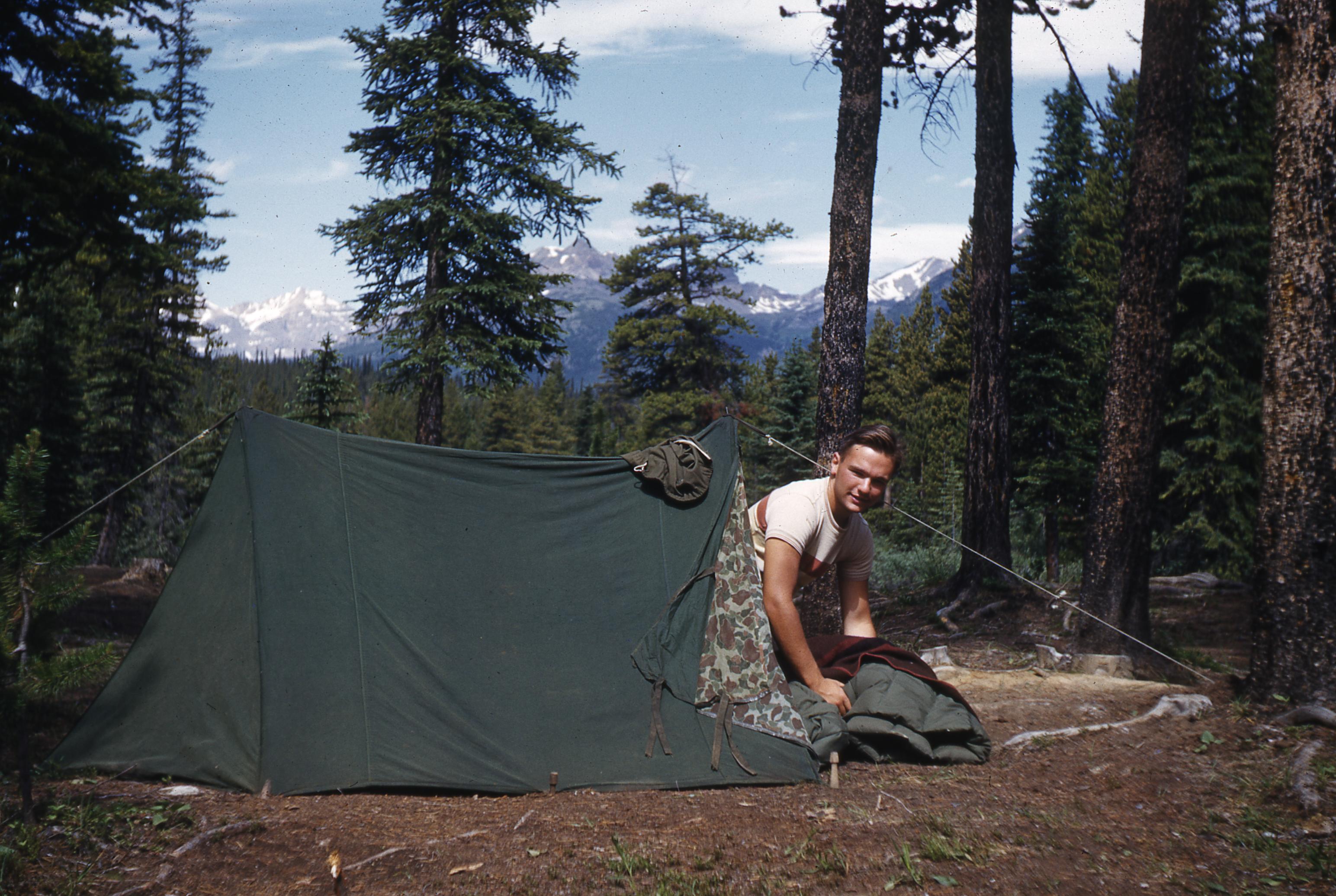
Camping in Alaska the summer after his senior year in High School: 1951.

My Dad in Alaska the summer after his senior year in High School: 1951. (photographer unknown)

Some of the things my father introduced me to:

September 21 is the date marked for the People’s Climate March in New York City.  The United Nations Climate Summit is two days later.  Please consider what your part may be.  What do you hope for our planet?  How do you want those hopes represented by our nations’ leaders?  How can you contribute to the teaching, the understanding, the loving and the preserving of our mutual home?  Thank you for doing your part, whatever that may be.

© 2014, essay and photographs, Priscilla Galasso, All rights reserved

Unknown's avatar

Weekly Photo Challenge: Adventure!

I am late jumping into this week’s challenge because I’ve been on an adventure!  I’ve been in California for the last week visiting family and taking excursions.  I lived in CA for 15 years, but it’s been 4 years since I’ve been there.  In the interim, they’ve established a new National Park.  The Pinnacles have been designated a National Monument since 1908, but 2 years ago it became a National Park.  And it’s still the newest one.   My father and brother used to hike there years ago and raved about it to me.  This week I made my first visit.  California condors have been reintroduced to the area, but I didn’t see one.  I did see a tarantula and a wild bobcat, though!  The tarantula was in one of the caves that was formed when giant boulders from the top of the Pinnacles crashed down into the canyons.  It was very dark under there, and it took me a while to figure out how to photograph the critter.  The CCC built some very helpful trails with stairs and railings in the 1930s that make exploring those caves and getting up to the rim of Pinnacles relatively easy.  What you might not notice in the photos is the silence.  Yes, even in California, one can find silence.  Solitude.  Space.  But those places seem to be shrinking every year as population and development boom.  The state has changed since I left in 1991.  And it will keep changing.  Some changes are good though.  It’s nice to know that condors live there now.