Unknown's avatar

Appreciating Milwaukee

Here it is, March in Milwaukee, Wisconsin.  Some unknown and perhaps magical forces have transformed this place into a balmy paradise.  It is 81 degrees F outside, flowers are blooming, trees are sprouting leaves, and chipmunks are cavorting around the forest floor.  I am appreciating it.  Last year was a very different story.  We had a blizzard at the very end of January, and snow fell into April.  The last two months of snow in a winter that can sometimes take up half the year can be very trying on a person’s patience.  Especially if that person lived in California for 15 years and got rather attached to sunshine and greenery!  So, what is there to do in Milwaukee when the weather is nice?  So glad you asked!

Steve used to live on the East Side of Milwaukee, which is kind of an East San Francisco.  Well, a little bit, anyway.  There are lakefront parks, beautiful old buildings, college students from the University, and a smattering of the nature freak/hippie vibe.  On St. Patrick’s Day, we headed to his old neighborhood to take in some of this atmosphere, which was augmented by people parading about in green beads with plastic tumblers of beer, enjoying the unseasonably comfortable weather on a Saturday devoted to pub crawling.  It made people-watching that much more interesting. 

We ate a late afternoon meal at Beans & Barley, which features a deli and market as well as a vegan-friendly cafe with a huge selection of tea.  I had a grilled balsamic Portobello mushroom sandwich with red peppers and bleu cheese, accompanied by a fantastic curry potato salad and a bottle of New Glarus Spotted Cow beer.  Steve had a black bean burrito with some very spicy salsa, an entree that is approaching “landmark status” since its debut in 1979.  We shared a piece of their “killer chocolate cake” for dessert.

After I was satisfied that every bit of frosting had been thoroughly licked up, we headed over to the deli and market to take stock of their offerings.  It was there that I found this most delightful treasure: it’s an old cigarette vending machine that now provides the customer with a genuine work of art for the price of one token.  All of the Art-0-mat items are the size and shape of a pack of cigs, and decorated in a variety of different ways, by different artists.  Examples are installed on the front of the machine. 

Here is a close up of one example:

I simply love this idea!  I’ve never seen anything like it before.  It’s hip, it’s visual, it’s smoke-free.  These should be everywhere, supporting artists in every community. 

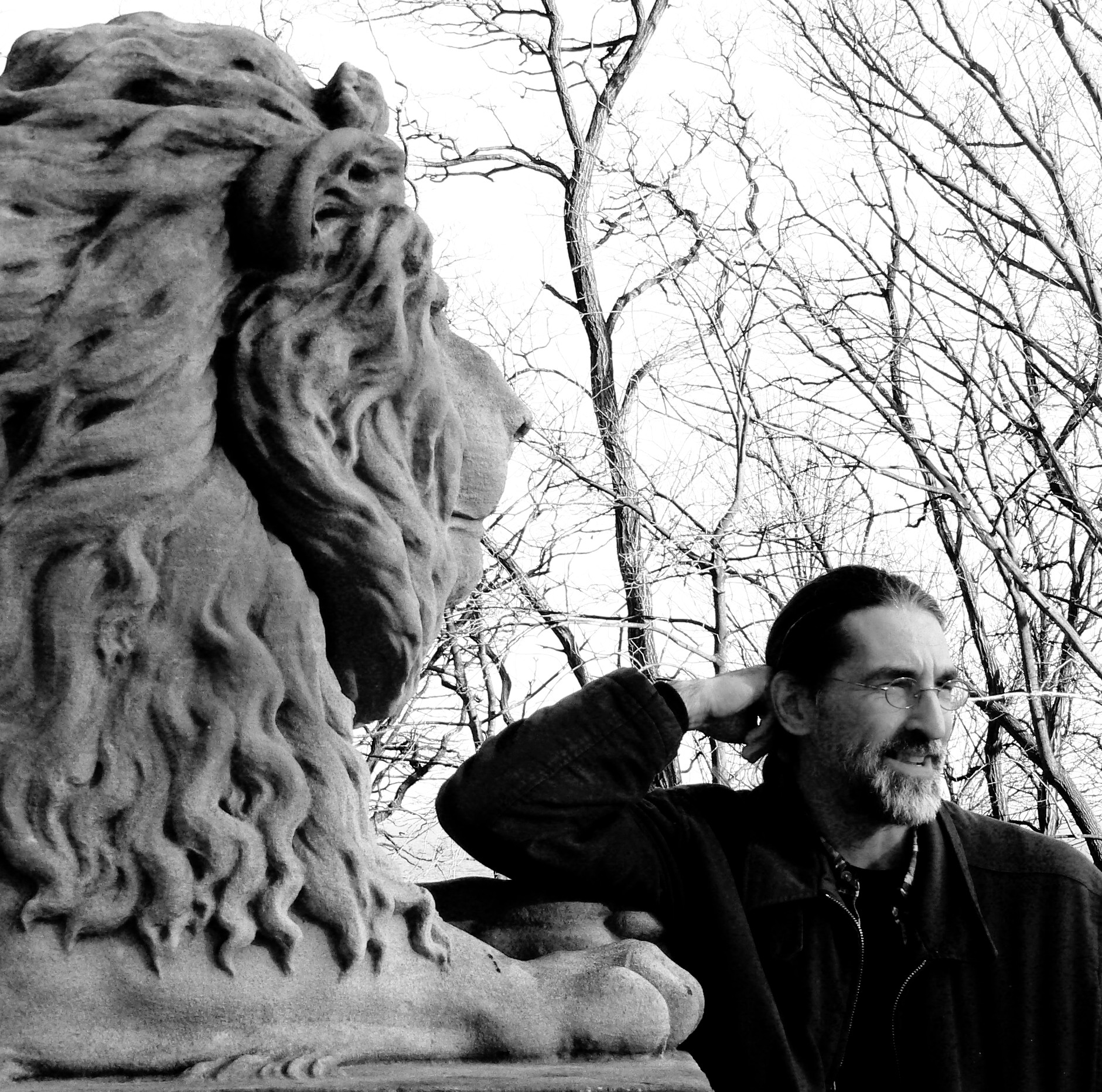
I’m feeling young, artsy, and energized.  We take a walk down to the lighthouse station.  I do a portrait of Steve that I think would look good on the back of a book he will write some day.

I’m having fun discovering something wonderful every day, no matter where I am.  This is how I want to keep myself well and happy for the rest of my life.  A few weeks ago, Wisconsin Public Radio’s Ben Merens did a show on wellness that featured an interview with a personal life coach named Colleen Hickman.  Steve likes to call into this radio station when the topic moves him, and he called in to add to this discussion.  He had two things to share.  First, he said that his partner (me!) was very good at appreciating things, and then he said that his contribution to our positive relationship is that he doesn’t think of life as a problem to be solved or a commodity to be evaluated.  It is something of which to be constantly aware, though.   After he hung up, Ms. Hickman says, “Steve is certainly one of the lights we have in the world.”  That makes me chuckle because it sounds so “media”, but I have to agree.  If you want to hear the broadcast, here’s the link; just scroll down to the Friday, March 2, 5:00pm broadcast and click the Windows Media Player or MP3 icon to the right.  Steve’s call is 17:30 into the program.

What a wonderful world!  Even in Wisconsin in March! 

Unknown's avatar

Honoring My Father

George William Heigho II — born July 10, 1933, died March 19, 2010.

Today I want to honor my dad and tell you about how I eventually gave him something in return for all he’d given me.

My dad was the most influential person in my life until I was married.  He was the obvious authority in the family, very strict and powerful.  His power was sometimes expressed in angry outbursts like a deep bellow, more often in calculated punishments encased in logical rationalizations.  I knew he was to be obeyed.  I also knew he could be playful.  He loved to build with wooden blocks or sand.  Elaborate structures would spread across the living room floor or the cottage beach front, and my dad would be lying on his side adding finishing touches long after I’d lost interest.  He taught me verse after verse of silly songs with the most scholarly look on his face.  He took photographs with his Leica and set up slide shows with a projector and tripod screen after dinner when I really begged him.  He often grew frustrated with the mechanics of those contraptions, but I would wait hopefully that the show would go on forever.  It was magic to see myself and my family from my dad’s perspective.  He was such a mystery to me.  I thought he was God for a long time.  He certainly seemed smart enough to be.  He was a very devout Episcopalian, Harvard-educated, a professor and a technical writer for IBM.  He was an introvert, and loved the outdoors.  When he retired, he would go off for long hikes in the California hills by himself.  He also loved fine dining, opera, ballet, and museums.  He took us to fabulously educational places — Jamaica, Cozumel, Hawaii, and the National Parks.  He kept the dining room bookcase stacked with reference works and told us that it was unnecessary to argue in conversation over facts.

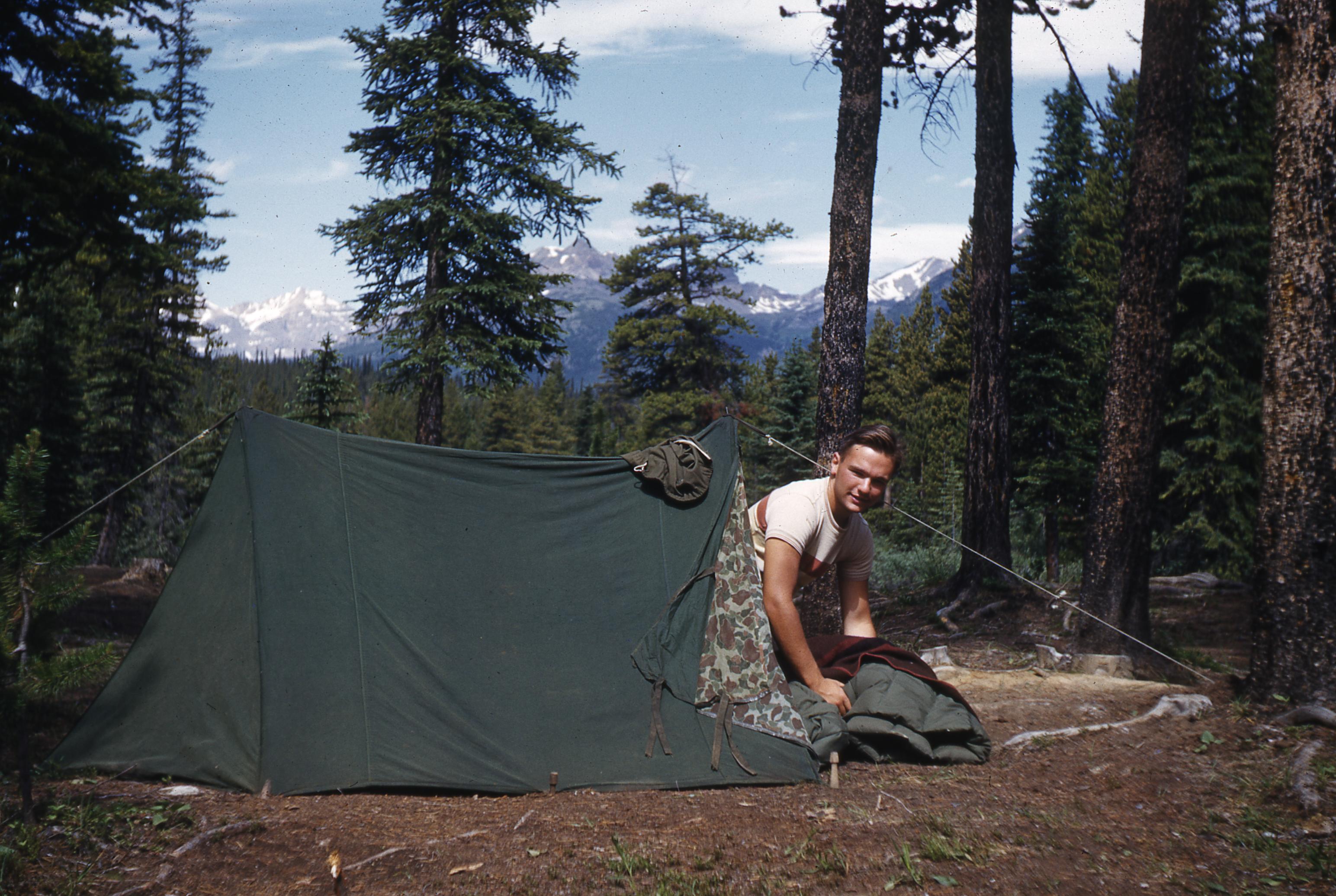
Camping in Alaska the summer after his senior year in High School: 1951.

My father was not skilled in communicating about emotions.  He was a very private person.  Raising four daughters through their teenaged years must have driven him somewhat mad.  Tears, insecurities, enthusiasms and the fodder of our adolescent dreams seemed to mystify him.  He would help me with my Trigonometry homework instead.

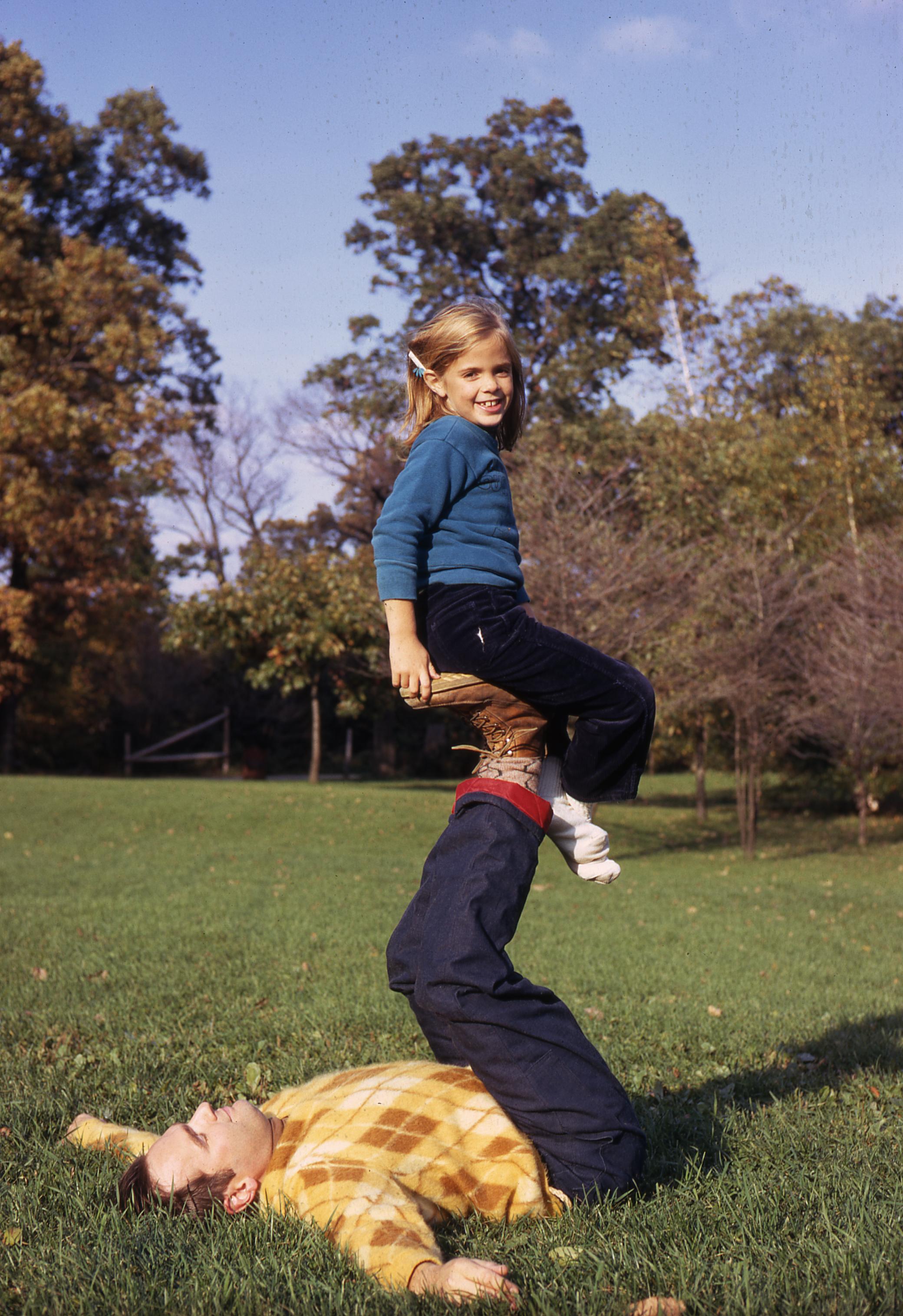
Playing with my dad, 1971.

I married a man of whom my father absolutely approved.  He walked me down the aisle quite proudly.  He feted my family and our guests at 4 baptisms when his grandchildren were born.  I finally felt that I had succeeded in gaining his blessing and trust.  Gradually, I began to work through the  more difficult aspects of our relationship.  He scared my young children with his style of discipline.  I asked him to refrain and allow me to do it my way.   He disowned my older sister for her choice of religion.  For 20 years, that was a subject delicately opened and re-opened during my visits.  I realized that there was still so much about this central figure in my life that I did not understand at all.

Grandpa George

In 2001, after the World Trade Center towers fell, I felt a great urgency to know my father better.  I walked into a Christian bookstore and picked up a book called Always Daddy’s Girl: Understanding Your Father’s Impact on Who You Are by H. Norman Wright.  One of the chapters contained a Father Interview that listed dozens of questions aimed at bringing out the father’s life history and the meaning he assigned to those events.  I decided to ask my father if he would answer some of these questions for me, by e-mail (since he lived more than 2,000 miles away).   Being a writer, this was not a difficult proposition for him to accept.  He decided how to break up the questions into his own groupings and sometimes re-phrase them completely to be more specific and understandable and dove in, essentially writing his own memoirs.   I was amazed, fascinated, deeply touched and profoundly grateful at the correspondence I received.  I printed each one and kept them.  So did my mother.  When I called on the telephone, each time he mentioned how grateful he was for my suggestion.  He and my mother shared many hours reminiscing and putting together the connections of events and feelings of years and years of his life.   On the phone, his repeated thanks began to be a bit eerie.  Gradually, he developed more symptoms of dementia.  His final years were spent in that wordless country we later identified as Alzheimer’s disease.

I could never have known at the time that the e-mails we exchanged would be the last record of my dad’s memory.  To have it preserved is a gift that is priceless to the entire family.  I finally learned something about the many deep wounds of his childhood, the interior life of his character development, his perception of my sister’s death at the age of 20 and his responsibility in the lives of his children.   My father is no longer “perfect”, “smart”, “strict” or any other concept or adjective that I could assign him.  He is simply the man, my father.  I accept him completely and love and respect him more holistically than I did when I knew him as a child.  That is the gift I want to give everyone.

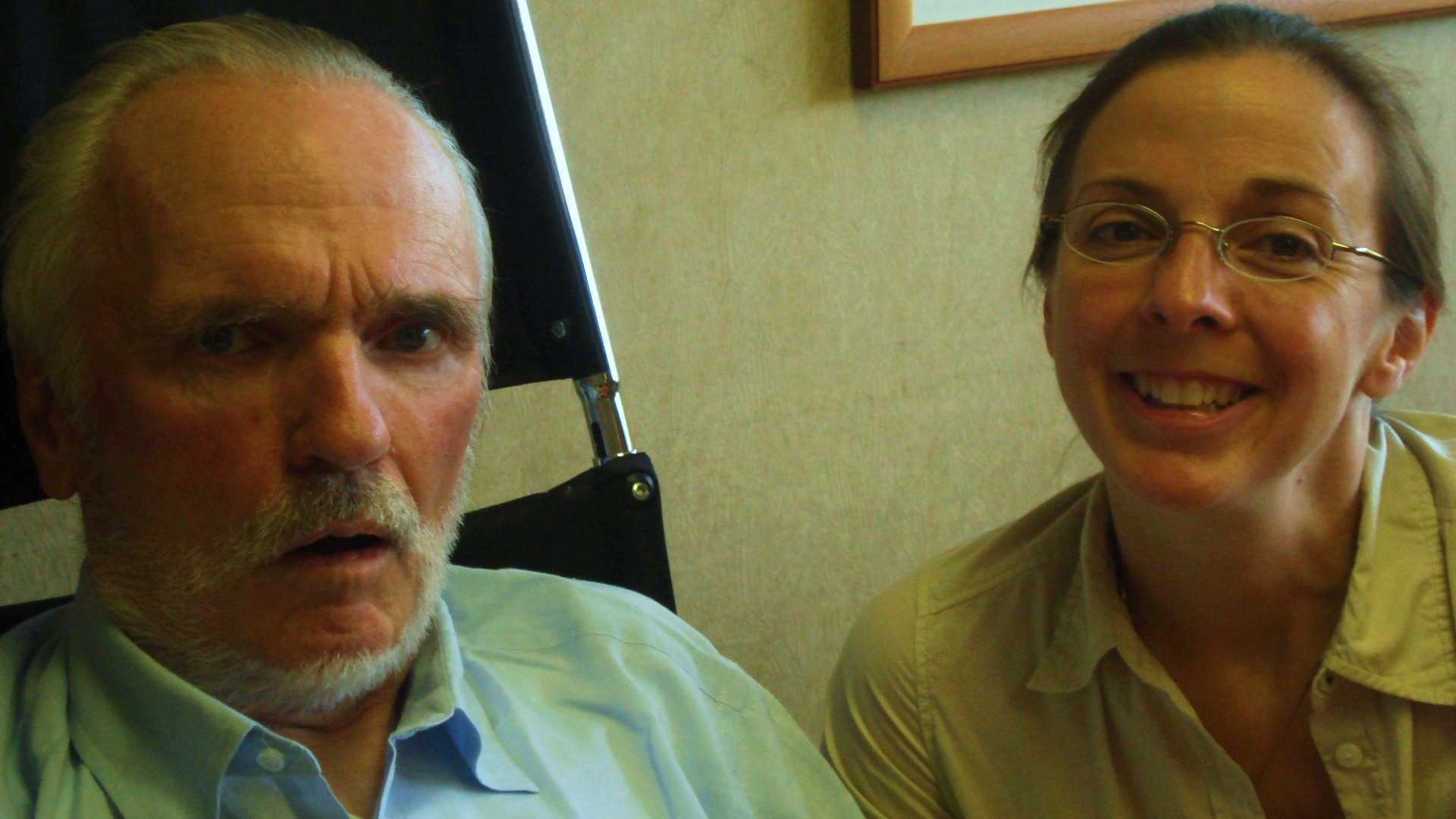
I will close with this photo, taken in the summer of 2008 when my youngest daughter and I visited my father at the nursing home.  I had been widowed 6 months, had not yet met Steve, and was anticipating my father’s imminent passing.  My frozen smile and averted eyes are fascinating to me.  That I feel I must face a camera and record an image is somehow rational and irrational at the same time.  To honor life honestly is a difficult assignment.  I press on.

Unknown's avatar

The Bicentennial Post

I began this blog 200 posts ago, and there’s nothing in this world that I don’t know…


Well, that’s not true, but I’m remembering my father sitting in his chair on our wrap-around porch singing old silly songs as the sun went down.  “I was born about 10,000 years ago…” verse after unbelievable verse.   There’s a lot in this world that I don’t know and will never know, and many things that I can know if I pay attention and try to be aware.  One thing I became aware of is that my blog was hard for my mother to read in its old format.  The light text on a slightly darker background was obscured through her developing cataracts.  I hoping that this new look will be clearer for her.

Another thing that I’m becoming aware of is the way that thoughts influence energy.  Life is difficult (opening line of M. Scott Peck’s The Road Less Traveled), in other words, living requires effort.  Solving problems, finding food, making money, communicating – all of that takes some energy, but sometimes the energy returns to us if the process is positive and life-giving.  When I feel drained and sad and depressed, it’s often simply because my thoughts about problem solving, making money, and other efforts of living are not positive.  In another Summit with Steve this morning, I asked myself this question, “Are you going to roll up your sleeves or roll up your eyes?”  Steve offered an illustration from our favorite National Basketball team, the Chicago Bulls (President Obama is also a loyal fan).  Rookie Jimmy Butler, brand new to the team, has a life story that exemplifies the effort of overcoming obstacles.  He was abandoned by his father at an early age, kicked out by his mother at 13, raised by a widow with 4 children who remarried a man with 3 more children, and finally made it to Marquette University and the NBA.   He is part of the energy infusion we fans call “The Bench Mob”.  They’re not “good enough” to be starters, but when they go into a game, they roll up their sleeves and get to work!  Another member of “The Bench Mob” who has a totally different physical attitude is Omer Asik.  We love him, because he’s nerdy-looking like us.  He’s tall and skinny and white.  He’s from Turkey.  He is a great basket defender, but he’s pretty new to the team, too, and not as athletic as many players.  He has this comical hang-dog expression when he fouls someone or misses a shot.  He literally rolls up his eyes, instead of his sleeves.

Energy ebbs and flows.  Sometimes I roll up my sleeves, sometimes I roll up my eyes.  Here’s another comic example: Buster Keaton.  Mr. Keaton had a stellar career in silent films.  He’s a little guy, very physically strong.  His acrobatic stunts on camera are amazing.  His comedy is also about solving problems, thinking outside of the box and using his incredible energy.  Of course, he doesn’t squander any energy talking!  His reaction to social situations is great.  He doesn’t let them deter him from going after what he wants, and whenever he fails, he simply tries a new tactic.  See any of the clips from “College” (1927) that you can find…or the whole film!  He makes a great movie star hero, in my book.

So, this one’s for me, my kids and anyone else out there who is putting effort into living.   You are not your thoughts.  If your thoughts of failure and shame are draining your energy, listen to them and then change them.  Are you really ashamed of yourself?  Or is that a perception of what you think ‘society’ thinks of you?  The truth is you are a good person and you desire to be a good person (most likely – granted there may be exceptions).  Roll up your sleeves, Good Person, and play!

A couple of really Good People rolling up their sleeves!

Unknown's avatar

Muck and Muddle

I hate hormones.  Why anyone would want to replace estrogen once she’s finally lost it is beyond me.  The moods and emotions it produces are so murky.

I feel like I haven’t learned a damn thing about who I am, and I’m almost 50 years old.  Aren’t I supposed to get this right, eventually?

Annie Dillard writes about awakening to her consciousness when she was about 10 years old.  How do you do that at ten?  And remember what it felt like decades later?  The woman must have a brain six times the size of mine.  Here’s a passage I read this morning, from An American Childhood:

“I woke in bits, like all children, piecemeal over the years.  I discovered myself and the world, and forgot them, and discovered them again.  I woke at intervals until, by that September when Father went down the river, the intervals of waking tipped the scales, and I was more often awake than not.  I noticed this process of waking, and predicted with terrifying logic that one of these years not far away I would be awake continuously and never slip back, and never be free of myself again.

“Consciousness converges with the child as a landing tern touches the outspread feet of its shadow on the sand: precisely, toe hits toe.  The tern folds its wings to sit; its shadow dips and spreads over the sand to meet and cup its breast.

“Like any child, I slid into myself perfectly fitted, as a diver meets her reflection in a pool.  Her fingertips enter the fingertips on the water, her wrists slide up her arms.  The diver wraps herself in her reflection wholly, sealing it at the toes, and wears it as she climbs rising from the pool, and ever after.”

Why do I feel like I never achieved this perfect fit, this awakened consciousness, not as a child and that I’m struggling to find it still?   The idea of ancient grace that began this blog seems as ethereal and unattainable as ever.  The clumsy truce I’ve maintained with myself wears thin.

Time to cocoon under the blankets and let the snow fall.  Perhaps I’ll emerge as from a chrysalis and feel differently by supper.


Unknown's avatar

The Flow of Emotions

Peace like a river.  After the burning of Valhalla, the Rhine surges its banks and brings everything back to a gentle equilibrium.  Sometimes I feel like I’ve burned out on the passions of the world and slipped into the calm of old age and wisdom….and then the flames flicker under the surface, and I dive into the drama with an eagerness that mystifies me.  Why do I want to go there?  Is it my ego grasping for some thrill ride?  Beginnings and endings are often infused with heightened emotion, even and maybe especially in the recollection of them.   There’s an excitement to those feelings that can be addictive.  I wallow in the concept of new love and the tearful goodbyes.  And then I get a headache and puffy eyes and wonder why I’m so masochistic.   I blame hormones.  And social traditions like Valentine’s Day.

I appreciate my partner and the safe but challenging environment he creates.  He asks me what I’m feeling and waits patiently while I try to fashion words from the vulnerable soup of my damp thoughts.  I am learning to be aware of myself, my cyclical moods and intractable psychological baggage.   He senses when I’m “stuck” and when I’m “flowing”.  And so, I dedicate this photo to him:

Thanks, Steve, for your compassion.


Unknown's avatar

Stressed for Success?

My very astute sister once pointed out to me that all stress is not created equal.  There’s daily stress, the normal result of a body functioning without rest for 16 hours or so, which is alleviated after 8 hours of sleep.  There’s distress, which gives us the feeling of being overwhelmed or upset by the amount of stress we experience, and then there’s eustress, which according to Wikipedia is “a term coined by endocrinologist Hans Selye which is defined…as stress that is healthy, or gives one a feeling of fulfillment or other positive feeling. Eustress is a process of exploring potential gains.”  Examples of eustress could include climbing a mountain, running a marathon or sky-diving.  Or surviving a nautical disaster.

I was intrigued by a comment I read from one of the survivors of the cruise ship, Costa Concordia, that sank in the Mediterranean this past week.   ABC News reported:

‘Australian miner Rob Elcombe and his wife, Tracey Gunn, told Melbourne’s Herald Sun Newspaper they booked a spot on the Concordia as a last ditch effort to save their marriage.  Instead, the couple found themselves trying to save their lives when they boarded the very last lifeboat to leave the ship with survivors. “This has made our bond much, much stronger,” Elcombe told the paper. “Who needs couples counseling, when you survive a Titanic experience?” ‘

An adventure.   Stress worked into a feeling of gain.  Is it possible to turn your distress into eustress?

Peace like a river

Another news story I ran across came under this headline: Wife Slips Into Madness As Husband Dies of Brain Tumor. (ABC News)  Catherine Graves wrote a book called Checking Out: An In Depth Look At Losing Your Mind describing the distress of caring for her husband.  The headline rather sensationalizes an experience of overwhelming stress that is shared by a lot of people who find themselves in the role of caregiver.  I can relate.  I went through depression and Post Traumatic Stress Syndrome during my husband’s illness and after his death.  Like Mrs. Graves, I was widowed at 45.  But did I lose my mind?  Not irretrievably, I don’t think.  Maybe what I’m doing now, being unemployed, slowing down, is my way of turning that distress into eustress.

There’s an old hymn that I’ve affectionately heard referred to as “The Playtex Hymn” (after the girdle).  The first line is “How firm a foundation, ye saints of the Lord, is laid for your faith in His excellent Word”.   It was written by John Keith in 1787.  My favorite verse goes like this:

“When through the deep waters I cause thee to go,
The rivers of woe shall not thee overflow;
For I will be with thee thy trouble to bless,
And sanctify to thee thy deepest distress.”

For some reason, singing that verse always causes me to choke up with emotion.  I know how it is to feel like I’m drowning.  I have a gasp reflex that reminds me of this almost daily.  It shows up lightning fast in moments when my reptilian brain senses danger.  It first became noticeable when I was trying to teach my kids to drive.  I would gasp and grab the handle above the passenger side door at the slightest correction of the steering wheel or touch of the brake.  It happened to me again just this morning.  I was stacking packages on the table and the tower toppled over.  I gasped.  “I must be drowning!” I laughed.  It’s probably a rather annoying habit for those who live with me.   I appreciate their patience.

There’s another hymn that follows this theme.  “It Is Well With My Soul” was written by Horatio Spafford in 1873.  The story behind it is quite amazing.  In brief, according to Wikipedia:

“This hymn was written after several traumatic events in Spafford’s life. The first was the death of his only son in 1871 at the age of four, shortly followed by the Great Chicago Fire which ruined him financially (he had been a successful lawyer). Then in 1873, he had planned to travel to Europe with his family on the SS Ville du Havre, but sent the family ahead while he was delayed on business concerning zoning problems following the Great Chicago Fire. While crossing the Atlantic, the ship sank rapidly after a collision with a sailing ship, and all four of Spafford’s daughters died. His wife Anna survived and sent him the now famous telegram, “Saved alone . . .”. Shortly afterwards, as Spafford traveled to meet his grieving wife, he was inspired to write these words as his ship passed near where his daughters had died.”

And here’s the lyric:

When peace like a river, attendeth my way,
When sorrows like sea billows roll;
Whatever my lot, Thou hast taught me to say,
It is well, it is well, with my soul.

I am trying to re-train my brain to believe that my deepest distress can be sanctified.  I don’t think this is an exclusively Christian perspective at all.  The Noble Truths of Buddhism are all about addressing the suffering (distress) of this world and how we think about it.   I hope that as I “explore potential gains”, my drowning will become floating, and all will be well with my soul.