Unknown's avatar

The Shadow Side of Abundance

I’ve connected a few strands in the cobweb of my mind.  Follow me, if you will.

I’ve been thinking about my shadow side, my dark side, and I’ve located an area that I think could be it.  It lurks in my ego, in the part of me that craves attention for myself at the possible expense of others.  This is where I am tempted to be manipulative and fake.  The origins of this desire are nebulous, but I can identify manifestations in my childhood.  I was daughter #4 in my family, the youngest child for 11 years, the only blonde, with a ski-jump nose and a pouty lower lip.  I was cute (pardon my use of this hated word, Steve!), especially to strangers.  My family used to tease me for being “touched by waiters” because every time we went out to eat, the waiter would pat me on the head or something.  I loved being cute.  I loved the attention because my deep-seated fear was that I was redundant.   With three older sisters, there was always someone near at hand who was smarter, more accomplished, and better than me at everything.  I struggled to find a niche where I could have my own spotlight.  I actually found that in music, so I majored in Voice Performance in college.  My mother was very musical, but a rather shy performer.  I pushed myself to overcome my natural fear of being judged so that I could stand out every once in a while.  This thread leads to….

Salieri in “Amadeus”.  His dark ego leads him to all kinds of hateful thoughts about Mozart and about the God who favors him.  This fear of redundancy gripped him.  He saw the world as a competitive arena.  “This town ain’t big enough for the both of us” is a theme in a lot of movies, actually.  Walking to the farmer’s market today, I noticed redundancy all over.  Nature is full of it.  How many leaves gather in the gutter?  How many stands of squash and potatoes gather for market?  How many people, how many birds, how many mice or ants or whatever do we really need?  What is the point of abundance and why is redundancy a bad thing?  Follow “Amadeus” to….

Cynthia Nixon, who played Mozart’s maid and Salieri’s “spy”.  This is the only performance of hers that I’ve actually seen.  I did find an article on her when I read and researched the Pulizer Prize winning play, “Wit”.  I discovered that she is in a lesbian relationship now, and she was quoted as saying that she never thought of herself as a lesbian.  What she did say was that “here was this undeniable person”.  That phrase stuck with me.  I wonder at all the things we find redundant and ask if we are denying them.  Of all the leaves that I encountered on this windy day, did I deny most of them and only notice a few?  I actually picked up only one to look at it more closely.

We don’t know what to do with abundance.  We can’t possibly take it all in, so we deny much of it and acknowledge only a portion.  The rest we call “redundant” because we have no use for it.  But Nature is abundant for some reason.  Could it be that it’s not just for us?  Oh, that’s hard for our egos to imagine.  Think of the use of pesticides.  Why in the world would there be so many little critters who eat vegetation?  We don’t need them. It must be a mistake.  Let’s kill them off.  What’s the result?  Dead soil – no humus, no living matter mixed with the rock, no space for air and water and roots.

Do we need all these beetles? Hey, maybe it's not about what 'we' need.

We live in an abundant world, and we are part of that abundance.  How do we refrain from denial and keep our minds open to more than we can comprehend?  The balance between abundance and scarcity in Nature keeps populations in flux and unpredictable.  Therefore, I suppose redundancy has its place in an uncertain future.  This is an ancient wisdom.  When we eliminate redundancy because it doesn’t make sense to our economic mindset, we are dangerously engaged in hubris.  Why are we allowing our seed banks to be monopolized and diminished, for instance?   Why are we allowing the rate of extinction to skyrocket?  Why are we allowing our denial to be imprinted on the planet?  We act in ignorance because we have no choice, that is to say that we will never understand the world completely.  But we need not act impetuously out of false assumptions driven by our egos.

Unknown's avatar

Hanging Out Locally

For many, the study of nature begins in your own backyard.  Here in my second floor bedroom, I look out on some beautiful maple trees.  One of them would be inside my bedroom if I removed the screen.  My squirrel friend, Itchy Twitchy (or one of his kin), has been hanging out eating maple seeds off the ends of branches, fattening up for the winter.  He’s an amazing little acrobat, able to hang on with his toes leaving his hands free to grab up the dangling seeds.


I’m glad to see he’s selecting healthy, natural squirrel fare instead of diving into the trash can!

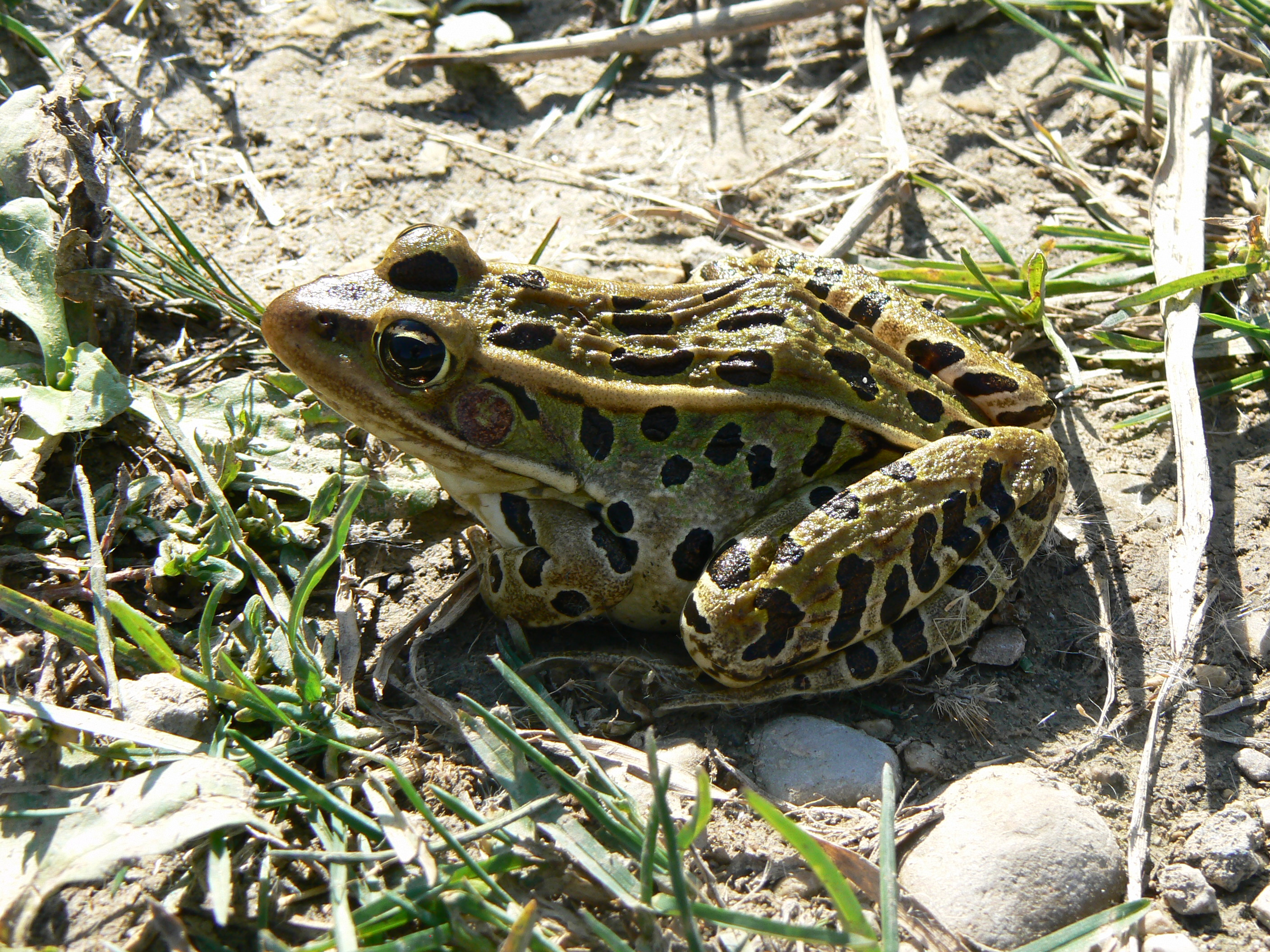
I am participating in the Wehr Nature Center’s Halloween event this weekend.  They present a nature walk lit by jack o’ lanterns that features various costumed characters who teach about wildlife and traditions of Halloween.  There are some lovely teenaged girls volunteering who represent decomposers like Millipede and Roly-poly.  They do a rap song.  I am playing two different characters.  I am V.C. Frog for two nights and the Witch for our sold out Saturday night.  I suppose you’re wondering what V. C. stands for.  (That’s actually one of my lines.)  It stands for Very Crabby.  VC has litter and algae and petroleum products clinging to him.  He is looking for a clean pond.  One of the visitors listening to my schtick piped up to say that he is a Boy Scout, and he regularly scoops litter out of his local pond.  I thanked him on behalf of frogs everywhere.

Doing my part last night entailed standing on a wood chip path in the rain in a fleece frog suit with mosquito netting covering my face.  The full moon eventually shone through the dissipating clouds.  The Canada geese on the pond were making as much noise as the volunteer owl who ‘hooted’ loudly at intervals.  I was croaking softly as the walkers approached me.  I do a pretty good croak.  It was strangely surreal, though.  Natural and fake at the same time.   Is this harmonizing with the planet?

Happy Frog at Vernon State Wildlife Area

I read in our local paper that there is a 420-million year old tropical reef here in Wauwatosa.  This piece of land has been hidden behind an industrial site for decades.  Before that, it was part of a quarry.  A recent purchase of the land by the Historic Preservation Committee will allow limited access to the public.  Fossils from this site that were collected by a local pioneer physician are housed at Harvard.  I look forward to exploring the area and trying to imagine this place under equatorial waters.

What’s in your backyard?

Unknown's avatar

Discoveries

In 14 hundred and ninety-two, Columbus sailed the ocean blue…

Happy Columbus Day.  In my family, the tradition is to play selections from Stan Freeburg’s “The United States of America” on this day.  Especially the song “It’s a Round, Round World”.  Just because it’s silly and we’ve memorized the whole record.  Yes, record.  As in vinyl.  It was from Jim’s collection.

“You have a dream?”  “Yes, I do.”   “Would you like to talk about it?”

Yes, I would.  My dream is to live a life of discovery, to open my eyes and ears and arms and senses to the vast experiences of this round, round world.  To open my mind to possibilities for living, to find ways of peace, of tolerance and acceptance.  To learn from the earth, from the other living things around me, what it is to be in harmony with my surroundings.  I want to discover how to live in grace.

To look far off

and close up

to notice relationships

and contrasts

Awareness, appreciation, attitude, action, activism and education.  Discovery, embodiment, and teaching.  The way of the bodhisattva, actually.

Yes, that’s my dream.

Unknown's avatar

Squirrely Business

A whole lot of chattering is going on in the trees outside my bedroom window.  A whole lot of rustling is going on below.  Animals are harvesting and gathering and hiding food away for the winter.  We have a special friend whom I call Itchy Twitchy.  He sits on the fence above our landlord’s garbage can and munches on whatever he’s gleaned from inside it.  He has (or his friends have) chewed a couple of holes in the plastic can big enough to fit through, so he has easy access to the people food in the bottom.  I have found him working on Eggo waffles and chicken legs before.  When he’s not eating, he’s itching and scratching.  He probably has some kind of insect parasite problem.  He has to do some pretty nifty acrobatics to clean thoroughly while still perched on the fence.


Sometimes it looks as if he has a belly ache from something he ate.

I really appreciate his visits.  He reminds me that despite my suburban surroundings, there are other critters making a living here besides the human neighbors.  Steve and I were talking about hubris and anthropocentricism at dinner again, and we keep coming back to a desire to be open to the wider world.  I think my landlord considers Itchy a pest, and he keeps saying, “Yeah, I need to get a new can.”  But he hasn’t done it yet.  I’m not sure waffles are the best squirrel food, though.  Maybe it would be better to fix the can and put out the occasional corn cob or plant sunflowers and echinacea?

I have grand ideas about saving the planet, but maybe I should start in my own back yard and figure out how to have a good relationship with the squirrels first.  In other words, address my own hubris.

Unknown's avatar

Harvest and Hunting

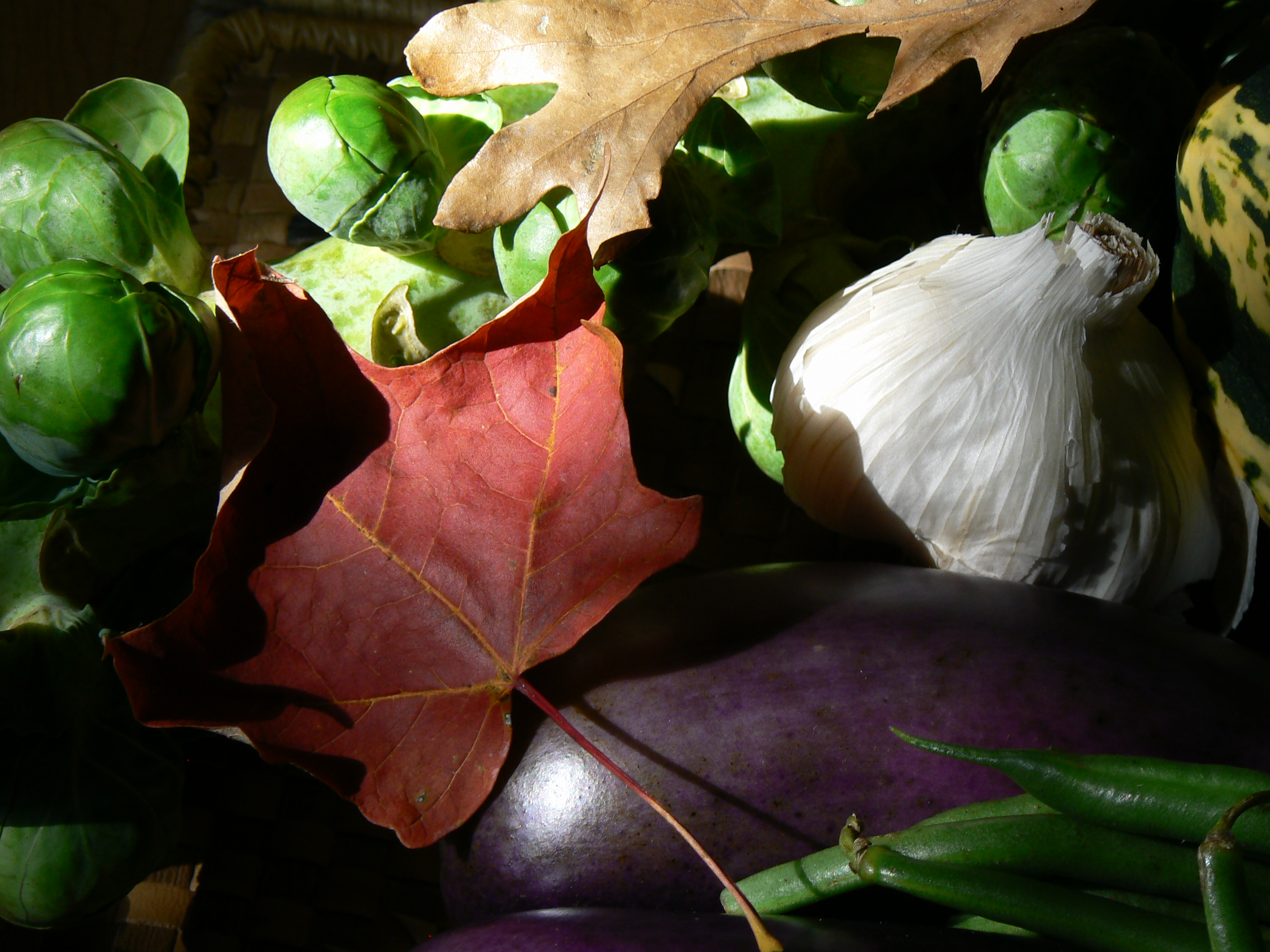
Next Saturday will be the last Farmer’s Market day for ‘Tosa.  Today’s was spectacular, though.  Here’s a picture of my morning harvest.

Oh, it’s so beautiful, I have to show you another:

As we walked to the market place in the village, we noticed a deer on someone’s front lawn grazing on fallen crabapples as the leaves blew around her.  Such a picturesque view of Fall, but unfortunately, I didn’t have my camera with me.  This evening,  I made a risotto using the Japanese eggplant, green beans, garlic, onion, and red pepper.  Supplemented with a couple of unfinished bottles of red wine plus a loaf of Kalamata rosemary bread, also from the Farmer’s Market.  Dessert was Amaretto and brownies.

In the afternoon, Steve and I went walking in the Vernon State Wildlife Area.  Emily will remember this place.   Oh, and we took the D.H. Lawrence novel we’re reading with us.

Our reading spot

Our reading was punctuated by the sound of rifle fire not far away.  Also, up the river was a duck blind and a bunch of decoys.

Not the real thing

We had a lot of questions.  Are there supposed to be people hunting waterfowl in a wildlife refuge?  The signs that were posted were confusing.  There’s no waterfowl hunting whatever beyond certain signs.  No one is allowed in the refuge area from Sept. 1 to November 30 except for gun deer hunters.  You can’t hunt on the dikes between the signs.  We took the long way around the perimeter of the area, and ended up on the railroad tracks for a while to avoid the marshy path.

Taking a higher road out of the marsh

We finally got back to the parking lot at about 4:30pm and noted more cars and people in camouflage gear with guns taking to the trails.  What was going on?  The sign in the parking lot did indicate that Hunting was one of the features of this wildlife area.  But is it deer hunting season already?  As concerned citizens, we wanted to know.  Steve jumped online when we returned home and learned that this weekend is Youth Deer Hunt weekend.  The Wildlife Area is a public hunting area, and only a portion of it is a refuge.  From the Department of Natural Resources website: “Youth hunting events give hunters ages 10 to 15 an opportunity to hunt and gain valuable experience without competing against adult hunters. Special seasons for a variety of species allow only youngsters to hunt during these days under the supervision of their mentor.”  Here is a picture:

From the DNR website

This morning, we were talking about children taking responsibility and how there ought to be a way to give kids a more meaningful role in society – somewhere between child labor and “playing” at adult roles while mom or dad do all the real stuff because adults are more efficient.  So I’m asking myself, is “hunter” a meaningful role in today’s society?  Are these kids helping the family to eat for the winter?  Are they participating in a traditional family role?  Do they partake in any ritual of acknowledging the deer’s part in this event, as many hunting cultures do?  I don’t want to be dogmatic, and I don’t like killing for sport.  I wonder what these kids are taught by their “mentors” about hunting.  I suppose I would have to speak to a hunter to find out.  I have questions.

Unknown's avatar

Reinventing Environmental Education

This morning we had a group of 1st graders participate in the Soil Secrets program.  They gathered “ingredients” for soil and cooked up a great batch…except that it will take 100 years for their ingredients to decompose and become one inch of soil.  At least that’s what they were told.  I told Howard the naturalist that I’ve been taking his teachings on Change and the 3 As (Awareness, Appreciation and Action) and blogging about them.  I told him I added “Attitude” to the list.  Just then, another staff member chimed in and said, “Oh, those are the 4 pillars of Environmental Education: Awareness, Appreciation, Attitude and Action”.  So intuitively, I’ve been piecing together a way of learning that’s already been codified and stamped with a Presidential approval…by Richard Nixon, no less.   I looked it up on Wikipedia.

Environmental education (EE) refers to organized efforts to teach about how natural environments function and, particularly, how human beings can manage their behavior and ecosystems in order to live sustainably. The term is often used to imply education within the school system, from primary to post-secondary. However, it is sometimes used more broadly to include all efforts to educate the public and other audiences, including print materials, websites, media campaigns, etc. Related disciplines include outdoor education and experiental education.  EE focuses on:

  • Awareness and sensitivity about the environment and environmental challenges
  • Knowledge and understanding about the environment and environmental challenges
  • Attitude concern for the environment and help to maintain environmental quality
  • Skills to mitigate the environmental problems
  • Participation for exercising existing knowledge and environmental related programs.

There’s a history section that notes that thinking about the environment was at first a more philosophical endeavor, engaging writers and ‘naturalists’ like Rousseau and Agassiz and became a more “scientific” issue after the Depression and dust bowl days when Conservation Education became “a major scientific management and planning tool that helped solve social, economic, and environmental problems.”

On Thursday, I learned that the CCC had built the dam at the Wehr Nature Center in 1935.  I also learned that they planted pine forests on top of the glacial kames because reforestation was generally considered good management.  Howard told me that it introduced a monoculture that wasn’t really typical of the native vegetation of the area.

So I’m beginning to realize that I’m stepping into the middle of a long-term drama.  The dialogue isn’t new, I’m just new.  But I notice that the dialogue has become more clinical and less poetic.  I like the aspect of grace.  I like the aspect of wonder.  I met a student on our program today who is getting her certification in early childhood education, K-3.  Environmental education represents 8 hours of her total degree requirements.  She will check it off her list and be that much closer to becoming a teacher. What will she impart to her students?  She laments the fact that most city kids don’t get the opportunity to go on a field trip to a park.  They simply can’t afford it.  Sometimes one parent will foot the bill for the entire class to go, and that helps.  When they can’t leave the school, they try to do a nature unit in the classroom.  One class did a seed experiment that failed because their class was in a basement room that didn’t get enough sunlight to grow the seeds in their little plastic bags.  They all rotted instead of sprouting.  What happens when you put in your required curriculum hours on environmental education but the students don’t actually get to experience a natural environment?  I suppose they learn that environments can be very different.  Wendell Berry hates the term, actually.  He says, “I don’t live in an environment.  I live in a place.”

Man, I wish I could take every kid in Milwaukee out one at a time and show them the Wehr Nature Center or Havenwoods at least once every year of their school career.

Green space at the heart of the city at Havenwoods State Forest, Milwaukee

That would be a good beginning.  How do you develop love for the world in yourself?  How do you help develop it in another person?


Unknown's avatar

Change

Today I tagged along with a group of 4-6th graders as they participated in a program called “Let’s Go Climb a Moraine”.  The staff naturalist gathered them all at the beginning of the hike and said that he hoped they would remember one important word from the day’s experience.  “Glacier?” they guessed.  No.  CHANGE.  Everything on the planet is changing.  Even the land.  For example, Wisconsin was once underwater at about the equator, back in the days of Pangaea.  The glaciers shaped landforms.  A beaver changes the landscape by chewing down trees and creating dams.  People are making all kinds of changes to the earth as well.  Naturalist Howard also asked the kids, “Why do we bother to study and learn about the earth?  The more we know about the earth, the better we’re able to do what?”  Protect it.  Take care of it.

And change?  Why do we bother to look at change and be aware of it?

So we won’t be so afraid of it, perhaps.

Change is inevitable.  Eventually, everything changes.  Some changes take a long, long time and are not even noticed in a few lifetimes.  Other changes happen in an instant.  Does change make you feel unsettled, anxious, frightened, panicked?  Are you comfortable with change?  Do you delight in change?  “Depends on what the change is.”  Sure.  That’s a fair question, but would you be able to accept every change eventually?  Are there some changes that you would never accept?  What do we teach about change?

New colors on the trees

My children are going to be living quite differently from the way I did.  There is change in the air.  Our economic situation seems like a popcorn kernel about to burst.  Something’s gotta give.  And I think that will be a very good thing.  I think that the older I get, the more open I am to change.  You might say the opposite would be more typical, and perhaps it is, but the longer I live, the more changes I see and the more I get used to change.

Steve really enjoyed our hike and remarked, “My life’s been good to me.”  It made me think of John Denver’s song, “Poems, Prayers and Promises”.

The days they pass so quickly now
Nights are seldom long
And time around me whispers when it's cold
The changes somehow frighten me
Still I have to smile
It turns me on to think of growing old
For though my life's been good to me
There's still so much to do
So many things my mind has never known
I'd like to raise a family
I'd like to sail away
And dance across the mountains on the moon

I have to say it now
It’s been a good life all in all
It’s really fine
To have the chance to hang around
And lie there by the fire
And watch the evening tire
While all my friends and my old lady
Sit and watch the sun go down

And talk of poems and prayers and promises
And things that we believe in
How sweet it is to love someone
How right it is to care
How long it’s been since yesterday
What about tomorrow
What about our dreams
And all the memories we share

I’ll always have a place in my heart for Henry John Deutschendorf, Jr.

Unknown's avatar

Juxtaposed on a Planet

Last night I wondered why I’m not an insect.  There are only 4,000 species of mammals on the earth and over 100,000 species of insects.  There are even more microbes.  I was thinking how simply one of those animals lives in the soil, a short life with clear intent.  My life as a human seems so much more complicated.  Even so, by human standards, my life is pretty simple now.  I don’t have a job, and I’m done raising kids.  Today, I walked to a restaurant to have breakfast with Steve and his mom, then walked to the grocery store to buy vegetables.  I am making soup and working on the computer.  I made a phone call to my mother and left a voice message.  Pretty uneventful, you might say, but still involving a lot of decisions.  How did I impact the planet today?  Why did I buy that item?  Why did I use electricity?  Why did I throw that in the garbage?  Where did I spend my time and energy and why?  How did I get here, where I am today?

Yesterday I felt pretty exhausted by my busy week.  Socially, I had spent time with all my family and Steve’s plus met strangers on our camping trip.  Geographically, I had covered over 500 miles.  Physically, I had hiked some but sat in a car more.  Psychically, I had given a lot of energy to my most important relationships.  When I’m with my kids, I feel nameless parts of myself going out to them.  I look at them, all 4 together with full-grown energy, and I feel spent in some way.  I wonder about insects who live to reproduce and then die in a matter of hours.  That seems pretty simple.  What do I do with the years I may still be living?

The web of interconnections on the planet is unfathomable.  I feel like I dabble my foot in here and there, watching ripples emanate and then wonder what I did.  What was the meaning, what will be the result, was that responsible?  I have awareness but not full understanding.  I have appreciation and take action based on my best intentions, and may never even know the impact.  I am not in control.  I wonder if simplifying my life is really an effort to have more control.  I suppose I act in faith, as does everyone, in the end.

Sometimes the things that I see connected here on earth don’t make much sense.  How did we get giraffes in Madison WI?

Barn, windmill, maple tree, giraffe. One of these things is not like the others.

My human brain wants to separate things and put them into tidy, little boxes organized by my own way of thinking.  I want a rational world, everything doing its job in its place.  Then, all I have to do is figure out what my job is and what my place is and do it.  No more problems, no more conundrums, no more philosophical issues.  Neat.  Ah, but as Alan Watts says, the world is “wiggly”.  Lines are blurred.  Connections are made, broken, re-made, detoured, disappear, and appear willy-nilly.  Is there something I must do?  My energy is spent just thinking about it sometimes.  I suppose there is another way, a Middle Way, a way that has to do with finding the flow of energy and going with it.  I found a website today that talks about our ecological thoughtprint.  Before we place a footprint on the planet, or maybe as we place our footprints on the planet, we have a thoughtprint.  Learning about how we think about our connections and using that knowledge to help us to make better connections is a valuable lesson.  Education doesn’t begin with an A, but I think it belongs in the ‘awareness, appreciation, action, attitude, activism’ list.

Unknown's avatar

Changing Attitudes

Awareness, Appreciation, Action.  Somewhere in there, Attitude is also an issue.  I suppose our attitude springs from our appreciation or understanding of a situation.  Camping in a state or national campsite is an opportunity to observe different attitudes in action.  We like to camp in the middle of the week, after Labor Day, in remote areas without a lot of “recreational” amenities so that we can find quiet and wildlife.  Here’s where we were Tuesday night:

The entire campground was empty except for the host and two other rather large camping trailers occupying the handicapped spaces.  One of the sites had twinkly lights up and a dog, but they were very quiet.  We heard coyotes howling and cicadas thrumming quite loudly all night, which was just what we wanted to hear.  On Thursday, we were in the National Forest and had set up our tent at the end of the camping loop, quite alone.  When we came back from our day hike, the spot next to us was occupied.  Gear covered the picnic table.  It looked like a large group had left one car behind and gone off for the day.  We prepared our evening meal in quiet and enjoyed that.  They returned later, made a fire, and started preparing their dinner.  It was dark by this time, and Steve and I were setting out on our “night hike”.  We like taking a walk in the dark after dinner, no flashlight.  The campers next to us were equipped with head lamps, like miners.  They were also equipped with plenty of beer.  About 10 minutes before 10 o’clock, official quiet hours, they turned on their music.  We were just about to go to bed.  We decided to go over and talk to them.  We gently told one of them that we were disturbed by the noise they were making, that it was park policy to have quiet hours at 10pm, and that we would appreciate it if they would attempt to quiet down.  He thanked us for alerting them and went to speak to the group.  Back in our tent, the noise level seemed only minimally diminished.  The music was off, but the laughter erupted continually and carried down the canyon.  Steve eventually spoke to them again, his quiet, deep voice coming in underneath their raucous chatter.  They got a little quieter, and some of them soon turned in, after banging the latrine door and some garbage cans first.   At least one person stayed up all night long and kept the fire going.

We got up early and broke camp.  One woman from their party came over to apologize about the noise and said that she knew her voice and laughter could get out of hand.  We told her that we appreciated her coming over to apologize.  They were state college students who had been observing the snake migration, a tradition of sorts.  They were only staying one night.  Their reasons for being there were not the same as ours, but that wasn’t the conflict.  The conflict was in attitude.  What posture do you take in nature?  Is it a resource or playground for us to use as we wish?  Is it a sanctuary for us to tiptoe into reverently?  Those are only two examples, the possibilities are endless.  I was thinking of some articles I’d read recently on bullying.  I was thinking about Fred Rodgers and his two minutes of silence during an awards acceptance speech.   My mother sent me this news item today about a teacher who turned his front yard into a garden and promptly drew complaints from neighbors about the “nuisance”.

http://kitchengardeners.org/blogs/roger-doiron/stand-solidarity-adam-guerrero

Attitude.  We are not all on the same page about any issue.  How do you communicate your attitudes?  How do you respect others’?  How do you invite people to change their attitude and allow some new experience?  I wonder if the college campers heard the owls and coyotes that were active that night.  I want to be gentle and kind and peaceful in my approach to changing attitudes.  I don’t want to get aggressive or give in to power plays.  I do want to promote awareness and appreciation and action.

Unknown's avatar

I’m Baaaack!

We returned from our 3 day camping trip this evening and will be heading out to Madison tomorrow to walk in the Step Out Walk to Stop Diabetes.  We ended up going down to Shawnee National Forest….again.  This was our fourth trip down there together.  The chance to spend a few more days in summer temperatures was just too appealing to pass up.  I loved watching the fall colors intensify as we drove north again today.  There were rain clouds in the area still and rainbows to accentuate the play of late afternoon sun.  I am glad to be back up in Wisconsin where the reds of sumac and maple have taken their place in the fall palette.   Down south on the Mississippi we got a chance to see migrating birds.  The snake migration was also going on, we heard, but we weren’t looking for them.  What we did see were flocks of white pelicans doing aerial maneuvers that took my breath away.  Going in one direction, they are brilliant white in the sun.  Then they turn, and you see the black undersides of their wings.  It’s magical!

American White Pelicans migrating south

...and stopping to rest by the Big Muddy

Can you imagine what it might have been like to be Meriwether Lewis or William Clark and see wildlife in the kinds of number that populated the United States in 1804?  I get excited seeing a few dozen turkey vultures sunning themselves in the early morning.  I wonder how many they saw on a daily basis during their expedition?

Turkey vultures warming up

What would be the difference in our cultural ideas about nature and conservation if experiences of wildlife sighting weren’t “exotic” but commonplace?  Would we feel more or less concerned about the web of biodiversity?