Unknown's avatar

Autumn Sentiments

The autumn years of life.  The harvest of a lifetime.  Gathering together the products of work and character.  There’s something nostalgic and lonesome about autumn, sweet and melancholic.  Glossy photos of food and family and warm colors seem so appetizing.  I am planning to host Thanksgiving dinner for Steve’s family, and I keep daydreaming about how the table will look.  I want my home to be filled with warmth and love, good smells, earthy colors, sparkles of glass, silver, and candlelight.  Of course, this will be on a modest scale.  Martha Stewart does not live anywhere near here.  I have song lyrics stuck in my head from Barry Manilow’s “Paradise Cafe 2:00am” CD… “Oh, how I hate to see October go.”  How will I get my Thanksgiving vegetables now that the farmer’s market is closed?  The acorn squash and broccoli we had last night were delicious, dressed only in butter, salt & pepper.  The earth is so good to us and autumn is the applause before a winter curtain.  How do you feel when you’re giving a standing ovation, damp-faced and shining, heart bursting, swallowing hard, delaying your exodus into the next moment?  I feel that way about autumn.  I remember driving home from dropping one of my children off at preschool one cloudy November day and bursting into tears.  I tried to figure out what that was about and ended up writing this poem:

Change

In autumn, the trees start to sing once again

of the bittersweet mystery of change.

Is it beauty or pain now attached to my soul?

Is it grief…or relief…or nostalgia?

In the scarlet and gold,

the blood-red of life’s hold…on my heart

and the warmth of its love

mingles memories and years

into afternoon tears

falling softly…as leaves…to the ground.

Unknown's avatar

Cats and the Philosophy of Health Care

At our Socrates Cafe meeting on Saturday, we discussed the ethics of rationing health care.  How are decisions made about administering medical care?  Should health care be awarded to the wealthiest, the most fit, the least at-risk or the most at-risk?  Is health care a commodity that can be administered according to social and economic guidelines?  Is health care distinct from “illness care”?  And so on.  Our group is rather small and not especially representative of any particular demographic.  I don’t think we’re “solving” anything, we’re just enjoying discussion and engagement and some brain activity.  I’m exploring the results of allowing other people to comment on the products of my own bizarre thinking.  Which is kind of what blogging is about as well.

As I put in my own perspective on this issue, I realize that I speak from experiences that have centered mostly around my husband’s illness and death and from observances of non-human beings.  Jim used to chalk up a lot of his medical interventions as “better living through technology”.  He was the recipient of some very technical and somewhat heroic (although now pretty standard) procedures.  It was a complicated arena of insurance issues, multiple specializing doctors, drug interactions and availability, and the donor list system.  There were layers of decision-making involved and a fabric of responsibility that was pretty nebulous.  When his pulmonologist found out that he’d died, he asked me, “What are you doing about it?”  I wasn’t sure what he was talking about.  “I’m grieving!” I answered.  “I mean legally,” he explained.

Who is responsible for my health?

As for the observance of non-humans and their health, I look to the pets I have known.  Specifically cats.  I learned a lot from Pinkle, who somehow got injured up in the attic one day.  She simply stopped using her back legs until they had healed.  She slept.  She ate.  She tried out putting weight on them gradually, and eventually got back to doing all the things she had been doing.  She didn’t complain.  She didn’t seem miserable.  She didn’t worry or push herself or engage in any neurotic behavior that we could detect.  She took responsibility for herself, for the most part, and we provided food and shelter and quiet.  Phantom is another cat I have observed.  She is 16 years old now, and not living with me any more.  She had some urinary tract issues in the past when I did care for her.  I gave her antibiotics in pill and liquid form (which was an ordeal she did not welcome) and changed her food.  She had a bladder stone removed surgically as well.  That was maybe 10 years ago.  Her litter mate died of cancer a couple of years ago.  Cats don’t complain about pain much, and they don’t complain about death.  My kids tell me that Tabitha was purring as she died of the injection that ended her suffering.  Cats (and many other animals) have a tendency to seek out a quiet place to die.  They don’t make a big fuss.  We’re the ones who fuss.

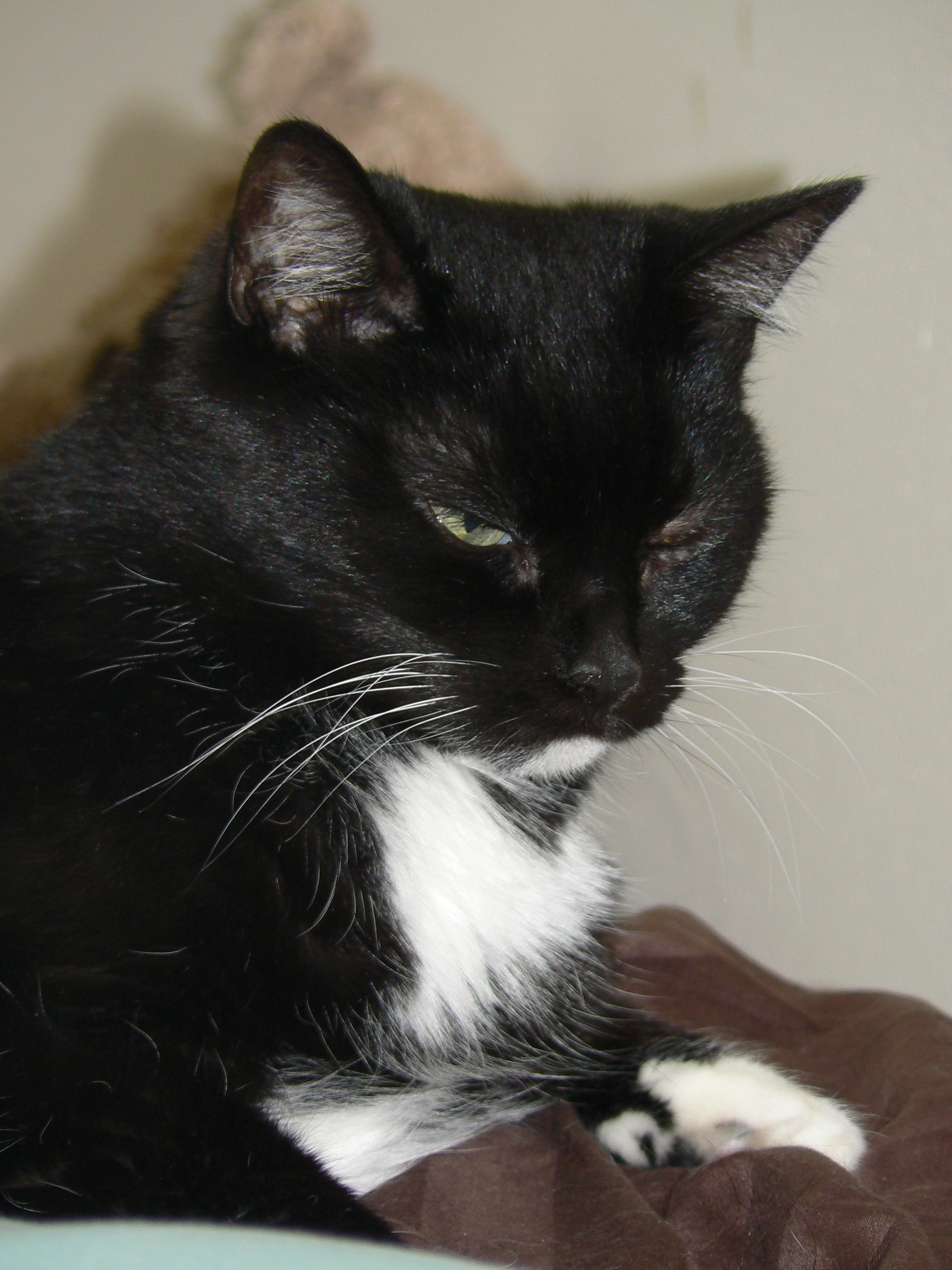
Phantom del'Opera

Pinkle Purr (see poem by A.A. Milne)

What if we focused on healthy living and didn’t sweat so much about “illness care”?  What if we made it our social/economic/political responsibility to work hard to provide clean water, clean air, healthy food, shelter, education about health, and quiet (less stress) for as many of us as we can, and let illness play out as it would naturally?  What if we as a community took responsibility for supporting health but abstained from taking responsibility for preventing death?  It’s not like we’d be successful in that effort ultimately anyway, right?  We’d do our best to give you the basic needs, and the rest is up to you and nature.  That’s how human life went before technology kicked in, and plenty of people lived to reproduce (or we wouldn’t be here today).   Is there anything wrong with that model?

That’s my two cents for the health care debate.

Unknown's avatar

Change

Today I tagged along with a group of 4-6th graders as they participated in a program called “Let’s Go Climb a Moraine”.  The staff naturalist gathered them all at the beginning of the hike and said that he hoped they would remember one important word from the day’s experience.  “Glacier?” they guessed.  No.  CHANGE.  Everything on the planet is changing.  Even the land.  For example, Wisconsin was once underwater at about the equator, back in the days of Pangaea.  The glaciers shaped landforms.  A beaver changes the landscape by chewing down trees and creating dams.  People are making all kinds of changes to the earth as well.  Naturalist Howard also asked the kids, “Why do we bother to study and learn about the earth?  The more we know about the earth, the better we’re able to do what?”  Protect it.  Take care of it.

And change?  Why do we bother to look at change and be aware of it?

So we won’t be so afraid of it, perhaps.

Change is inevitable.  Eventually, everything changes.  Some changes take a long, long time and are not even noticed in a few lifetimes.  Other changes happen in an instant.  Does change make you feel unsettled, anxious, frightened, panicked?  Are you comfortable with change?  Do you delight in change?  “Depends on what the change is.”  Sure.  That’s a fair question, but would you be able to accept every change eventually?  Are there some changes that you would never accept?  What do we teach about change?

New colors on the trees

My children are going to be living quite differently from the way I did.  There is change in the air.  Our economic situation seems like a popcorn kernel about to burst.  Something’s gotta give.  And I think that will be a very good thing.  I think that the older I get, the more open I am to change.  You might say the opposite would be more typical, and perhaps it is, but the longer I live, the more changes I see and the more I get used to change.

Steve really enjoyed our hike and remarked, “My life’s been good to me.”  It made me think of John Denver’s song, “Poems, Prayers and Promises”.

The days they pass so quickly now
Nights are seldom long
And time around me whispers when it's cold
The changes somehow frighten me
Still I have to smile
It turns me on to think of growing old
For though my life's been good to me
There's still so much to do
So many things my mind has never known
I'd like to raise a family
I'd like to sail away
And dance across the mountains on the moon

I have to say it now
It’s been a good life all in all
It’s really fine
To have the chance to hang around
And lie there by the fire
And watch the evening tire
While all my friends and my old lady
Sit and watch the sun go down

And talk of poems and prayers and promises
And things that we believe in
How sweet it is to love someone
How right it is to care
How long it’s been since yesterday
What about tomorrow
What about our dreams
And all the memories we share

I’ll always have a place in my heart for Henry John Deutschendorf, Jr.

Unknown's avatar

Righteous Depression

Ya know, in general, I think I’m a pretty happy, positive person.  I want to be like that.  Also peaceful, calm and occasionally insanely silly.  I did have a wicked period of postpartum depression after my first child was born and a bout with post-traumatic stress syndrome when Jim had heart surgery at 31. Okay, but I’m a pretty happy person, I think.  I’ve noticed now that since I’m a widow, if I get started crying about something, I can go on leaking for hours.  Now, could this be due to my new agenda of trying to face the reality of the world honestly?  The truth is the truth hurts.  Suffering exists in the world.  Various coping strategies and religions exist primarily to soften the blow of that blunt piece of honesty.  I am trying to be open, and it leaves me vulnerable.  Ouch.  It felt better to be Polyanna.

What to do about the responsibility and challenge to look deeply into the suffering of the planet, to become aware of the failures of systems and cultures, of relationships and communication from the large-scale to the intimate?  I feel sad about the truth.  Can I call this righteous depression?  Is this deep or simply pathological?

I am suddenly reminded of one of my life stories.  My sister and I were in a car accident when I was 17 and she was 20.  She was driving, and flipped the car at 80 miles per hour on the Interstate.  We were transported in an ambulance together to the Lincoln, NE hospital.  I was aware that they had been doing CPR on her the whole time with no response.  I had seen her covered in blood slumped next to me in the car before I was extricated from it.  I was in shock, but I was able to comprehend what was going on.  The hospital has policies about who can release information to patients, though, and everything must be done according to protocol.  So I found myself in an examining room with a nurse.  I had been checked out and aside from a bump on the head and some cuts, I am fine.  I know that my sister is not fine.   A nurse comes in and sits in the chair in the corner and says something about how they’re also examining my sister.  “It’s very bad,” she says, looking worried and vague, but directly at me.  “It’s just very bad.”  I felt like she was trying to talk to me in code or something.  She wanted to say something specific, but she couldn’t.  Instead, she just kept repeating how bad it was.  Was this supposed to prepare me for something?  Or was it supposed to fill me with a sense of doom and dread?  I realize she was probably a very sympathetic woman who felt terrible at being in the position of not having more comforting things to say or even more authority to speak the truth.  The result was just….awkward.  What do I do with this?  I suppose I could put her out of her misery and say, “It’s okay.  I’ve guessed that she’s dead.  I will deal with it.  I have a plan.”  Honestly, this is what I want to do in these situations.  I want to take responsibility and make everyone around me feel better.  Then I suppose I can feel righteously depressed.  It’s bad; it’s very bad, but I am going to try to do the right thing.

There are some very seriously bad things happening around us.  Global climate change, deforestation, greenhouse gases, ozone depletion, drought, famine, economic devastation, war, oppression and domination, political atrocities, nuclear poisoning, chemical poisoning, racial hatred, bullying, on and on and on.  How much of this can I be open to?  What if I bit off just a tiny portion and tried to chew on that only, to save myself from being overwhelmed?  What if I tried to absorb the totality and sank into a dark depression?  What do we do with deep sadness?  Share it?  Ignore it?  Fight it?  Meditate?  I’m open to suggestions.

Unknown's avatar

Juxtaposed on a Planet

Last night I wondered why I’m not an insect.  There are only 4,000 species of mammals on the earth and over 100,000 species of insects.  There are even more microbes.  I was thinking how simply one of those animals lives in the soil, a short life with clear intent.  My life as a human seems so much more complicated.  Even so, by human standards, my life is pretty simple now.  I don’t have a job, and I’m done raising kids.  Today, I walked to a restaurant to have breakfast with Steve and his mom, then walked to the grocery store to buy vegetables.  I am making soup and working on the computer.  I made a phone call to my mother and left a voice message.  Pretty uneventful, you might say, but still involving a lot of decisions.  How did I impact the planet today?  Why did I buy that item?  Why did I use electricity?  Why did I throw that in the garbage?  Where did I spend my time and energy and why?  How did I get here, where I am today?

Yesterday I felt pretty exhausted by my busy week.  Socially, I had spent time with all my family and Steve’s plus met strangers on our camping trip.  Geographically, I had covered over 500 miles.  Physically, I had hiked some but sat in a car more.  Psychically, I had given a lot of energy to my most important relationships.  When I’m with my kids, I feel nameless parts of myself going out to them.  I look at them, all 4 together with full-grown energy, and I feel spent in some way.  I wonder about insects who live to reproduce and then die in a matter of hours.  That seems pretty simple.  What do I do with the years I may still be living?

The web of interconnections on the planet is unfathomable.  I feel like I dabble my foot in here and there, watching ripples emanate and then wonder what I did.  What was the meaning, what will be the result, was that responsible?  I have awareness but not full understanding.  I have appreciation and take action based on my best intentions, and may never even know the impact.  I am not in control.  I wonder if simplifying my life is really an effort to have more control.  I suppose I act in faith, as does everyone, in the end.

Sometimes the things that I see connected here on earth don’t make much sense.  How did we get giraffes in Madison WI?

Barn, windmill, maple tree, giraffe. One of these things is not like the others.

My human brain wants to separate things and put them into tidy, little boxes organized by my own way of thinking.  I want a rational world, everything doing its job in its place.  Then, all I have to do is figure out what my job is and what my place is and do it.  No more problems, no more conundrums, no more philosophical issues.  Neat.  Ah, but as Alan Watts says, the world is “wiggly”.  Lines are blurred.  Connections are made, broken, re-made, detoured, disappear, and appear willy-nilly.  Is there something I must do?  My energy is spent just thinking about it sometimes.  I suppose there is another way, a Middle Way, a way that has to do with finding the flow of energy and going with it.  I found a website today that talks about our ecological thoughtprint.  Before we place a footprint on the planet, or maybe as we place our footprints on the planet, we have a thoughtprint.  Learning about how we think about our connections and using that knowledge to help us to make better connections is a valuable lesson.  Education doesn’t begin with an A, but I think it belongs in the ‘awareness, appreciation, action, attitude, activism’ list.

Unknown's avatar

Bibliophilia

Steve's office, next to the bedroom

Books are amazing.  They’re so diverse, so intriguing, so satisfying.  I live with about 40,000 of them in this house, and yet, there are so many more to look at.  We went to a Friends of the Library Book Sale in West Berlin today.  Tables and tables full of boxes of books lined the room.   Every time I think I might be getting sick of looking at books, a cover catches my eye.  A picture or a title throws a thought against my consciousness, and I’m hooked again.  I can’t resist a book on natural history or a cookbook on chocolate or a biographical picture book on Roberto Benigni.  The world is a fascinating place.  So, after the book sale, where did we go?  To a bookstore… to meet with the Socrates Cafe group.  Steve has been talking about them since we first started dating, but he hasn’t gone to a meeting for about a year.  They were very glad to see him again.  I was introduced to the group of 2 women and 7 men as the only newbie.  We put 3 questions up on the dry erase board and voted for our favorite.  “Is life meaningless?” was the winner.   Is life meaningless?  We’re surrounded by books, words and pictures about life.  If  life is meaningless, we’re certainly doing our damnedest to create meaning to put in it.  Ah, but is there a capital M – Meaning as in a meaning that was put into life by something or someone bigger and other than us?  The discussion goes on.  The group dynamic plays out on the stage.  An hour and a half goes by, and then the leading couple asks us out to dinner.  A charming pair of psychologists make great dinner companions, in my book (pun intended).  I had a thoroughly enjoyable day.  It felt great to meet with and talk to new people.  I feel like I’ve brought a hundred new friends home with me as well.  I feel alive and engaged!  Life has meaning and death has meaning; everything has meaning and everything is valuable!  I feel like Walt Whitman in one of his litanies of affirmation.  If you spent an hour browsing through a library or a bookstore, how would you feel?  Expanded?  Sensitized,  like tiny hairs of consciousness were prickled on your mind?

Before the meeting, we walked on the shore of Lake Michigan looking past the breakers where spinnakers danced on the horizon.  Gusts of wind and sunshine exhilarated our senses.  I wish I had brought my camera.  I like to try to hold on to the bedazzlement of life.  I suppose that books do the same thing, symbolically trying to capture something of wonder.  From the snatches that I read this morning, here is a dazzling quote:

“I wish I could translate the hints about the dead young men and women, And the hints about old men and mothers, and the offspring taken soon out of the laps.  What do you think has become of the young and old men?  And what do you think has become  of the women and children?  They are alive and well somewhere.  The smallest sprout shows there is really no death, And if ever there was it led forward life, and does not wait at the end to arrest it, And ceas’d the moment life appear’d.

All goes onward and outward, nothing collapses, And to die is different from what any one supposed, and luckier.”   Walt Whitman, “Song of Myself” from Leaves of Grass

Unknown's avatar

Dear Prudence

Last night, we watched the movie “Into the Wild” which tells the story of Christopher Johnson McCandless, who walked into the wilderness of Alaska to live off the land and do battle with some personal demons.   After 113 days, he died of starvation.  The story brings up some very interesting questions about society, “prudence”, and responsibility.

“Society!  So – ci – e – ty!!!” yells Vince Vaughn in a bar scene.   His character is bonding with Chris in a less-than-articulate but heartfelt acknowledgement that we fuck each other up regularly.  Parents and children, systems, administrations, organizations, rules, protocol and expectations.   It’s all pretty neurotic when you step back and look at it.   Some days, maybe most of us would like to walk to Alaska to get away from it all, to experience the freedom and dignity of making our own choices and engaging with the world head on.   After 100 days of complete solitude, Chris writes that he is lonely.  I think of that Life of Mammals scene with all the baboons on an African mountain.  We are social animals; it’s in our DNA, and we can’t walk away from that.  Maybe that’s another part of life to engage head on.

The first time my mother met Steve, she made a comment about him being “prudent”.  He denied it immediately.  To him, ‘prudence’ has to do with conforming to the cultural norm for being sensible.   However, other definitions indicate “wisdom, judiciousness” as its characteristics.   Chris had no desire to conform to any cultural norm; to him, the culture was hypocritical and dishonest.  It wasn’t sensible at all.  His personal wisdom and judgment seemed pretty embryonic, which is probably why he wanted to challenge it and gain maturity through experience.  He was certainly intelligent.  But why didn’t he take the time to prepare more thoroughly for his wilderness adventure?  Why did he choose not to use a compass or a map?  Why didn’t he tell anyone where he was going or make any emergency plans?  Those decisions bring up the question of responsibility.

It seems that most people assume that our primary responsibility is to survive.   Many people held Chris responsible for his return from the wild.   The fact that he didn’t return led many to suspect that he was basically suicidal.  Are the oldest people in our society the most “responsible” ones?   Is cheating death for as long as possible the mark of wisdom?  If we’re all going to die some day, our success in survival is simply an incremental one.   It seems to make life about quantity.   What about quality and the way we live?   Would it be responsible to sacrifice your life for something you value highly?  Some people believe that Chris was doing that.  They think he was a hero.  Others think his adventure was “a pointless fuck up”.

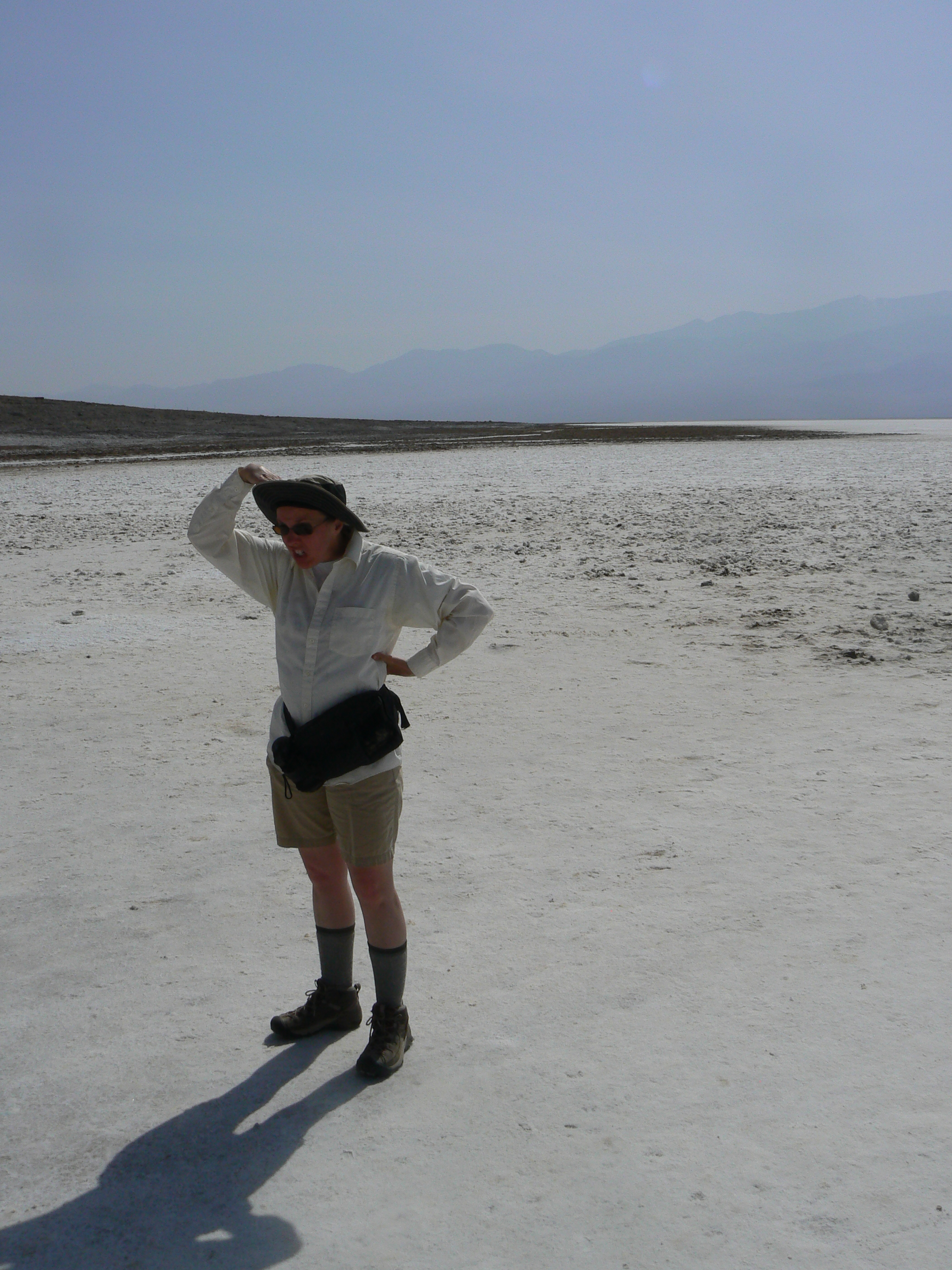
Prudence in Death Valley: wear a hat, bring water

This judgement about what is responsible is the stuff that made me a neurotic mother.  Am I “responsible” for navigating the waters of life for myself , my husband, and all my children?  How much responsibility do I take?  Which risks are worth it?  Do I allow my kids to walk to school alone, to learn to drive, to travel?   Do I ‘allow’ my diabetic husband to eat ice cream?  If someone in my family dies, does that mean that I have failed?  We’re all going to die; does that mean I’m doomed to fail at life?  You see – this can start a very vicious cycle of paranoia and dread.  Is it wise to live with that?

I think that I used to abdicate that issue of responsibility and pass it on to God.  I figured He was responsible for my life and my death, and I was off the hook.  That was useful for a while.  My grandmother used to hedge her bets by saying, “Trust in God, but do your homework.”   I suppose that’s useful advice as well.   I find that Buddhism gives a useful perspective, too.  It says simply that life and death is what we’re given, and that we can choose how we live.  Jim used to say, “I can be sick and miserable or I can be sick and happy.  I choose happy.  Pain is inevitable; misery is optional.”   All good stuff to think about.

Unknown's avatar

Taking Action, Stepping Out, Making Meaning

My husband was diagnosed with diabetes after his first heart attack when he was 31 years old.  He died 16 years later from coronary artery disease, kidney failure, and other complications of diabetes.  He was sleeping in bed next to me and never woke up.  I unplugged his dialysis machine, his CPAP machine, and his insulin pump that morning and set him free.  That was 3 and a half years ago.  My eldest child got the idea the next year that she wanted to do something to honor her father and take action to support diabetes research.  She and 2 of her siblings participated in a fundraiser called StepOut Walk to Stop Diabetes.  I was really impressed by her initiative and her civic action.  I joined her the next year with Steve; the siblings had moved west by then.  This year, we are all going to participate together.  All 4 siblings and mom with a few significant others alongside.   Our goal is to raise some money, to honor Jim, and to be involved in positive action as a grieving family.   (If you want to donate money on behalf of our team, go to http://main.diabetes.org/goto/pgalasso)

Team Galasso 2010

Do I expect that our participation will cause this disease to be eradicated?  Well, not really.  Do I imagine that Jim will feel honored and bring some good fortune to us from the spirit world?  Not exactly.  Do I hope that our sorrow will abate and our self-esteem will soar as we pat ourselves on the back for “giving back” to the community and “fighting” for a cause?  Actually, I don’t.  All of those things are ego-based and not very realistic.  What am I really doing, then?  Well, I think of it as “pointing the canoe” again.  I see that people suffer from this disease.  I see that certain kinds of medical technology and education have been used to ease that suffering.   I want to paddle my canoe, make some effort, toward helping those who suffer, not because I believe that I can rescue someone, but because it is how I want to live.  I want to honor Jim and remember him because that’s how I want to live.  I want to work with my family’s grief because that’s how I want to live.  I don’t know if any particular thing will result; I don’t expect to become noble or perfect or anything.  I do know that paddling in that way lets me choose a purpose and work toward it.  I suppose it helps my mind to be directed toward meaning.

So, why are we humans always looking for meaning?  Inquiring minds want to know…

That Steven Colbert report clip from the Approximate Chef suggests that we want to feel safe about the ending of the story.  We tell ourselves, “It’s okay, because it turns out this way; I know it does”.  That gives us, what, control?  Last night I had a dream about  meeting “the woman who owned the house” of the estate sale I went to yesterday.  I don’t even know that a woman lived there.  In fact, it was quite a masculine log cabin, with a boat and a mounted moose head dominating the decor.  What was my subconscious trying to figure out?  Well, I was trying to assure myself that this family was okay.  They were selling all their stuff.  They were letting strangers into their house to buy their belongings.  There has to be a story there.  I just went through the sale of my family home.  I had emotions about it.  I had a story.  I imagine that there are people behind these things with an emotional story, and I want to be told that they are okay.  I want to be satisfied that there is some meaning to the sale of these possessions.   Ultimately, I want to know that I’m okay, that my story has a happy ending.  (Steve always tells me that everyone in your dream is really you.)

Man’s Search for Meaning by Victor Frankl comes to mind.  I read parts of it.  Is this how we keep ourselves sane in “stressful” circumstances?  Is it just a game?  If it works, does it matter?  If I am not dogmatically asserting that my actions are ultimately meaningful, just saying that I find meaning in them and that is useful to me, does that make my position more authentic?  Can I make up a satisfying story about the family in the cabin and then say, “I know it’s not ‘true’, but I like to tell myself this story to calm my neuroses” and still be considered ‘sane’?  Do most of us do this anyway?  Does that make it ‘normal’ then?  I suppose I could give that up and face the fact that I won’t know every story.  Perhaps I would be far more sane to learn to live with ambiguity and uncertainty and meaninglessness.   What do you think?

Unknown's avatar

Claiming Rights of Passage

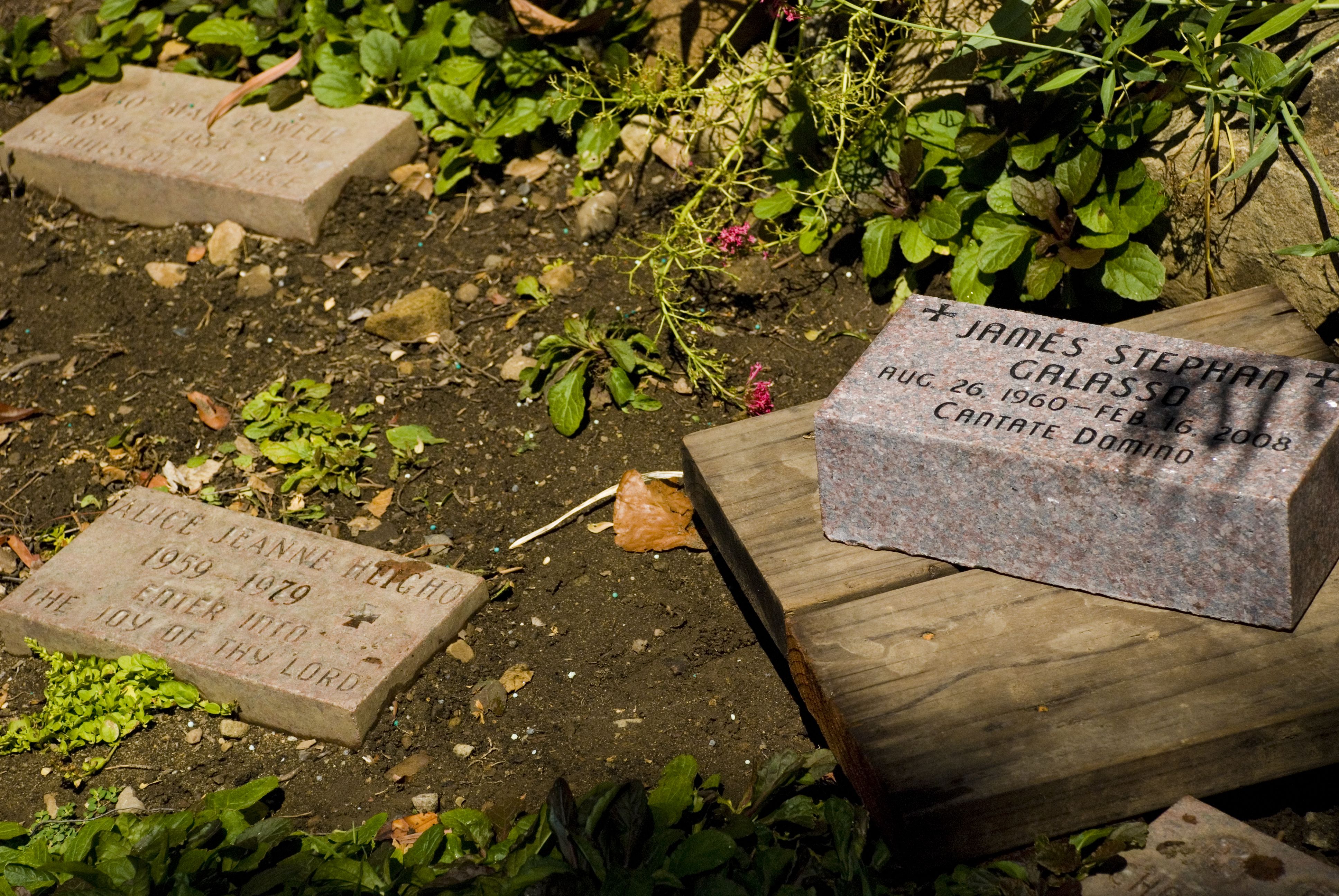
St. Luke’s columbarium

A few years ago, I went to an exhibit on mummies at the Milwaukee Public Museum.  It was fascinating.  Listening to the whispered comments and questions of other patrons was fascinating as well.  We have a very scattered cultural approach to death, with so many various ways of marking the rite of passage, including not really marking it at all.  Our American culture, as a whole, has been dominated by technology to the point that important parts of our lives are relegated to “experts” and taken out of our hands completely.   My mother fought against this trend in the late 50s when she insisted on breastfeeding her babies instead of allowing the “experts” to convince her that artificial formula on an artificial schedule was better for them.   Birth experiences have become sterilized, institutionalized, and anesthetized as well in the mainstream.  My 4 were all born in a hospital under the HMO system (but not under any pain killers!) because in my 20s, I wasn’t brave enough to seek more creative options.   However, my sister birthed one of her children at home, and I once assisted a friend who had a home birth.  It’s not impossible to choose to take full responsibility in this event.  Death is another part of life that more and more people deal with by proxy.  Of course, the hospice movement is a wonderful example of the purposeful effort to maintain the grace and dignity of this stage of life by bringing it back into the home, away from institutions.  I recently watched an Ingmar Bergman movie set at the turn of the century, called Cries & Whispers (well, it’s actually called something in Swedish, but that’s the English title).  This intense family drama deals with the death of a spinster sister from cancer.  The action all takes place at home, in this case an elegant manor.  The doctor’s largest role is in an affair with one of the sisters, in flashback.  When I think of the family drama of my husband’s death, experts and technology played a huge part.  Unfortunately, that became a distraction from entering into the rite of passage, from experiencing the more intimate aspects of the dynamics that were changing my family.  What I mean to say is that it enabled denial.

The last photo of Jim; coming out of surgery Feb. 5

What does it mean to choose to take responsibility for my life?  Not to delegate the more painful or complicated bits to an “expert”, not to live by proxy or by representative?  In which situations do I most often abdicate my ability to decide a course of action?  Financial, political, medical, social, spiritual, emotional, physical.  I am only beginning to wake up and ask myself these questions.  Steve often puts it to me this way: in every situation, you have at least 3 options.  1) Run away and hide  2) Try to change the situation  3) Change yourself.

This is a good time for me to think about aging, about how I want to live and address the changes that are happening now and will continue to happen.  What do I want?  I want to experience life in a more authentic way, not behind a duck blind or a proxy, not behind a curtain of denial or dogma, not by avoiding discomfort or hard work.  I want to make decisions about who I am and how to live proactively.  How do I embody this?  At this point, I am still figuring out who I am and want to be and recognizing places where that has been dictated and I have responded without looking deeper.   My father and my husband took great care of me.  I want to learn to do that myself.   I often dream about Jim returning as if he’d never died.  Last night, I had a powerful dream about him, set in the house I sold, with my young children around.  My consciousness struggled with it; I knew that the house was emptied and I’d moved.  I couldn’t understand why the furniture was back and the place looked so “lived in”.  I couldn’t understand why Jim was there.  He told me he was going out to work because he wanted to support me and the kids.  In a choked whisper, I closed the door behind him and said, “Don’t come back.”  I woke up crying.  Talking about this dream with Steve, I realized that I do want him to come back and float through my subconscious and consciousness without confusing me, without affirming me or correcting me, just visiting.  I suppose when I gain the confidence to affirm and care for myself, my dreams will change.

Unknown's avatar

Uncontained and immortal beauty

Ralph Waldo Emerson wrote in his essay on Nature in 1836:

“Nature never wears a mean appearance.  Neither does the wisest man extort all her secret, and lose his curiosity by finding out all her perfection.  Nature never became a toy to a wise spirit.  The flowers, the animals, the mountains, reflected all the wisdom of his best hour, as much as they had delighted the simplicity of his childhood…The lover of nature is he whose inward and outward senses are still truly adjusted to each other; who has retained the spirit of infancy even into the era of manhood….Standing on the bare ground, –my head bathed by the blithe air, and uplifted into infinite space, — all mean egotism vanishes.  I become a transparent eye-ball.  I am nothing.  I see all.  The currents of the Universal Being circulate through me; I am part or particle of God…I am the lover of uncontained and immortal beauty.”


Nature is an ancient embodiment of grace.  The elegance of form, motion, manner, action and moral strength inherent in the natural world can be revealed and described in detail by science, but not in totality.  The mystery of this grace remains.  There is a random, chaotic element that defies analysis and inspires awe.  The morality of what is defies dogmatism.  Death is intrinsic to the grace of life, not an aberration or problem to be solved.  I have not always believed this, although I have always loved Nature.

During my child-rearing years, I frequently walked to a prairie preserve in my neighborhood for sanctuary and solace.  I began to have a very special relationship with “my prairie”.  My entire demeanor would change the minute I set foot inside the gateway.  I would feel myself relax, physically and emotionally, and whatever was simmering at the core of my being would bubble up and spill over.  Often, I would cry copiously, hoping I wouldn’t meet anyone on the paths.  Just as often, I would be exuberantly lifted by sunshine, color and fragrance and dance my way over the grass.   After settling in to the quiet, I would observe the wisdom of the place and learn something to take back with me into the suburban world.   For many years, I would visit the prairie in the middle of the day while the kids were in school and feel rather guilty and unproductive to be enjoying the grace of the place instead of “working”.  It occurred to me one day that someone should at least be doing the job of enjoying it.  It seemed a huge pity that the dazzling elegance of the sky, the land, the creatures and all that thrummed and buzzed and swished should go unnoticed.  I felt that their Creator should be thanked, and in those days, I believed that was the God of the Bible, the same Father God who rescued and redeemed us from Death.

Death is a biggie, in my life and in my culture.  When I was 16, I was in a car accident with my 20 year old sister where she died beside me.  When I was 29, I was a prayer warrior who fought off Death when my infant daughter had spinal meningitis.  When I was 45, I woke one Saturday morning and found my husband cold and lifeless beside me.  Death was The Bad Guy who sneaked into the Garden and stole our birthright.  God was The Good Guy who caught him and gave it back.   Illness is just Death sneaking around, and I have been a paranoid hypochondriac at times because of that way of thinking.  But that isn’t the only way of thinking, I found out.

Once, when I entered my prairie, I was shocked to go around the bend in the path and see the ground burnt jet black.  The vibrant green shoots of grass across the path from that section of land made a startling comparison.  This controlled burn was part of the park management program for spring.  Dry stubble and thick hanks of grass had been burned down to decaying ash in order for the new life to grow up.  I wasn’t sure what to make of the change in my sanctuary.  I felt that something bad had infiltrated the Garden.  I took it rather personally, and although I understood the scientific reasons for it, my spirit was troubled.  I wanted to know the wisdom of this observation.  I found it explained quite elegantly later, by Thich Nhat Hahn in his book No Death, No Fear: Comforting Wisdom for Life.  He gives many examples of how life is in a state of continuation such that there is no beginning point or end point.  We have no birth day or death day.  Paper is the forest, the logger, the clouds, the sunshine, the ash when it is burned, the heat that we feel after the smoke blows away, the soil that is enriched and the tree that grows in the soil.  “If you are a scientist and have very sophisticated instruments, you can measure the effects of that heat even in distant planets and stars.  They then become a manifestation, a continuation of the little sheet of paper.  We cannot know how far the sheet of paper will go.”

Continuation is the ancient grace of Nature.  Ancient and immortal and always new.

Yesterday was a wonderful continuation day for me.  My daughter Emily and Steve and I walked in Chicago’s oldest cemetery and found cicadas everywhere – their sound, their carapaces, their bodies.  Death is not a Bad Guy, just a concept.  I am comforted by this wisdom.

Me, when I started this blog.