

“Some people are uncomfortable with the idea that humans belong to the same class of animals as cats and cows and raccoons. They’re like the people who become successful and then don’t want to be reminded of the old neighborhood.”
– Phil Donahue

Welcome to my neighborhood! I live 14 miles southwest of a university town in the Willamette Valley in Oregon. I rent a studio apartment above the garage of a big house among the trees. When I ventured out this morning, my housemates were already gone. It’s quiet in my neighborhood. Most of my neighbors are plants.
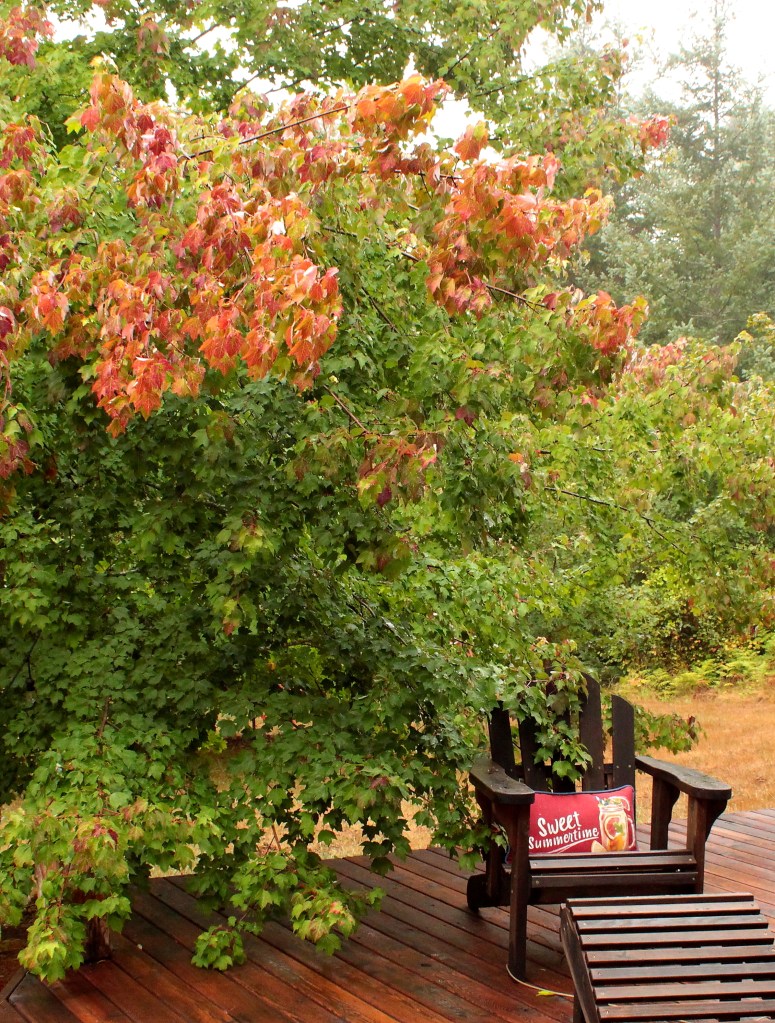

In addition to my three human housemates, two dogs and six chickens live on the property. So do countless others: rodents, reptiles, bats, insects, and birds, plus the occasional deer, bear, coyote, and cougar.

This morning the weather started out cool and foggy. We had a significant rain yesterday, a true sign that we are past the Autumnal Equinox and headed toward the rainy season of Oregon winter.

This part of Oregon was once a temperate rain forest. Moss and lichen hang from the trees all year round, but they dry out considerably during the summer. When the rains fall again, they expand like sponges and become green again. This is along my driveway – it’s .7 miles from the house to the mailbox.

Here’s where I stopped to drop my recycling in the bins by the mailbox. I’m looking across the gravel road past the tree farm lot toward where Duffy Creek runs along the base of the hills.
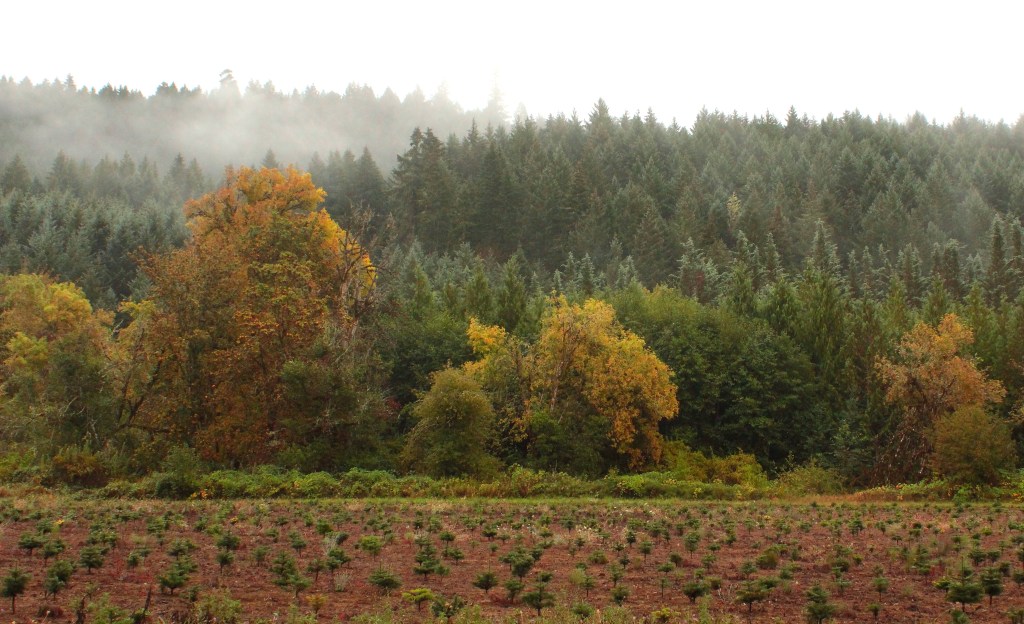
Timber is a big industry in Oregon. Logging operations are interspersed with small farms along our gravel road. Douglas Fir trees grow very rapidly in this climate. Six to ten years after planting, they can be harvested as Christmas trees. In 40 to 50 years, they can grow to be 70 feet tall and are used for lumber and telephone poles. The branches are often left in slash piles that are burned – which seems to be the most convenient way to get rid of the excess material. I find it worrisome that the carbon sequestered in that wood is released into the atmosphere instead of being used as mulch or paper pulp or something.

The rest of these shots were taken in the afternoon when I was returning home from town. The clouds had dispersed and the temperature climbed up to a delightful 72 degrees F.

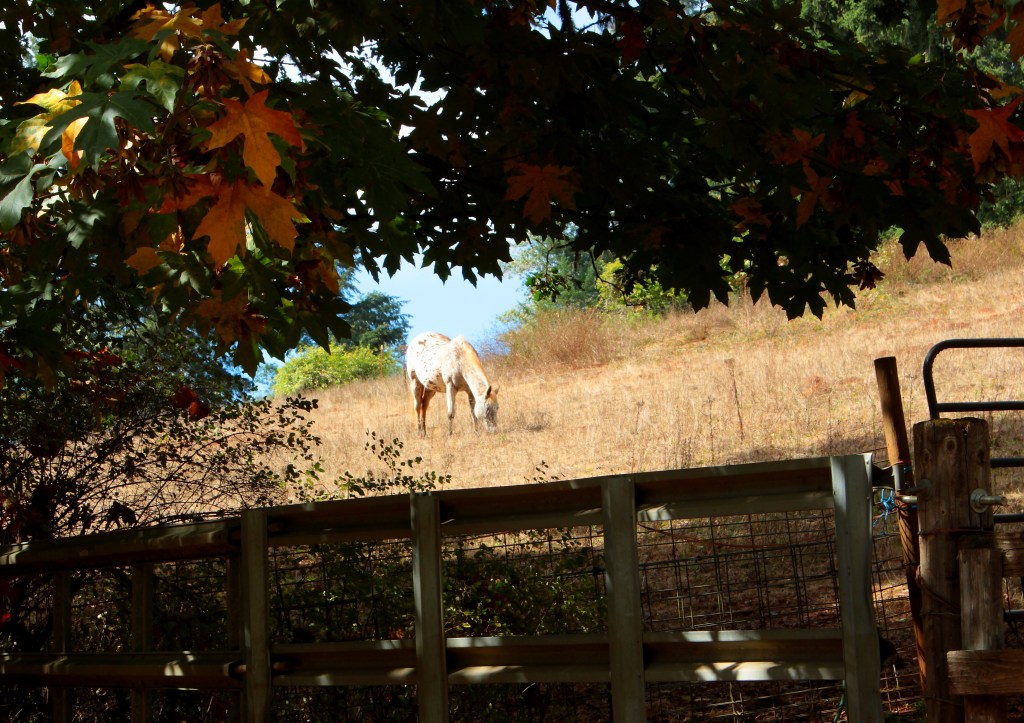
The small family farms along my road are home to a variety of domesticated animals: horses, cows, goats, sheep. And there are wild turkeys everywhere! They are not native to this area; they were introduced from western Texas in 1961 by game hunters, and have proliferated tremendously. They have become rather a nuisance.
And here is the view of the valley where my mailbox and trash bins sit. You can see a few small white rectangles to the left of the telephone pole.

 scillagrace