

“She would only point out the salvation that was latent in his own soul, and in the soul of every man. Only connect! That was her whole sermon. Only connect the prose and the passion, and both will be exalted, and human love will be seen at its height. Live in fragments no longer. Only connect, and the beast and the monk, robbed of the isolation that is life to either, will die.” – E.M. Forster, Howard’s End
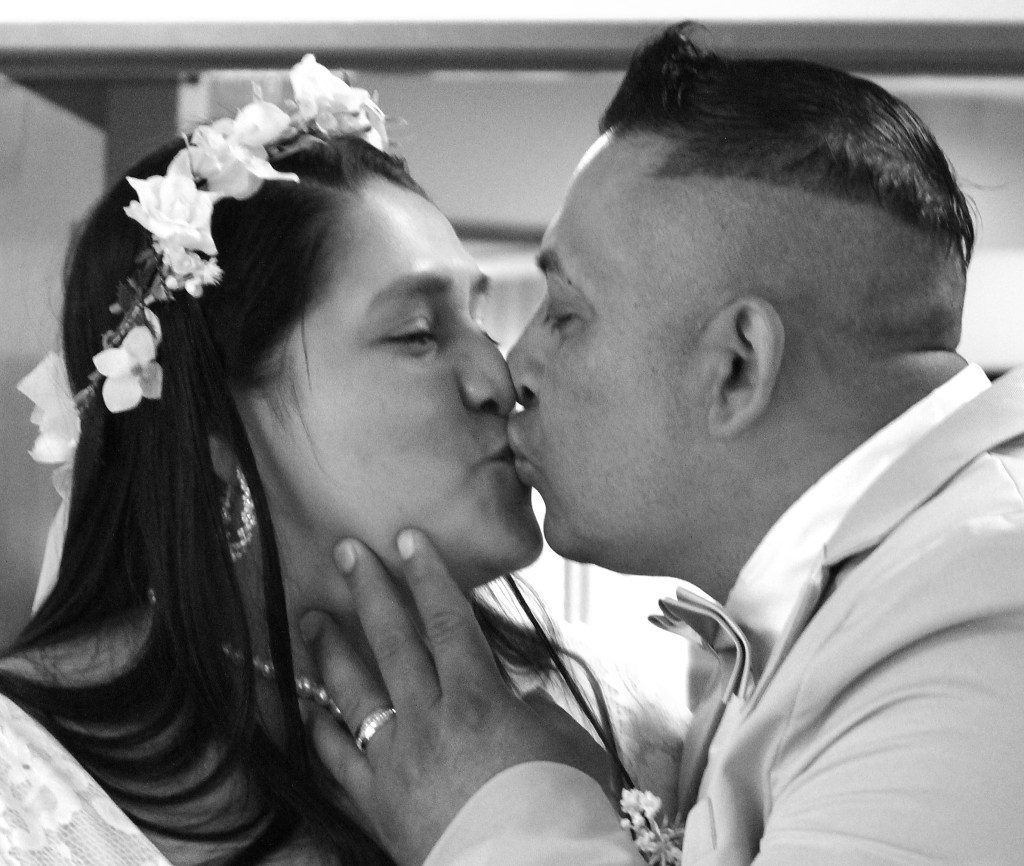
My mother, a Radcliffe English major, used to quote Forster often. “Only connect!” she’d say, referring to a variety of ways that she’d joined thoughts and anecdotes and facts and trivia. I was mystified by this reference for a long time. I wrote a poem about her once, comparing this practice with my visual memory of her pairing up socks while sorting laundry. Helpfully, a Google search has led me to a new interpretation of that quote. The connection of prose and poetry, of head and heart, of physical, sexual, spiritual and intellectual energy alluded to in Forster’s novel reminds me of the theme in the 1927 film Metropolis – the intersection of industry and humanity.
I searched my recent photos to find illustrations of this concept. I quickly realized that I’d set my aspirations pretty high. I’m reaching for artistic expression that mirrors sweeping novels and ground-breaking cinema in my amateur snapshots! Well, let’s embrace that absurdity. Why not?
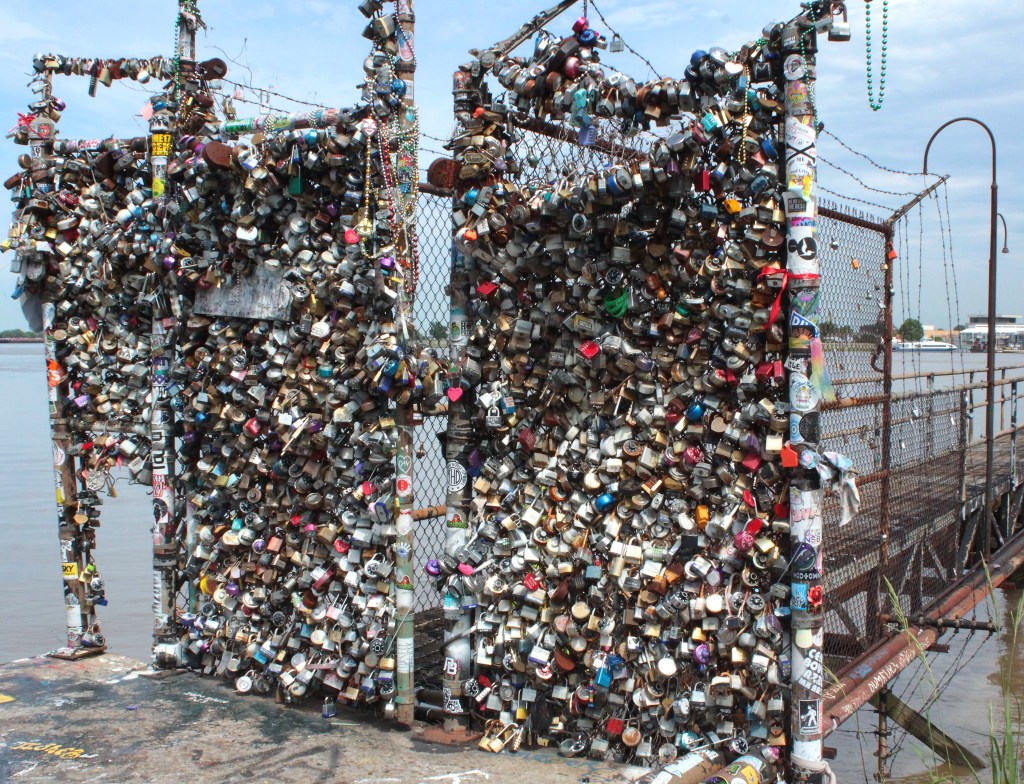
I finally came across a display of Love Locks on this pier on the Mississippi River in New Orleans. Here’s an AI generated summary of this cultural phenomenon (nodding to John’s challenge of last week): “Love locks, or padlocks of love, are a way for couples to symbolize their love by attaching them to a public fixture, such as a bridge, fence, or statue. The locks are often engraved with the couple’s names or initials, and sometimes the date, and the key is thrown away to symbolize their unbreakable bond. The tradition is thought to have originated in Serbia over a century ago when a young woman named Nada died of heartbreak after her lover was unfaithful. Inspired by her tragedy, local women began attaching padlocks to bridges with their names and those of their loved ones. The poet Desanka Maksimović later memorialized the story in a poem that helped spread the practice around the world. Today, love locks can be found in many cities: Paris, Cologne, Malta, Mount Huangshan.”
How do you anchor passion and hope? How do you create loving connection that endures in this technological age?
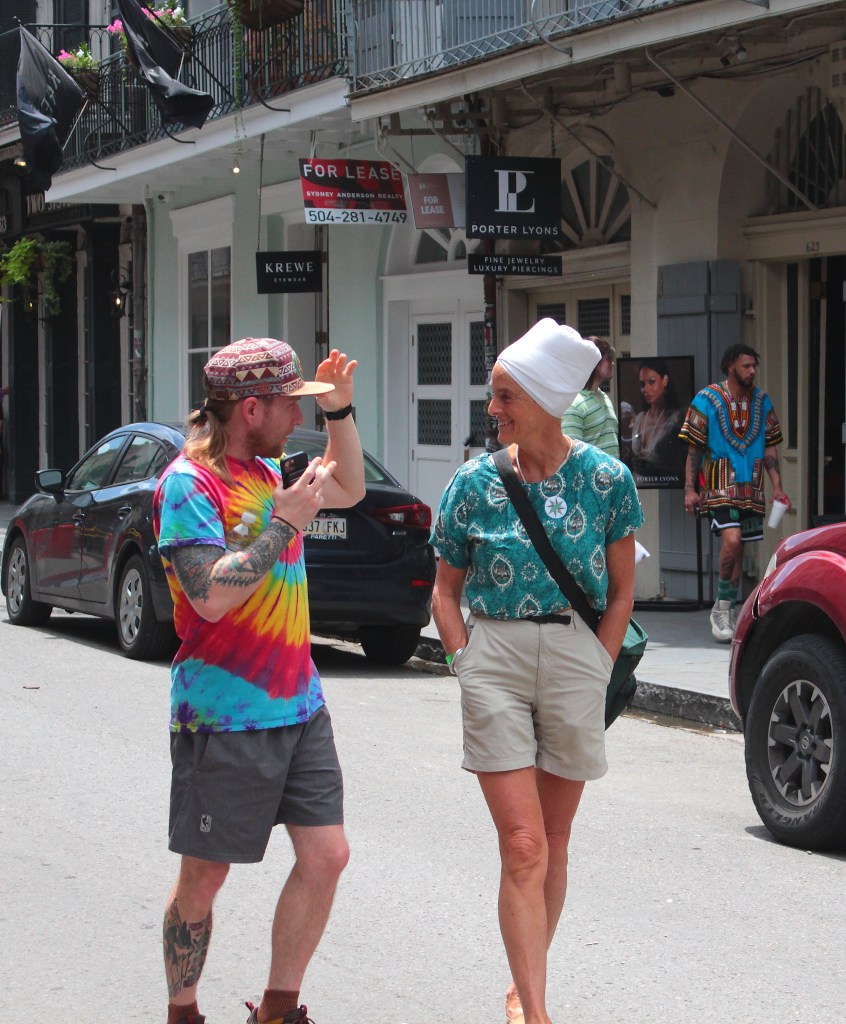
I find a precious connection in this moment between my sister and my son-in-love. It depicts two different generations connecting face to face, while his cell phone is idling in his hand.

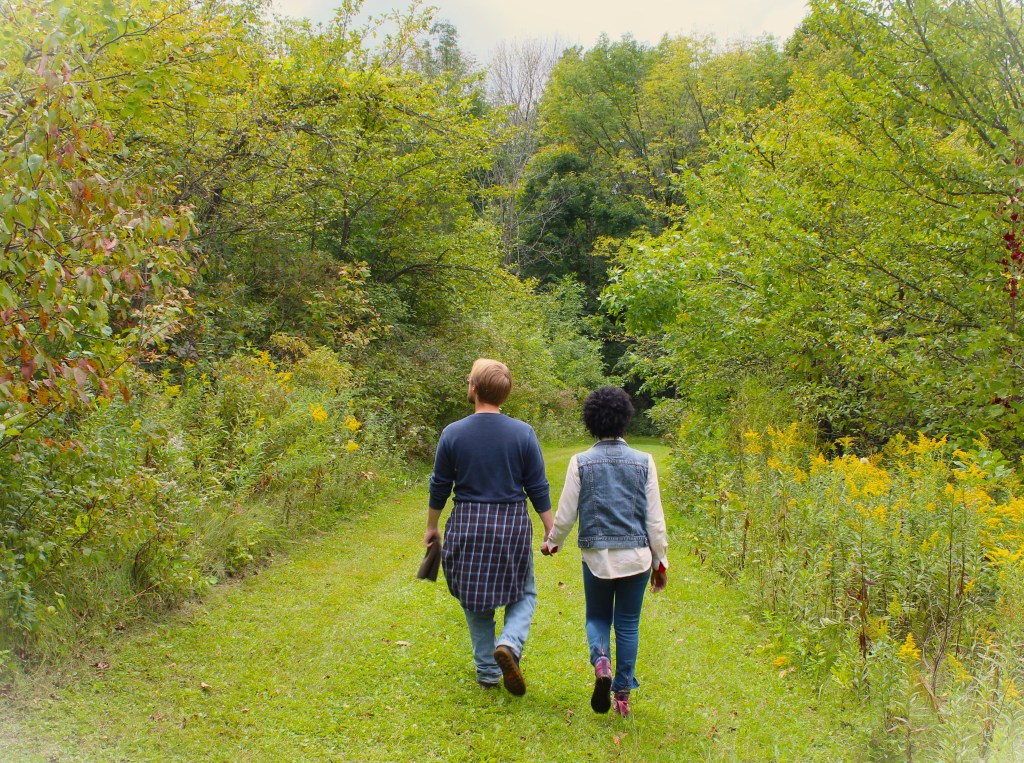
This modern world can be overwhelmingly distorted and fragmented, filled with hard angles that force our soft bodies into tight spaces. How do we live in connection with all this, in right relationships where we are good for and good with the world around us?
 scillagrace