

“What we do see depends mainly on what we look for. … In the same field the farmer will notice the crop, the geologists the fossils, botanists the flowers, artists the colouring, sportmen the cover for the game. Though we may all look at the same things, it does not all follow that we should see them.”
― John Lubbock, The Beauties of Nature and the Wonders of the World We Live In
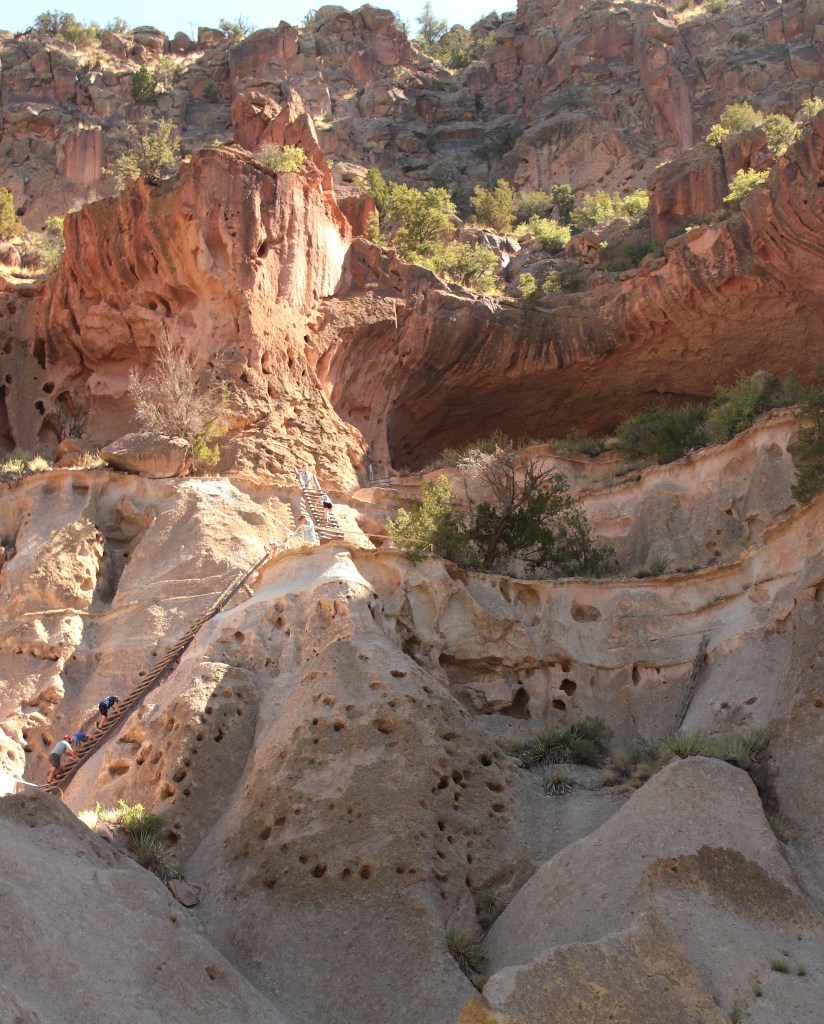
Imagine looking at a canyon wall, eroded by wind, formed of crumbly volcanic tuff. Would you see in it a choice place to build a home, defensible from attacks, high above the river floods, cool in the summer and warmed by the afternoon sun in the winter? Would you see the path up to the sheltering alcove? And what would you be looking over once you got up there? Also, imagine that it is the year 1150 A.D. Can you look with an archeologist’s or anthropologist’s vision and imagine the ways of the people who lived there?
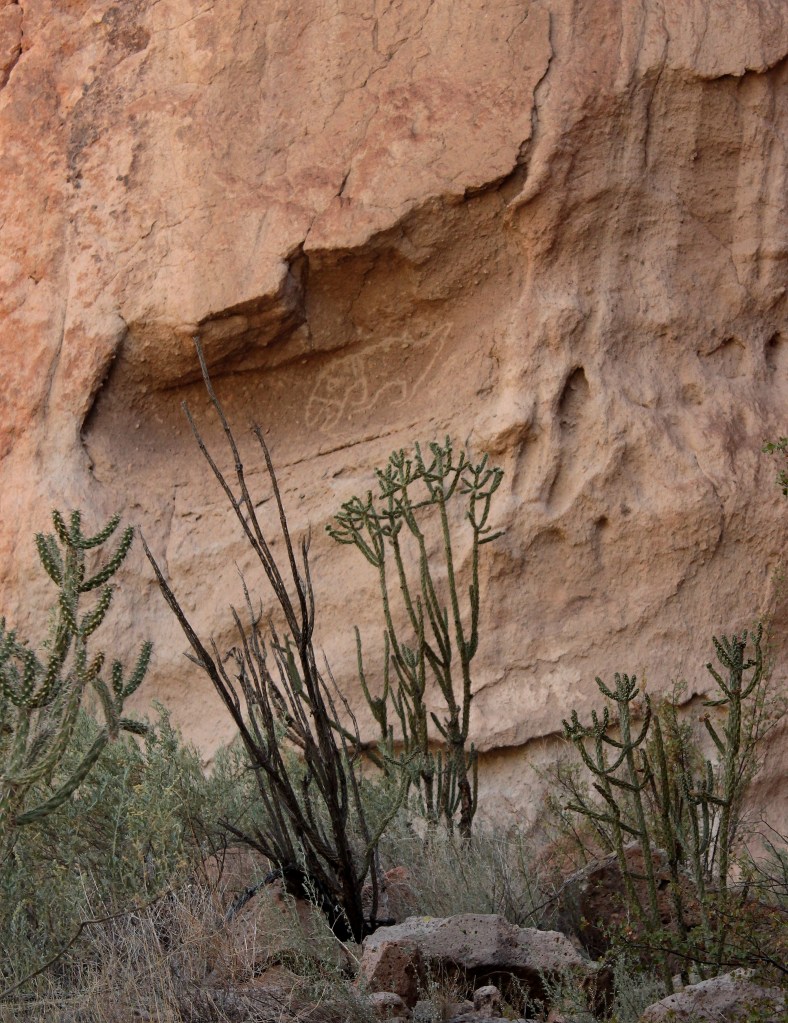
My friend, Ranger Steve, pointed at the canyon wall. “Do you see that petroglyph up there? What do you think it is?”
“Um…a person’s head? A bear’s head?”
“WHAT?”
“You mean that round, red spot above that pale place on the rock?”
“NO! Not a pictograph, a petroglyph. Carved into the rock under the overhang, above where that cholla cactus is.”
“Ooooh, THAT. I didn’t see it before. Um…a horse bending its head down to drink, maybe?”
“A lot of people see that. It’s probably a parrot, actually.”
Thick-billed parrots now are found primarily in Chihuahua and Durango, Mexico, but used to range north to Arizona and New Mexico. I completely overlooked that possibility!
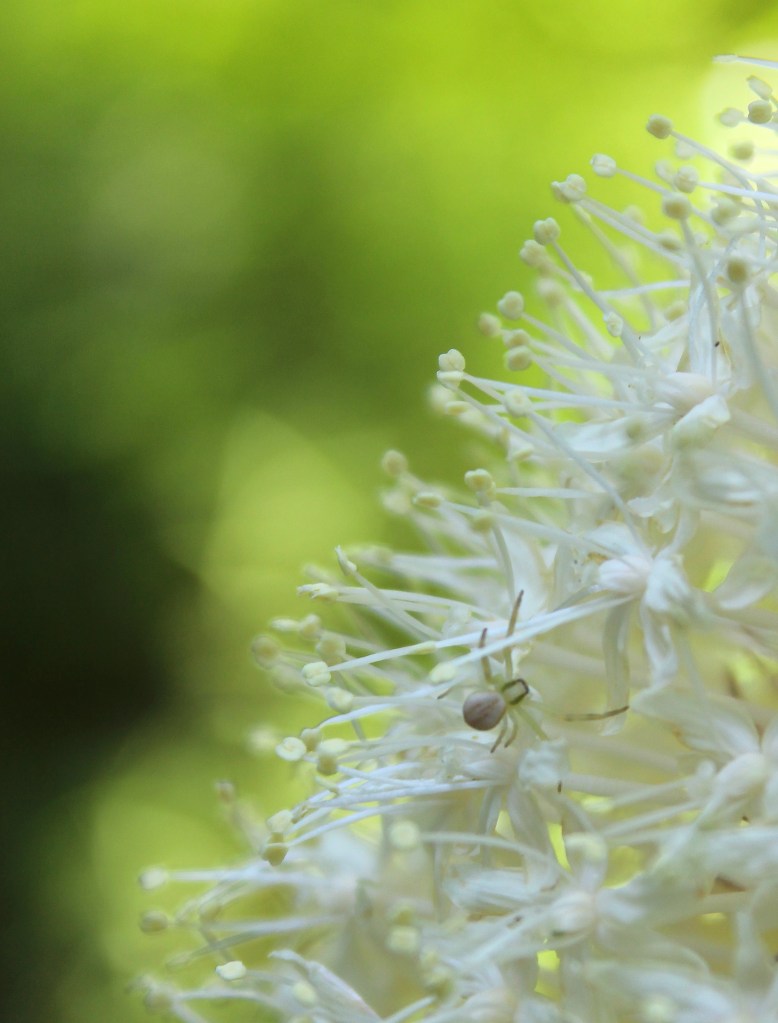
I was doing a botany hike with a learned friend recently. She was pointing out and naming the plants along the trail, and I kept finding what I call Bonus Bugs. This tiny, pale spider was well hidden in the blooming Bear-grass.
 scillagrace