

At our Socrates Cafe meeting on Saturday, we discussed the ethics of rationing health care. How are decisions made about administering medical care? Should health care be awarded to the wealthiest, the most fit, the least at-risk or the most at-risk? Is health care a commodity that can be administered according to social and economic guidelines? Is health care distinct from “illness care”? And so on. Our group is rather small and not especially representative of any particular demographic. I don’t think we’re “solving” anything, we’re just enjoying discussion and engagement and some brain activity. I’m exploring the results of allowing other people to comment on the products of my own bizarre thinking. Which is kind of what blogging is about as well.
As I put in my own perspective on this issue, I realize that I speak from experiences that have centered mostly around my husband’s illness and death and from observances of non-human beings. Jim used to chalk up a lot of his medical interventions as “better living through technology”. He was the recipient of some very technical and somewhat heroic (although now pretty standard) procedures. It was a complicated arena of insurance issues, multiple specializing doctors, drug interactions and availability, and the donor list system. There were layers of decision-making involved and a fabric of responsibility that was pretty nebulous. When his pulmonologist found out that he’d died, he asked me, “What are you doing about it?” I wasn’t sure what he was talking about. “I’m grieving!” I answered. “I mean legally,” he explained.
Who is responsible for my health?
As for the observance of non-humans and their health, I look to the pets I have known. Specifically cats. I learned a lot from Pinkle, who somehow got injured up in the attic one day. She simply stopped using her back legs until they had healed. She slept. She ate. She tried out putting weight on them gradually, and eventually got back to doing all the things she had been doing. She didn’t complain. She didn’t seem miserable. She didn’t worry or push herself or engage in any neurotic behavior that we could detect. She took responsibility for herself, for the most part, and we provided food and shelter and quiet. Phantom is another cat I have observed. She is 16 years old now, and not living with me any more. She had some urinary tract issues in the past when I did care for her. I gave her antibiotics in pill and liquid form (which was an ordeal she did not welcome) and changed her food. She had a bladder stone removed surgically as well. That was maybe 10 years ago. Her litter mate died of cancer a couple of years ago. Cats don’t complain about pain much, and they don’t complain about death. My kids tell me that Tabitha was purring as she died of the injection that ended her suffering. Cats (and many other animals) have a tendency to seek out a quiet place to die. They don’t make a big fuss. We’re the ones who fuss.
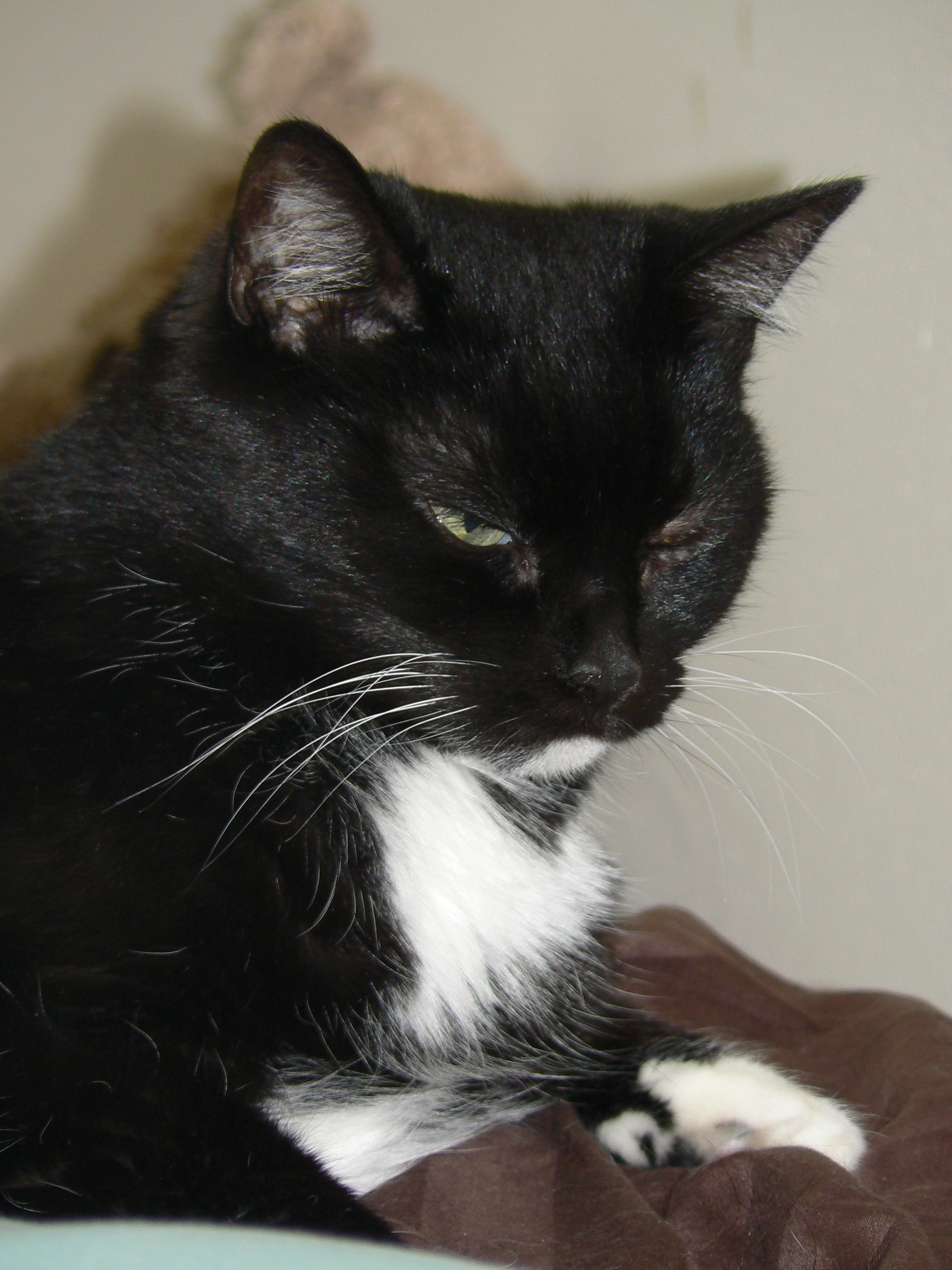
Phantom del'Opera

Pinkle Purr (see poem by A.A. Milne)
What if we focused on healthy living and didn’t sweat so much about “illness care”? What if we made it our social/economic/political responsibility to work hard to provide clean water, clean air, healthy food, shelter, education about health, and quiet (less stress) for as many of us as we can, and let illness play out as it would naturally? What if we as a community took responsibility for supporting health but abstained from taking responsibility for preventing death? It’s not like we’d be successful in that effort ultimately anyway, right? We’d do our best to give you the basic needs, and the rest is up to you and nature. That’s how human life went before technology kicked in, and plenty of people lived to reproduce (or we wouldn’t be here today). Is there anything wrong with that model?
That’s my two cents for the health care debate.






 scillagrace